
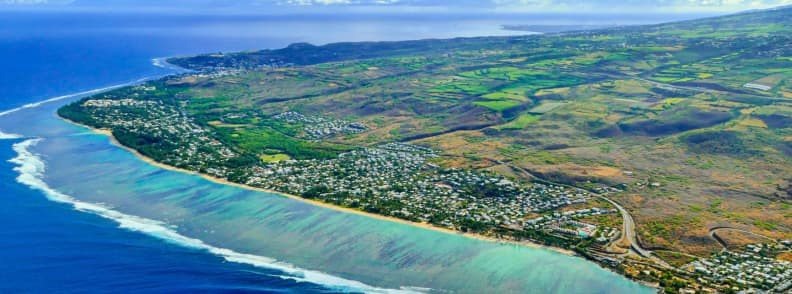
Beaches on Reunion Island West Coast set the tone for this guide on The Travel Bunny, with calm lagoons, easy swims, and mornings where you do not chase anything. I wrote this Reunion Island travel guide after staying with local friends and moving at their pace, nature and beach first, food second, plans last. This Reunion Island slow route runs as a relaxed self-drive from Reunion Island West Coast to South Coast, with coastal roads, market stops, and long breaks built in on purpose.
You will get a practical loop through Reunion Islands West Coast beaches and the south, plus the small details people need on the ground, like local market schedules, where to find the best local markets on the West and South coasts of Reunion, and what I actually ate when I stopped for spice stalls, samoussas, and fruit.
I will also show you how to build a proper Reunion beach picnic around filao shade, and how to time the day so you catch a clean Reunion sunset on the beach without racing the clock. If you care about nature, I cover the Marine Nature Reserve Reunion, why it matters, and where to snorkel with coral reef on Reunion west coast without wrecking the reef or your nerves.
Reunion Island West Coast to South Coast Road Trip Itinerary
This Reunion self drive route also answers the questions people keep asking in trip planning chats, like can you combine Reunion Beaches with Mauritius in one trip? If you travel with kids, I call out family friendly beaches Reunion Island that suit slow days, not adrenaline. If you want classic postcard sand, I point you to Reunion Island white sand beaches, including where to photograph palm trees and white sand in Reunion. If you wonder why is the sand black at Étang-Salé beach Reunion, I break it down in plain language and tell you what the beach feels like underfoot.
And because La Réunion does not stop at the lagoon, you will also see how this coastal plan links to bigger island icons like the Route du volcan, when to look for Reunion whale watching on the coast, and where Reunion whale watching on the west coast tends to deliver without turning your day into a tour marathon. I’ll also help you time sunset beaches on Reunion Island, a quiet Reunion sunrise on the South coast, and the best months for tropical fruit at La Reunion, so your plate and your photos both make sense. Let’s hop to it!

The Philosophy of Slowness. Why La Réunion Demands a Different Pace
A Reunion slow road trip works because the island rewards patience vs speed. I tried it the easiest way, by following local friends who never treated La Réunion like a checklist. This section of The Travel Bunny’s Reunion guide explains how Reunion slow travel replaces photo collecting with real presence along the coast.
Most itineraries push La Réunion Île Intense like a warning label, as if you need to suffer to earn the island. I disagree. I wrote this article like a Reunion slow travel blog on purpose, because a slow travel Reunion Island approach gives you the same variety, but with room to breathe, eat, and stop when you see something worth pulling over for.
Understanding the Île Intense vs. the Slow Local Rhythm
Île Intense or Intense Island describes the landscape, not the pace you must keep. You can experience cliffs, lagoons, black sand, and wild surf while still building a slow travel itinerary Reunion that leaves space for naps, long lunches, and unplanned detours.
The biggest mindset shift comes when you stop measuring days by how much you cover. I started measuring days by how often I felt calm. That is the real skill behind how to plan a slow travel reunion itinerary without rushing, and it matters even more if you live here as an expat and you want weekends that refill you instead of draining you.
A slow rhythm also protects your trip from the island’s natural friction. La Réunion throws roadworks, sudden showers, and fog at you as if it’s testing your patience. If you build the trip around flexibility, you end up experiencing Reunion Island without rushing, absorbing delays without turning you into a stressed driver staring at a clock.
You don’t need to hike every day to feel like you did La Réunion. Some of my most satisfying hours came from coastal drives, market stops, and sitting by the water with nothing planned. Although I did enjoy hiking in La Reunion, this specific route supports a Reunion no hiking beach holiday while still feeling rich and local, especially if your idea of a perfect day starts with coffee and ends with sunset.
If you want the coast but you don’t want strenuous treks, you can structure a Reunion Island coastal road trip without hiking around short walks, viewpoints, lagoons, and food. The goal is to choose effort when it adds something. Don’t do it just because the internet told you it counts.
Reunion Microclimates and the 10 AM Rule. Navigating Island Moods
La Réunion changes mood fast because microclimates sit close together. A morning that starts bright on the coast can turn grey inland within minutes, and the reverse happens too. When you understand this, you stop planning your vacation like a city break and start planning like an island with weather pockets.
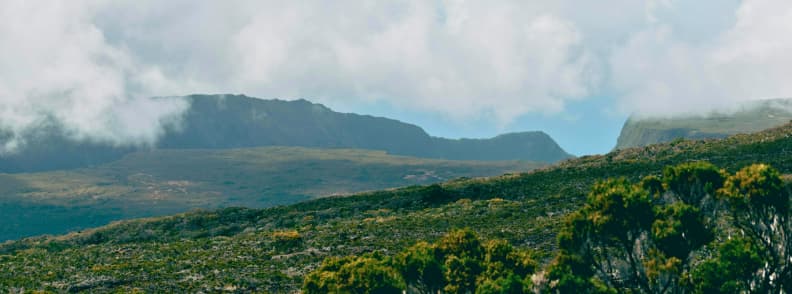
La Réunion Travel Tip: The simplest local trick is what I call the 10 AM rule. Do anything that depends on clear views early. Prioritize viewpoints, volcano areas, and anything in higher ground before late morning, then let the afternoon belong to beaches, food, and slower stops.
This rule also keeps your coastal days smooth. If clouds build inland, you can stay on the shore and still win the day. When the sky clears, you grab your window for a scenic drive or a lookout, then drop back to sea level without feeling like you lost time.
For travelers, this means you plan days by light and heat vs. a rigid schedule. For expats, it means you learn a rhythm you can repeat every weekend without burning out. Once you accept the microclimates, slow travel stops feeling like a philosophy and starts feeling like the smartest way to move on this island.
Why This West to South Coastal Route Belongs on Your Reunion Itinerary
This Reunion Island West Coast to South Coast road trip works because it follows how the island actually functions. Light, weather, food culture, and distance all favor a coastal flow instead of a frantic loop around the island. Keep reading to see why this coast-first logic beats the usual inland-heavy plans.
Many travel guides describe the Reunion West Coast to South Coast route as a simple transfer between beaches. In reality, this stretch holds the island’s most balanced mix of calm water, everyday local life, and dramatic scenery, without forcing your days into early alarms or long recovery nights.
The Travel Bunny’s West Coast to South Coast La Réunion Slow Route is about seeing better, with time to sit, eat, swim, and repeat without fatigue stacking up.
What slow and local means on Reunion’s coast
Slow on Reunion Island’s West Coast means planning your days around the ocean. You swim early when the lagoon is flat, eat when markets and kitchens are open, and drive in short stretches that leave space for spontaneous stops.
Local rhythm shows up in small habits. People linger at sunset. Meals stretch longer than expected. Nobody rushes you out of the water or off the table. When you follow this pace, the coast stops feeling like a tourist strip and starts feeling lived-in.
A coastal route also reduces decision fatigue. You move in one direction, sleep near where you eat, and avoid backtracking. That simplicity is what lets slow travel work in practice, not just in theory.
This approach fits expat life especially well. It mirrors how locals use the coast on weekends, short drives, repeat beaches, familiar food spots, and no pressure to conquer terrain.
Who this Reunion route is perfect for. couples, families, food lovers
Couples benefit from predictable days and gentle transitions. Mornings belong to the water, afternoons to shade and rest, evenings to sunset and dinner. You spend more time together and less time navigating logistics.
Families gain safety and flexibility. Lagoon beaches allow relaxed swimming. Short drives limit car fatigue. Markets and casual eateries make meals easy, even with changing appetites. You can stop early or push on without breaking the structure.
Food lovers thrive here because the coast concentrates on everyday eating. Markets, snack stalls, beach bars, and unfussy local tables sit right along the route. You eat what is fresh, not what is dressed up for visitors.
This route also suits travelers who want richness without strain. If your idea of a good trip includes swimming, eating well, watching light change, and sleeping deeply, the West to South Coast delivers that rhythm without asking for constant effort.
Disclosure: Some of the links on this page are affiliate links. This means that at no extra cost to you, The Travel Bunny will earn a small commission if you click through and make a purchase. Thank you!
Best Time to Visit Réunion Island. Planning a Réunion Coastal Adventure
The best time of year for beaches in Reunion Island depends on what you want from the coast, considering flat lagoons, clear sunsets, and the chance to spot whales without fighting rain. If you plan a west-to-south coastal route, timing matters less for distances and more for light, sea conditions, and how comfortable you feel lingering outside.
Best months for lagoon beaches, whales, and sunsets
The best time to visit La Réunion is during the dry winter months of May to October, when rainfall is low, and temperatures are comfortable.
Winter on the coast feels mild, not cold, with daytime temperatures around the mid-20s by the Indian Ocean in July and August. That makes beach mornings easier, especially if you hate sticky heat or you travel with kids.
If you want whales, aim for the core season from June to October. This is also when you have the best odds of calm, clear coastal days on the west. In this period, Reunion whale watching West Coast is ideal because the main viewing and boat departures cluster around West Coast towns like Saint-Gilles and Saint-Leu.
La Reunion Whale Watching Tip: If you are specifically planning around the best time for whale watching in Reunion, August and September often sit in the sweet spot where sightings peak and conditions stay stable. Still, you should treat every whale day as a bonus vs. a guarantee.
Cyclone season officially stretches from December to April, and the roughest stretch often falls between January and March. Heavy rain can disrupt coastal plans and regularly affects hiking access, road conditions, and visibility, especially outside the West Coast, where it rains less.
April and November often work well if you want fewer people and you do not need peak whale conditions. You get warmer sea time than deep winter, but the weather in La Reunion can flip faster, so you need flexible days.
La Reunion Local Advice: If markets form part of your trip rhythm, plan them like anchor points. The best time to visit Saint-Paul market for local food is early in the day, and the market runs all day Friday and Saturday morning, so you can build your beach time around it.
This is the Reunion trip planning logic both travelers and expats should use. Put your fixed experiences, markets, whale outings, and anything with opening hours at the start of the day, then let the coast absorb the rest.
How Many Days Do You Need? Ideal length for West Coast trip in La Reunion
A one week Reunion itinerary focusing on beaches and food gives you enough time to settle into the coast, learn the rhythm, and still feel like you had real days instead of rushed transitions. You can do this route faster, but you will spend more time checking in and out than swimming, eating, and letting the island sink in.
You need at least one week in Réunion to comfortably explore the west and south coasts at a slow pace. A good split looks like 1 to 2 days around Saint-Paul and Saint-Gilles, 1 to 2 days based near Saint-Leu, 1 day for Étang-Salé, then 2 days for Grande Anse and Saint-Pierre.
The sweet spot for slow coastal travel in La Reunion
A Reunion itinerary 7 days works because it gives you slack. Slack means you can wake up late after a beach night, linger over breakfast, and still catch a sunset without watching the clock.
Seven days also keeps your driving short. You can move in small hops, which is the whole point of slow coastal travel. Short hops mean you stay curious, not tired.
For expats, seven days translates into a repeatable template for long weekends. You can break the route into two or three coastal chunks and rotate them through the year without feeling like you are repeating the same day.
If you only have 3 to 4 days for Reunion Beaches
A shorter trip can still work, but it stops being slow. You will see beaches and eat well, but you will not get the long pauses that make this route feel local.
If you only have a few days, pick one base and commit to it. Saint-Leu works well for this style because it sits between the busier west and the quieter south, and you can reach Étang-Salé and Saint-Pierre without long drives.
On a short timeline, skip anything that adds friction. Don’tt stack markets plus museums plus long dinners plus late drives in the same day, because that is how easy coast days start feeling heavy.
If you have 10 days or more in La Reunion
A ten day Reunion itinerary including West and South Coasts lets you keep the coast slow and still add inland variety. Ten days gives you recovery time after any bigger day, which matters if you add altitude.
A Reunion itinerary 10 days also lets you include the Wild South without turning it into a marathon. You can drive east of Saint-Philippe for lava landscapes, then come back for another beach morning instead of forcing a full island loop.
This is also the length where you can afford to do both, a few relaxed coastal days and a couple of intense interior days, as we did. You stop choosing between beaches and mountains, and you start choosing based on weather and energy.
Reunion West coast versus interior. how to decide
How many days to spend on Reunion West Coast vs interior? Start with what you want your body to feel like at the end of the trip. The West Coast gives you water time, food, and easy logistics. The interior gives you peaks, cirques, and big hikes, but it demands early starts and more effort.
If you want slow mornings and long meals, give the coast the majority of your days and add interior as short bursts. If you want long hikes and viewpoints, flip that balance and treat the coast as your recovery zone.
Either way, don’t try to fit everything into one week. La Réunion punishes rushed planning, and the coast deserves more than a drive-by.
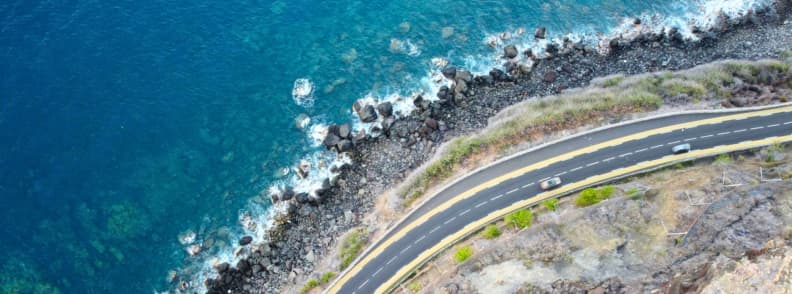
Overview Route des Plages. Reunion’s Old Coastal Road RN1A
This Reunion coastal road is the backbone of a coast-first itinerary because it keeps your days simple. You get a clean sequence of lagoons, beaches, and towns from Saint-Paul down to Saint-Pierre, and you can stop whenever the light looks right.
If you’re building a Reunion coastal road trip 7 days plan, think of this as two layers. You use the fast road when you want to save time, then you drop back to the slower coastal sections when you want beaches, viewpoints, and real breaks.
Let’s break down how the Reunion coastal drive works in practice, where the old road still wins, and how to keep it safe and easy even if you want a Reunion coastal road trip without hiking.
From Saint-Paul to Saint-Pierre via the Route des Tamarins
The Route des Tamarins is the modern West Coast express road that links Saint-Paul to Étang-Salé, and it gives quick access to coastal exits like Boucan Canot, L’Ermitage, La Saline-les-Bains, Saint-Leu, and Étang-Salé.
If you want the big panorama moments, Route des Tamarins views come from driving high above ravines and slipping past major engineering works. La Reunion official tourism site describes it as crossing ravines with multiple junctions for fast access to both the coast and the highlands.
Speed and flow matter here because this road behaves like a highway. The official guidance lists speed limits in the 90 to 110 km/h range depending on the section, and it warns about daily traffic volumes.
If you’re driving the West Coast of Reunion Island at a slow pace, treat the Route des Tamarins as a connector. It’s not the entire experience. Use it to jump between areas, then spend your real time off the fast lanes.
Leaving the Route des Tamarins. Why the slow road is better
The Route des Plages Reunion is the coastal experience layer of the trip. You’ll be traveling along the coastline from the west to the south, with lagoon stops and beach time built into the idea of the route.
This is how to drive from Saint Paul to Saint Pierre along the coast without turning the day into pure transport. Take the Route des Tamarins when you need to cover distance, then exit toward Boucan Canot, L’Ermitage, La Saline-les-Bains, and Saint-Leu when you want beaches and lagoon water.
How long to drive from Saint Paul to Saint Pierre via coastal road? It depends on your exits. If you stay on the main RN1 flow with minimal stops, you can cover it in roughly an hour or a bit more, then the slow road version stretches into a full day because you keep pulling over for beaches, viewpoints, and food.
It matters more where to stop on the coastal road between Saint Paul and Saint Leu, because those stops set the tone for your whole route. Boucan Canot, L’Ermitage, and La Saline give you lagoon time, then Saint-Leu shifts the mood toward salt pans, coastal walks, and sunset spots, all with short driving hops between them.
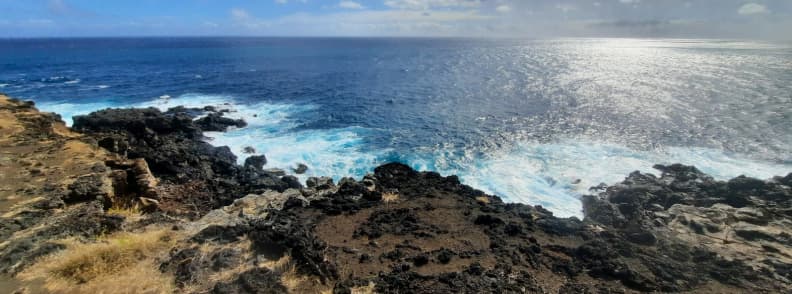
The Gouffre de l’Étang-Salé, Where the Indian ocean breathes
The Gouffre de l’Étang-Salé is a quick, dramatic stop. It’s a long natural passage formed by dark rocks where the sea slams into black basalt and sprays through a natural rocky corridor.
This stop works perfectly for a coastal itinerary because it delivers intensity with almost no effort. You park, walk a short stretch, and you get that raw ocean soundtrack without committing to a hike.
La Reunion Safety Tip: Treat the Gouffre de l’Étang-Salé with respect because the rocks and spray don’t forgive careless footing. Stay back from the edges when the swell picks up, and don’t chase the best angle if the wind pushes mist straight onto the path.
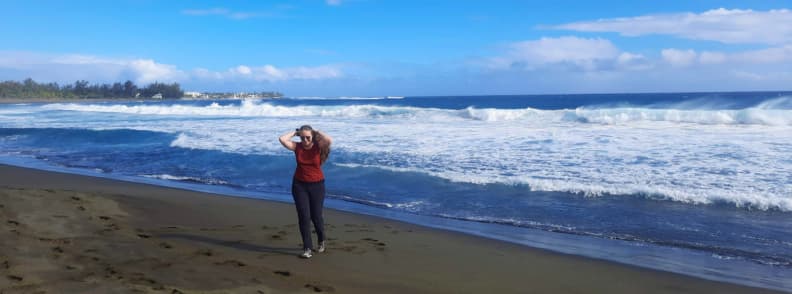
Étang-Salé-les-Bains, The Visual Poetry of Black Sand.
Étang-Salé-les-Bains gives you one of Reunion Island’s most striking beach contrasts, with black sand, dark rock, and bright water.
If you plan beach time here, think comfort first. Black sand heats up quickly, so shoes matter, and shade matters even more.
La Reunion Photo Tip: This is also where your photos change style. Black sand makes shadows stronger, and mid-day sun can feel harsh on the eye, so early morning and late afternoon work best for skin tones and landscapes.
Driving, parking, and public transport along the coast
For coastal drive Reunion days, drive in short hops, park early near popular lagoons, and save highway segments for moving bases instead of chasing quick stops.
Parking works best when you adopt a beach mindset. Arrive earlier than you think you need to, especially near the lagoon beaches, then leave later after the rush thins out.
If you want to do parts of this without a car, the Car Jaune bus network publishes line timetables and stop searches on its official site, which helps you string together major towns.
Buses work for point-to-point travel between bigger places, but they limit spontaneity. A car makes the slow route easier because the best moments often come from unplanned exits and quick beach stops.
La Reunion Coastal Drive Road Safety Tip: The biggest risk isn’t the road quality on the coast. It’s the distractions. Viewpoints, lagoon color, and sunset light tempt you to drift mentally, so plan your pull-offs and never stop where drivers cannot see you.
Day by Day Slow Coastal Itinerary from Saint Paul to Saint Pierre
The Travel Bunny’s Reunion beach road trip itinerary gives you a coast-first plan you can follow without turning La Réunion into a stopwatch challenge. I designed it as a Reunion self drive itinerary, with short drives, long breaks, and enough slack to handle heat, clouds, and market timing.
This is a slow travel itinerary on Reunion Island with beach mornings because the lagoon works best early, and your energy lasts longer when you avoid mid-day rushing. How to plan a slow travel itinerary in Reunion on your own? Start by choosing one base on the west, one base on the south, then fill the middle with coastal stops instead of constant hotel changes.
How many days do you need between Saint-Paul and Saint-Pierre? If you want slow mornings and real beach time, plan 5 to 7 days for this whole west-to-south stretch, not one frantic transfer day.
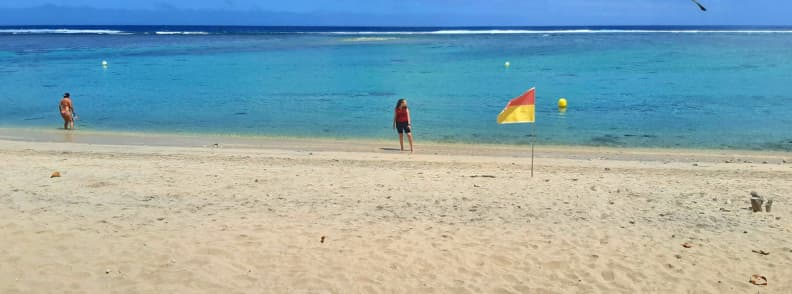
Day 1. Arrive in Saint-Paul. Lagoon Sunset and Market Vibes
Start with a soft landing in Saint-Paul, even if you plan to sleep farther south later. After arriving at Roland Garros airport, the drive to Saint-Paul feels like a gradual exhale. You leave traffic behind and trade it for light, palm trees, and the smell of salt in the air.
I recommend staying near Saint-Gilles or L’Hermitage for your first night, not because it’s the most authentic choice, but because it’s forgiving. Everything is close, beaches are easy, and you don’t need to think much to enjoy your first afternoon.
Your priority on day one is water. Boucan Canot works if you want drama and scale, while L’Hermitage is great if your body wants calm. The lagoon here is shallow and protected, which makes it ideal after a long journey, especially if you’re traveling with children or simply feel overstimulated.
A short swim is enough. You don’t need to snorkel for hours or walk far. Let your senses recalibrate. Watch the fish if you feel like it, or float and do nothing if you don’t.
As the day cools, people naturally drift toward the shoreline. The West Coast treats sunset as a collective event. Locals sit on the sand, couples walk barefoot, and nobody seems in a hurry to leave.
End the first day near the Saint-Gilles marina or back at the lagoon, where the sky slowly turns pink and gold. Dinner should stay simple. Fresh fish, a Creole cari, or grilled seafood keep you anchored to the place. This is not the night for overthinking menus. It’s the night for listening to the ocean and going to bed early without regret.
Day 2. Saint-Paul Market and Culture, then Beach Time
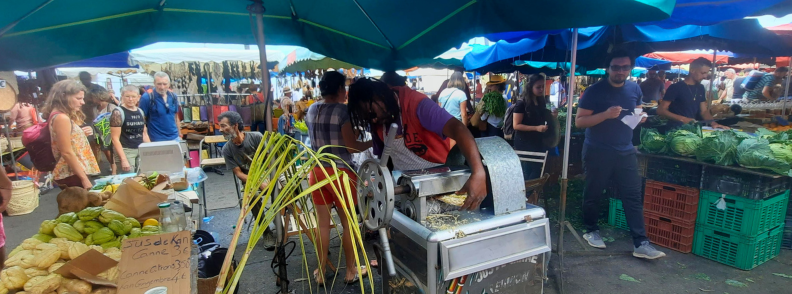
Saint-Paul market sets the tone for the day, and the earlier you arrive, the better it feels. By eight in the morning, the air is still manageable, and vendors are relaxed enough to talk.
Walking through the market is less about buying everything and more about understanding what the island grows and eats. Piles of fruit, jars of spices, vanilla pod bundles, and sizzling snacks tell you more about Réunion than any museum panel.
We ate samoussas straight from a stall, and I drank freshly-squeezed sugar cane juice for the first time. I learned fast that a full glass can feel intense, even if you have a bit of a sweet tooth. Our local friend paired it with ginger, perhaps take his lead to add some spice.
What I liked most were the small, practical souvenirs. There’s pretty handmade jewelry, but you’ll also find mixes for rhum arrangé, spice packets, and local products that fit easily in a bag and actually get used later.
To us, the spice mixes for rhum arrangé felt like a genuinely local souvenir instead of a generic magnet. We got several different blends for us and for the family back home. It turned out pretty good. Just make sure you taste it frequently and don’t let it infuse for an extended period of time. (Exactly how long depends on the strength of the flavors you chose.)
Once the heat builds, it’s time to leave the market behind. Driving to La Saline-les-Bains takes minutes, and suddenly you’re back in water clear enough to see your feet.
Trou d’Eau beach works well if you want a quieter lagoon. Families spread out under filao trees, kids float with masks, and nobody seems to mind how long you stay.
Lunch is where slow travel becomes real. I had my first rougail saucisse near La Saline. It wasn’t some polished restaurant, but a place our local friend trusted. The piment was stronger than I expected (and I eat spicy!), and the setting wasn’t really the cleanest, but the food was solid, and nobody got sick. This meal taught us that in Réunion, local knowledge often matters more than appearances.
The afternoon gives you a choice. If you want a gentle cultural stop, Kélonia in Saint-Leu fits naturally into the route. It’s educational without being heavy, and it works well for families. If history appeals more, Stella Matutina adds context to the island’s sugar and rum past without demanding a full day indoors.
As evening approaches, Saint-Leu feels like the right place to slow down again. It’s less resort-driven, more rooted in daily life. On some nights, you’ll hear maloya music near the beach, and the atmosphere shifts from sightseeing to shared space.
Dinner here doesn’t need ceremony. Grilled food, Creole sides, and a relaxed table do the job. You end the day knowing you’ve already stopped rushing, and that the rest of the coast will open up naturally from here.
Day 3. Saint-Leu. Surf vibes, tide pools, easy sunsets
Saint-Leu wakes up slowly, and that’s exactly why it works so well in a slow coastal itinerary. Start the morning on foot, forget about the car for a bit. Walk toward a local bakery and buy a warm macatia, the island’s soft, slightly sweet bread, often with some chocolate. Eat it near the water while the town stretches into the day.
Late morning in Saint-Leu, the shoreline feels more open than the lagoons farther north. You’ll see surfers checking conditions, fishermen moving quietly, and families settling into shaded spots. This is not a swimming-heavy stretch, but it’s perfect for wandering and watching how the town lives with the ocean.
Lunch works best when it stays casual. Saint-Leu has plenty of small, unfussy places where food comes quickly and portions are generous. Grilled fish, simple Creole plates, or burgers all work here, especially if you want to keep the afternoon light.
If you want a cultural pause, this is a good moment to visit a Tamil temple in or near Saint-Leu. These temples reflect the island’s Indian heritage and add context to the food, music, and festivals you’ll see along the coast. Visit respectfully and dress modestly, even if you only stay briefly.
As the day cools, Saint-Leu turns golden. Evenings are social without feeling busy. You can sit near the shore, order a drink, and watch the sky change color without planning anything special. It’s the kind of sunset that asks you to stay still and take it all in, rather than chase viewpoints.
Dinner in Saint-Leu should follow the same logic. Choose a restaurant where locals linger, eat well, and talk longer than planned.
La Reunion Personal Tip: Saint-Leu is one of the easiest places on the west coast to do almost nothing all day and still feel satisfied. Don’t fight that feeling.
Day 4 Étang-Salé. Black sand, forest, and viewpoint
Day four shifts the scenery without breaking the rhythm. Check out from your Saint-Paul or Saint-Leu area lodging and drive south toward Étang-Salé. The trip takes about thirty minutes, and the Route des Tamarins gives you wide ocean views before dropping you closer to the coast.
Étang-Salé-les-Bains feels different the moment you step onto the beach. The sand here is black, formed from volcanic basalt, and it absorbs heat fast. Wear sandals and slow your pace. This beach is more about contrast and atmosphere than swimming.
Swimming in the open ocean is not allowed here due to the frequent presence of sharks. Strong currents and the absence of a protective reef make the water unsafe beyond designated zones, even on calm days.
But you can still cool off safely near the lifeguard station, where a supervised swimming area is protected by an anti-shark net. This zone is clearly marked and monitored, and it is the only place where swimming is permitted at Étang Salé.
Behind the beach, Étang-Salé forest opens into a dry coastal landscape that surprises many visitors. Casuarina trees line sandy paths, and short walks let you stretch your legs without committing to a hike. This area also works for horseback riding if you’ve arranged it in advance.
Head to the village for lunch and look for a small, local spot serving Creole food. This is a good place to try bouchons or croûte salée if you haven’t already, alongside rice and grains that keep the meal grounded and filling.
If you feel like changing altitude briefly, an optional detour to Entre-Deux adds a new layer to the day. The village sits higher up, feels cooler, and shows off preserved Creole houses and flower-filled streets. A short walk and a coffee here offer contrast without draining energy.
In the afternoon, continue south toward Grande Anse in Petite-Île. The drive takes about thirty minutes and feels like a transition, from dry west coast tones to greener southern light. Once you arrive, this is not a place to rush through.
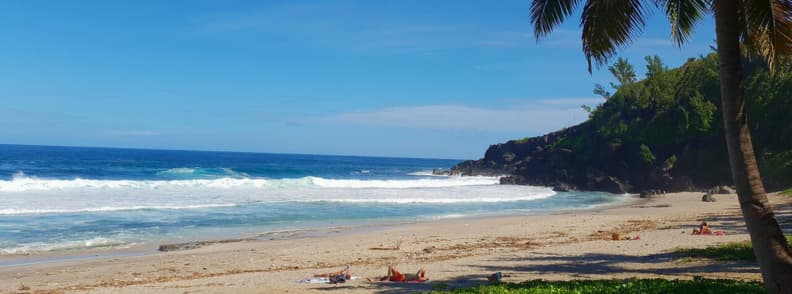
Grande Anse stretches into a wide arc of sand lined with coconut palms and backed by soft hills. The setting feels open and generous, with space to sit, walk, and spread out without stepping on anyone else’s rhythm. Swimming in the open ocean is not safe here, but the beach remains one of the most beautiful places on the island to spend time.
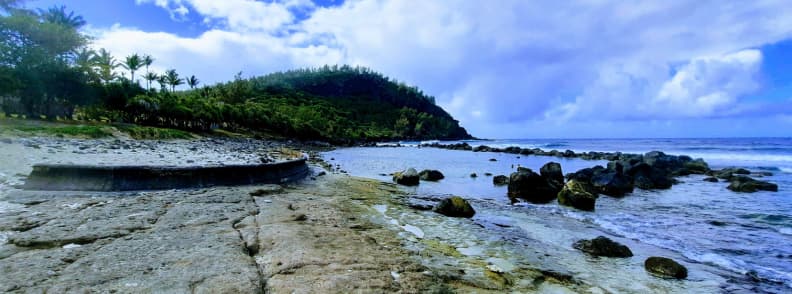
Still, on one end of the beach, our friends took a dip in a natural rock pool that forms a sheltered swimming spot that locals use regularly. It’s small, calm, and perfect for cooling off without fighting currents. Even if you skip the water, the contrast of palm trees, sand, and ocean makes this a place where doing very little feels enough.
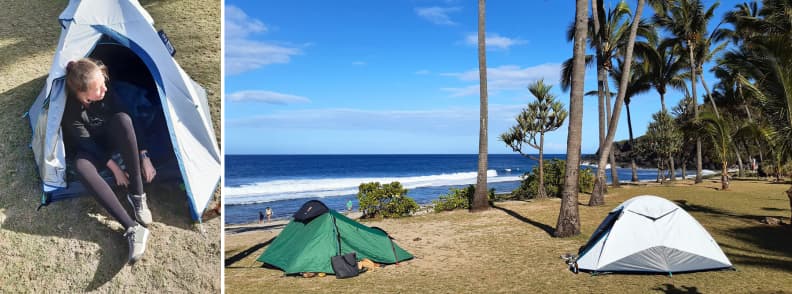
If you’re comfortable with simple conditions, camping in a tent directly at Grande Anse is one of the most memorable ways to experience this part of the island. We pitched our tents close enough to hear the ocean clearly, but far enough from the busiest picnic tables to keep a sense of space. The setup was easy, and the flat ground under the palms made it feel more like settling in than roughing it.
The night felt incredibly calm. Once the lights faded, the sky filled with stars, far more than I expected. Lying in the tent, listening to the waves, felt deeply restful rather than exposed. It was one of the easiest nights of sleep I had on the island.
Grande Anse beach feels alive but never chaotic. During the day, local families arrive with coolers, food, and charcoal, cooking together and eating long lunches under the palms. Children run between picnic tables, adults tend grills, and everyone seems to know how long to stay without overstaying.
Food is easy, even if you don’t plan ahead. Small restaurants and snack bars near the beach stay open into the early evening, usually until around six or seven thirty. You can grab something simple, or cook at the barbecue and eat with your feet in the sand while the light starts to soften.
If camping is not your style, Petite-Île has small guesthouses and rentals that keep you close to Grande Anse without giving up comfort. Saint-Pierre, about ten minutes away by car, offers a wider range of hotels, apartments, and restaurants, while still making it easy to return to the beach for sunset or early walks.
Choosing between camping, Petite-Île, or Saint-Pierre comes down to how close you want to be to the beach at night. Camping gives you immersion. Petite-Île offers quiet and proximity. Saint-Pierre gives you convenience and food variety. None of them breaks the rhythm of a slow coastal route.
Day 5. Grande Anse Beach and Petite-Île. Picnic paradise
Waking up at Grande Anse Beach sets a different tone for the day. The beach is quiet again, the light is soft, and the air feels cooler than the afternoon before. If you camped, breakfast can be as simple as coffee by the tent, bare feet on sand, and no agenda beyond watching the shoreline come back to life.
But if it’s a Sunday, this is the perfect morning to head into Saint-Pierre for brunch. We did exactly that after our night in the tent and ended up at Fleur de Tartare. The spread was very generous and unhurried, and despite wanting to try it all, we had to leave some dishes untouched.
Otherwise, stay local for lunch. You can join the picnic rhythm at Grande Anse, eat at one of the small beach restaurants while they’re still open, or drive a few minutes inland toward Petite-Île village for something quieter and less beach-centric.
Petite-Île works well as a gentle shift away from the beach without turning the afternoon into a drive. The village sits slightly above Grande Anse and feels noticeably calmer than Saint-Pierre. A short walk through residential streets, past gardens and small local shops, gives you a glimpse of everyday southern life without needing a plan.
Petite-Île is also a good place to slow down into conversation. The village is small enough that interactions happen naturally, at a snack stand, a small bar, or while watching a casual game of pétanque start up. Nothing feels staged, and nobody seems in a hurry.
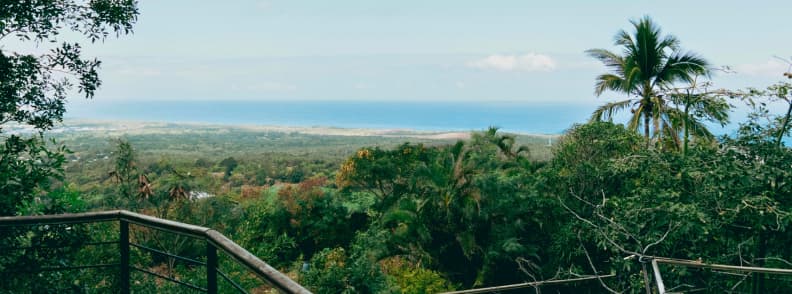
If you want a viewpoint with minimal effort, head up to Point de Vue du Piton Grande Anse. The road climbs gently, and the lookout offers a wide view over Grande Anse from above. You see the full curve of the beach, the palms, and the changing color of the ocean without committing to a hike. It’s the kind of stop locals make briefly, then move on.
As evening approaches, staying in Petite-Île for dinner makes sense. Restaurants here are quieter and more local than in Saint-Pierre, and you avoid getting back into the car just as light fades. Meals tend to start earlier, portions are generous, and the pace matches the village. You eat well, talk longer than planned, and head back to your accommodation without traffic or noise.
Day 6-7. Saint-Pierre, The gateway to the Wild South
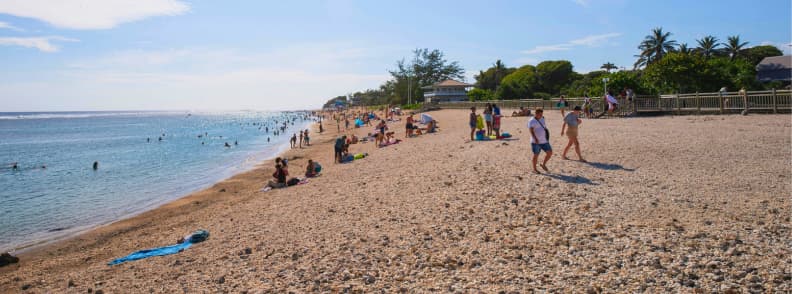
Saint-Pierre makes an easy base because it blends coastal life with access to the south. Start your mornings with a walk along the waterfront, Le Front de Mer, where fishermen bring in their catch, and locals drift through their routines. The lagoon area here is safe for swimming, and even a short dip helps you reset before the day unfolds.
If your timing aligns with a Saturday, the Saint-Pierre market at Bazarbe is worth prioritizing. It mirrors Saint-Paul’s energy but feels more southern and local. Produce, snacks, and street food take over the space, and it’s a good way to stock up before heading farther afield.
A cultural stop fits well before lunch. La Saga du Rhum sits on an active distillery site and offers context for something you’ve already tasted across the island. Learning how rum is produced, then sampling rhums arrangés, adds depth without taking over the day. Just note it’s closed on Sundays.
Lunch in Saint-Pierre offers several options. Food trucks by the ocean serve bouchon sandwiches and quick local dishes, while restaurants offer Creole, Indian-influenced cooking, and lighter café options. Choose based on appetite vs reputation.
The afternoon opens the door to the Sud Sauvage or Wild South. Driving east from Saint-Pierre along the N2 shifts the landscape quickly. Vegetation thickens, the coastline turns rougher, and the ocean becomes louder.
Make a stop at Cap Méchant. Herem waves slam into lava cliffs, spray rises, and the energy feels raw. A short walk through the park area is enough to take it in without pushing the day too far.
If you’re curious about plants and spices, stop at Le Jardin des Parfums et des Epices, a spice garden in Saint-Philippe. Vanilla vines, cinnamon, and pepper put words to flavors you’ve already been eating.
Return to Saint-Pierre before night falls. Evenings come early in the tropics, and driving after dark in the south is less rewarding. End the day with a relaxed dinner, maybe a barbecue or a beachfront table, and something local to drink.
This is the moment to look back on the route as a whole. Calm lagoons in the north. Black sand and palms in the south. Lava and wild coast beyond. All of it fits without forcing, if you give it time.
You can continue to the Route des Laves if energy allows. Driving across black lava fields where past eruptions crossed the road feels surreal, but it’s a long out-and-back from Saint-Pierre. Turning around after Cap Méchant keeps the day balanced.
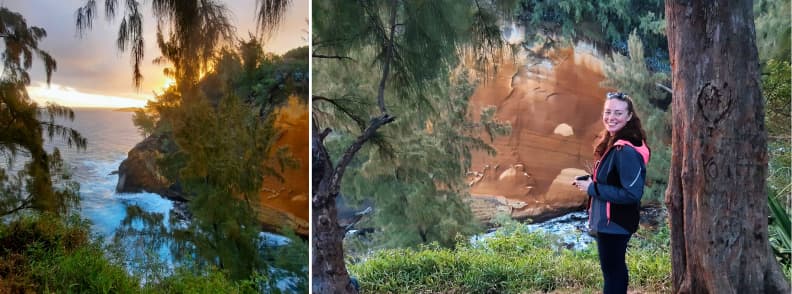
Your second day based in Saint-Pierre can take you to Saint-Joseph and Cap Jaune.
Manapany Bay is a good first stop. A natural swimming pool offers a safe place to cool off, and the views over volcanic rock and crashing waves give you a taste of what the south does best. If you’re handy, you can attend a basket-weaving workshop with a local. It takes place right next to the bay, in the backyard of the tourism office.
Continue your drive to Saint-Pierre and Cap Jaune later in the afternoon, once the heat softens and the light improves.
Saint-Joseph feels quieter than Saint-Pierre, more residential, less performative. It’s a good place to slow down before moving your body. The hike to Cap Jaune starts gently and builds without becoming technical, which makes it manageable even at the end of the day.
Cap Jaune trail winds through a banana plantation and rich vegetation, opens onto cliffs, and ends with a wide view over the ocean. Reaching the viewpoint as the sun drops changes the experience entirely. The color shift against volcanic rock feels dramatic without needing altitude.
This is not a hike to rush, although you won’t have long to walk. We took it at a steady pace, arrived with time to sit, and stayed long enough to let the light settle. That pause is what made the effort worthwhile.
After the descent, dinner in Saint-Joseph or back in Saint-Pierre feels simple and satisfying. You’ve moved, seen something different, and still returned without stretching the day thin.
If you want La Réunion planned around your pace, your interests, and real local logic, then book a personalized itinerary with The Travel Bunny and skip the trial and error. I build routes that actually work on the island, based on lived experience, not recycled lists.
1. Saint-Paul, The Cradle of the Island
Saint Paul Reunion beach gives you the easiest first taste of West Coast life, calm mornings, warm light, and a rhythm built around water, food, and shade. Saint-Paul also holds the island’s earliest layers of settlement, so you can pair beach time with history without turning the day into a museum marathon.
Let’s have a look at the best things to do in Saint Paul Reunion in one day. We’ll hit the market first, then heritage, followed by nature, and an easy return to the coast. It’s a strong base for travelers who want the West Coast to feel lived-in, and for expats who want repeatable weekend rituals.
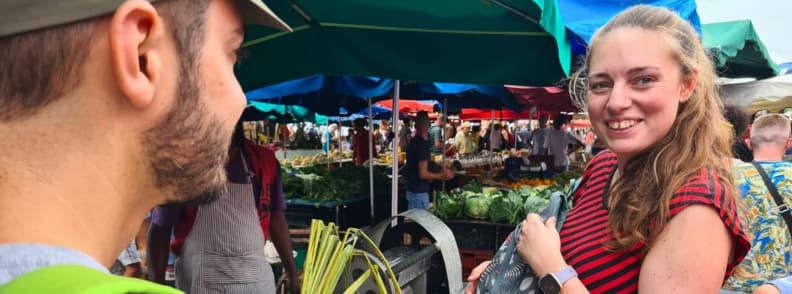
Morning Immersion. The Sights and Smells of the Friday Market
Saint Paul Reunion market hits you before you even reach the stalls, with the spice, fruit, frying oil, and sugarcane in the air. Saint-Paul market Reunion feels like the island in fast-forward, but you control the pace by arriving early and moving slowly.
Saint-Paul market Friday works best when you treat it as breakfast/brunch vs. shopping. You can taste your way through Saint Paul street food Reunion with crunchy samoussas, bonbon piment, fresh fruit, and sweet juices.
The market is a practical starting point for a Saint-Paul Friday food tour on foot. You can build a full meal in small bites instead of one heavy sit-down lunch. Keep your hands free, carry small cash, and buy in small portions so you can try more without waste.
After the first loop, slow down and look beyond the food. The spice blends, vanilla products, and rum-arrangé kits make useful souvenirs that travel well and don’t clutter your suitcase. This is also where you get your best picnic supplies for later beach time.
If you want a sit-down meal after market snacking, keep it Creole and uncomplicated. A short list of best local Creole restaurants in Saint Paul Reunion usually includes places that focus on cari, rougail, grilled fish, and rice with grains, served without ceremony and eaten without rushing.
Saint-Paul Creole architecture visit
Once you leave the market, Saint-Paul’s streets still reward walking. Colonial architecture sits in plain view if you stop scanning for island attractions and start watching details, balconies, shutters, and proportions that reflect climate and history.
A short Saint-Paul architecture tour works well right after the market, when light stays soft, and the town still feels active. Look for architecture créole Saint-Paul details in older houses and civic buildings, and note how it often prioritizes airflow, shade, and outdoor living over showy façades.
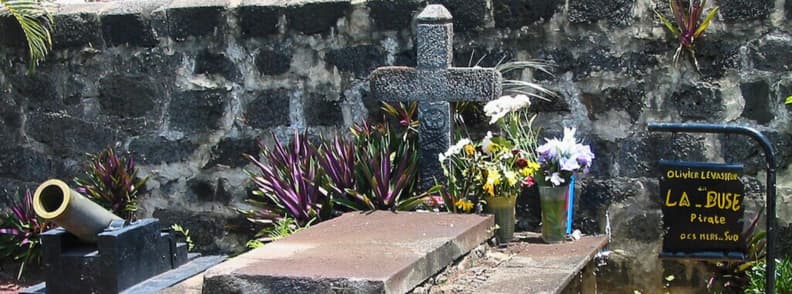
The Maritime Cemetery. Pirates, Poets, and the Path to the Past
Saint-Paul Maritime Cemetery changes the tone of the day as soon as you step inside. It sits close to the shoreline, close enough that the air still carries salt, yet the space feels hushed and grounded. The noise of the market fades, and the island’s older rhythms take over.
Exploring the historic Maritime Cemetery of Saint-Paul brings up names, dates, and symbols without explanations, asking you to slow down and read the landscape rather than a plaque. Graves reflect a port town shaped by arrivals and departures, not a closed community.
This place ties directly into the Indian Ocean trade routes that once defined Saint-Paul. Ships passed through carrying spices, textiles, sugar, enslaved people, sailors, and stories from Africa, India, Madagascar, and Europe. The cemetery mirrors that circulation, with family names and burial styles pointing to a world far larger than the island itself.
Pirates belong here as part of the wider Indian Ocean economy. Privateers, traders, and naval crews moved through these waters alongside merchants and missionaries. The sea offered opportunity and danger in equal measure, and the cemetery records the cost of both.
Poets belong here, too, not always by profession, but by legacy. Some inscriptions speak quietly of loss, distance, and longing, themes common to maritime lives shaped by months at sea and uncertain returns. The layout itself reflects that restraint, orderly paths, modest markers, and an emphasis on continuity rather than display.
Spending time here adds depth to everything else you’ve seen in Saint-Paul. The food at the market, the mix of cultures, and the Creole architecture all make more sense once you stand among the people who lived at the crossroads of the Indian Ocean long before tourism arrived.
Saint-Paul Local Tip: Visit the cemetery after the market, not before. The contrast helps you connect daily life with the deeper layers that shaped it.
The Grotte des Premiers Français. Standing where it all began
Grotte des Premiers Français adds a foundational stop that stays small and meaningful. You don’t need a long visit here, just a few quiet minutes.
The history of the first settlers cave in Saint-Paul becomes tangible here when you slow down enough to read the site information, observe the surrounding terrain, and imagine what arrival meant in a place where fresh water, shelter, and orientation were not guaranteed.
Standing at the cave, you understand why early settlers chose this spot and how quickly a welcoming coastline could turn unforgiving if misread.
End your Saint-Paul day with nature. The Saint-Paul Pond Nature Reserve or Réserve Naturelle Nationale de l’Étang Saint-Paul offers an easy transition away from streets and traffic, while still keeping you close to town and the coast.
A slow walk here turns naturally into birdwatching at the Saint-Paul Pond Nature Reserve, even without binoculars or experience. You’ll often see common moorhens with dark bodies and bright red beaks near the water’s edge, small groups of white-faced whistling ducks resting quietly, and white egrets standing still before striking at fish. Overhead, you might spot a paille-en-queue, the white-tailed tropicbird, gliding high with its long trailing tail feathers.
2. Boucan Canot and Saint-Gilles, The Beach Mornings
Saint-Gilles-les-Bains beach mornings feel built for recovery and routine, even if you arrived the night before and your brain still runs on airport time. This stretch of coast lets you keep days simple, with coffee, safe water time, and short drives that never turn into chores.
Family-friendly lagoon beaches near Saint Gilles and Saint Leu also cluster close enough that you can pick your spot based on wind and mood, not on a strict plan. If you want variety without constant packing and unpacking, this is the easiest part of the route to repeat for several mornings.
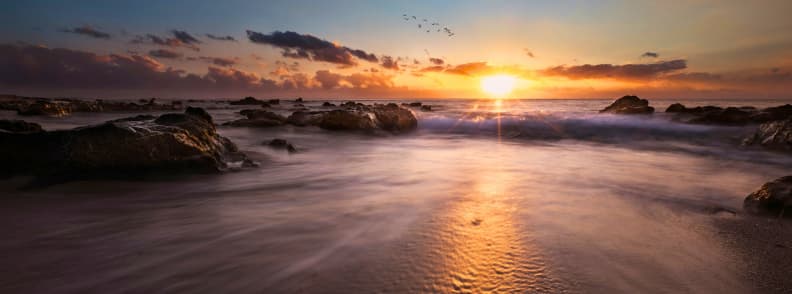
Boucan Canot. Coffee, Croissants, and the Natural Rock Pool
Boucan Canot works best as an early stop, when the light stays soft, and the beach still feels spacious. A slow coffee and bakery breakfast sets the tone, then you decide if you want a swim or a walk.
The place to go is Boucan Canot rock pool, which gives you a more protected way to enjoy the ocean atmosphere. It’s not a lagoon, but it does offer a contained spot where you can cool off without committing to open-water conditions.
Swimming in the natural pool at Boucan Canot beach means checking sea state first, then entering carefully, because rock edges and surge demand attention. Treat it like a natural feature vs. a manmade pool, and you’ll enjoy it without stress.
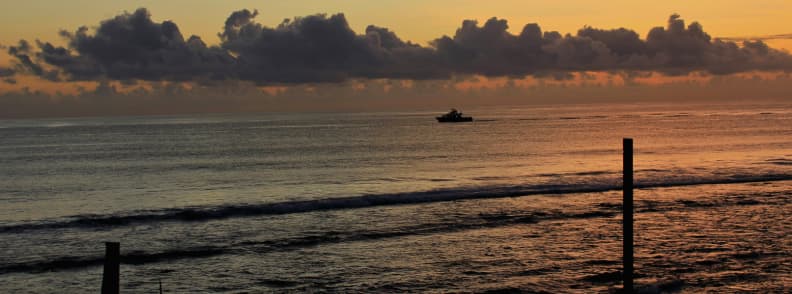
The Saint-Gilles Port. Planning your Slow Dolphin Watch
Saint-Gilles port adds structure to your morning without forcing you into a full tour day. You can walk the marina, watch boats come and go, and decide calmly if you want to book something.
Saint-Gilles port cruises are best early, when sea conditions tend to stay calmer and the day still feels open afterward. Pick operators that prioritize respectful distances and clear briefing, because wildlife trips should not feel like chasing.
If you want a relaxed post-boat plan, Saint-Gilles beach clubs give you an easy place to sit down, eat, and linger near the water. This is also where you can slow into the social side of the town without turning the day into nightlife.
Saint-Gilles mornings also include small local beach rituals. You’ll often see beach tennis Saint-Gilles happening close to the sand, and it’s an easy way to notice the town’s rhythm.
If you’re tempted to join in, beach tennis in Saint-Gilles is best when you show up friendly and patient, because groups often rotate naturally. You might end up playing beach tennis with locals in Saint-Gilles, which is a fun way to connect without needing fluent French.
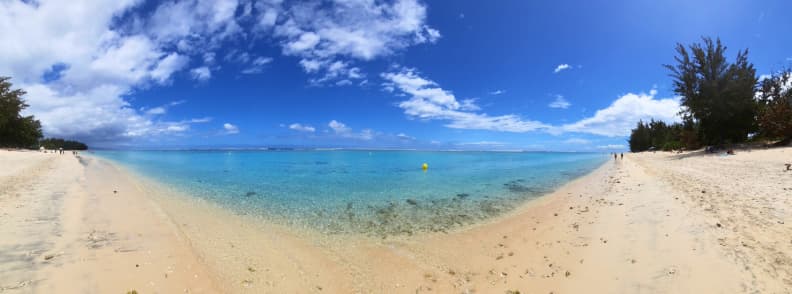
L’Hermitage Lagoon. Snorkeling in a Sunken Coral World
The calm water stretch most people picture belongs to L’Ermitage lagoon, where the reef shelters the shallows and the morning light makes everything clearer. This is the spot that turns a quick swim into an hour without noticing.
Settle on the lagoon side for a swim or a nap. After landing on the island, we crashed on the sand near the Boulodrome de l’Hermitage, and it did more for our mood than any top attraction ever could.
If snorkeling is your goal, Hermitage lagoon snorkeling is best enjoyed early, before the wind and people disturb the water. You’ll see fish close to shore, and you can keep safe by staying within the lagoon zone and respecting marked areas.
The best spots for snorkeling in the Hermitage lagoon safely are the shallow coral gardens, where you can float without fighting the current. Keep fins controlled, avoid standing on coral, and skip chasing fish into deeper gaps.
If you want the same lagoon view with less face-in-water time, try a transparent craft. A glass-bottom kayak Hermitage experience gives you a slow glide over reef scenes without needing snorkeling confidence.
If you prefer doing it yourself, renting a transparent kayak in the Hermitage lagoon lets you move at your own pace, pause over coral, and return to shore whenever you feel done. This is also a good option for families who want reef views without long swims.
Then, you have La Saline les Bains lagoon, which is great when you want shade and a calmer family atmosphere close to the water.
Between Saint-Gilles and Saint-Leu, short detours reward anyone willing to take exits and explore slowly. You’ll find hidden coves and small beaches between Saint Gilles and Saint Leu that feel quieter than the headline lagoons, especially outside peak hours.
The Travel Bunny’s Reunion Tip: Go to the lagoon early, then keep Boucan Canot for later light. You’ll get clearer water, easier parking, and a calmer rhythm without needing to wake up at dawn.
3. Saint-Leu, Where the Lagoon Meets the Sky
Saint Leu lagoon feels calmer than Saint-Gilles, with fewer resort cues and more everyday coastal life. We used Saint-Leu as a base with local friends, which made it easy to keep the pace slow, eat well, and repeat the same beach stretch without boredom.
Saint Leu Reunion surf is part of the town’s identity, but we treat it as something to watch, not copy. Conditions and regulations change, and the safest plan is to enjoy the lagoon, stick to marked swim zones, and book activities when you want adrenaline.
Paragliding over the Colimaçons. A Bird’s Eye View of Slowness
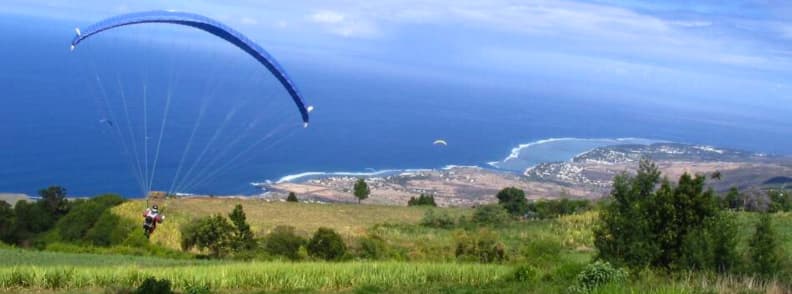
Saint-Leu paragliding makes the coastline look completely different, with the reef line, lagoon gradient, and the way the town sits between sea and hillside. The takeoff area above Saint-Leu, often linked to Colimaçons, sets you up for that long glide toward the bay.
You fly over the coral-protected water and see how shallow and close-to-shore the lagoon actually is. Saint-Leu paragliding lagoon views are the real payoff. This is the part that sticks in your head afterward when you’re back on sand level.
If you want a practical Paragliding in Saint-Leu over the coral reef guide, think in three steps: book early morning when winds behave, wear closed shoes because you will run a few steps at takeoff, and plan a flexible schedule because operators confirm exact timing based on weather.
Can I paraglide in Saint-Leu if I’m a beginner? Yes, because most visitors do a tandem flight with a certified instructor. You don’t need experience, but you do need enough mobility to jog a few steps at launch and follow instructions calmly.
For budgeting, Saint-Leu paragliding price usually lands around the low hundreds for a tandem flight, depending on duration and options. As a reference point, some operators list tandem flights from about €200.
Kélonia, A Masterclass in Marine Turtle Conservation
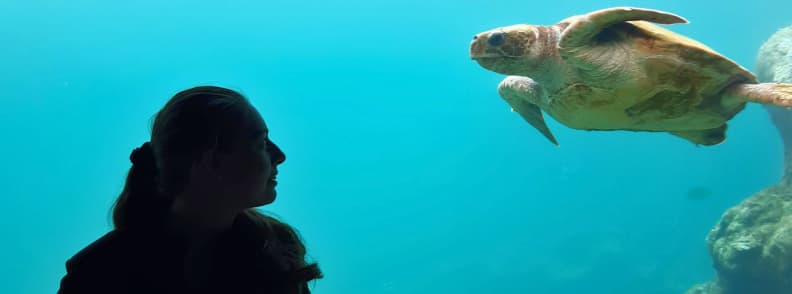
Kélonia Turtle Sanctuary guide planning starts with timing because it’s easy to pair with a beach morning. Kélonia sits right on the waterfront and works well as a late morning visit when the sun gets harsh, and you want shade plus structure.
Visiting the Kélonia Marine Turtle Observatory in Saint-Leu feels more like a careful learning space than a quick aquarium stop. You follow a route that explains rescue work, rehabilitation, and the realities of human impact, with viewpoints that keep the experience calm and observational.
For logistics, Kélonia Saint-Leu tickets cost around €9 for adults and €5 for children. You can also buy museum passes if you plan to visit Stella Matutina later.
If you want a low-friction plan, go for the guided visit slots when available, then leave without forcing a long stay. Kélonia publishes guided visit times and keeps the site open through the day, with the ticket office closing earlier than the gates.
The Salt Pans and the Pointe au Sel, A Basaltic Landscape
Pointe au Sel Museum gives you a different Saint-Leu, dry, mineral, and wind-exposed. The site ties the coastline to working history, and it’s one of the few places where the landscape itself explains the activity.
Traditional salt harvesting at the Pointe au Sel Museum adds context to what you’re seeing on the ground, salt basins, evaporation, and the logic of using this specific coastal pocket. It’s a short visit that still feels local because it’s rooted in a real practice.
If you want to stretch your legs, the Saint-Leu salt pans walk keeps things easy and scenic. The terrain stays mostly flat, the views stay wide, and the basalt gives the whole area a stark, textured look.
For movement without committing to a big trail, coastal hiking Saint-Leu works best when you stick to short distances, with plenty of stops to look out over the water.
Easy coastal hiking trails near Saint-Leu and Pointe au Sel start directly by the salt pans, following a flat shoreline path over volcanic basalt with constant ocean views. The walk stays short and flexible, with no elevation gain and plenty of spots to stop, sit, and turn back whenever you feel done. It works well early or late in the day, when the light softens the black rock, and the coast feels quiet.
Walking from Pointe au Sel to the Saint-Leu center extends that same coastal path toward town, linking open shoreline with the edge of Saint-Leu. The route remains mostly flat but more exposed to the sun, passing fishing spots and small viewpoints before reconnecting with streets and cafés. At a slow pace, it takes about an hour one way, and you can always return the same way or plan a pickup.
If you want one more cultural layer near Saint-Leu, Stella Matutina Museum piton Saint-Leu is worth half a day when you’re ready for depth. The museum sits in a former sugar factory site and gives you a clear narrative of how sugar shaped work, land use, and daily life on the island.
Exploring the history of sugar at Stella Matutina works best when you commit to the full flow rather than rushing through exhibits. Stella Matutina tickets cost €6.50 for adults and €2.50 for children.
Saint-Leu Travel Tip: If you only pick one active thing to do in Saint-Leu, choose paragliding on a clear morning, then use Kélonia and Pointe au Sel as your slow afternoons.
4. Saint-Pierre Capital of the South
Saint-Pierre Reunion Island is a real coastal town where you get an easy beach, markets, street food, museums, and nights out, all within short walks and short drives.
Vacationing in Saint-Pierre, the capital of the South Coast, also gives you options when the weather shifts. If the coast turns windy or the sky goes flat, you can still fill a day with food, culture, and a long evening without forcing anything.
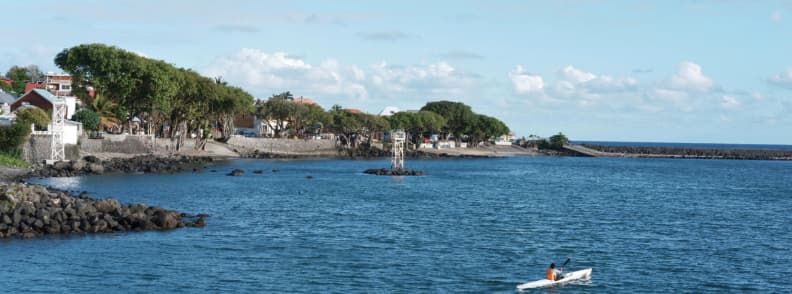
Terre Sainte, The Heart of the Fishing Community
Saint-Pierre fishing village life is most evident in Terre Sainte, where you feel the working rhythm before you see any attractions. Walk slowly, watch the boats, and notice how the neighborhood behaves like a community first.
Terre Sainte murals Reunion turn that working neighborhood into an open-air gallery without sanitizing it. A walking tour of the Terre Sainte fishing village murals works best when you keep it loose. Start near the waterfront edge, drift through side streets, and let the art pull you along instead of following a strict route.
Cultural experiences in the old fishing village of Saint-Pierre also happen in small moments. You can stop for a quick snack, chat with a shop owner, and notice the mix of everyday life and pride in place.
The Waterfront Promenade with Rum, Rhythm, and Nightlife
The Saint Pierre waterfront gives you the easiest daily ritual in town. Walk Le Front de Mer in the morning for fresh air and movement, then return later when the light softens, and the tables fill.
If you want dinner with the right timing, Saint-Pierre waterfront dining is best enjoyed when you arrive early enough to settle in before the sky changes. Pick a place with a clear view, order something simple, and let the sunset do the heavy lifting.
Best restaurants on the Saint-Pierre waterfront for sunset depend on how much importance you give to being right by the water versus keeping things relaxed. O Bord de Mer sits directly on the seafront and works well for a proper sunset dinner with fish and Creole-inspired plates. Les Planches offers a similar setting with a slightly more contemporary feel. If you want something more casual and cheaper without losing the view, La Ficelle keeps things simple and social, especially earlier in the evening.
Where to eat in Saint Pierre Reunion becomes an easy decision when you follow one rule. Eat close to the waterfront for atmosphere, then go one street inland when you want better value and less noise. Local food Saint-Pierre shines when you lean into everyday dishes rather than searching for fusion or fine dining. Creole plates, grilled fish, and simple rice-and-grains meals match the town’s pace and taste more honest.
Authentic Creole cuisine and where to find it in Saint-Pierre: That often means small places with short menus and steady regulars. If you see locals eating quickly and coming back, you’re usually in the right place.
When night falls, Saint-Pierre stays lively without feeling chaotic. Saint-Pierre nightlife guide planning can stay minimal. Start with a cocktail near the seafront, then follow music rather than bouncing between bars.
Best places for live music and cocktails in Saint-Pierre shift depending on the night, which is part of the appeal. For reliable drinks by the sea, Longboard Cafe works well for cocktails with a relaxed crowd. Le Spot leans more into music and late evenings, and it’s the kind of place you choose after listening from outside for a minute before walking in.
Saga du Rhum. Exploring Reunion Island’s Liquid Heritage
Saga du Rhum Museum in Saint-Pierre is great to visit because rum is part of everyday culture here. A visit here adds context to what you’ve already seen in markets and what you’ll drink at dinner.
To properly enjoy a Saga du Rhum tour, give yourself time to read and taste slowly. The value isn’t only the final samples, it’s the story of production, labor, and how sugar shaped life on the island.
History of rum and the Saga du Rhum museum tour becomes clearer when you connect it to what you’ve eaten. Vanilla, spices, and fruit show up everywhere on the island, and rum became the vessel that carried those flavors into daily ritual.
After the museum, return to the waterfront and keep the evening easy. This is a good night to order one drink you actually want and skip the rest, because slow travel wins when you stop performing vacation.
Finish with the basics of the town itself. Saint Pierre Reunion market is worth planning into your stay, and the morning energy shifts the way you understand Saint-Pierre. If you can line up a Saturday, the Saint-Pierre Saturday market gives you the full sensory version of the south. Go early, buy fruit and snacks, then leave before it turns into a crowd shuffle.
Saint Pierre Reunion beach also works as a simple reset between culture and food. Even a short walk along the sand helps you keep the town from feeling like an itinerary.
Saint Pierre Travel Tip: Visit Terre Sainte in the morning, then save the waterfront for late afternoon and evening. You’ll get better light for murals and a calmer path to sunset dinner.
5. Grande Anse and Petite-Île. The Southern Edge
Grande Anse Beach Reunion marks a clear shift in atmosphere. The coast opens up, the crowds thin, and the pace slows without effort. This is where the Reunion coastal route starts to feel less curated and more lived in.
How to get to Grande Anse Beach from Saint Pierre? Reaching the beach is straightforward. It’s just a short drive south toward Petite-Île, then following signs downhill. You can stay in Saint-Pierre and still arrive early enough to enjoy the beach properly.
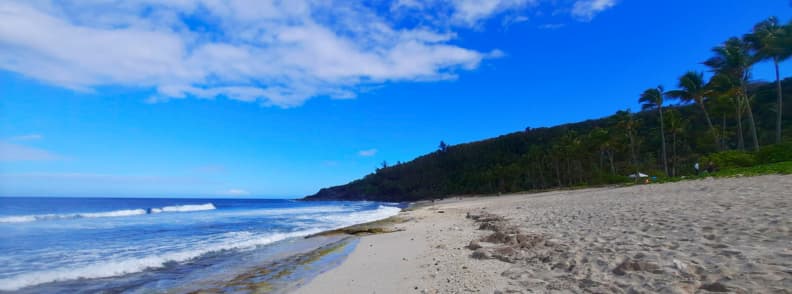
The Grande Anse Picnic. How to join the locals under the palms
Grande Anse coconut palms back this beach in southern Reunion, providing shade throughout the day. The sand stays fine and light, and the space allows groups to spread out comfortably.
Where to have a traditional picnic at Grande Anse? Grande Anse picnic spots are just behind the beach, equipped with tables and stone barbecues available for public use. Families arrive mid to late morning and settle in for long meals.
The best picnic spots at Grande Anse Beach Reunion Island are close to the palms and picnic tables. These are great, especially for groups planning to eat and rest before walking along the shore.
Can you swim at Grande Anse Beach Reunion? Swimming here follows specific rules. You can swim only in the rock pool that creates a barrier from the open Indian Ocean, keeping you safe from sharks and waves.
Photography tips for the palm trees at Grande Anse: Photography works best when the light stays low. Take photos in the early morning or late afternoon, when shadows lengthen, and colors soften across the bay.
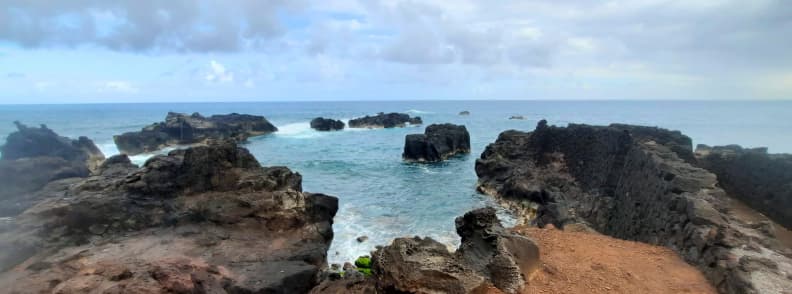
Manapany. Bathing in the most beautiful basalt pool
A short drive south leads to Manapany. Manapany natural pool sits along the rocky coastline and fills with seawater through wave action.
Swimming in the basalt natural pool at Manapany suits calm sea conditions and supervised access times. The pool offers a contained swimming experience with clear edges and visible entry points.
This stop fits well into a half day from Saint-Pierre, combining movement, water time, and coastal views without a long drive.
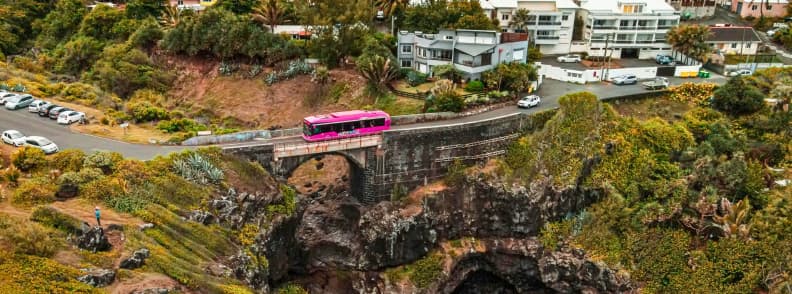
Petite-Île, The end of the route and the start of the Wild South
Petite-Île keeps a low profile. Petite-Île hidden gems include village streets, small viewpoints, and short walks rather than formal attractions.
Above Grande Anse, Petite-Île points de vue provide wide views over the bay and coastline. These stops work well near the end of the day, when light shifts across the palms and water.
Exploring secret places to visit near Petite-Île and Grande Anse often means stopping briefly, observing the landscape, and moving on when the moment feels complete.
In Petite-Île, the upper part of the village around Ravine des Cafres offers quiet streets and partial ocean views without signage or lookout platforms. Locals stop along the road to sit, talk, or watch the light shift across the bay. It’s not designed as a viewpoint, which is exactly why it stays quiet.
South of Grande Anse, short access paths near Anse les Bas lead to rocky shoreline sections rarely visited by beachgoers. There’s no swimming here and no facilities, just basalt, sea movement, and space. These spots work best for short pauses rather than long stays, especially early morning or late afternoon.
Best Beaches on La Réunion’s West Coast
The best beaches on Reunion Island are concentrated along the west coast, where coral reefs create calm lagoons and swimming conditions stay predictable. This part of the island suits travelers who want sea time without technical gear, strong currents, or constant risk assessment.
When people talk about the best beaches in Reunion Island for swimming, they usually mean this stretch. The combination of reef protection, supervised zones, and easy access makes the West Coast the most reliable area for beach days.
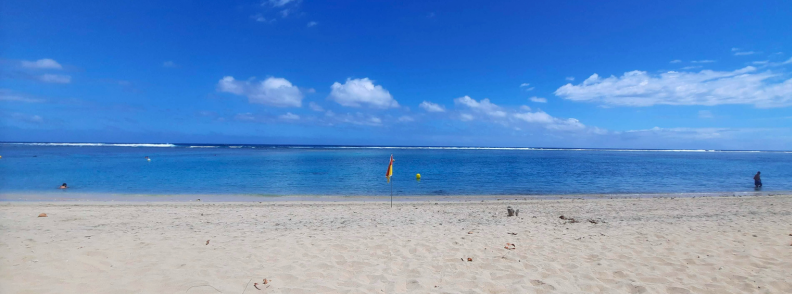
Calm lagoon beaches for safe swimming
Reunion lagoon beaches such as L’Hermitage and La Saline les Bains offer shallow water, sandy entry points, and clearly marked swimming zones. These spots form the core of the safest swimming beaches on Reunion Island West Coast. Lifeguards are present in peak hours, and the reef barrier reduces swell and current strength.
This is also where snorkeling shines. The Reunion snorkeling West Coast experience is easy and accessible, even if you are not confident in the water. Snorkeling here means stepping straight in from the beach and floating above coral heads with parrotfish and surgeonfish. For beginners, lagoon snorkeling Reunion Island works best early in the day, before the wind picks up and before families arrive for lunch.
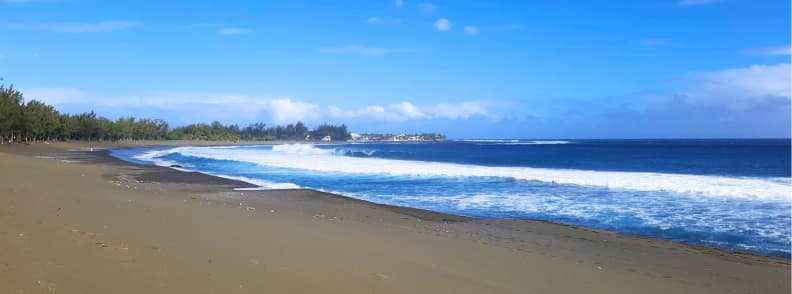
Black sand and wild surf spots
Not all West Coast beaches are for swimming, and that contrast is part of Réunion’s character. La Reunion black sand beaches tell the volcanic story of the island, and Étang-Salé is the clearest example. It is one of the most striking black sand beaches on the island, with dark basalt sand, strong waves, and a completely different mood from the lagoons.
Is the Etang Salé Beach safe for swimming Reunion? This is not a casual swimming beach. There is a safe area to dip, but most days it is better enjoyed on foot. Walk the shoreline, feel the heat of the sand, and watch the ocean from a distance.
Étang-Salé and nearby headlands are better appreciated late in the day. Some of the most dramatic sunset spots between Saint Gilles and Saint Leu Reunion sit along this stretch, where black sand and cliffs catch the light.
Family-friendly coves and shady picnic areas
If you travel with kids or simply want slow beach time, the West Coast is great. Many of the Reunion Island white sand beaches along the lagoon have natural shade from filao trees, making them ideal for long stays. These are the family friendly lagoon beaches Reunion, where parents and kids return day after day because everything feels manageable.
A proper Reunion beach picnic fits naturally here. Locals arrive mid-morning, swim first, eat under the trees, and stay until the light softens. You should follow the same rhythm while you’re vacationing in La Reunion. Food tastes better when you aren’t watching the clock.
For a different perspective, head to Cap la Houssaye viewpoint. The Cap de la Houssaye views stretch over open ocean and cliffs, and during the right season, this is one of the easiest places to spot whales from land. It’s not a swimming stop, but it completes the West Coast experience and reminds you how quickly calm lagoon life meets wild water on this intense island.

Getting Around La Reunion. Transportation on Reunion Island
This West Coast to South route works best when you move on your own terms, because the best stops happen between the main attractions. A car gives you that freedom, but you still have options if you don’t drive. I’ll break down what works for travelers and expats, and what wastes time.
Car Rentals in La Réunion. Why the smallest car isn’t always best
Reunion car rental makes this itinerary simple. You land, pick up keys, and stop when something looks good, a viewpoint, a fruit stand, a quiet beach access road. Rental desks cluster around the main airport at Roland Garros, and you’ll also find options in the south around Saint-Pierre.
Do you need a car to explore the West Coast of Reunion? Yes, if you want the full experience. You can pull off for short swims, markets, and sunset viewpoints without turning your day into a timetable exercise. You also avoid the annoying pattern of arriving after the parking fills up, then circling while everyone else eats.
The smallest car looks cheap until you hit Réunion’s reality. Compact cars work, but ultra-small models feel tiring on longer coastal stretches and annoying when you carry beach gear, market bags, or hiking shoes. If you plan even one inland detour, a slightly higher, slightly stronger car feels calmer on bends and steep sections.
Here are some quick Reunion car rental tips for driving coastal roads in Reunion Island:
- Book early if you travel during school holidays.
- Choose automatic only if you truly need it.
- Bring a phone mount and download offline maps.
- Pick a car with decent air conditioning because short drives can still feel hot when you hop in and out all day.
Want to avoid overpaying, surprise deposits, and bad pick-ups? Read The Travel Bunny’s Car Rental Tips for Travelers and rent with confidence from the moment you land.
Is it possible to visit Reunion Island without a guide car rental? Yes, you can do the coast independently and keep it slow. The roads are well signed, and coastal driving stays straightforward. You don’t need a tour to string Saint-Paul, Saint-Leu, Étang-Salé, Petite-Île, Grande Anse, and Saint-Pierre together.
For this West-to-South route, renting a car is what keeps the trip slow instead of stressful. Book a car through DiscoverCars because it compares local agencies, shows real insurance terms upfront, and usually includes free cancellation if plans shift.
Reunion Driving culture, parking, and respecting local life
Driving feels relaxed when you follow the local rhythm. Avoid the school run window near towns, and you’ll glide. Watch for scooters, give pedestrians space, and slow down in village centers where people cross without rushing.
Parking is easy as long as you arrive early on market mornings and popular lagoon beaches, then stay a while. If you arrive late, you will still find somewhere, but you’ll spend your patience hunting a spot instead of swimming or eating.
Respect matters on this island because people live their daily lives right next to the places visitors treat like attractions. Keep noise down near residential streets. Don’t block driveways when you stop for a photo. Leave space for locals who use the beach before work.
Public Transport in La Reunion
Is public transport enough for visiting the West Coast of Reunion? Buses can help, but they change the trip. Public transport works for point-to-point travel, but doesn’t really allow space for spontaneous beach stops. You can still enjoy the coast, but you’ll spend more time waiting and walking.
Public transport Car Jaune West Coast Reunion, which connects major towns. A single ticket on Car Jaune costs about €2 and connections work within a time window, which keeps day trips affordable.
Use buses if you plan to base yourself in one town and move between main hubs. Pair that with guided excursions for places where timing matters, like whale watching or volcano-related sites.
La Reunion Taxis and ridesharing Services
Taxis exist, but they cost enough to hurt if you use them for a full coastal itinerary. They also work best when booked in advance, especially at night or outside busy areas.
Quick correction from older travel advice you might see online. Uber does operate on Réunion in some areas, including Saint-Denis and Saint-Pierre, though pick-up times can run longer than in bigger cities.
If you rely on ride-hailing, treat it as a backup, not the spine of a slow coastal route. It works for a night out or a short transfer. It doesn’t replace having your own wheels when your whole day depends on flexible stops.
La Reunion Island Tours and Top Activities for the West and South Coasts
This slow route still has a few moments worth booking. A good tour lets you show up, relax, and skip the logistics when timing, safety, or access gets tricky. Tours also solve the “I don’t drive” problem for expats settling in and travelers who want a few big experiences without turning the whole trip into a checklist.
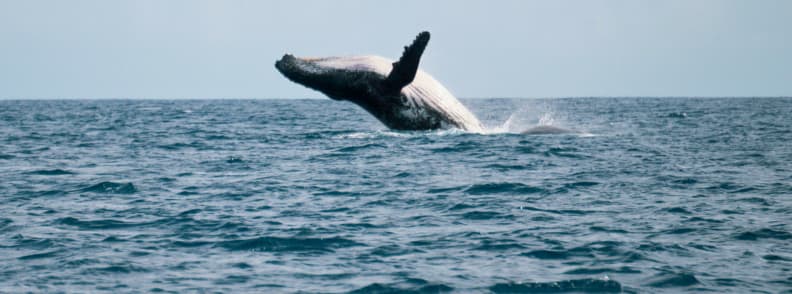
Whale Watching Boat Tour from June to October
Reunion whale watching is a good morning plan on the West Coast, when the sea stays calmer, and visibility helps. I saw whales from shore in Saint-Leu at sunset, but a boat tour will give you better angles and a higher success rate, especially when whales stay further out.
Choose an operator that follows the official approach rules. You want a crew that explains distances, limits time around pods, and avoids chasing. This keeps the experience ethical and, selfishly, it keeps the whales around longer.
Bring a light jacket and something for seasickness, even if you think you’ll be fine. The West Coast can feel warm on land and breezy on the water, and the movement hits harder when you stare at the horizon for an hour.
Book a whale and dolphin tour from Saint-Gilles on a morning that stays open in your schedule, because weather calls the shots here. Pick a slot early in your trip so you can try again if conditions change.
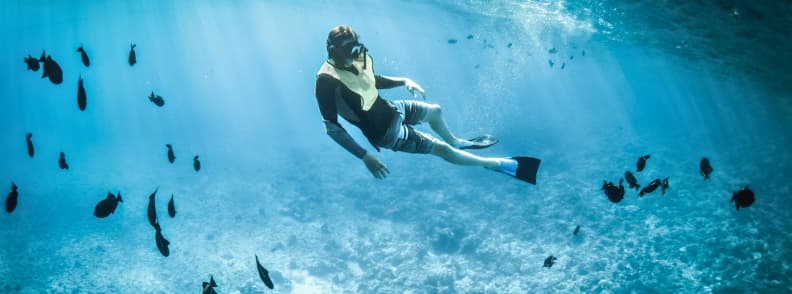
Snorkeling or Glass-Bottom Boat Tour
If you want lagoon views without committing to long swims, book a guided snorkel or a glass-bottom style outing. It suits nervous swimmers, families, and anyone who wants coral and fish with structure and safety briefings.
A guided snorkel also fixes the common beginner mistake of drifting into shallow coral. Good guides steer you to sandy patches, point out fish, and keep the group away from fragile areas.
Pack reef-safe sunscreen and a rash guard if you burn easily. You spend longer in the water than you think, even on a short trip, and the sun reflects off the lagoon.
Reserve a guided coral reef snorkel if you want the marine life without guessing entry points and conditions. It’s the easiest way to get a proper lagoon session even on a short stay.
Scuba Diving in La Reunion
The West Coast provides the island’s most accessible diving spots. Beginners can do a first immersion with an instructor, and certified divers can ask about sites near Saint-Leu that mix coral structures with volcanic terrain.
If you are new, pick an intro session with clear ratios and a calm entry plan. The goal is comfort and basic skills, not a deep adrenaline push. If you are certified, ask what the visibility has been like this week, because it changes quickly.
Do not schedule your first dive right after a big meal or a late night in Saint-Pierre. You want a clear head and an easy morning, especially if you get motion sick.
Book an intro dive in Saint-Leu if you want to try scuba without committing to a full course. A short guided session gives you the thrill, the photos, and the skill check in one go.
La Reunion Surfing Lesson
Surfing in Réunion comes with real restrictions, and the ocean does not forgive ignorance here. Saint-Leu used to be famous for waves, but access and safety rules have changed, and you should treat surfing as something you do only in approved settings.
A lesson should be in a controlled environment, not at a random break you saw on a video. Look for instructors who explain where surfing is allowed and who adapt to current local rules, including safer alternatives like protected areas and supervised sessions.
Book a surf lesson only if the provider clearly explains where the session happens and why it is allowed. You’ll learn faster and you won’t spend your holiday second-guessing risk.
If your goal is the feeling, not the sport identity, consider kitesurfing in lagoon conditions instead. You still get wind and water time without putting yourself in the wrong place.
Paragliding in la Reunion
Saint-Leu is one of the easiest places on the island to get a big view without a long hike. Tandem paragliding from the Colimaçons cliffs gives you lagoon, coastline, and farmland in one sweep, and landing on or near the beach feels surreal in the best way.
Pick a morning slot if you want calmer air and fewer delays. Afternoon winds can cancel flights, and you do not want to build your day around an activity that depends on clean conditions.
Wear closed shoes and bring a light layer. Even when it’s hot in town, the air up there feels cooler, and you’ll stay more relaxed if you’re not shivering.
Book a tandem flight in Reunion early in your trip so you can reschedule if the wind shifts. It’s one of the rare activities that feels huge without stealing your whole day.
Guided Lava Tunnel Exploration
The South Coast has one experience that feels otherworldly without demanding a full volcano hike. A guided lava tunnel tour near the Fournaise area puts you inside the island’s geology, with helmets, headlamps, and a route chosen for safety.
Go with a guide, always. Lava tubes carry real hazards, from unstable ground to low ceilings and sharp rock. A proper guide reads conditions, chooses the right tunnel section, and keeps the group moving safely.
Dress for abrasion and dirt. Wear long pants, bring gloves if you have them, and accept that you will not stay clean.
Book a Reunion lava tunnel tour if you want the volcano story in two hours instead of a full-day trek. It’s the best trade-off for slow travelers who still want a visceral adventure.
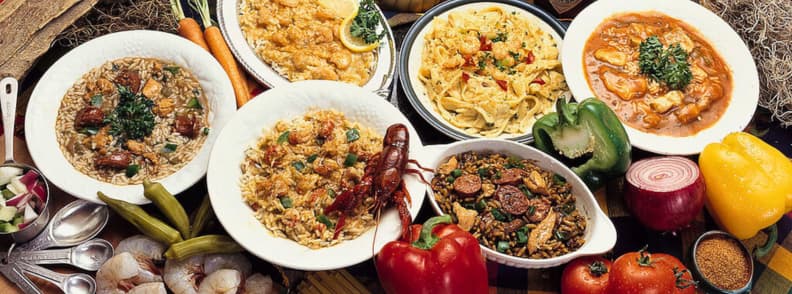
Creole Cooking Class
A cooking workshop works brilliantly for expats and travelers who want to take Réunion home in a practical way. You learn techniques for cari and rougail, understand spice balance, and stop treating the food as island curry in the generic sense.
Choose a class that cooks a full meal, not just a tasting. The value comes from chopping, seasoning, simmering, and asking questions while the pot does its work.
Schedule this on a day when the weather looks messy. A rainy afternoon becomes useful, and you still end up with a memorable evening.
Book a Creole cooking workshop if you want a cultural activity that doesn’t depend on perfect weather. You’ll eat well and leave with skills, not souvenirs.
Where to Stay Along the Route, From Guesthouses to Beach Hotels
Where you sleep decides how slow this route feels. If you pick the right bases, you wake up close to the water, eat without driving far, and you do not waste energy packing every morning. Let’s discuss Reunion beach hotels and small local stays that fit a coast-first itinerary, figure out where to stay between Saint Paul and Saint Leu on Reunion, and how to handle the South without turning it into a commuting job.
Best areas to sleep on the west coast (Saint Paul to Saint Leu)
Stay near the lagoon zone, because you can swim early, eat late, and avoid long transfers. If you want beach hotels Reunion Island west coast, aim for the Saint-Gilles and L’Hermitage area, where you can walk to the sand and still reach Saint-Paul or Saint-Leu quickly by car.
If you want a splurge night, Hotel Le Boucan Canot is a strong choice for couples who want comfort and an easy beach rhythm. It sits near Boucan Canot beach, and the setting suits travelers who want pool time, good food, and zero planning fatigue.
If you want mid-range and practical, Le Nautile Beachfront keeps you right by the lagoon at L’Hermitage. This location suits people who want morning swims, snorkel time, and lazy beach afternoons without driving back and forth.
Staying in Saint Pierre and Petite Île for the south coast
In Saint-Pierre you can eat well, walk the waterfront, and drive out to the Wild South without changing hotels. Where to stay in Saint Pierre without a car? Choose somewhere near the waterfront and the town center so you can reach restaurants, the beach, and markets on foot.
If you want upscale comfort with city convenience, Villa Delisle Hotel and Spa sits right by the beach, and it suits travelers who want a hotel experience and easy evenings. This is a good match for expats visiting friends in the south, too, because it feels straightforward and well-located.
If you want budget and walkable, La Bohème in Petite Île fits travelers who want a relaxed base close to the waterfront. It works well as a simple Saint Pierre guesthouse for people who spend their days out and only need a comfortable place to sleep.
If you want something more local than a hotel, gîtes and farm stays change the whole feel of the trip. A place like Gîte Le Vieux Flamboyant in Entre-Deux fits a short inland detour, and a farm stay near Saint-Joseph can turn breakfast into a vanilla and fruit moment instead of another coffee run.
How to choose between one base vs. moving every few nights
One base is best if you want to settle, swim daily, and keep food choices close. It also suits expats arriving on the island who want an easy rhythm while they learn the roads and the towns.
Moving every few nights works well if you want early mornings in different places and you hate backtracking. This route stays short enough that you can switch bases without stress, but only if you pack light and avoid trying to check in and out during peak beach hours.
If you want a deeper breakdown with more neighborhoods, realistic pros and cons, and the hotels that match different budgets, read my full accommodation guide on where to stay in La Réunion. It will help you pick the right base the first time and avoid wasting nights on the wrong side of the island.
Eat Like a Local. Authentic Local Food, Markets, Beachfront Spots
Reunion local food hits you fast because it does not try to impress you, it tries to feed you. I ate my way down the West and South coasts with local friends choosing most stops, which meant I tried places I wouldn’t have picked on looks alone. This section is my short practical Reunion Island food guide, for travelers and expats who want real flavor, clear expectations, and a few honest warnings.
Local food Reunion Island also changes from town to town. Saint-Paul feels like spice, fruit, and street snacks. Saint-Pierre feels like seafood, rum, and long dinners by the water. If you want a quick Reunion street food guide and where to find street food on Reunion West and South coasts, I’ll start with what I ate, what surprised me, and what I would order again without hesitation.
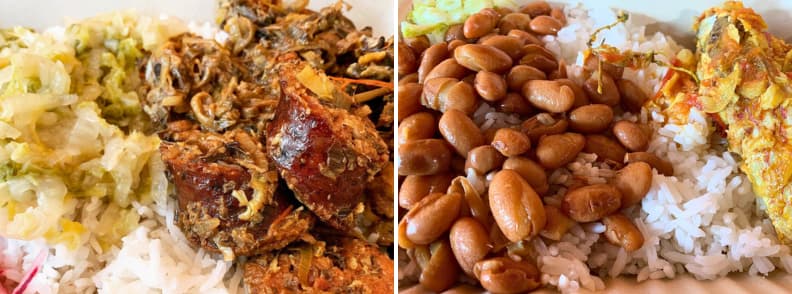
The Art of the Cari. Traditional techniques and flavors
What food is Reunion Island famous for? Cari and Rougail, for good reason. Cari is a slow-cooked stew that starts with onion, tomato, garlic, ginger, and herbs, then builds depth through simmering, not heat alone. Rougail can mean a spicy tomato condiment, or a full dish like rougail saucisse, and the difference matters when you order.
What is a Cari and where is the best place to eat one? The best cari rarely comes from the most photogenic restaurant. It comes from a table d’hôte dinner in a guesthouse, or from a no-frills place locals trust.
My first rougail saucisse near La Saline was delicious and properly spicy, but the toilets were rough enough that I would have walked away if I had seen them first. I ate anyway because our local friend knew the spot, and we had zero stomach issues, so I learned an annoying truth about travel judgment.
Other Essential Creole dishes and snacks to try in La Reunion
Seafood deserves its own lane in Réunion. You’ll see tuna tartare, grilled swordfish, and octopus in sauce on menus that look simple. In Saint-Pierre, Le Belem is a good place to start if you want a straightforward catch-of-the-day meal without guessing.
Chinese-Creole food shows up everywhere once you notice it. You’ll find fried rice, chop suey, and pork dishes adapted with Réunion seasoning, often served quickly and cheaply. In Saint-Pierre, places like Les Papi’es keep this tradition alive.
Desserts and sweet snacks also deserve attention because they explain local habits. Bonbons miel are sticky and satisfying, gâteau patate tastes richer than it sounds, and fruit stops become part of the drive.
Vegetarian Food on Reunion Island West Coast: Look for Indian and Chinese-Creole places, ask for vegetable cari, and lean on market fruit, bouchons without meat, and snack plates built around grains and sauces. The island’s food culture works with vegetables naturally, you just need to order with confidence.
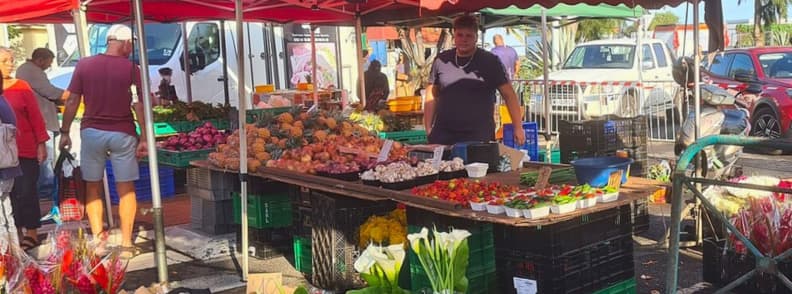
Saint Paul and Saint Pierre markets. When and how to visit
Saint-Paul market is where I understood why people say the island smells like a pantry. The spice stalls feel endless, and the fruit section looks like a color test. If you want Saint-Paul street food Reunion, show up hungry and eat as you walk. We ate samoussas there with different fillings, and we kept stopping because every stall had a different scent. Bring cash, start early, and accept that you will snack your way through the morning.
Saint-Pierre market has a different energy. What to eat at the Saint Pierre market Reunion? Focus on grab-and-go Creole staples, fruit, and anything grilled if you see smoke. This is a great stop for expats stocking up on produce and spices without paying supermarket prices.
Street Food Secrets. Samoussas, Bouchons, and Macatias
Street food here is not a side quest, it is a real meal. Samoussas range from mild cheese to fillings that bite back. Bouchons show up everywhere, including in baguettes as a quick sandwich, which sounds odd until you taste it.
Macatias are the snack that makes you understand why locals do not need brunch culture to survive. They are soft, slightly sweet, and built to be eaten while walking. If you want typical Creole dishes to try in Saint Paul and Saint Pierre, put samoussas, bouchons, and macatias on your first-day list, because they teach you the island faster than any restaurant menu.
Rhum Arrangé. A guide to the island’s post-dinner rituals
Rhum arrangé is part drink, part social punctuation. People infuse rum with vanilla, pineapple, ginger, or spice blends, and many restaurants will offer a small glass after a meal. It’s all about ending dinner slowly and talking longer.
If you drink beer, try La Dodo at least once because it’s a local reference point. I had my first Dodos with a casual lunch near the lagoon, and it fit the vibe perfectly. If you prefer coffee, keep an eye out for Bourbon pointu, which locals treat as something special when you find it.
Slow Travel Essential Tips. Pacing, Safety, and Local Etiquette
Slow travel on La Réunion works when you protect your time. I built this route around long mornings, market conversations, and beach stops that last as long as you feel like staying. If you rush this island, you miss the point. Locals live by prend ton temps, and once you follow it for a day, your whole trip feels lighter.
La Reunion Entry Requirements and Visa
Entry rules stay simple because La Réunion is part of France. EU citizens enter without a visa for short stays, and many other nationalities also enter for tourism without arranging a visa in advance, depending on their passports. If you normally need a Schengen visa for France, you need the same for La Réunion.
Keep your passport valid well beyond your return date, and store a digital copy separately from the original.
Reunion Language and Local Etiquette
French runs daily life, and Réunion Creole adds warmth. You do not need fluent French, but you do need courtesy. Start every interaction with bonjour, smile, and reply with merci, and you will notice the difference immediately.
Small manners matter more than perfect grammar. Say hello when you enter shops, greet people at markets, and keep your beachwear for the beach.
When you try a tiny bit of Creole, even one phrase, locals often soften and open up. Start with Komman i lé for how are you and Mersi bokou for thank you very much. Mi aim means I like it, and Pa tro piment saves you when food looks hotter than expected. Even using one of these gets a smile because it shows you’re paying attention.
Leave No Trace
Leave no trace is not a slogan here, it’s local pride. You will see families using the same picnic areas every week, so treat those spots like someone’s backyard. Pack your trash, use bins in town, and keep your picnic area cleaner than you found it.
Stay on marked paths near cliffs and coastal vegetation. The shoreline looks tough, but plants and soil erode fast when people cut corners. If you want the Wild South views, earn them with respect.
Beach and lagoon safety. Sharks, currents, and flags
People ask two questions nonstop, and both deserve a direct answer. Are sharks a problem on Reunion beaches? How to swim safely? Incidents changed the rules on the island so that depends entirely on where you swim.
Swim only where swimming is allowed and clearly marked. On the west coast, lagoon zones behind the reef offer the safest conditions, especially in supervised areas. Avoid swimming at unprotected ocean beaches, and treat warning signs as instructions, not suggestions.
Respect the reef like it’s alive, because it is. The Marine Nature Reserve Reunion protects coral, fish, and the lagoon ecosystem that makes west coast swimming possible. Rules for swimming in the Marine Nature Reserve start with staying in designated areas, not stepping on coral, and avoiding anything that damages marine life.
More Safety Tips. Is Réunion Island Safe?
Most travelers deal with normal, low-level risks, not dramatic danger. Use basic common sense with valuables in cars, especially around busy beaches and parking areas. Skip leaving bags visible, and you remove most problems before they start.
Health issues tend to be practical, not exotic. Sun hits hard even on cloudy days, so cover up and hydrate. Mosquitoes exist, so use repellent, especially at dusk. If a beach is closed or conditions look rough, walk away without arguing with the ocean.
Packing for beach mornings and cool coastal evenings
Beach mornings call for swimwear, reef-safe sunscreen, a light rash guard, and sandals that handle hot sand. Add a compact towel and a reusable water bottle because hydration matters more than style here.
Evenings cool quickly once the sun drops, especially near the ocean. A light sweater or windbreaker earns its place every night, even in summer. Closed shoes help for coastal walks, night markets, and uneven ground around lava rock.
Skip overpacking. Laundry access is easy in towns, and local shops sell basics if you forget something. The real goal is to travel light enough that moving between beaches, markets, and dinners never feels like work.
Connectivity. Offline maps and local SIM cards for the road
Connectivity feels easy until it doesn’t. Coastal areas usually stay fine, but the signal can drop when you head inland or hit quiet stretches. Download offline maps before you start driving, and pin your key stops so you do not rely on reception.
A local SIM or eSIM helps if you work remotely or need reliable navigation. Expats settling in often appreciate having local data immediately for calls, maps, and bookings. If you plan to stream or hotspot, choose a plan with enough data for real use.
How to support local businesses along the coast
Supporting local businesses is the fastest way to make your trip feel less touristy. Buy fruit, spices, and small goods directly at markets, and eat at places locals actually use. Choose family-run guesthouses when you can, because your money stays on the island.
Pick souvenirs you will use, not clutter you will regret. Vanilla, spice mixes, and locally made items travel well and feel tied to real life here. You get better stories, and locals get real support.
Sample La Reunion Budgets and Practical Tips
This route stays affordable if you keep your days simple and your bases well chosen. La Réunion is not a cheap destination, but it rewards travelers who prioritize location over luxury and experiences over constant movement. If you plan well, you can eat well, sleep close to the sea, and still keep costs under control.
Rough daily costs for car, food, and lodging
For 2026, car rental prices on the West and South coasts average €35 to €55 per day for a compact but comfortable vehicle when booked in advance. Fuel remains reasonable, and coastal driving does not burn much, so €10 to €15 per day usually covers petrol on this route.
Accommodation varies sharply by location and season. Expect €80 to €120 per night for mid-range beach hotels on the west coast, while smaller guesthouses and studios average €60 to €90. If you want budget friendly guesthouses near Saint Leu Lagoon, realistic prices sit around €50 to €70 per night, especially if you stay several nights or book directly.
Food costs stay flexible. Street food, bakeries, and casual Creole lunches run €8 to €15 per person. Sit-down dinners in Saint-Pierre or Saint-Gilles typically cost €18 to €30 per person, including a drink. Markets and picnics cut daily food spend dramatically if you enjoy assembling meals yourself.
Overall, a comfortable daily budget per person for this route in 2026 lands around €90 to €130 without splurges, and €140 to €180 if you add beach hotels, guided activities, and sunset dinners.
La Reunion FAQ. Top Questions About La Réunion’s West and South Coasts answered
This FAQ is for travelers and new expats who want clear answers, not vague reassurance. La Réunion rewards informed choices, especially around time, beaches, transport, and safety, and most frustrations come from assumptions rather than real difficulty. Use these answers to plan calmly, avoid common mistakes, and enjoy the island at the pace it deserves.
How many days do you need in Reunion Island?
At least 7 days gives you enough space to do the west and south coasts properly, with beach time, markets, and a couple of inland moments without feeling squeezed. If you want the full island, including cirques and the volcano, 10 to 14 days makes the difference between seeing places and living them.
If you only have 3 to 5 days, stay on the west coast and choose one south day trip from Saint-Pierre, then stop trying to cover the island. Réunion rewards slow travel, not constant movement.
What is the best time of year to visit Réunion Island?
May to October brings drier, cooler weather, which makes beaches and coastal driving easier and more comfortable. January to March carries the highest cyclone risk, and heavy rain can shut down hikes and disrupt plans fast.
If you want the West Coast lagoon lifestyle, shoulder months also work well because you still get warm water with fewer people. Plan your biggest drives earlier in the day and keep a flexible buffer for the weather.
Do I need a visa for Reunion Island?
For most travelers, no separate visa is required because La Réunion is an overseas department of France and follows French entry rules. US, UK, and Australian passport holders can enter visa-free for short stays for tourism, usually up to 90 days within 180 days, as long as their passport is valid for the duration of the stay.
If you normally need a Schengen visa to enter France, you will need the same visa for La Réunion. Even though it is far from Europe, entry rules do not change, so always check the latest requirements through official French consular sources before booking flights.
One practical note for travelers from the US, UK, and Australia. Border officers may ask for proof of onward travel and accommodation, especially if you arrive via mainland France. Keep digital copies handy so entry stays smooth and stress-free.
Can you combine Reunion Beaches with Mauritius in one trip?
Yes, you can combine them, but you should treat them as two different travel styles. Mauritius suits classic resort beach time, while Réunion rewards driving, markets, and wild scenery, so you will enjoy it more if you split your time and keep transfers minimal.
If your goal is pure swimming and beach comfort, spend more days in Mauritius. If your goal is variety and landscapes, give Réunion the bigger share and add Mauritius as a rest stop.
What are the must-see attractions in Réunion Island?
For a balanced first trip, prioritize the West Coast lagoon beaches, Saint-Paul market, Piton de la Fournaise, at least one cirque viewpoint, and a Wild South coastal drive. This mix shows you the island’s extremes without forcing you into constant hiking.
If you follow this route, you already cover two of the strongest coastal experiences, lagoon life in the West and volcanic coastline in the South. Add one inland day, and you get the full picture.
Is Reunion Island good for beaches or more for hiking?
Both, but you need to choose your coast carefully. The best swimming beaches sit on the west coast lagoons, while the south and east coasts deliver scenery and power, not calm water.
If you want beach mornings every day, base yourself on the west coast and treat hiking as optional. If you want big hikes, plan beach time as recovery, not as your main activity.
Which side of Réunion Island has the best beaches?
Reunion’s West Coast has the best beaches for swimming and snorkeling because the reef creates lagoons with calmer water. The south and east coasts look dramatic, but they are usually not designed for relaxed swimming due to currents and wave energy.
If you want the simple answer for planning, sleep west for beaches, drive south for scenery, and do not mix those expectations.
What is the most beautiful beach in Reunion?
Grande Anse wins for pure looks because of the palms, the curve of the bay, and the picnic atmosphere. L’Hermitage wins for function because you can swim and snorkel easily in the lagoon.
If you want one beach that delivers both comfort and time value, pick the lagoon beaches. If you want the photo and the mood, go to Grande Anse and plan to stay on land.
Is it safe to swim in Reunion Island beaches?
Yes, but only in designated areas, mainly inside the west coast lagoons, where reefs and managed zones reduce risk. Outside these areas, swimming and surfing face strict restrictions due to shark incidents and ocean conditions.
Swim where signs say swimming is allowed, stay within marked zones, and skip the temptation to enter open water just because it looks calm. Caution here is not paranoia, it is local common sense.
What is the best time for whale watching in Reunion?
June to October is the core season, and the west coast gives you the easiest access from Saint-Gilles and Saint-Leu. Morning boat trips usually deliver the best conditions, while shoreline viewing works on the right day if you have patience.
If you want to increase your odds, book a whale watching tour early in your trip so you can try again if the sea turns rough. Whale watching rewards flexibility more than planning.
Do I need a car to explore the west coast of Reunion?
For a slow route with beach stops, yes, a car makes the West Coast work the way it should. Public transport connects major towns, but it does not fit spontaneous swims, short viewpoint stops, and sunset detours.
If you rely on buses, choose one base and plan fewer stops. If you want the route to feel effortless, rent a car and keep your days open.
What are the Route des Plages and Route des Tamarins?
The Route des Tamarins is the modern west coast express road that links the main towns fast, with big ocean views from high bridges and viaducts. Locals use it to move quickly between Saint-Paul, Saint-Gilles, Saint-Leu, and beyond, especially when they want to skip town traffic.
The Route des Plages is the slower coastal alternative that hugs the shoreline and rewards stop-and-go travel. It’s the road for beach pull-offs, sunset pauses, and short detours that never appear on a top sights list.
Do you need a car to drive the Route des Plages?
A car turns the Route des Plages into the whole point of the trip, because you choose your stops, not a timetable. This road shines when you pull over for a five-minute viewpoint, a quick swim, or a snack that turns into lunch.
Without a car, you still reach the main towns, but the slow coastal rhythm fades fast. You’ll spend more time aligning schedules and walking between stops, which makes a beach-first route feel like logistics work.
How do you get around Reunion Island?
A rental car is the most practical option for Réunion if you want coastal freedom and any inland detours. You drive on the right, roads are well signed, and day plans stay flexible, which matters on an island where weather and light shift quickly.
Public buses connect the main towns, but frequency drops once you want smaller beaches, viewpoints, or off-peak timing. For a west and south coast plan, a car or a few well-chosen tours delivers the best balance between ease and time saved.
What should I buy at the Saint-Paul market?
Start with what travels well and tastes like the island at home: vanilla products, spice mixes, and rhum arrangé infusions in small packets. Those packs take almost no space and still feel like a real souvenir, not airport clutter.
Then eat your way through the market. Grab samoussas hot, try fruit you don’t see back home, and pick up something handmade like vacoa weaving if you want a local craft that doesn’t scream tourist shop.
How many days do you need between Saint Paul and Saint Pierre? How long is the drive from Saint-Paul to Saint-Pierre?
The direct drive is short, but this route is not about direct drives. On a map, Saint-Paul to Saint-Pierre looks like a simple hop, but a slow plan turns it into a full day with swims, snacks, and stops in Saint-Leu and Étang-Salé.
Give it at least one full day if you want the West Coast lagoon energy and the South Coast mood shift in the same flow. You’ll arrive in Saint-Pierre feeling fed and rested instead of feeling like you spent the day watching road signs.
How do I avoid the fog when visiting viewpoints in La Reunion?
Follow the before-10 rule for anything involving altitude or wide views. Clouds build fast once the day warms up, and late-morning viewpoints often deliver grey instead of a panorama.
If you wake to clear skies, move early and commit. If you wake to clouds, swap plans and keep the day coastal, because the beach often stays brighter when the interior closes in.
Can I paraglide in Saint-Leu if I’m a beginner?
Yes, beginners fly in tandem with a certified instructor, which keeps it accessible and controlled. You don’t need experience, you need calm nerves and a willingness to follow instructions exactly.
Most flights launch from the Colimaçons area above Saint-Leu and glide down toward the coast. The take-off moment feels intense for a second, then the flight settles into a smooth coastal glide with lagoon views that make the island’s shape click.
Are there sharks in the Saint-Pierre lagoon?
The Saint-Pierre swimming zone is more protected than open ocean, but it still demands attention to signage and permitted areas. Reef and managed zones reduce risk, while unprotected stretches outside those areas follow different rules.
Treat the lagoon as the safe option only when it’s designated for swimming. If locals stay out of the water and flags warn against swimming, follow the lead and keep your ocean time to beaches with clear protection.
What food is Reunion Island famous for?
Réunion is famous for cari, rougail, and street food that feeds you fast and well. The island’s cooking reflects Creole roots with Indian, Chinese, African, and French influences showing up in everyday plates.
Market snacks matter as much as restaurant meals here. Samoussas, bouchons, and fresh juices explain local eating habits better than any best restaurants list.
What is Cari and where is the best place to eat one?
Cari is a slow-simmered stew built on onion, tomato, garlic, herbs, and often thyme, then finished with meat or fish. It’s not generic curry, and the base flavors matter more than heat.
The best cari usually comes from simple local places and guesthouse dinners, especially table d’hôte meals. Look for rondavelles and small local spots where locals eat regularly, because consistency beats décor every time.
Is Réunion Island safe for tourists?
Réunion feels safe in daily life, and most trips run smoothly with normal precautions. Watch valuables in cars, stay aware in busy parking areas, and keep the same street sense you’d use anywhere.
The biggest safety topic is the ocean, not crime. Swim only in allowed areas, respect flags and closures, and treat unprotected beaches as places for walking and views, not swimming.
What language is spoken in Réunion Island?
French is the official language, and it runs admin, shops, and daily logistics. Réunion Creole is widely spoken in casual life, and you’ll hear it constantly in markets and among friends.
English is present in tourism settings, but basic French changes your experience fast. A simple bonjour at the start of every interaction opens doors, especially outside resort zones.
The Intensity of the Slow Road on Reunion Island
This West-to-South coastal route lets the island come to you. I started with lagoon mornings and beach naps, then ended with black rock coastlines where the ocean hits harder and louder. In a few short drives, you go from sipping something sweet at Boucan Canot to standing on volcanic cliffs in the Wild South, and you never need to rush to feel the contrast.
Slow travel creates better memories here because it leaves space for small moments to land. It leaves room for the market scents in Saint-Paul, for a long breakfast in Saint-Pierre after a night under the stars at Grande Anse, and for the kind of sunset that makes locals stop and watch too. It also keeps the trip realistic, because Réunion rewards patience and punishes overpacking.
Now you have the plan. Pick your bases, rent the car, and give yourself permission to stay longer when a place feels right. If you want a detailed map, grab my island guide La Réunion Unfiltered, The Hidden Island in the Rexby app. Then send me a message or comment with what you ate, what you skipped, and what surprised you.
Bon voyage et profitez bien! Enjoy every moment of your slow Réunion road trip.
About the Author

Hi! I’m Mirela Letailleur, the travel writer behind The Travel Bunny. I’ve explored La Réunion slowly with my husband, guided by local friends, sleeping by the ocean, eating where locals eat, and learning the island’s rhythm day by day. I focus on practical routes, real pacing, and honest advice that helps travelers avoid mistakes and enjoy places as they actually are.
My work centers on slow coastal travel, local food culture, and realistic planning for independent travelers and expats. I don’t chase highlights for the sake of lists. I explain how places feel, how long things really take, and how to move through them without stress.This Reunion West Coast guide reflects how I travel myself, with time, curiosity, and respect for the people who live there.
After reading my Reunion West Coast road trip itinerary, check out these guides
What I Wish I Knew Before Visiting La Réunion for the First Time