
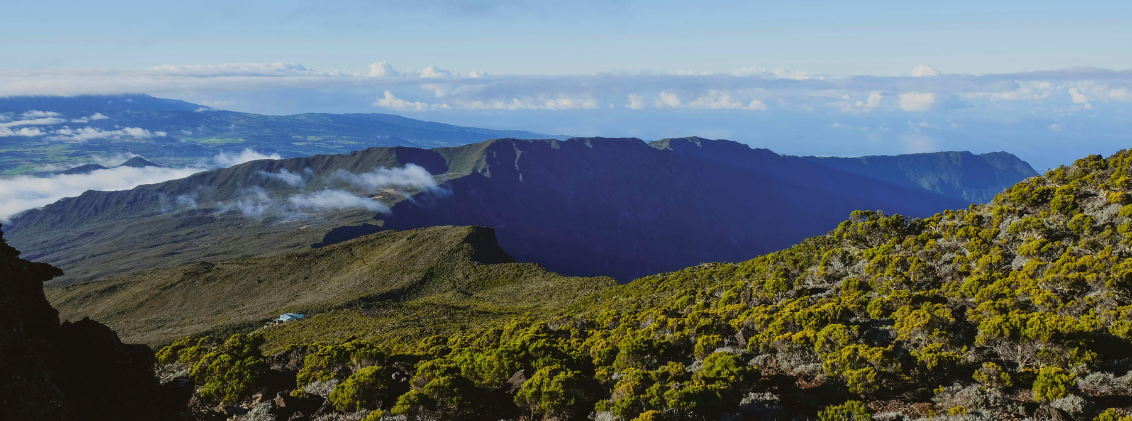
Planning a trip to La Réunion looks simple until you open the map. The island is small on paper, but it asks for real choices. The Travel Bunny’s La Réunion travel guide is here to help you make the right ones from the start. If you’re trying to plan a trip to La Réunion, I’ll walk you through the timing, the logistics, the regions, the hikes, the food, and the mistakes that can waste a good trip.
What pulled me into Reunion Island travel was how many experiences you can find in one place. You get a live volcano, thick forest, rough cliffs, black-sand beaches, mountain villages, and Creole food that deserves its own detour. That contrast is why a proper Reunion Island travel guide matters. You can’t treat this like a flop-on-the-beach holiday and hope the rest sorts itself out. A useful Réunion Island guide needs to help you choose where to stay, how to get around, and what is worth your time.
La Reunion Travel Guide
So this page works as both a practical La Réunion trip planner and a real starting point for La Réunion travel planning. I wrote it for people looking for solid La Réunion travel tips. If this is your first trip to the Intense Island and you need a La Réunion guide for first timers, you’ll find the main things to know before going to La Réunion in one place. I cover when to go, how to build a smart La Réunion itinerary, what to see, what to eat, and how to avoid the classic planning mistakes. Think of it as your La Réunion quick guide, with enough depth to help you visit La Réunion well, while saving money.
And if you want the version I’d use on the road, open my La Réunion guide app on Rexby. It’s my Reunion Island guide app for travelers who want curated spots and ready-made routes without bouncing between tabs. Use this page as your travel guide Réunion hub. Then use the app when you want to plan the perfect La Réunion trip with less second-guessing and better decisions from day one.
Plan your route faster with my interactive La Réunion guide app, packed with mapped hikes, waterfalls, beaches, food stops, and smart road trip routes built for real travel days.
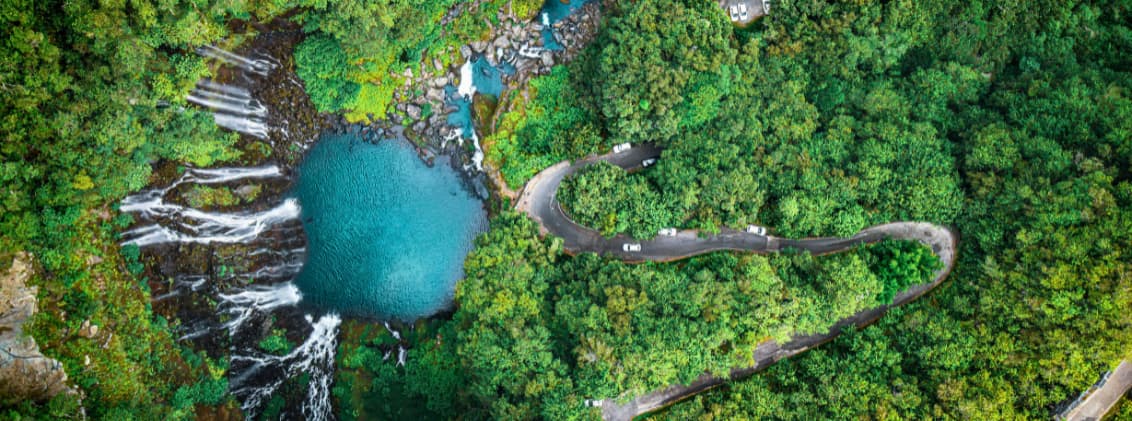
Why La Réunion is the Indian Ocean’s Best-Kept Secret
What and where is La Réunion? La Réunion is a French island in the Mascarene archipelago in the western Indian Ocean, east of Madagascar and southwest of Mauritius. Administratively, La Réunion is an overseas department and not a separate country. This means the French overseas department Réunion follows French systems for public services, roads, healthcare, and administration. On a map, La Réunion looks tiny. On the ground, it feels much bigger because the landscape is so wild and vertical.
That contrast is the first reason I think of La Réunion as a hidden gem. People hear Indian Ocean and jump straight to Mauritius, the Maldives, or the Seychelles. La Réunion gets skipped because it’s harder to label. It’s a French island in the Indian Ocean, but it doesn’t fit the lazy beach-only fantasy. It’s greener, steeper, rougher, and far more dramatic. This intense island rewards travelers who like movement, changing weather, and days that don’t go to plan in a neat, resort-friendly way.
Geology explains almost everything about the island’s personality. La Réunion was created by volcanic activity over millions of years, and UNESCO describes the island’s core landscape as two adjoining volcanic massifs shaped by volcanism, landslides, heavy rainfall, and stream erosion. In plain English, this place is extreme. Piton des Neiges, the older volcano, formed much of the island, while Piton de la Fournaise still gives La Réunion its restless edge. That’s why the roads twist so hard, the cirques feel carved by raw forces rather than settled by people, and the scenery changes so fast between coast, forest, and highlands. The branding of intense island La Réunion is on point! The terrain earned that name.
The second reason to visit La Réunion has nothing to do with geography and everything to do with people. The island’s culture grew from waves of settlement and forced movement, especially from France, Madagascar, Africa, India, and later China. You feel that mix in the food, hear it in conversation, and notice it in daily life fast. Officially, the La Réunion language is French, but Réunion Creole is spoken widely and carries the island’s social texture much better.
The same pattern shows up in everyday practicals, too. While the La Réunion currency is the euro, the La Réunion timezone is GMT+4. This makes the island feel administratively French but geographically far from Europe, which is part of the appeal. You get tropical distance without losing the familiar framework many expats and long-stay travelers want.
Is La Réunion in Europe or Africa? The answer is more difficult than you think. Politically, it’s French and European. Geographically, it sits off Africa in the Indian Ocean. Culturally, it belongs fully to neither box. That is what makes Réunion Island interesting. The island sits at a crossroads of African, Asian, and European influences, and that mixed identity isn’t some tourism slogan. It’s the reason the island feels different from mainland France, different from Mauritius, and different from most destinations people compare it to too quickly.
For travelers and expats alike, the big draw is this mix of friction and comfort. You get French institutions, emergency services, pharmacies, and infrastructure, but you also get steep mountain roads, fast-changing weather, volcanic ground, and a culture that never feels imported or staged. That is why I consider La Réunion a layered island. If you want a flat, polished holiday, there are simpler picks nearby. But if you want a place with real character, strong landscapes, and a clearer sense of identity, the Indian Ocean island La Réunion is one of the smartest trips you can plan.
Skip the tourist guesswork and use my Reunion Island guide app to build a smoother route with the best hikes, villages, waterfalls, and local food spots already mapped.
Don’t treat La Réunion like a beach island with a volcano on the side. Plan for varied landscapes, distance, altitude, and culture first. The lagoons come after that.
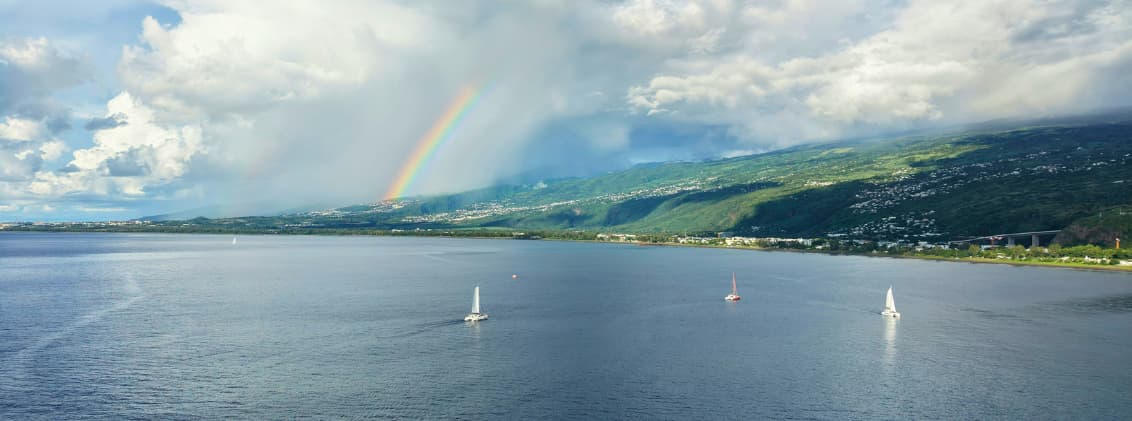
Why La Réunion is different
Most islands ask you to pick one version of the trip: beach, hike, food, or rest. La Réunion brings everything together. It’s a volcano rainforest beach island where the road can take you from dry lava and high viewpoints to wet forest and a lagoon in the same day. That contrast comes straight from the island’s volcanic relief and its dense network of marked trails, protected landscapes, and fast-changing microclimates.
That is why I can’t compare it with the usual Indian Ocean fantasy. In the broad fight of La Réunion vs other islands, Réunion wins on range. Mauritius tends to sell the polished beach holiday better, while Seychelles owns the postcard look. La Réunion is the destination for people who want motion, landscape, and a stronger sense of place. As a hiking island in the Indian Ocean, is offers more than 900 km of marked trails and a UNESCO-listed mountain core that shapes almost every serious itinerary.
The island also feels different because the Creole culture of La Réunion is present in the food, the language, the family-run tables, the markets, and the everyday mix of African, Asian, and European influences described by the official tourism board. That gives the island a sharper identity than destinations where culture stays hidden behind resort walls. For me, La Réunion’s unique culture is one of the strongest reasons to come, because the trip works on two levels at once. You get scenery worth the flight, and you get a lived-in island that still feels like home to the people who actually live there.
That mix of mountain scenery and social texture is what makes La Réunion nature and culture work so well together. You don’t need to force the connection. A hike ends in a village. A market stop explains what’s on your plate later. A road trip passes through areas that feel culturally different from one another because the terrain shaped settlement, movement, and daily life.
La Réunion vs. Mauritius vs. Seychelles. Which Should You Choose?
If you are stuck on La Réunion vs Mauritius or trying to place Seychelles in the same decision, start with honesty about your travel style. Mauritius is easier to understand at a glance because the beach holiday is more straightforward. Seychelles is easier to picture because the scenery is instantly recognizable. Réunion takes a bit more effort to understand, and that is often exactly why it stays with people. It asks more from you, but it gives more back if you care about landscape, hiking, local food, and routes with a bit of friction.
For beaches first, Mauritius and Seychelles usually beat Réunion. That’s the blunt version. If your ideal trip is mostly sand, calm lagoons, resort time, and easy sea days, Mauritius or Réunion isn’t a fair contest. Mauritius usually wins for beach holidays, and Seychelles is even stronger if you want iconic beach scenery and a more castaway look. On the narrow question of La Réunion or Mauritius for beaches, I would point most beach-first travelers to Mauritius.
For hiking and dramatic terrain, Réunion is in another league. That is where Reunion vs Mauritius shifts fast. La Réunion has the volcano, the cirques, the long-distance GR routes, and over 900 km of marked trails. Mauritius has worthwhile hikes, too, but hiking is not the main skeleton of the trip in the same way. On the question of La Réunion or Mauritius for hiking, Réunion wins clearly for anyone who wants mountain days to shape the whole holiday.
Cost matters too, because these islands don’t hit your budget the same way. On Réunion vs Mauritius cost, Mauritius is generally cheaper overall according to recent cost-of-living comparisons, and that matches the way many travelers experience it on the ground. French pricing affects food, services, and rentals in Réunion. So yes, La Réunion is more expensive than Mauritius, especially once you factor in transport and accommodation standards. However, Seychelles is usually the most expensive of the three for many travelers.
The easiest way to choose is to stop asking which island is best in general. Ask what kind of trip you want to remember. If you want polished beach time with easier logistics, Mauritius is the safer pick. If you want the most photogenic beaches and a strong sea-focused trip, Seychelles earns the hype. If you want a trip built around volcanoes, trails, villages, food, and landscapes that keep changing, then Reunion Island vs Mauritius stops being a close call. In that case, which is better Mauritius or La Réunion? La Réunion.
| Island | Best for | Weak point | Who should pick it |
|---|---|---|---|
| La Réunion | Hiking, volcanoes, road trips, Creole food, mixed landscapes | Less beach-perfect, more demanding logistics | Travelers who want movement, relief, and a trip with character |
| Mauritius | Beaches, lagoons, resorts, easier relaxation, mixed culture | Less dramatic hiking identity | Travelers who want comfort, sea time, and a smoother holiday flow |
| Seychelles | Iconic beaches, island-hopping, marine scenery, castaway feel | Higher costs, less route variety on land | Travelers who want the postcard version of the Indian Ocean |
Want help planning the right side of the island for your travel style? Use my La Réunion travel guide app to compare routes, bases, beaches, and hiking regions in minutes.
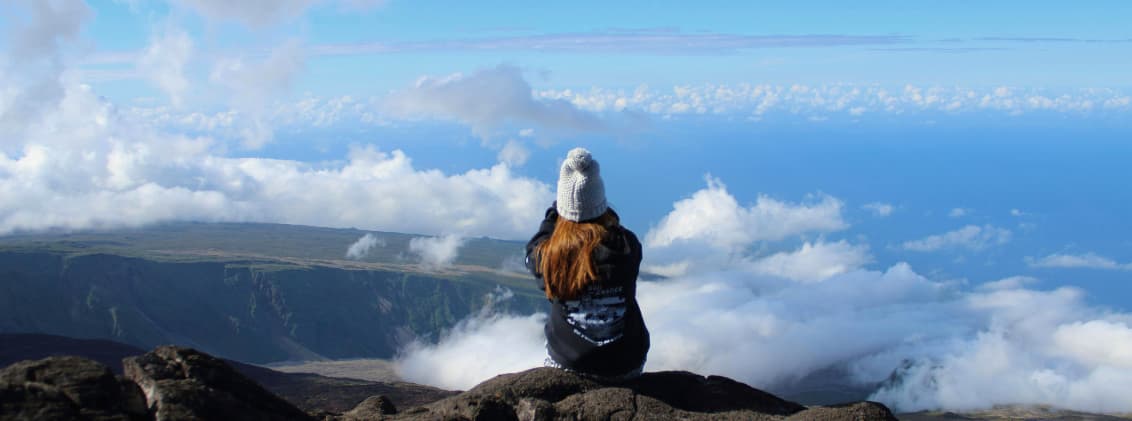
Is La Réunion Worth Visiting? An Honest Answer
Yes, La Réunion is worth it if you care about landscape, food, and getting beyond a resort version of island travel. It’s not the island I would send someone to if they only want sunbeds and flat days. It’s the island I would send someone to if they want to wake up early for a hike, stop for a cari at lunch, drive through weather that changes every hour, and end the day feeling they have seen something real.
Should you visit La Réunion? It depends on how you travel. For active travelers, slow travelers, and expats scouting somewhere with stronger infrastructure than a typical tropical island, the answer is usually yes. It’s a French overseas department with the euro, French public systems, and a level of day-to-day practicality that reduces stress. That matters more than people admit. It lets you focus on the island instead of spending the whole trip troubleshooting basics.
The honest answer is that La Réunion island isn’t easy, and that’s part of the point. You won’t get the laziest version of the Indian Ocean here. Distances can look short and feel long. The weather can ruin a plan fast. Good planning matters more than in many beach destinations. But when a place makes you pay attention, it often stays with you longer. That’s the case here.
If you are torn between these islands, don’t compare them by beaches alone. Compare them by how you want your days to feel. Quiet and polished, sea-heavy and photogenic, or intense, varied, and a bit stubborn? That last one is Réunion.
Is La Réunion worth the flight? For the right traveler, absolutely. You get lava landscapes, a major hiking destination, a living Creole culture, and a stronger feeling of discovery than many more obvious Indian Ocean choices.
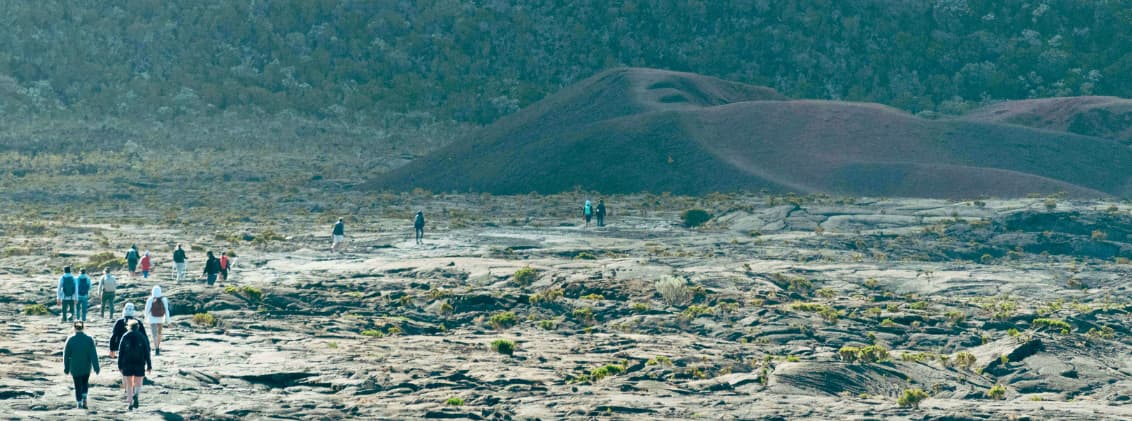
How many days do you need to visit La Réunion?
Reunion Island needs more time than you might think. On the map, distances seem short, but on the ground, the mountains slow everything down. Roads twist, the weather shifts, and a short drive can take longer than you expect. That’s why travelers who rush through the island often leave with the wrong impression. They spend too much time in the car and not enough time actually being somewhere.
So, how many days do you need in Réunion Island to enjoy it properly? I would treat ten days as the sweet spot for most travelers. That gives you enough time to see the West Coast, get into the highlands, experience the volcano, eat well, and leave space for one or two weather-related changes. Less than that can work, but only if you accept that the trip will feel tighter and more selective.
Spending 7 days in La Réunion is ok for a first trip, but only if you stay disciplined. A week is enough for a clear first taste of the island. You can base yourself smartly, do a few major highlights, and understand why people love it. What you can’t do in a week is see everything. Trying to cover the whole island in seven days usually turns the trip into a checklist with long drives between stops.
If you only have one week in La Réunion, focus on contrasts. Pick two bases at most. One should give you access to the West Coast or the Southwest for easier weather, beaches, and food. The other should bring you closer to the volcano or hiking country. That way, you get the island’s two strongest sides without wasting half your holiday moving hotels every night.
10 days in La Réunion is the trip length I would recommend. You have time for a proper volcano day, a cirque or two, market stops, beach time, and slower meals that are worth the detour. You also have time to recover if fog ruins a viewpoint or rain kills a hike. On this island, that flexibility is part of planning well.
My interactive Reunion itinerary guide includes optimized routes so you stop wasting time driving back and forth across the island.
If you are wondering about the ideal La Réunion trip length, think in terms of pace. The right number of days depends on how you travel. Fast travelers can see the headline sights in a week, while slow travelers will feel cramped. Hikers need more margin because weather and trail fatigue matter. Expats or long-stay visitors should do shorter local outings and spread the experience over time, which is a much smarter way to absorb Réunion if you have that freedom.
Planning 2 weeks in La Réunion lets you stop forcing impossible choices. You can spend time on the coast without dropping the mountains. You can add eastern waterfalls, a real hiking section, and the kind of meals and village stops that turn a trip into a memory instead of a route. In two weeks, the island stops feeling difficult and starts feeling rich.
Two weeks in Réunion Island also gives you room for adjusting to the weather, which matters more here than many first-time visitors realize. This is a destination where clouds roll in every day. Rain hits one region and misses another. A sunrise hike can disappear into mist. If you have fourteen days, you can reshuffle your itinerary without panic. If you only have seven, one or two bad weather days can throw off the whole plan.
How long to stay in La Réunion depends on what kind of trip you want to bring home. For a first overview, plan one week and keep your route simple. For a balanced first trip, plan ten days. For a deeper trip with hikes, food, coast, and mountain time, plan two full weeks. Anything longer is even better, especially for remote workers, repeat visitors, or anyone trying to understand the island beyond its headline sights.
If I had to make this decision brutally simple, I’d say go for 7 days if that is all you have, aim for 10 if you want a good trip, and choose 14 if you want the island to open up properly.
Local tip: Add at least one buffer day if hiking is important to you. In La Réunion, the weather can wreck a plan fast, and the people who enjoy the island most are usually the ones who stop trying to control every hour.
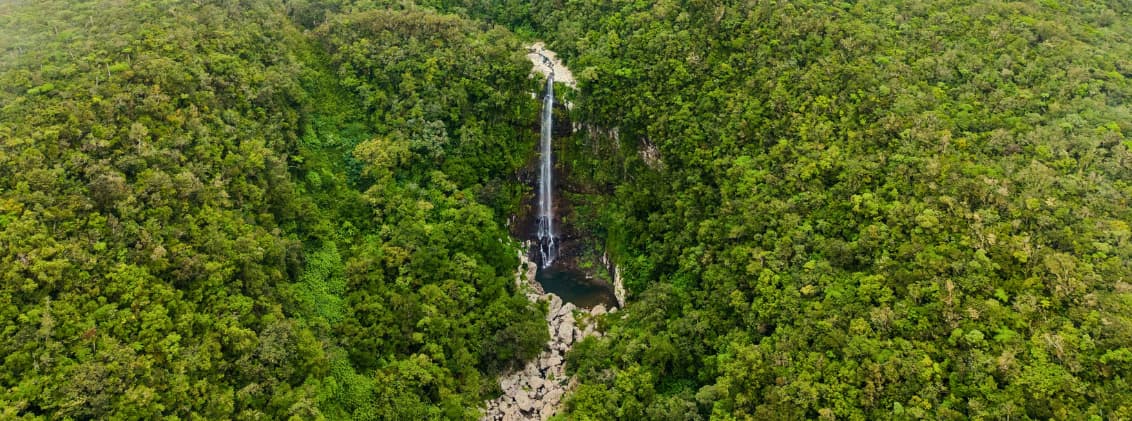
Best time to visit La Réunion. Month by Month Breakdown
The best time to visit La Réunion depends less on a single perfect month and more on what you want from the island. Hiking, swimming, waterfalls, road trips, and long stays don’t all peak at the same time. That’s why people asking for the single best time on La Réunion often get a flat answer that’s only half useful. A better approach is to match the season to your priorities, because Reunion best time to visit for a hiker isn’t the same as for someone chasing beaches or greener scenery.
The first thing to know is that La Réunion weather changes fast across short distances. The island has a tropical climate, but the coast, the highlands, and the volcanic interior don’t behave the same way on the same day. The official tourism board stresses the island’s strong relief and wide variety of microclimates in La Réunion, which is why you can have sunshine by the sea and clouds in the mountains a short drive later. This is the real key to understanding Reunion Island weather and planning smarter day trips.
At the broadest level, when to visit La Réunion comes down to two main seasons. The year is divided into a warm, humid period from November to April and a cooler, drier period from May to October. In plain language, that means you can choose between La Réunion’s rainy season and dry season, with short shoulder periods around April to May and October to November that are often especially pleasant.
The best month to visit La Réunion for most travelers usually falls somewhere between May and November. Those months tend to give you more reliable conditions for driving, hiking, and clear viewpoints, especially if your trip is built around the cirques, the volcano, and long days outside. I would still avoid treating the island as predictable.
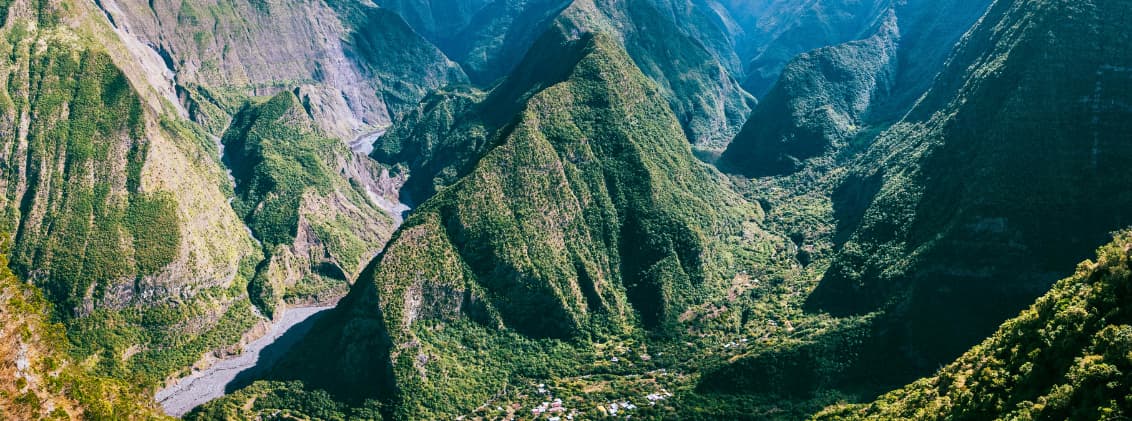
Best Months for Hiking in La Réunion
The best time to visit La Réunion for hiking is usually the drier, cooler stretch from May to October. This is when trails are generally more comfortable, temperatures are easier to manage, and mountain views are often clearer if you start early. The fresher, drier season runs from May to October, while mountain clouds tend to build later in the day. This pattern matters more than people think. The best hikes on Réunion Island often start at dawn or earlier, not after breakfast.
For most walkers, the best months for hiking La Réunion are May, June, September, and October. These months sit away from the wettest summer period and usually avoid the heavier heat of peak austral summer. They also work well for travelers who want a mix of hiking and coastal time, because you can move between higher and lower zones without the trip feeling punishingly hot.
The overall best hiking season in La Réunion is the austral winter, but winter here isn’t cold in the way many visitors imagine. Along the coast, July and August temperatures are still around 24-25°C by the ocean. The shock comes in the mountains, where temperatures drop sharply, and conditions feel much colder, especially before sunrise. That’s why packing badly ruins so many hiking days on this island.
When to hike in La Réunion? Hike early, plan conservatively, and treat mountain weather as its own system. Even in the good season, clouds often build as the day goes on. Early starts give you the best chance of clear skies and open viewpoints.
Beyond comfort, dry season hiking in La Réunion also gives you a better shot at seeing the landscapes you came for. The cirques, the ridgelines, and volcanic viewpoints lose much of their power when they disappear under clouds. If hiking is a major reason for your trip, I would build the holiday around the drier months first and fit the beach time around that.
The best time for Piton de la Fournaise hike is usually in the cooler, drier part of the year, especially if your goal is visibility. The volcano area is exposed, and conditions can shift fast. Clearer mornings and lower humidity help, but you still need to check forecasts close to the date. A volcano day is never the one to plan blindly.
The best season for Mafate hike is also the drier season, because Mafate rewards good footing, clear views, and stable days. This matters even more there because Mafate is not a quick roadside stop. Once you commit to the hike, weather and trail conditions shape the whole experience. For that reason, I would rather visit Mafate in a shorter good-weather window than force it into a summer trip that is already fighting rain and heat.
La Réunion Cyclone Season and What to Expect
Cyclone season La Réunion scares many first-time visitors more than it should, but it still deserves respect. The warm and humid season is between November and April. Météo-France confirms that January and February are the core of cyclonic activity in the southwest Indian Ocean basin, while activity can continue into March and sometimes April.
When is cyclone season in La Réunion? Use December to April as your practical warning window. January and February are the heart of the season. March can stay active, and April isn’t always fully settled yet. That doesn’t mean a cyclone will hit your trip. It just means you should watch official forecasts and avoid building a mountain-heavy itinerary without a backup plan.
This period is also known as La Réunion wet season. It brings hotter days, heavier humidity, and rain that can be short and intense. The austral summer peaks in January and February, with coastal temperatures often above 30°C and heavy rain showers. The upside is that vegetation looks lush, and waterfalls are at their strongest. The downside is obvious if your trip depends on long hikes and reliable views.
La Réunion summer weather is not bad by default. It’s simply more volatile. If your priorities are greener scenery, warm sea temperatures, and fewer expectations about hiking every day, summer can still work well. If your priorities are mountain trekking, road reliability, and viewpoint days, summer asks for more compromise.
Is cyclone season bad in La Réunion? Not automatically. It’s riskier for rigid itineraries and less ideal for travelers who want the island at its easiest. It can still suit flexible visitors who understand that a beautiful tropical island can also cancel their plans for a day or two. Travelers usually enjoy summer on Réunion Island when they leave room for spontaneity.
The main thing to remember about La Réunion weather December to April is that this is the season of flexibility. You may get glorious beach mornings and wet afternoons. You may get rich green valleys and poor summit visibility. You may also find that one coast works while another is soaked. On this island, summer planning works best when you book with room to move.
The best time to visit La Réunion is usually from May to October, when the weather is cooler, drier, and better for hiking. November to April is warmer, wetter, and overlaps with cyclone season, though it brings greener landscapes and stronger waterfalls. For most travelers, shoulder months give the best balance.
Read my detailed seasonal guide on Rexby to plan the best month for hiking, waterfalls, whale watching, beaches, and road trips in La Réunion.
La Réunion Month-by-month breakdown
| Month | Weather | Hiking conditions | Crowds | Good for |
|---|---|---|---|---|
| January | Hot, humid, rainy | Poor to mixed | Moderate | Waterfalls, tropical greenery |
| February | Hot, humid, cyclone-prone | Poor to mixed | Moderate | Lush scenery, lower hiking priority |
| March | Still warm, still wet, slowly easing | Mixed | Moderate | Flexible trips, coastal stays |
| April | Transitional, more pleasant | Improving | Moderate | Balanced trips, shoulder season |
| May | Cooler, drier | Good | Moderate | Hiking, road trips, mixed itineraries |
| June | Dry, comfortable | Very good | Moderate | Hikes, cirques, volcano days |
| July | Coolest season, dry | Very good, but cold at altitude | Higher | Hiking, viewpoints, active trips |
| August | Cool, dry | Very good, but cold at altitude | Higher | Trekking, mountain trips |
| September | Dry, comfortable | Excellent | Moderate | Hiking, road trips, mixed stays |
| October | Pleasant, often one of the best months | Excellent | Moderate | Hiking plus beach time |
| November | Warmer, more humid | Good to mixed | Moderate | Shoulder travel, mixed plans |
| December | Warmer, wetter | Mixed | Moderate to higher | Coast, family trips, flexible routes |
- Best overall time to visit La Réunion: May to October for easier hiking, cooler temperatures, and more stable conditions.
- Best shoulder months: April to May and October to November for a balanced trip.
- Best for lush landscapes and waterfalls: Summer, especially after rain.
- Most weather-sensitive period: December to April, with cyclone risk highest around January and February.
Local tip: If hiking matters most, plan around May to October and keep your best viewpoints for the earliest mornings. If you travel in summer, stop fighting the weather and build a looser route with backup coastal days.
La Réunion climate chart
| Season | Months | Coast | Highlands and cirques | Hiking | Waterfalls | Beach time |
|---|---|---|---|---|---|---|
| Warm and humid | November to April | Hot, humid, frequent rain | Wetter, cloudier, less stable | Mixed to poor | Strongest flows | Good on clearer days |
| Shoulder season | April to May | Pleasant, less oppressive | Improving visibility | Good | Still lush | Very good |
| Cooler and drier | May to October | Sunny, milder | Cooler, clearer mornings, colder at altitude | Best overall | Less dramatic than summer | Very good, especially west coast |
| Shoulder season | October to November | Warmer, still pleasant | Often still good early in the period | Good to very good | Moderate | Excellent |
Disclosure: Some of the links on this page are affiliate links. This means that at no extra cost to you, The Travel Bunny will earn a small commission if you click through and make a purchase. Thank you!
How to Get to La Réunion
Figuring out how to get to La Réunion is easier once you stop looking for dozens of flight hacks and focus on the island’s actual air links. Most travelers arrive by plane, and for most of them the route runs through mainland France, especially Paris. If you’re searching for flights to La Réunion and comparing Reunion flight tickets, keep in mind that the island is well connected to France and regionally linked to Mauritius and a handful of other destinations.
The main gateway is Roland Garros Airport, also known as Saint-Denis airport Réunion. This is the island’s largest airport, near Saint-Denis in the north, and the one most long-haul travelers use. As a simple Réunion airport guide, think of Roland Garros as the default entry point for international arrivals and the practical start of most island itineraries.
For most visitors, how to reach La Réunion comes down to choosing between a direct flight from France or a one-stop route through Paris. There are direct links to mainland France from Roland Garros from Paris Orly, Paris Charles de Gaulle, and Marseille. That matters because it tells you two things fast. First, direct flights to La Réunion do exist. Second, if you are getting to Reunion Island from elsewhere in Europe or North America, Paris is usually the cleanest connection point.
The easiest way to fly to Réunion Island is usually to build your route around Paris. Air France, Air Austral, Corsair, and French Bee all serve the island from Paris, and the airport schedule also shows Paris Orly and Paris CDG among the core arrival routes into RUN. That gives you enough airline choice to compare baggage policies, timings, and fares instead of locking yourself into one carrier.
| Origin | Best route | Approx. price |
|---|---|---|
| Paris | Direct to RUN | From about €242 to €711+ return depending on airline and dates |
| Marseille | Direct to RUN | From about €614 return |
| London | Via Paris to RUN | Usually one stop, often from roughly €700+, depending on season and carrier mix |
| Brussels | Via Paris CDG to RUN | Usually one stop, often from roughly €700+ |
| New York / Montreal | Via Paris to RUN | Usually one stop, often from roughly €900+, depending on the season |
| Mauritius | Direct to RUN | From about €251 to €298 return |
Flights from Europe, UK, and North America
If you are looking at flights to La Réunion from France, you have the cleanest options of any market. The island has three direct mainland France links, from Paris Orly, Paris Charles de Gaulle, and Marseille. Air Austral’s airport page also says it operates multiple weekly flights from Paris CDG and non-stop service from Marseille, while the airport arrivals board shows regular service from Paris Orly and Paris CDG.
For most travelers comparing flights to La Réunion from Paris, the choice is more about airline style and airport preference than access. Paris is the main long-haul gateway, and both Orly and CDG connect to Réunion. Paris CDG to Réunion flight time is about 11 hours, while Paris Orly to Saint-Denis is about 11 hours 30 minutes.
A direct flight Paris Réunion is the simplest option for travelers who care most about reducing stress. You skip a connection, lower the risk of baggage problems, and land directly at RUN airport ready to start the trip. Many of these services are also timed as an overnight flight Paris Réunion, which is practical in theory because you leave France in the evening and arrive on the island the next morning. In practice, overnight long-haul flights still hit hard, so I wouldn’t plan a demanding hike for arrival day.
Struggling to sleep on long-haul flights like this one? Read my practical guide on how to sleep on a plane so you land ready to explore.
For anyone checking flights to La Réunion from UK, there is no need to overcomplicate this. The most straightforward route is usually to connect through Paris rather than hunting for exotic detours. Mainland France remains the direct long-haul entry point, so how to get to La Réunion from UK is usually a one-stop journey through Paris on a single ticket or separate tickets, depending on your budget tolerance and risk appetite.
The same applies to flights to La Réunion from Europe outside France. If you’re coming from Belgium, Germany, Spain, Italy, or elsewhere, Paris is usually the cleanest transfer hub. Air Austral has connections from 40 European destinations and 19 provincial French cities via Paris CDG through partnerships, which makes Paris the backbone of most European itineraries to the island.
There are no regular direct long-haul options for flights to La Réunion from USA / flights to La Réunion from North America, so I would plan on one stop. In real terms, that means routing through Paris, and sometimes comparing that with other long-haul combinations only if the fare difference is large enough to justify the extra complexity. For most North American travelers, Paris keeps the journey simpler and more predictable, which matters on a route this long.
Getting to La Réunion from Mauritius
If you are already in Mauritius, getting across is simple. The flight route between Mauritius to La Réunion is short, active, and easy to understand. The Roland Garros airport schedules show arrivals from Mauritius into RUN, with flight times of about 45 minutes between MRU and RUN. That makes Mauritius the easiest regional add-on if you want two islands in one trip.
How do you get to La Réunion from Mauritius? If you are debating ferry or flight Mauritius Réunion, the practical answer is flight. The trip is short enough that airport time can feel longer than the time in the air.
This short hop is one of the best reasons to combine Mauritius and Réunion if you have enough time. Mauritius gives you the smoother lagoon-heavy holiday, while Réunion gives you relief, hiking, and more dramatic terrain. For travelers interested in island hopping Mauritius Réunion, taking a flight is direct, short, and already built into the regional network.
But the real question is not whether you can combine them. It’s whether you should. I think the pairing works best if you want contrast. Start with Réunion Island if you want energy first and rest later. Or start with Mauritius if you want the easier landing before the more demanding island. Both plans work, as long as you don’t squeeze both into a rushed trip and pretend they offer the same kind of experiences.
A practical note for travelers and expats: If your long-haul route into Réunion is expensive from your home airport, checking a split journey via Paris or Mauritius can still be useful. The island’s direct network isn’t huge, but it is coherent, and that’s what matters. Build around the routes that already work, and your planning gets easier fast.
The easiest way to get to La Réunion is to fly into Roland Garros Airport in Saint-Denis. Most direct long-haul flights come from mainland France, especially Paris Orly and Paris CDG, while travelers from the UK, Europe, and North America usually connect through Paris. From Mauritius, direct flights take about 45 minutes.
Local tip: If you land after a long overnight flight, don’t pretend you’re ready for a mountain road right away. Sleep near Saint-Denis or pick up the car only when your brain starts working again.
Do You Need a Visa for La Réunion ? Entry Requirements by Nationality
La Réunion visa rules are simple, but there is one detail many travelers miss. La Réunion is a French overseas department, so the visa system is French, but it’s treated as a non-European French territory for visa purposes. That means a standard Schengen visa isn’t automatically enough for entry to La Réunion. France-Visas states that for non-European French territories, travelers who need a visa must apply for a specific national visa for that territory.
Do you need a visa for La Réunion? It depends on your nationality, your residence status, and the type of permit or visa you already hold. Some travelers are exempt from visa requirements for overseas French territories, including EU, EEA, and Swiss citizens, as well as certain other nationals covered by ministerial orders for each territory. Some holders of valid residence permits or long-stay visas issued by France or a Schengen state may benefit from a waiver.
That is why general searches for La Réunion visa requirements often confuse people. A lot of travelers assume mainland France and La Réunion follow exactly the same short-stay entry rules, but they don’t. Regulations vary depending on whether you are traveling to European France or to a non-European French territory, and La Réunion falls in the second category. For practical planning, the safest move is to check your exact case before booking anything expensive.
The same caution applies if you are looking up broader Reunion travel visa requirements or generic entry requirements La Réunion advice. Even when a visa isn’t required, border police can still ask for standard supporting documents. You may be asked to show a valid passport, proof of accommodation, proof of sufficient funds, and a return ticket or the means to buy one. A visa exemption doesn’t mean automatic entry.
In practice, La Réunion formalities are less about paperwork overload and more about getting the right category right. If you are visa-exempt, your job is mostly to travel with the right documents and a realistic file for border checks. If you arn’t visa-exempt, your job is to apply for the right overseas-territory visa rather than assuming a Schengen visa covers the island. That one mistake can wreck a trip before it starts.
Your passport for La Réunion matters even if you don’t need a visa. On arrival, travelers may be asked for a passport issued less than 10 years earlier and valid for at least 3 months after the planned departure date.
Schengen rules La Réunion. La Réunion is French, but it isn’t handled the same way as mainland France for short-stay visa purposes. Mainland France follows Schengen short-stay rules, while non-European French territories use a separate national visa system. So if your itinerary includes both mainland France and La Réunion, you may need two distinct visas depending on your nationality and status.
Do Americans need a visa for La Réunion? Visa exemptions depend on nationality and on the territory being visited, and the official France visa wizard is the tool that gives the exact answer for your passport and trip type. Check the official France-Visas tool for updated information regarding La Réunion visa for Americans, because La Réunion isn’t processed like standard Schengen-only travel.
Do UK citizens need a visa for La Réunion? The same advice as above applies to La Réunion visa for UK citizens. Since the official rule depends on nationality, passport type, duration, and destination within the French Republic, UK travelers should verify their exact status through France-Visas. That sounds dry, but it’s better to check the latest official information available.
The broader entry requirements for La Réunion go beyond the visa question. Travelers may need to present proof of accommodation for the full stay, enough money for the trip, and a return or onward ticket. If you’re coming as a tourist, those are normal travel checks. If you’re an expat, digital nomad, or long-stay traveler coming for a non-tourist purpose, your file needs to match what you’re actually doing. Border systems hate vague stories.
Prepare your travel documents for Réunion Island as if someone will actually read them. Have your passport, booking confirmations, onward travel, and accommodation proof easy to show, and keep them in one place.
| Nationality or status | Visa situation for a short tourist stay | What to do |
|---|---|---|
| EU / EEA / Switzerland | Generally visa-exempt for overseas French territories | Travel with valid ID or passport and supporting documents if requested. |
| UK | Check official France-Visas result for your exact case | Don’t assume Schengen-only rules apply unchanged to La Réunion. |
| US | Check official France-Visas result for your exact case | Verify overseas-territory rules before departure. |
| Canada | Check official France-Visas result for your exact case | Use the visa wizard, especially if your trip includes mainland France too. |
| Australia | Check official France-Visas result for your exact case | Confirm whether you are visa-exempt for La Réunion specifically. |
| Romania | EU citizen rules apply | Usually visa-free for short tourist travel. |
| Non-Schengen third-country nationals | Depends on nationality, permits, and destination rules | Check the France-Visas wizard and apply for the correct overseas-territory visa if required. |
La Réunion follows French entry rules, but for visa purposes it’s treated as a non-European French territory. Some travelers are visa-exempt, including EU, EEA, and Swiss citizens, while others may need a specific national visa for La Réunion. A standard Schengen visa doesn’t automatically allow entry, so check your case on France-Visas before you travel.
Local tip: If your route includes both Paris and La Réunion, check the visa requirements first. That split itinerary is exactly where people make expensive assumptions.
Where to Stay in La Réunion. Choosing the Right Base
Deciding where to stay in La Réunion matters more than people expect. Distances may look manageable when you take a first glance at a map of the island, but once you add mountain roads and factor in the weather, it’s a whole other story.
The best region to stay in La Réunion depends on whether you care most about beaches, hiking, road access, city convenience, or a slower long-stay rhythm. For most travelers, the smartest approach is to match the base to the trip instead of trying to force the whole island into one hotel booking.
Use my La Réunion accommodation guide to compare the best bases for beaches, volcano hikes, road trips, digital nomad stays, and family travel.
The best area to stay in Reunion Island usually falls into three broad categories:
- The west coast works best for easier weather and lagoon access.
- The south works well for travelers who want a less resort-focused base with good road-trip potential.
- Inland stays make the most sense when hiking is the main goal.
Accommodation style matters too because La Réunion hotels are only a part of the picture. Good Reunion accommodation also includes self-catering rentals, mountain lodges, family-run guesthouses, and hiking lodges in or near the cirques. You will see La Réunion Airbnb options, but also a lot of gîtes and guesthouses La Réunion that fit the island better, especially inland. In practice, hotels gîtes Airbnb La Réunion all have their place. You just need to match them to the route.
For a first trip, I wouldn’t obsess over the “best” property before deciding the best base. Searching for accommodation La Réunion brings up the best results once the geography is clear in your head. Get the base right and many lodging types will work. Get the base wrong and even a lovely stay can waste your days.
The West Coast, the Best base for first-time visitors La Réunion
The best base for first-time visitors La Réunion is usually on the West Coast. That side gives you easier weather, safer swimming options, and a more forgiving start to the island. It also puts you in a practical position for day trips without dropping you straight into the wettest or most isolated parts of Réunion.
Where should first-time visitors stay in La Réunion? I would start with Saint-Leu or the broader west coast before anywhere else. Saint-Leu is right on the coast, with lagoon access and beach settings, and west-coast properties are well positioned between coast and upland zones. That balance is exactly what first-timers need.
A west coast base La Réunion gives you the island in manageable pieces. You can do sea days without wasting time, but you can also pivot inland for viewpoints, villages, and drives into rougher terrain. For most readers, that makes it the easiest base La Réunion if the goal is to understand the island before trying anything more ambitious.
For me, the best area to stay in La Réunion for first trip is one that keeps the first days simple. That usually means west coast first, then a second inland or southern base if you have enough time.
The West Coast, the Best base for beaches La Réunion
The best beaches base La Réunion is clearly the west coast. This is the coast most associated with lagoon life, easier swimming, and the kind of sunny holiday rhythm many first-time visitors expect when they book an Indian Ocean island. It’s also where tourism listings repeatedly highlight beach settings and coastal convenience.
If you are comparing west coast La Réunion hotels or deciding where to stay on west coast La Réunion, Saint-Leu and Saint-Gilles are the names to focus on first.
A Saint-Leu stay suits travelers who want the west coast without the fullest resort feel. Saint-Leu is right by the lagoon, but you’ll also find accommodation slightly above the coast at moderate altitude, which gives you a useful mix of sea access and cooler evenings. This makes Saint-Leu one of the most balanced choices on the island.
A Saint-Gilles stay is great for travelers who want a straightforward beach base with familiar holiday infrastructure. I recommend staying in Saint-Gilles to families, beach-first visitors, and anyone who wants easier access to the most popular lagoon zone. I would choose it for comfort and simplicity, not for originality.
If you’re searching beach hotels La Réunion, keep expectations realistic. The west coast is the right zone for lagoon days, but La Réunion isn’t Mauritius and doesn’t need to pretend to be. The real value of staying on the west coast is that you get beach time without losing access to the island’s more interesting inland layers.
That is why the best west coast beaches La Réunion matter even if beaches aren’t your main reason for coming to the Intense Island. They make the west a forgiving base between bigger days on the road. A lagoon afternoon after a long drive or hike can save the rhythm of a trip by giving you time to unwind and recover.
The Highlands and Cirques, the Best base for hikers on Reunion Island
The best base for hiking La Réunion is inland, not by the lagoon. If your trip is built around trails, altitude, and early starts, you need to stay closer to the cirques or the highlands for at least part of the time. A beach base can work for a few day trips, but not for a hike-heavy route that wants serious mountain time.
Where to stay for hikes in La Réunion? Think in terms of access to trailheads. That usually means a highlands stay La Réunion or one of the cirque villages that already sit close to the routes people come to walk. You’ll gain time in the mornings and waste less energy on long approach drives.
Good cirques accommodation Réunion looks different from coastal lodging. This is where mountain gîtes La Réunion come into their own. There are stopover and hiking lodges in Cilaos and Salazie, often right near hiking routes, with simple practical setups that make sense for people who are there to walk.
Gîte de montagne La Réunion booking advice: Do not treat these stays like interchangeable hotels. Lodging here is part of the hike. In Cilaos, you have the Gîte de l’Ilet as a stopover lodge in the cirque near major hiking opportunities. For Piton des Neiges, the ascent usually starts from Cilaos with a halt at the Refuge de la Caverne Dufour.
Where to stay for Mafate? Mafate is inaccessible by road. You either stay inside Mafate as part of the hike or use an access point outside it. Grand Ilet in Salazie is a Porte de Mafate hiking gîte close to major trail starts toward Mafate and nearby routes. That makes Salazie and Grand Ilet especially practical for Mafate-focused trips.
Where to stay for Cilaos? Stay in or near Cilaos if your priorities are mountain scenery, trail access, and a proper shot at Piton des Neiges. The Piton des Neiges ascent is tied to Cilaos, which makes the cirque the obvious base for that part of the island.
Where to stay for Salazie? Hell-Bourg and the surrounding cirque villages make the most sense. Salazie is the largest and greenest of the three cirques, with Hell-Bourg high on one of its plateaus and a range of gîtes, guesthouses, seasonal rentals, and Créole-style hotels available in the area. This makes Salazie a practical inland base.
Unlock my Reunion Island guide app to find mapped gîtes, hidden stays, scenic lodges, beach bases, and practical overnight stops that actually fit your route.
Best base for road trips La Réunion
The best base for road trip La Réunion is rarely a single stop. This island works far better as a two-base or three-base trip than as one long commute from the same room every night. The roads are scenic, but they aren’t fast, and trying to do everything from one base usually turns the route into a chore.
A good split base La Réunion setup usually starts with the west coast and adds either the south or the highlands. This gives you one easier coastal base and one base that brings you closer to mountain roads, villages, or the volcano side of the island. For most self-drive travelers, this is the cleanest compromise between comfort and access.
Where to stay for driving around Réunion? The smartest self-drive base La Réunion choice depends on your route shape. If you want mixed days with beach breaks, use the west. If you want a wilder, more movement-heavy trip, add the south. If the trip is dominated by hikes, switch one base inland. This is how you cut dead time from the route.
A north to south road trip base on Reunion can work if you need city convenience at the start and then want to push out toward stronger scenery. Saint-Denis is practical for arrivals, departures, errands, and the kind of first or last night that shouldn’t be complicated. I wouldn’t keep Saint-Denis as the only base unless your trip is unusually short or urban-focused.
Saint-Leu as a west coast road trip base is still the best starting point for most drivers. It gives you the easiest area, good weather odds, and a route structure that lets you build confidence before tackling inland roads or longer loops. For people driving Réunion for the first time, that is a better strategy than charging straight into the mountains on day one.
| Base | Best for | Strength | Weak point |
|---|---|---|---|
| Saint-Leu / west coast | First trips, mixed itineraries, beach plus road trip | Balanced access to coast and inland | Can still mean long drives for deep mountain days |
| Saint-Gilles / west coast | Beach-first stays, families, easy holiday flow | Lagoon access and classic resort setup | Less character, more obvious tourist rhythm |
| Saint-Pierre / south | Slower stays, road trips, mixed south and east access | Good launch point for broader loops | Less ideal for classic lagoon-heavy beach time |
| Saint-Denis / north | Arrival night, departure night, city convenience | Practical airport access and services | Not the strongest scenic or beach base |
| Cilaos / Salazie / inland | Hiking, mountain lovers, cirque trips | Best trail access and early starts | Less flexible for coast-focused days |
If you want a fuller breakdown of the best areas to stay, read my dedicated Where to Stay in La Réunion guide.
Getting Around La Réunion by Car, Bus, or Both?
Getting around La Réunion is one of the first planning decisions that shapes the whole trip. The island has rental cars, buses, taxis, airport transfers, and even bike-friendly public transport in some areas, but the right choice depends on what you want to see and how much flexibility you need. You should prepare your itinerary in advance and choose the transport that matches it, because the island’s landscapes are spectacular but spread across very different kinds of terrain.
La Réunion isn’t a flat beach destination. This is mountain road, cirque, volcano, and coast territory, all packed into one island. That is why deciding between car or bus La Réunion is a big deal. Your choice defines how many places you can realistically see, how early you can start, and how often you’ll have to cut something from the plan.
There is real public transport La Réunion, but it doesn’t replace a car for every style of trip. The Car Jaune network covers the whole island with 16 lines, including express lines and a tourist line linking the two airports and the west coast. That’s useful, especially for budget travelers or people staying in the main urban areas, but it’s still a different experience from having your own vehicle.
Match Reunion Island transport to your priorities. If you want volcano drives, cirque access, sunrise trailheads, and the freedom to stop at viewpoints, rent a car. If you want to reduce costs, stay along the coast, and accept a slower pace, buses can work. If you want both, combine them. Use a car for the hard terrain and buses for short urban or coastal stretches. That’s usually the smartest way of moving around Réunion Island without turning every day into a logistics puzzle.
My La Réunion road trip guide helps you choose the smartest driving routes, overnight stops, and scenic loops without wasting entire days in the car.
How to get around Réunion Island? It depends on the trip you are building, there’s no universal rule. Most visitors with limited time will do best with a car. Budget travelers, long-stay expats, and slower travelers can manage parts of the island La Réunion without a car, but they need to be more selective about bases and day trips.
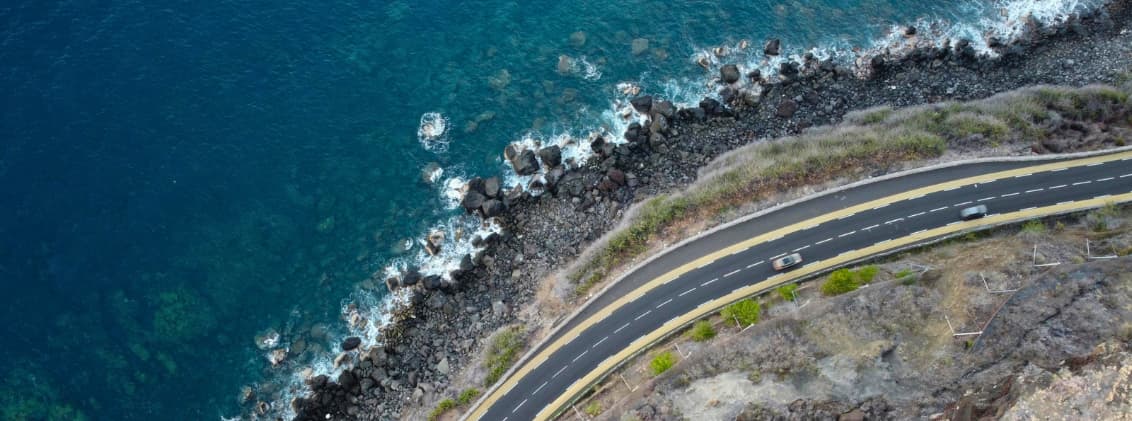
Do you need a car on Réunion Island?
Most first-time visitors need a car in Réunion. Car hire as the easiest way to go straight from the airport to your accommodation and then on to the island’s hidden treasures, from cirques to volcanic plains. The best parts of La Réunion are often inland, elevated, or awkward to reach on a fixed timetable.
Do you need a rental car in La Réunion? Think about what would frustrate you more: paying for a car, or missing the freedom to change plans when fog rolls in, a beach is too windy, or a trail looks better than expected? On Réunion, flexibility is often worth more than it seems on paper. Weather and terrain make rigid planning weaker here than on many other islands.
You can visit La Réunion without a car, but only if you plan around that limitation from the start. The interurban bus system is real and useful, and you can travel across the whole island on the Car Jaune network. Bus travel suits a slower trip, a tighter budget, and a shorter list of priorities. It doesn’t suit travelers trying to squeeze in the volcano, cirques, waterfalls, and remote trailheads on a tight schedule.
A trip built around La Réunion without car can be amazing if you stay in well-connected places and lower your ambitions a little. Stick to major towns, use the west coast well, and choose day plans that fit published timetables instead of fighting them. This can work for some travelers, especially long-stay visitors and remote workers who don’t need to see the whole island in one go.
The real fight is public transport vs rental car La Réunion, and the winner depends on time. If you have one week or ten days, the car wins for most people. If you have several weeks, a fixed base, and patience, buses become more realistic. This is the clearest way to think about Reunion car rental vs public transport without pretending the same advice fits every traveler.
Renting a Car in La Réunion Tips and Pitfalls
La Réunion car rental is easiest at Roland Garros Airport, where you’ll find multiple rental companies on site, including major brands and local operators. You will find agencies such as Hertz, Sixt, ADA, Europcar, Avis Réunion, Jumbo Car, Multiauto, and others, which means you don’t need to gamble on vague third-party listings if you want something straightforward.
This makes Reunion Island car rental easy in one sense and messy in another. Easy, because there are plenty of options at the airport and elsewhere on the island. Messy, because choice tempts people to book purely on price. I wouldn’t do that here. On Réunion, vehicle type matters more than on flatter, easier islands.
If you want to rent a car La Réunion and keep the first day simple, airport pick-up is the cleanest move. Several agencies operate at Roland Garros with long opening hours, and some specifically say your car will be waiting when you land. That matters after a long-haul flight, when the last thing you need is a complicated transfer before you even start driving.
If you are planning a pick-up airport Saint-Denis rental car, book before you arrive, especially in busy periods, because transport bottlenecks here cost time fast.
La Réunion car rental tips: Pick a car that can handle gradients, tight bends, and luggage without making the drive miserable. A tiny city car can work on the coast, but once you start pushing inland, comfort and road confidence matter more. Choose different vehicles for different adventures, from city cars for the coast to 4x4s for the highlands.
An automatic gearbox La Réunion is worth considering if you aren’t used to steep roads and constant gear changes. This isn’t because everyone needs one. It’s because hill starts, long descents, and twisting approaches become tiring fast if you’re already driving on unfamiliar roads after a long flight. This is especially true for first-time mountain drivers.
The cheapest car rental La Réunion isn’t always the best value. A bargain rate loses its charm fast if the vehicle struggles on climbs, if luggage barely fits, or if you spend the trip stressed on narrow roads. I would compare total value, including mileage terms, fuel policy, office hours, and where the agency has other branches on the island. Some airport-listed companies also operate in Saint-Gilles and Saint-Pierre, which gives you more flexibility.
On insurance La Réunion car rental, check the collision excess, tire and glass coverage, additional driver fees, and what happens if weather or road closures affect your route. On an island with mountain roads and changeable conditions, this isn’t the section to skim.
In the end, car hire Réunion Island is about freedom, but it’s also about responsibility. You are buying access to the island’s best landscapes, not an excuse to rush them. If you drive, build realistic days, not fantasy loops.
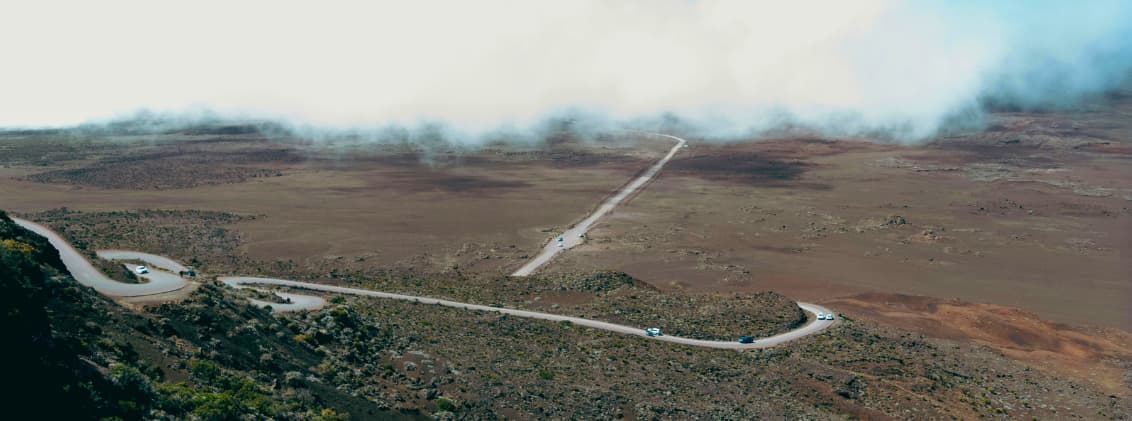
La Reunion driving tips and what No One Tells You
The first truth about driving in La Réunion is that the island is more tiring than it looks. Roads are scenic and often excellent, but the terrain asks more from you than the map suggests. While covering distance, you’re managing bends, elevation, weather, and concentration.
The hardest part for many visitors is driving mountain roads La Réunion without overestimating themselves. Driving the 400 turns on Route de Cilaos combines vertical cliffs, tunnels, and narrow passages where the first vehicle has priority. Drivers are advised to use the horn at certain tunnels to signal their approach. That isn’t the kind of detail you get on an easy island drive.
People joke about , but it isn’t easy the first time. The Cilaos road is beautiful and famous for a reason, but beauty does not make it less demanding. This is a route to drive patiently, not proudly.
Good road conditions La Réunion don’t mean effortless driving. The roads are often in solid shape, but fog, rain, altitude, and twisting routes change the experience completely. On the Plains Road, the area is often foggy, with cool early and late temperatures that can even drop below zero in winter at altitude.
You should also keep an eye on Route du Littoral status if your plans rely on coastal movement near Saint-Denis. Major roads can be affected by closures or partial service changes, and the island’s transport and traffic networks publish live updates for disruptions. This is one of those practical checks that can save a bad transfer day.
The Route des Laves and Route du Volcan drives are easier to romanticize than to pace well. They are both major scenic experiences, but make sure you check the weather and pack proper equipment for the volcano area. Conditions can shift fast once you leave the coast.
What people remember too late is how much narrow roads La Réunion change the day. You can’t rush a twisting inland road the way you rush a motorway. You stop more, you think more, and you arrive more tired than the distance suggests
That is why realistic driving times La Réunion matter so much. I would rather under-plan and still enjoy the route than cram in one extra stop and spend the whole day chasing the clock. On Réunion, too much ambition makes the island feel harder than it is.
My best road trip tips La Réunion: Start early. Avoid stacking a hard drive onto a hard hike. Build buffer time around weather. Never assume the return will feel shorter. That last mistake is common and stupid.
Watch fuel stations remote La Réunion more closely once you move away from the main towns. Petrol prices are close to mainland France, but that doesn’t help if your tank is low in a remote zone. Fill up before long inland detours, not after.
On parking in La Réunion, the issue is usually practicality. Coastal towns, airport areas, and some tourist sites are straightforward enough, but popular viewpoints and trailheads can still get crowded. Early starts solve more parking problems than cleverness does.
La Réunion driving tips checklist:
- Brake early on descents
- Use low gears in the mountains
- Don’t trust map times blindly
- Treat fog as a real constraint
- Use the horn where local road rules require it on Cilaos approaches
- Fill the tank before remote drives
- Start early for volcano and cirque days.
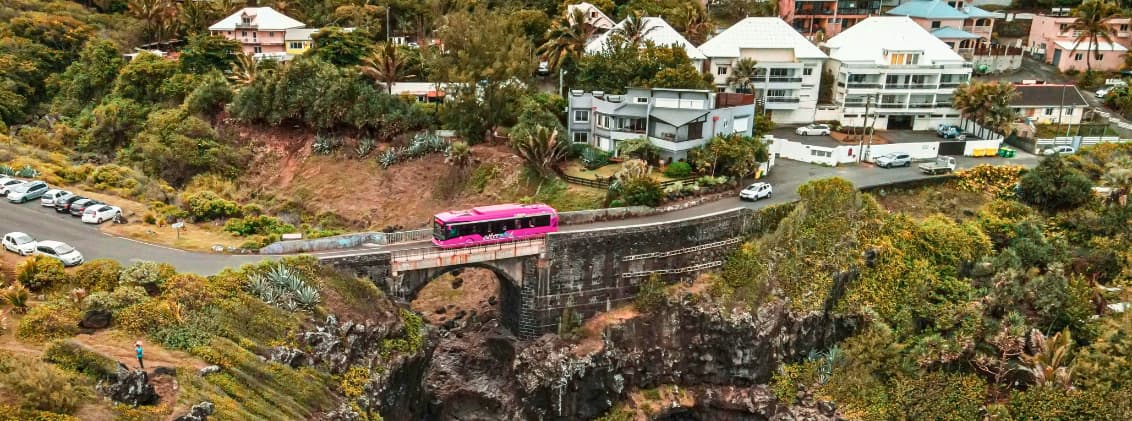
The Public Transport Alternative (Car Jaune & Regional Networks)
The best public transport alternative La Réunion is the island’s interurban bus system. Car Jaune Réunion is the inter-city network and you can travel across the whole island with it. There are 16 lines, including express services, and the vehicles are described as modern, air-conditioned, Wi-Fi equipped, and accessible.
That makes the bus network La Réunion better than many people expect, especially for a tropical island. Car Jaune is the regional backbone, managed under the authority of Région Réunion, and it links the north, west, south, and east.
The key thing to understand is that regional bus networks Réunion don’t stop at Car Jaune. Local mobility is also handled through networks such as Citalis Réunion in the north, Kar’Ouest Réunion in the west, and Alternéo Réunion in the south. That means bus travel is easier to plan when you combine interurban and local systems instead of expecting one line to do everything.
For airport users, Car Jaune is stronger than many travel blogs admit. Tourist Line T runs seven days a week, links Roland Garros and Pierrefonds airports, and also serves the west coast beaches. Some ZO services also go to Roland Garros Airport. This is genuinely useful if you’re arriving without a car or trying to connect a flight to a west coast base.
Your real challenge is whether the bus schedule Réunion fits your day. Bus-based travel works best for straightforward routes, urban movement, and slower-paced stays. It is difficult or impossible to use public transport for sunrise hikes, weather-sensitive days, and routes that depend on fast changes of plan.
So yes, getting around Réunion without a car is possible. It’s simply a slower, narrower version of the island. If that sounds fine to you, buses can be a smart budget tool. If it sounds frustrating, rent the car and move on
| Mode | Best for | Pros | Cons | Cost feel |
|---|---|---|---|---|
| Car | Most first trips, road trips, hikers | Maximum freedom, best for remote areas, easiest for changing plans | More expensive, tiring on mountain roads, parking and fuel to manage | Highest |
| Bus | Budget travel, city-to-city movement, slower trips | Cheaper, real island-wide coverage, airport links exist | Timetable limits, weaker for trailheads and early starts | Lowest |
| Taxi / shared taxi | Short hops, station-to-village links, late arrivals | Helpful for gaps in the network, no driving stress | Cost adds up fast, less practical for full itineraries | Medium to high |
| Bike | Strong cyclists, local exploration | Scenic, active, no parking issue | Terrain is demanding, not realistic for most island-wide travel | Low once equipped |
Read my detailed Réunion transport guide and use the interactive map to Reunion Island to avoid bad driving days, weak bases, and unrealistic travel times.
Best things to do and see in La Réunion
The best things to do in La Réunion are the ones that show you how extreme the island really is. This isn’t a destination where you tick off one beach, one viewpoint, and call it done. The core of your Reunion trip is movement through the landscape. This is why the best things to do in Reunion Island usually mean volcano routes, cirque hikes, mountain roads, village stops, and long looks at scenery that feels far bigger than the island’s size suggests.
If you’re wondering what to do in La Réunion or what to see in La Réunion, start with the interior before the coast. The island’s headline experiences explain how La Réunion works. The volcano, the cirques, and the uplands shape the roads, the weather, the walking culture, and even the pace of the trip. The top attractions La Réunion aren’t isolated sights, they’re entire landscapes.
For me, the true La Réunion must see places are the ones that make the island impossible to confuse with Mauritius or any other Indian Ocean destination. This is where nature and adventure activities La Réunion overlap.
Piton de la Fournaise & Piton des Neiges, the Island’s volcanic Soul
The fastest way to understand La Réunion is to look at its two great volcanic anchors. Piton de la Fournaise is the island’s living force, one of the world’s most active volcanoes according to the official tourism board. La Réunion volcano culture, road design, and hiking identity all radiate from it. Piton des Neiges is the older giant, now dormant, and still the summit that explains the island’s central relief. Together they define the volcano and mountains La Réunion experience better than any postcard beach ever could.
This is also where the island becomes visually outrageous. The approach to the volcano through the Plaine des Sables is almost Martian, while the central mountain core is a UNESCO-listed world of cirques, escarpments, forests, and collapsed volcanic forms. These are the volcanic landscapes La Réunion travelers remember long after they forget hotel names.
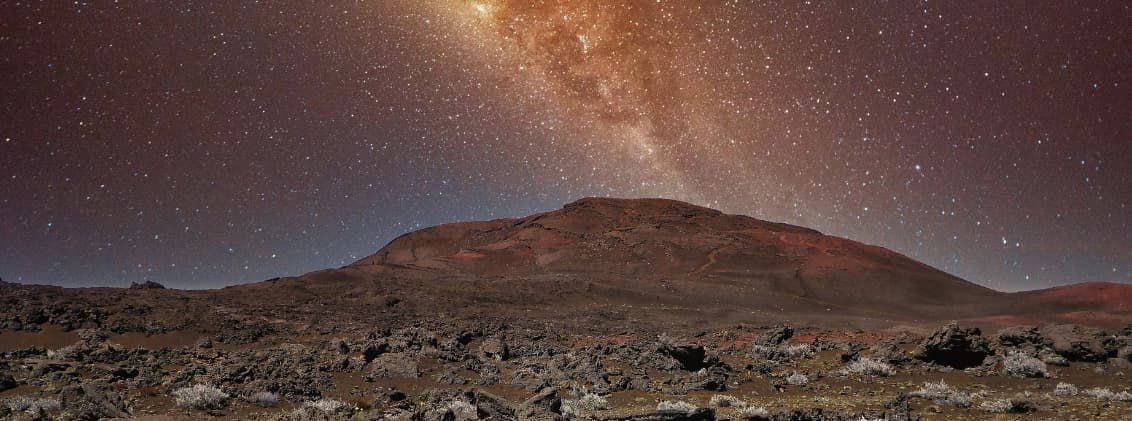
Conquering the Active Volcano Piton de la Fournaise
If you do only one inland outing on the island, make it the volcano. Hiking Piton de la Fournaise is one of the most iconic experiences on Réunion because it feels like stepping into another world. The site is the island’s main tourist attraction, with around 400,000 visitors a year. The volcano rises to 2,631 metres and ranks among the most active in the world.
The standard Piton de la Fournaise hike starts after the drive along the Route du Volcan.The road from the RN3 and Plaine des Cafres leads to the panoramic Bellecombe viewpoint, and from there a walking trail takes you toward the summit crater area. The route itself is part of the experience because the approach already strips away the usual tropical-island expectations.
If you don’t want to walk alone, a Piton de la Fournaise tour is easy to justify here. Book a volcano tour with a mountain guide to discover the volcano in safety. This is a sensible choice on a site where weather, exposure, and official closures matter more than your level of confidence. This is one of the few places where paying for expertise can improve both safety and timing.
Piton de la Fournaise difficulty depends on which route you choose, the weather, and how well you handle exposed volcanic terrain. Although the volcano is accessible to many ages and levels, the old round-the-crater route is no longer possible since the Dolomieu collapse, so visitors now use alternative routes inside or around the Enclos Fouqué.
If you are trying to work out how to hike Piton de la Fournaise, start with the road, the forecast, and the official alerts. Check the weather and prefectural notices before heading out and be properly equipped for hiking.
The island’s signature volcano hike Réunion gives you something most destinations can’t. You are walking across an active massif in the Indian Ocean inside a UNESCO-listed national park. This makes it a genuine active volcano hike Indian Ocean experience, not some rebranded viewpoint stop.
The road in matters as much as the walk. The Route du Volcan is one of the island’s classic drives. It passes through the lunar-feeling Plaine des Sables before reaching the viewpoint zone above the volcano. I would count this approach among the best road experiences on the island even for people who never leave the car.
A lot of visitors secretly hope for eruption viewing Réunion. Eruptions do happen, and lava fountains and flows are part of the volcano’s identity. However, access depends on conditions and official authorizations. A live eruption that you can admire is a bonus, not a given.
Volcano safety La Réunion: Check weather, follow alerts, bring the right gear, and don’t improvise around closures. The volcano is spectacular because it’s an active massif, not because a safe little theme park.
For parking Piton de la Fournaise, most visitors use the main access area near the Pas de Bellecombe side after driving up from Bourg-Murat. Bellecombe is the access point where the road ends and the trail begins. Start early to catch the sunrise and a less crowded parking.
My La Réunion volcano guide includes sunrise timing tips, parking advice, scenic stops, and the best volcano routes mapped step by step.
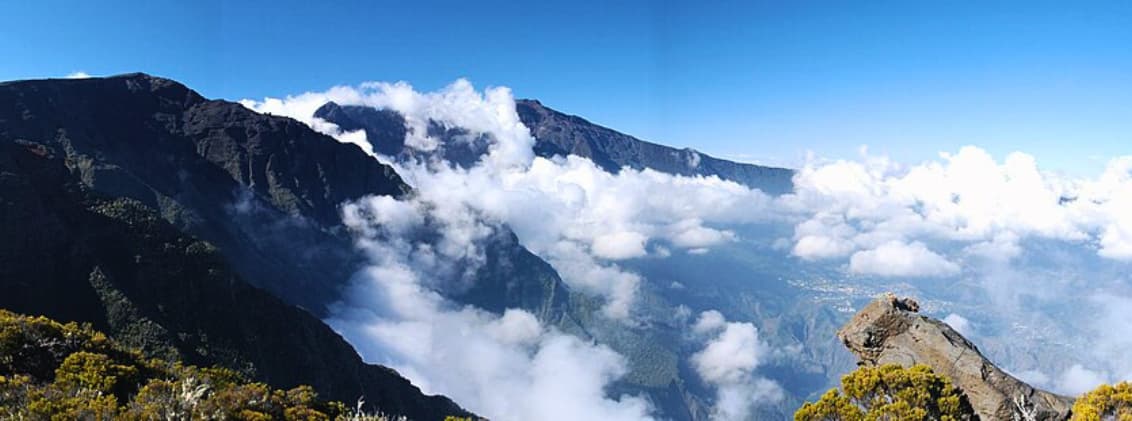
Climbing Piton des Neiges, The Indian Ocean’s Roof
If Piton de la Fournaise is the island’s pulse, Piton des Neiges is its backbone. The dormant volcano is at the origin of La Réunion and the highest peak Indian Ocean, reaching 3,071 metres. It’s also the summit that gives context to the three cirques below.
The classic Piton des Neiges hike is a proper mountain outing that trequires good physical condition. Most ascents begin from Cilaos, and the usual rhythm includes a stop at the Caverne Dufour gîte before the final climb. That overnight stop is what makes the route doable for many non-elite hikers.
People often ask me about Piton des Neiges difficulty because they want reassurance. I won’t sugarcoat it. The ascent requires good fitness, because it’s not a casual viewpoint walk. Hiking Piton des Neiges is a proper summit effort with altitude, darkness if you start early, and the need to manage your energy well.
The reason so many people end up climbing Piton des Neiges anyway is the summit experience. A night at the refuge lets you reach the top at dawn and watch the sun rise over Mafate, Salazie, and Cilaos. The payoff is one of the biggest mountain rewards on the island.
A sunrise Piton des Neiges is one of the strongest arguments for sleeping badly on purpose. This is the moment most people come for, and it’s also why the refuge system matters so much. Without the overnight halt, the timing becomes much harder for many walkers.
Approaching the summit shouldn’t be taken lightly. Piton des Neiges is the highest peak in La Réunion and the Indian Ocean highest peak. This climb carries real weight in a La Réunion itinerary. You’ll be standing on the roof of the region.
If you’re planning the ascent Piton des Neiges, Cilaos is still the key base to think about first. The climb to Cilaos and the refuge halt are key-spects for a successful hike. Treat this part of the route as a small mountain project, not a spontaneous add-on. It deserves respect.
Reunion’s Three Circuses, A Hiker’s Paradise
The three cirques La Réunion are the island’s most distinctive inland landscapes. The heart of the island are the three great natural amphitheatres of Mafate Cilaos Salazie, all shaped around the old Piton des Neiges massif. These are the cirques of Réunion that turned the island into a UNESCO world heritage site and into one of the great hiking destinations of the Indian Ocean.
You don’t need to be a hardcore trekker to care about the UNESCO cirques Réunion. They define the island’s interior geography, climate, and scenic roads. For hikers, though, they are the real prize. Hiking in the cirques becomes the heart of a trip to La Reunion. La Réunion calderas are where the island’s old volcanic collapses reveal themselves as giant inhabited landscapes.
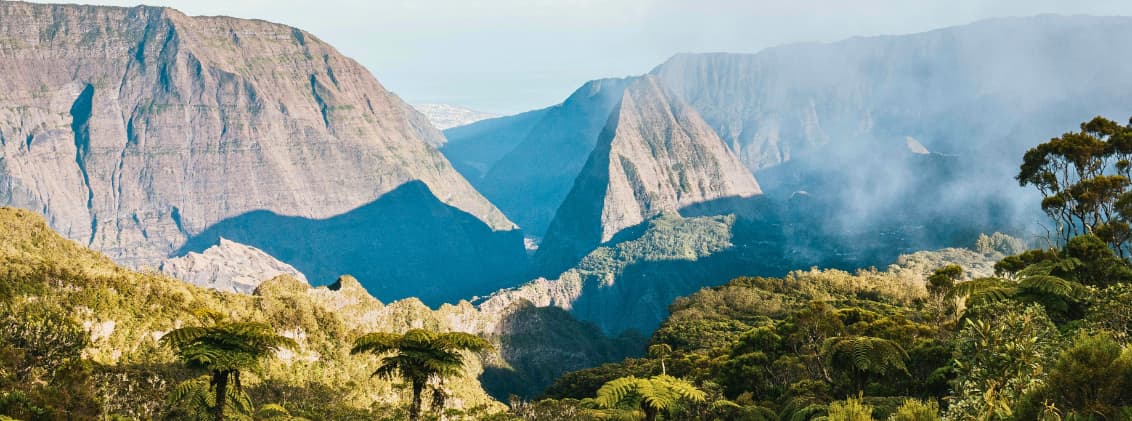
Cirque de Mafate, The Hike You Can’t Reach by Road
Nothing on the island feels quite like Cirque de Mafate. It’s a a world apart that’s only accessible on foot or by helicopter. That alone makes it different from the rest of Réunion. You don’t drift into Mafate casually, you commit to it.
How to hike Cirque de Mafate? A proper Mafate hiking guide starts with planning your access. The whole point of Mafate is that there are no through roads, and the official tourism sources repeat that again and again. The cirque filters out casual tourism through effort.
Your Mafate itinerary depends on where you enter and how much time you have. Many walkers use access points like Col des Boeufs, and there are also Salazie-based departures into the high Mafate area with serious distance and elevation.
You can hike Mafate without guide, but that doesn’t mean you should treat it lightly. The terrain is marked, many independent hikers do it, and there is trail data, yet the whole cirque rewards preparation and humility more than bravado. For many first-timers, a shorter independent route or a guided introduction is the smarter start.
For many travelers, Col des Boeufs Mafate is the name that keeps coming up for a reason. It’s one of the practical gateways into the cirque and one of the access points linked to Mafate hiking. When people say Mafate is hard, they often mean the commitment after these access points.
Mafate only accessible on foot isn’t some slogan. It shapes everything from daily life to luggage decisions to food supplies. The îlets are hamlets reached by trails, still carrying a powerful sense of isolation and authenticity. That’s why Mafate feels less like a stop and more like a small separate country inside Réunion.
Good Mafate gîtes are part of the experience, not a compromise. Staying in them is how you slow down enough to understand the cirque, and it’s also what makes multi-day walking here realistic. If you’re serious about Mafate, sleeping inside the cirque matters.
Use my interactive Reunion map to plan realistic routes, overnight gîtes, access points, and safer hiking days.
Mafate hike for beginners reality check. Some entry routes are more manageable than others, but Mafate as a whole is still a hiker’s place. Beginners can experience it, but they should choose access carefully and avoid pretending the cirque is easy just because it’s famous and so many other travelers are exploring it all the time.
A detailed 2-day Mafate route makes is better than a rushed in-and-out day for most people. The cirque needs time to feel like more than effort. One night inside changes the experience completely because it lets you stop hiking through Mafate and start being in Mafate.
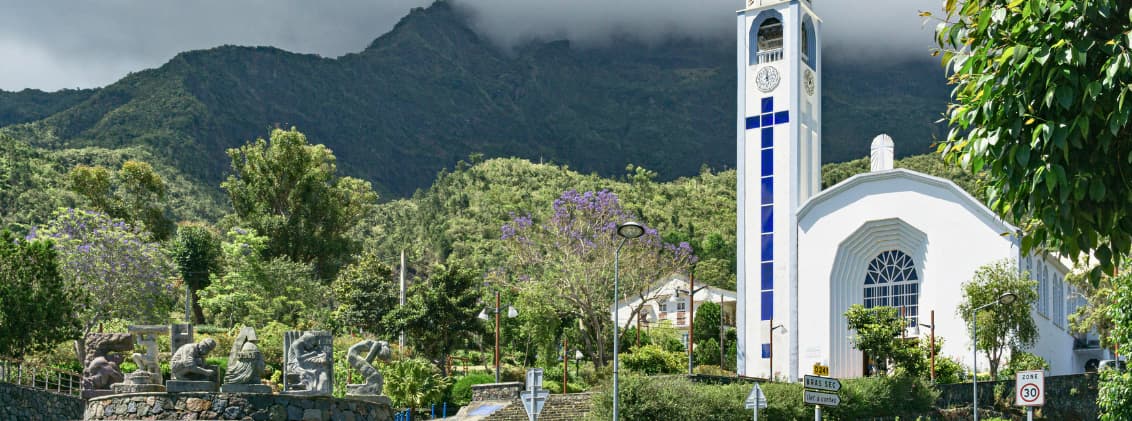
Cirque de Cilaos. Peaks, Waterfalls, and Wine
A good Cilaos travel guide needs to cover the road. The Route de Cilaos is a spectacle in itself, with 400 bends, tunnels, cliffs, and a constant climb into the cirque. If you hate mountain roads, the road to Cilaos will test you before you even get to the village.
Once you arrive, Cirque de Cilaos feels different from the other two cirques. It’s the sunniest and driest of the three, dominated by Piton des Neiges and shaped by a chain of hamlets along the valley. It has a more settled, structured feel than Mafate.
Things to do in Cilaos beyond the summit climb. This is the cirque to explore for mountain atmosphere, village stops, thermal-town history, ridge views, and access to big hikes. It’s a great destination even for travelers who aren’t trying to suffer beautifully on Piton des Neiges.
Cilaos waterfalls and rugged slopes help explain why the cirque feels so visually dense. Everything here seems stacked. Ridges, ravines, cliffs, and village pockets all pile onto one another. It’s one of the few places on the island where simply driving in already feels like an event.
Then there is Cilaos wine, which catches many visitors off guard. You can book vineyard visits and tastings at Ti Cave L’Ilet, including fruit wines made from passion fruit, pineapple, strawberry, banana, and more. Cilaos may be mountain country, but it offers a wider range of experiences beyond hiking.
Still, Cilaos hikes are among the best on the island. This isn’t only because of Piton des Neiges. Cilaos is a good base for exploring dramatic mountain terrain without the full isolation of Mafate. That balance is a big part of its appeal.
As a mountain town Cilaos owes part of its beauty to the fact that it is and feels inhabited, not staged. You get access, views, lodging, and a sense of place without losing the rawness that makes Réunion’s interior worth the effort. Book ahead during major trail events because accommodation fills up fast.
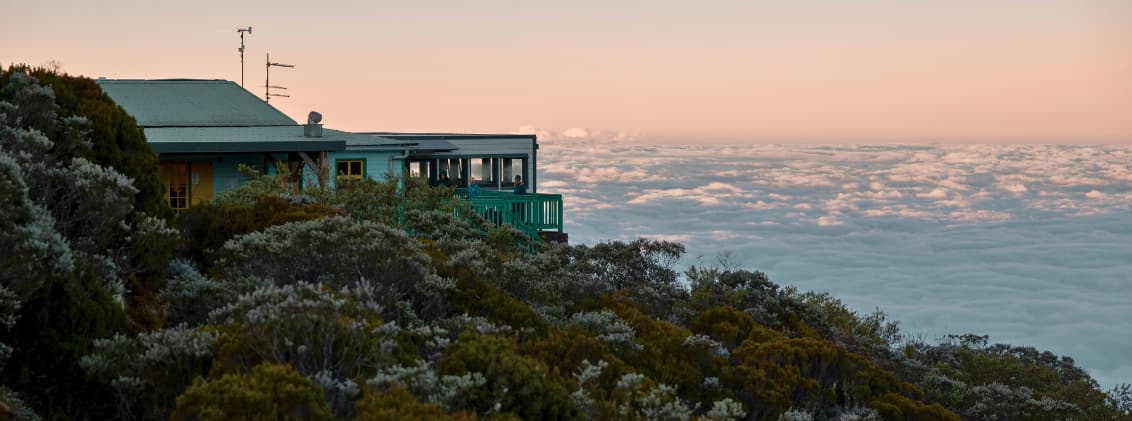
Cirque de Salazie, the Green Heart and Hell-Bourg
If Cilaos feels mineral and structured, Cirque de Salazie feels wet, green, and generous. Salazie is the largest and greenest of the three cirques, with waterfall after waterfall. And once you get on the ground there, you’ll see that isn’t an exaggeration. The whole cirque is like a lesson about how much water a mountain landscape can hold.
Salazie waterfalls are one of the cirque’s defining pleasures. Even the drive in feels like a moving wall of vegetation and falling water. If you want the lush side of Réunion, not the lunar side, this is where you should go.
The place to stop overnight here is Hell-Bourg, and it deserves attention. The village is perched high on one of Salazie’s plateaus and is listed among the Most Beautiful Villages in France. That alone would be enough to make it a stop, but the Creole houses and gardens give it a softer visual texture than many mountain settlements.
Things to do in Salazie beyond hiking. Salazie is also a good destination for scenic drives, village wandering, heritage interest, shorter walks, and slower stays based around the cool peaks. The area offers a mix of outdoor activities, cultural visits, and varied accommodation.
This is the real green heart of Réunion because it balances scenery with softness. Mafate is harder and more isolated. Cilaos is drier and more road-defined. Salazie gives you access to the high interior without forcing the same level of physical commitment. That makes it a useful middle ground for many travelers.
Any good waterfall road Salazie guide should also tell you not to rush your visit here. The area looks like a quick scenic detour on paper, but it rewards the slower traveler far more than the fast one. When the road, the waterfalls, and Hell-Bourg are all working together, there’s no need to invent urgency. If you want one part of Réunion that proves the island offers more than lava and dry ridges, Salazie does that job beautifully.
Local Reunion tip: If you only have time for one volcanic day and one cirque, pair Piton de la Fournaise with either Cilaos for stronger mountain drama or Salazie for greener, easier beauty. Save Mafate for the trip where you can stop pretending you are in a hurry.
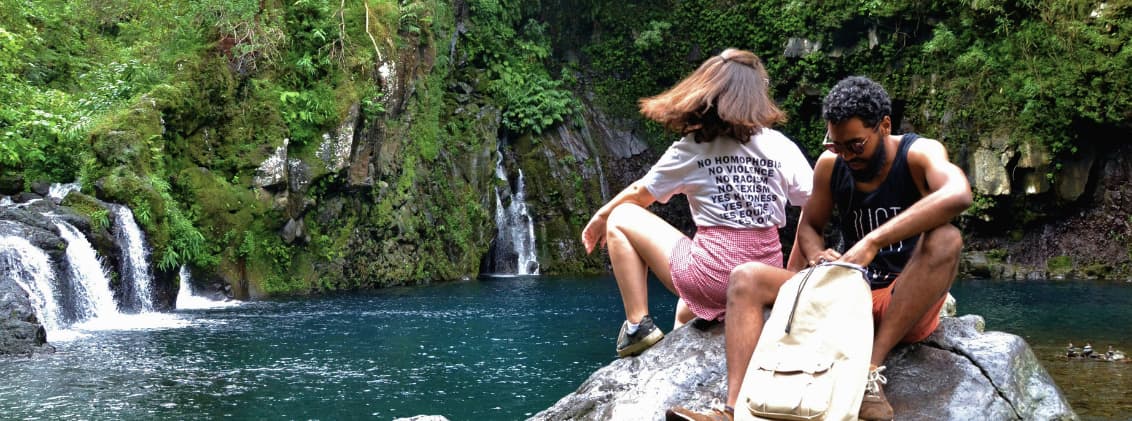
La Reunion waterfalls and nature stops
The easiest way to understand the softer side of the island is through its water. La Réunion waterfalls are everywhere. There are almost a hundred across the island, scattered through forests, mountains, cirques, and eastern river valleys, part of the landscape system.
If you’re looking for the best waterfalls in La Réunion to visit, start by accepting that the east usually wins on abundance. The east is wetter, greener, and more river-cut than the west, which is why so many of the island’s most dramatic cascades sit there or along routes that lean in that direction. This is also why the phrase waterfalls east coast Réunion shows up so often in trip planning.
Read my east coast Réunion waterfalls guide and use the mapped route to connect the best cascades, jungle roads, and nature stops without backtracking.
One of the names you will hear early is Grand Galet, also known as the Langevin waterfall. It’s famous because it delivers the kind of dense tropical scenery people imagine before they ever land on the island. It’s also one of the easier waterfall experiences to understand at a glance, which makes it popular for road trips and first visits.
Then there is Takamaka Valley, which feels wilder and more rugged. Takamaka belongs to the island’s rain-fed interior and carries more of that dramatic, remote energy that makes Réunion feel bigger than it is. When people dream to see the island that looks fully untamed, this is one of the names that comes up for a reason.
If you want scale, Trou de Fer Waterfall lookout is the one that punches hardest. Trou de Fer is the highest waterfall in French territory at 725 metres and one of the most spectacular sites on the planet. Cascade Trou de Fer is one of the rare places where the landscape genuinely looks oversized.
For a stop that’s easier to fold into a drive, Cascade Niagara is one of the friendlier destinations. It’s a good stop for travelers who want a scenic nature stop without turning the day into a full hiking project. Not every waterfall stop on Réunion needs to be a mission.
That’s really the best way to think about cascade stops Réunion in general. Some are pure viewpoint stops, some are picnic places, and some are tied to canyoning, water hiking, or more serious outdoor planning. Rivers, waterfalls, and pools are used all year for swimming, canoeing, rafting, canyoning, and other water-based activities, but ask locally before heading out to avoid unnecessary danger.
The smartest nature stops La Réunion are the ones that balance effort and atmosphere. You don’t need to chase the hardest waterfall every day. A good Réunion route often works better when you mix one major dramatic site with smaller green pauses that leave you time to breathe a bit. That’s especially true on long driving days.
Rivers and waterfalls Réunion are not side attractions. They’re one of the island’s defining textures, especially once you move away from the drier west coast. If the volcano gives Réunion its force, the waterfalls give it its lushness.
Coastal Life. Lagoons, Sharks, and Whale Watching in La Reunion
Coastal life La Réunion is real, beautiful, and worth your time, but it doesn’t look like a generic Indian Ocean beach holiday. The whole shoreline isn’t one giant swimming zone.
The calmest version of the coast lives inside the lagoons La Réunion on the west side. The lagoon is a 22-kilometre reef-protected zone with shallow water, family appeal, and a wide range of low-stress activities. That’s why the west coast is so perfect for first-time visitors. It gives you access to the sea without demanding blind confidence.
At the same time, sea planning on Réunion only works when you take shark safety La Réunion seriously. Swim only where lifeguards are present and never in forbidden or dangerous areas. Families should stay on lagoon beaches and ask lifeguards about currents, weather, water quality, and sharks before entering the water. That’s the tone this island demands.
The reward for respecting those rules is that a coastal vacation means more than beach time. Whale watching Reunion Island is one of the most beautiful seasonal experiences. Humpback whales come from June to October during the austral winter. Dolphins are present year-round, and the island’s marine biodiversity also includes protected sea turtles. That makes the coastline one of the island’s richest wildlife zones.
If your priority is safe swimming La Réunion, use the right beaches under the right conditions. Don’t assume every pretty stretch of water is meant for swimming. That’s exactly why the beach choices below matter.
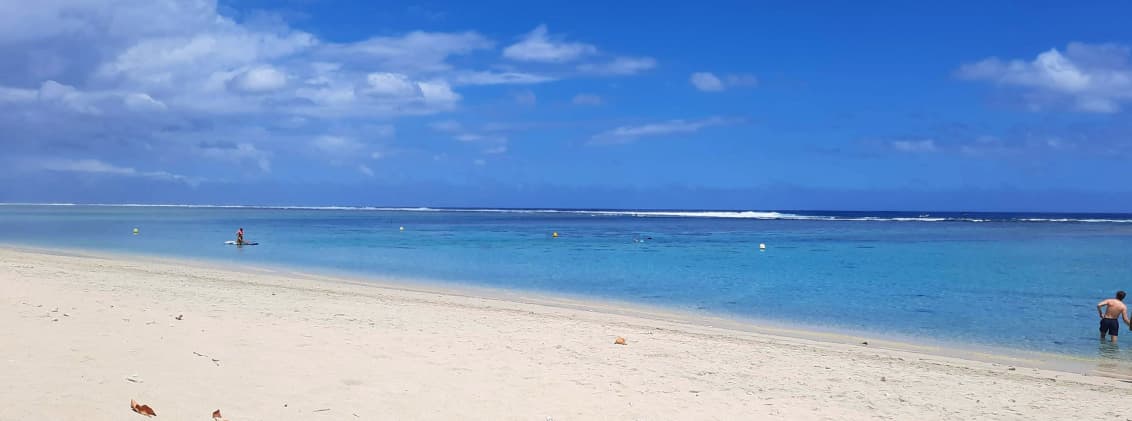
The Best Beaches of La Reunion (Where it’s Safe to Swim)
The best beach strategy on this island is to stop chasing perfection and start chasing safety. There are special swimming areas with lifeguards, nets, or natural pools, and those are the places to prioritize if you want a relaxed sea day.
Are La Réunion beaches safe for swimming? Swimming and water sports are forbidden on much of the coastline because of marine life, but there are dedicated safe swimming zones with supervision. In other words, this is an island where the safe beaches are the ones to plan around.
Where to swim safely in La Réunion? The west coast lagoons are the obvious answer. The lagoon is shallow, reef-protected, and family-friendly. Reunion’s lagoon zone is the best for first-time swimmers and cautious travelers.
The best lagoon beaches La Réunion sit around the west coast reef. L’Hermitage lagoon is the classic family choice because it combines shallow water, easy access, and reef-protection. La Saline lagoon works in a similar way. These are the places I would send most first-timers before anywhere else.
For travelers who want a more famous resort-side beach, Boucan Canot deserves its place in the conversation. Boucan Canot has a swimming area equipped with a net and is one of the island’s big beach names. The Boucan Canot live webcam page also notes a supervised natural pool of volcanic rocks at the north end where families can swim. This makes Boucan Canot one of the island’s most practical compromise beaches.
If you prefer darker sand and a less polished mood, Etang-Salé beach is worth noting. The Étang-Salé coast should be part of your beach-road circuit because it’s a great scenic stop on the west-to-south stretch. I would treat it as a coast experience first and a swimming plan second unless conditions and local guidance are clearly in your favor.
The same goes for Saint-Pierre beach, which works better as part of a southern stay than as the island’s top pure swim beach. Saint-Pierre is practical, urban enough to be easy, and useful if you are based in the south. I wouldn’t rank it above the lagoon beaches for relaxed family sea time, though.
For those after snorkeling beaches La Réunion, the lagoon still wins. The reef-protected waters around the west coast give you the easiest entry into marine life without forcing you into rougher ocean conditions. Lagoon visitors should stay away from the reef barrier and not disturb divers.
Top 3 beaches for families: L’Hermitage lagoon, La Saline lagoon, and Boucan Canot’s supervised swimming area.
My La Réunion beach guide maps the safest swimming spots, lagoon beaches, snorkeling areas, and family-friendly coastal stops across the island.
La Reunion Sharks. Facts, Safety, and Regulations
The hardest part about La Réunion sharks is separating facts from noise. The island does have a serious shark-safety framework, and the tourism board doesn’t hide that. It says swimming and many water sports are restricted around much of the coastline, while special supervised areas are identified for safer bathing. This isn’t random fear but formal coastal management.
Yes, Réunion shark safety needs to be part of your planning, but it’s not the whole story. Swim where there is a lifeguard. Stay out of forbidden zones. Ask local staff about conditions. Don’t enter the sea tired, injured, or casually confident after a long journey. That advice is far more useful than dramatic headlines.
Shark attacks Réunion mentions get a lot of attention but they aren’t frequent. The last fatal shark attack on La Reunion took place in 2019 in an area by Saint-Leu that was banned to swimming and surfing. It’s important how the island responds. There are designated swimming areas, safety nets in certain beaches, natural pools, lifeguard oversight, and clear rules around where recreation is allowed. If you follow that system, the coast becomes much safer and easier to understand.
Is it safe to swim in La Réunion lagoons? Lagoon beaches are the right place for families and other travelers who want to swim in the Indian Ocean. Reef-protected zones are the safest environment for bathing. That doesn’t mean zero risk exists in nature, it means the lagoons are where the island itself is telling you to go.
La Réunion shark regulations: Use the authorized beaches. Respect local warnings. Understand that much of the open coast isn’t designed for carefree swimming. Water sports and swimming are forbidden within a broad 300-metre coastal perimeter except in special supervised areas. The real ocean swimming danger Réunion comes from the mistake of treating a controlled lagoon and an open-ocean beach as if they were the same thing.
You will also hear about shark nets Réunion, especially at places like Boucan Canot. Boucan Canot has a swimming area equipped with a net, and Roches Noires also has protected bathing infrastructure.
Safe swimming zones Réunion are the only zones that matter for most visitors. The rest of the debate is mostly noise unless you are a specialist water user with local knowledge and current information. Ordinary travelers should stick to the official rules.
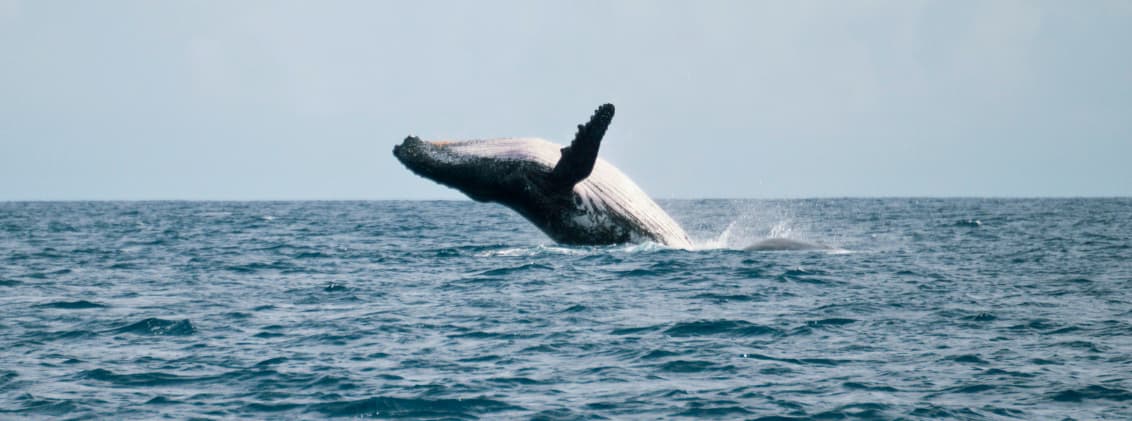
Reunion Marine Life: Whales, Dolphins, and Turtles
The coast also gives you one of the island’s best wildlife rewards. Whale watching Réunion Island is a real draw because humpback whales come to the island during the austral winter, from June to October, after their journey from Antarctica. This isn’t a rare-fluke destination where you hope for luck and little else. Seasonally, Réunion is a serious whale destination.
The stars of the season are the humpback whales Réunion is known for. They arrive to bask in the warmer Indian Ocean waters and that sightings can be made from the west coast and other shoreline points. That combination of accessibility and spectacle is hard to beat. If you are planning around the whale watching season Réunion, pair the June to October window with west coast viewpoints and even parts of Saint-Denis and you’ll get good land-based observation. (Not everyone wants to be on a boat to enjoy the season.)
The island’s marine life isn’t seasonal, though. Dolphins Réunion are visible all year, including pantropical spotted dolphins and bottlenose dolphins, with organised excursions available for people who want to see them respectfully. This year-round presence makes dolphins one of the easier wildlife hopes to build into a trip.
The turtle story is quieter, but still important. Sea turtles Réunion are protected species. They are vulnerabile and need to be preserved. Turtle encounters should be treated as a privilege, not a performance. For people dreaming about snorkeling with turtles Réunion, the smartest mindset is respect first and expectation second. Réunion’s marine identity is strongest when travelers accept that conservation comes first.
Taken together, this is the rich marine life Réunion most people miss when they only think about beaches. You have whales in winter, dolphins year-round, and protected turtles in the island’s waters.
Best hikes in La Réunion. The Complete Beginner’s Overview
The best hikes in La Réunion aren’t all brutal, but they do ask travelers to be realistic and accept their own limits. You see, this island makes people ambitious fast. They see the cirques, the volcano, the ridgelines, and suddenly every walk looks doable. But the smartest first hike on Réunion isn’t the most famous one. It’s the one that matches your fitness level, your timing, and the weather you actually got that day.
That is why I think of La Réunion hiking in three levels. Beginner hikes give you the scenery without wrecking the rest of the day. Moderate hikes give you the real interior of the island without forcing a full trekker identity. Advanced hikes are where Réunion starts testing whether you prepared properly or whether you only liked the photos on social media.
A clear sense of hiking difficulty La Réunion matters more here than in flatter destinations. The island’s marked trail network is excellent, but good waymarking doesn’t make altitude, exposure, cold mornings, or long descents disappear. The Travel Bunny’s Réunion hiking guide is here to help you sort effort from fantasy. Think of it as a simple trail difficulty Réunion filter, a practical hiking overview Réunion, and a reminder that there are hikes for all levels La Réunion if you stop trying to prove something on day one.
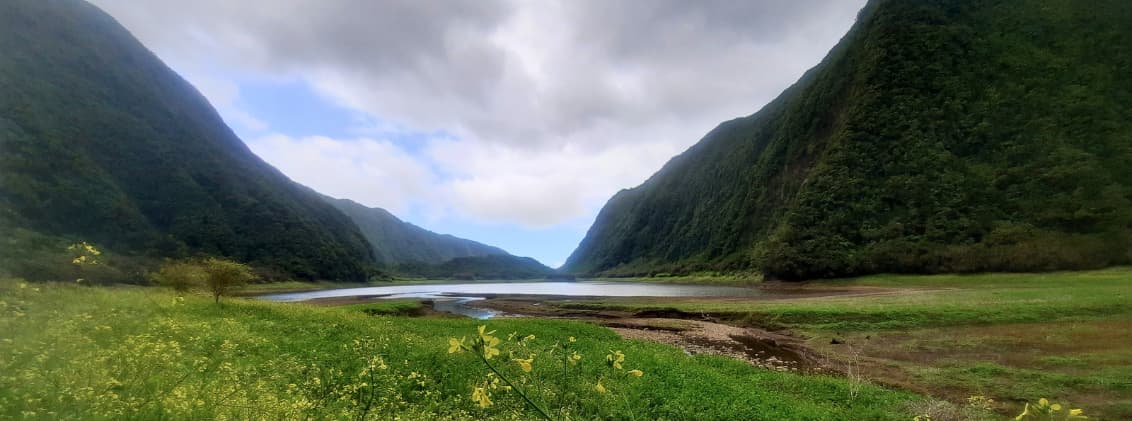
Beginner hikes like Cap Jaune
The best beginner hikes La Réunion are the ones that let you understand the island before the island starts pushing back. Easy does exist here, but easy on Réunion still means heat, uneven ground, or exposure can show up fast if you’re careless. That’s why I like to define the easy hikes La Réunion as short scenic walks with strong payoff rather than flat, urban-style strolls. The point is to build confidence, not to chase mileage.
The Cap Jaune hike is a good example of what beginners should look for. It gives you a strong visual reward without requiring the full logistics and stamina of the cirques or summit climbs. On this Intense Island, that matters. A short hike with clear atmosphere often teaches you more about Réunion than a longer route you only survive. I would put this kind of outing high on the list for first-timers who want the hiking experience without starting with punishment.
This is also the level for most family hikes La Réunion. Families do best on short routes with one clear payoff, good light, and a simple turnaround point. Réunion is spectacular enough that you don’t need to force an epic outing to make the day feel worth it. One compact trail with a big view often works better than a longer route with tired children and bad timing.
When travelers ask me about short trails La Réunion, what they usually want is the easiest route to the island’s essence. That’s totally fair. Beginner-friendly hikes should still show relief, coastline, lava colors, vegetation, or some other side of Réunion’s strange scale. If the walk feels flat in every sense, it’s probably not the best introduction to this island.
Here are some other easy hikes La Réunion that also work with kids: Bassin des Aigrettes (easy access viewpoint version), Cascade Niagara (Sainte-Suzanne), Grand Étang loop (partial walk), and Cap Noir viewpoint (Dos d’Âne).
A lot of the best beginner outings double as easy viewpoints Réunion. That’s part of their value. They let you experience the island’s relief without committing to a full mountain day. I would always rather recommend a short route with a memorable lookout than a longer route picked only because it sounds more serious.
Local tip: If a trail description starts talking about ropes, ladders, or “technical sections,” that’s your cue to turn around with kids.
Moderate hikes like Mafate
The middle ground is where Réunion starts to feel properly like itself. The best moderate hikes La Réunion give you access to the island’s interior without throwing you straight into a summit project or long-distance route. This is where you move beyond scenic samples and begin to understand why hiking shapes so much of the island’s identity.
Most intermediate hikes Réunion aren’t difficult because of a single obstacle. They’re difficult because effort stacks up. Elevation, humidity, heat, rough footing, and the length of the descent all matter. That’s why moderate routes can still surprise reasonably fit travelers. On Réunion, “intermediate” usually means you need decent stamina and some respect for the terrain.
Mafate for fit beginners only. Mafate itself is not beginner territory in general, but some access routes and day walks are realistic for hikers who are fit, prepared, and sensible about distance. The cirque is accessible only on foot or by helicopter, which already tells you what kind of place this is. Parts of it can still work for ambitious beginners who know their limits.
Good day hikes in Mafate are better than a rushed summit hike. Mafate gives you trail culture, remoteness, and inhabited mountain landscapes in one experience. That’s hard to beat. If you can handle a serious walking day, the cirque often delivers more of Réunion’s character than a route chosen only because it is famous.
The best moderate trails Réunion usually leave you tired but still functional the next morning. That sounds obvious, but it’s a useful threshold. On a multi-day trip, you don’t want every hike to become a recovery event. Moderate routes should deepen the trip, not dominate it. On Réunion, pacing is part of hiking skill, not a separate topic.
Here are some of the best Reunion moderate hikes and day routes in Mafate and beyond: Col des Bœufs to La Nouvelle (Mafate), Rivière des Galets to Cayenne (Mafate), Dos d’Âne to Roche Verre Bouteille (Mafate viewpoint route), Cilaos to Bras Rouge waterfall, Grand Bassin via Bois Court, and Sentier Scout (Salazie).
Local tip: If you’re choosing just one Mafate day hike, go for Col des Bœufs to La Nouvelle early in the morning. Heat and cloud build fast and can ruin the experience by midday.
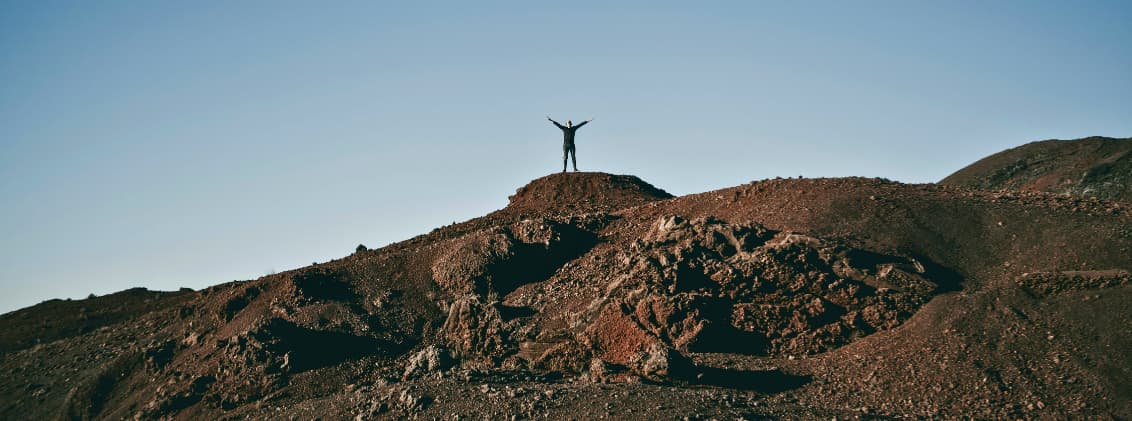
Advanced hikes in Reunion like Piton des Neiges and Plaine des Cafres
The serious side of the island starts here. The best advanced hikes La Réunion are the ones people talk about for years, but they’re also the routes most likely to expose weak planning. Once you move into summit ascents, longer GR sections, or harsher upland terrain, Réunion stops being forgiving.
There’s no point pretending the hard hikes La Réunion are only for elite athletes. Many strong non-professional hikers do them every year. The difference is preparation. Piton des Neiges is an unmissable hike for seasoned walkers, and the island’s long-distance GR trails are explicitly framed as routes for experienced hikers.
The most obvious benchmark is Piton des Neiges difficulty. The ascent requires good physical condition, with the standard rhythm built around an overnight stop at the Caverne Dufour refuge at 2,400 metres before the summit push. The sunrise summit is the prize, but the cold, the altitude, and the final climb make it a genuine mountain outing, not a symbolic challenge.
The island’s upland routes also bring into thought Plaine des Cafres hiking. Choosing the Plaine des Cafres to Piton des Neiges route lets you discover the treasures of the highlands. That tells you exactly what kind of terrain you’re entering. Open, elevated, and more exposed to cold, wind, and long effort than many first-time visitors expect on a tropical island.
For long-route walkers, GR R1 Réunion is one of the island’s classic tests. The GRR1 is a six-stage trek through the cirques and was voted the French public’s favourite trail in 2019. That alone tells you it’s one of the island’s defining trekking experiences. It works best for walkers who want several days of full immersion rather than one big day.
The other major reference point is GR R2 Réunion. It’s the only hiking trail on Réunion that crosses the island from north to south, covering about 130 kilometres in 13 stages from Saint-Denis to Mare Longue in Saint-Philippe. Some sections are challenging, especially between Piton des Neiges and Piton de la Fournaise. It’s the sort of route you plan like a project, not like a holiday extra.
This is where long-distance hiking Réunion becomes its own world. Once you step into multi-stage trekking, the trip changes shape. Accommodation, water, weather windows, and recovery all matter as much as your legs. Réunion can absolutely support that kind of hiking life, but only if you stop thinking in terms of one-off day trips.
A lot of what people call technical hikes Réunion aren’t technical in the mountaineering sense. They’re technical in the real-travel sense. Cold mornings, volcanic slag, steep descents, route length, and the need to manage your body over several stages or high-elevation sections. That’s enough. The island doesn’t need to become an alpine theatre to be demanding.
The same goes for high elevation trails La Réunion. Altitude on Réunion is not Himalayan, but it’s high enough to change temperature, fatigue, and pacing fast. The official tourism pages for Piton des Neiges and the Caverne Dufour refuge both emphasize cold conditions at altitude, frost in the southern winter, and the need to carry water and proper kit. That’s exactly why these hikes stay memorable.
Local tip: Start lower than your ego wants. On Réunion, the hikers who enjoy the island most are usually the ones who save Piton des Neiges and the GR routes for later in the trip, not for the day they’re still pretending jet lag is a personality trait.
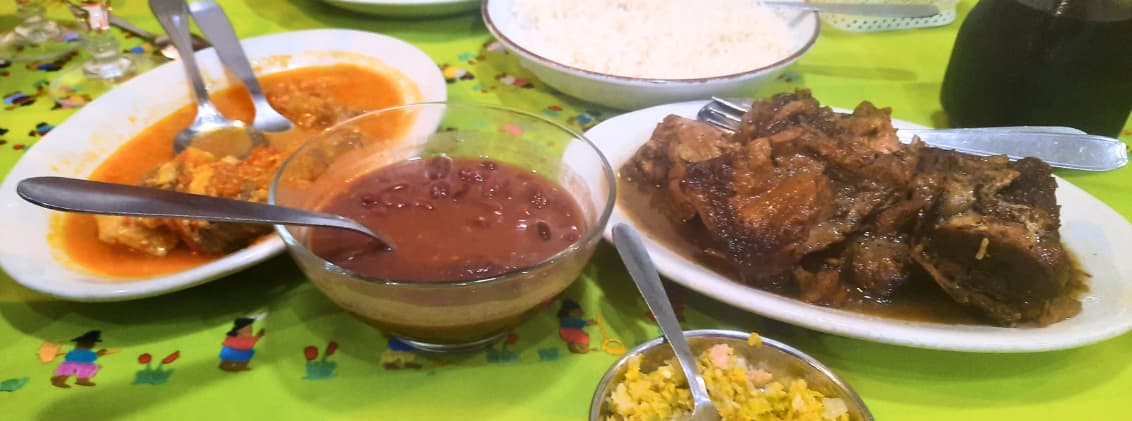
What to Eat in La Réunion. Creole Food Guide
If you’re wondering what to eat in La Réunion, start by forgetting the idea of one neat national cuisine. La Réunion food makes sense only when you see it as a living mix of people, migration, trade, and adaptation. Real Creole food La Réunion can’t be reduced to one curry and a rum bottle. This island’s food is as diverse as its history.
Any good Reunion Island food guide has to begin with the island’s cultural mix. If you want to know what to eat in Réunion Island, you need to understand that the plate here reflects African, Indian, Chinese, Malagasy, and French influences layered together over time. The island is a crossroads of civilizations, and its gastronomy is one of the strongest ways to understand local life.
The best local food La Réunion is usually the food that still feels tied to routine. Daily lunches, market snacks, family cooking, and Creole lunch menus tell you far more than a polished menu trying too hard to be memorable. Traditional food Réunion still lives in simple places where rice, grains, meat, fish, spices, and achar all make practical sense together.
Approach Réunion cuisine as a journey through Creole flavors. Savor multicultural food La Réunion: taste French technique in one place, Indian spice logic in another, and African or Malagasy echoes in dishes that feel fully local now. This is real French Indian African Malagasy food Réunion.
If I had to sum it up simply, this is a Creole cuisine fusion island with a strong appetite and no reason to apologize for it. The result is a food culture La Réunion that feels lived in, generous, and rooted in everyday life rather than staged for outsiders. That makes eating on the island one of the best ways to understand it.
Essential Creole Dishes to Try in la Reunion
The dish most people meet first is the cari réunionais. What is cari réunionais? It’s the core of many local meals, one of the pillars of Réunion cuisine. It’s a dish usually built around meat, fish, or sometimes vegetables, cooked with onion, garlic, turmeric, and thyme, then served with rice and side dishes.
Then comes rougail saucisse, which is the dish many visitors remember first and crave later, when their Reunion vacation is over. What is rougail saucisse? It’s smoked sausage cooked with tomatoes, onion, and spice, usually served with rice and grains. It’s one of the island’s great classics, and it earns that status easily.
A plate like bol renversé shows the Chinese side of the island more clearly. This upside-down rice dish is one of those meals that proves Réunion food is broader than many first-timers expect.
The snack side matters too, especially if you want to eat the way people really eat during the day. Handmade samoussas Réunion are one of the clearest examples. Another example is bonbon piment. These little chili fritters are simple, cheap, and easy to underestimate, which is part of their charm.
No local plate is full without the side elements. Achards bring acidity and crunch. Grains give depth and substance, usually through lentils or beans. Together, they stop the meal from becoming only about the main meat or fish. This is one reason island lunches feel complete rather than assembled.
Drinks deserve their own moment too. A proper ti’ punch is part of the wider Creole drinking culture, while rhum arrangé is one of the island’s most recognizable signatures.
These are the local dishes La Réunion that you’ll remember long after your trip. They are must-try dishes Réunion for first-timers because they cover the island’s gastronomy without pretending every meal needs to be a special occasion.
| Must-try dish | What it is |
|---|---|
| Cari Réunionais | The backbone of many local meals, built around meat, fish, or vegetables with turmeric, onion, garlic, and thyme, usually served with rice and sides |
| Rougail saucisse | Smoked sausages cooked with tomato, onion, and spice, then served with rice and grains |
| Bol renversé | A Chinese-influenced rice dish that reflects the island’s mixed culinary roots |
| Samoussas | Crisp filled pastries sold in snack shops, markets, and takeaway counters |
| Bonbon piment | Small spicy fritters that work as a cheap and satisfying snack |
| Achards | Pickled vegetables that bring sharpness and balance to heavier dishes |
| Grains | Lentils or beans served alongside rice and the main dish |
| Rhum arrangé | Infused rum that is closely tied to the island’s food and drink culture |
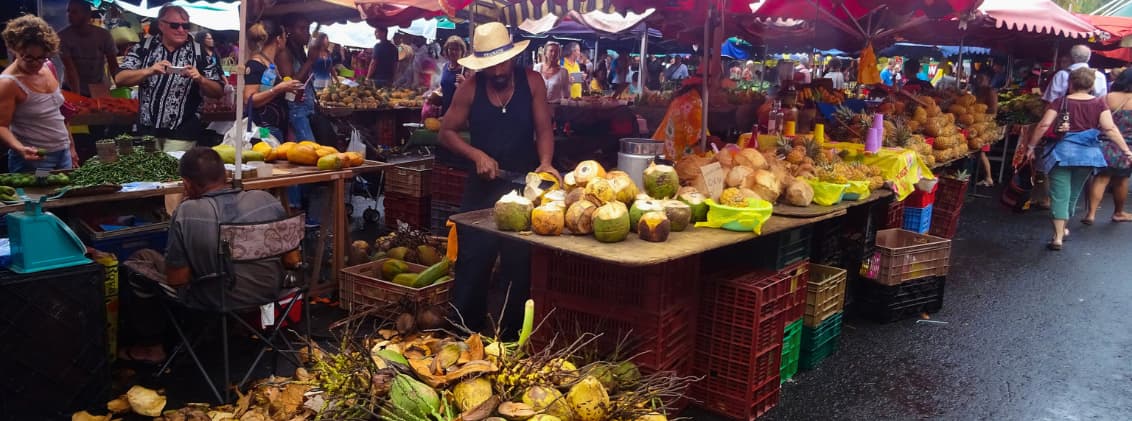
Reunion local Markets and Where to Eat Like a Local
The fastest way to understand the island’s food habits is to go where locals actually buy and eat. The best local markets La Réunion combine shopping with a daily rhythm, ingredients, snack culture, and who the food is really for. Markets sit at the center of everyday food life on the island.
If you want to know where to eat like a local in La Réunion, don’t start with the smartest-looking dining room. Start with lunch counters, market edges, family-run Creole restaurants, and places that still cook the dishes people recognize without explanation. In Saint-Denis, Le Manguier serves cari and sautéed dishes. Le Gasparin Créole serves cari coq, massalé cabri, and potato boucané. In Saint-Paul and Saint-Pierre, many restaurants still combine Creole and Chinese influences in very ordinary, useful ways.
For market culture, Saint-Paul market is one of the big names for a reason. Food, seafront life, and market activity connect tightly here. It’s the kind of place where buying produce, grabbing something hot, and understanding the local mix all happen in the same stretch. That makes it one of the easiest food stops for first-time visitors.
The same applies to the Saint-Pierre market, especially if you are based in the south. Saint-Pierre is one of the best towns on the island for combining everyday life with food stops that still feel normal rather than curated for visitors. Places like United Food and Restaurant du Marché de Gros show just how varied the scene can be, from balanced modern bowls using island ingredients to Chinese, French, and Creole daily cooking.
For a more urban north-coast rhythm, head to Saint-Denis markets and snack shops. Saint-Denis gives you a more city-based version of the food scene, with Creole lunch restaurants and specialist snack makers like Samoussa Mounichy. That’s useful for travelers who arrive in the north and want to eat well before disappearing into a resort or a road trip.
The places worth remembering are often the less flashy ones. The best local restaurants Réunion aren’t always the most photographed. They’re often the ones still cooking a proper lunch service with dishes local people order without hesitation. Some examples are Bistrot Case Créole, Le Manguier, Le Gasparin Créole, and La Table de Dyan’s. The offer fresh products, daily dishes, Creole classics, and straightforward opening hours.
Family restaurants La Réunion or small local places carry a lot of the island’s food memory because they keep dishes close to habit rather than novelty. On an island with this kind of culinary mix, consistency and freshness often matter more than polished presentation.
If you’re specifically after authentic Creole restaurants Réunion, look for menus that still speak the local language of lunch. Cari. Rougail. Cabri. Rice. Grains. Daily specials. Those are better signs than “fusion” used too many times on a menu. Réunion doesn’t need help becoming multicultural. It already is.
For some travelers, a food tour Réunion or local cooking class is one of the smartest ways into the cuisine. It shortens the learning curve, especially if you’re the kind of traveler who likes context with the plate. On a destination this layered, that can make a real difference because you stop ordering blindly and start noticing patterns.
Use my Reunion travel guide app to find the best Creole restaurants, market lunches, samoussa stops, rum tastings, and local food experiences across the island.
Local tip: On Réunion, lunch is where the island often tells the truth. Go where people are eating proper plates in the middle of the day.
Digital Nomad in Réunion and Long Stays in Paradise
A digital nomad Réunion Island stay can be great, but only if you choose your base with more care than you would for a short holiday. La Réunion is good for people who want French infrastructure, year-round outdoor access, and a slower island rhythm. It is less good for anyone expecting a huge nomad ecosystem on every corner. For remote work La Réunion, the sweet spot is usually a coastal town with services, decent transport links, and an easier day-to-day life.
The appeal of a long stay La Réunion is easy to understand. You get the euro, French administration, strong healthcare, and a lifestyle that mixes sea, mountains, markets, and practical daily living. That makes the island attractive for people who want to work remotely from La Réunion without feeling cut off from basic systems. The trade-off is the cost of living La Réunion that’s still tied to French standards more than to cheaper tropical-destination logic.
If you are planning a month in La Réunion, don’t think like a tourist booking one “best” hotel. Long stays work better with apartments, studios, guesthouses with kitchen access, or some form of coliving Réunion arrangement. Long-term rentals Réunion become more important than postcard views. The right stay is the one that makes ordinary weekdays easy.
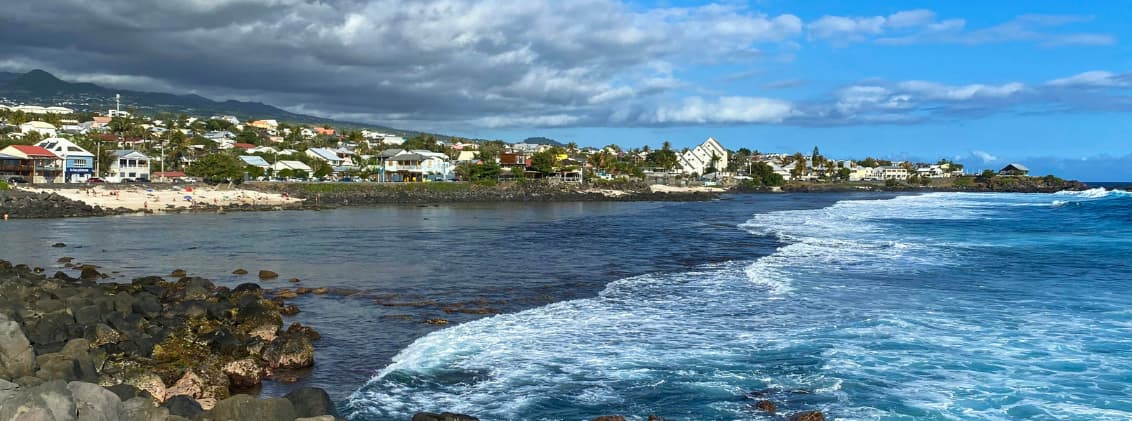
Saint-Pierre, The Island’s Nomad Hub
If I had to point most remote workers toward one town first, it would be Saint-Pierre. A Saint-Pierre digital nomad stay makes sense because the south coast gives you services, food, a livelier local rhythm, and a better balance than a resort-heavy beach base. It feels practical without feeling dull, which is exactly what long-stay travelers usually need after the first few photogenic days wear off.
There’s also actual infrastructure behind that choice. For example, Villa Coliver in Saint-Pierre offers coworking with fiber Wi-Fi, video-call booths, and monthly, multi-entry, and day passes, while Emergence OI also runs a coworking space in Saint-Pierre with high-speed Wi-Fi and day-rate access. That matters because Saint-Pierre coliving WiFi has real places built around it.
I consider Saint-Pierre the best base for digital nomads La Réunion for most people, not because it’s trendy, but because it’s workable. You can work from Saint-Pierre Réunion, then still have a normal life outside working hours. Cafés, food, errands, coast, and road access all sit within a rhythm that suits longer stays better than a pure resort strip. As a south coast base Réunion, Saint-Pierre is one of the island’s strongest compromises between comfort and character.
La Reunion Internet Speed & Coworking Infrastructure
The first practical question is always connectivity, and here the picture is decent. Internet speed La Réunion is supported by established fiber and mobile operators, not by one fragile island network. Zeop presents itself as a major fixed and mobile operator and calls itself a pioneer of very high-speed and fiber on the island. Réunicable also describes broad fiber deployment across much of La Réunion. That doesn’t mean every rental is excellent, but it does mean the island has real digital infrastructure behind the pretty scenery.
For day-to-day use, look at the property’s internet connection. General WiFi La Réunion quality can be strong, but apartment-level reality still depends on the host, building, and exact neighborhood. That’s why coworking spaces matter. At Saint-Pierre’s Emergence OI, the space explicitly advertises high-speed Wi-Fi compatible with Wi-Fi 6E. Villa Coliver also advertises fiber Wi-Fi and work-friendly facilities. That’s the kind of detail long-stay workers should care about more than decorative interiors.
On mobile access, SIM card La Réunion options are straightforward because you’re dealing with real local operators, not improvised tourist products. Zeop offers mobile plans on the island, and SFR Business Réunion says it covers more than 99 percent of La Réunion in 4G+. Arcep also publishes annual quality-of-service results for La Réunion, which is a useful sign that mobile performance is measured and compared seriously. That gives you a stronger base for mobile data La Réunion than many remote islands can offer.
On La Réunion mobile data and SIM card options you have workable choices. What matters more is picking the operator that performs best in the exact places you plan to stay and move around.
For most remote workers, the island offers reliable internet Réunion if you build in a little redundancy. Use a rental with confirmed fixed internet, keep a local SIM with data, and know where the nearest coworking backup is. That’s enough for most normal work patterns. If your income depends on flawless connectivity every hour of every day, treat coworking membership as insurance, not as an optional extra.
The same applies to fiber internet Réunion. The island clearly has fiber infrastructure and fiber-marketed workspaces, but that doesn’t guarantee that every charming rental has a setup worth trusting. For long stays, ask for an actual screenshot of the connection or a recent speed test before you book. Pretty balconies don’t run video calls.
If coworking matters to your routine, the good news is that there are real options. Coworking La Réunion isn’t massive, but it’s visible and usable. Le Crew operates in Saint-Pierre and La Saline, with day access and an active member community, while Saint-Pierre also has coworking spaces such as Villa Coliver and Emergence OI. That’s enough to make the island suitable for freelancers, founders, and remote employees who don’t need a giant startup scene to stay productive.
And if you’re specifically comparing housing setups, coliving internet Réunion is one of the more useful filters to apply. A coliving or work-focused villa that already advertises fiber, workspaces, and community will usually serve a nomad better than a random holiday rental with vague promises about “good Wi-Fi.” On La Réunion, that difference is worth taking seriously.
Local tip: For a long stay, I would base myself in Saint-Pierre, get a local data plan on day one, and keep one coworking option in reserve even if I planned to work mostly from home. That’s the easiest way to make island life productive.
La Réunion Budget. How Much Does It Really Cost to visit Reunion Island?
The truth about a La Réunion budget is simple. This isn’t a cheap island by backpacker-Asia standards, and it’s not absurdly expensive by French standards either. If you plan well, the island is manageable. If you improvise badly, the costs stack up fast through car hire, accommodation, and too many meals in the wrong places. Current cost-of-living data puts an inexpensive restaurant meal at around €15, a mid-range meal for two at around €65, and local public transport at about €2 per ride.
A realistic Reunion Island budget starts with accommodation, because that’s usually the highest fixed cost after flights. For a typical traveler, the broad range of about €90-€200 per night for a decent private stay is a fair planning benchmark, especially once you factor in coastal hotels, comfortable rentals, and seasonality. That range also fits the prices of the island better than chasing fantasy bargains that usually come with bad location or weak reviews. This sits alongside current local rent levels that Numbeo places around €550-€713 per month for a one-bedroom, depending on location, which also helps long-stay travelers judge the market.
Food is easier to control than lodging if you stay honest about how you eat. Looking at current local price data, a casual restaurant meal averages around €15, a cappuccino around €2.75, and bottled water around €2.38 in restaurants. Grocery basics are also in a recognizably French price world, with rice around €2.22 per kilo, eggs around €4.35 per dozen, and chicken fillets around €12.24 per kilo. That means self-catering can help, but it won’t magically turn Réunion into a bargain destination.
Car rental is the cost line that catches people off guard. If you want the freedom to reach the volcano, cirques, and inland viewpoints, renting a car still makes the most sense for most trips. Current listings show small cars from roughly €16-€20 per day and compact SUVs from roughly €27 per day on sample dates, which is useful as a lower-end benchmark rather than a guaranteed fare. On the ground, airport rental options are extensive, but the cheapest daily rate is rarely the full story once insurance, fuel, and vehicle suitability enter the picture.
La Réunion budget per day depends less on the island and more on your travel style. A lean budget traveler using buses, simple guesthouses, and takeaway lunches can keep daily costs much lower than a couple using a rental car, restaurant dinners, and comfortable hotels. A comfort trip rises fast because French-style pricing touches meals, services, and lodging.
How expensive is La Reunion? It’s moderate to high, but predictable if you plan. For a rough La Réunion travel cost framework, I would think in tiers instead of pretending one number fits everyone:
- Budget travel can work from around €70-€110 per person per day if you keep accommodation simple, use public transport when possible, and eat casually.
- A mid-range trip with a rental car and comfortable lodging is more realistically around €140-€220 per person per day.
- A comfort or luxury trip with stronger hotels, full car use, and regular restaurant meals rises from there without much resistance.
Those bands are reasoned from current local meal prices, transport costs, and typical accommodation pricing.
The full cost of a trip to Réunion is easier to reduce through structure than through sacrifice. The biggest savings usually come from choosing the right base, limiting unnecessary hotel changes, mixing self-catering with lunch specials, and avoiding a car for every single day if your itinerary doesn’t need one. Smart planning helps more than performative frugality here.
A proper budget trip Réunion is possible, but it works best for travelers who accept limits. The bus network can reduce costs. Guesthouses and simpler apartments can reduce costs. Market snacks and lunch menus can reduce costs. What usually fails is trying to do every remote scenic drive and every premium experience while still calling the trip budget. Réunion is generous, but it doesn’t bend that far.
There is still room for cheap travel La Réunion, especially for long-stay travelers, remote workers, and people who don’t need to “see it all” in one week. Monthly accommodation averages show that a one-bedroom outside the center can run around €550, which is far more workable than nightly hotel rates if you’re staying longer. That’s one reason the island makes more financial sense on a slower timeline.
The easiest money win on the island is to mix paid highlights with free things to do La Réunion. Viewpoints, scenic drives, beach time in authorized zones, many waterfalls, village walks, and selected hikes cost little or nothing beyond transport and food. The island’s best landscapes are often not ticketed experiences. Certain cultural events are also free, which is a good reminder that not every worthwhile stop needs a price tag.
Use my interactive Reunion Island guide to plan smarter routes, reduce unnecessary driving, and avoid overspending on weak tourist stops.
Budget accommodation Réunion exists, but the trick is choosing simple places in the right area. A cheaper room that adds two extra hours of driving isn’t really cheap once fuel, time, and fatigue are counted. This island punishes false economy more than many destinations do. That’s why base choice matters so much to the final budget.
For a cost comparison La Réunion vs mainland France, the island feels close enough to France to be familiar and far enough to sting a little. Grocery and restaurant prices are clearly in the eurozone world, not the budget tropics world. Fuel and rental costs also reinforce that. So if you already live in France, the island won’t feel wildly alien financially. If you’re arriving from a much cheaper region, it probably will.
Money handling is straightforward once you stop overthinking it. La Réunion uses the euro because it is a French overseas department. In daily life, cards are widely used, but many businesses accept cash, and some specifically list only cash or cheques as payment methods. That means carrying some cash is sensible, especially outside the more polished tourist flow.
| Daily budget tier | Who it suits | Typical daily range per person | What this usually includes |
|---|---|---|---|
| Budget | Careful solo travelers, long-stay travelers, and simple couples | €70-€110 | Simple room or shared stay, casual meals, buses or limited car use, mostly free activities |
| Mid-range | Most first-time travelers | €140-€220 | Comfortable private stay, rental car, mix of casual and nicer meals, regular sightseeing |
| Comfort / luxury | Travelers prioritizing convenience and higher-end stays | €250+ | Better hotels, full car use, restaurant dinners, premium activities, fewer compromises |
La Réunion is easiest on the wallet when you slow down, choose your base well, and stop trying to buy convenience for every part of the trip.
Local tip: Spend money on the right base and the right car first. On Réunion, those two choices save more wasted cash than cutting coffees or pretending a bad room in the wrong place is a smart deal.
Reunion Safety, Common Mistakes, and What I’d Tell a Friend
Is La Réunion safe? The island is generally safe for tourists La Réunion in the everyday sense, yet it demands more respect for nature than many classic beach destinations. On Réunion, the biggest problems usually come from the sea, the mountains, fast-changing weather, and poor decisions around timing or gear, not from problems on the streets.
Travel Safety La Réunion: If you follow local rules, plan hikes honestly, swim only in authorized areas, and avoid treating a tropical island like a soft-edged playground, you should be safe. The most common mistakes La Réunion are ordinary planning errors repeated by first-timers who underestimate the island.
Solo travel safety Réunion is a concern when a solo traveler overestimates their hiking ability, sets out too late, or assumes all water is safe because it looks beautiful. Réunion is dangerous if you stop paying attention.
That is why the real subject is natural risks La Réunion, such as currents, sharks, dehydration, sun exposure, slippery rocks, closed trails, sudden river rises, heavy rain effects, and unstable rock on volcanic terrain. Those are all manageable risks, as long as you treat them as real. That is also where most rookie mistakes La Réunion begin.
Healthcare and Pharmacies. The French Advantage
One of the island’s quiet strengths is healthcare La Réunion. Health services are available throughout the island according to French standards, with an excellent network of nurses, doctors, and well-equipped hospitals. That matters a lot more than people admit, especially for families, expats, remote workers, and anyone doing mountain activities.
The same goes for pharmacies La Réunion. There’s a network of pharmacies across the island where you can buy medication and hygiene products. This sounds basic, but on a volcanic island where weather, insects, and active days can all catch you off guard, it’s a real advantage. French healthcare standards Réunion are one of the practical reasons long stays here feel less stressful than on many other tropical islands.
What most don’t know is that on Reunion Island, it’s a lot faster to see a specialist than on mainland France. For example, to see a dermatologist, you can make an appointment the next day in La Reunion, but you need to wait several months in mainland France.
For visitors, this means medical care La Réunion is not some weak point you have to nervously work around. You still need travel insurance and common sense, but the baseline system is reassuringly solid. I would still pack a small first-aid kit, blister care, mosquito repellent, and any personal medication rather than assuming you want to shop for everything after landing.
On water, the official hiking advice is to avoid drinking from rivers and lakes (untreated natural water), and to take enough water with you into the mountains. Can you drink tap water in La Réunion? There is no warning against drinking tap water La Réunion. That said, after storms or if you have a sensitive stomach, some travelers still prefer bottled or filtered water for peace of mind. I would treat tap water as generally normal in settled areas, but I would not improvise with untreated natural sources.
The bigger day-to-day health issue is insects. Mosquitoes Réunion aren’t a small annoyance to laugh off. Dengue is present on the island, and travelers should protect themselves against mosquito bites day and night. Use repellent on exposed skin, mosquito nets, protective clothing, air conditioning, and continue protection if symptoms appear.
The same caution applies to chikungunya Réunion, even if dengue gets more attention. On a tropical island with tiger mosquitoes, bite prevention isn’t optional. It’s one of the simplest and most useful safety habits you can build into every day.
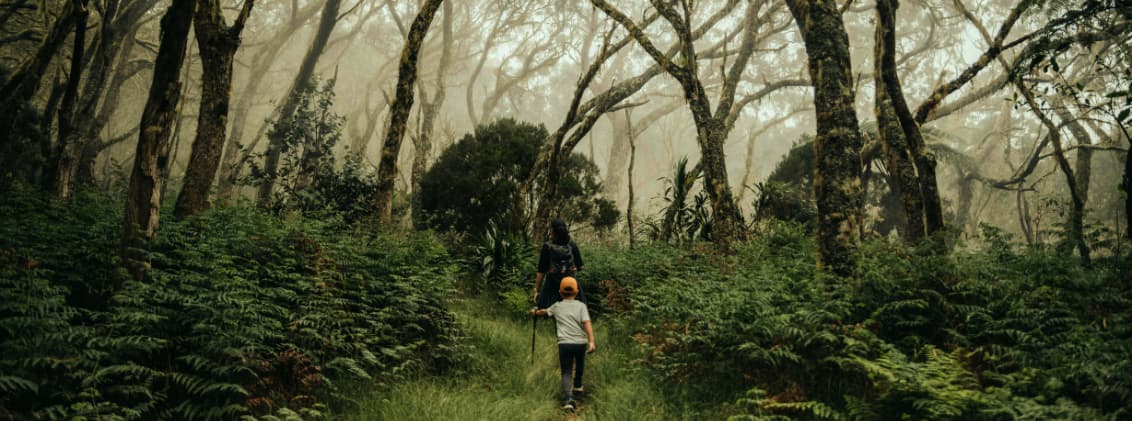
Sustainable Tourism in Reunion & The UNESCO Charter
The island’s landscapes are protected and under pressure. Sustainable tourism matters more here than in some destinations where “eco” mostly means using a paper straw. The island’s mountain core sits inside a UNESCO-recognized environment, and the National Park actively links development, biodiversity protection, and resident life in places like Mafate.
At the broadest level, ethical travel Réunion means understanding that the island is a lived-in place with fragile habitats, inhabited cirques, and protected coastal and mountain areas. Travelers should not light fires, use closed trails, and/or damage protected coral in the lagoon. These simple rules are part of keeping the island usable and beautiful.
The island’s most famous interior landscapes were inscribed on the UNESCO World Heritage List because of their volcanic formations, biodiversity, and ecological value. When you hike, drive, swim, or stop for a picnic in these areas, you’re moving through protected terrain. That should change how you behave.
Réunion National Park UNESCO status for travelers: Stay on marked paths. Respect closures. Do not carry off coral, plants, or little “souvenirs” from natural sites. Taking coral can lead to a heavy fine. Good travel here means understanding that the landscape is not yours to edit.
For hikers, responsible hiking Réunion means matching the route to your physical ability, avoiding hiking alone, booking refuge space, checking trail conditions, and avoiding trails during heavy rain and for three days after rainy periods because rocks and ground can become unstable. That is both safety advice and environmental advice.
Eco travel Réunion: Use the official networks. Ask before swimming. Follow trail rules. Carry out your rubbish. Choose local businesses when you can. Stop acting like nature becomes harmless or ownerless because you are on holiday.
The best local expression of this is the wider idea behind the Mafate attitude eco charter. The National Park describes Mafate as a lived-in cirque that it wants to guide toward ecological, exemplary development, balancing resident needs with preservation of biodiversity and landscape. That’s a useful model for the island as a whole. Travel here works best when visitors understand they are entering a place that is inhabited, fragile, and not infinitely elastic.
10 Mistakes First-Time Visitors Make in La Réunion
These are the mistakes first-time visitors make in La Réunion most often, and nearly all of them are avoidable. None of them are glamorous. Most are the kind of common travel mistakes La Réunion punishes quietly through wasted time, bad timing, uncomfortable hikes, and needlessly stressful days.
- Underestimating driving times in Réunion is the classic first-timer error. The island looks small. The roads aren’t fast. Weather and relief change everything. A route that seems easy on the map can eat most of your day once bends, climbs, stops, and fatigue enter the picture.
- Choosing the wrong base. A wrong base La Réunion can quietly ruin the structure of the trip. A cheap room in the wrong area often costs more in fuel, time, and frustration than a better-located stay. This island rewards smart geography more than cheap optimism.
- Swimming where you should not. Unsafe swimming Réunion is one of the dumbest mistakes because the island makes the rules very clear. Swim in supervised or authorized areas. Ask lifeguards about currents, weather, and sharks. Don’t improvise because the water looks nice.
- Packing badly for the mountains. Wrong hiking gear Réunion shows up every day in small ways. People bring beach clothes to cold trailheads, weak shoes to muddy descents, or too little water because the island “looks tropical.” Hikers should carry enough water, protect against the sun, and plan for the route properly.
- Booking gîtes too late. Not booking gîtes early Réunion is especially risky if your route includes popular mountain areas or summit plans. Booking room and board in the mountains in advance. If you want refuge-based hikes or nights inside popular areas, don’t leave them to chance.
- Poor weather planning Réunion wrecks more days than people expect. Heavy rain can destabilize trails. Rivers can rise fast. Fog can erase your big viewpoint. Certain trails are closed during heavy rain and for three days afterward.
- Trying to do too much. Too much in one itinerary Réunion makes the island feel harder and less enjoyable than it is. The best trips here leave room for weather, stops, and a little stubbornness from the terrain. Stuffing the plan with every highlight usually means seeing everything badly.
- Ignoring local signage and closures. Don’t follow trails marked as closed. That should not need repeating, but apparently it does. Closed means closed. Not “probably fine.”
- Overpacking the wrong things. A giant suitcase is less useful than a better day bag. One of the smallest useful habits on Réunion is carrying a light bag with water, layers, repellent, sun protection, and snacks instead of treating each outing like a separate migration.
- Forgetting mosquito protection. Repellent sounds minor until it stops being minor. Protect yourself against mosquitoes day and night because dengue can be transmitted by tiger mosquitoes. I would pack repellent before a second pair of “nice” shoes.
If I were telling a friend how to stay safe here, I would keep it brutally simple. Respect the sea. Respect the mountains. Respect the distances. Pack lighter but smarter. Carry a decent bag. Bring mosquito repellent. Check the weather. Don’t treat official signs are suggestions. And that’s about it.
My La Réunion guide app also includes practical safety notes, realistic drive times, hiking advice, and route planning built from real experience on the island.
Curated La Réunion Itineraries
A good La Réunion itinerary is about seeing the island in the right order. This is where many first trips go wrong. Travelers build a route that looks efficient on the map, then spend the holiday driving, repacking, and arriving too late for the places that mattered most. A memorable Reunion Island itinerary needs to respect relief, weather, and the fact that the island changes character fast between coast, volcano, and cirques.
Steal my ready-made La Réunion itineraries and interactive route maps instead of spending days trying to connect the island logically yourself.
That’s why I prefer a layered self-drive itinerary Réunion over a frantic island sprint. Réunion works best as a road trip Réunion because the drives are part of the trip, but only if you stop thinking every day needs to be huge. Group areas properly, sleep near what they want to see, and let yourself breathe. This is the difference between a satisfying La Réunion route and a holiday that feels like logistics with scenery in the background.
The simplest way to choose your trip is by time and travel style. A shorter trip needs focus, while a longer one can hold more contrast. Less time means fewer bases and harder choices. More time means the island starts to make sense.
The other big decision is east vs west coast Réunion. The west is easier, drier, and more forgiving. The east is greener, wetter, and more intense. A smart route uses both if you have enough time, but it doesn’t force them equally into every trip. Route planning should be practical instead of ideological.
7 days in La Réunion, the First Glimpse Road Trip
A 7 day La Réunion itinerary shouldn’t try to prove anything. If you only have one week in La Réunion, the goal isn’t total coverage. The goal is to get the island right in broad strokes. This means one easy coastal base, one mountain or volcano section, and just enough movement to understand why Réunion feels so different from other Indian Ocean islands.
The best first road trip La Réunion usually starts on the west coast. This gives you easier weather, safer swimming options, and a softer landing after the flight. From there, you can branch inland for the volcano or one cirque without starting the trip in the most demanding terrain. This fits the island’s official route structure, since the volcano approach from the west and south runs via Le Tampon and Plaine des Cafres, while Cilaos is a separate mountain commitment through the RN5.
A realistic short itinerary Réunion should keep the number of hotel changes low. Two bases are enough for most people in seven days. Plan one west coast base for beaches, food, and road access, and one inland or southern base for the volcano, mountain atmosphere, or a wilder stretch of coast. This allows you to discover the island without turning the week into suitcase management.
My recommended first glimpse Réunion itinerary would look like this in broad terms: Start on the west coast for three or four nights. Use those days for lagoon time, a market, and one long inland day. Then shift south or inland for the volcano route and a mountain or wild-coast day. End the trip without trying to cram Mafate in unless hiking is the whole point of your holiday. This is the itinerary to visit Réunion a first-timer can still enjoy while tired.
La Reunion 10 day itinerary
A La Réunion 10 day itinerary is the sweet spot for most travelers. Ten days shows you the island at a pace that is relaxed enough. You can keep the west coast, add the volcano, and make room for at least one cirque or a proper south-coast stretch without every day collapsing into a transfer.
A self-drive itinerary Reunion Island 10 days starts to feel worth the rental car. The extra days give you flexibility for weather, and this matters on Réunion more than many first-time visitors expect. One foggy volcano day or one wet mountain morning doesn’t wreck the whole trip when you have ten days. It rather becomes part of the route adjustment.
The best 10 day Réunion route usually balances three zones. West coast first for ease and beach access, highlands or volcano country second for the island’s interior logic, and south or east after that for a rougher, greener, less polished stretch. This is also the point where the popular scenic routes start fitting together properly. The volcano approach from Bourg-Murat, the 400-bend road into Cilaos, and the Route des Laves in the wild south-east become approachable when you aren’t trying to stack them into one rushed week.
A good 10 days west coast volcano cirques Réunion plan still needs restraint. You can include one cirque well, maybe two if you move smartly, but don’t force every major inland area into one trip. Cilaos is better than Mafate for many ten-day travelers because the road access is direct even if the drive is demanding. Mafate is better when you can spend at least an overnight and not resent the time it takes.
Ten days in Réunion is long enough to understand the island’s contrasts and short enough that every bad planning choice still hurts. Your route planning needs to be smart!
14 days in Réunion for an Intense Adventure Loop
A La Réunion 2 week itinerary gives you time to absorb the contrasts of the island. You can relax on the west coast, give the volcano a proper window, include a cirque without panic, and be left with enough time to visit the south and east coasts, too. This is the trip length where Réunion feels coherent instead of fragmented.
The best 14 day Réunion itinerary includes one of the island’s biggest luxuries, which is adaptation. Bad weather no longer destroys the whole planning. You can move a volcano day, wait for better mountain visibility, or spend longer in a place that surprises you. On Réunion Island, this flexibility is worth more than one extra attraction squeezed into a shorter route.
An intense adventure loop Réunion can finally justify the island’s branding as Île Intense. With two weeks, you can combine coast, cirques, volcano, waterfalls, markets, and slow meals without turning every morning into a tactical operation. Your route can become a journey instead of a series of long drives between disconnected highlights.
A proper full island road trip Réunion can include most of the best places to see on the island:
- Cilaos is a dedicated mountain detour through its own spectacular access road.
- The volcano route runs inland through Bourg-Murat and Plaine des Cafres.
- The Route des Laves unfolds along the south-east between Sainte-Rose and Saint-Philippe, with wild basaltic scenery and access from either north or south.
When you have two weeks, these destinations can finally sit in the same trip itinerary without making the whole route absurd.
For many travelers, 2 weeks Réunion Island is the point where east and west stop competing and start complementing each other. The west cocoons you with easier days, lagoons, and recovery. The east and south invite you to explore waterfalls, lava, and more of the island’s raw edge. Together, they show you the contrasting sides of Réunion Island.
Réunion Local tip: If you have 7 days, choose clarity. If you have 10 days, choose balance. If you have 14 days, choose contrast. Réunion gets better the moment you stop trying to make every trip length do the same job.
Your La Réunion Guide. Hundreds of Spots on an Interactive Map Built for Slow Travel
If you have made it this far, you already know why a generic island checklist isn’t enough. A good La Réunion guide has to do more than list beaches, hikes, and viewpoints. It has to help you connect the island’s beautiful destinations in a way that saves time, cuts bad decisions, and makes the trip feel coherent from the first drive to the last stop.
That is exactly why I built my La Réunion guide app. This isn’t a pile of random pins thrown onto a map to look impressive. My Rexby La Réunion guide brings together the places that make the island worth the effort, from coast roads and waterfalls to villages, hikes, scenic stops, and food finds that fit real routes.
At the center of it are hundreds of spots La Réunion travelers can actually use. Some are big names, while others are practical stops that fix a route. And some are the kind of places you miss when you plan too fast from the surface-level guides. Together, all these places I recommend reflect the kind of slow travel La Réunion deserves.
My guide is built around hidden gems Réunion travelers often miss, but not in the annoying secret spot way Instagrammers use for clicks. I mean useful, memorable places that add depth to your trip and make the island feel less… basic. This matters more here than in destinations where the headline sights do all the work.
I built the interactive map from the ground up as a real experience La Réunion guide. It reflects actual movement on the island. My goal was to gather the local spots La Réunion travelers need alongside the obvious highlights, then organize them in a way that helps you make better decisions faster.
Think of my guide as an insider map Réunion with the clutter removed. You don’t need every possible point on the island. You need the right ones, grouped in a way that respects distance, weather, and how Réunion really works. That is why the guide focuses on curated spots Réunion instead of trying to impress you with endless quantity.
The Rexby Experience And Why You Need the Mobile Guide
A lot of people ask me why you need the Rexby guide when free information already exists. Well, most of that free information is usually scattered, repetitive, and weirdly bad at helping you build a route. On Réunion Island, this becomes expensive fast because every bad base, unnecessary detour, or missed weather window costs you real time.
My La Réunion Rexby guide turns scattered research into one practical tool. You get a mobile travel guide La Réunion you can use while planning and while moving around the island. This matters in a destination where your route often changes with the weather, the road, or your energy level.
The offline map La Réunion part matters. Réunion isn’t the kind of place where you can rely on perfect signal every time you head inland. Having an interactive map Réunion in your pocket is simply more useful than juggling screenshots, old tabs, and vague memory.
The real value is speed. This is done-for-you Réunion planning for travelers who want to skip the worst part of trip prep, which is opening thirty tabs and still not knowing where to stay, which road is worth it, or what to combine in the same day.
It also helps you travel smarter Réunion. Instead of guessing your way across the island, you can build around places that already fit together. This translates to fewer bad base choices, fewer wasted hours, and less of that tired feeling you get when the trip starts running you instead of the other way around.
And yes, it is also one of the easiest ways to avoid tourist traps La Réunion without becoming obsessive about authenticity. You still get the famous places that deserve your time. You just stop building the whole trip around the most obvious surface-level version of the island.
Ready to explore Réunion?
If you want the fastest route from research to a trip based on experience on the ground, this is it. My Reunion Island guide saves time, sharpens the route, and helps you make smarter decisions about where to go, where to stop, and what’s worth the effort.
If you want insider help without turning your trip into homework, this is what I made it for. It brings together the places I would want in front of me while planning Réunion properly, especially on a first trip when the island looks bigger, slower, and more demanding than expected.
This is the kind of Réunion planning I wish more people had before they go. Away from generic “top 10” lists, you get a clear, usable guide built for travelers who want to enjoy their time on Reunion without feeling like they’re missing out.
| Planning it yourself | Using my Reunion travel guide |
|---|---|
| You spend hours comparing blogs, maps, and scattered reviews | You open one guide with hundreds of mapped places that already fit the island |
| You risk choosing the wrong base and wasting driving time | You build around spots that work together geographically |
| You miss smaller stops that make a route feel complete | You get a better mix of highlights, practical stops, and hidden finds |
| You depend on signal, memory, and too many open tabs | You use a mobile guide and map built for actual travel |
| You sort through tourist-heavy recommendations yourself | You get thoughtful routes with fewer weak picks |
And the feedback has been strong from travelers using it in the real world.
If you are not professional hiker like I am its good map to find different places to see not just hiking trails. If you take time and make a plan trip with map its great option. Just for some waterfalls check also on web we found out that one of them on the west coast of island were close but it was no big deal. We do not use that for searching restaurants so can’t compare that. 5.0 stars
– Ferdinand Ožana
Ready to plan Réunion without wasting hours on scattered blogs, weak maps, and bad routing?
Open the best La Réunion Guide on Rexby and start building a smoother, smarter trip today!