
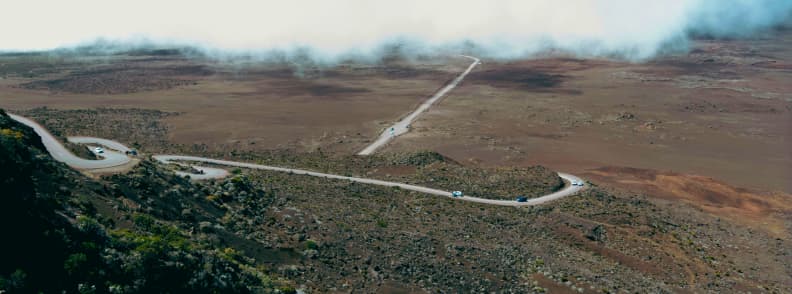
La Réunion without a tour sounds simple until you hit the island’s real boss fight, time. Roads snake through fog, traffic stacks up on the coast, and a quick stop turns into half a day if you plan by sights instead of bases.
If you’re considering visiting Reunion Island without car, you need to know what that really means here. And if you’re planning a full Reunion Island itinerary by car, you need to understand how long mountain roads actually take. And finally, if you’re dreaming about a flexible Reunion Island itinerary combining car and buses, you need to know where the system works and where it quietly falls apart after sunset.
Réunion Island Transportation Guide
We stayed with local friends in Saint-Leu, and that changed everything. Instead of racing between sights, we slipped into their rhythm, with pub quiz nights, an improv show in the Petit-Île area, grocery runs, and a last-minute Decathlon stop to buy waterproof over-pants for the volcano hike. The local pace exposed the gap between online itineraries and how the island truly works.
You can absolutely do Reunion Island with no car. Many travelers manage a solid Reunion Island itinerary without a car if they base themselves wisely and accept slower transitions. But you cannot improvise your entire trip through La Réunion. Roads close, fog swallows viewpoints, coastal traffic adds hours, and trailheads hide in the dark.
This Reunion guide isn’t about sightseeing highlights. It’s about getting around Reunion Island realistically. You’ll learn how long it truly takes to cross the island, when buses are enough, when a rental car becomes freedom, and how to avoid losing an entire day because Google Maps said 45 minutes.
If you plan transport in Reunion correctly, everything else works. If you don’t, even paradise feels complicated.
Disclosure: Some of the links below are affiliate links. This means that at no extra cost to you, The Travel Bunny will earn a small commission if you click through and make a purchase. Thank you!
The Logistics of Independence. Why Planning Realistically Matters
La Réunion rewards independence, but only if you respect distance, terrain, and timing. The island looks small on a map, but in reality, elevation, microclimates, and traffic reshape your days. If you want control over your schedule, you must understand Reunion driving times before you book a single night.
Distances here deceive. The coastal ring suggests simplicity, yet the interior rises sharply, and roads bend around ravines and cliffs. The difference between Reunion driving distances on a map and what you experience behind the wheel defines your entire trip. Ten kilometres can feel fast along the coast and painfully slow in the highlands.
Most visitors underestimate realistic driving times around Reunion Island because they calculate as they would in mainland Europe. You can’t drive here with flat-country logic. Mountain gradients reduce speed, fog erases visibility, and traffic builds in predictable choke points. Add a waterfall stop or a viewpoint, and your schedule stretches without warning.
I learned this on a failed attempt to reach Cascade du Chien. Google Maps guided us through narrow sugarcane roads where passing two cars felt risky. We climbed slowly, unsure if someone would appear from the opposite direction. In the end, we reached a distant viewpoint rather than the waterfall itself. That moment explained perfectly why Google Maps lies about Reunion. It calculates distance, not terrain or local access limits.
This matters even more when building a Reunion Island road trip itinerary. If you stack volcano, cirque, and coast into one ambitious loop, you will spend more time driving than exploring. A road trip here succeeds when you reduce daily range and cluster sights by geography.
Accommodation choice becomes a transport decision. You need to find out where to stay in Reunion for easier driving. For example, a base in Saint-Leu reduces West Coast commute stress, and a highland stay cuts early starts for volcano hikes. Poor positioning adds hours over a week.
If you travel without a car, location becomes critical. Choosing the best base to stay without a car on Reunion Island can mean the difference between relaxed beach days and complex bus transfers. Coastal towns with strong Car Jaune connections make life simple, while remote guesthouses make life complicated.
Even with buses, strategy wins. It’s important to learn where to stay for easy access to buses on Reunion before confirming accommodation. Some villages have limited evening service, and others connect smoothly across networks. Staying near a main corridor saves time and stress.
Planning realistically doesn’t mean slowing your ambition. It means structuring it intelligently. Once you accept how the island truly moves, you stop fighting it. You build shorter, smarter days. You wake earlier for mountain drives. You protect afternoons from traffic.
Freedom on La Réunion belongs to travelers who plan transport first and sightseeing second.
How to choose your transport style in La Réunion
Transport shapes your entire experience on the island. The best way to travel around La Réunion depends on geography, traffic patterns, elevation, and how much flexibility you need each day. This decision comes before choosing hikes, beaches, or viewpoints.
The debate around car vs bus reunion often ignores terrain and timing. The real calculation behind Reunion island car or bus travel isn’t convenience alone, but access to trailheads, exposure to traffic, and tolerance for long mountain drives. Each option changes your daily rhythm.
A clear comparison of Reunion buses vs car rental pros and cons helps structure expectations. Buses reduce costs and remove parking stress. A rental car reduces waiting time and opens early departures. In certain areas, choosing taxis and vtc vs buses on Reunion Island becomes relevant when schedules thin out in the evening.
The three profiles. Bus-only, car-only, mixed days
There are three practical profiles. Bus-first, car-first, and mixed days depending on region and activity.
A bus-first strategy supports visiting Reunion Island without car when built intentionally. A strong Reunion Island itinerary without car includes visits to coastal towns, lagoons, and accessible viewpoints along main corridors. It requires fewer bases and more patience with schedules.
A car-first structure relies on Reunion Island car rental to reach cirques, volcano routes, and highland roads efficiently. A well-designed Reunion Island itinerary by car reduces backtracking and builds in buffer time for fog, traffic, and detours.
A mixed model balances cost and access. A Reunion Island itinerary combining car and buses uses public transport on easy corridors and reserves the rental car for days that demand altitude or remote trailheads. This choice often delivers the most realistic balance for one-week trips.
The one rule that saves Reunion trips
Transport success begins with an accommodation strategy. The best base to stay without a car on Reunion Island determines how simple or frustrating a bus-based trip becomes. Walking distance to major stops matters more than scenic isolation.
Selecting where to stay for easy access to buses on Reunion reduces missed connections and limits transfers. Towns along strong transport corridors simplify movement across the island and keep daily logistics manageable.
For drivers, the same principle applies. Choosing where to stay in Reunion for easier driving prevents unnecessary exposure to rush-hour congestion and long coastal commutes. A strategically placed base shortens drive time, lowers fatigue, and protects flexibility when weather shifts in the mountains.
Should You Rent a Car or Rely on Buses in La Réunion?
The transport decision drives everything from budget to daily stress. Do you need a car on Reunion Island? That depends on where you want to sleep, how early you want to start, and how often you plan to change altitude. A week of lagoons and coastal towns has different needs than a week built around cirques and volcano mornings.
Is it possible to visit Reunion Island without a car and still enjoy the island fully? Yes, but only with the right bases and realistic expectations. A clean plan for visiting Reunion Island without car relies on understanding routes, service gaps, and the limits of last departures.
Let’s compare Reunion public transport and private driving in practical terms. You’ll see how Reunion buses shape planning, when taxis and VTCs become the fallback, and what kind of days public transport can’t support. Later, I’ll also share Reunion car rental tips for visitors who want maximum flexibility, plus what changes when renting a car in La Réunion as a foreigner.
Getting Around Reunion Island
Getting around Reunion Island means moving between coastal hubs, climbing into the highlands, and returning without losing half your day to transport. The island’s structure forces repeated choices between speed, cost, and comfort.
Reunion Island transport covers more than buses. It includes road access to trailheads, airport transfers, and travel between regions that don’t connect smoothly by public networks. Any plan that ignores these links breaks fast.
Reunion Island transportation often gets reduced to a list of operators. What matters more is what those operators make possible in one day. A realistic plan starts with what can be reached in daylight and ends with how to return after dinner.
The best way to get around Reunion Island depends on your itinerary style. Coastal days work well with bus corridors and shorter hops. Highlands days often need early starts and reliable access to parking and trailheads.
How to get around Reunion Island without a tour? You need a clear base selection, fewer transfers, and a backup plan for evenings when service thins out. You also need to accept that some days work better as car days.
La Reunion Road Etiquette and the Local Speed Phenomenon
Driving feels familiar at first, then the pace shifts. Reunion Island driving rules follow French road law, but local habits shape how traffic flows. Confidence rises on the coast and drops quickly on foggy highland roads.
The core reference point is still official law. Driving rules and speed limits on Reunion Island depend on road type and conditions, and rain or fog changes safe speed, even when limits stay the same. A safe driver treats limits as ceilings, not targets.
Road behaviour also matters for comfort. Reunion Island driving rules around overtaking and lane discipline become more relevant on the coastal arteries where traffic compresses. Patience often saves time because aggressive moves rarely beat congestion.
Enforcement exists, and it adds stress if you ignore it. Reunion speed cameras appear in everyday driving zones, not only on highways. Staying calm and consistent reduces risk and keeps the day predictable.
Traffic timing shapes daily planning as much as distance. Reunion traffic hours can turn a simple transfer into a long crawl, especially on the main coastal routes. This pattern defines how early departures protect your schedule.
The worst moments arrive when plans collide with rush hour Reunion. A mountain hike that ends late can dump you back onto a congested coast. A simple commute between coastal towns can steal time from dinner and rest.
When a Car in La Reunion Makes Sense
Some trips need a car to stay realistic. Renting a car in La Réunion makes the most sense when your plan includes early trailheads, flexible weather chasing, or multiple regions in one week. A car also reduces reliance on sparse evening options.
A key advantage is direct access. Reunion Island car rental lets you start before sunrise, stop briefly without planning a full bus loop, and carry gear without worry. This matters for volcano clothing, wet weather layers, and hiking supplies.
The most practical question becomes cost versus value. Rent a car Reunion Island when time matters more than budget, or when the trip would otherwise require repeated taxi rides. A few taxi journeys can exceed the cost of a small rental quickly.
Pickup location influences your first day on the island. Reunion airport car rental saves time if you want to drive straight to your base. It also reduces the risk of arriving late and scrambling for transport options.
Making the right choice when you compare Reunion airport car rental vs city rental depends on your arrival time, your base location, and whether you want a slow first day. City pickup can reduce pressure, while airport pickup can remove friction.
Highlands and cirques create a different problem. Public transport options to cirques and hiking areas Reunion are limited and they don’t match every hiking schedule. Transfers can be slow, and returns can be early. Hiking days often need freedom.
Can you reach Mafate trailheads by bus? That’s a complicated answer because road access ends where hiking begins. A car makes the approach predictable. Without one, planning needs more buffers and more patience.
When You Can Skip the Car on Reunion Island
A car is not mandatory for a good trip. A vacation on Reunion Island without car works best when you commit to it and build your trip around transport corridors. Coastal bases, lagoon days, and shorter hops keep the plan calm.
Your accommodation choice decides the outcome. The best base to stay without a car on Reunion Island is one with strong connections, walkable services, and easy access to a main bus corridor. This reduces dependence on taxis and last-minute scrambling.
Planning becomes easier when you pick a place to stay in La Reunion with easy access to buses. A base with reliable stops nearby lets you run day trips without multiple transfers. It also reduces the risk of getting stranded after an afternoon delay.
La Reunion Travel Tip: Learning how to plan day trips without a car La Réunion means building around departure times, leaving margin for delays, and choosing one main goal per day. It also means accepting that some remote viewpoints work better on car days.
Essential Facts About Roads, Driving Times, and Distances
Planning transport on La Réunion starts with three realities. Reunion driving times change fast with weather, altitude, and traffic. Reunion driving distances look short on a map, yet the experience behind the wheel often feels long.
You need a working mental map of Reunion road conditions. Coastal roads move quickly when traffic is light, then crawl at peak times. Mountain routes slow down because of tight bends, fog, and narrow passages. A realistic plan treats every transfer as part of the day’s effort instead of a blank space between activities.
This section of The Travel Bunny’s Reunion transport guide breaks down what matters for drivers and for expats commuting daily. It covers Reunion mountain roads versus Reunion coastal drives, how the Route des Tamarins changes West Coast movement, and why a Reunion East Coast drive often takes longer than expected. It also frames the practical logic behind a Reunion West Coast beaches drive, where traffic and parking can decide whether a beach day feels relaxing or exhausting.
How Long Does It Really Take to Drive Around the Island of Reunion?
The big question is always how long to drive around Reunion Island if you stick to the coast and keep stops minimal. My answer depends on the day, the direction, and how many times you leave the ring road. A full loop without detours is one thing. If you drive nonstop on a clear day with no traffic and no detours, you are looking at roughly 4 to 5 hours for the coastal ring. However, a loop that includes viewpoints, lagoon stops, and a highlands climb becomes a different animal.
A more useful way to phrase it is how long does it take to drive around Reunion Island when you travel like a normal person? Normal means you stop for food, you pause for views, you wait behind slower vehicles, and you deal with the weather. Normal also means you don’t want to arrive at your accommodation drained and hungry. So plan 6 to 8 hours to do a loop around Reunion Island.
How long does it take to drive around the island if you add one interior section, like a cirque road or a volcano? One interior detour can turn a simple day into a long day of 8 to 10 hours, including stops, because ascent and descent eat time and energy. If you want to climb inland, plan fewer stops and an earlier start, or plan a two-day trip.
Key Driving Times Between Major Towns and Cirques
A useful itinerary comes from understanding driving times between major Reunion towns instead of dreaming about straight-line distances. Coastal transfers often look simple, yet they pass through busy nodes that clog at predictable times. Highland transfers look short, but they climb slowly and demand focus.
When planning transfers, anchor your week on a few essential routes, then build around them. A key example is Reunion driving times between Saint Denis and Saint Pierre, because it affects arrivals, departures, and airport days.
How long is the drive from St. Denis to St. Pierre? That depends heavily on traffic windows and the route you take. The same route can feel easy at one hour and brutal at another. Treat the driving from Saint-Denis to Saint-Pierre travel time as a range. Build a buffer that protects your booking check-in, your dinner plan, or your sunrise hike. If you arrive early, you win. If you arrive late, you lose half a day.
You should structure your trip by treating each region as a day cluster. This is how key driving times between major towns and cirques become a planning tool instead of a stress source. If you want a cirque day, commit to it fully and avoid stacking long coastal hops on top.
Some distances look close, but don’t behave that way in real life. For example, the real driving distance between Salazie and Mafate is not defined by kilometres only. It’s influenced by road access, where roads end, and how hiking logistics replace driving logistics. This matters for expats too, because weekend plans often fail when the access math gets ignored.
Reunion Rush-hour choke points and how to route around them
Reunion traffic hours hit hardest on the coastal arteries, especially when commuters move between towns for work and school. If you drive during peak flow, you trade your beach time or hike time for brake lights.
A key route that changes the West Coast is the highway, but it’s not a magic solution. Route des Tamarins drive time at rush hour still depends on the volume of commuters and the exits you need. The road can save time, but it can also funnel you into bottlenecks near busy junctions.
To put it in numbers, off-peak, Saint-Paul to Saint-Leu can take 20 to 25 minutes. During peak flow, that same stretch often stretches to 35 to 50 minutes, especially near major interchanges and coastal access points.
Planning around rush-hour choke points Reunion starts with knowing where traffic tightens. The slowdowns often build near Saint-Denis entries, around the Route du Littoral junction, at the Saint-Paul interchange, and near busy exits along the Route des Tamarins toward Saint-Leu and Saint-Pierre.
Move early for inland days and return before the late afternoon squeeze if your route hugs the coast. If peak times are unavoidable, plan a useful stop near one of these nodes, such as groceries or lunch, instead of idling in frustration.
For expats, the best habit is to treat appointments as time blocks, not as strict arrival minutes. Leaving early often means arriving early, and that isn’t wasted time on La Réunion. It’s the difference between a calm day and a day shaped by congestion.
Realistic Driving Times. Why Google Maps Lies About Reunion?
The island punishes planners who trust a single number on a screen. Realistic driving times around Reunion Island often differ from what apps suggest because apps don’t fully model microclimates, road texture, and the friction of stops. They also fail on rural access, where a “road” can turn into a narrow track that forces slow driving.
Realistic driving times become the most useful concept in your trip planning. You want a schedule that survives fog and traffic, not a schedule that works only in perfect conditions. Build days around one main goal and one optional goal, not three must-dos.
The core issue is why Google Maps lies about Reunion travel. It may route you into narrow agricultural lanes, it may ignore the emotional cost of driving in fog, and it may underweight the slow grind of climbing inland. It also tends to treat viewpoints and trailheads as equivalent endpoints, even when access differs.
The fix is to plan with two numbers for every transfer. Use real map time vs realistic time as a mindset. The map time is a baseline. The realistic time includes finding parking, waiting behind slow vehicles, and stopping safely when visibility drops.
A practical approach is to tag drives as coast, interior, or highlands, then assign a buffer before you even leave:
- Coast drives need traffic buffers of 20 to 40 minutes during peak periods and 10 to 15 minutes off-peak.
- Interior drives need curve buffers of 15 to 30 minutes because bends, slower vehicles, and photo stops reduce average speed.
- Highlands drives need weather buffers of 30 to 60 minutes since fog, rain, and reduced visibility can cut pace dramatically.
This simple classification keeps your itinerary stable and protects your energy.
The World’s Most Expensive Road. Navigating the New Route du Littoral
The coastal connection near Saint-Denis sits at the core of island movement. The New Route du Littoral changes the rhythm of the North Coast, but it doesn’t remove the need for timing. When you rely on this corridor, you need a plan that adapts to traffic and weather conditions.
The biggest problem is unpredictability. Route du Littoral traffic can spike hard during commuting windows. It can also slow down when incidents ripple through the network. When your day depends on this corridor, leave earlier than you think you need.
Closures and restrictions matter enough to build into your plan. Reunion Route du Littoral closures happen due to rockfall risk, heavy swell, strong winds, or maintenance. When alerts are issued, traffic can be reduced to one lane, slowed significantly, or temporarily diverted.
If your accommodation is west of Saint-Denis and your activity or airport transfer sits north, a Route du Littoral closure can add 30 to 60 minutes easily. In more serious cases, rerouting or heavy congestion can stretch delays beyond that. Even partial restrictions create long queues during peak flow.
For expats, this corridor becomes part of routine life, which makes local timing wisdom valuable. Early departure patterns exist for a reason. Following them can protect your schedule without adding stress.
Mountain Roads vs Coastal Roads. Difficulty, Weather, and Fatigue
Coastal routes and highland routes demand different energy. Reunion mountain roads require focus, patience, and comfort with bends and steep gradients. If you dislike tight roads, plan fewer highland days and shorten each highland drive.
In contrast, Reunion coastal drives feel easier technically, but they can tire you differently. Stop-and-go traffic drains attention. Heat builds in the car. Parking battles add friction. Coastal driving can become exhausting when you underestimate those factors.
The weather in La Reunion turns the difficulty dial quickly. Reunion fog driving can drop visibility to headlamp distance in the highlands. Fog also makes trailhead finding harder at night, which matters for sunrise hikes. If fog is common on your route, simplify the day and plan extra time.
Rain changes both safety and pace. Reunion rain driving increases stopping distance and reduces confidence on narrow roads. Rain can also affect river crossings and waterfall access, which influences whether a side stop is worth it.
Is driving in Reunion Island difficult for your comfort level and your passengers? Difficulty isn’t only about skill. It’s also about fatigue. Plan shorter drives if you want to arrive with energy for a hike.
How to plan one highs day without destroying your week
Highland days are the most rewarding and the easiest to overstuff. The key is learning how to avoid losing time on mountain roads Reunion. Curves slow you down more than you expect, and weather often pushes you into slower speeds.
Start by limiting the number of altitude changes in one day. This is the simplest method for how to plan realistic driving days in La Réunion. Pick one main highland goal, then return to your base without stacking more inland climbs.
Protect your week by placing highland days with recovery in mind. This is how to avoid losing a day on the road Reunion in practice. Don’t schedule a huge drive on the day after a night hike or a long dinner. Give yourself a coast day after a highland day.
Visit La Reunion Tip: A highland day works best with a clear departure rule. Leave before traffic builds. Aim to reach the first high point early, then let the rest of the day flow downhill. This reduces stress and makes the return more predictable.
Parking, Fuel Prices, and Tolls (or Lack of Them)
Driving convenience depends on how you handle parking. Reunion Island parking varies wildly between towns, beaches, and trailheads. Some places offer easy lots. Others require patience, walking, and a plan for peak times.
Rules matter because fines add pointless costs. Parking rules and common fines on Reunion Island follow French road law, and enforcement is real in towns, near beaches, and around public buildings. Informal parking that feels harmless can still result in a ticket if you block visibility, pedestrian access, or traffic flow.
The most common mistake is parking on sidewalks or partially on them. Even if locals seem to do it, it’s technically illegal and fined. Blocking a driveway, even slightly, can trigger a tow request. Stopping in front of waste bins, bus stops, or marked delivery zones also leads to fines.
Blue zones in town centres require a time disc. If you park in a marked blue area without displaying the disc correctly, you can be fined even if you stay within the allowed time. These areas are common in Saint-Denis and Saint-Pierre near commercial streets.
Parking in Saint Denis where to leave car. Use structured car parks rather than street guessing. Parking République near the Barachois is central and practical for short visits. Parking Grand Marché works well if you plan to explore the old town on foot. For longer stays, underground options near the Prefecture area are more secure and reduce stress about overnight street rules.
Beach areas and market zones receive stricter checks during weekends and school holidays. Parking outside marked spaces, especially on sand shoulders or grassy edges, is often fined. In some coastal towns, police monitor popular lagoon access points regularly.
Beach towns have their own rhythm. For example, parking in the Saint Pierre beach area becomes harder during peak beach hours and weekends. Arriving early often saves time and reduces stress, especially if your day also includes a long drive afterward.
In the highlands, enforcement feels lighter, but the rules still apply. Parking in a way that blocks narrow mountain roads or restricts emergency access can result in fines. Trailhead congestion does not justify illegal parking.
Fines vary but typically range from around €35 to €135 depending on the violation. Obstructive parking or dangerous positioning carries higher penalties. Vehicles can be towed if they block circulation or create a hazard.
La Reunion Parking Tip: Park only in marked spaces, check signage carefully, use a parking disc where required, and avoid the temptation to “just stop for five minutes” in restricted zones. Those five minutes are often enough for a ticket.
Fuel planning also affects your confidence. Reunion fuel prices shift, and remote areas have fewer stations. Don’t let your tank drop low before a highlands climb, because you may not find a convenient station when you want one.
How much does petrol cost on Reunion Island in 2026? It generally ranges between €1.75 and €1.95 per litre for unleaded and €1.55 to €1.75 for diesel, with prices regulated and updated monthly. Monitor local rates, keep a fuel buffer before inland drives, and treat refuelling as a daily check rather than a last-minute surprise.
Knowing where to fill up makes long days easier. Reunion petrol stations appear frequently on the coast and more sparsely inland. Fill up on the coast before you commit to a long interior loop, especially when you plan early starts.
Renting a Car in La Réunion. Costs, Insurance, Common Traps
Renting a car in La Réunion gives you sunrise access to volcano trails, flexible beach hopping, and freedom from bus timetables. It also comes with contracts, deposits, and decisions that many travelers underestimate.
The market for Reunion Island car rental is competitive but limited in high season. Availability tightens fast during school holidays and peak hiking periods. If you want control over your week instead of adapting to what is left, booking early matters.
If your itinerary includes cirques, early trailheads, or multiple bases, you will likely rent a car in Reunion Island at some point. If your trip focuses on lagoons and one coastal base, the math changes. Below, I’ll explain the real costs, the insurance traps, and the smartest booking strategy.
Airport pickups dominate the market. Reunion airport car rental offers convenience but not always the lowest price. Comparing providers properly is key if you want flexibility without overpaying.
Word of Warning from a Budget Traveler: Some travelers search for cheap car hire in Reunion and end up booking underpowered vehicles or limited insurance. Price alone doesn’t guarantee value. The right approach is to combine coverage clarity with vehicle suitability.
In a bit, I’ll share some more Reunion car hire tips, including what to check before signing, how to read insurance clauses, and how to avoid friction at drop off. You will also find a breakdown of Reunion Island car rental insurance explained in plain language.
For arrivals at Roland Garros, knowing the best car rental companies at Roland Garros Airport helps reduce stress on day one. A structured comparison platform simplifies this process and often unlocks better cancellation policies.
If you want the cheapest way to rent a car on Reunion Island without sacrificing insurance clarity, compare providers side by side before booking. I recommend checking DiscoverCars because it aggregates major brands and local agencies, shows real insurance conditions clearly, and often includes free cancellation. That flexibility matters on an island where the weather can change plans.
Where to Rent a Car in Reunion. Airport vs Town Agencies
Most visitors default to Reunion airport car rental because it removes the first transfer. Picking up directly at the airport saves time, especially after long flights.
Roland Garros Airport hosts both international brands and local agencies. Each has strengths depending on your priorities:
- International brands such as Europcar, Avis, Hertz, Sixt, and Budget typically offer newer fleets, clear insurance structures, English-speaking staff, but higher base prices.
- Local agencies often offer lower daily rates, smaller deposits in some cases, more flexibility in vehicle class, but older fleets in certain categories.
If you prioritise reliability and straightforward contracts, the larger international companies reduce friction. If you prioritise price and flexibility, reputable local agencies can offer better value.
The safest approach is comparison rather than loyalty. This is where Discover Cars becomes practical. It aggregates both major brands and vetted local providers in Saint-Denis. Instead of guessing which desk is best, you compare conditions side by side before arrival.
Here are some practical renting a car at Roland Garros Airport tips that save time and money:
- Book before you fly. Prices at Roland Garros rise quickly during school holidays and peak hiking months. Availability for automatic cars drops first.
- Check the fuel policy carefully. Full to full is the safest option. Avoid pre-purchase fuel unless your flight timing makes refuelling impossible.
- Confirm the deposit amount in writing. Some agencies block €800 to €1,500, depending on vehicle class and insurance level.
- Verify exact pickup location. Some providers operate inside the terminal arrivals hall. Others require a short shuttle ride to an off-site depot. That difference matters if you land late or travel with children.
- Check opening hours for late arrivals. If your flight lands after desk closing time, you may face after-hours fees or need pre-approval for key collection.
If you land in the south, renting a car at Pierrefonds Airport is also possible. Pierrefonds Airport is smaller and more limited than Roland Garros. Here are some
- Fewer providers operate at Pierrefonds Airport, which means vehicle categories sell out faster. Automatic cars are especially limited, so reserve early if you need one for mountain driving.
- Confirm in writing that your vehicle will be held, if your flight lands close to closing time. Opening hours are shorter, and some desks close in the late afternoon. Don’t assume grace periods. Smaller airports operate on tighter schedules.
- Double-check the exact pickup procedure. Some providers have a physical counter inside the terminal. Others require walking to a nearby parking area. Instructions are not always obvious on arrival, so keep your confirmation email accessible offline.
- Verify the fuel policy and return rules carefully. Late returns outside office hours may trigger additional fees if not arranged in advance. Confirm where the key drop box is located before you drive away.
- Deposit amounts can still be high even if daily rates are lower. Ask for the blocked amount clearly and make sure your card limit can handle it. Many travelers forget this detail and face unnecessary stress at the desk.
If you are staying near Saint-Pierre, Petite-Île, or the Southeast coast, Pierrefonds pickup can save time and coastal backtracking. If your first base is on the West Coast, calculate whether collecting in the north is more efficient.
Reunion Rental Car Tip: Choosing between Reunion airport car rental vs city rental depends on your itinerary. Airport pickup works best for immediate road trips. City pickup works well if you spend your first days bus based in one town and only need a car later.
If you want simplicity, reserve your vehicle in advance through Discover Cars. It allows you to compare airport and city agencies transparently, filter by insurance type, and avoid surprises at the counter.
Manual vs automatic Car in Reunion. what to book early
Vehicle type affects comfort on mountain routes. The question of manual or automatic car for Reunion mountain roads becomes relevant once you see how steep and curved certain climbs are.
Most rental fleets still lean toward manual. Automatic vs manual car rental in La Réunion availability narrows quickly in peak periods. If you prefer automatic, reserve early to avoid compromise.
La Reunion Driving Tip: When comparing manual vs automatic car rental La Réunion, remember that mountain driving requires control and confidence. If you aren’t comfortable with manual gear changes on steep inclines, automatic is worth the premium.
What Type of Car for Mountain Roads and Luggage
Vehicle size matters more than luxury. Ask yourself honestly what type of car for mountain roads and luggage suits your trip.
Compact cars handle most coastal routes well. However, repeated climbs through Reunion mountain roads feel different when the engine struggles on steep gradients.
Avoid the risk of underpowered cars Reunion in highland regions. A slightly stronger engine reduces stress during overtakes and uphill segments. It also improves fuel efficiency consistency under load.
Balance luggage capacity with maneuverability. Narrow roads and tight parking areas reward smaller vehicles. Overpacking creates unnecessary friction on curved roads.
Insurance, Deposits, and Scratches. Reading the Contract
Insurance confusion causes most rental stress on the island. Clear reunion island car rental insurance explained in advance prevents arguments at drop off and protects your budget.
Most rentals in La Réunion include basic third-party liability and collision damage waiver. What matters is the excess. The excess is the amount you pay in case of damage before insurance covers the rest. On the island, excess amounts commonly range from €800 to €1,800 depending on vehicle class.
This is where insurance and deposits Reunion car rental conditions become critical. The rental agency usually blocks the full excess amount on your credit card as a security deposit. For compact cars, expect deposits between €900 and €1,200. For larger vehicles or SUVs, deposits can rise to €1,500 or more.
La Reunion Budget Tip: Many travelers underestimate this rental car deposit block. The amount isn’t charged, but it reduces your available credit. If your card limit is too low, you may be refused the vehicle at the desk.
Basic coverage often excludes specific damage types. Windscreen cracks, tyre damage, undercarriage damage, and roof scratches are frequently excluded from standard policies. On mountain roads and gravel parking areas, these exclusions matter.
A common La Réunion insurance trap involves undercarriage clauses. Some highland roads include rough surfaces or steep angles. If damage occurs underneath the car and your policy excludes it, the full repair may fall within your excess.
Another frequent issue concerns single-vehicle accidents. If you slide in heavy rain or hit a rock while parking, basic policies may apply full excess without negotiation. Clear documentation and full coverage reduce this risk.
Car rental scratches Reunion disputes often arise from minor cosmetic marks. Coastal sun glare and dusty conditions make scratches hard to see at pickup. Take detailed photos and a slow video of the entire vehicle, including wheels and bumpers, before leaving the parking area.
Don’t rely on a quick walk around with the agent. Open doors, photograph mirrors, inspect alloy rims, and check the roof if possible. Small dents and scuffs are common in tight town parking areas.
Full coverage options usually reduce the excess to zero or near zero. If you rent your car through Discover Cars, this often costs an additional €8 to €15 per day, depending on vehicle category. For a week-long rental, that may add €60 to €100. Compared to a blocked €1,200 deposit and the risk of a dispute, this a reasonable trade.
Another trap concerns the credit card type. Some agencies require a true credit card in the driver’s name. Debit cards may not be accepted for the deposit block. Or they only accept debit cards with embossed numbers. Always verify this condition in advance.
Late return fees and fuel penalties also appear frequently. If your contract requires full-to-full fuel and you return below full, refuelling charges can include administrative fees. Refill within a few kilometres of the airport or town drop-off to avoid disputes.
The Cost of Freedom. 2026 Rental Car Pricing and Insurance Realities
Understanding 2026 rental car pricing Reunion helps you set a realistic budget. Prices fluctuate by season, vehicle type, and booking window.
Average rental car pricing Reunion 2026 for a small manual vehicle typically ranges from €25 to €45 per day off-peak. In high season, expect €50 to €80 per day, depending on availability.
The overall car rental cost Reunion 2026 for a one-week stay often lands between €250 and €600, including basic insurance. Full coverage increases this slightly but protects against high excess.
Book a car early through Discover Cars to secure better rates and cancellation flexibility. Waiting until arrival usually costs more and reduces choice.
Car Rental Mistakes to Avoid
Many travelers repeat the same errors. Car rental mistakes to avoid Reunion begin with waiting too long to book.
- Late booking car rental Reunion often results in higher prices and fewer automatic options. It can also force you into smaller vehicles than you need.
- Choosing underpowered cars Reunion for highland heavy itineraries increases fatigue and fuel use. Select a vehicle appropriate for your route.
- Building a tight schedule. Avoid no spare day Reunion planning when you rely on a car for volcano or cirque access. Weather changes and road conditions can force itinerary adjustments.
If you want flexibility without risk, compare options through Discover Cars before your trip. It allows you to filter by engine type, insurance coverage, and cancellation policy. That transparency turns car rental from a gamble into a controlled decision.
Navigating the Car Jaune Public Transport Network
If you plan a trip built around Reunion buses, you need structure. Reunion public transport system works well along major corridors, but it rewards travelers who understand its rhythm and limits.
The backbone of movement is the regional Reunion bus network, layered with local operators. Long-distance corridors connect coastal towns, and local loops fill in urban areas. Knowing how these layers interact determines whether your day flows or stalls.
Success depends on reading the right information. You must understand Reunion bus routes, interpret a Reunion bus timetable, and calculate Reunion bus fares in advance. Spontaneous decisions rarely work in your favour.
The yellow coaches branded Car Jaune Reunion form the island-wide spine. Their corridors link north, west, south, and east. Mastering the Reunion Car Jaune timetable and the Car Jaune Reunion bus routes unlocks most coastal travel.
The system continues to evolve under Reunion public transport 2026 reforms. Fare structures, cards, and integration between networks have shifted. Keep reading to find out how to use Car Jaune buses on Reunion Island without confusion.
Car Jaune, The Yellow Bus Backbone Around the Island
The regional network branded Car Jaune reunion is the spine of intercity movement. These are long-distance coaches, not small urban buses. They connect the main coastal axis and the two airports, and they operate on structured corridors rather than wandering neighbourhood loops.
The core of the Car Jaune Reunion bus routes runs along the coast. The main Line T links Roland Garros Airport with Saint-Denis, Saint-Paul, Saint-Leu, Saint-Pierre, and Pierrefonds Airport. Other key lines connect Saint-Denis to Saint-Benoît in the east, and Saint-Pierre to Saint-Joseph in the south. This means you can realistically move north to west, north to east, and west to south without a car if you accept timetable discipline.
The system works best for town-to-town transfers. It works poorly for trailheads, hidden beaches, or small inland villages. Car Jaune will drop you off at the Saint-Paul centre, not at a lagoon access path. It will take you to the Saint-Pierre bus station, not directly to a cirque road.
How to read bus timetables Reunion. Timetables are displayed in several places. They are posted online on the official Car Jaune website. They are printed at major bus stations such as Saint-Denis and Saint-Pierre. At smaller stops, you often find a printed panel inside the shelter, though these are sometimes weathered or outdated. Always cross-check online before relying on a photo taken days earlier.
Frequency varies by corridor. On major routes between Saint-Denis and Saint-Paul, departures can run roughly every 30-60 minutes during the day. On less populated corridors, intervals may stretch to 60-90 minutes. Evening frequency drops significantly after early evening.
Reunion Bus Tip: Reading a Reunion car jaune timetable requires care. Each line has separate columns for weekdays, Saturdays, Sundays, and public holidays. Departure times can shift significantly between weekday and weekend service. Always verify the exact day type at the top of the timetable.
A realistic Reunion Island buses guide must also explain travel time expectations. A Saint-Denis to Saint-Pierre transfer by Car Jaune typically takes between 1 hour 30 minutes and 2 hours, depending on traffic. The bus uses main roads and shares congestion with cars.
Plan transfers conservatively. If you connect from Car Jaune to a local network such as Kar’Ouest or Carsud, allow at least 20-30 minutes between scheduled arrivals and departures. Do not assume perfect alignment.
Any practical Reunion buses guide must include bus stop behaviour. Car Jaune stops are marked with yellow signage and often include a shelter with a route number displayed. Not every stop has a ticket office, as most are simple roadside stops.
Buses don’t automatically stop at every single point unless someone signals. When boarding, stand visibly near the stop and raise your hand clearly as the coach approaches. If you remain seated inside and want to get off, press the stop button in advance, just like on a city bus. Don’t wait until the bus is fully stopped or assume the driver will remember your destination.
Large stops such as Saint-Denis Gare Routière or Saint-Pierre Gare Routière function as hubs. These stations include multiple bays with clear signage showing line numbers and destinations. I advise you to arrive early at these hubs, because platforms can feel busy during peak departure times.
Luggage rules are generous compared to city buses. Car Jaune coaches often include undercarriage storage similar to intercity buses. Smaller daypacks can be kept with you, while larger hiking backpacks may be stored below, especially on airport lines.
La Reunion Transport Tip: It’s important to understand what the network doesn’t cover. Car Jaune doesn’t drive into Mafate. It doesn’t reach most volcano trailheads. It doesn’t climb Cilaos road or Maïdo road. It connects you to towns where you may need to walk, transfer, or arrange onward transport.
The strength of Car Jaune lies in predictable corridors and airport connectivity. Its limitation lies in flexibility. If you treat it as an intercity backbone and design your accommodation around it, it works well. If you treat it like a door-to-door solution, you will face friction.
Mastering Car Jaune means accepting its structure, learning its rhythm, and planning your day around departure and return times rather than forcing the island to adapt to you.
The 2026 Fare Reform. Goodbye Z’éclair, Hello Réuni’Pass
The fare system under Reunion public transport 2026 reforms changed how you pay and how networks integrate. The island moved away from fragmented paper tickets toward a unified, rechargeable card system designed to work across regional and local operators.
The older Z’éclair system was based on single paper tickets sold mainly on Car Jaune regional coaches. These tickets were valid for one journey on a specific corridor. They didn’t integrate smoothly with local networks, and they often required separate purchases when transferring between systems.
During the YPass transition, legacy fare products began phasing out in favour of card-based validation. This reform aimed to simplify inter-network travel and reduce fare confusion. It also introduced clearer subscription options for longer stays.
The central element of this reform is the Reuni’pass. But what is the Reuni’pass card and where do you get it?
The Reuni’Pass is a rechargeable mobility card designed to function across multiple operators on the island. It works on Car Jaune regional coaches and on the main local networks, including Kar’Ouest, Citalis, Carsud, Estival, and Alternéo. Instead of purchasing separate tickets for each segment, you validate the same card across systems.
The Reuni’Pass card is obtained at major bus stations such as Saint-Denis Gare Routière and Saint-Pierre Gare Routière. It’s also available at selected ticket offices within the regional transport network and at certain mobility partner outlets. In most cases, you pay a small initial card issuance fee, typically around €2-€5, depending on the issuing location.
Once issued, the card is rechargeable. You can load credit at ticket offices, designated sales points, and in some cases via online portals connected to the mobility system. Reloading requires planning because not every small stop offers recharge facilities.
La Reunion Budget Travel Tip: The card is designed for repeated use and can be kept for future visits. Credit validity depends on the fare product type rather than the physical card itself.
How to pay for buses in La Réunion under the new structure?
You have five options to pay for buses in Reunion now:
- Single-journey tickets purchased on board from the driver on many Car Jaune routes. These are convenient but often cost slightly more than subscription or stored value use.
- Paper tickets purchased at ticket counters in major stations before boarding. These reduce boarding time and may be preferred during busy periods.
- Reuni’Pass stored value payment, where you load credit and validate at boarding. This method simplifies transfers across networks.
- Short-term subscriptions, such as weekly or monthly passes linked to Reuni’Pass.
- Occasionally mobile or digital integration, depending on network development stage, though physical validation remains dominant.
Understanding how to validate matters. When boarding a Car Jaune coach, you present your Reuni’Pass to the driver or validate it on the onboard reader. On local urban buses, you tap the card on the validation device near the driver.
If you forget to validate, you risk a fine. The fare reform increased inspection consistency, and inspectors may board at hubs or during route checks.
The transition also raised questions about Z’éclair ticket refund. During reform phases, holders of unused Z’éclair tickets could request reimbursement or exchange depending on deadlines set by the transport authority. These procedures typically required presenting unused tickets at official counters rather than claiming online. Always verify whether older tickets remain valid or refundable before travel.
The broader YPass digital shift aimed to unify fare logic. Under this integration, the Reuni’Pass acts as the central medium while subscription and stored value products replace fragmented single route logic.
A single Car Jaune intercity journey generally costs €2. Urban network fares are often slightly lower for short trips. Weekly subscription options such as Bat’Karé passes can provide unlimited or high-frequency access for a fixed price, often in the range of €15-€28 per week, depending on the number of weeks. Monthly passes scale accordingly.
Reuni’Pass benefits travelers who make multiple transfers in one day or who stay longer than three to four days. It reduces repetitive ticket purchases and simplifies the connection between Car Jaune and local networks.
However, it doesn’t solve timetable gaps. It doesn’t increase evening frequency. It doesn’t create mountain access where roads do not exist.
The most practical approach is this:
- If you are staying under three days in Reunion and taking only one or two regional transfers, single tickets may be sufficient.
- If you are staying four days or more on Reunion Island and planning repeated intercity travel, Reuni’Pass becomes efficient.
- If you are staying two weeks or longer in La Reunion, especially as an expat or slow traveler, subscription products reduce friction and long-term cost.
Treat the Reunion bus fare reform as a tool. When used correctly, Reuni’Pass simplifies island-wide mobility. When ignored, it creates unnecessary payment confusion and fine risk.
Reunion Bus subscriptions for Visitors. The Bat’Karé Week and Month Passes
Short-term subscriptions make sense if you move often and stay near strong corridors. The Bat’Karé week pass is designed for unlimited or high-frequency travel over seven consecutive days. The Bat’karé month pass targets longer stays and expats testing life without a car.
In 2026, typical pricing ranges are as follows.
- A Bat’Karé Week Pass generally costs €15-28 depending on the number of weeks.
- A Bat’Karé Month Pass is actually Reuni’Pass valid for one month that costs €60.
A Reunion bus subscription tourist option reduces daily ticket calculations. It simplifies movement across regional corridors without constant cash or card transactions.
Cost comparison clarifies value. A subscription often costs less than repeated taxi journeys. When comparing subscription vs taxi costs vs rental car + gas, consider frequency of travel and destination type.
| Length of Stay | Travel Pattern | Public Transport Cost | Estimated Taxi Cost | Rental Car + Fuel | Best Value For |
|---|---|---|---|---|---|
| 1 day | Coastal corridor only | Car Jaune Day Ticket €6 | €20-€80 | €40-€80 | Day ticket |
| 3-4 days | Single base, coastal | 5-Ticket Bundle €8 or Bat’Karé 1 Week €15 | €60-€160 | €150-€300 | 5-ticket bundle or weekly pass |
| 5-7 days | Coastal towns, daily travel | Bat’Karé 1 Week €15 | €80-€200 | €250-€450 | Weekly pass |
| 2 weeks | Frequent intertown travel | Bat’Karé 2 Weeks €20 | €160-€400 | €500-€900 | Bat’Karé 2 weeks |
| 3 weeks | Slow travel across corridors | Bat’Karé 3 Weeks €28 | €250-€600 | €750-€1,200 | Bat’Karé 3 weeks |
| 1 month | Urban commuting or long stay | Reuni’Pass Monthly €60 or Car Jaune Monthly €38 | €400-€900 | €900-€1,500 | Monthly pass |
| 3 months | Resident or expat stay | Car Jaune 3-Month Pass €100 or Réuni’Pass 3-Month Pass €140 | €1,200+ | €2,500+ | 3-month pass |
What this means in plain English:
- If you stay under one week and move along coastal corridors, the €15 weekly pass is extremely cost-efficient.
- If you stay two or three weeks and use buses daily, Bat’Karé subscriptions between €20 and €28 offer exceptional value.
- If you stay one month and commute frequently, the €38 Car Jaune monthly pass or €60 integrated Reuni’Pass provides stable budgeting.
- Taxi use becomes expensive quickly once you exceed three or four medium-length rides.
- Rental cars become financially logical when you include cirques, volcano access, Mafate trailheads, or repeated early departures.
The real decision isn’t based on price alone. It’s how often you leave coastal corridors and how much flexibility you need when you’re traveling in Reunion.
How to Convert a Transit Fine into a Subscription. The Switch Offer
The switch offer Car Jaune allows certain passengers who receive a fare evasion fine to convert that penalty into a paid subscription instead of simply paying the full fine. This mechanism exists to encourage long-term compliance rather than pure punishment.
Here are the exact steps to convert transit fine into subscription Reunion under the Car Jaune system:
- You must receive a formal inspection notice from a transport inspector. This applies only to standard fare irregularities such as failure to validate or absence of a valid ticket. It doesn’t apply to fraud involving falsified documents or repeated serious violations.
- You must act within the timeframe stated on the notice, usually within a limited number of days after issuance. Delayed action can void eligibility for the switch option.
- You must visit an official Car Jaune sales office or designated mobility agency in person. Major locations include Saint-Denis Gare Routière and Saint-Pierre Gare Routière. The conversion can’t be completed on board a bus.
- Bring the following documents:
- The original fine notice
- A valid ID
- Your Reuni’Pass or yPass card if you already have one. If you do not yet have a mobility card, you will need to obtain one during the process.
- Request activation of the Switch Offer at the counter. Staff will verify whether your fine qualifies for conversion. Eligibility generally applies only to first-time or minor infractions.
- You will pay for a qualifying subscription product, instead of paying the full fine amount. This is typically a monthly pass, such as a Car Jaune monthly subscription at €38 or an integrated Reuni’Pass monthly product, depending on your zone and eligibility.
- The fine is considered resolved under the program once the subscription is activated and paid. The subscription becomes active immediately and must be validated normally for each journey.
Important conditions apply. The Car Jaune switch offer usually applies only once per person within a defined period. Repeat infractions may not qualify. The offer doesn’t apply to violent behaviour, document falsification, or serious fraud.
The financial logic is straightforward. Instead of paying a fine that may exceed €50 or more, depending on circumstances, you redirect that amount toward a valid subscription that grants unlimited travel for a defined period.
The practical lesson is simple. If you receive a minor validation fine and intend to use public transport again, visit a Car Jaune office quickly, ask about the Switch Offer explicitly, and convert the penalty into legal travel rather than treating it as a sunk cost.
Reunion Budget Travel Tip: The Car Jaune switch option makes sense if you plan to continue using Reunion buses regularly. It’s less useful for short-term tourists staying only a few days.
Other Reunion Bus Networks
Car Jaune is the main bus operator in Reunion, but daily life on the island depends heavily on the local operators. If you rely on Reunion public transport, you must understand how these networks divide territory, how they price tickets, and when they operate.
The five main local networks are Kar’ouest, Citalis, Carsud, Estival, and Alternéo. Each serves a defined geographic zone. They use their own timetables, stop layouts, and frequency patterns. Each has slight fare nuances despite integration through yPass and Reuni’Pass.
Kar’Ouest, Reunion West Coast Network
Kar’Ouest is the public bus network covering the West Coast of La Réunion, including Saint-Paul, Saint-Gilles-les-Bains, L’Hermitage, La Saline, and Saint-Leu. If you are based near the lagoons or along the western coastline, this is the system you’ll use for daily movement between beaches, town centres, markets, and residential areas. It operates as an urban and peri-urban network rather than a long-distance intercity system, which means it’s designed for short and medium coastal trips and not for mountain access.
Kar’Ouest standard ECO ticket costs €1.60 and remains valid for two hours from first validation. During that two-hour window, you can transfer within the Kar’Ouest network without paying again, provided you validate properly each time. If you board without a pre-purchased ticket and buy directly from the driver, the Dernière Minute ticket costs €2. The price difference encourages buying in advance.
For repeated travel, the Carnet Malin bundle offers 10 trips for €11. This lowers the effective per-ride price and makes sense if you move daily between beaches and town centres. Kar’Ouest also issues a reusable contactless transport card that requires a €2 deposit when first created. Once issued, you can load single tickets, bundles, or subscription products onto it.
Tickets and cards can be purchased at official Kar’Ouest agencies, selected partner retailers, and via the network’s online sales tools when available. Not every small stop has a sales point, so it’s better to organise your tickets in advance rather than relying on onboard purchase.
Kar’Ouest integrates progressively with the wider Reuni’Pass and yPass framework introduced under the 2026 mobility reforms. However, not every fare product automatically covers transfers across all regional networks. A Kar’Ouest ECO ticket is valid within the Kar’Ouest system only. If you transfer to Car Jaune or another operator, you must confirm that your fare product includes that network or purchase an additional ticket.
You must validate your ticket or card each time you board. Validators are located near the entrance. If the machine is unavailable, present your ticket to the driver. Inspectors conduct checks, and failure to validate can result in fines.
Kar’Ouest buses operate from early morning, around 5:30-6:00 am, until early evening, around 7:00 pm, depending on the route. Main coastal corridors run roughly every 20-40 minutes during weekday daytime hours. Frequency decreases in the late afternoon and becomes significantly lighter on Sundays and public holidays. Rural or inland loops may run only a few times per day, so always check the timetable carefully before planning a return.
Kar’Ouest Reunion coverage is coastal and urban. Kar’Ouest doesn’t climb Maïdo, doesn’t serve the Cilaos road, and doesn’t reach remote trailheads. It moves you efficiently along the West Coast corridor. If your itinerary stays between Saint-Paul, Saint-Gilles, L’Hermitage, and Saint-Leu, it’s practical and inexpensive. If your plan includes highland hikes or volcano access, you’ll need to combine it with Car Jaune or a rental vehicle.
Citalis, Reunion North Network
Citalis is the public transport network serving the north of La Réunion, primarily Saint-Denis, Sainte-Marie, and parts of Sainte-Suzanne. If you stay in Saint-Denis and plan to move between the city centre, residential districts, the university campus, shopping areas, and the Barachois waterfront, Citalis becomes your daily mobility system. Unlike Car Jaune, which connects towns along the coast, Citalis is urban and designed for short to medium distance circulation within the metropolitan north.
A standard single ticket on Citalis costs €1.30. It is valid for two hours, including return travel within that time window. The ticket must be validated upon first boarding and at every transfer. You must keep it and present it during inspections. You can purchase the €1.30 ticket at an Espace Bus office, from authorised depositaries, through the M-Ticket mobile application, or online if you already have a rechargeable Cital’Pass card.
If you buy directly on board the bus, the Citalis ticket costs €1.60. The higher onboard price encourages advance purchase. The two-hour validity still applies, including transfers within the Citalis network.
For frequent short trips, Citalis offers a 10-journey carnet priced at €10. This reduces the per-ride cost and works well for visitors staying several days in Saint-Denis. There is also a Citalis day pass for €3, which allows unlimited travel within the network for one day. This is particularly useful if you plan multiple stops across the city in a single day.
Monthly and long-term subscriptions are available. The Papaye Mensuel is €35 per month, and the Papaye Annuel costs €300 per year. These are most relevant for expats, students, or longer-term visitors staying in the north for several weeks. Short-stay travelers generally benefit more from carnets or day passes.
Citalis operates with a rechargeable Cital’Pass mobility card that requires a small initial issuance deposit. Once issued, you can load single tickets, carnets, or subscription products onto the card. The system integrates progressively with Reuni’Pass and yPass, meaning certain subscription products may function across multiple networks, but single Citalis tickets remain valid only within the Citalis perimeter unless specifically combined under an integrated pass.
Reunion Citalis service typically begins around 5:00-5:30 am on weekdays and runs until approximately 7:00-8:00 pm on major lines. Core urban routes operate frequently during peak commuter hours, often every 10 to 20 minutes. Midday service runs approximately every 20 to 30 minutes on main corridors. Evening frequency decreases significantly, and Sunday schedules are lighter. There’s no extensive late-night service, so confirming the last departure is essential.
Bus stops are clearly marked and typically include posted timetables inside shelters. Digital timetable information is available online, and printed schedules at stops can be weathered, so confirming online before departure is wise.
Citalis buses don’t automatically stop unless signalled. Stand visibly at the stop and signal the driver as the bus approaches. Once onboard, press the stop button before your intended stop to ensure the bus pulls over.
For travelers staying within Saint-Denis and moving locally, Citalis is inexpensive, structured, and efficient. However, Citalis doesn’t serve mountain roads, volcano access points, or cirque entry routes. It’s a city network. If you need to reach the airport, a Car Jaune regional line may be required, depending on your location. If you need to access inland hikes, you’ll need to combine Citalis with Car Jaune or arrange additional transport.
Carsud, Reunion Southern Network
Carsud is the public transport network serving the south of La Réunion, mainly Saint-Pierre, Le Tampon, Petite-Île, Saint-Joseph, and surrounding communes under the CASUD intercommunal authority. If you’re based in Saint-Pierre or exploring the southern coastline and inland towns, Carsud becomes your daily mobility layer. It’s a regional urban network, not a long-distance intercity coach like Car Jaune.
The standard Carsud ticket costs €1.50 and is valid for 90 minutes after validation (except for connections with the STC line, where you have a 2-hour validity). You can buy them at official Carsud sales points and authorised retailers. If you buy the ticket directly from the driver, it costs €1.80.
For regular use, the Carnet with 10 tickets costs €11.00. This reduces the per-ride cost to €1.10 and is a practical option if you plan repeated short trips around Saint-Pierre or between southern towns.
Monthly and long-term subscriptions are structured clearly. The Abonnement mensuel costs €35, and it provides unlimited travel within the Carsud network for one month. The Abonnement annuel costs €250, reducing the effective monthly cost for long-term residents.
Carsud also operates shuttle services:
- Floribus primarily serves Saint-Pierre and nearby districts, linking residential neighbourhoods with the Saint-Pierre town centre, commercial areas, and the main bus exchange. It’s designed for short internal trips, not long coastal movements.
- GeckoBus operates mainly around Le Tampon. It connects residential zones on the plateau with key services such as schools, municipal buildings, shopping areas, and transfer points where passengers can switch to regular Carsud lines heading toward Saint-Pierre.
- Géranium serves smaller local corridors within southern communes, often connecting suburban neighbourhoods with central service areas. It’s structured for daily errands and school commuting rather than tourism.
- Magma’BUS operates in the volcanic south territory areas closer to Saint-Joseph and parts of the Grand Sud. It connects dispersed residential areas with town centres and main Carsud corridors. It doesn’t drive up to Plaine des Sables or volcano trailheads, but it helps residents reach larger interchange points.
- Floriana functions in defined neighbourhood loops within CASUD communes, linking housing zones with central urban services and sometimes coastal access areas. Like the others, it is a feeder service.
The Abonnement mensuel navettes at €10 covers unlimited travel on these shuttle lines only. It doesn’t cover standard Carsud main lines unless combined with a broader subscription. These shuttles are useful if you are staying long-term in a southern commune and need repeated short local trips without walking long distances.
Carsud buses operate from early morning, around 5:00-5:30 am, until early evening, often around 7:00 pm, depending on the line and day. Frequency varies by corridor. Core urban routes in Saint-Pierre may run every 20-30 minutes during weekday daytime hours. Rural or peripheral routes may operate hourly or less frequently. Sunday and public holiday service is reduced.
Carsud integrates progressively with broader mobility tools on the island, but single tickets remain valid within the Carsud network only. If you transfer to Car Jaune or another local operator, you must confirm whether your subscription covers that network or purchase a separate ticket.
Coverage is urban and peri-urban. Carsud connects Saint-Pierre to Le Tampon and nearby communes efficiently. It doesn’t climb deep mountain roads such as the Cilaos ascent, and it doesn’t provide direct volcano trailhead access. For inland highland routes, Carsud serves as a connector to larger hubs where further transport arrangements are required.
For travelers staying in Saint-Pierre and focusing on southern coastal towns, Carsud is affordable and structured. For volcano mornings, cirques, or early highland departures, it functions as a supporting layer rather than a complete transport solution.
Estival, Reunion East Network
Estival is the public transport network serving the east of La Réunion under the CIREST intercommunal authority. It covers Saint-Benoît, Sainte-Anne, Sainte-Rose, Bras-Panon, Plaine-des-Palmistes, and surrounding communes. If you stay on the East Coast or in the volcanic southeast, Estival becomes your local transport. It’s designed for regional daily circulation, school commuting, and access between small towns rather than for island-wide intercity travel.
An Estival ticket costs €1.50 if purchased at a sales point or online. If you purchase directly onboard in paper format, the ticket costs €1.80. For repeated short trips, the Pass jour costs €5.80 and provides unlimited travel for one day. There’s also the Carnet de 10 tickets, which costs €11. This lowers the per-ride cost to €1.10 and is practical if you move regularly between Saint-Benoît, Bras-Panon, and nearby communes.
The Pass mensuel costs €38 and allows unlimited monthly travel. Subscriptions are typically loaded onto a mobility card, and eligibility documentation is required for reduced or free passes. Tickets can be purchased at official sales points, authorised retailers, or online. Not all small stops include ticket vending facilities, so organising tickets before departure is recommended.
Reunion Estival service generally operates from early morning, around 5:00-5:30 am, until early evening, around 6:30-7:30 pm, depending on the route. Frequency varies significantly by corridor. Urban and school-oriented lines operate more frequently during weekday peak hours. Rural and peripheral routes may operate only a few times per day. Sunday and public holiday service is reduced and sometimes minimal on certain lines.
Stops are clearly marked, but some rural stops are simple roadside poles without shelters. Timetables are displayed online and at key stops, though printed panels may not always be updated. Buses don’t automatically stop unless signalled. Stand visibly at the stop and raise your hand. Once onboard, validate your ticket or card immediately and retain proof of purchase for inspection.
The Estival bus network doesn’t provide direct access to deep volcanic interior roads, remote waterfall trailheads, or high mountain passes. It connects towns and coastal villages. If you plan to explore sites like Plaine des Sables or interior cirque access points, Estival may bring you to a town hub, but additional transport arrangements will be required.
For travelers staying in Saint-Benoît or exploring the east coast at a slow pace, Estival is affordable and functional. For volcano dawn departures or remote waterfall hopping, it functions as a structured base network rather than a complete solution.
Alternéo. Complementary Corridors on Reunion Island
Alternéo operates in the south of La Réunion under the CIVIS intercommunal authority and complements Carsud and Car Jaune on specific corridors. It serves Saint-Pierre, Saint-Louis, Petite-Île, L’Étang-Salé, Les Avirons, and Cilaos in defined routes. Alternéo functions as a hybrid network. It supports daily commuting, school transport, and selected regional links, including night services.
An Alternéo ticket costs €1.70 if you buy it at a sales point with a contactless card. If you buy a contactless ticket rather than using a card, the price is €2.00. If you purchase onboard from the driver using a contactless card, it’s also €2.00. Finally, if you purchase on board with a paper contactless ticket, the fare increases to €2.50. As you can see, buying in advance is consistently cheaper.
For occasional travel, Alternéo offers a 10-journey bundle priced at €12.30. This reduces the per-ride cost and suits travelers staying in the CIVIS territory for several days. A Pass jour costs €5.60 and allows unlimited travel within the network for one day from first validation.
Monthly and annual subscriptions are also available on the Alternéo transport network. The Néo mensuel costs €39 per month. The Néo annuel costs €278 per year, reducing the effective monthly rate for long-term residents. These subscriptions allow unlimited travel within Alternéo’s coverage zone.
Alternéo also operates nocturnal services under the Noctambus scheme. The Abonnement noctambus mensuel plein tarif costs €14 per month. The demi-tarif version costs €7 per month for those already holding a valid Néo subscription. The Abonnement noctambus annuel plein tarif costs €112 per year, while the demi-tarif version costs €56 per year. These products are relevant if you rely on evening or night routes, which are otherwise limited across the island.
Operational hours vary by line. Core daytime routes generally run from early morning, around 5:00 am, to early evening, around 7:00 pm. Noctambus lines extend service into later evening hours on specific corridors, which distinguishes Alternéo from other southern networks. Frequency depends heavily on the specific route. Main commuter corridors operate more frequently during weekday peaks. Peripheral routes may run hourly or less outside peak times. Sunday service is reduced.
Stops are marked clearly in urban areas, though rural stops may be simple roadside markers. Timetables are available online and at key stops. Alternéo buses don’t automatically stop unless signalled. Stand visibly and raise your hand. Validate your card or ticket immediately upon boarding. Inspectors conduct checks, and failure to validate can result in fines.
Alternéo doesn’t replace Car Jaune for island-wide movement. It operates within CIVIS territory and connects specific southern corridors. It doesn’t provide direct access to deep mountain trailheads or volcano parking areas. It supports structured commuting and certain evening mobility patterns that complement other networks.
For travelers staying in Saint-Pierre, Saint-Louis, or CIVIS communes and relying on structured daily transport, Alternéo offers predictable and reasonably priced mobility. For volcano dawn departures or remote cirque access, it remains a supporting option.
How to Read Timetables, Buy Tickets, and Plan Connections
Most transport problems on La Réunion are caused by misunderstanding the bus frequency. Learning how to read bus timetables Reunion starts with identifying the correct column for the correct day. Weekday schedules differ from Saturday schedules. Sunday and public holiday timetables are often dramatically reduced. If you read the wrong column, your entire day shifts.
Always begin by locating the direction of travel. Timetables list outbound and inbound journeys separately. Don’t assume symmetry. A 10:30 am departure in one direction doesn’t guarantee a 10:30 am return in the opposite direction.
Next, identify the frequency pattern rather than isolated times. On strong coastal corridors, departures may run every 30 minutes. On secondary lines, intervals stretch to 60-90 minutes. In eastern and rural zones, some routes operate only a handful of times per day outside school hours.
Reunion Bus Travel Tip: Understand directionality. Some routes operate inbound heavy in the morning and outbound heavy in the late afternoon. If you travel against the commuter flow, frequency may drop.
The most important line on any timetable is the last departure. Highlight it mentally before planning your morning. If the final return from your destination is 6:45 pm and you arrive at 6:47 pm, there’s no backup. Evening services are not flexible.
When you buy tickets Car Jaune, understand the hierarchy of purchase. The safest method is to buy in advance at a major station or load credit onto Reuni’Pass. Onboard purchase is possible, but the payment method may vary, and onboard prices are always higher in some Reunion bus networks. Always carry small notes if paying in cash.
Understanding how to pay on buses in Reunion Car Jaune and across networks reduces friction. Keep your card loaded and validate immediately upon boarding. Validation isn’t optional. Inspectors board at hubs and on corridor routes. Failure to validate, even with a subscription, can result in fines.
Planning transfers requires structured thinking. When you plan connections Car Jaune, secure the long-distance segment first. You then combine Car Jaune for regional corridors with local networks such as Kar’Ouest, Citalis, Carsud, Estival, or Alternéo for town-level access. Success depends on timing, geography, and realistic buffers.
Always confirm whether your fare product covers both networks. A single Kar’Ouest ticket doesn’t automatically cover a Car Jaune transfer. A Reuni’Pass subscription may integrate networks, but single tickets do not. Verify before boarding to avoid paying twice or risking a fine.
Never plan a five-minute connection. Add a minimum 20 to 30 minute buffer between arrival and your connecting departure. Coastal traffic affects Car Jaune. Urban congestion affects local networks. Even if a connection appears aligned on paper, allow margin for delay.
La Reunion Transport Advice: For airport connections, use Line T for major transfers and build an extra buffer. If your flight departure time is fixed, plan to arrive at least one full bus cycle earlier than necessary. Missing one departure can mean waiting an hour.
If you need to connect Car Jaune and Kar’ouest, review both timetables simultaneously. Confirm the arrival minute of the Car Jaune coach and identify the next realistic Kar’Ouest departure after a safe buffer. Don’t assume the first listed time after arrival is achievable.
In rural eastern and southern sectors, there is less flexibility. Some lines align primarily with school schedules. Midday gaps can be long. Always verify both outbound and return times before departure.
When calculating connections, think in cycles rather than minutes. If frequency is hourly and you miss one departure, you lose one full hour. Build your day around these cycles.
Platform awareness matters. Saint-Denis Gare Routière and Saint-Pierre Gare Routière function as structured interchange points. Transfers are easier here because routes converge and platforms are clearly marked. But since multiple bays serve different lines, make sure you confirm departure bay numbers in advance rather than running between platforms at the last minute.
Understand that some stops are request stops. Stand clearly visible and signal the approaching bus. If you are onboard and wish to disembark, press the stop button early enough to give the driver time to slow safely.
Signal reliability is uneven in the highlands. Save offline screenshots of your timetable or write down departure times. Don’t depend solely on live internet access.
Planning connections on La Réunion isn’t complicated, but it demands organisation. Identify the corridor, confirm the last return, add buffer, validate properly, and respect frequency cycles. When you follow these steps, the system works predictably. When you improvise, the island reminds you that buses run on schedule, not on hope.
Reliability, Evening Service Gaps, and Taxi à la place
How reliable are buses on Reunion Island depends less on the operator and more on the type of route. On the main coastal corridors and in bigger urban zones, buses tend to follow the timetable closely during the day because service runs frequently and hubs have clearer dispatch logic.
Reliability drops on low-frequency lines because one small delay becomes a big delay. If a route runs once per hour, a 15-minute delay isn’t only annoying, it breaks your connection and forces you to wait for the next cycle.
Traffic creates the most predictable delays. Coastal congestion near Saint-Denis, Saint-Paul, and Saint-Pierre can push arrivals later than planned, especially around school and work commute windows. This matters most when you try to connect from a regional coach to a local network with a tight margin.
Evening service is where most bus-based plans fail. How late do buses run in La Réunion? Most daytime networks stop between 6:30 and 8:00 pm, depending on the corridor and the day.
This means that for most of the island, the practical last bus Reunion window is early evening. After that, scheduled service becomes sparse or nonexistent depending on your location.
Alternéo is the exception because it operates Noctambus services. These night buses extend mobility on selected southern corridors beyond standard daytime limits. Night services don’t operate island-wide, but on the corridors they cover, they provide structured late-evening travel where other networks stop.
La Reunion Transportation Tip: Confirm your return option before you leave in the morning, then plan your afternoon around being back at the stop early. This one habit prevents the classic situation where you finish dinner, check the time, and realise the network has already shut down.
When the buses stop running, taxi à la place Reunion becomes the practical fallback. It is called à la place because you pay per seat, meaning you buy your place in the vehicle rather than paying for the whole taxi like a private ride.
Reunion taxi à la place works like informal shared transport on common corridors. You often find them near busy hubs, stations, or town centres, and they leave when seats fill rather than on a strict timetable. Availability changes by area and time of day, so it helps to ask locally where the usual pickup point is in your town.
Use taxi à la place in Reunion for gaps that buses can‘t cover, especially late afternoon returns, evening events, or days when one missed connection would strand you. Treat it as a backup plan, not as your only plan, and you will keep public transport travel on La Réunion stress-free.
Roland Garros Airport arrivals without drama
A smooth arrival at Roland Garros starts with one decision. Choose your first transfer before you collect your bags. The airport sits close to Saint-Denis, but the rest of the island stretches out fast, so a planned Reunion airport bus transfer saves you money and mental energy on day one.
Your two default options are a scheduled coach or a paid ride. The Roland Garros airport bus system works well if you land during operating hours and you stay on the west coast corridor. A taxi or VTC works better if you arrive late, travel with bulky gear, or need a direct door drop in a residential area.
The Roland Garros airport bus stop is located near the terminal, between the P1 and P4 car parks. It’s hard to miss normally, but it can be easy to walk past when you are tired.
How do you get from Roland Garros airport to the beach towns without renting a car? If your base sits on the lagoon strip, Line T covers the classic beach run.
Roland Garros airport to west coast using Line T. what to expect
Line T is the tourist corridor that links Roland Garros Airport to the West Coast beaches of Reunion, then continues to Pierrefonds Airport. On Car Jaune, you will also see it described as the “touristic” line that connects both airports and the west coast coastal strip.
The first practical win is coverage. The Line T Car jaune route includes airport pickup, then key west coast stops like Boucan Canot, Saint-Gilles-les-Bains, Roches Noires, La Saline-les-Bains, then Saint-Leu, and it continues toward Pierrefonds Airport and Saint-Pierre.
The second win is the frequency you can plan around. The official tourism board of La Reunion describes Line T as running daily, with departures from Roland Garros from 05:15 to 20:00 and nine departures per day.
If you want to visit Reunion West Coast straight from arrival, Line T fits. This is the core Reunion Airport bus line T play when your first base is Saint-Gilles, La Saline, L’Hermitage, or Saint-Leu, and you want to skip the stress of driving after a flight.
For a specific stop, treat Line T like a coach, and not a city bus. You board at the airport transport hub, you keep your ticket accessible, and you watch the stop list so you get off at the right beach town. The stop list includes the most-used West Coast points, so your Roland Garros airport to Saint Gilles bus plan will work without extra transfers.
If your base is Saint-Leu, the Line T is direct and straightforward. The airport’s official transport page lists Line T service to Mairie de Saint-Leu, which makes getting from Roland Garros Airport to Saint Leu by bus one of the cleanest no-car transfers on the island.
For the long ride south, Line T also answers the Saint-Pierre question. It’s the simplest public option for how to get from Reunion Airport to Saint Pierre by bus, and it stays practical if you accept that it is a coach ride with a real travel time.
A Line T single ticket costs €5 and it’s valid for two hours. You can also choose to pay €15 for a day ticket or €20 for a carnet of five tickets. There are reduced fares for children under 12 and free travel for those under 3 on the Reunion Line T bus.
When a taxi makes more sense than a bus
A taxi wins when your priority is speed, privacy, or a door drop. That is common with toddlers, heavy hiking bags, surfboards, or a first night booking in a steep residential street where a coach stop still leaves you with a long uphill walk.
Taxi pricing is regulated and metered, and the driver must run the meter. The prefecture taxi fare guidance states a pickup charge of €3.85 at the moment you enter the taxi, and it also states that card payment must be accepted, regardless of the fare amount.
VTC exists on the island, but it works differently from waving down a cab. A local VTC service runs on reservation, usually by phone, web booking, or app booking, which suits airport pickups when you want a fixed plan.
What is VTC? VTC stands for Voiture de Transport avec Chauffeur. In plain terms, it means a private driver service that you book in advance. It’s not a taxi you hail on the street. It’s a pre-arranged ride. On the island, VTC is the French legal category behind what many people associate with Uber-style services.
If you are wondering about Uber, plan around local VTC instead. You will find Uber-style language used by local VTC companies in their marketing, but the practical reality for most arrivals is a pre-booked local driver, not a guaranteed global-platform pickup flow.
The late landing fallback plan
Late arrivals change the math because buses stop early compared to island nightlife. For Line T, the tourism board’s published window from the airport ends at 8:00 pm, so a delayed flight can push you beyond the final departure.
Your fallback starts before you board the plane. Screenshot the Line T timetable and save one taxi number, so you don’t rely on the signal or airport Wi-Fi when you land tired.
If you miss the coach, treat the last bus as missed and move to Plan B immediately. For many travelers, that is either a metered taxi at the rank or a pre-booked VTC, depending on budget and destination.
Taxi à la place helps in town hubs, not at the airport. As a reminder, taxi à la place Reunion are shared taxis found at bus stations that leave once full and link villages. That model works after you reach a gare routière, not as an airport arrival solution.
Getting to Mafate, Cilaos, Salazie, and Other Hiking Hubs
Accessing the cirques is where logistics stop being theoretical and start shaping your trip. Understanding Mafate access, the road conditions in Cilaos, and transport into Salazie determines whether your hiking day begins calm or chaotic.
The cirques are not beach towns with parking lots at the entrance. Mafate has no roads inside. Cilaos has a spectacular but demanding mountain road. And Salazie is the most accessible by both car and bus. Knowing your entry strategy matters more than the hike itself.
Public transport doesn’t reach trailheads directly. Public transport options to cirques and hiking areas Reunion always means reaching a town hub, then continuing on foot, by shuttle, or by car. No bus drives into Mafate. No bus climbs to Plaine des Sables.
Main Trailheads and Where You Actually Park
Mafate access begins where the asphalt stops and the mountains take over. The idea of road ends feet begin Mafate is not poetic. It’s the operating rule of the cirque. There is no internal road network. There is no way to drive into the villages. Every entrance requires hiking or a controlled 4×4 track.
If you are deciding where to park before hiking into Mafate, you must first choose your entry zone. The three most used Mafate trailheads are Col des Boeufs above Salazie, Rivière des Galets in the west, and Maïdo above Saint-Paul. Choosing the right trailhead shapes the entire experience. Col des Boeufs offers the most balanced introduction. Rivière des Galets provides mechanical assistance if needed. Maïdo offers the most dramatic views but demands more physical effort.
Col des Boeufs is the most popular independent access point. You drive through Hell-Bourg and continue uphill toward the col. The road is paved but narrow in sections. At the end, there’s an official parking area near the trail start. Parking is free but unguarded. Arrive early during school holidays and long weekends because the lot fills quickly. From here, you descend toward La Nouvelle, one of the largest villages inside Mafate. This is the best option for first-time hikers.
Rivière des Galets is the western gateway. You drive from Le Port toward the river track. The asphalt ends, and the 4×4 track begins. There’s parking near the departure zone for shared 4×4 vehicles. This isn’t a formal tourist car park. It’s practical ground parking used by hikers and drivers. From here, you either hike directly along the track or take the 4×4 shuttle to shorten the approach. This access works well for those heading toward Marla or Roche Plate.
Le Maïdo is a high-altitude entry above Saint-Paul. You drive the Maïdo road up to the belvedere at over 2000 metres. There’s roadside parking near the viewpoint. Weather matters here. Fog and cold are common in the early morning. From Maïdo, the trail descends steeply into Mafate. This route is demanding on the knees and requires strong fitness on the return if you hike back up the same way.
A lesser-known access point is via Dos d’Âne above La Possession. Parking is available in the village, and the Cap Noir trail provides panoramic access into Mafate. This entry is scenic but more physically demanding and less used by beginners.
Can you reach Mafate trailheads by bus? You can take public transport to Salazie and then arrange a taxi up to Col des Boeufs. You can also reach Le Port by bus and then taxi to Rivière des Galets. Direct bus service to the actual trailhead parking doesn’t exist. Plan for the final stretch by car or taxi.
Understanding Mafate hiking access means accepting that logistics are part of the adventure. There are no ticket booths, and there’s no controlled gate. Entry is free, but responsibility is fully yours.
If you want to know how to access Mafate without a guide, the independent approach is straightforward if you prepare properly. Choose your trailhead. Download offline maps. Check weather forecasts for the cirque, not just the coast. Start early to avoid heat buildup on descents and to secure parking.
Quick Mafate Hiking Tips: Trail markings are present and maintained, but fog can reduce visibility. Carry sufficient water because there are no shops between the trailhead and interior villages. Inform your accommodation inside Mafate of your expected arrival time.
Hiking Mafate rewards independence. It also exposes weak planning quickly. Pick your access point with intention, secure parking early, confirm your route offline, and start walking before the heat or fog decides for you.
The Mafate Gateway. Shuttles, 4x4s, and Hidden Trailheads
Mafate hiking access is simple in theory and complex in practice. You either enter on foot from a high ridge, or you reduce distance and elevation by using the Rivière des Galets track. There’s no road inside the cirque, so the 4×4 option doesn’t drive you to your gîte’s door. It drives you along the riverbed track to shorten the approach before you continue walking.
The western entrance through Rivière des Galets is the only motorized penetration into Mafate. This is the core of Mafate access by 4×4 and on foot. Vehicles drive from Le Port side along a rough river track used by residents and supply transport. The ride’s very bumpy and not always slow. Expect rocks, river crossings, and dust.
When people talk about Mafate access with 4x4s, they usually mean boarding one of these shared off-road taxis. These aren’t private jeeps waiting casually for tourists. They operate on structured departure points and often leave once seats are filled. (And not everybody gets an actual seat. The backs of the jeeps have barriers, and passengers are traveling standing there.)
The Rivière des Galets 4×4 Shuttle. Booking and 2026 Rates
How much is the 4×4 taxi to Mafate in 2026? The standard shared shuttle along Rivière des Galets costs €26 per person one way, and it covers transport from the Rivière des Galets departure zone to key drop points along the track, typically near Deux Bras. From there, you continue hiking on foot toward villages such as Aurère, Ilet à Bourse, Ilet à Malheur, Roche Plate, or further inland, depending on your route.
When hikers mention 26 euros per person Mafate 4×4, they are referring to this shared seat price, not a private vehicle. The cost of 4×4 shuttle to Rivière des Galets 2026 doesn’t apply to private charters. If you request a dedicated vehicle outside shared rotation or outside peak departure times, expect significantly higher pricing per vehicle rather than per seat.
For Rivière des Galets 4×4 shuttle booking, there are three practical options:
- Arrange shuttle booking through your gîte inside Mafate. Many hosts coordinate pickups and returns because they work regularly with specific drivers.
- Call local 4×4 operators directly a few days in advance, especially during school holidays and long weekends.
- Arrive early at the departure zone and board the next available shared vehicle, which works outside peak periods but carries risk during busy months.
The departure point sits at the end of the paved road after Le Port, where the river track begins. You will see 4×4 vehicles lined up and activity around the track entrance. There’s parking nearby, but it’s informal ground parking rather than a secured tourist facility. Arrive early in the morning if you want both a parking space and a prompt departure.
Departures operate throughout the day, but they aren’t clock-based like a city bus. Vehicles leave when seats fill or when enough passengers are ready. Morning flow is more predictable because most hikers enter the cirque before midday heat.
The Mafate shuttle ride itself takes approximately 45 minutes to one hour, depending on river conditions and drop-off point. Expect rough terrain, river crossings, and slow speed sections. Hold on well and secure your bag because the vehicle moves continuously over uneven ground.
Return logistics require equal planning. If you plan to exit Mafate via Rivière des Galets, confirm your pickup time with the driver or through your gîte before descending from your village. Don’t assume vehicles will be waiting late afternoon without prior coordination.
Mafate 4×4 Shuttle Tip: Weather influences operations. Heavy rain can raise river levels and temporarily affect track access. Always check conditions the day before your entry or exit.
Using the Rivière des Galets shuttle doesn’t remove the hike, it simply shifts your elevation profile and reduces initial climbing. You still walk into Mafate and carry your gear. The 4×4 is a transport tool, not a shortcut to the village door.
For many independent hikers, this route provides the most efficient balance between physical effort and logistical control.
Hidden trailheads also exist above Dos d’Âne and La Possession. These are less crowded but more physically demanding. Parking in these villages is limited and often roadside only. These routes are best for experienced hikers comfortable with steep descents and climbs.
Col des Boeufs vs. Maïdo. Picking the Right Independent Entry Point
Choosing between Col des Boeufs vs Maïdo is rarely about which view is better. It’s about logistics, elevation profile, and your return strategy.
Col des Boeufs sits above Salazie at around 1950 metres. The road from Saint-André through Salazie and Hell-Bourg is paved all the way to the parking area near the trailhead. The final section narrows, but it remains standard asphalt. Parking is directly adjacent to the signed trail entrance. From here, you descend into Mafate toward La Nouvelle. The descent is steady and clear, while the climb back out is long but predictable.
Maïdo sits above the west coast at over 2000 metres. The Maïdo road climbs from Saint-Paul through Petite-France and continues uphill through forest and open slopes. The surface is paved, but the road is narrow in sections, with limited shoulder space. Early morning fog is common. The temperature at the summit can be 10 degrees cooler than the coast. Visibility can drop suddenly, especially at sunrise.
Driving Maïdo demands attention. Hairpins are not as extreme as Cilaos, but the combination of mist, cyclists, and early morning traffic requires patience. Parking is roadside near the belvedere. There’s no large structured car park, only marked areas along the summit zone.
The hiking difference is significant. From Col des Boeufs, you descend gradually into Mafate’s northern villages. From Maïdo, the trail drops steeply into the cirque. The descent is beautiful but punishing on the knees. The return climb from Mafate back to Maïdo is physically demanding and often done in the heat.
How to reach Maïdo without renting a car? From Saint-Paul, seasonal or limited Maïdo bus services sometimes operate to the belvedere. But there’s no year-round, daily high-frequency bus that runs directly to the Maïdo summit. You must verify the current timetable before planning.
Without a seasonal Maïdo summit bus from Saint-Paul, the realistic no-car route is this:
- Take Car Jaune to Saint-Paul
- From Saint-Paul, use local buses to reach Petite-France
- From Petite-France, there’s no regular bus to the summit. You need a taxi or VTC.
Taking a taxi from Saint-Paul to Maïdo summit takes roughly 45-60 minutes, depending on traffic. Pricing varies by time of day and waiting arrangement. Expect €45-€65 one way during daytime weekday conditions. If you request an early morning sunrise departure, the night tariff applies, and pricing usually increases to €60-€80 one way.
If you ask the driver to wait at the summit during your hike and bring you back down, you are paying for immobilisation time. In that case, expect €120-€180 round trip, depending on waiting duration. A one-way drop is cheaper but requires arranging a separate return.
Makate Access Advice: You can also arrange a one-way taxi drop at Maïdo and exit Mafate via a different trailhead, such as Col des Boeufs. In this case, you return by bus from Salazie to the coast. This avoids climbing back to Maïdo and removes the need for summit pickup.
Comparing the two entries clearly shows their differences:
- Col des Boeufs offers easier parking, clearer bus access to Salazie, and a more balanced descent. It suits first-time independent hikers.
- Maïdo offers dramatic views and western access but requires either a car or a coordinated taxi. It suits hikers confident in managing transport logistics and steep elevation changes.
If you rely entirely on public transport, Col des Boeufs remains the more realistic independent entry point. If you have a car or pre-arranged taxi support, Maïdo becomes viable.
Choosing between ridge entry and river entry depends on fitness and itinerary. Ridge entries such as Col des Boeufs offer structured parking and a clear descent toward La Nouvelle. River entry reduces elevation gain but involves vehicle coordination and rough terrain.
The gateway you choose shapes your entire Mafate experience. Plan the vehicle or trailhead before you plan the village.
Driving to Cilaos road tips and warnings
Cilaos road driving isn’t dangerous by default, but it is demanding. The RN5 linking Saint-Louis to Cilaos climbs from sea level to around 1200 metres in roughly 35 kilometres. The road includes over 400 bends, multiple narrow tunnels carved into rock, and long exposed cliff sections.
The first rule of driving the Cilaos Road is time discipline. Google Maps may suggest around 1 hour from Saint-Louis to Cilaos in ideal conditions. Realistically, allow 1 hour 20 to 1 hour 40, depending on traffic, weather, and stops. During school holidays or weekends, add another 20 to 30 minutes.
The road begins gently but tightens after the initial climb. Hairpins increase in frequency. Several sections are narrow to the point where two larger vehicles must negotiate passing carefully. You will encounter buses, delivery trucks, and locals who know the road well and drive confidently.
For anxious drivers, the key is rhythm. Maintain steady low gear on ascents and descents. Avoid braking continuously downhill. Use engine braking to control speed. Don’t hug the cliff edge out of fear, because this forces oncoming traffic into awkward positioning.
There are designated pull-off bays along the route. Use them with confidence. If you feel pressure from vehicles behind you, pull over safely and let them pass. This reduces stress and improves overall safety.
The weather changes quickly. Rain makes the asphalt slick, especially in shaded cliff sections. After heavy rain, small rock debris may appear on the road. Fog reduces visibility dramatically in the upper sections. If visibility drops below safe stopping distance, reduce speed significantly or pause at a safe turnout until conditions improve.
Night driving on RN5 in Reunion is technically possible, but increases difficulty. Lighting is limited outside tunnels. Reflective markings help, but the combination of hairpins and darkness increases fatigue quickly.
Cilaos Road Tips for Nervous Drivers: Start early in the morning when traffic is lighter. Avoid driving late afternoon when return traffic from the cirque increases. Don’t attempt the road for the first time in heavy rain or after dark.
Fuel up before climbing. There are no fuel stations between Saint-Louis and Cilaos town. Carry water and snacks in case of delay due to traffic control or temporary roadworks.
Despite its reputation, the Cilaos road is manageable for any competent driver who respects mountain conditions. It rewards patience and punishes impatience. If you treat it as a scenic ascent rather than a race, it becomes one of the most memorable drives on La Réunion rather than a stressful one.
Turning back isn’t a failure. If rockfall blocks sections, if fog becomes impenetrable, or if you feel physically tense and fatigued, descending safely is smarter than pushing upward.
Salazie, Hell Bourg, and Bus Access Options
Salazie is the most accessible of the three cirques, but it still demands mountain awareness. The D48 road from Saint-André climbs gradually into the cirque, following the Rivière du Mât valley. The surface is fully paved and generally wider than the RN5 to Cilaos, which makes it less intimidating for first-time mountain drivers.
Salazie road driving feels calmer than Cilaos, but it isn’t flat countryside either. The road includes steady curves, occasional narrow bridges, and sections where waterfalls cascade directly beside or above the carriageway. After heavy rain, water can flow across parts of the road surface. Reduce speed immediately in these zones.
Visibility changes with elevation. Lower valley sections remain clear and humid. Upper sections near Hell-Bourg can experience mist. Unlike Cilaos, the bends are less extreme and the tunnels fewer, which lowers the overall stress level for drivers.
Driving to Salazie Road Tips and Warnings: After intense rainfall, small rock debris may appear near cliff edges. Don’t stop randomly to photograph waterfalls in narrow sections. Use designated lay-bys only. Tourists sometimes brake suddenly for waterfall photos, which creates rear-end collision risk on curved sections.
Parking in Hell-Bourg is limited. There are designated parking areas at the entrance of the village and near the thermal bath ruins. During peak hiking weekends, arrive before mid-morning to secure space. Street parking inside the village is controlled and should follow signage strictly.
For those without a car, taking a bus to Salazie from airport requires a two-step connection. First, take the Car Jaune from Roland Garros Airport to Saint-André. This segment runs on regional corridors and typically takes around 20-30 minutes, depending on traffic.
From Saint-André, transfer to the local network serving Salazie. Service frequency varies by day. Weekday daytime departures are more regular. Sunday service is lighter. Always check return times before departing for Hell-Bourg.
There is no direct airport-to-Hell-Bourg line. The transfer happens at the Saint-André bus hub. Build a minimum 30-minute buffer between arrival and connection to absorb traffic variability.
Travel time from airport to Hell-Bourg by bus combination typically ranges from 1 hour 30 minutes to 2 hours, depending on alignment. By car, the same route averages around 1 hour 10 minutes in light traffic.
For hikers continuing beyond Hell-Bourg, remember that bus service stops in the village centre. Trailheads toward Bélouve forest or Trou de Fer begin further uphill. Plan walking time from the bus stop to the actual trail entrance.
Signal coverage in upper Salazie can fluctuate. Download offline maps before departure. Carry water even if your hike is short because the humidity in the cirque is high and refill points are limited outside village centres.
Salazie is the most accessible cirque for bus-based travelers, but access remains timetable-dependent. Confirm departure times, secure parking early if driving, and treat waterfalls as scenery, not roadside stopping points.
Trailhead Cheat Sheet. What to Pack for Transport Constraints
Drafting a trailhead cheat sheet Reunion begins before you start the engine or board a bus. The cirques are nothing like coastal towns. Once you leave Saint-Denis, Saint-Paul, or Saint-Pierre, services thin out quickly and disappear entirely near trailheads.
What to pack for long drives in La Réunion:
- Start with fuel. Fill your tank before climbing toward Cilaos, Maïdo, or Col des Boeufs. There are no petrol stations on the summit roads. Don’t assume you’ll fill up later.
- Carry water beyond your hiking needs. Mountain roads can close temporarily due to rockfall or weather. Traffic can halt unexpectedly. Two litres per person in the car is a realistic baseline even for short drives.
- Pack food that survives heat. A traffic delay on the RN5 to Cilaos or on Maïdo road can stretch beyond an hour. Nuts, fruit, sandwiches, and electrolyte tablets prevent fatigue from becoming poor driving judgment.
- Bring a warm layer even in summer. Summit temperatures at Maïdo or Plaine des Sables can drop below 10 degrees in the early morning. Wind exposure increases perceived cold. Lightweight waterproof trousers are practical in fog or volcanic humidity.
- Offline map necessities Reunion are not optional. Download detailed offline maps before departure. In Mafate, Salazie forest, and around Piton de Bert, mobile signal drops completely. Trail markers exist, but fog and fatigue distort orientation.
- Carry a headlamp even for daytime hikes. Unexpected delays happen. Fog thickens. Sunset comes faster in valleys. On Piton de Bert at 2 am, no artificial lighting exists. A reliable headlamp is non-negotiable.
- Cash still matters in mountain zones. Some gîtes accept cards, some do not. Taxi drivers at remote trailheads may require cash. Carry small notes.
- Carry a basic safety kit. Water, small first aid kit, sunscreen, a hat, a phone battery pack, and printed accommodation contact details.
What to pack for transport constraints Reunion includes timing protection. Write down your last bus departure if you arrived by public transport. Screenshot return timetables. Do not depend on the signal at the summit.
Know your daylight window. In the highlands, fog often lifts late morning and returns mid-afternoon. Start early. Build turnaround time into your plan.
Protect your vehicle at trailheads. Don’t leave visible valuables. Park legally within marked areas. At Col des Boeufs and Rivière des Galets, parking is unguarded. Lock doors and keep documents out of sight.
Plan your exit before you hike. If entering Mafate via 4×4 and exiting at a different trailhead, confirm your pickup logistics before descent. Don’t assume spontaneous availability.
For drivers, calculate descent time realistically. Downhill travel can take as long as the ascent because of braking, cyclists, and traffic clusters near viewpoints.
For bus users, build redundancy. If your return bus from Salazie leaves at 5:10 pm, aim to be at the stop by 4:40 pm. Missing one departure can mean a one-hour wait or no connection.
Enjoying a cirque hike means preparing for no shops, no signal, no shade, and no backup transport. When you plan the drive, the parking, the weather, and the return window before stepping onto the trail, the mountain becomes manageable rather than stressful.
Reaching Piton de la Fournaise and Piton de Bert Without Mistakes
Volcano days are where poor planning becomes dangerous, not inconvenient. Understanding Reunion volcano access means accepting that you are driving into a high altitude, rapidly changing environment where weather, visibility, and road rules matter more than coastal logic.
Piton de la Fournaise access is straightforward on paper and complex in real conditions. The road is paved almost the entire way, the trail is marked, and the route is public. The mistakes happen in timing, weather judgment, and underestimating distance.
Piton de la Fournaise hike access depends entirely on self-discipline. There’s no entry gate, and no ranger checking your gear at the trailhead. You decide when to start and when to turn back. That freedom creates risk if you ignore conditions.
Reunion volcano access mistakes are rarely about technical hiking skills. They are about late departures, fog blindness, fuel miscalculation, and assuming the weather at sea level reflects the summit.
Getting to Piton de Bert requires a different strategy from the main volcano crater trail. The route is less structured, darker at night, and more dependent on parking awareness.
Standard Route to Piton de la Fournaise. Road, Parking, and Toilets
The standard route to Piton de la Fournaise begins from the south through Bourg-Murat. From Saint-Pierre, drive north toward Le Tampon, then follow signs for Plaine des Cafres and Route du Volcan. The road becomes isolated quickly after leaving residential zones.
The ascent continues through forest and open highland plains until you reach Plaine des Sables. The final stretch before Pas de Bellecombe is paved but exposed. There are no fuel stations beyond Bourg-Murat, so fill your tank before climbing.
Piton de la Fournaise access by car and on foot is fully independent. You drive to Pas de Bellecombe parking, which sits at roughly 2300 metres altitude. Parking is free, and spaces are marked but limited. On busy weekends, the lot fills before sunrise.
Toilets are available near the main parking area. They are basic facilities and may close temporarily depending on maintenance or weather.
From Pas de Bellecombe, the marked descent leads to the crater floor. The hike to the summit cone can take between 4 and 6 hours round-trip, depending on your pace and weather conditions.
Piton de la Fournaise access planning must include return timing. The climb back to the rim is steep and exposed. Start early enough to finish before fog and wind intensify in the afternoon.
Plaine des Sables Timing, Visibility, Cold, and Turn-Back Rules
Plaine des Sables timing determines your experience before you even reach the trailhead. This high altitude volcanic plateau sits around 2000 metres and is often described as lunar. It is also a fog trap.
Visibility Plaine des Sables can drop to near zero within minutes. Early morning departures often provide clearer skies, but this isn’t guaranteed. Fog rolls across the plateau unpredictably.
Cold at volcano Reunion is real even in tropical months. Temperatures at sunrise can fall below 5-8°C, depending on the wind. That is because wind chill increases perceived cold dramatically. Gloves and waterproof layers aren’t optional in Reunion winter months!
On the trail, if the weather deteriorates significantly or the wind speed increases, turning back early is smarter than pushing toward the summit.
Turn Back Rules Reunion Volcano: If visibility drops below safe driving distance, reduce speed immediately. If fog becomes dense enough that you cannot see the next bend, wait in a safe turnout until clarity returns.
The Foc-Foc Parking Protocol. Accessing Piton de Bert Safely
The Foc-Foc parking protocol exists because Piton de Bert doesn’t begin at Pas de Bellecombe. The trailhead for Piton de Bert is reached via the Foc-Foc parking area off Route du Volcan before the main crater parking.
Parking at Foc-Foc for Piton de Bert hike is within a designated gravel area used by hikers. Piton de Bert parking requires arriving early during volcanic activity. During active eruption phases, vehicles line up before sunrise.
For those planning a sunrise, securing the best parking for Piton de Bert sunrise hike means arriving at least 60-90 minutes before you intend to start walking.
How early to leave for Piton de Bert hike? Calculate backward. If sunrise is at 6:00 am, allow 45-60 minutes hiking time, plus 45 minutes driving from Saint-Pierre, plus a buffer for fog. Departure at 2:30 or 3:00 am is common for safe timing.
Hiking Piton de Bert Tip: The Piton de Bert hike start isn’t illuminated. If you begin before dawn, bring reliable headlamps. There is no artificial lighting at 2 am.
Typical Departure Times and Weather Windows
Typical departure times volcano Reunion depend entirely on what you want to see. For a standard crater hike without sunrise pressure, leaving the coast between 5:30 and 6:30 am is realistic. That places you at Pas de Bellecombe around 7:00 to 8:00 am, which usually still offers stable visibility before late morning cloud formation.
For a sunrise objective at Piton de Bert, departure shifts dramatically earlier. From Saint-Pierre or Saint-Leu, most hikers leave between 2:30 and 3:30 am. The drive to Foc-Foc parking takes 60 to 75 minutes in clear night conditions. You then need 45 to 60 minutes of hiking in darkness to reach a stable viewpoint before first light.
If you depart after 4:30 am for sunrise, you risk losing both parking space and visibility window. During active eruption periods, Foc-Foc parking begins filling before 4:00 am. Vehicles may line the gravel areas by 5:00 am on clear forecast days.
Weather Windows Volcano: These are short and unstable because of altitude layering. Coastal towns can show 25°C and full sun while Plaine des Sables sits in 8°C and fog. The plateau between Bourg-Murat and Pas de Bellecombe acts like a basin where moist air condenses quickly.
Fog traps Reunion volcano are most common between 1800 and 2200 metres. The stretch across Plaine des Sables often experiences rapid whiteout formation between 9:00 and 11:00 am. Early morning between 5:30 and 7:30 am statistically offers the highest probability of stable visibility, but there is no guarantee.
Wind speed increases noticeably after mid morning. On clear days, thermals build as the sun heats the volcanic surface. By 10:30 or 11:00 am, exposed ridge sections can feel unstable for less experienced hikers.
Afternoon departures are rarely optimal. If you start hiking at noon, you face peak sun exposure on black lava rock combined with increasing wind and potential fog return. Descent back to the rim can become physically draining in those conditions.
Plan backward from your objective, not forward from breakfast. If your goal is sunrise lava viewing at Piton de Bert, calculate hiking time plus driving time plus 30 minutes buffer for fog and parking adjustments. If your goal is a crater loop without sunrise pressure, aim to begin walking no later than 8:00 am to avoid mid day weather shift.
Never rely on coastal forecasts alone. Check mountain-specific conditions and webcams if available before departure. Cloud cover over the coast tells you almost nothing about summit clarity.
The volcano rewards those who leave early and remain flexible. If the fog doesn’t lift, accept it. Waiting 30 minutes at a safe turnout is smarter than pushing blind through volcanic plateau mist.
Mistakes at the Volcano. Night Driving, Fog, and Thermal Shocks
Most Reunion volcano access mistakes happen on the road, not on the trail. The drive from the coast to Route du Volcan feels easy at first because the asphalt is good and traffic is light at night. The difficulty increases gradually with altitude, colder air, and reduced visibility.
Is it safe to drive to Piton de la Fournaise at night? That depends entirely on how you drive. The road is paved and structurally safe. It’s not illuminated. Between Bourg-Murat and Pas de Bellecombe there are long stretches with no artificial light, no houses, and no roadside reflectors beyond standard markings. You rely entirely on your headlights.
Fog is the main danger. On Plaine des Sables, fog can reduce visibility to less than 20 metres within seconds. Drivers who maintain coastal speeds of 70 to 80 km per hour in these conditions are taking unnecessary risk. In dense fog, safe speed may drop to 20 or 30 km per hour.
Full beam headlights must be used intelligently. In clear darkness, high beams increase reaction time. In thick fog, high beams reflect back and worsen visibility. Switch to low beam when fog thickens to reduce glare.
Fatigue multiplies risk more than the road itself. Many hikers leave the coast at 2:30 or 3:00 am after sleeping only a few hours. Reaction time slows, and judgement drops. If you feel heavy eyed before reaching Bourg-Murat, stop and reassess. A 10-minute break is safer than pushing through fatigue.
Mistakes tourists make driving in La Réunion often include rushing for sunrise. Arriving five minutes earlier doesn’tt improve lava visibility if fog sits on the plateau. Speeding through bends to make it in time creates the real hazard.
Another mistake is ignoring temperature change during the drive. Coastal departure at 24°C can turn into 6°C at Pas de Bellecombe before dawn. Car windows fog internally when humid coastal air meets cold summit temperatures. Use ventilation correctly to maintain windshield clarity.
Thermal Shock Volcano Reunion Warning: This affects hikers more than they expect. You leave warm air, arrive in cold wind, step out of the car sweating from nerves or anticipation, and your body temperature drops quickly. Dizziness and mild disorientation are common if you start hiking immediately without layering.
Sweat management is critical. Wear a breathable base layer during ascent. Add insulation at the parking area before starting the hike. Don’t begin the trail in the same light clothing you wore at sea level.
Wind exposure at Piton de Bert is stronger than at the main crater floor. Ridge lines channel wind. Combined with volcanic humidity and fog saturation, clothing becomes damp fast. Waterproof outer layers reduce heat loss significantly.
Another frequent error is underestimating return driving conditions. Many hikers focus only on sunrise arrival. The descent after the hike often happens when fog has returned. Fatigue plus descending curves increases braking errors. Engine braking should be used on long downhill sections to avoid overheating brakes.
Parking mistakes also create risk. At Foc-Foc or Pas de Bellecombe, drivers sometimes park partially outside designated areas when arriving late. This restricts emergency vehicle access. Always park fully within marked or established zones.
Visibility judgement must override ego. If fog is thick enough that you can’t see the next bend clearly, reduce speed drastically or wait in a safe turnout. The plateau offers several widened sections suitable for temporary pause.
Driving the Volcano Road in Reunion is technically safe. The mistakes occur when drivers treat it like a daytime scenic route rather than a high altitude environment with zero margin for distraction.
Eruption Logistics. Where to Park and When to Drive During Activity
Eruption logistics Reunion alter the entire rhythm of the Volcano Road. During active lava flow, traffic volume increases dramatically before sunrise and again in late afternoon when visibility reports circulate. Parking pressure shifts from normal hiking patterns to observation behavior.
Eruption logistics where to park are dictated by safety perimeters set by the Préfecture de La Réunion and the Parc National de La Réunion. During some eruptions, Pas de Bellecombe parking remains open and serves as the main observation hub. In other phases, access to certain craters or lava fields is restricted and hikers are redirected toward Piton de Bert viewpoints.
When lava is visible from Piton de Bert, Foc-Foc parking becomes the pressure point. Vehicles may arrive before 3:00 am to secure space. Gravel areas fill first, followed by controlled roadside positioning. Parking outside designated areas can result in fines or forced relocation to maintain emergency access.
Driving the lava road during an eruption requires stricter discipline than a normal hiking day. Traffic flow slows considerably between Bourg-Murat and Plaine des Sables. Expect convoys of vehicles moving cautiously in fog. Overtaking in low visibility is dangerous and unnecessary.
When to drive during eruption in Reunion? This depends on official access status. Authorities may temporarily close sections of Route du Volcan due to crowd control, unstable terrain, or gas concentration monitoring. If access is limited to specific hours, arrival outside that window results in waiting or forced return.
Eruption Logistics Reunion: Check official updates from Préfecture de La Réunion, Parc National de La Réunion, and Observatoire Volcanologique du Piton de la Fournaise. These sources publish eruption status, access rules, and safety advisories.
Avoid stopping randomly along Route du Volcan to photograph lava glow. Shoulders are narrow and visibility is often compromised by fog. Use only designated observation zones or parking areas.
During active eruptions, plan arrival before peak hours. After 8:00 am, traffic density increases and parking options narrow significantly.
What to Do if Roads or Trails Are Closed
Reunion road closures occur for three main reasons: severe weather, rockfall risk, and volcanic safety perimeters.
Volcano road closures Reunion are formally announced through the Préfecture de La Réunion and relayed by local municipalities. Always check the official prefecture website before departure on unstable weather days or during eruption activity.
If Route du Volcan is closed at Bourg-Murat checkpoint, there is no alternate backroad to bypass it. Don’t attempt to navigate forest tracks. Barriers are enforced and fines apply for non-compliance.
If Pas de Bellecombe access is restricted but lower sections remain open, adapt your plan to highland alternatives. Piton Textor offers accessible summit views without entering restricted zones. Plaine des Cafres forest trails provide safe hiking alternatives at lower altitude.
If you encounter trail barriers on site, treat them as final decisions rather than suggestions. Volcanic terrain changes rapidly and closures often reflect gas monitoring or unstable ground conditions invisible to visitors.
What to do if trails are closed Reunion? Pivot immediately. Drive back to Bourg-Murat and re-evaluate. Waiting at a barrier rarely results in same-day reopening.
Carry sufficient fuel before approaching the volcano. Closures can require immediate descent without additional services available at altitude.
Volcano days demand respect. Check official channels like Gendarmerie de La Réunion. Confirm access before climbing. Accept closure decisions without negotiation. Plan alternatives in advance rather than improvising at 2200 metres altitude.
East Coast and Waterfall Hopping on Reunion Island
Reunion East Coast looks easy on a map… then it eats your day. The mix of narrow roads, sudden rain, and long gaps between services creates real Reunion East Coast logistics traps, especially for travelers trying to cram one more waterfall into the afternoon.
The core promise of the East is simple, dense nature close to the road. You see beautiful Reunion East Coast waterfalls without the long hikes you often need in the west. You also get the island’s most punishing weather swings, so Reunion East Coast waterfall hopping only works when you plan like the rain will win.
Most mistakes start with the idea that the East Coast is a quick loop. But a scenic Reunion East Coast drive can turn into stop and go traffic behind trucks, slow coastal bends, and detours for viewpoints. Add showers and you lose time fast.
This is the one day on La Réunion where you need a hard cutoff time. If you don’t set it, the road and the weather will set it for you, usually right when you are far from your base.
Why the East Coast feels close but isn’t
The East Coast feels close because the road hugs the shoreline and everything looks clustered. But real Reunion East Coast logistics run on speed limits, curves, and stop density, not straight-line distance.
You lose time at every small stop because each one requires slowing, parking, walking, then merging back into traffic. These are the real Reunion East Coast drive time traps, and they compound when you attempt too many viewpoints in one day.
It also feels close because the landscape tricks you. You drive through cane fields, lava flows, and forest edges in minutes, then hit a slow section with no safe pull-offs and you realise why Reunion East Coast feels close but isn’t.
I learned this the hard way chasing Cascade du Chien. Google Maps pushed us onto a highland route through overgrown sugarcane, then dumped us at a partial viewpoint uphill from the waterfall. We still enjoyed the views, but the access cost time and felt disappointing compared to east coast falls where you can drive close and see the water properly.
Overview of Reunion’s East Coast Road and Key Waterfalls
Reunion East Coast road RN2 sets your pace for the entire day. Treat RN2 as your base corridor, then add short detours only when you know the return merge point and parking situation.
A practical overview East Coast road RN2 starts in Sainte-Suzanne and runs through Saint-André, Saint-Benoît, Sainte-Anne, and toward Sainte-Rose. This corridor gives you the easiest sequencing for stops, food breaks, and fuel.
If you want the most satisfying Reunion East Coast waterfalls with the least planning, start north and work south. This direction keeps your morning drive calm, then lets you finish in the lush Sainte-Rose area when the light softens. Here are the best Reunion East Coast waterfalls:
- Cascade Niagara in Sainte-Suzanne is the easiest stop on the east for a first hit. It sits close to the road, you get a proper drop into a basin, and it works well as a morning stop before the day gets humid and crowded.
- Bassin Bleu at Sainte-Anne, in the commune of Saint-Benoît, gives you the classic east coast water colour without a big hike. It is popular with locals for picnics, and it reads more like a swimming spot than a dramatic cliff fall, which makes it a good midday reset when you want shade and a break from driving.
- Grand Étang sits inland from Saint-Benoît and functions as your one detour that costs time but pays back. You get a proper highland feel, cooler air, and a trail that continues beyond the lake toward the Bras d’Annette cascades, which makes it a solid choice when you want a half-day nature block instead of quick roadside stops.
- If you want east coast waterfalls that hit the ocean, Anse des Cascades in Sainte-Rose delivers the signature scene. The site has multiple small falls running into the sea, picnic infrastructure, and an easy loop walk, so it works even when you do not want another steep trail in wet conditions.
When planning where to stop for waterfalls on Reunion East Coast, anchor your day around one inland detour maximum. A realistic day looks like Cascade Niagara or Bassin Bleu as a warm-up, then Grand Étang as the inland anchor if you choose it, then Anse des Cascades as your coastal finish, with Takamaka lookout only if the weather stays stable and you still have time in hand.
Reunion Waterfall hopping rules, max stops, when to quit
Real waterfall hopping rules Reunion start with quality over quantity. Pick a small number of stops you will enjoy fully, not a long checklist you will rush through.
Set your max stops waterfalls Reunion based on your base and daylight. For a normal day starting on the west coast and returning west, plan 3 to 5 meaningful stops. If you sleep on the east or in the south east, 5 to 7 stops becomes realistic because you remove the long return.
Your stop count must shrink the moment the rain starts. This is where rain river levels safety calls Reunion matters, because heavy showers raise river levels quickly and turn safe-looking crossings or viewpoints into risk zones.
Know when to quit waterfall hopping and stick to it. Quit when you hit two of these three signs: repeated rain bursts, parking chaos, and you start rushing. The east punishes rushed driving and sloppy footing near wet rocks.
Takamaka Lookout, The Steepest Dead-End in the Indian Ocean
The Takamaka Lookout detour looks like a quick add-on, but it’s a commitment. Once you start climbing, you are locked into a slow ascent and a slow descent, and you lose flexibility for the rest of the day.
The Takamaka Road steep dead end reality is narrow and mentally tiring. You drive slowly because passing can feel tight and you stay alert for oncoming traffic on bends.
Only do Takamaka when your weather window is stable and your schedule has slack. If clouds build early or rain moves in, skip it and keep your day on RN2 where you can pivot fast between stops and still get a great east coast day.
One Day Waterfall Hopping Itinerary by Car on RN2
A one day waterfall hopping itinerary RN2 works best when you keep detours short. Start early, drive north to south, and avoid stacking multiple inland climbs on the same day because the east coast rain schedule rarely respects your ambition.
Begin in Sainte-Suzanne with Cascade Niagara, then get back on RN2 fast. This first stop gives you a proper waterfall without burning your morning on slow mountain bends, which keeps the rest of the day realistic.
Drive south on RN2 toward Saint-Benoît, then choose one mid-day stop that matches the weather. If skies hold, detour inland to Grand Étang for a cooler hike zone and a longer nature block. If clouds build, stay coastal and pick a shorter stop like Sainte-Anne and its nearby swimming spots, so you preserve flexibility.
Finish in Sainte-Rose at Anse des Cascades and treat it as your last major stop. The site works well late afternoon because you can slow down, walk the loop, and end the day without racing back to your car through wet vegetation.
The best lay-bys East Coast Reunion are the ones where you can pull fully off the road without forcing a risky merge back into traffic. On RN2, prioritise wide shoulders near straight sections and avoid stopping on blind bends, even if the view looks tempting, because trucks and fast local drivers will not expect a stationary car.
When you see a promising pull-off, confirm the exit plan before you stop. If the lay-by requires reversing into traffic or crossing a lane on a curve, skip it and keep driving until you find a safer pull-off.
The scrambles to waterfalls Reunion are where injuries happen. Wet basalt turns into skating rink rock, and the east coast humidity keeps it slick even when it looks dry from above. If a scramble requires stepping onto steep mud or grabbing roots to descend, treat it as optional. The east coast gives you enough accessible waterfalls that you don’t need to gamble your ankles for a better photo.
Reunion East Coast Tip: Don’t plan more than five meaningful stops if you start from the West Coast. The long return drive plus late-day rain turns a packed plan into a stressful plan, and stress makes people drive badly.
Driving the Lava Route. Safety Protocols for the South-East
The south-east Lava Road Reunion crosses exposed lava fields with strong wind, sudden showers, and long stretches without services, so you must drive like help is far away, because it is.
Driving the Lava Route safety protocols start with visibility and stopping discipline. Pull over only in marked bays and proper viewpoints, because stopping on narrow shoulders around lava curves creates a collision risk when another driver appears late.
Treat the lava fields like a weather amplifier. Wind increases suddenly, rain hits sideways, and road spray reduces contrast, so reduce speed earlier than you think you need to.
If you are driving the Lava Road during an eruption, assume traffic congestion and unpredictable closures. People arrive in waves when news spreads, so the most dangerous moments often happen at dawn and late afternoon when visibility reports circulate and everyone rushes at the same time.
Don’t stop randomly to photograph glow or smoke. Park only where the road design supports stopping, because a shoulder stop in low visibility can block emergency vehicles and trigger fines or forced relocation.
Keep your fuel above half when you enter the southeast. The area feels close on the map, but detours, waiting time, and slow traffic can stretch distances in a way that drains fuel faster than expected.
Visiting the East Coast by Bus. What’s Realistic and What Isn’t
A plan for doing the East Coast by bus Reunion can work, but it changes what “waterfall hopping” means. You won’t chain five waterfalls in a day, because you’ll spend a lot of time syncing timetables and walking from stops.
Is Reunion East Coast by bus realistic? Yes, when you anchor yourself in one base town like Saint-Benoît. From there, you can use the local east network to reach a couple of stops and spend more time on foot instead of wasting hours on transfers.
The strongest bus access East Coast waterfalls is for sites close to town corridors, not remote inland viewpoints. Anse des Cascades becomes possible if you can reach Sainte-Rose reliably, but a complex inland loop combined with multiple short waterfall stops is not realistic on a single day by bus.
You must plan the return before you leave in the morning. East Coast services thin out in the evening, and missing one connection can strand you far from your base with limited fallback options.
If you want a bus-friendly East Coast day, choose one main site and one backup site. This keeps your day enjoyable, not anxious, and it prevents the classic mistake of chasing a third stop and losing the last reasonable return.
Common East Coast Logistics Traps
The biggest common east coast logistics traps come from stacking small mistakes that feel harmless in the moment. One extra stop turns into ten minutes of parking search, which turns into a late arrival, which turns into a rushed scramble, which turns into a risky drive back in rain.
Bad parking East Coast Reunion decisions cause half the day’s stress. Parking near popular viewpoints fills quickly, and drivers sometimes stop in unsafe places when they cannot find a space, which blocks traffic and creates tension fast.
One-way loops are another time thief. One way loops Reunion appear when you follow a navigation prompt down a side road and discover you must complete a full loop to rejoin RN2, which costs more time than the detour looked like on the map.
Your main enemy is timing traps East Coast combined with school and commuter rhythms. Morning traffic clusters near town entrances, then mid-day slows around popular stops, then late afternoon traffic stacks again when people head home, so a “quick” reposition drive can double in time.
Rain changes everything on the east, and the traps feel invisible until you are in them. Rain traps Reunion show up as sudden heavy bursts that flood roadside pull-offs, reduce visibility, and turn short walks into slippery hazard zones.
River crossings and basins require conservative judgment, especially after sustained rain. River levels Reunion can rise quickly, and the water colour often tells you more than the sky does, because the basin might be getting rain upstream even if your viewpoint feels calm.
Reunion Safety Tip: Quit earlier than you want to when conditions deteriorate. Ending the day with one strong waterfall and a safe drive back beats ending the day with one extra stop and a mistake you regret.
Other Reunion Coastal drives worth doing, and the ones that eat time
La Réunion coastal days look easy because the sea sits next to the road, but timing decides whether you enjoy them or grind through them. There are plenty Reunion coastal drives, yet not all of them suit a short stay or a tight base plan.
The best coastal drives on Reunion Island share two traits. They offer frequent pull-offs, and they let you string stops without constant backtracking. Drives that force long dead ends or slow town crossings often feel scenic, but quietly steal half your day.
West coast drive, where to stop, where to skip
The Reunion West Coast beaches drive is the easiest coast day to execute because roads are smoother and services are dense. It also tempts you into too many short stops, so you need a clear sequence.
Start around Saint-Paul and move south in a straight line. This keeps your morning efficient, then gives you lagoon time when the light is best for swimming and photos.
The best Reunion Coastal drive stops West Coast are the ones that match the lagoon strip. Boucan Canot for a quick look at swell conditions, Saint-Gilles for the marina vibe, Roches Noires for an easy stroll, then La Saline and L’Hermitage for protected lagoon time.
Pick one lagoon block and commit to it. If you hop beach to beach every 30 minutes, you spend more time parking and merging than relaxing.
Be selective with viewpoints. The coast has plenty of spots where the view looks good but access adds stress, especially near busy junctions, so skip any stop where you cannot park cleanly and rejoin traffic safely.
Use the highway smartly, then step off it intentionally. The Route des Tamarins makes the West Voast faster, but the best days include Route des Tamarins scenic detours at Saint-Leu for the seafront promenade, Boucan Canot for ocean views and a quick swim stop, Trois-Bassins for wilder coastal cliffs, and Étang-Salé for the black sand contrast before rejoining the main flow.
A simple rule prevents wasted hours. If a detour forces you through town centres at peak traffic time, skip it and keep your coast day clean.
If you want the full stop-by-stop plan, beach logic, and my honest picks for what is worth your time, read my Reunion West Coast guide on The Travel Bunny. It’s where I map the lagoon strip properly, add realistic drive times, and show you how to fit the best west coast day into a short itinerary without running yourself into the ground.
South coast drive, wind, spray, and short daylight logic
The South Coast is where La Réunion drops the postcard and shows you the raw version. The Reunion South Wild Coast delivers dramatic cliffs, big swell, and volcanic textures, but it also demands stronger planning because conditions change quickly.
Wind defines the day here. Wind spray South Coast Reunion can hit hard enough to soak you within minutes, especially on exposed viewpoints, so pack a light waterproof layer even if the coast looks sunny from your base.
Plan fewer stops and spend longer at each one. The road feels simple, but short daylight and coastal gusts can drain energy fast, so build a shorter loop with clear priority stops.
The best Reunion coastal drive stops South Coast focus on natural power rather than swimming. Cap Méchant for wave impact, the coastal stretch around Saint-Philippe for volcanic scenery, and a controlled stop near lava flows when conditions are safe.
Don’t plan Reunion South Coast like a beach day. You go for cliffs, spray, and atmosphere. If you accept that upfront, the drive feels like a highlight instead of a wet, windy disappointment.
Reunion Coastal Driving Tip: Drive the West Coast for lagoon time and easy sequencing. Drive the South Coast for drama, then keep your stop list tight so wind and light do not run your schedule.
Sample Itineraries in La Reunion With and Without a Car
The only itinerary that works on La Réunion is the one that matches your transport options. A car-based plan gives you sunrise flexibility and easier cirque access. A no-car plan gives you slower days, fewer stress points, and a cleaner budget, but it requires smarter bases and tighter return timing.
These sample itineraries from The Travel Bunny show what a Reunion Island itinerary by car looks like when you plan for real driving times, and what a Reunion Island itinerary without car looks like when you accept bus limits instead of fighting them. The sweet spot for many travelers is a Reunion Island itinerary combining car and buses, because it buys you independence for highland days and simplicity for lagoon days.
If you want these turned into ready-to-follow day plans with exact bases, transfers, and backup options, grab my La Réunion guide with itineraries on Rexby. You get self-guided routes built around realistic pacing, plus pre-made options and mixed plans that avoid the classic traps.
3-4 Days in Reunion. West Coast Beaches and a Volcano Day
This 3-4-day Reunion West Coast Volcano Day plan works best when you keep one base and do one big highland push. Base yourself on the West Coast for easy lagoon time, then dedicate one full early start to the volcano.
- Day 1 stays simple and local. Settle into the lagoon strip and choose one long beach block instead of bouncing between parking lots. If you are based around La Saline or L’Hermitage, you can walk between calm swimming zones and food options without constant driving.
- Day 2 uses Route des Tamarins fast routing to keep your day smooth. Drive south early for a short wild coast stop, then return to the lagoon before late afternoon traffic builds. You get variety without sacrificing your whole day to the car.
- Day 3 is your volcano commitment, and it needs structure. Piton de la Fournaise day trip planning starts with a full tank, warm layers, and a hard return time. Leave before dawn, hike in the morning window, and descend before fog and wind build. If conditions collapse, pivot to a shorter highland walk rather than forcing the summit.
- Day 4 is a half-day buffer. Use it for Saint-Gilles market time, a slow breakfast, or a final lagoon swim, and you leave the island without feeling like you sprinted through it.
7 Days in Reunion. Mixed Hiking, Volcano, and Coast With a Car
A 7 day Reunion itinerary with a car is great when you plan according to bases and stop pretending you can cross the island casually every day. Choose two bases, maybe three, and minimise long backtracks.
The West Coast makes the smartest first base for recovery and rhythm. It gives you easy swimming, simple evenings, and good access to the highway. This is where to stay in Reunion for easier driving, because you can reach north, south, and the highlands without immediately hitting the worst bottlenecks.
Your midweek should focus on one cirque. Pick Salazie for accessibility or Cilaos for big road drama and thermal-town atmosphere. Commit to a hike and a slow village evening rather than stacking three trailheads in two days.
The volcano becomes a separate early-start day. Mixed hiking volcano coast Reunion only works if you accept that the volcano is a high altitude block, not a quick morning activity. Leave before dawn, hike within your weather window, then return and sleep properly.
Finish with a short south or east segment only if your energy is still intact. If not, stay west and do a clean final day. A tired driver on mountain roads is never a good trade for one extra waterfall.
7 Days in Reunion Without a Car Using Car Jaune
The best 7 day no car itinerary La Réunion is not a compromise, it is a different style. It works when you pick a bus-friendly base, plan transfers with a buffer, and accept that some trailheads require taxis or shuttles.
This is a 7 days Reunion without a car using car jaune structure that stays realistic. Base yourself on the West Coast lagoon strip first, then move to a second base that opens the east or south, depending on your priority.
On days 1 and 2, visit the West Coast using buses and walking. Use Car Jaune to move between Saint-Paul, Saint-Gilles, La Saline, and Saint-Leu, then do long beach blocks on foot so you don’t spend your day chasing connections.
Day 3 is your paid mobility day for something buses can‘t do well. This can be a volcano transfer by taxi, a guided minibus day, or a planned lift to a trailhead, depending on your budget and goal.
On days 4 and 5, shift base once by Car Jaune. The move must be midday, so you avoid rush-hour stress and reduce the chance of missing a connection. Spend the rest of the time exploring the new area.
On days 6 and 7, focus on local networks and smart transfers. Knowing how to use Car Jaune buses on Reunion Island matters, because Car Jaune gets you between towns, but Kar’Ouest or other networks often do the last-mile work. If you plan a West Coast town day, you will likely need to know how to connect Car Jaune and Kar’Ouest at a hub and build a time buffer so you don’t miss the return.
14 Days on Reunion Island. Deep Hikes Mafate, Cilaos, Salazie, and Coastline
A 14 days Reunion Island itinerary gives you enough time to do the cirques properly instead of treating them like day trips. This is the minimum timeframe where deep hikes Mafate Cilaos Salazie becomes enjoyable rather than exhausting.
Week one builds coastal rhythm and one cirque. Start west for lagoon recovery, then move into Salazie or Cilaos for two to three nights so you can hike and still sleep normally.
Week two is where Mafate becomes realistic. Use the Mafate access guide from this article, pick your entry point, and plan a multi-day trek with a gîte booking inside the cirque. That is where the island feels like a different world, because you stop driving and start walking.
Finish with the volcano and the Wild South. Place the volcano near the end only if you know you can handle an early start after hiking days, otherwise do it earlier while you are fresh.
If you want a plan built around your fitness, your budget, and your exact hiking priorities, book a personalised Reunion itinerary with me via Rexby. I’ll build it around real driving times, real bus limits, and the kind of backup options you only learn after the island throws fog, traffic, and closed trails at you.
Safety First. Microclimates, Sharks, and Emergency Logistics
La Réunion will punish lazy safety assumptions. Microclimates flip fast, roads close without drama, and the ocean follows its own rules, so you plan emergency logistics Reunion the same way you plan hikes, with redundancy and early decisions.
Is It Safe to Drive in La Réunion? Road Standards and Risks
Yes, it is safe to drive in La Réunion, if you respect how quickly conditions change. Road quality is generally good on the main corridors, but the island’s risk profile comes from terrain, weather, and driver fatigue, not potholes.
Are roads in La Reunion dangerous for tourists? The danger comes from otherwise predictable scenarios. Mountain roads compress lanes, fog kills contrast, and heavy rain triggers debris and sudden runoff, so tourists struggle when they drive like they are still on a coastal boulevard. Plan well, and you’ll be ok.
Is driving in Reunion Island difficult? It depends on where you drive. Coastal corridors feel easy. Roads to cirques and volcano zones require patience, steady speed control, and comfort with bends and steep gradients.
Is it safe to drive Reunion at night? The asphalt can be fine, but visibility drops, lighting disappears, and fog on high plateaus turns a normal road into slow-motion navigation, so night driving only works when you accept slower speeds, and you stop chasing sunrise like a deadline.
The best is to check the current Reunion road conditions before you commit to altitude. The volcano road can get maintenance constraints and speed limits, and high use plus rain can change surface quality quickly, so treat every highland drive as a check-first outing.
How Locals Actually Drive. Speeds, Overtaking, and Flashing Lights
The local speed phenomenon Reunion feels confusing until you accept the logic. Locals drive fast when the road and visibility support it, then crawl instantly in fog, rain, or narrow mountain sections.
Overtaking follows local rhythm, not tourist comfort. Overtaking Reunion roads often happens quickly on short straights because nobody wants to sit behind a slow vehicle for ten kilometres of bends, so you stay predictable, keep right, and let confident drivers pass instead of speeding up out of ego.
Flashing lights usually communicate intent, not aggression. Flashing lights Reunion driving most often means I am passing or go ahead, and sometimes watch out, so treat it as information and keep your lane discipline clean.
The 3:00 aM Rule. Why Morning Travel is Mandatory
The 3:00 am rule Reunion means long drives start before the island wakes up. It’s all about enjoying clear roads, safer visibility, and better weather windows in the highlands.
Morning travel is mandatory Reunion when your day depends on a single road corridor. If you need Route du Littoral, Route des Tamarins, or the volcano access road, early departure gives you margin for traffic bascules, rain slowdowns, and parking pressure without wrecking the rest of your day.
Early departures Reunion help avoid traffic in the areas that jam hard. Coastal commuting can stack quickly around Saint-Denis approaches and west coast junction zones, so leaving early protects your itinerary and reduces stress driving.
Language Tips for Car Rental Desks, Buses, and Taxi à la place
You don’t need perfect French, but you need the right words at the right moment. These are practical language tips car rental Reunion you can use word-for-word at the counter.
At the car rental desk, clarify insurance and deposits first. Say:
- Est-ce que l’assurance tous risques est incluse ? Is comprehensive insurance included?
- Quel est le montant de la franchise ? What is the deductible?
- Quel est le montant de la caution sur ma carte ? What is the security deposit on my card?
- Est-ce que les rayures sur les jantes sont couvertes ? Are scratches on the rims covered?
- Pouvez-vous noter toutes les rayures existantes sur le contrat ? Could you please note any existing scratches on the contract?
If you want zero excess coverage, ask directly:
- Vous avez une option sans franchise ? Do you have a zero-deductible option?
- Quel est le coût total avec assurance complète ? What is the total cost with full insurance?
If you are worried about how the car will handle mountain roads:
- Cette voiture est adaptée aux routes de montagne ? Is this car suitable for mountain roads?
- La voiture est assez puissante pour monter au Maïdo ou au volcan ? Is the car powerful enough to climb Maïdo or the volcano?
At pickup and return, protect yourself with documentation:
- Pouvez-vous faire le tour du véhicule avec moi ? Could you walk around the vehicle with me?
- Je voudrais prendre des photos avant de partir. I’d like to take some photos before we leave.
Bus vocabulary prevents ticket stress. Knowing bus ticket terms Reunion helps you understand what you are buying, whether a single ride, a carnet, a day ticket, or a subscription product, and it also helps when you ask where to validate and where to transfer.
To buy a bus ticket:
- Je voudrais un ticket unitaire, s’il vous plaît. I’d like a single ticket, please.
- Je voudrais un carnet de dix tickets. I’d like a book of ten tickets.
- Est-ce que ce ticket est valable pour les correspondances ? Is this ticket valid for transfers?
- Où dois-je valider mon ticket ? Where do I validate my ticket?
If you are transferring between networks:
- Est-ce que cette ligne correspond avec le Car Jaune ? Does this line connect with the Yellow Bus?
- Où se fait la correspondance pour Saint-Gilles ? Where is the connection to Saint-Gilles?
- Le ticket est valable combien de temps ? How long is the ticket valid for?
If you are unsure about the stop:
- Ce bus va à Saint-Pierre ? Does this bus go to Saint-Pierre?
- Pouvez-vous me dire quand on arrive à Salazie ? Can you tell me when we arrive in Salazie?
Taxi wording also matters because it signals how the ride works. Taxi à la place wording refers to the shared-seat logic, you pay per seat and the vehicle leaves when it has enough passengers, which is why it is literally “taxi by the seat.”
To ask if it is a shared taxi:
- C’est un taxi à la place ? Is it a taxi by the seat?
- Le prix est par personne ou pour la course entière ? Is the price per person or for the entire ride?
- Le taxi part quand il est complet ? Does the taxi leave when it’s full?
To confirm the fare before departure:
- Combien coûte la course jusqu’au Maïdo ? How much is the trip to Maïdo?
- C’est un tarif fixe ou au compteur ? Is it a fixed price or metered?
- Est-ce que vous acceptez la carte bancaire ? Do you accept cards?
If you want the driver to wait:
- Pouvez-vous m’attendre ici pendant deux heures ? Can you wait here for me for two hours?
- Combien coûte le temps d’attente ? How much will the waiting time cost?
If you speak little French, add one sentence that changes the tone immediately:
Je parle un peu français, merci pour votre patience. I speak a little French, thank you for your patience.
That single line buys goodwill in rental offices, buses, and taxis across the island.
Offline Map Necessities in the Mountains
Offline map necessities Reunion mountains means downloaded maps, saved pins for parking, and a route plan you can follow when your phone shows no service.
Expect no signal mountain roads Reunion in exactly the places where you most want help. Highlands, cirque edges, and remote trailheads drop coverage, so you screenshot return times, store accommodation contacts offline, and keep a battery pack ready before you climb.
This is what safe planning looks like on La Réunion. You drive early, you accept weather limits, you swim in protected zones, and you keep a navigation backup because the island will always test the one assumption you forgot to check.
Quick Checklists to Get Around La Reunion
La Réunion rewards well-prepared travelers. Use these checklists before you move, not after something goes wrong. This section turns the theory into action with a practical before you drive reunion checklist, a before you take the bus Reunion checklist, and a before a big hike transport checklist, so you can focus on the island instead of fixing preventable mistakes.
Before You Drive reunion Checklist
Check the road status before altitude
- Verify current Reunion road conditions on official sources.
- Confirm any Reunion road closures affecting volcano, cirques, or coastal corridors.
- Screenshot closure info in case you lose signal.
Plan fuel before leaving urban zones
- Check current Reunion fuel prices and refuel before climbing to the highlands.
- Never start a volcano or cirque day below half a tank.
- Locate open stations near your return route.
Understand Reunion parking Rules before you arrive
- Review Reunion parking rules in town centres and lagoon zones.
- Confirm paid zones and time limits in Saint-Denis or Saint-Pierre.
- Avoid informal shoulder parking on mountain roads.
Drive in Reunion with enforcement awareness
- Expect fixed and mobile speed cameras Reunion on highways and town entries.
- Reduce speed immediately when entering villages.
- Assume enforcement on Route des Tamarins and main north corridors.
what to pack for long drives in La Reunion
- Bring water for all passengers.
- Light waterproof layer for highland weather shifts.
- Sunglasses for low coastal glare.
- Snacks to avoid risky roadside stops.
Before You Take the Bus in Reunion
Confirm the exact departure, not just the line number
- Check the Car Jaune Reunion timetable for weekday versus weekend schedules.
- Verify the final destination on the front display before boarding.
- Screenshot the return schedule immediately.
Understand how to read Reunion bus timetables correctly
- Learn how to read timetables for Reunion buses by matching your stop name, not just the town.
- Identify whether times refer to departure or arrival at your stop.
- Note school holiday adjustments.
Know how to pay on buses in Reunion Car Jaune before boarding
- Decide in advance how to pay on buses in Reunion Car Jaune
- Load credit in advance or buy tickets at official points.
- Ask clearly about validation if using a card.
Secure your Reuni’Pass subscription early
- Confirm Reuni’pass where to get it at Car Jaune agencies or authorised counters.
- Bring ID and required documents for subscription types.
- Validate on first use and on each transfer.
Respect the final departure of the day
- Identify the last bus Reunion for your route before starting your outing.
- Build a 30-45 minute buffer before the last departure.
- Have a taxi backup number saved.
Before a Big Hike in Reunion
Confirm your exact cirque entry point
- Identify correct Mafate access trailheads and parking rules.
- Confirm whether access is by road or requires walking from the lot.
- Check sunrise and sunset times.
Lock down your parking strategy
- Verify Piton de Bert parking location in daylight if possible.
- Follow the Foc-Foc parking protocol strictly.
- Avoid blocking emergency or ranger access routes.
Match your timing to conditions
- Study current volcano weather windows before departure.
- Leave early to avoid fog buildup.
- Set a personal turnaround time regardless of the summit goal.
Prepare for isolation and limits
- Accept transport constraints trailheads, including no signal and limited facilities.
- Download offline maps.
- Carry enough water and warm layers for altitude cold.
These checklists turn ambition into safe execution. Use them before every move and you remove most avoidable problems from your La Réunion plan.
Getting around Reunion Practical FAQs
You are planning how to move across La Réunion. These answers focus on real movement decisions, realistic timing, and what changes depending on whether you drive, ride buses, or mix both.
Do you need a car in Reunion Island? Can I visit Reunion Island without a car?
You don’t automatically need a car to visit Reunion Island, but you do need the right base. This comes down to terrain and timing, not distance.
A trip on Reunion Island without car works well if your priority is lagoons, coastal towns, and slow travel. The West Coast around Saint-Gilles, L’Hermitage, and La Saline allows beach access on foot, supermarket access nearby, and bus links for day trips. This is the best base to stay without a car on Reunion Island because you reduce transfers and keep your logistics simple.
A Reunion Island with no car itinerary becomes limited only when you want sunrise volcano starts, deep Mafate entries, or flexible highland exploration.
The trade-offs become clearer when comparing Reunion buses vs car rental pros and cons. Buses reduce cost and stress but require strict timing and limit early departures. A car increases flexibility and opens remote viewpoints but adds parking, fuel, and fatigue management.
A realistic 7 day example without a car in Reunion includes four West Coast lagoon days, one Saint-Paul market morning, one Saint-Leu coastal day, and one guided volcano transfer or paid excursion for the highlands.
A realistic 7 day example with a car in Reunion includes two West Coast beach days, one south wild coast loop, one volcano sunrise, one Salazie or Cilaos highland day, and two relaxed coastal days.
How long does it take to drive around Reunion Island?
The full coastal loop in ideal conditions takes about 4 hours and 30 minutes to 6 hours of continuous driving without meaningful stops. That answers how long it takes to drive around Reunion Island in theory.
In practice, realistic driving times around Reunion Island depend on traffic, weather, and your stop frequency. The moment you stop at viewpoints, beaches, or markets, you add 60 to 120 minutes to the loop.
From Saint-Denis to Saint-Gilles via the coastal corridor, it often takes 35-60 minutes, depending on congestion and any Route du Littoral regulation.
From Saint-Gilles to Saint-Pierre via Route des Tamarins, it usually takes 50-75 minutes, depending on traffic volume.
From Saint-Pierre to Sainte-Rose along the lava coast often ranges 60-90 minutes, depending on stops and road conditions.
From Sainte-Rose to Saint-André, it often takes 35-60 minutes, depending on rain and local congestion.
These figures represent realistic Reunion driving times for planning purposes.
Reunion driving distances may look short on a map, but curves, elevation, and traffic patterns determine the actual time behind the wheel.
Is it safe to drive in Reunion Island?
Driving standards follow French road regulations, and infrastructure quality is generally strong. It is safe to drive in La Réunion when you adapt to the terrain and conditions.
The real challenge lies in Reunion mountain roads, where hairpins, elevation change, and limited overtaking space demand patience.
Reunion fog driving becomes critical in highland zones such as Plaine des Sables or Maïdo, where visibility can drop quickly. Low beams, reduced speed, and longer following distances are essential.
Reunion rain driving requires caution because runoff, small debris, and sudden braking are common in heavy showers.
Driving at night in Reunion in rural highland areas is technically safe but demands slower speeds and heightened awareness of wildlife and fog.
Fatigue management matters. Early volcano departures require lighter afternoon plans to reduce cumulative tiredness.
Are roads in La Reunion dangerous for tourists?
Road quality is high, but terrain and exposure require attention. Therefore, the answer depends on preparation.
The RN5 to Cilaos road is commonly referred to as the Route aux 400 virages. These Cilaos road hairpins extend over approximately 37 kilometres and typically require about one hour of driving from Saint-Louis in dry conditions. Narrow lanes and rockfall exposure mean slow and steady driving is the safe strategy.
The coastal axis between Saint-Denis and the West Coast has experienced periodic Route du Littoral closures due to weather or safety operations. Traffic redirection or lane reduction can create congestion and delays.
All Reunion road closures are enforced for safety. Bypassing barriers is illegal and dangerous. Official updates are issued by the Préfecture de La Réunion and local road authorities.
Do I need an international driving permit for Reunion?
La Réunion follows French law. EU and EEA licences are generally valid for tourists.
For international driving permit Reunion situations involving non-EU licences, requirements depend on the country of issuance and the language of the licence.
For driving licence Reunion Island foreigner cases involving citizens with EU biometric passports, no additional permit is required when holding a valid EU licence.
Is there public transport on Reunion Island?
Yes, there is structured Reunion public transport across the island.
The backbone consists of Reunion buses operated by Car Jaune, which connect major towns and airports around the island.
Car Jaune Reunion covers intercity corridors and tourist routes, including Line T linking Roland Garros Airport to the West Coast.
Regional networks operate inside specific areas. Other reunion bus networks Kar’Ouest Citalis Carsud Estival Alternéo each cover west, north, south, east, and corridor zones respectively.
A practical public transport itinerary combines Car Jaune for long segments and local networks for last-mile connections.
How do you get from Roland Garros Airport to the beach towns?
The simplest option from the north airport is the Roland Garros Airport bus operated by Car Jaune.
The main route for beach access is Line T Car Jaune, which runs daily and connects the airport to Saint-Gilles, Saint-Leu, and Saint-Pierre.
How to get from Reunion Airport to Saint Gilles by bus? For Saint-Gilles, take the airport departure on Line T toward the West Coast and disembark at the Saint-Gilles stop.
For Saint-Leu, remain on Line T until the Saint-Leu stop.
For Saint-Pierre, Line T continues southbound and stops in town.
The Reunion airport bus option is usually the most cost-effective daytime solution. Late evening arrivals may require taxi or VTC service if outside bus operating hours.
Always confirm departure times in advance, especially if arrival is close to evening.
How reliable are buses on Reunion Island?
Daytime service is steady on the main corridors. It’s the evening service that’s the weak point.
Car Jaune intercity trips usually run as planned outside traffic choke points and storms. Delays show up most often when coastal traffic stacks, when heavy rain slows roads, and during school travel peaks.
Evening flexibility drops fast, so planning revolves around final departures. How late do buses run in La Réunion varies by network, by line, and by day type. Some tourist and trunk corridors run later than local feeders, but you must confirm the timetable for your exact stop and direction.
Missing the last bus Reunion changes the night. After the final departure, the fallback becomes taxi or VTC, or waiting until morning, depending on where you are.
How do you pay for buses in La Réunion?
Payment depends on the network and the product you choose, not on one island-wide rule.
On Car Jaune, you can ride with single tickets, bundles, day tickets, and passes. How to pay on buses in Reunion Car Jaune? Buy or load your ticket before boarding at a counter, agency, authorised reseller, or the network’s official channels, then validate on entry.
For longer stays and multi-network travel, Reuni’pass simplifies life. It reduces repeated purchases and helps when you cross from intercity to regional lines on the same day.
Always validate at first boarding and at each connection when required. Controls happen, and validation rules matter more than having a ticket in your pocket.
What is Car Jaune in La Réunion?
Car Jaune is the island-wide intercity bus network in Reunion.
The Car Jaune Reunion network links the main towns and key transport nodes. It handles longer hops around the coast and toward major hubs where local networks take over.
The Car Jaune Reunion bus routes work like a set of fixed corridors with hubs, not like a flexible hop-on shuttle. You plan around the corridor, then solve the last kilometres with local buses, a taxi, or walking.
How does the Car Jaune bus system work in Reunion?
Start by building a mental map of hubs and corridors. Understanding the Car Jaune bus network on Reunion means knowing where you will transfer, not only where you want to end up.
Use this step-by-step method for how to use Car Jaune buses on Reunion Island:
– Find your exact stop name on the timetable and confirm weekday versus weekend.
– Confirm direction by checking the destination displayed on the bus and the timetable direction column.
– Arrive early and signal the driver clearly as the bus approaches.
– Validate immediately after boarding.
– Press the stop button before your stop. Drivers do not stop at every stop unless someone requests it.
Timetables appear in three places, and you should use all three. Major hubs usually display full network boards, many stops show posted schedules, and the official online timetable gives the most complete view when stop posters are missing or outdated.
What is the Reuni’PASS card and where do you get it?
Reuni’PASS card is the integrated transport card designed to work across participating bus networks in Reunion.
The Reuni’pass is issued through Car Jaune distribution channels and authorised points. You get it at Car Jaune agencies and official counters, then load the product that matches your stay and travel frequency.
The reform context matters because Reunion public transport 2026 introduced clearer pass structures and cross-network connections. You still need to validate as required on each network, even with a pass.
Can I take a bus from the airport to Salazie?
This trip works with a transfer, not as a direct ride. Bus from Airport to Salazie planning hinges on your connection timing.
Take Car Jaune Line T from Roland Garros to Saint-André. This is the Line T to St André connection, and it is the cleanest public transport bridge from the airport into the east.
Switch to the local network line that climbs into Salazie. That completes public transport to Salazie.
Plan the return before you leave the hub. Connection gaps can be long, and the day falls apart if you arrive back in Saint-André after the final climbing service.
Can you go from the airport to Saint-Gilles by bus?
Yes, the direct option runs on Line T Car Jaune. It’s the simplest bus from Airport to Saint Gilles route during operating hours. Board at Roland Garros and stay on Line T to the Saint-Gilles stop.
If your accommodation sits outside the immediate stop zone, finish with a local bus or a short taxi ride. That avoids a long walk with luggage in the heat.
How long is the drive from St. Denis to St. Pierre?
Map estimates often look optimistic because they ignore the real choke points and weather slowdowns. That is why driving from Saint-Denis to Saint-Pierre travel time needs a buffer.
In smooth conditions outside peak windows, the drive takes around 1 hour 30 minutes to 1 hour 45 minutes. In heavier traffic, rain, or lane restrictions, Reunion driving times between Saint Denis and Saint Pierre can push closer to 2 hours to 2 hours 15 minutes.
Rush hour adds unpredictability even on the highway. Route des Tamarins drive time at rush hour can stretch near major interchanges and West Coast entries, so adding 30 minutes buffer is the safer planning move when timing matters.
How do you access Piton de la Fournaise without a tour?
Independent access works best with an early start and a clear weather decision.
The standard approach uses the Volcano Road to Pas de Bellecombe, then the hike begins on foot. That is Piton de la Fournaise access in its simplest form.
The on-foot part starts at the rim and drops into the crater floor before climbing toward viewpoints. Piton de la Fournaise hike access demands warm layers, a headlamp if starting early, and a strict turnaround time when fog builds.
Without a car, the workable method is the bus to Plaine des Cafres or Bourg-Murat, then a pre-arranged taxi transfer to the trailhead zone. This is slower and less flexible, but it still lets you do the volcano independently if you respect timing and altitude conditions.
How to get to Piton de la Fournaise without a car?
Getting to Piton de la Fournaise without driving means either a paid transfer day or a strict DIY chain that you commit to early.
The simplest option is a van excursion from the west or south, which solves timing, altitude, and the return problem in one move. Most operators run a volcano day that includes Plaine des Cafres, Plaine des Sables, Pas de Bellecombe, then a short hike window. You trade freedom for reliability, which matters on fog days.
The DIY combination bus + taxi is doable, but you must lock the taxi both ways. The workable version of DIY combination bus + taxi starts with a daytime bus toward Le Tampon or Bourg-Murat, then a pre-booked taxi to Pas de Bellecombe, then a pre-booked pickup time back to Bourg-Murat or Le Tampon. If you try to find a ride back at altitude, you gamble with zero phone signal and zero spare vehicles.
Taxi à la place volcano is the budget wildcard, but it’s not a guaranteed volcano solution. Taxi à la place volcano means you pay a seat in a shared taxi, not for the full vehicle. It can work on popular corridors in towns, but it is inconsistent for remote highland trailheads. If you rely on it, keep a backup plan and a strict turnaround time.
Can you reach Mafate by road or do you need to hike?
You never drive into the cirque itself, and your feet do the final part every time. Mafate has no road access to the villages.
You can shorten the approach with a rough track transfer, but it still ends in a hike. The most common setup is Mafate access by 4×4 and on foot, where a 4×4 takes you to Deux-Bras through the Rivière des Galets, then you hike into Cayenne, Grand Place, Roche Plate, or Marla depending on your route.
How to get to Mafate (Cirque de Mafate)?
Getting to Mafate (Cirque de Mafate) depends on which entry point fits your legs, your weather window, and your transport style. A good Mafate access guide always starts with trailheads, because each trailhead locks you into a different day length.
The most practical trailhead for first-timers is Deux-Bras, because it keeps elevation manageable and options wide. The riverbed walk toward Cayenne and the crossings add effort, but the gradients stay friendlier than some ridge routes.
For a high viewpoint entry, Maïdo gives a dramatic start, but the transport barrier is higher. If you drive, you park at the Maïdo summit area and take the descent route toward La Brèche, then into Mafate. Without a car, you must align the bus schedule precisely or pay for a private transfer, which changes the cost logic fast.
Col des Bœufs is the cleanest entry for Marla and longer crossings, but it usually requires a car day or a paid driver. It suits hikers who want to sleep in Mafate and continue toward Salazie or Cilaos.
Which trailheads are best for entering Mafate depends on your goal. Deux-Bras suits a first day or a day hike with fewer altitude shocks. Maïdo suits big views and longer descent. Col des Bœufs suits Marla access and multi-day routes.
If you use buses, consider Mafate as a mixed-transport day and expect a taxi step. Car Jaune can get you near La Possession or Le Port, then you connect to a local ride to the Rivière des Galets 4×4 parking. If you arrive late, you lose the 4×4 window and your day collapses.
Taxi à la place can help with the last kilometres to the 4×4 parking when it exists, but don’t plan your whole Mafate day around it. It’s best as a lucky boost, not as the foundation.
How much is the 4×4 taxi to Mafate in 2026?
The commonly quoted round-trip rate on the Rivière des Galets route is €26 per person when you use a shuttle linked to guided day formats.
For the same corridor, other providers publish different structures, often pricing per direction and per passenger count. You will also see figures such as €14 per person one way and €28 round trip on that track, with higher per-person pricing when only one or two people ride.
Treat the €26 figure as a reference price for the Rivière des Galets shuttle flow, then confirm the exact quote before you commit to a hike. That protects you from surprises tied to time of day, group size, and return pickup constraints.
Is it safe to drive to Piton de la Fournaise at night?
Driving to Piton de la Fournaise at night is manageable for confident drivers, but it’s not a casual night drive, and the risk profile changes with fog and temperature.
Fog turns the last stretch into slow-motion driving, and you must accept that you might turn back. Reunion fog driving gets worse near Plaine des Sables and the upper plateau. Low visibility plus curves plus tired legs creates the classic mistake pattern.
Temperature drops create comfort problems fast, especially when you step out soaked or underdressed. Thermal shocks volcano are essential for warm coastal bodies meeting near-freezing wind. Wet fog plus wind chills your hands and feet first, then drains your energy before the hike begins.
On Piton de Bert mornings, parking behaviour matters as much as the road. The Foc-Foc parking protocol for busy eruption nights is simple. Park inside marked areas, keep lanes clear, do not block exits, and plan for a slow exit because gridlock happens when crowds return at the same time.
What is the Foc-Foc parking closure status for 2026?
The parking exists as the standard start point for Piton de Bert hikes, but access can change instantly under volcano safety rules. Foc-Foc parking closure status 2026 follows temporary prefecture safety decisions during alert phases and site incidents.
The most important context is that the prefecture can close the entire Enclos area during alert level changes, regardless of where you planned to park. During an alert 1 activation, access to the Enclos can be prohibited until further notice.
Trail availability can also change under volcano trail reopening context after rockfall, repairs, or safety inspections. The prefecture has issued closures after incidents at key access points and reopened only when conditions allowed.
For real-time status, use the prefecture’s official communiqués and the OVPF-IPGP channels before you leave. The prefecture points to OVPF-IPGP for live volcano activity updates and closure context.
How do I get my Z’éclair ticket refund?
The Z’éclair ticket refund process depends on where your tickets sit, on paper, on yPass, or inside the M-Ticket app. Car Jaune details the steps and the deadline window.
The key rule in the 2026 transition to yPass is that Z’éclair products stopped being used from 1 December 2025, and Car Jaune moved to a simplified fare offer. Car Jaune states that the whole network, including key lines, became accessible at €2 or via yPass and Réuni’PASS subscriptions.
If your Z’éclair tickets were stored on yPass, Car Jaune states that each €5 ticket was automatically converted into three €2 tickets. You can ride without doing anything, or request a refund using their process before the deadline.
If your tickets are paper tickets, you must submit the form with unused tickets plus your IBAN, either at a Car Jaune Info or Sales point or by post. Car Jaune provides the exact postal address for submissions.
If your tickets were bought on M-Ticket, you can request conversion or refund via the same official form route.
What is the Switch Offer on Car Jaune?
The switch offer Car Jaune lets you turn a fixed fine into a subscription if you act fast and show up in person. Car Jaune states a conversion window of five calendar days for eligible fines.
This is literally how you convert transit fine into subscription on Car Jaune. You go to a Car Jaune Info or Sales point with the fine notice, an ID, a passport photo, and proof of address, then you choose an eligible subscription based on your profile.
Car Jaune lists the eligible fine values and the pass options tied to the offer. The cited versions include fines of €22 or €35, then subscriptions such as monthly €38 or quarterly €100 for the general public, with reduced profile options for under 26s, plus free categories for specific groups.
The limit matters because you only get one use, and already-paid fines or behavioural offences do not qualify.