
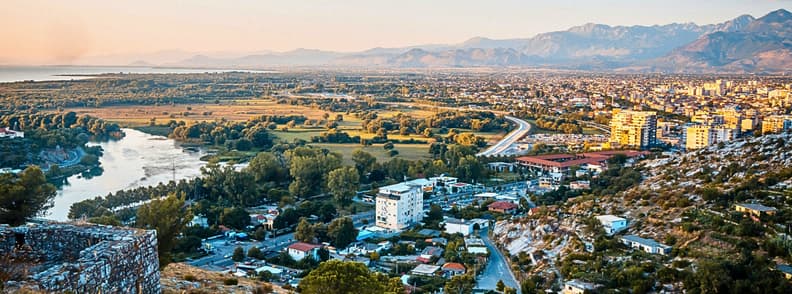
My first time visiting Shkoder in Albania started with coffee on the terrace at Wanderers Hostel and a five-minute walk into the center with Ana to find food. Before long, I had eaten along the pedestrian streets, returned to Vila Bekteshi for dinner twice, borrowed a hostel bike for Lake Shkodra, and learned that taking one hand off the handlebars after six years away from cycling was an very ambitious decision.
This Shkoder travel guide on The Travel Bunny covers the parts of the city that shaped my stay, alongside the practical information I wish I’d had before arriving.
Visit Shkoder Albania Guide
You’ll find what to see, where to eat, how to reach Lake Shkodra, how to get around, where to stay, which day trips fit naturally around the city, and how much time to set aside when you visit Shkoder Albania. I’ve also added a Shkoder map so you can see what lies within walking distance and where a bike, taxi, or other transport makes life easier.
You’ll encounter several spellings while planning a trip. Shkodër is the Albanian name, while Shkoder and Shkodra also appear frequently in English. So if a map, hotel listing, or bus page refers to Shkodra Albania, it’s talking about the same city. I use Shkoder throughout this guide because it’s easy to type and widely recognized, while keeping the proper names of individual places where relevant.
A Shkoder city break can stay centered on the pedestrian streets, food, cafés, museums, and nearby Lake Shkodra. Longer Shkoder city breaks leave room for places farther from the center and onward trips into northern Albania. I’ll also point out where Shkoder tours add something useful and where walking, cycling, or going independently makes better sense.
I stayed at The Wanderers Hostel, so this complete backpacker guide to Shkoder in Albania comes from firsthand experience. The hostel put me within a short walk of the center and gave me access to the bicycle that carried me to the lake, eventually accompanied by several fresh scrapes and a slightly revised opinion of my cycling abilities. This is also a complete travel guide to Shkoder in Albania for anyone staying elsewhere, since the same streets, restaurants, sights, transport choices, and day-trip decisions apply well outside hostel life.
For me, the best way to visit Shkoder in Albania is to spend enough time on foot explore the center, then leave it for a while. My own days moved between Rruga Kolë Idromeno, long meals, cold drinks, Lake Shkodra, and the roads linking everything together. If you’re planning to visit Shkoder for the first time, this guide on The Travel Bunny should help you decide what deserves your time before you start adding places to your route simply because a list told you to.
Disclosure: Some of the links on this page are affiliate links. This means that at no extra cost to you, The Travel Bunny will earn a small commission if you click through and make a purchase. Thank you!
Is Shkoder Worth Visiting?
Yes, Shkoder is worth visiting if you plan enough time in town for its pedestrian center, food, Lake Shkodra, and a few cultural stops. I wouldn’t see it solely as a bed before Theth. My own stay gave me lots of reasons to slow down, eat well, and cycle out toward the lake.
I think Shkoder Albania is worth visiting because the city offers several different experiences without requiring constant travel between them. I could walk from Wanderers Hostel to Rruga Kolë Idromeno in about five minutes, sit down for lunch, go out to dinner at Vila Bekteshi and San Francisco Restaurant, then borrow a bike and head toward Lake Shkodra the following day.
The bike ride did involve falling off after I tried fixing my bangs with one hand, which isn’t an official Shkoder attraction and probably shouldn’t become one. Still, the ride showed me another side of the city. Within the same stay, I went from busy café terraces to a lake shore with birds, fishermen, swimmers, and plenty of space to hide while I cleaned blood off my knees.
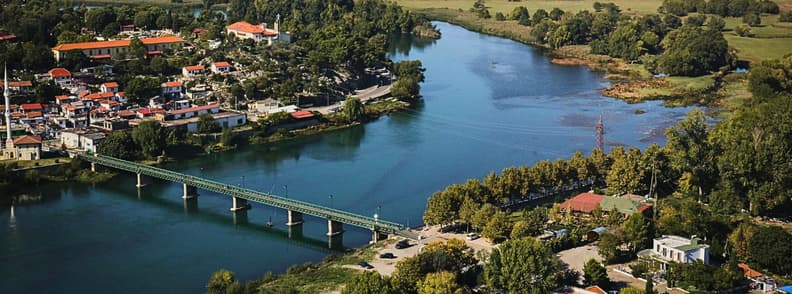
Shkoder is worth visiting on an Albania itinerary even if Theth or the Albanian Alps are your main reason for traveling north. Shkodër is beside Lake Shkodra and the Buna, Drin, and Kir rivers, and a a starting point for Theth and other northern mountain villages. How cool is that?
And Shkoder is worth visiting in Albania especially if you like trips where ordinary city life sits close to nature. You can spend part of the day around cafés, restaurants, museums, and pedestrian streets, then head toward Lake Shkodra, Shiroka, or the roads beyond the center. The lake is on the Albania-Montenegro border and is the largest lake in the Balkans.
My recommendation is to keep Shkoder on the itinerary and don’t rush through it. The city gave me good meals, an easy center to explore on foot, a memorable ride to the lake, and… a bicycle accident I could have happily left out. Still, it seems a fair return from a stop many people treat as somewhere to sleep before heading north.
Shkoder at a Glance
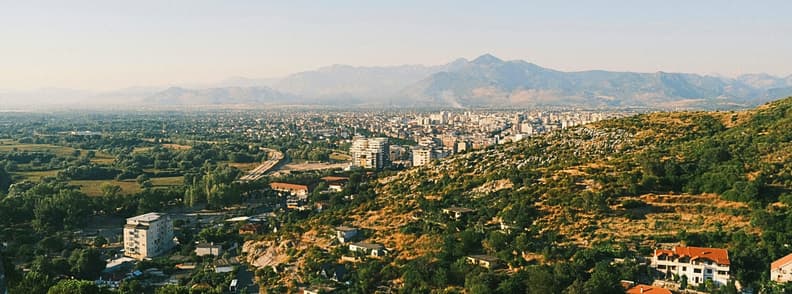
Shkoder sits in northwestern Albania, close to Montenegro, Lake Shkodra, and the Buna, Drin, and Kir rivers. This position explains a lot about the city. You can spend the morning on pedestrian streets, ride toward the lake later in the day, then use Shkoder as a base for Theth, Koman, or a border crossing into Montenegro.
| Shkoder quick facts | |
|---|---|
| Where is Shkoder located? | Northwestern Albania, near Lake Shkodra and the Montenegro border. Tirana is about 98 km away by road, while Podgorica is about 60 km away. |
| Recommended stay | Two days for a first visit. Add a third if you want extra time around Lake Shkodra, Shiroka, Zogaj, or Mesi Bridge without rushing. |
| Best season | Late spring and early fall for walking and cycling. Summer makes sense for swimming, lake time, and combining Shkoder with the Albanian Alps. |
| Currency | Albanian lek, ALL. The lek is Albania’s official monetary unit. |
| Language | Albanian. It’s the official language of Albania. |
| Airport | Shkoder doesn’t have a major commercial airport. Tirana International Airport is about 83 km away, and its current airport shuttle timetable includes direct Shkodra services. Podgorica Airport in Montenegro is geographically closer, though reaching Shkoder involves an international border crossing. |
| Transport | Intercity buses and minibuses connect Shkoder with Tirana, Tirana Airport, Podgorica, and surrounding towns. Taxis and bicycles cover shorter trips. |
| Walkability | The central area is easy to cover on foot. From Wanderers Hostel, I reached the pedestrian center around Rruga Kolë Idromeno in about five minutes. |
| Cycling | Shkoder is widely known as Albania’s City of Bicycles. Its flat streets and long cycling tradition make bikes part of everyday local transport. My own return to cycling after six years was not too elegant. |
| Lake access | Lake Shkodra lies close enough to combine with a city stay. I cycled there from Shkoder. Shiroka and Zogaj are the main lakeside villages on the Albanian side. |
| Onward destinations | Theth, the Albanian Alps, Koman Lake, Tirana, Podgorica, and other destinations in northern Albania and Montenegro. Official tourism information presents Shkoder as a starting point for Theth, Vermosh, and other alpine villages. |
| Shkoder population | 102,434 residents in Shkodër Municipality in the 2023 census. That figure covers the municipality rather than only the compact city center. |
How to pronounce and spell Shkoder vs Shkodra is less complicated once you know why several versions appear. Shkodër is the Albanian indefinite form, while Shkodra is the definite form. English-language travel material also drops the ë and writes Shkoder. The Albanian pronunciation of Shkodër is approximately shkoh-duhr, with the initial shk pronounced together.
What language do people speak in Shkoder? Albanian is the official language, so learning a few basic words is useful even if your accommodation and restaurants use English with foreign visitors. The city name is a useful first lesson.
Shkoder history reaches back to antiquity, with Illyrian, Roman, medieval, Venetian, and Ottoman periods leaving traces around the city and especially at Rozafa Castle. Shkodra is one of the country’s oldest cities and a longstanding commercial, artistic, and cultural center in northern Albania.
Shkoder’s history as a cultural capital of Albania is a description of its influence, because it not an official title. Photography, music, religion, trade, and education all play a large role in the city’s identity. The Marubi National Museum of Photography is one of the best examples, while Shkoder’s Catholic, Muslim, and Orthodox landmarks sit unusually close together in and around the center.
What Shkoder Albania is known for comes down to a fairly distinctive combination: Rozafa Castle, the Marubi photographic archive, Lake Shkodra, an impressive cycling culture, religious heritage, and its position at the entrance to northern Albania. Bicycles are part of the city’s identity, which made borrowing one from my hostel seem like an excellent idea right up to the moment I tried actually rode it.
The best time to visit Shkoder Albania depends on what you plan to do. I’d favor late spring or early fall for a city-first trip built around walking and cycling. My own visit was hot enough that lunchtime on the San Francisco Bar eventually got uncomfortable, and a cold cucumber, lemon, and mint drink at Shega e Eger became considerably more interesting than sightseeing for a while.
The Travel Bunny’s local tip: Late spring and early fall are the best time of year to visit Shkoder Albania if your priorities are the city, Rozafa Castle, cycling, and the lake shore. The best time to visit Shkoder shifts toward summer if swimming and onward travel into the Albanian Alps rank higher on your list.
Shkoder weather follows a pattern of hot summers and considerably wetter periods outside the summer months. Average temperatures rise sharply during summer and rainfall increases again later in the year. I would check Shkoder weather monthly averages before building several long bicycle rides into the same trip, particularly outside summer.
This said, there isn’t a universal best time for Shkoder. A hot July day beside Lake Shkodra is a different trip from a mild spring day spent walking between museums and cafés. You’d better pick the season around what you plan to do.
How Many Days Do You Need in Shkoder?
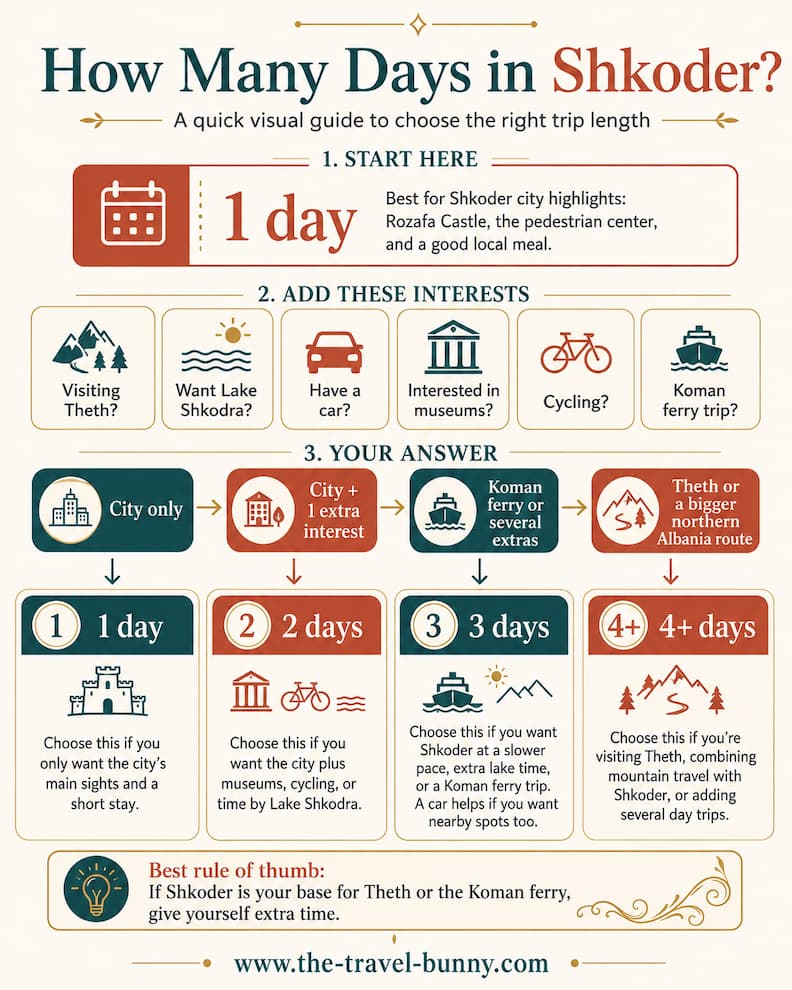
Two days is my recommendation for how many days to spend in Shkoder Albania. One full day is just enough time to visit the center and a few major sights. Two days let you add Lake Shkodra without turning the visit into a race. Three days make sense if you also want to explore Mesi Bridge, Shiroka or Zogaj, or a slower pace before continuing north.
How many days in Shkoder Albania you need also depends on what comes next. Shkoder is a common base before Theth, nearby mountain villages, and other parts of the Albanian Alps. If you’re passing through on the way to Theth, one night still gives you time for an evening around Rruga Kolë Idromeno and part of the following day.
For a first visit, two days in Shkoder is enough to see the city at a comfortable pace and spend proper time by the lake. The second day I spent in Shkoder changed my impression of the place more than another few hours around the center would have.
The third day will give your Shkoder itinerary time to plan places outside the small center. Lake Shkodra is close to the city, while Shiroka and Zogaj extend the trip farther along the Albanian shore. The lake is also a good destination for kayaking, fishing, birdwatching, or simply spending time along the water if you prefer nature to monuments.
A Shkoder itinerary without a car is entirely realistic. I walked from Wanderers Hostel to the pedestrian center in about five minutes and cycled from Shkoder toward Lake Shkodra. Places farther from the center require a little planning, especially if your cycling skills resemble mine after a six-year break.
How many days do you need in Shkoder? Give it one day if your schedule is tight, two days for the first visit I would recommend, and three if you want the city, lake, and nearby places without checking the time every twenty minutes. In the next three itineraries, I’ll break down exactly what fits into each option.
One Day in Shkoder
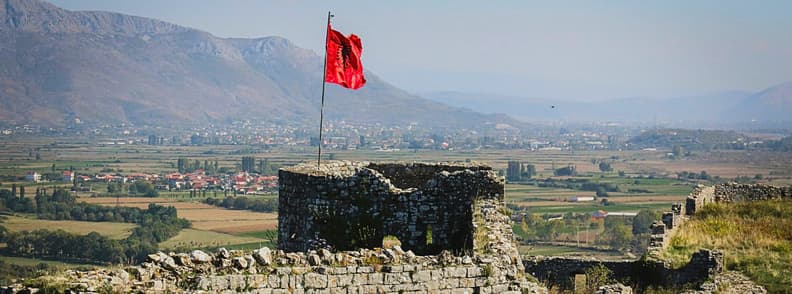
With only one day in Shkoder, I’d keep the route tight. Spend the morning in the pedestrian center, visit the Marubi National Museum of Photography and nearby landmarks, head to Rozafa Castle after lunch, then end your day by Lake Shkodra before dinner. Trying to squeeze every sight around the city into the same day mostly produces a fine tour of Shkoder’s pavement but not much anything else.
Start around Rruga Kolë Idromeno and Gjuhadol, where several of the city’s main sights sit within easy walking distance. From Wanderers Hostel, I reached the pedestrian center in about five minutes. This left considerably more time for coffee, food, and looking around, which is usually preferable to spending the morning on short taxi rides.
The Marubi National Museum of Photography deserves a proper stop instead of a quick appearance to take a photo by the door. The museum is on Rruga Kolë Idromeno and holds a huge photographic record of Albanian life. Opening hours are from 9 am to 7 pm every day and an adult museum ticket costs 700 ALL.
From there, continue your visit through central Shkoder toward Ebu Bekër Mosque, St. Stephen’s Cathedral, and the Site of Witness and Memory. These landmarks cover quite different parts of the city’s identity within a relatively small area. The Site of Witness and Memory occupies a former communist-era detention and interrogation building, with original cells still inside, and it’s the most interesting to see, in my opinion.
Go back to the pedestrian center for lunch. I ate here soon after arriving in Shkoder, and tried San Francisco Bar Restaurant. I liked its terrace until the summer sun became the dominant local treat being served at the table. In hot weather, I’d rather choose shade at lunchtime and save the sunny terrace for later.
After eating, take a taxi to Rozafa Castle. The fortress stands high outside the small city center, on a rocky hill above the Buna and Drin rivers, with Lake Shkodra stretching beyond. The castle’s position makes it easier to appreciate the geography around Shkoder than any map on your phone.
I’d leave Mesi Bridge for another day unless you have a true interest in Ottoman architecture. It’s located 8 km northeast of central Shkoder, so including it to your itinerary means adding another trip away from the center when your time is already limited.
Use the late afternoon to go to Lake Shkodra, with a short lakeside stop in Shiroka. I reached the lake by bicycle with Simon and two Italian girls I met at the hostel. They went swimming, and I sat on shore cleaning blood from my knees after proving that the phrase it’s like riding a bike has its exceptions.
But the ride itself was worth taking. I saw thick vegetation along the shore, plenty of birds, and enough fishermen to make the local fish dishes suddenly seem interesting. The lake is also a good place to stay until sunset if your schedule allows it.
Return to the center for dinner. My choice would be dinner at Vila Bekteshi, because I liked it enough to eat there two evenings in a row. Shkoder has plenty of restaurants, so repeating one during a short stay says a lot about a place!
This one day in Shkoder Albania itinerary helps you discover the pedestrian center, photography, religious and communist-era history, Rozafa Castle, Lake Shkodra, and have a proper dinner without spending the day racing between pins on a map.
What to see in Shkoder in one day comes down to choosing places that show different sides of the city. The center explains daily Shkoder, Marubi displays its photographic history, Rozafa offers the geography, and Lake Shkodra lets you relax and take it all in.
My Shkoder itinerary 1 day express walking tour would therefore stay on foot through the morning, use a taxi for Rozafa Castle, then continue toward the lake. Save Mesi Bridge, Zogaj, and longer cycling routes for a second day. Shkoder becomes far more enjoyable once you stop treating every available hour as vacant space that needs filling.
Two Days in Shkoder
Two days in Shkoder is the amount of time I’d choose for a first visit. You can spend one day around the historic center and Rozafa Castle, then use the second to visit Lake Shkodra and one place farther out, without turning inhaling your breakfast to save time.
My Shkoder 2 day itinerary travel guide keeps Day 1 packed. Start around Rruga Kolë Idromeno and Gjuhadol, visit the Marubi National Museum of Photography, walk past the main religious landmarks, and make time for the Site of Witness and Memory. Most of this part of Shkoder is easy on foot.
After lunch, head to Rozafa Castle. With two days available, there’s no reason to wedge the castle between three other distant stops. Spend the afternoon there, then return to central Shkoder for dinner.
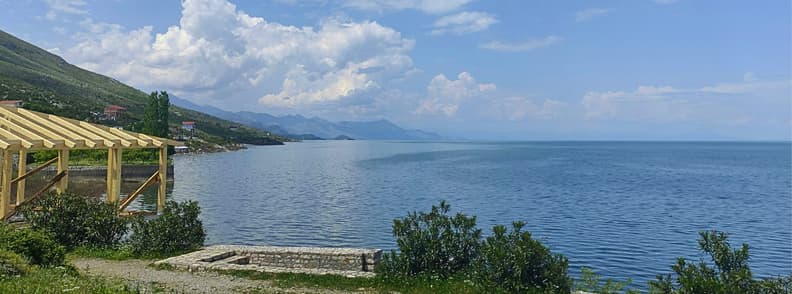
Day 2 is when a two-day stay becomes much better than a rushed overnight stop. Leave the center and spend time around Lake Shkodra. I borrowed a bicycle from The Wanderers Hostel and rode there with some friends I made during my Balkan road trip.
It was my first time cycling in six years. I had been doing rather well until I decided to fix my bangs with one hand while taking a curb. My remaining hand turned out to have neither the authority nor the technical ability required for the situation. I jumped off mid-fall and landed beside the bicycle on all fours. but I still got back on and continued to Lake Shkodra, although by then my relationship with the bike had become noticeably more formal.
Once we reached the water, the others went swimming while I stayed ashore cleaning my wounds and applying band-aids. I noticed thick vegetation, plenty of birds, and many fishermen along the lake. In truth, our quick stop outside town took longer than expected.
If you want to cover a little extra ground on Day 2, add Mesi Bridge before heading toward the lake, or continue farther along the shore toward Shiroka and Zogaj instead. I’d choose only one of these options instead of piling all three onto the same day. Spending extra time in Shkoder is useful only if you resist the urge to immediately fill every available hour.
The things to do in Shkoder for 2 days fit naturally into two different halves of the city experience. Day one is urban, with the pedestrian streets, museums, religious landmarks, Rozafa Castle, and dinner in town. Day two takes you by the water, on cycling routes, through lakeside villages, to enjoy the slower pace around Lake Shkodra.
This is the two days in Shkoder Albania itinerary I’d choose myself. One day tells you what Shkoder has to offer, then two days allow you to spend part of the trip living at the city’s pace, including the occasional long meal, an unnecessary second coffee, and, ideally, fewer bicycle-related medical supplies than I required.
Three Days in Shkoder
Three days in Shkoder leaves you a useful choice on the final day. Stay around the city and explore places that deserve a bit of extra time, or leave Shkoder for the Albanian Alps. I wouldn’t try to do both. A third day should make your trip calmer, not give you another excuse to study your watch.
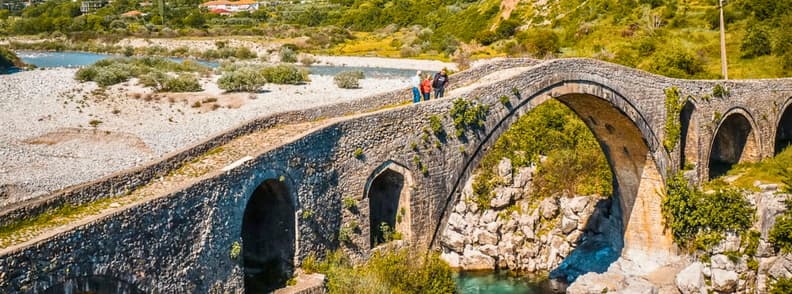
My three days in Shkoder Albania itinerary would keep day three local if visiting Shkoder is the priority. Head out to Mesi Bridge in the morning, when you have time to appreciate the 18th-century Ottoman stone bridge. It located only 8 km northeast of the city, across the Kir River.
Afterward, I’d choose between the Buna River and another stretch of Lake Shkodra. Shiroka and Zogaj are good stops if you enjoyed the lake on day two and want to continue farther along its Albanian shore. A long lunch by the water also becomes a wonderful opportunity to slow down once you’ve already seen the major city sights.
The alternative is Theth, and this changes the character of day three completely. The mountain village lies within Shkodër Municipality in the Albanian Alps, reached through the Tërthore Pass at about 2,000 meters. Grunas Waterfall, Grunas Canyon, the Okoli springs, Mount Harapi, and the historic Lock-in Tower are among the places associated with the village.
A Shkoder 3 day itinerary with Theth hike therefore needs a different itinerary. Spend the first two days in and around Shkoder, then leave early for Theth on day three. The mountain day is its own destination, it’s not something to add after another morning of sightseeing in town.
If hiking is one of the main reasons for your Albania trip, sleeping in Theth is the best choice. The village has traditional guesthouses, and an overnight stay gives you time for a proper walk instead of combining a mountain road, a hike, and the return to Shkoder into one long day.
This leaves you with two sensible versions of three days:
- Stay based in Shkoder for Mesi Bridge, the Buna River, and extra lake time
- Use the third day to move into Theth and continue through northern Albania.
I prefer this kind of choice to an itinerary that attempts to include every pin on the map. The latter usuallly leaves you remembering mainly the inside of your car.
Best Things to Do in Shkoder
The best things to do in Shkoder Albania fall into three useful groups: the historic center, the lake and rivers around the city, and a handful of cultural stops worth leaving the main pedestrian streets for. Rozafa Castle, Marubi, Gjuhadol, the Site of Witness and Memory, Lake Shkodra, Mesi Bridge, and the Buna River all show a different part of the city instead of repeating the same experience in another building.
This variety is why I’d resist treating Shkoder sightseeing as a checklist. Some of the best places to visit in Shkoder Albania, such as the Marubi National Museum of Photography and the religious landmarks around the center, fit easily into a morning on foot. Others, including Rozafa Castle, Mesi Bridge, and the lakeshore, are better explored with a bicycle or a taxi.
The quieter places to visit in Shkoder deserve attention too. The Shkoder Historical Museum / Shkoder History Museum occupies the traditional Oso Kuka house and covers archaeology, ethnography, visual arts, clothing, weapons, crafts, and everyday objects from the area. The building is part of the reason to go, because the museum is inside an authentic 19th-century Shkodran house.
And now here’s something you wouldn’t have expected among Shkoder attractions, and I mean that as a compliment. Buying Venice Carnival masks at a factory in Shkoder sounds like somebody has shamefully confused two spots in the country of Europe [sic!], yet the Venice Art Mask Factory is a genuine local workshop founded by the Zadrima family. It produces handmade Venetian-style masks in papier-mâché and ceramic, with decoration including feathers, gold and silver leaf, crystals, and pearls. Visitors can watch the production process, and you can also mask-painting workshops.
Shkoder shopping also gives you better options than anonymous souvenir shelves. Gjuhadol has craft galleries, while Margjelo Filigran on the Kolë Idromeno pedestrian street specializes in handmade filigree jewelry. Handloom textiles are another local tradition. I’ll point out where to buy traditional Albanian crafts in Shkoder so you can tell the difference between something made locally and something that has followed the same delivery truck around half the Balkans.
Gjuhadol is also worth lingering in for ordinary city life. Gojë Gaditëse Shkoder is a nice stop, combining café, bar, and restaurant, alongside the smaller cafés and cultural spaces that keep the old neighborhood active after you’ve finished studying façades.
What to do in Shkoder depends less on collecting famous names and more on mixing them properly. What to see in Shkoder Albania includes the popular historical sights, but also photography, communist-era memory, religious architecture, local craftsmanship, cycling culture, rivers, and the largest lake in the Balkans.
My list of things to do in Shkoder below focuses on the places that help explain the city. Shkoder is more interesting when you let the urban sights lead you naturally toward the water and the countryside around them.
And if your version of Shkoder what to see begins with Rozafa Castle, that’s perfectly sensible. Mine would also leave room for the street where I ate, the road I cycled toward the lake, and the less famous places that explain why Shkoder stayed in my memory after I left. My list of things to do Shkoder starts with the major sights, then moves outward from the center.
Explore Rozafa Castle
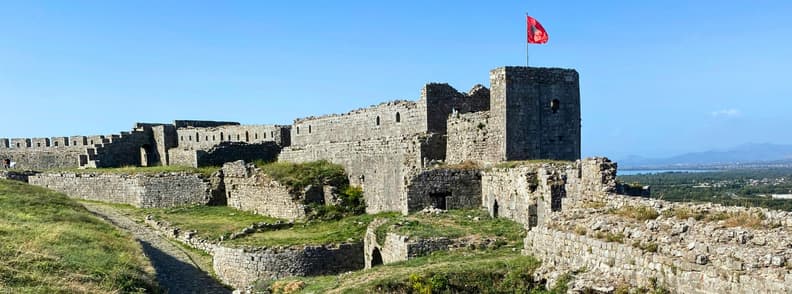
Rozafa Castle (Kalaja e Rozafës) is the landmark I’d put first on any Shkoder sightseeing list, partly for the fortress itself and partly for the view below it. The castle rises on a rocky hill at the southern edge of Shkoder, above the place where the Buna and Drin rivers meet, with Lake Shkodra stretching beyond.
Rozafa Castle Shkoder has Illyrian origins, then passed through Roman, Byzantine, Venetian, and Ottoman influences. The Balshaj family shaped much of its medieval form in the 14th century, while a large part of what survives today belongs to the Venetian period. Ottoman occupation left further traces across the fortress.
The history of the legend of Rozafa Castle with a woman sacrificed is darker than the usual castle folklore, although similar to foundational myths spread over Europe, such as the legend of Meșterul Manole in Romania. According to Albanian tradition, three brothers built the fortress walls by day, only to find them collapsed each night. They agreed that one wife would have to be immured within the walls. The two older brothers warned their wives, while Rozafa, the wife of the youngest, arrived unaware and became the sacrifice.
What is the history behind Rozafa Castle legend? The story centers on besa, the Albanian idea of keeping one’s word. Rozafa accepted her fate on the condition that part of her body remain exposed so she could continue feeding her child. At the castle entrance, a bas-relief recalls her story, and local tradition links limestone water flowing there with her breast milk. It’s folklore and not an archaeological account, but it remains central to the identity of Shkoder Castle.
How to get to Rozafa Castle from Shkoder depends mostly on how much uphill walking you’re willing to do before entering the fortress built on top of the hill. The castle is roughly 3 to 5 km from central Shkoder, depending on your starting point. A taxi ride takes around 10 minutes, while walking from central Shkoder takes 40 minutes before the final steep approach. Local buses also stop nearby, and from where they drop you, you still have a 10 to 20 minute uphill walk.
How much does a taxi cost to Rozafa Castle? It costs around 500 ALL for a one-way ride from central Shkoder, so about 1,000 ALL for a return trip. Prices vary, so agree on the fare before leaving to avoid surprise mathematics at the castle gate.
Rozafa Castle ticket prices are 400 ALL for a standard adult ticket, 200 ALL reduced, and 120 ALL for students and visitors aged 12 to 18. Children under 12 visit Rozafa Castle for free.
Rozafa Castle opening hours are:
- 9 am to 7 pm from Monday to Saturday, and from 9 am to 4 pm on Sunday, from 15 May to 31 October
- 9 am to 4 pm from Tuesday to Saturday, and from 9 am to 2 pm on Sunday, from 1 November to 14 May.
How to visit Rozafa Castle Shkoder also depends on the weather. The final approach is paved but steep, and the stone surfaces deserve proper shoes, especially after rain. In summer, the exposed hill also gives the sun plenty of opportunity to participate in your visit. I’d go earlier in the morning or later in the afternoon. Don’t aim for the hottest part of the day.
Late afternoon has another advantage. Visiting Rozafa Castle for sunset views places the Buna River, Lake Shkodra, Shkoder, and the surrounding mountains in softer light. The meeting of the rivers west of the castle is one of its main viewpoints at Rozafa Castle, and it’s definitely worth photographing or admiring at sunset.
Best Shkoder sunset spots at Rozafa Fortress: Look toward the river plain and Lake Shkodra. The wide view is the reason the castle photographs differently from ground-level landmarks in town.
My main photography tips for Rozafa Castle and Buna River are simple. Use the higher western viewpoints for the river confluence, keep some of the fortress walls in the foreground for scale, and save wider river shots for later in the day when the light is not as harsh. From below, the road beside the Buna also gives you a good view back toward the fortress on its hill.
I’d allow at least 90 minutes for Rozafa Castle, and even longer if you want to visit the museum, take photographs, or watch the sunset. Stop looking only at the ruins and start looking outward. From up there, Shkoder suddenly becomes a city organized by water, roads, hills, and a lake that continues toward Montenegro.
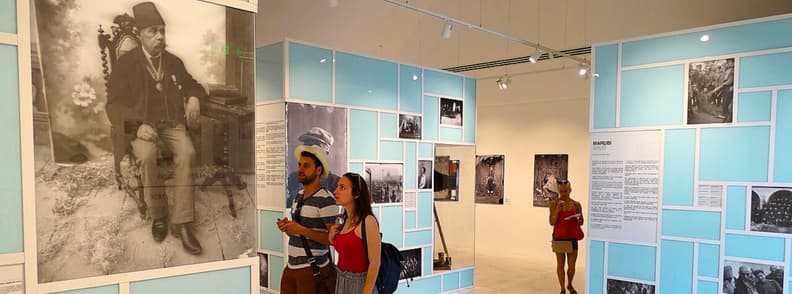
Visit the Marubi National Museum of Photography
The Marubi National Museum of Photography is one of the best reasons to spend time in central Shkoder. Its archive holds over 500,000 negatives and photographs recording Albanian people, cities, political events, clothing, social life, and changing streets across well over a century. This is history with faces attached to it, which is often easier to absorb than yet another room full of dates and military campaigns.
The collection began with Pietro Marubi, an Italian painter, sculptor, architect, and photographer who established his studio in Shkoder in the mid-19th century. Kel Marubi and later Gegë Marubi continued the photographic dynasty, creating a visual record that eventually expanded through archives from other Shkoder photographers. Gegë donated the family collection to the Albanian state in 1970.
The Marubi Photography Museum is easier to appreciate if you think of it as a visual archive of Albania instead of a museum devoted only to cameras. Portraits, glass negatives, photographic equipment, archival material, and temporary exhibitions show how photography recorded ordinary people alongside politicians, soldiers, religious figures, cities, and major historical events.
The present Marubi Museum Shkoder museum opened in its contemporary form on 9 May 2016. It’s located at Rruga Kolë Idromeno No. 32, directly on the pedestrian street, so it fits neatly into a morning spent exploring central Shkoder.
Marubi National Museum of Photography opening hours are 9 am to 7 pm every day of the week. The museum occasionally closes while new exhibitions are being installed, so I’d still check its official website shortly before visiting.
The Marubi National Museum of Photography ticket cost is 700 ALL for adults. Groups of over 12 pay 600 ALL per person, and students and visitors aged 12 to 18 pay 210 ALL. Children under 12 visit Marubi National Museum of Photography for free. Reception accepts cash only in Albanian lek, but individual tickets are also sold online.
Marubi Museum opening hours and tickets make it one of the easier Shkoder attractions to fit around lunch or other central sights. Several designated cultural dates also have free admission, such as 18 April for the International Day for Monuments and Sites, 18 May for International Museum Day, 21 May for the World Day for Cultural Diversity for Dialogue and Development, and 29 September for Cultural Heritage Day.
On 28 and 29 November free admission applies only to Albanian citizens. 28 November is Flag and Independence Day in Albania and 29 November is Liberation Day from Nazi occupation.
Note that any free admission doesn’t apply on the last Sundays from May through October.
How to visit Marubi Museum in Shkoder: Walk to Rruga Kolë Idromeno, enter from the pedestrian street, and read the exhibition material instead of treating the building as a quick stop between cafés. The museum doesn’t provide a regular guide, but exhibition texts, brochures, and video material explain the displays.
Photography is permitted throughout the Marubi National Museum for non-commercial use. Large bags and strollers go into the designated storage area, food and drinks stay outside the exhibition route, and the building has an elevator and accessible toilets. The entrance staircase lacks a ramp, though staff assist visitors who need another way in.
I’d plan at least an hour for this Shkoder photography museum, and longer if historical photographs tend to stop you in your tracks. The attraction isn’t the number of images stored in the archive but the accumulation of ordinary details inside them: clothes, expressions, streets, ceremonies, occupations, and people who had no idea someone would still be admiring their photograph a century later.
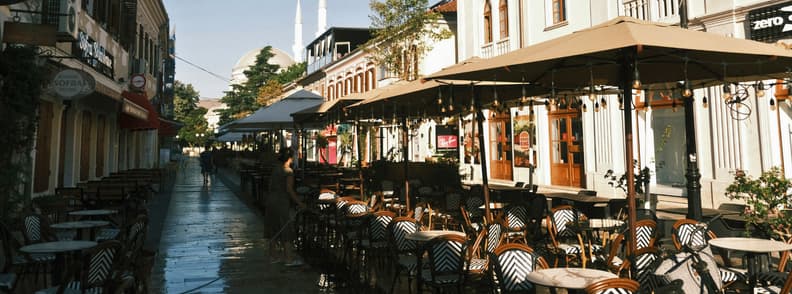
Walk on Kolë Idromeno Street and Gjuhadol
Rruga Kolë Idromeno is the pedestrian spine of Shkoder city center, and it was the first part of town I reached after checking in at The Wanderers Hostel. Ana and I walked there in about five minutes, found a terrace, ordered drinks and food, and settled into the sort of afternoon where sightseeing begins to compete with sitting down.
The street is named after Kolë Idromeno, the Shkoder-born painter, architect, photographer, and designer whose name appears repeatedly in the city’s cultural history. Today, Kolë Idromeno Street is lined with cafés, restaurants, shops, and restored façades, while the Marubi National Museum of Photography is directly on this pedestrian route.
Keep walking into Gjuhadol and don’t turn back once you’ve photographed the main street. Gjuhadol is one of Shkoder’s historic neighborhoods, with cobbled streets, older houses with Venetian influence, small cafés, craft galleries, and cultural spaces. Much of its central part is pedestrianized.
Rruga 28 Nëntori extends the central walk and connects directly with Rruga Kolë Idromeno. Rruga 28 Nëntori, Kolë Idromeno, and nearby streets are all within Shkoder’s historic central zone, so a walk through here gives you a much glipse of the old city than hopping between isolated pins on a map.
Self guided walking tour of Shkoder old town: Start on Rruga Kolë Idromeno, continue through Gjuhadol, add Rruga 28 Nëntori, then branch toward the Marubi Museum, Ebu Bekër Mosque, St. Stephen’s Cathedral, and the Site of Witness and Memory. Most of the central route is compact enough that your biggest delay is likely to involve coffee.
A distinction between Shkoder old town and the historical Old Bazaar is worth keeping straight. The original Shkoder Bazaar stood near Rozafa Castle and the Buna River, away from today’s pedestrian center. Marubi now refers to it explicitly as the lost Bazaar of Shkodra, whose physical presence disappeared after war, political change, and later demolition. Kolë Idromeno or Gjuhadol aren’t a restored Old Bazaar, like some guides picture them. They belong to the historic center, which is a different place with a different story.
My self guided walking tour of old town Shkoder would take at least half a day once you add museum stops and lunch. The walking part is short. The problem (if one insists on calling it a problem) is that Shkoder pedestrian street life keeps offering perfectly reasonable excuses to stop.
I can’t rank every one of the best coffee shops and cafes in Kolë Idromeno after a single stay in the area. But I did spend time around the central terraces, and my favorite refreshment came from Shega e Eger on Gjuhadol, close to The Wanderers Hostel. I copied Hasna and ordered the cold cucumber, lemon, mint, and ice drink she was having and it was exactly what I needed to cope with the summer. Well, that and one of the hostel’s shaded hammocks.
I’ll take the same cautious approach to the best restaurants in Shkoder old town. I ate around the center, returned to Vila Bekteshi twice for dinner, and tried Bar Restaurant San Francisco at lunchtime. At San Francisco, the terrace was pleasant until the heat hit me, so evening would be a better choice in summer.
Shkoder bike rental in the old town wasn’t something I had to arrange separately. I borrowed a bicycle from The Wanderers Hostel for the ride toward Lake Shkodra. This saved time and money..
The top historical museums in Shkoder city center fit neatly around this walking route I proposed. Marubi is right on Rruga Kolë Idromeno, while the Site of Witness and Memory adds the communist-era story nearby. The Shkoder Historical Museum, housed in the traditional Oso Kuka residence, helps you discover archaeology, ethnography, art, clothing, crafts, weapons, and domestic objects from the region.
Explore Rruga Kolë Idromeno and Gjuhadol both in daylight and in early evening. By day, the façades, museums, shops, and architectural details are easier to examine. Later, the café tables start multiplying until walking in a straight line becomes an unnecessarily rigid personal goal.
Visit the Site of Witness and Memory
The Shkoder Site of Witness and Memory is one of the city’s most important historical stops, especially if you want to understand Albania beyond castles, cafés, and Ottoman stonework. The museum occupies part of the former local branch of the Ministry of Interior, known as Dega e Brendshme, where political prisoners were detained and interrogated during the communist dictatorship.
The building served a very different purpose before communism. Franciscan friars bought the property in 1930 and opened a college there for training parish priests. In 1946, the communist authorities confiscated the site and converted it into a center for detention and interrogation, a role it retained through the dictatorship. The memorial museum opened to the public in 2014.
Calling it the Site of Witness and Memory communist prison museum is useful shorthand, although the exhibits go further than the surviving cells. Documents, manuscripts, correspondence between prisoners and their families, objects connected with imprisonment, audiovisual material, and testimony place individual lives inside the broader story of communist repression in Shkoder.
The most difficult part of the Site of Witness Memory is also the least theatrical. Original pre-trial holding cells survive inside the complex, including small ground-floor cells with little natural light where political prisoners were kept before trial. The building itself supplies much of the explanation. There’s little need to dramatize rooms that were already used for detention and torture.
Shkoder has a particular reason for preserving this history. The city became an important center of resistance and religious persecution under the communist regime, while churches, religious institutions, private houses, and other buildings were turned into detention sites. The museum’s introductory material includes a map tracing prisons and places of repression across Shkoder.
Visiting the Site of Witness and Memory Museum Shkoder fits easily into a walk around the historic center. It’s located on Bulevardi Skënderbeu, within walking distance of St. Stephen’s Cathedral, Ebu Bekër Mosque, Rruga Kolë Idromeno, and the Marubi National Museum of Photography. This proximity makes it possible to uncover several very different chapters of Shkoder’s history within the same morning.
Plan to spend around one to two hours at the Site of Witness and Memory of Shkoder, especially if you plan to read the documents instead of moving quickly through the cells. This is one of those museums where speed rather defeats the purpose and even feels disrespectful.
The Shkoder Site of Witness and Memory has a modest admission charge of 150 ALL for adults and 50 ALL for children, with free admission for students accompanied by teachers.
The Site of Witness and Memory is open from Monday to Friday from 9:30 am to 2:30 pm and Saturday from 9:30 am to 12:30 pm. It remains closed on Sunday.
Visiting Site of Witness and Memory adds context that changes how you read Shkoder afterward. The pedestrian streets, churches, mosques, schools, and ordinary houses around the center belonged to a city where political and religious persecution happened within living memory, often behind doors that looked entirely unremarkable from outside.
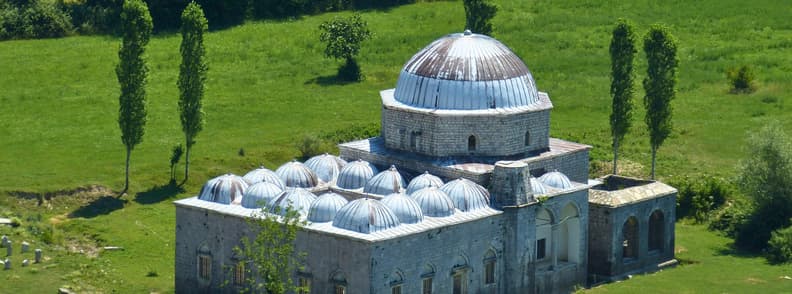
See Shkoder’s Religious Landmarks
Shkoder’s religious landmarks put several centuries of the city’s history within a relatively small area. In the center, Ebu Bekër Mosque stands within walking distance of St. Stephen’s Catholic Cathedral and the Orthodox Nativity of Christ Cathedral. Farther south, near Rozafa Castle, the Lead Mosque belongs to an older Ottoman period. In Shkoder, you will uncover interfaith coexistence as a longstanding national tradition.
The history of Catholic and Muslim cohabitation in Shkoder Albania deserves a little care. Different communities kept their own institutions, rituals, and identities, and the past was hardly a single uninterrupted tale of agreement. What remains visible today is proximity. Major Muslim and Catholic landmarks share the same small city, while local religious leaders still speak publicly about dialogue and cooperation.
The Ebu Bekr Mosque is the easiest major mosque to include during a walk through central Shkoder. Also known as the New Fushë Çela Mosque and Xhamia e Madhe, or Great Mosque, it stands at 1 Rruga Fushë Çelë, near the pedestrian center. The present building dates from 1994 to 1995 and occupies the site of an earlier mosque destroyed during the communist period.
The modern Ebu Bekr Mosque Shkoder has two slender minarets and a large central dome, so spotting it from the center requires little detective work. The earlier Fushë Çela mosque had played an important role in Islamic scholarship in Shkoder, while the present mosque belongs to the revival of public religious life after communism.
Opening hours for Ebu Bekr Mosque Shkoder are around the clock. The Shkoder Ebu Bekr Mosque is an active place of worship, so please go outside prayer times, dress modestly, and follow any additional instructions at the entrance.
The Lead Mosque Shkoder is a completely different building, in a different part of town. Mehmet Pasha Bushati built it in 1773-1774 near Rozafa Castle. Its low domes and stone construction give it an older, heavier appearance than Ebu Bekër Mosque in the center. It’s one of Shkoder’s important Ottoman religious monuments.
Its name comes from the lead that once covered the domes. Much of the metal later disappeared, and repeated flooding has also affected the mosque because of its low position near the rivers below Rozafa. The setting explains part of the building’s history before you even go inside. Water, repairs, political change, and centuries of use have all left their mark.
The main Shkoder Catholic Cathedral is St. Stephen’s Cathedral, also called Shën Shtjefni. Sultan Abdülmecid I granted permission for its construction in 1851 after years of petitions from Shkoder’s Catholic community. Kolë Idromeno later decorated the vault, including an image of Our Lady of Shkoder with angels dressed in local folk clothing.
St Stephen Cathedral Shkoder also carries one of the clearest physical traces of Albania’s communist attack on organized religion. In 1967, the authorities converted the cathedral into a sports palace, demolished its towers, and closed the portal. It reopened in 1990 and hosted the first public Mass in Albania since religion had been banned in 1967. Pope John Paul II visited in 1993.
I’d visit these landmarks as parts of the same historical story instead of seeing them as three unrelated architecture stops. Ebu Bekër Mosque reflects the post-communist return of public Islamic life, St. Stephen’s Cathedral carries the history of Catholic survival and restoration, and the Lead Mosque reaches back to Ottoman Shkoder. Together, they explain several centuries of religious and political change better than any neat timeline on a museum wall would.
These are active sacred places first. Please keep your voice low, avoid entering during prayer or services unless invited, and dress with the setting in mind. Shkoder has enough cafés nearby to cope with the rare inconvenience of a religious building prioritizing religion. 🙂
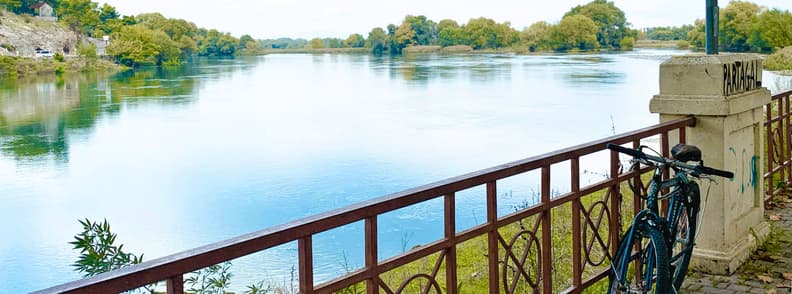
Cycle to Lake Shkodra, Shiroka, and Zogaj
Cycling from Shkoder to Shiroka is one of the easiest ways to leave the city center and reach Lake Shkodra under your own steam. Shiroka is on the southwestern shore of the lake, close enough to Shkoder for a short ride, with a promenade, fish restaurants, swimming spots, and open views across the water.
I borrowed a bicycle from The Wanderers Hostel and rode out toward the lake with my German friends from the hostel. The ride gave me something walking around the center never would have. Streets gradually gave way to water, shoreline vegetation, birds, fishermen, and the sight of my companions swimming while I stayed on land attending to the consequences of my earlier disagreement with the bicycle.
The Shkoder to Shiroka bike route follows the lakeward road southwest from the city. Shiroka is reachable by bicycle or on foot, the village is only 3 km from Shkoder. It’s a sensible turnaround point if you want a short ride instead of a half-day outing.
A bike tour from Shkoder to Shiroka Lake becomes much better once you allow time for stops. Shiroka is known locally for its lakeside promenade and fish restaurants, so there is little advantage in pedaling straight through, photographing the water, and immediately turning around. Might as well take advantage of Shkoder’s closest lakeside destination.
Cycling from Shkoder to Shiroka and Zogaj turns your outing into a longer ride. Zogaj is several kilometers beyond Shiroka along the Albanian shore, closer to the Montenegro border. A Shkoder, Shiroka, and Zogaj out-and-back ride is 25 km in total, with modest climbing, although exact distance depends on where you start in Shkoder.
The reward for continuing is reaching a quieter stretch of Lake Shkodra. Zogaj has hillside houses, lake views, birdlife, and a slower pace than Shiroka, while the road between the villages keeps the lake close for much of the way. Zogaj is a good stop for for birdwatching, nature walks, and sunset views.
There is one important complication in 2026. The Shiroka to Zogaj road is undergoing reconstruction, but the project is approaching completion. Old Bridge to Shiroka and Shiroka to Zogaj segments may be unsuitable for group riding during the road reconstruction.
So I would check the latest road condition shortly before setting out, especially if you plan to continue past Shiroka. The route itself is established, but a road beside a lake is considerably less romantic once construction vehicles, broken surfaces, or temporary diversions join the scenery.
Shiroka also gives you a useful fallback if the road toward Zogaj looks poor. There is a Center to Shirokë to Zogaj bus line for 100 ALL, so reaching the lake doesn’t depend entirely on cycling conditions. The service runs only a few times per day, so check the timetable. You can’t arrive here with the hopeful confidence reserved for big city metros.
The Travel Bunny’s tip: In hot weather, I’d leave earlier in the morning or later in the afternoon. My own visit was hot enough that shade and cold drinks had become serious considerations by lunchtime. The lake is a much better destination when you have enough time to stop beside the water. The ride shouldn’t be an endurance test.
The same applies to cycling from Shkoder to Shiroka as a shorter outing. Ride out, stop for a drink or meal, spend time at the shore, then return to town before dark. The road itself is only part of the point.
If conditions are good and you have several hours, continue to Zogaj. If construction or heat makes the longer ride unappealing, Shiroka alone still gives you the change of scenery that makes this route worth taking. My own ride to Lake Shkodra remains one of the parts of Shkoder I remember most clearly, but it might also be because of the fall I took.
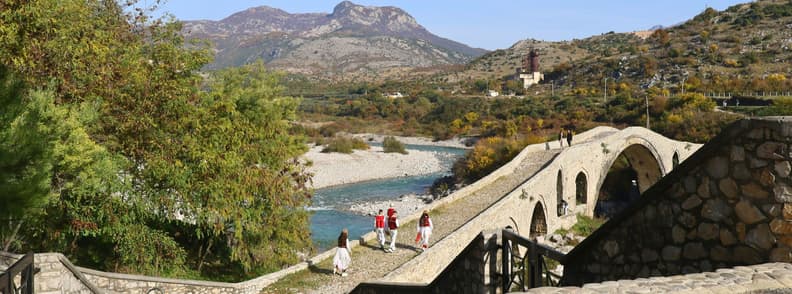
Visit Mesi Bridge or Middle Bridge in Shkoder
Mesi Bridge or Middle Bridge is one of the easiest historic sights to add to your visit outside central Shkoder. The 18th-century Ottoman stone bridge crosses the Kir River near the village of Mes, at 8 km northeast of the city. It was built in 1768 by Mehmet Pasha Bushati to connect Shkoder with mountain villages and improve trade along the valley.
The bridge is 108 meters long, 3.4 meters wide, and carried by 13 stone arches of different sizes. Its irregular shape is part of the attraction. Instead of forcing a ruler-straight crossing over uneven ground, the builders adapted the bridge to the riverbed and surrounding terrain.
Among the architectural highlights of Ottoman bridges near Shkoder, the changing arch sizes are the detail I’d pay attention to first. The largest arch spans the main river channel, while smaller arches step across the rougher ground beside it. The result looks slightly asymmetrical, because the landscape had the final word in the making of the plans.
You’ll sometimes see the attraction called Mes Bridge in Albania, taken from the nearby village name, while Ura e Mesit is the Albanian name. Mesi Bridge in Albania refers to the same monument. The spelling varies less dramatically than the bridge itself, which curves instead of marching obediently across the river in a straight line.
How to get to Mesi Bridge from Shkoder: Driving or taking a taxi is the easiest option, because the bridge is 8 km from the city. Public transport is limited, while cycling is a practical alternative along the rural roads toward Mes.
The Shkoder to Mesi Bridge by bike route is short enough for a half-day outing. You will cycle 7-8 km each way from central Shkoder, depending on where you start.
Biking from Shkoder to Mesi Bridge guide: Leave the center toward the Kir River and Mes village, follow the road northeast, then return the same way unless you’re combining the bridge with another stop. I’d still save the route offline before leaving, since country roads have never shown much respect for anyone’s confidence.
My cycling from Shkoder to Mesi Bridge guide would also put timing ahead of speed. Go earlier in the morning or later in the afternoon in summer, carry water, and give yourself time beside the river. Cyclists regularly use the route and that summer temperatures make preparation worthwhile.
The Kir River changes the experience by season. Water levels fluctuate considerably, and July and August sometimes bring little water beneath the bridge. In spring and early summer, higher water can make the stone arches and riverbed even more photogenic.
The bridge recently went through restoration, with repairs to accumulated damage and new lighting added around the monument. Shkoder regional authorities announced the completion of that work in 2025.
Mesi Bridge Shkoder is open-air and currently accessible without a ticket. It is as open 24 hours, which makes timing flexible if you want softer morning or evening light, without arriving like everyone else in the middle of the day.
I’d plan to spend about an hour at the bridge or longer if you’re cycling or planning to sit by the Kir River. The attraction is the combination of stonework, river, and scenery, you don’t have much to do once you arrive. Walk across, look back from the riverbank, study how the arches change across the span, then leave before you take the same photograph from eleven slightly different angles as field research.
Walk Along the Buna River
The Buna River is Shkoder’s quieter side away from the pedestrian center. It begins at Lake Shkodra, passes the southern side of the city below Rozafa Castle, and continues toward the Adriatic Sea. The Buna is Albania’s only river to form a true natural delta.
A Shkoder Buna River walk goes well with Rozafa Castle because the two places explain each other. From the fortress, you see the river system spread across the plain. From the Buna River, Rozafa Castle rises clearly above the water on its rocky hill, giving you a completely different view of the fortress than from inside its walls.
One useful landmark is the Old Buna Bridge, which links the Shkoder side of the river with the road to Shiroka and Lake Shkodra. From around the bridge, you have clear views toward Rozafa Castle and the river, and the route can continue toward the lake for a longer walk or bicycle ride.
Walk for as long as the weather and your schedule allow, watch the fishermen, and look back toward Rozafa. Don’t turn the river into another attraction with a required completion time.
The Buna also has real ecological importance. The river forms part of one of Europe’s major bird migration corridors, while its delta supports a rich wetland ecosystem before the river reaches the Adriatic. This gives the waterway a larger role than the short stretch you see beside Shkoder.
I’d visit in the late afternoon, particularly in summer. The lower sun is kinder for photographs of the river and Rozafa Castle, and the temperature is usually easier for walking than around midday. If you’re already heading toward Shiroka, the Buna River also provides a natural transition from city streets to Lake Shkodra.
Plan to spend around half an hour at the Buna River if your day is packed, or longer if you want a slower walk toward the lake. Shkoder has plenty of major sights to keep you occupied, but this is one of the places where doing very little is the best you can do.
The Travel Bunny’s Shkoder Map
Sights, restaurants, my hostel, Lake Shkodra stops and useful transport points from my Shkoder guide.
My Shkoder Map. What Is Walkable, Bikeable, Or Better by Taxi
My Shkoder map separates the city into three practical zones: the small center you can cover on foot, the lake routes you can cycle on, and the outlying sights where a taxi saves time. Seeing those zones together explains Shkoder better than a collection of isolated attraction pins.
A wider Shkoder Albania map places the city in northwestern Albania, close to the Montenegro border and beside Lake Shkodra, with the Buna, Drin, and Kir rivers shaping the area around it. A map showing where Shkoder is located in Albania also explains why the city is such a useful base for Lake Shkodra, Theth, Koman, and onward travel toward Montenegro.
The Shkoder city map becomes simpler once you zoom into the center. Rruga Kolë Idromeno, Gjuhadol, Marubi National Museum of Photography, Ebu Bekër Mosque, St. Stephen’s Cathedral, and the Site of Witness and Memory form a dense walking cluster.
Rozafa Castle belongs to a different zone. It rises on the rocky hill at the entrance to Shkoder, above the Buna and Drin river area. I’d visit Rozafa by taxi if your time is limited, especially since the visit itself already involves climbing around the fortress.
To the northeast, Mesi Bridge is 8 km from Shkoder on the Kir River. It’s bikeable for confident cyclists but better by taxi for anyone who wants to save energy for the bridge and riverbank. Its position becomes immediately obvious on the map because it sits away from both the historic center and the lake route.
Southwest of the city, Shiroka and Zogaj follow the Albanian shore of Lake Shkodra. This is the route I find best for cycling. I rode from Shkoder toward the lake myself, and the gradual change from city streets to water, birds, fishermen, and shoreline vegetation is part of the reason the ride stayed with me.
Use the map by choosing your area first, then your sights. Keep the center together on foot, group the lake villages into one cycling outing, and treat Rozafa Castle and Mesi Bridge as separate trips beyond the core.
Visit Lake Shkodra: Shiroka or Zogaj?
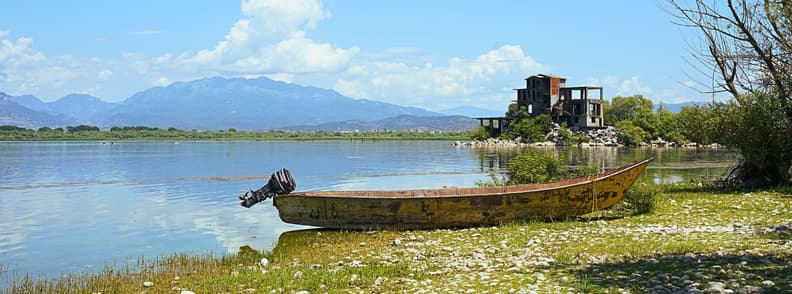
Lake Shkodra is where Shkoder opens up into water, villages, birdlife, fishing, and long views toward Montenegro. The lake sits directly on the Albania-Montenegro border and covers about 370 km², making it the largest lake in the Balkans. Shiroka and Zogaj are the two main traditional villages on its shore.
You’ll see several names for the same lake. Lake Shkoder or Shkoder Lake are common English variations around the city, while Lake Skadar is widely used in Montenegro and international travel material. Lake Skadar Albania and the Montenegrin national park share the same body of water.
Shiroka or Zogaj, which is better?
| Shiroka | Zogaj | |
|---|---|---|
| Best for | First lake visit, food, swimming, promenade, easy access | Quieter lake time, birdwatching, nature walks, sunset |
| Distance from Shkoder | Closest lakeside village | Several kilometers farther west |
| Atmosphere | Busier, with restaurants and a developed waterfront | Smaller and quieter |
| Food | Excellent choice for lake fish and tavë krapi | Lake fish and traditional local meals |
| Swimming | Easier to access for a quick summer swim | Possible lake access, with fewer visitor facilities |
| Boat and paddle activities | Better starting point for organized water activities | Smaller-scale options and quieter water access |
| Cycling | Easy target for a shorter ride | Better if you want to extend the ride along the shore |
| Public transport | Served by the Shkoder to Shirokë to Zogaj city line | Same city line continues to Zogaj |
| My pick | Shiroka for a first visit | Zogaj when relaxation is the priority |
Shiroka or Zogaj, which is better? I’d choose Shiroka on a first visit because it gives you the easiest combination of lake access, food, swimming, and transport. Shiroka Albania is the closest lakeside destination to Shkoder, with a promenade and fresh-fish restaurants.
Shiroka village near Shkoder is also the best destination if you don’t have a full day. The municipal Shkoder to Shiroka bus continues onward to Zogaj every day between 6:15 am and 4:15 pm. The exact frequency is set according to demand, so I’d check locally before planning your return.
Continue to Zogaj Albania when you want fewer restaurants and a little more space. Zogaj is an excellent destination on Lake Shkodra for birdwatching, nature walks, and sunset, with houses climbing the slope above the shore.
The Travel Bunny’s local tip: Zogaj village on the lake is a good extension of a Shiroka visit. Save time and don’t plan your visit on a separate day.
Among the best things to do at Lake Shkodra, I’d put swimming, cycling, kayaking, a boat trip, birdwatching, and a long fish lunch ahead of more sightseeing. The lake is the attraction here. Filling every hour with organized activities defeats the advantage of leaving the city.
Swimming, kayaking, and getting onto the water
Where to swim in Lake Shkodra? I’d start with Shiroka. My companions went straight into the lake when we cycled out from Shkoder. Swimming is a normal summer activity here, and Shiroka offers the easiest lake access.
Kayaking Lake Shkoder is a better option if you want to get closer to the shoreline. Stand Up Paddle Board or Kayak Rental in Shkodër is available at Drini Times in Shiroka. You choose a kayak or SUP, receive the equipment and route guidance, then paddle on Lake Shkodra in Shiroka to Buna Bridge or another accessible point along the Buna River.
A Lake Shkodra boat tour from Shkoder
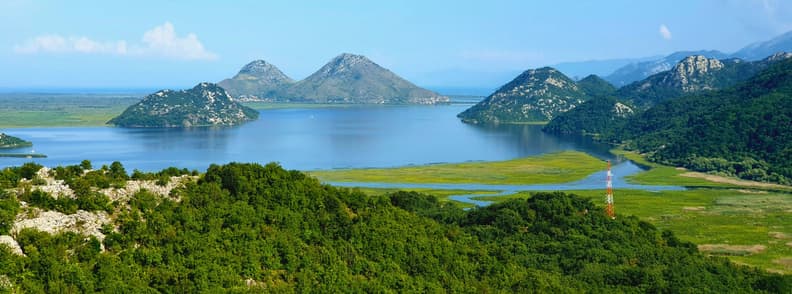
If you prefer sitting in a boat to providing the propulsion yourself, the Lake Shkodra Boat Cruise and Water Biking and Cultural Visits Tour leaves from the Shkoder area with accommodation pickup. The roughly 3.5-hour outing includes a short Lake Shkodra cruise, water biking in Shiroka, and a visit to either Rozafa Castle or Mesi Bridge.
This Shkoder lake boat tour is useful because you get to see a lot without spending an entire day. The lake part is close to Shiroka, and the cultural stop adds something you would otherwise visit separately. Going to Rozafa is ideal if you haven’t visited the castle yet and Mesi Bridge if the fortress is already crossed off your list.
The Shkoder lake boat tour price changes by date, availability, and the activity option selected. Check the live booking page to get the updated cost of a boat tour on Lake Skadar from Shiroka.
This gives Lake Skadar kayaking and boat tour rental planning two fairly different choices. Pick the kayak or SUP if you want independence and time close to the water. Pick the Lake Shkoder boat tour if you’d rather combine the lake with another Shkoder sight and let somebody else deal with the forward motion.
Sailing Lake Shkoder
Sailing on Lake Shkoder from Albania is possible, although the current commercial activity around Shiroka is dominated by motorboat tours, kayaks, SUPs, and traditional excursion boats. Community sailing routes exist around Shiroka and Zogaj, but organized yacht-style charter is easier to find and book on the Adriatic coast than here.
Be cautious when you see tours promoting Lake Skadar sailing. A boat trip is not automatically a sailing trip because somebody has used the verb loosely in a description. If your plan specifically involves sailing Lake Shkoder, check the vessel before paying.
Real Shkoder sailing deserves respect, because the large shallow lake changes quickly with the local weather. The Albanian part of the lake is particularly influenced by easterly winds, and summer brings local wind changes through the day. Stronger winds elsewhere on the lake can raise considerably rougher water.
These sailing conditions and wind patterns on Lake Shkoder are why I’d search for a proper local sailing operator before heading out for several hours under sail.
What to eat in Shiroka and Zogaj
Lunch is one of the best things to do at Lake Shkodra, especially after cycling there. The dish to keep an eye out for is traditional carp dish tave krapi in Shiroka, or tavë krapi. It is a symbolic Lake Skadar dish made with fresh carp baked with onions, tomatoes, peppers, parsley, and vinegar. It’s served mainly in family restaurants in Shiroka and Zogaj.
The number of fishermen I saw along the shore made the local obsession with carp fairly easy to understand. Fish here has a visible relationship with the place.
Where to eat in Shkoder
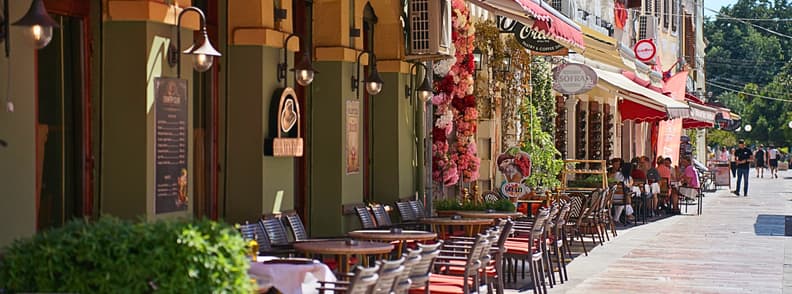
Shkoder restaurants are better judged by the meal you want, the time of day, and the neighborhood than by a single ranked list. Stay around Rruga Kolë Idromeno and Gjuhadol for central cafés and easy dinners, head toward the lake for regional fish dishes, and check dietary details before sitting down if gluten or another ingredient is a medical concern.
My own Shkoder food guide is based on several meals in and around the pedestrian center. I ate there soon after arriving, tried Bar Restaurant San Francisco at lunchtime, stopped at Shega e Eger for a cold drink, and found one dinner spot good enough to revisit the following evening. This gave me a useful cross-section of the center without sampling every kitchen in town.
The best restaurants in Shkoder Albania, also depend heavily on timing. At San Francisco, I preferred the terrace to the interior, but the midday heat eventually became too strong. In summer, I’d save exposed terraces for dinner and choose shade at lunch. You don’t have to roast more than your food.
Shkoder restaurant tip: There are plenty of restaurants offering Albanian, Mediterranean, Italian, grill, vegetarian, and vegan food, with several central venues also accepting cards and offering Wi-Fi.
Vegetarians should have an easier time. I found several meat-free choices on menus during my stay, and restaurants such as Genti, Fisi Grill, M’Shijon, and Elita also mention vegetarian or vegan options.
The best gluten free options in Shkoder Albania need more care. You will find restaurants that are gluten-free friendly, including Elita, Fisi Grill, Pasta e Vino, San Francisco, and Tradita Geg & Tosk. But a gluten-free label still doesn’t establish safe preparation for celiac disease, so ask directly about shared fryers, sauces, bread, and kitchen surfaces before ordering.
Currency and card acceptance in Shkoder restaurants varies from place to place. Several restaurants in Shkoder explicitly state that credit cards or digital payments are accepted. But I’d still keep some lek on you for smaller cafés and places where the card terminal has chosen that particular moment to develop philosophical objections.
Remote workers have a different shortlist. Genti, M’Shijon, Fisi Grill, Stolia Coffeehouse, PURI, and Elita have Wi-Fi access, but I haven’t tested their connection speeds myself. Confirm the connection and power outlets before settling in with a laptop.
Where to eat in Shkoder comes down to what your expectations are from the meal. Central streets are convenient, dietary choices are broader than some first-time visitors expect, and payment habits still vary by venue.

Vila Bekteshi Shkoder. What I Ate and Whether I Would Return
Vila Bekteshi was the only restaurant in Shkoder where I deliberately ate dinner twice. I liked the quiet, intimate setting, the professional service, and the food enough to come back the following evening instead of testing somewhere new. On the first evening I went with Ana and Tim, and on the second one I went with my three new German friends from the hostel.
The first evening, I ordered the linguine Bolognese. It was exactly the sort of uncomplicated dinner I wanted after a day out in Shkoder. The pasta menu also includes linguine aglio e olio, pomodorini, carbonara, seafood linguine, shrimp linguine, and a beetroot, truffle, and pioppini mushroom versio.
On my second evening at Vila Bekteshi Shkoder, when Ana and Tim were in Theth, I switched to qofte tradicionale me lëng, traditional meatballs with sauce. Between the two meals, I’d choose the qofte if you want something closer to Albanian home cooking and the Bolognese if you want familiar comfort food.
The traditional part of the menu has several other dishes I’d consider on another visit. Stuffed peppers with veal, rice, and spices, stuffed eggplant with onion, tomato, and minced meat, japrak (Albanian sarma), tavë krapi (baked carp with onions, garlic, and sauce), and baked lamb with potatoes.
Fish is well represented as well. The updated Vila Bekteshi Shkoder menu and prices for fish are grilled sea bass at 1,150 ALL, grilled shrimp at 1,150 ALL, grilled carp at 1,250 ALL, salmon fillet with lemon sauce and cherry tomatoes at 1,300 ALL, and cuttlefish legs at 1,500 ALL.
Pizza is the cheaper end of the Vila Bekteshi Shkoder menu prices, varying from 450-700 ALL. You can choose from Margherita, vegetarian pizza, quattro formaggi, Diavola, Capricciosa, seafood pizza, and shrimp with pumpkin.
Dessert is refreshingly restrained in price, at 150-200 ALL. The menu lists chocolate tortini, trileçe, and crème caramel. If dinner has already become longer than planned, adding 150 ALL for caramel cream is just a minor act of irresponsibility.
What to order at Vila Bekteshi Shkoder depends on what you want from the meal. I’d pick the qofte from the dishes I personally ate. But you can have a look at japrak or the stuffed vegetables for another traditional option, choose carp if you want to try a fish closely associated with the Lake Shkodra area, or go with pasta or pizza when you want something familiar.
Vila Bekteshi Shkoder is at 33 Rruga Hasan Riza Pasha, close to the Orthodox Cathedral and within walking distance of the pedestrian center. It’s registered as a restaurant, bar, and catering company so keep it in mind if you’re renting self-catered accommodation but don’t feel like cooking.
The Vila Bekteshi menu is worth checking close to your visit. The restaurant’s current website has a dedicated menu page, while third-party listings show changing uploads from different dates. One current menu service, for example, lists pizzas from about 450 to 700 ALL, but that is a snapshot, not a promise carved into the restaurant wall.
Is Vila Bekteshi worth visiting? My two dinners say yes. I went back because I wanted to eat there again, and on the second evening I chose a completely different dish. For a short stay in a city with plenty of restaurants within walking distance, that is about as convincing as my personal recommendation gets.
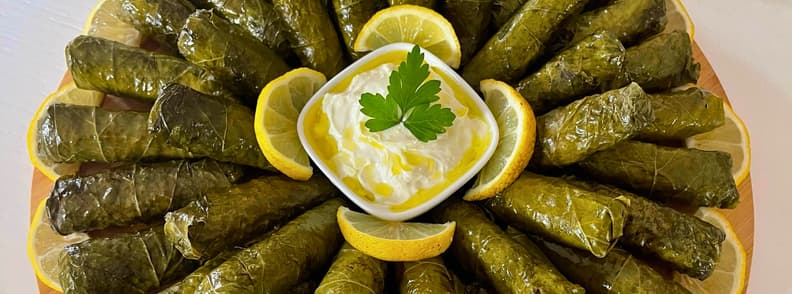
Traditional Shkoder Food to Try
I ate qofte at Vila Bekteshi on my second evening, but I left Shkoder with several local dishes still on my list. Shkoder traditional food follows the geography closely. Lake fish turns up everywhere near Shiroka and Zogaj, while northern Albanian cooking brings in meat, dairy, pies, preserved foods, and desserts that were designed long before anyone started arranging parsley for Instagram.
First on my next-trip list is tavë krapi Shkoder. This baked carp dish is a symbol of the Lake Shkodra area. Fresh carp goes into the oven with onions, tomatoes, peppers, parsley, and vinegar, giving the sauce a sweet-and-sour edge.
Where to eat traditional tave krapi in Shkoder: I’d eat tave krapi Shkoder by the lake. The dish is served mainly in family restaurants in Shiroka and Zogaj. So go toward the water, don’t pick a random restaurant in the center and hope for the best
My list for what to eat in Shkoder Albania for traditional food would also include fresh lake fish cooked on a hot plate, especially carp or eel. Shiroka’s restaurants specialize in fish from Lake Shkodra, so this is one meal where leaving the center offers a clear culinary reward.
What to eat in Shkoder from northern Albanian cuisine also depends on how far north your trip continues. Around the wider Shkoder region, you’ll find slow-cooked meat, mountain dairy products, preserved foods, and hearty preparations associated with places such as Theth and the Albanian Alps. I’d save those for the mountain part of your trip.
As for desert, Revania Shkodrane is the one I’d order first. Revania Shkodrane is a traditional Shkoder-style revani, a sweet syrup-soaked cake. This Albanian semolina cake has thin layers of light dough soaked with aromatic sherbet, often with chopped walnuts or almonds.
Local raki also appears in the regional food tradition, including grape, plum, and mulberry versions around Lake Shkodra
Best Day Trips from Shkoder
Shkoder is an excellent base for northern Albania because several worthwhile trips sit within reach of the city, although they offer completely different days. You can head into the Albanian Alps, follow the Drin toward Koman, visit medieval ruins around Drisht and Vau i Dejës, or make lunch the main event at an agritourism farm.
Among the best day trips from Shkoder Albania, Theth is the obvious choice in the mountains. The village sits inside Shkodër Municipality in the Albanian Alps, and can be reached through the Tërthore Pass, with Grunas Waterfall, Grunas Canyon, the Okoli springs, and Mount Harapi among the nearby natural sights.
Is Shkoder a good base for the Albanian Alps? Yes, especially before Theth, Koman, or Valbona. The mountains deserve more time to explore, and a packing list for Shkoder and Albanian Alps hike should include proper walking shoes, water, sun protection, an extra layer for higher elevations, and rain protection even when Shkoder center is warm.
Koman Lake gives you a completely different Shkoder day trip. 2026 ferry schedules list morning transport from Shkoder to Koman, followed by the ferry across Lake Koman toward Fierza. You can ride the ferry as the main excursion, return the same day, or continue from Fierza toward Valbona.
That ferry also fits into a longer itinerary to visit Northern Albania. Koman is useful as both an excursion and a transport link, so you don’t have to return to Shkoder after every outing. The common onward route is Koman to Fierza, then Valbona. Theth connects separately by road from Shkoder.
Some of the easiest day trips from Shkoder without a rental car are Koman and Theth because scheduled transfers operate from the city in season. Koman Lake Ferry Berisha has Shkoder pickups for both Koman and Theth, but you should check exact departure times and seasonal schedules before your travel date.
If you prefer history to hiking, you have a quieter day trip to plan. Drisht Castle Albania rises above the Kir valley northeast of Shkoder and once guarded an important medieval settlement on the old Shkoder to Kosovo trade route. Drisht Castle is 6 km beyond the village of Mes, which makes it easy to visit with Mesi Bridge.
How to visit Drisht Castle from Shkoder by car: Drive to the village, then finish with an uphill walk. Expect roughly 30 minutes on foot from Drisht village to the castle ruins, with narrow local roads and limited parking near the trailhead.
Drisht belongs on my list of the top historic sites to visit in northern Albania from Shkoder because it tells a different story from Rozafa Castle. Rozafa dominated the city, while Drisht belonged to the wider network of settlements, trade routes, and fortifications that linked Shkoder with the interior and Kosovo.
Vau i Dejës is another easy excursion south-east of Shkoder. The artificial lake is 20 km from the city on the Drin, with boating, fishing, shoreline walks, and nearby medieval remains. Sarda, the ruined medieval city on Shurdhahu Island, is the historical prize if you arrange boat access!
Driving conditions from Shkoder to Vau dejes are easier to plan than the onward road toward Koman, but you should still check current roadworks before leaving. The difficult part of this corridor has traditionally been farther east between Vau i Dejës and Koman, where reconstruction has affected the mountain road. If Koman is your destination, allocate extra time and check the latest local advice on the day.
A day trip from Shkoder to Mrizi i Zanave Agroturizem is the one I’d choose when sightseeing starts to sound suspiciously like unpaid overtime. The farm restaurant sits in Fishtë, Lezhë, south of Shkoder, and combines a restaurant, farm, winery, and accommodation. Reserve ahead for Mrizi i Zanave, especially in busy periods. Arriving hungry and optimistic at peak lunch time isn’t the best strategy.
Shkoder to Kosovo belongs in a different category. Kosovo is an onward travel route, not a sensible day trip if your purpose is to see anything once you arrive. The historical Shkoder to Kosovo connection is interesting, especially around Drisht and the old trade routes, but I’d give Kosovo an overnight stay instead of spending most of the day crossing borders and watching road signs.
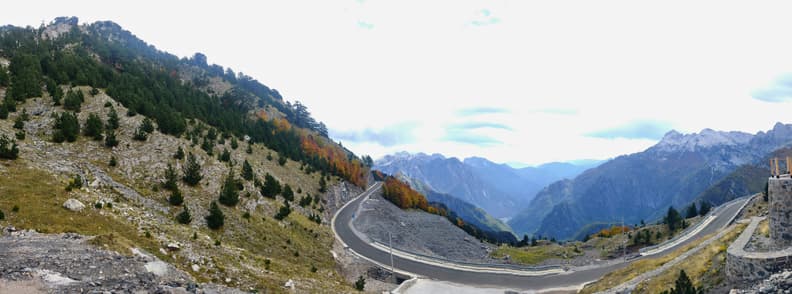
Day trip to Theth
Theth is the mountain trip I’d plan most carefully from Shkoder, because the distance on the map is misleading. The village is 70 km away in the Albanian Alps, reached over the Tërthore Pass and down into the Theth valley. The road is paved now, but it still twists dangerously through the mountain land.
How to get from Shkoder to Theth: Take a minibus, usually called a furgon, or book a private transfer. There are direct services during the main hiking season, and winter transport exists with weather restrictions. Theth has no railway or airport connection, so Shkoder remains the road gateway.
The Shkoder to Theth bus timetable needs checking immediately before travel. Different operators publish different departures and fares:
- Visit Shkodër sells rides in summer vans at 7:30 am and 2 pm for for €15.20
- Thethi Travel has rides at 7 am and 1:00 pm for 1,200 ALL one way
- Koman Lake Ferry Berisha lists rides at 7 am and 2 pm for €12.
Shkoder to Theth transport guide and timetable advice: Pick an operator first, confirm the departure point and time with them, and arrive early. Visit Shkodër currently uses the area in front of Hotel Rozafa for its Theth service, while other companies use their own pickup arrangements.
The ride from Theth from Shkoder lasts two to three and a half hours, depending on the operator, road conditions, and stops. The distance is modest, but the road is the reason the trip takes time. If your transfer estimate looks surprisingly slow for 70 km, the mountains are responsible, it’s not a clerical error.
A Shkoder itinerary before visiting Theth should include at least the previous night in the city if you’re taking an early van. This gives you time to confirm the pickup, leave luggage you don’t need in the mountains if your accommodation allows it, buy anything missing, and eat dinner without spending half the meal checking tomorrow’s departure time.
How to get from Shkoder to Theth National Park also changes outside the main season. Regular service takes place from spring until 1 November, then there’s a separate winter transfer from November to April or early May. Winter trips depend on snow and road conditions, and operators require passengers to confirm before booking. Fewer clients i the cold season means late cancellations or no-shows are riskier to them.
The return is equally straightforward, but the Theth to Shkoder bus timetable varies too. Depending on the operator, there are departures at 10 am, 10:30 am, 11 am, and 5 pm, Confirm with the company carrying you. Mountain villages are an inconvenient place to learn that your saved screenshot belonged to somebody else’s minibus…
Valbona enters the plan if you’re hiking across the mountains instead of returning directly to Shkoder. Shkoder to Valbona is a combined road and ferry trip, typically connecting Shkoder to Koman, crossing Lake Koman to Fierza, then continuing by minibus into Valbona.
That makes a Shkoder to Valbona complete hiking plan quite different from the direct road to Theth. The classic route is Shkoder to Koman, ferry to Fierza, minibus to Valbona, overnight in the valley, then hike over Valbona Pass to Theth the next day. The Valbona to Theth hike is seven to eight hours of effort.
A Shkoder to Valbona hike transit schedule also depends heavily on the ferry. Koman Lake Ferry Berisha currently lists the Koman to Fierza ferry at 9 am and a Fierza to Valbona pickup at noon, while other combined-ticket providers publish slightly different connections. Book the chain as one trip where possible. Missing the boat is an unusually literal way to ruin a hiking plan.
So I’d choose between two northern routes. Take Shkoder to Theth directly if Theth itself is your destination. Travel Shkoder to Valbona first if you want to hike the classic Valbona Pass route and finish in Theth. Both start naturally in Shkoder, but once you leave the city, they tell very different stories.
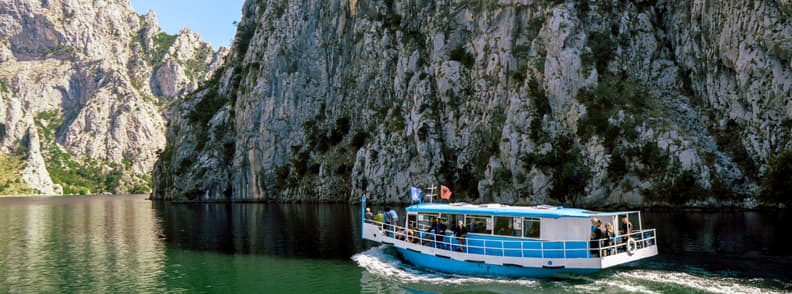
Day trip to Koman Lake and Shala River
Koman Lake is the day trip from Shkoder I’d choose when I want the travel itself to be the attraction. I took the ferry from Koman to Fierza and back, spending hours between steep mountain walls with water filling the narrow space below them. Even the return trip held my attention, though it also gave me a few extra sunburns for souvenirs.
The first part is less poetic. The trip from Shkoder to Koman starts early, and my minibus ride was bumpy enough to make me regret having breakfast. The harbor at Koman was hot, crowded, noisy, and short on shade. Then the boat left, and the whole day changed.
How to get from Shkoder to Koman Lake: 2026 schedules show early-morning minivans leaving Shkoder at roughly 6:30 to 7:00 AM, timed to reach Koman before the 9:00 AM ferry to Fierza. Return transfers usually leave Koman after the afternoon ferry arrives, with Shkoder reached in the early evening.
How to book Lake Koman ferry from Shkoder depends on the route you want. You can book the road transfer and ferry separately or buy a combined ticket covering Shkoder, Koman, Fierza, and, if needed, the onward connection to Valbona. I’d compare the current departure point, timing, cancellation terms, and what the ticket includes before paying. Several companies run the route, so make the best choice for your personal trip.
How to take Komani Lake ferry from Shkoder depends on what you want at the other end. A simple Koman Lake day trip means taking the morning transfer from Shkoder, riding to Fierza, then returning across the lake and back to Shkoder. This is what I did because I wanted another night in the town and my knee wasn’t up for a long hike.
If Valbona is next, stay on the transport chain. You can get Shkoder to Koman to Fierza to Valbona tickets as a connected route, with a Fierza to Valbona minivan at noon. This is when Koman from Shkoder becomes the first leg of a northern Albania route.
A Shala River day trip is much easier if you book the full excursion from Shkoder instead of stitching together van and boat tickets yourself.
A Shkoder to Shala River day trip needs an early departure and a full day set aside. The one I recommend meets at Migjeni Theatre at 6:30 am, leaves Shkoder at 6:45 am, reaches Koman around 9:00 am, then continues by boat across Koman Lake to the Shala River. You spend around four hours by the river, with time to swim, eat, rent a kayak, or try the zip line before heading back. Arrival in Shkoder is scheduled for around 5:30 pm.
The package includes round-trip transport from Shkoder, the return boat cruise on Koman Lake, four hours at Shala River, travel insurance, and the road and transport fees. Food, drinks, kayak rental, and the zip line cost extra. The cost of a day trip to Shala River from Shkoder varies by date and availability, so just check the live price below when booking and take advantage of the discounts. It’s a long day, about 11 hours in total, but most of that time is spent admiring beautiful scenery, which is considerably better than spending it staring at a bus station wall.
Water levels can affect the final approach. Low water sometimes prevents boats from reaching the usual end point on the Shala River, leaving passengers to walk the remaining distance.
My own trip was the full Komani Lake Ferry Shkoder route through Fierza and back. I remember the noisy wait at Koman, the long hours on the water, the houses appearing in places that seemed absurdly isolated, and deciding at Fierza that another three hours on the ferry sounded perfectly reasonable. Ana and Tim made the opposite choice on their trip and continued toward Bajram Curri and Valbona instead.
I’ve written the full story, including the bumpy minibus, the wait at Koman, the ferry ride, Fierza, and the practical things I wish I’d packed better, in my personal Komani Lake ferry guide. If you’re deciding between the lake crossing, Valbona, and a Shala River excursion, read it before booking.
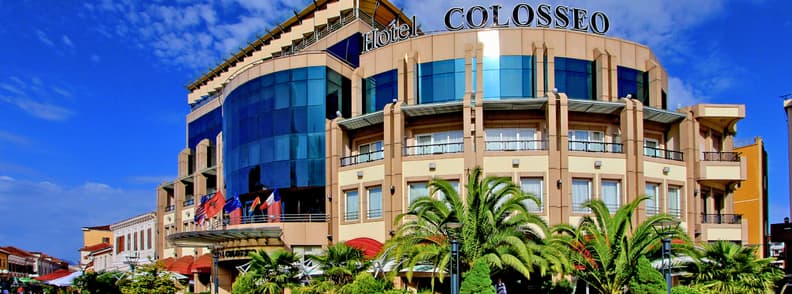
Where to Stay in Shkoder
Where to stay in Shkoder depends first on which part of the city you want outside your door. For a first visit, I’d stay close to Rruga Kolë Idromeno and Gjuhadol. You’ll reach the pedestrian center, Marubi Museum, cafés, restaurants, and most major sights on foot, which is exactly what I wanted from my own stay.
Accommodation in Shkoder city center is the best choice for short trips. Staying around Kolë Idromeno, Gjuhadol, or the streets immediately around them keeps most of the central sightseeing within a small walkable area. This is also where many of the best boutique hotels in Shkoder city centre are concentrated.
A few blocks beyond the busiest pedestrian streets take you to a quieter part of town while keeping the center close. The area around Rruga Edith Durham is excellent if you prefer traditional guesthouse character and a little less evening noise. For a longer stay, the best neighbourhoods to live in Shkoder deserve a separate comparison based on groceries, schools, parking, transport, and daily routine. For a holiday, proximity to the center is usually the best thing to look for.
Shiroka and Zogaj are good places to stay in, but for a different trip. Staying by Lake Shkodra brings you next to water and fish restaurants, but it also places you outside the main museum and restaurant cluster. I’d rather choose the lake for a second Shkoder stay or a longer visit, not for your first night or before an early transfer to Theth or Koman.
Among the best hotels in Shkoder Albania for a central stay, Cocja Boutique Hotel is on Rruga Vilson and offers family rooms, a garden, restaurant, terrace, and rooms with work desks and soundproofing. Its location places you close to the pedestrian center without putting your bed directly among the busiest café tables.
Hotel Colosseo & Spa is another excellent central option, directly on Kolë Idromeno. It has an indoor pool, spa, fitness facilities, restaurant, and easy access to the pedestrian area. If your idea of the best hotels Shkoder offers includes a full-service property and a location where sightseeing starts outside the door, this is the best candidate.
Petit Hotel Elita is only a short walk from the center. It has larger rooms, family accommodation, private parking, a restaurant, and a fitness center.
For traditional character, Hotel Tradita is the one I’d shortlist. Hotel Tradita Shkoder occupies a historic house on Rruga Edith Durham, with rooms decorated in Albanian style, a restaurant, courtyard, ethnographic displays, and a souvenir shop.
The best guesthouses and boutique hotels in Shkoder are worth considering if you prefer smaller properties over large hotels. Central Shkoder has a growing number of small boutique stays, and I’d prioritize location, recent guest feedback, air-conditioning in summer, and soundproofing before decorative extras. A beautiful room loses some of its persuasive power at 1 am if the bar beneath it is still jumping.
Budget travelers have a particularly good choice of budget guest houses and hostels in Shkoder. Current listings show over twenty hostel options in the city, with several clustered close to the center.
The Wanderers Hostel Shkoder is where I stayed, and its location was one of the reasons the city was so easy to visit for me. The hostel has dorm beds and private rooms, breakfast, Wi-Fi, laundry facilities, a guest kitchen, gardens, bike rental, and direct transport connections toward Theth, Koman, Valbona, Tirana, and Ulcinj. I’ve written a separate review of my stay at Wanderers Hostel with the details I’d want before booking the place, so have a look there.
Wanderers is one of my first suggestions when people ask me where to stay in Shkoder for solo travelers. I met people quickly through the hostel and ended up cycling to the lake with travelers I’d met there. If you want a social Shkoder hostel where finding company for a day trip doesn’t require too much effort over breakfast, The Wanderers is an easy recommendation from my own experience.
Other Shkoder hostels are available if you want a different atmosphere, private rooms, female-only dorms, or the lowest possible bed price. I’d still pick somewhere near the historic center unless you have a specific reason to sleep farther out.
Where to stay in Shkoder Albania comes down to four practical choices. Choose the pedestrian center for the easiest first visit, the streets immediately around it for a quieter night, a traditional property such as Hotel Tradita for character, or a Shkoder hostel near Gjuhadol if budget and social travel come first.
Where stay Shkoder: Central accommodation saves time every day, and in Shkoder that time is better spent over coffee, beside Lake Shkodra, or halfway up a castle hill instead of commuting back to your room.
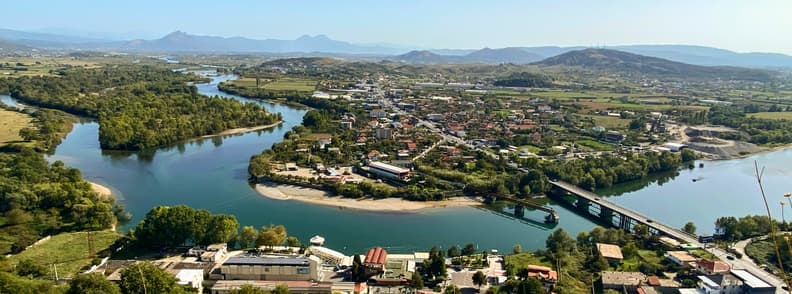
How to Get to Shkoder in Northern Albania
Shkoder is reached by road, and the city is well connected with the places most travelers use to enter northern Albania. Buses, minibuses, private transfers, and rental cars link it with Tirana, Tirana International Airport, Montenegro, and other Albanian cities. There are even direct international services between Shkoder and Podgorica.
There is no Shkoder airport serving scheduled commercial flights, so flying into the city isn’t an option. Podgorica Airport is geographically closer, across the border in Montenegro, but Tirana International Airport has the advantage of direct seasonal transfers to Shkoder without an international border crossing. There are dedicated airport services between Tirana International Airport and the city.
The best arrival route depends on where you’re coming from. Tirana and Tirana Airport are the best choices for most trips beginning elsewhere in Albania, while Podgorica is ok if you’re already traveling through Montenegro. Border queues, flight times, and your next destination are worth considering before choosing an airport because it appears closer on a map.
Once you arrive in Shkoder, the center is small, so you’re unlikely to spend the rest of the day dealing with transport. I appreciated that after checking into The Wanderers Hostel. Coffee first, five minutes on foot, and I was already sitting at a terrace in the pedestrian center. After a travel day, that’s exactly what I want.
Tirana and Tirana Airport
Tirana to Shkoder is an easy road trip of about 98 km, and the bus is the obvious choice if you’re traveling without a car. The ride usually takes around two hours, depending on traffic leaving Tirana. Check Albania’s official eTransport system for the current departure point and timetable.
How to get from Tirana to Shkoder by bus is simple once you reach Tirana’s North and South Bus Terminal. There are direct services on the Tirana to Shkoder route, while eTransport carries the current national timetable. I’d check the departure on the morning of travel instead of planning my day around a screenshot saved months ago.
The Travel Bunny’s local tips: A Tirana to Shkoder bus is usually the best choice for solo travelers and anyone keeping costs down. The trip takes around two hours, with direct services throughout the day. Traffic around Tirana can stretch that estimate, so I wouldn’t schedule an onward mountain transfer immediately after the expected arrival.
How to get from Tirana to Shkoder changes slightly if you land at Tirana International Airport, also called Rinas. You don’t need to travel into central Tirana first. You have a direct Tirana Airport to Shkoder bus service that costs 1,000 ALL one way. Departures from Rinas to Shkoder are at 11:15 am, 12:45 pm, 5:30 pm, and 8:10 pm.
How far is Shkoder from Tirana Airport? The road distance is 80 km, with a normal drive taking around 1 hour 30 minutes before counting traffic. The airport is noticeably closer to Shkoder than central Tirana.
Driving from Tirana Airport to Shkoder Albania is straightforward enough for a rental car or private transfer, with the main route heading north from Rinas toward Lezhë and Shkoder. I’d still leave extra time around busy periods. Albanian driving has many admirable qualities, but strict devotion to your estimated arrival time isn’t always among them.
If you prefer door-to-door transport, there are private transfers between Tirana Airport or Tirana city and Shkoder, with hotel or airport pickup included. The private option is best when you’re sharing the cost, arriving late, carrying a lot of luggage, or heading straight to a specific hotel.
The return direction is equally manageable. Shkoder to Tirana buses run daily, and there are multiple departures from Shkoder into the capital. Like before, use eTransport for the current schedule and station.
A Shkoder to Tirana bus is the best choice if your next stop is central Tirana. If you’re flying out, take the direct airport service instead. Tirana International Airport currently has Shkoder to Rinas departures at 7:30 am, 11 am, 2 pm, and 4 pm, again at 1,000 ALL one way.
Podgorica and Montenegro
Podgorica to Shkoder is one of the easiest international routes into northern Albania. The cities are 58 km apart by road, and there are several direct buses each day between Podgorica Bus Station and Shkoder. Most trips take around 1 hour 30 minutes to 2 hours, unless there’s a long wait at the frontier.
How to get from Podgorica to Shkoder: Take a direct bus from Podgorica’s main bus station, keep your passport accessible, and plan a buffer for extra time at the border. Departures are available from morning into late afternoon, which makes this route easier to fit around an overnight stay in Montenegro.
The border crossing from Shkoder to Podgorica bus goes by Božaj/Hani Hotit, the official road crossing for passengers and goods, with Hani i Hotit on the Albanian side and Božaj in Montenegro. During the journey, the border control can affect the scheduled travel time, which is always slightly optimistic.
How far is Shkoder from Montenegro border? Hani i Hotit is 35 km from the city and Muriqan is 14 km away. The first leads naturally toward Podgorica, while Muriqan connects with Sukobin in Montenegro and is better for visiting Ulcinj and the Adriatic coast.
There is no direct bus from Podgorica Airport to Shkoder Albania. Public-transport routes from Podgorica Airport require a connection through Podgorica Bus Station before continuing to Shkoder.
This makes booking a private transfer from Podgorica Airport to Shkoder or renting a car worth comparing if your flight lands awkwardly between bus connections. Public transport is still good when the timings line up, but changing in Podgorica adds a second timetable to a trip already involving passport control.
Traveling from Shkoder to Montenegro also includes Ulcinj, which is a better choice than Podgorica if your next destination is the Adriatic coast. The road passes through Muriqan/Sukobin, and direct buses connect Shkoder with Ulcinj several times a day.
The Shkoder to Ulcinj Montenegro bus schedule shows direct morning and afternoon departures, with journey times varying considerably between services.
A Shkoder to Ulcinj Montenegro day trip is possible, but I’d only do it with an early departure and a return bus confirmed in advance. Ulcinj deserves a few hours to properly visit its Old Town and beach, plus to have lunch, and an international border has a peculiar talent for becoming most interesting precisely when you have a bus to catch. For a relaxed Montenegro visit, I recommend spending one night in Ulcinj.
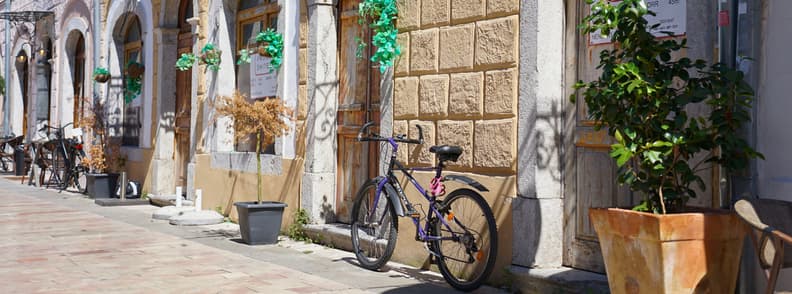
How to Get Around Shkoder Albania
Central Shkoder is easy to visit on foot. Rruga Kolë Idromeno, Gjuhadol, Marubi Museum, the cathedral, Ebu Bekër Mosque, and much of the restaurant and café area are close together, so most sightseeing in the center involves short walks. I stayed outside the immediate pedestrian center and still reached it in about five minutes.
Is Shkoder walkable without public transport? Yes, as long as you visit the center. Rozafa Castle, Lake Shkodra, Shiroka, Zogaj, and Mesi Bridge are farther out, which is where bicycles, buses, taxis, or a car start earning their keep.
A guided Shkoder walking tour is a great idea if you want historical context instead of wandering past buildings and identifying them later from your phone. Here are some of my top picks:
Shkoder has a genuine cycling culture, and the flat center explains part of the enthusiasm. Outside the city center, you have two obvious Shkoder cycling routes. Cycling Shkoder is especially practical for the lake to visit Shiroka and Zogaj. In the opposite direction, you can pedal to Mesi Bridge along the village road.
If you don’t want to join a tour, a Shkoder bike rental is easy to arrange in town. You can head over to Rollzafa or Joy Bike Rentals, which rent bicycles by the hour or day. Some hostels and accommodations also lend or rent bicycles to guests, which is how I got mine.
Shkoder cycling tip: Check the brakes, tire pressure, saddle height, and lock before leaving. My own bicycle survived our outing admirably. The rider was the less reliable component.
Dedicated performance bicycles need more checking. Standard city and touring bicycles are easy to find, but where to rent a road bike in Shkoder requires messaging the rental shops to ask specifically about frame size, drop bars, gearing, helmet availability, spare tubes, and repair equipment before you plan a long ride.
Shkoder also has urban buses, something older travel guides often skim over. The municipality has three urban routes: Bahçallëk–Fermentim–Bahçallëk, Center–Shirokë, and Center–Zogaj. They represent the main city line plus a lake connection.
The main line is the most relevant of the public transit options inside Shkoder city center. A Shkoder bus ticket costs 40 ALL, and you can use it between 6:30 am and 10 pm. Buses run every 15 minutes until 2:30 pm, and every 30 minutes afterward. The line also serves the area toward Rozafa Castle and the Buna River promenade.
The Center–Shirokë–Zogaj bus is useful is you want to reach Lake Shkodra without renting a bike or paying for a taxi. There are separate Center–Shirokë and Center–Zogaj branches.
Where is Shkoder bus station depends on where you’re going. Tirana, Koman, Montenegro, Theth, and other routes don’t leave from the same curb.
Taxis are useful for Rozafa Castle, Mesi Bridge, luggage-heavy transfers, and evenings when cycling back from the lake has lost its charm. I’d agree on the fare before leaving or ask your accommodation to arrange the ride, especially for destinations outside the center.
Do you need a car in Shkoder Albania? For a city break, no. Walking, bicycles, buses, and taxis cover the places most visitors use. A Shkoder car rental is interesting when you plan several rural stops in one day, have accommodation outside town, or want places poorly served by scheduled transport.
Driving into central Shkoder also creates the obvious next problem: where to leave the car. There are public no-fee parking spaces around Sheshi Demokracia, along with paid parking on nearby streets including Rruga Wilson, Rruga Teuta, and Rruga Gjylbegaj.
For free parking near Shkoder pedestrian street head first toward Sheshi Demokracia and its few surrounding streets, though an empty space is never guaranteed. When deciding where to park in Shkoder city centre, I’d head there first and walk the remaining few minutes.
How to get around Shkoder Albania ends up being pleasingly simple. Walk in the center, borrow or rent a bicycle for the lake, use the urban bus toward Shiroka, Zogaj, or the castle corridor, take a taxi for an awkward outer stop, and save the rental car for days when your plans spread well beyond the city.
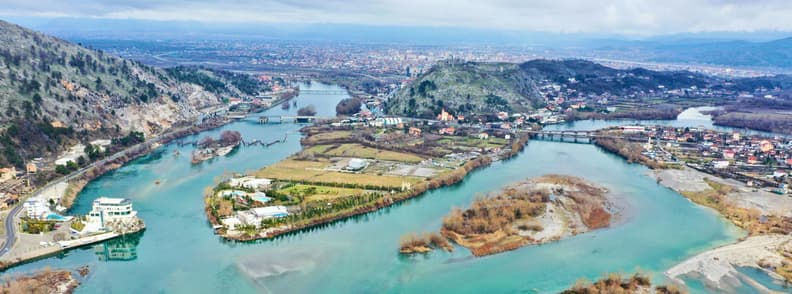
Shkoder Travel FAQ
My Shkoder Travel FAQ covers the practical details I’d want settled before booking, from is Shkoder safe, solo female travel, and night safety to trip costs, ATMs, SIM cards, Wi-Fi, rainy-day ideas, and family-friendly activities. I’ve also included useful notes for anyone considering a longer stay, including living in Shkoder, digital nomad life, and the cost of living in Shkoder, plus a few historical details that didn’t fit neatly elsewhere in the guide.
Is Shkoder safe?
Shkoder is generally safe for ordinary sightseeing, with the same sensible precautions I’d use in any unfamiliar city. Reports of crime targeting foreigners in Albania are rare, while pickpocketing and bag theft remain concerns in many tourist areas, on public transport, and around transport hubs. My Shkoder travel safety rule is to keep valuables close and stay aware of your surroundings.
Is Shkoder Albania safe for solo female travelers?
Yes, with ordinary solo-travel precautions for women. Keep your accommodation address saved offline, watch your belongings, arrange late transport in advance when needed, and avoid isolated places after dark. Is Shkoder Albania safe for solo female travelers deserves the same nuanced answer as any city: low reported targeting of foreigners doesn’t mean zero risk.
Is Shkoder safe to visit at night?
Central Shkoder is safe for evening dining and walking, especially around the pedestrian streets where restaurants and cafés stay active. I recommend extra care late at night and in larger urban areas. Stick to lit central streets, keep valuables out of sight, and use a taxi if your accommodation is far from the center.
How much does a trip to Shkoder cost?
How much does a trip to Shkoder cost depends mostly on accommodation, restaurant choices, and excursions, because central sightseeing itself stays inexpensive. Rozafa Castle charges 400 ALL for a standard adult ticket, Marubi Museum costs 700 ALL, and the main urban bus fare is 40 ALL. Walking Kolë Idromeno, Gjuhadol, the Buna River, and the lakefront adds nothing to your sightseeing bill.
What are good family-friendly activities and parks in Shkoder Albania?
Among family-friendly activities and parks in Shkoder Albania, Parku Liria is useful for a break near the center, with shade, benches, and a playground. The pedestrian area gives younger children space away from normal road traffic, and Lake Shkodra adds an easy outdoor outing with the kids. Marubi Museum also admits children under 12 free, which helps on hot or rainy afternoons.
What to do in Shkoder when it rains?
My first choice among things to do in Shkoder when it rains would be visiting Marubi National Museum of Photography. It opens daily from 9 am to 7 pm and has permanent and temporary exhibitions.
A visit to the Historical Museum of Shkodra, housed in the Oso Kuka residence, adds archaeology, ethnography, art, and local history to your itinerary.
A long lunch is another perfectly respectable answer to what to do in Shkoder when it rains. Northern Albanian food, coffee, and a dry chair have saved many travel schedules from unnecessary heroics.
Where should I withdraw cash in Shkoder?
An ATM without fees in Shkoder Albania isn’t something I’d promise for every foreign card. Fees depend on the Albanian bank, your own card issuer, and the transaction. Raiffeisen states explicitly that an acceptance fee applies in some cases to foreign-issued cards, and its ATMs offer dynamic currency conversion. Decline DCC and choose Albanian lek when your own card provides the better exchange rate.
I’d also read the fee displayed on the ATM screen before confirming. The Bank of Albania publishes current bank commission information, but your final withdrawal cost still depends on the card in your wallet.
What are SIM cards and Wi-Fi like in Shkoder?
For SIM card and wifi speed in Shkoder Albania, mobile data is the easier part to price. Vodafone Albania’s 2026 tourist packs currently start at 2,700 ALL for 15 days with 1 TB of domestic data, while ONE Albania also operates 5G service in Albania.
I can’t speak about Shkoder-wide Wi-Fi speed because hotel, hostel, apartment, and café connections vary by building and provider. National data gives some context, so check last month’s Albania Median Country Speeds on Ookla. Remote workers should ask their accommodation for a recent speed test if video calls are part of your day.
Is Shkoder good for digital nomads?
A digital nomad Shkoder stay has several practical advantages: a small center with cafés, inexpensive local transport, mobile data, and quick access to Lake Shkodra and the Albanian Alps. The obvious inconvenience is air travel. Shkoder has no commercial airport, so flights mean Tirana or Podgorica and an extra road transfer.
The cost of living in Shkoder for digital nomads is easy to keep under control if you rent locally instead of living out of short-stay accommodation. Expect to spend around €905 per month for one person, including housing, food, transport, utilities, and leisure. A one-bedroom apartment costs about €408 per month in the center and €265 outside it, with groceries around €174 per month per person.
What are the pros and cons of living in Shkoder as an expat?
The pros and cons of living in Shkoder as an expat are unusually tied to geography. Living in Shkoder places Lake Shkodra, Montenegro, Theth, Koman, and the wider Albanian Alps close enough for frequent trips, and the small center keeps ordinary errands quick and easy.
The main trade-off is connectivity beyond the region. Shkoder expat life means using Tirana or Podgorica for flights and relying heavily on road transport. Albanian also becomes increasingly useful once your stay shifts from ordering dinner to dealing with leases, healthcare, paperwork, repairs, and local services.
The cost of living in Shkoder for expats deserves individual research before relocation. You also need to check residency rules, taxation, healthcare, schools, leases, utilities, and neighborhood comparisons.
What historical facts about the Siege of Shkodra should I know?
The most important historical facts about the Siege of Shkodra concern the Ottoman attack of 1478. Sultan Mehmed II personally led the campaign against Venetian-held Shkodra, yet the fortress resisted the assaults. Venice ultimately ceded Shkodra to the Ottoman Empire under the peace settlement of 1479.
Shkodran humanist Marin Barleti later recorded the siege in De obsidione Scodrensi, published in Venice in 1504. His account became one of the principal written sources for the episode, which also explains why Rozafa Castle carries such weight in Shkoder’s historical identity.
What are the best free things to do in Shkoder?
The easiest free things to do in Shkoder are also some of the best ways to understand the city: walk Rruga Kolë Idromeno and Gjuhadol, follow the Buna River, watch everyday bicycle traffic through the center, and spend sunset beside Lake Shkodra around Shiroka. You won’t need a ticket to see Shkoder behaving like Shkoder.

What I Would Do Differently on My Next Visit
On my next visit, I’d spend one extra evening and one extra morning in Shkoder. My first stay was full enough to show me how easy the city is to like, but also short enough to leave several good ideas sitting unfinished.
First, I’d love to see Lake Shkodra from above. I already watched sunset from the shore, so next time I’d climb for it. Among the best viewpoints in Shkoder Albania, Rozafa Castle offers the classic panorama over the city, Lake Shkodra, and the Buna and Drin rivers. However, Mount Tarabosh opens wider views toward Shiroka, Zogaj, and the lake. Tarabosh is also a paragliding area, which tells you something useful about how open that ridge is.
So Tarabosh Mountain is a place I’d prioritize on my next trip to Shkoder. A local hiking route starts near the old Buna Bridge, climbs past viewpoints over Rozafa Castle and the rivers, passes communist-era bunkers, then continues toward the ridge above Shiroka and Zogaj. This is much closer to my idea of hidden gems and off beaten path in Shkoder.
I’d also spend longer visiting Zogaj. It’s a quieter lakeside village beyond Shiroka, known for birdwatching, walking, fishing, and sunsets. I cycled toward the lake on my first visit, but next time I’d keep going farther west, slow down, and spend a few hours in the village.
My evenings would change too. Dinner occupied most of my after-dark plans the first time, which was hardly a tragedy, especially with two nights at Vila Bekteshi. Still, I’d give one night to Shkoder nightlife around the pedestrian center and Gjuhadol, where bars and cafés stay concentrated within an easy walking area.
I already went to a bar with everyone from the hostel for late night shots, but next time I’d go out late enough to see the city after dinner service has settled, then decide if I want a quiet drink, live music, or one of the more social hostel bars. There’s a small bar scene centered around the pedestrian streets, plus a few clubs farther into the city.
I’d also stop treating rooftop sunset as something to leave to chance. The best rooftop bars in Shkoder for sunset shift as new hostels and terraces open. For example, today, Scodrinon Hostel advertises a rooftop terrace with sunset and city views, and Traveler Hostel Rooftop runs a rooftop bar in the center.
This would also change my list of things to do in Shkoder at night. I’d keep one evening completely unscheduled after dinner, walk Kolë Idromeno and Gjuhadol again after dark, stop wherever looks lively, then finish somewhere above street level.
I’d leave one morning without a museum, bus, castle, ferry, or bicycle objective too. The city deserves a little unproductive time. And so do I! Coffee, a bakery, side streets beyond the pedestrian strip, and perhaps another walk along the Buna would give me a better look at ordinary Shkoder between the places already marked on the map.
And yeah, I’d borrow a bicycle again! I’d just keep both hands on the handlebars this time. Some lessons arrive through research, others by trial and error.
About the author

Hi! I’m Mirela Letailleur, the Romanian-born travel writer behind The Travel Bunny, where I publish practical guides to Albania, the Balkans, and Mediterranean Europe. I’ve explored Shkoder Albania on foot and by bicycle, stayed in the city, eaten at local restaurants, spent time around Lake Shkodra, and used Shkoder as my base for the Koman Lake ferry route.
I write from first-hand travel backed by current official sources, with the details I want before booking a trip myself. My Shkoder travel advice covers things to do in Shkoder, local food, neighborhoods, transport, cycling, Lake Shkodra, Theth, Koman, and onward travel through northern Albania, including the small practical details that often decide how smoothly a trip goes.
After planning your visit to Shkoder Albania, check out these Balkan travel guides on The Travel Bunny
Time to relax on the Komani Lake ferry ride
Tirana, Albania’s colorful and creative capital
The Ultimate Balkans Travel Bucket List