
I visit Tanneron often because I live in Pays de Fayence, in one of its nine hilltop villages. Tanneron sits close enough to feel familiar, yet different enough to stay interesting. If you plan to visit Tanneron France, this is not a place you experience fully in an hour. It works best when you slow down, walk a little, and let the landscape do the talking.
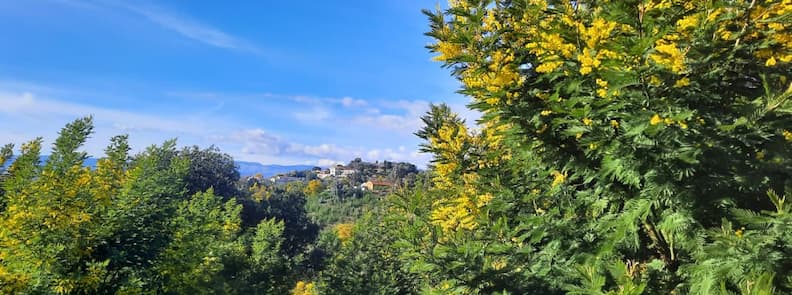
When people talk about visiting Tanneron, they’re usually thinking about mimosa season. That reputation is earned. From winter onward, the hills of Tanneron turn yellow, and the scent carries far beyond the village. But Tanneron travel is not limited to flowers. This is a quiet village in the French Riviera hinterland, set around 360 metres above sea level, surrounded by forest, viewpoints, and walking paths locals still use.
Visit Tanneron Travel Guide
The Travel Bunny’s Tanneron travel guide is written for international travelers looking for an offbeat Provence stop, for locals who want to understand Tanneron beyond a drive-through, and for expats living in France who want a solid, tested plan. In this practical Tanneron guide, I cover when to come, where crowds actually gather, which hikes work with kids, where to park during mimosa season, and why Tanneron works better as a slow stop than a checklist destination.
Set in the Var, Tanneron France delivers what many places promise and rarely offer. Room to breathe. Stunning views on beautiful walks. Picnic tables next to the village center… Tanneron suits hikers, slow travelers, and families who value nature over noise. If you prefer cities, nightlife, or constant activity, this is not your place. But if you want landscape, seasonality, and a village that still feels used rather than performed, keep reading.
Disclosure: Some of the links below are affiliate links. This means that at no extra cost to you, The Travel Bunny will earn a small commission if you click through and make a purchase. Thank you!
Where is Tanneron And Why Visit?
If you’re planning a Tanneron day trip from the coast, start with geography. Tanneron sits close to Cannes and Grasse, yet it feels like a different world once the road climbs into the hills. This section pins down exactly where Tanneron is, what makes it worth your time, and why it works so well for slow travel in Provence.
An Introduction to the Massif du Tanneron And Mimosa Blooms
The Massif du Tanneron is the engine behind Tanneron’s mimosa identity. The village of Tanneron Var sits inside a landscape of plantations and wild stands that stretch across steep hills, which is why the yellow season feels like it takes over the horizon instead of appearing in a few curated spots.
Mimosa arrived here from Australia in the 19th century, and wealthy winter residents helped it spread this invasive species along the French Riviera. Several local history sources place the first major appearances in the Cannes area in the late 1800s, after which growers established plantations across Mandelieu, Pégomas, Tanneron, and nearby communes.
Once the plant proved it could thrive in the mild Mediterranean winter, it stopped being a garden curiosity and became a crop. Growers concentrated around the Massif du Tanneron because the slopes, light, and climate suited large-scale production of cut flowers.
This is where the “yellow gold” economy comes from. Tanneron sits in the so-called Golden Triangle of mimosa production with Mandelieu-La Napoule and Pégomas, and the work here still revolves around cut flowers rather than sightseeing.
The business side depends on a technique called forcing, which turns a winter flower into a dependable product. Producers use closed rooms kept around 25°C with about 85% humidity to open buds evenly, and they use a preservative powder known as Chrystal to support blooming and shelf life.
That forcing step explains why you can see mimosa everywhere in season without realising how controlled the supply chain is. Tanneron’s hills produce the raw material, and the forceries turn it into something that survives transport across France and into neighbouring markets.
For a traveler, this history changes how you look at the forest. Some slopes are managed plantations with clear rows and access tracks, while others feel wilder, and the difference usually comes down to who works the land and how they harvest.
Tanneron, a Hilltop Village Charm in Pays de Fayence
Tanneron Pays de Fayence places the village in the Var department of Provence-Alpes-Côte d’Azur, right on the edge of Alpes-Maritimes. I live in this area, so I don’t treat Tanneron as a special detour. Instead, I treat it like a reliable escape from the coast.
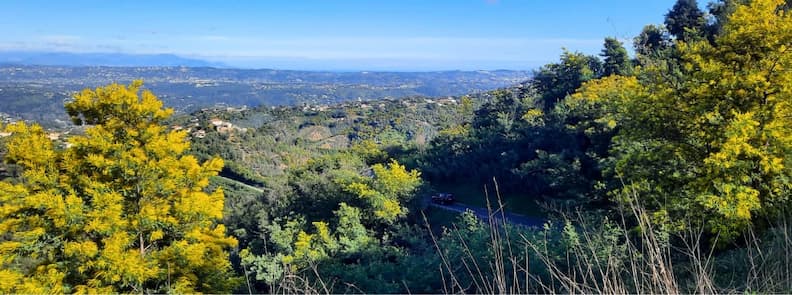
Tanneron sits at 360 m altitude, on the eastern edge of the canton, and it belongs to the Pays de Fayence villages, a group of nine hilltop villages. People often talk about the coastline, but this inland pocket gives you wide views, quieter roads, and hikes that start near the village instead of from a giant car park.
When readers search Fayence villages France, they often want one village with the best payoff. Tanneron delivers fast because you get the village, the viewpoints, and the surrounding nature in one stop. You drive up, park, and you are already in walking territory.
If you collect visits to hilltop villages Var, Tanneron fits the pattern, but it still stands out. It sits up high, it spreads into small hamlets, and it feels wrapped in forest instead of farmland. In winter, you’ll see mimosa everywhere, even before you reach the centre.
What Tanneron is Known For. Europe’s Largest Mimosa Forest
Tanneron mimosa is not marketing fluff. The village of Tanneron sits in the heart of the Massif du Tanneron, the main mimosa-growing area, with both wild and cultivated stands. The village lives on that reputation, and you’ll feel it most from late winter when the slopes turn yellow.
People call it the largest mimosa forest Europe because the mimosa coverage here dominates the landscape at scale, not in a single park or garden. You don’t come for one pretty street, you come to explore hillsides that glow for kilometres.
Tanneron also anchors the Route du Mimosa, the themed route that links mimosa towns between the Var and Alpes-Maritimes. If you like a structured road trip, you can pair Tanneron with Mandelieu and Pégomas, the core mimosa triangle for cultivation and harvest.
Tanneron stays quieter than the coastal festival towns because it offers fewer “big ticket” attractions. And that’s the point of visiting here. You come for walks, viewpoints, and a village that still runs on local routines.
Perfect Base for French Riviera Exploration
French Riviera inland travel solves a common problem. You want access to the coast, but you also want breathing room at the end of the day. Tanneron gives you that balance if you base yourself nearby in Pays de Fayence, Grasse, or the Mandelieu area.
From Tanneron, you can build a simple loop that mixes nature and classic Riviera stops. You hike in the morning, then drop back down toward the sea for beaches, museums, or a meal, without locking yourself into coastal crowds all day.
For expats and repeat visitors, Tanneron also works as a reset button. I go when I want views and an easy walk that still feels rewarding, especially in mimosa season when the landscape does most of the work.
When to Visit Tanneron (Seasonal Guide)
The best time to visit Tanneron depends on what you want more between golden mimosa hills, quiet hiking weather, or lake days. Tanneron’s mood shifts by season, and small logistics like parking and restaurant hours change with it.
Mimosa Bloom Season (December-March)
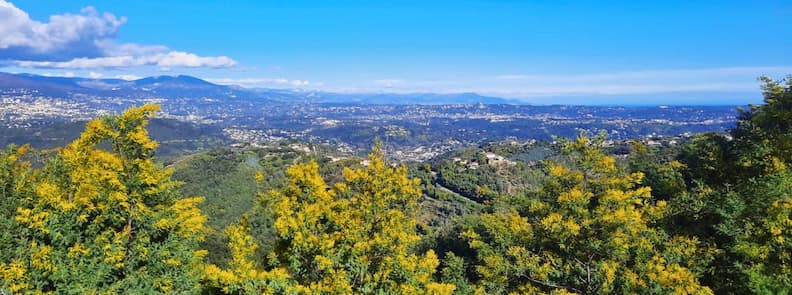
Wondering when is the best time to visit Tanneron for mimosas? Tanneron mimosa season runs from December to March, and it peaks in January and February when the slopes turn yellow fast and stay that way for weeks. This is when the village earns its reputation, especially for hikers and photographers who want color without coastal crowds.
Although the mimosa season in Tanneron stretches across three months, there are different varieties blooming at different times:
- Mirandole (December-January) is the earliest bloomer, perfect for a golden Christmas bouquet.
- Gaulois (January-February) is the most fragrant variety, highly sought after for perfume production.
- Rustica (February-March) is the hardiest of the three, often used for landscaping and erosion control.
But no matter when you visit during winter in Tanneron, you’ll find the hills drenched in gold. Tanneron sits in the heart of what many local sources describe as the largest mimosa forest Europe, with wild and cultivated stands across the Massif du Tanneron. You don’t come for one viewpoint, you come for hillsides that stay yellow as you drive and walk.
Winter weather here feels mild by France standards. Expect daytime temperatures around 10-15°C on many days, with cooler mornings and clearer skies between passing systems.
Late January matters because of the village fête. If you want the exact timing in your planning notes, Tanneron festival dates 2026 land on Sunday, 25 January 2026.
Summer & Lake Season (June-September)
Summer in Tanneron stays quiet because the big seasonal draw is winter. Days run hot and dry, and most people treat the village as a morning stop, then retreat toward shade, air-conditioning, or water.
This is when Lake Saint-Cassien becomes the smarter pairing. You hike early, then drive down for a swim or a slow picnic, but you’ll enjoy it more outside the peak summer crush.
Shoulder Seasons (April-May and October-November)
Spring brings greener hills and wildflowers, and autumn brings cooler hiking temperatures without winter crowds. These seasons suit walkers who care more about views and calm than bright yellow slopes.
The Massif du Tanneron works well in shoulder season because the trails stay open and the terrain stays approachable. You lose the mimosa explosion, but you gain space and easier parking.
If you’re a Romanian expat living in France, the climate feels gentler than most of Romania. Winters stay milder, and shoulder seasons last longer, so you can keep hiking comfortably later into autumn and earlier into spring.
Tanneron Events and Festivals
The headline event is the Mimosa Festival Tanneron, held every year on the last Sunday of January. Expect a morning mass at Notre-Dame de Peygros, a market running through the day, and a flower parade with mimosa distribution and village-style festivities.
Tanneron’s fête feels smaller and more local than the big coastal celebrations. If you want to stack festivals, Mandelieu-La Napoule runs its major mimosa festivities in mid-February, and it draws bigger crowds and bigger floats.
By the time May rolls around, Tanneron’s hills transition from gold to green, but adventure seekers still have plenty to look forward to. The Mimosa Bike Race, an exhilarating VTT-XC (cross-country mountain biking) competition, takes riders through some of the most breathtaking landscapes in the Tanneron Massif.
Cyclists of all levels can test their endurance on challenging trails, weaving through eucalyptus groves, chestnut forests, and remnants of mimosa fields. The race is a favorite among locals and visitors, combining sport, nature, and adrenaline in a way that few other events can.
This is an eco-friendly adventure. Unlike large-scale urban races, the Mimosa Bike Race prioritizes sustainability. Routes are carefully planned to preserve the natural environment, and participants are encouraged to use biodegradable gear and supplies.
Tanneron Travel Tip: Even if you’re not racing, spectators can follow the event from scenic vantage points along the trail. Bring a picnic and enjoy the fresh mountain air while watching the action unfold!
As the summer heat fades, the Tanneron hills prepare for another seasonal transformation. This time, in shades of orange, red, and deep green. By October, the village celebrates its Chestnut Festival, an event that highlights one of Tanneron’s lesser-known treasures.
Local châtaigniers (chestnut trees) produce sweet, nutty chestnuts, which are roasted over open flames and enjoyed in the crisp autumn air. The scent of roasting chestnuts fills the streets, mingling with aromas of Provençal spices, fresh pastries, and mulled wine from the local market stalls.
The festival is also a great opportunity to buy local products, including chestnut honey, artisan jams, and handcrafted souvenirs. These make for unique gifts that bring a little taste of Tanneron back home.
Tanneron Local Tip: If you’ve never tried freshly roasted chestnuts, don’t miss this chance! They’re soft, warm, and slightly caramelized, making them the perfect autumn treat. Pair them with a glass of local rosé or a warm cup of herbal tea for the full experience.
Outside mimosa season, Tanneron doesn’t run a packed event calendar. Plan your trip around nature first, and treat any extra village happenings as a bonus vs. the reason you came.
How to Avoid Crowds during the Mimosa Festival
If you want winter activities French Riviera inland without feeling boxed in, aim for weekdays in January and February. Weekends pull more cars into the village and onto the popular viewpoints, but the trails thin out fast once you start walking.
If you come on a weekend, you’ll still get solitude by choosing movement over terraces. Park a bit farther out, start earlier, and pick loops that leave the village center behind within the first 15 minutes.
How to Get To Tanneron. Transportation Guide
Tanneron is best adapted for drivers. You can reach it without a car, but you will spend more time stitching together connections than enjoying the views. If you want flexibility and calm, especially during mimosa season, driving makes the experience smoother and more enjoyable.
Cities and Airports near Tanneron
Many travelers reach Tanneron as part of a coastal stay. A Tanneron day trip from Nice works well if you want to escape the city for a full day and return without changing accommodation. The drive takes you from dense urban energy into open hills surprisingly fast.
A Tanneron day trip from Cannes is even easier. Cannes sits closer to the village, which makes Tanneron a realistic half-day escape for hikers, families, and photographers who want winter colour without committing to a full overnight stay.
For international travelers, Nice Côte d’Azur Airport is the most practical arrival point. From there, renting a car gives you direct access to the A8 motorway and avoids juggling multiple connections before you even reach the hills.
Getting to Tanneron By Car, The Preferred Way
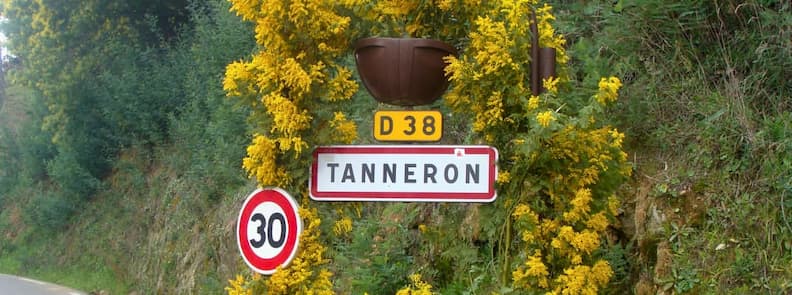
Driving remains the most efficient way to reach Tanneron. From either Nice or Cannes, you follow the A8 motorway, then exit toward Mandelieu or Les Adrets before climbing inland on departmental roads like the D38.
The drive itself sets the tone for the visit. You move through forested slopes of oak, eucalyptus, and mimosa, with occasional openings toward the coast and the Southern Alps. The road curves, but it stays manageable and well-maintained.
Drivers unfamiliar with the area should expect bends and occasional narrow sections. The solution is simple. Take your time, pull over when needed, and let faster local traffic pass. You’re on vacation, you’re not in a hurry.
How to get to Tanneron from Nice by Car (45 km, 1-hour drive)
For a Tanneron day trip from Nice, start on the A8 heading west toward Cannes. Exit near Mandelieu or Les Adrets, then follow the inland climb toward Tanneron through the hills.
Travel time varies depending on season and traffic. During peak mimosa weeks, the final stretch slows down as people stop for photos or hesitate on bends, so building in extra time keeps the drive relaxed.
How to get to Tanneron from Cannes (35 km, 50 minutes drive)
A Tanneron day trip from Cannes follows a similar route but cuts the driving time. You leave the coast quickly and begin climbing before the landscape opens into mimosa-covered slopes.
This route works well for families and slower itineraries. You can hike in the morning, eat elsewhere in the Pays de Fayence, and still return to the coast before evening.
How to get to Tanneron from Grasse (30 km, 45 minutes drive)
The Grasse Tanneron connection suits travelers already exploring inland Provence. The drive stays away from coastal congestion and places you close to the main hiking zones.
This route also works well for expats based in the hinterland who want a short, low-effort escape without touching the motorway.
Public Transport Options
If you are researching how to visit Tanneron without a car, manage expectations early. Tanneron has no train station, and public transport connections are limited and irregular.
The nearest train stations are in Grasse and Mandelieu-La Napoule. From either, you still need to rely on a bus or taxi for the uphill stretch into the village.
Bus services exist but run infrequently, especially outside peak season. Schedules change, and missed connections can easily cost you half a day.
Taxis from Mandelieu or Grasse solve the distance problem but add cost quickly, especially for families. During mimosa season, guided tours become a practical alternative if you want access without driving.
Guided Tours of the Tanneron Mimosa Forest
A practical no-car alternative is a sidecar tour along the mimosa route, departing from Cannes or Mandelieu. The experience covers the Route du Mimosa without parking stress or navigation issues, and it suits travelers who want scenery, access, and local context in one outing.
Book and see the mimosa route in a sidecar, from Cannes or Mandelieu. If you are visiting Tanneron without a car and want the landscape without logistics, this sidecar tour is the simplest way to experience the mimosa hills in one smooth half day.
Parking and Getting Around Tanneron
Tanneron is small, but parking strategy matters. Spaces near the village centre fill quickly during mimosa season, especially on weekends.
Parking near the town hall (Mairie) or church works outside peak hours, but during busy periods, it is easier to park further out and walk in. This approach also puts you closer to hiking loops.
Once parked, Tanneron is easy to explore on foot. The village, viewpoints, and several trail starts sit close together. A car remains useful if you want to explore the wider massif or combine your visit with Lake Saint-Cassien.
Local Tanneron Travel Tip: During the Mimosa Festival, arrive early. Some roads close temporarily, and parking shifts toward designated areas like the stadium.
Top Things to Do in Tanneron
Tanneron does not run on big attractions. It runs on forest roads, viewpoints, and short hikes that feel rewarding fast. If you like slow travel, you can spend half a day here without buying anything beyond a coffee, and still leave feeling like you saw something real.
Plan your day around nature first. Tanneron shines when you walk, pause at viewpoints, and treat the village as a base for loops. It’s not a “museum village” where you hop between sights.
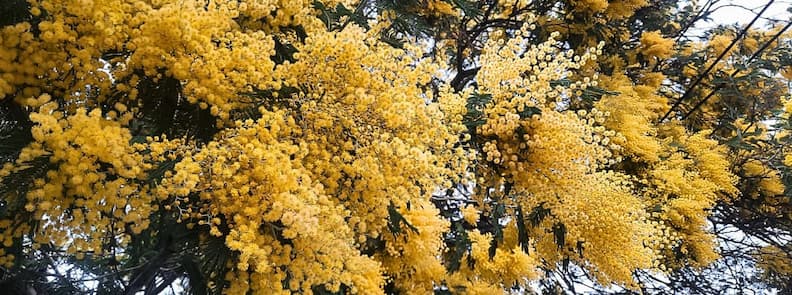
Explore the Mimosa Forest of Tanneron
The headline experience is Tanneron mimosa. In bloom season, the hills around the village turn yellow in a way that feels expansive and immersive. The mimosa is not confined to a park or a single viewpoint. It spreads across the landscape and defines it. You see it from the road, then it follows you into the forest.
Drive slowly through the Massif du Tanneron when the light is soft. Morning works well because the yellow pops without harsh contrast, and you can stop briefly at safe pull-offs without fighting as many cars.
Walk the classic loop for a full sensory hit. The easy reference walk is the Sentier du Mimosa, about 4 km, around 1.5 hours at a relaxed pace, and it starts near the Oustaou dou Païs area with marked waypoints. You pass plantations, cross wilder patches, and keep returning to open views.
Expect more than the mimosa scent. You will quickly discover that in some places, eucalyptus dominates the air, then the mimosa notes arrive later as you dip closer to the groves. That mix is one reason the hike feels clean even when the trail is busy.
Respect the working landscape. Some mimosa trees sit on private land, and locals make their living from mimosa, honey, and small agricultural production. Treat the blossoms like a view, not a souvenir.
Tanneron Mimosa Tip: If you want photos without people in frame, step off the first viewpoint area and walk 10 minutes before you take out your camera. Most visitors stop early and never bother with the loop.
Hike the Tanneron Massif Trails
Tanneron hiking works great because the trails start close to the village. You do not need a long approach to get into the landscape, which makes it ideal for families and expats squeezing a walk into a normal weekend.
The best hiking trails in Tanneron France change with the season. Winter and spring feel comfortable for longer loops, and summer asks for early starts because heat builds quickly on exposed ridgelines.
The Massif du Tanneron delivers variety on a small scale. You can pick short walks around the village, or commit to longer loops that open toward the lake and the coastline.
Tanneron Hiking Tip: Pack water even in winter. Shade comes and goes, and you can feel warmer than expected once the sun hits the slopes.
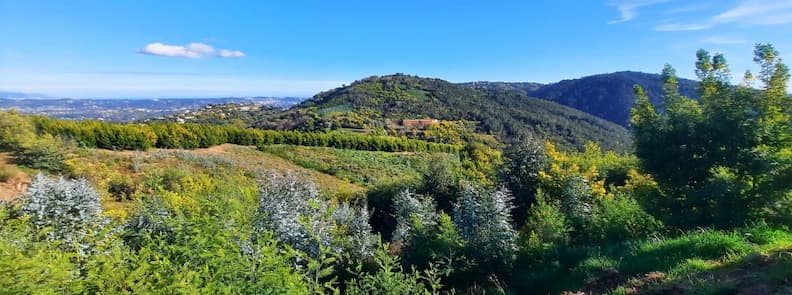
the Coeur de Mimosa Trail
The Coeur de Mimosa Trail is a 1.5-hour loop that winds through mimosa groves, scenic viewpoints, and historic landmarks in Tanneron. This is one of the best ways to explore the golden hills of Tanneron, especially between January and March, when the mimosa is in full bloom, filling the air with its delicate fragrance. The route offers breathtaking views over the Bay of Cannes, Grasse, and Mont Lachens, making it a must for nature lovers, photographers, and hikers looking for an easy yet rewarding walk.
The path starts in Place de la Mairie, the heart of Tanneron’s village life. The square is home to a 19th-century Provençal café, a war memorial from 1921, and a fountain renovated in 1997. This is a great place to pause before setting off on the trail.
From there, the walk continues into the Carreiros District, where the views open up to the Mediterranean and the Bay of Cannes. The mimosa forests stretch as far as the eye can see, with their bright yellow flowers standing out against the deep green of the surrounding trees. This section of the trail follows a dirt path, offering an authentic experience of Tanneron’s wild side. The route is well-marked, but comfortable shoes are recommended, as some parts can be uneven.
The trail then leads to Notre-Dame de Peygros Church, a historic hilltop church with panoramic views of the Esterel Mountains, Lac de Saint-Cassien, and the Alps. Originally a small chapel, it was expanded into a church in the 19th century, with local residents contributing stones to its construction. Its semi-circular apse and square bell tower with two bells make it a landmark of the region.
Along the way, you’ll pass through areas rich in Mediterranean flora, including eucalyptus, chestnut trees, and wildflowers. This is one of the most peaceful and visually stunning walks in Tanneron, offering a mix of natural beauty and cultural heritage.
For those interested in learning more about mimosa farming and its importance in Tanneron, guided mimosa walks are available. These walks provide a deeper look at the region’s history, the harvesting process, and the role of mimosa in the perfume industry. Experts explain how the flowers are grown, harvested, and transformed into essential oils used in world-famous fragrances.
Local Tanneron Tip: Visit in early morning or late afternoon for the best light for photography and fewer people on the trail. Bring water and a camera, and take your time enjoying the different viewpoints along the route.
Les Crêtes de Tanneron (16 km, 5 hours)
The Crêtes de Tanneron hike is one of the most spectacular trails in the Tanneron Massif, offering breathtaking views over the Côte d’Azur, the Esterel Mountains, and the golden mimosa forests that make this region so unique. Covering 15 km with an elevation gain reaching 481 meters, this moderate-to-difficult hike is perfect for those looking for a challenge while immersing themselves in Provence’s natural beauty.
Starting from the village of Tanneron, the trail winds through eucalyptus-lined paths, mimosa groves, and ridges with panoramic views stretching to the Mediterranean. Along the way, you’ll pass through hameaux such as Farinas, Grailles, and Margoutons, small hamlets that still retain the authentic charm of rural Tanneron Provence. The scent of mimosa fills the air during the blooming season from January to March, creating a sensory experience unlike any other.
This hike is particularly rewarding in winter and early spring when the temperature in Tanneron is mild. However, during the summer months, parts of the trail may be closed due to the risk of fire in Tanneron, so always check the latest updates with the Tanneron Tourist Office before setting out. Not to mention that in the middle of summer, the heat would make this hike unbearable.
Tanneron Hiking Advice: If you want the same views with less effort, ask locally for shorter ridge segments instead of committing to the full loop. You can still get the payoff without the five-hour block.
Circuit du Grand Duc From Mandelieu (7 km loop)
This loop sits inside the Massif du Tanneron and feels family-friendly. It is the kind of walk that works when you want forest, viewpoints, and a reasonable distance without turning the day into a performance.
Expect belvedere-style views over the Côte d’Azur when the air is crisp. The Grand Duc sector opens toward the coast, and it gives you a strong sense of height without technical terrain.
Tanneron Travel Tip: Bring a picnic and use the picnic tables at departure points. Tanneron does this better than most villages nearby, and it changes the whole vibe of the day.
Route du Mimosa Walking Trail
The Route du Mimosa is not only a drive. You can also use parts of it as a walking theme, especially in bloom weeks, because it naturally strings together mimosa zones, viewpoints, and village edges.
Think of it as a choose-your-own route. Walk short sections near Tanneron for the forest experience, then continue your day elsewhere if you want markets, a longer meal, or coastal scenery.
Visit Tanneron Tip: If you only have one morning, walk first, then drive. Walking gives you the scent and the sound of bees, and driving afterwards feels richer because you recognise the landscape.
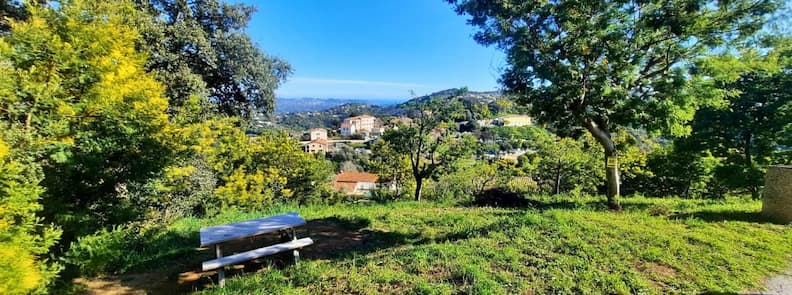
Enjoy the Panoramas (Scenic Viewpoints)
Tanneron village and its surroundings offer beautiful views. Even quick stops deliver big perspective, and that is part of why I keep coming back.
The Table d’Orientation near the Mairie is the easy win. You get a readable panorama and a clear sense of where you are in relation to the coast and inland peaks.
The road toward the lake adds some roadside viewpoints. Along the D38, you will find pull-offs that look over oak forest, mimosa stands, and the Siagne valley, with the Esterel Mountains adding shape in the distance.
Tanneron Photo Tip: Sunrise and late afternoon work best for photos because the slopes read as texture, not glare. If you arrive at midday, focus on the church viewpoint instead.
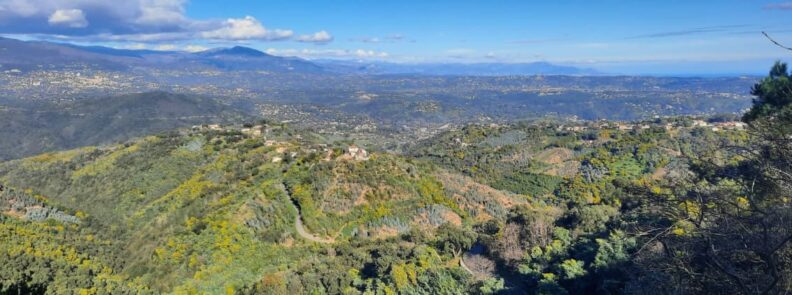
Mountain Biking Routes And Cycling in Tanneron
Cycling in Tanneron is an experience that takes you through some of the most scenic landscapes in the Var, offering a mix of breathtaking coastal views and lush forest trails. Whether you’re a seasoned cyclist or just looking for a peaceful ride through mimosa-covered hills, the 7.5 km route from Boulevard Paul Tarascon to the Var border is one of the best ways to explore this region on two wheels.
One of the top cycling spots in Tanneron is the Tanneron Grand Duc Forest, a stunning natural area that offers a mix of eucalyptus-lined paths, towering oak trees, and golden mimosa groves. With an elevation gain of 450 meters, the ride provides a good challenge while remaining accessible for most cyclists. The GR51 trail, known as the Balcony of the Mediterranean, passes through the forest, offering panoramic views over the Côte d’Azur and the Esterel Mountains. This is the perfect route to take in the fresh pine and mimosa-scented air, especially between January and March, when the hills turn bright yellow with blooming mimosa.
The Route du Mimosa, which stretches from Bormes-les-Mimosas to Grasse, runs through Tanneron, making this an excellent cycling route for those looking to combine nature, history, and cultural experiences. As you ride through the area, you’ll see small mimosa farms and traditional forceries where locals cultivate and prepare mimosa flowers for perfume production in Grasse. Stopping by one of these farms is a great way to learn about the region’s floral heritage, and some even sell mimosa-based honey and perfumes.
For those seeking a more challenging ride, several detours lead through steeper hills and gravel trails, rewarding cyclists with uninterrupted views over Lac de Saint-Cassien and the Mediterranean. If you’re feeling adventurous, take the D92 road towards the Tanneron Massif, which winds through dense forests and rolling hills, providing a mix of paved roads and rugged trails.
Tanneron village also hosts Mimosa Bike, a VTT-XC competition with several start options depending on level, and it shows how bike-friendly the massif can be.
Tanneron Travel Tip: If you’re cycling in Tanneron between June and September, check local fire regulations, as some forest paths may be closed due to high fire risk. Always bring plenty of water, as there are few stops along the trails, and in warmer months, the sun can be intense. The best times to ride are early morning or late afternoon, when temperatures are cooler, and the light is perfect for capturing the golden hills of Tanneron.
If you don’t have a bike, bike rentals are available in nearby Mandelieu-la-Napoule or Grasse, both of which are within easy driving distance from Tanneron. For those looking to make a full day of cycling, consider extending your route towards the Esterel Massif, where red rock formations meet the deep blue sea, creating one of the most picturesque cycling landscapes in Provence.
No matter your cycling level, riding through Tanneron’s mimosa forests is an unforgettable way to explore this hidden gem of the Côte d’Azur. Whether you’re here during the famous Tanneron Mimosa Walk season or in the warmer months when the eucalyptus groves provide cool, shaded trails, this cycling experience is one of the best ways to immerse yourself in the natural beauty of Provence.
Remember to always treat the roads with respect. Some drivers move fast on familiar bends, so riding feels safer when you choose quieter tracks and start early.
Tanneron Biking Tip: If you ride, plan your return route before you leave. Phone signal can drop in forest sections, and it is easy to waste energy on the wrong climb.
Family-Friendly Walks In Tanneron Massif
Family-friendly walks in the Tanneron Massif work best when you keep things simple, especially if you are traveling with children. Short loops close to the village deliver views, forest shade, and a real sense of place without long distances or tricky terrain, which is exactly what families need here.
The 4 km TNRV Trail is the easiest starting point for Tanneron nature walks families kids actually enjoy. This marked loop circles the village, passes through mimosa groves, and stays gentle enough for small legs, pushchairs with big wheels, or improvised carrying solutions.
We tested it in real conditions, not ideal ones. One time, we forgot the baby carrier at home and ended up using my husband’s hoodie as an improvised backup, and it still worked because the trail stays forgiving, wide in sections, and never feels exposed or stressful.
The trail that passes through the village and climbs toward the church works particularly well with children. This structure gives you visual landmarks, natural breaks, and a clear reward point at the top where kids understand why they walked, because there is a view, space to move, and often other families around.
Tanneron Parking Tip: When the center is full, park near the stadium area and walk in. You start calmer, skip the pointless loop of hunting for a space, and ease into the walk instead of beginning already frustrated.
Lac de Saint-Cassien Activities
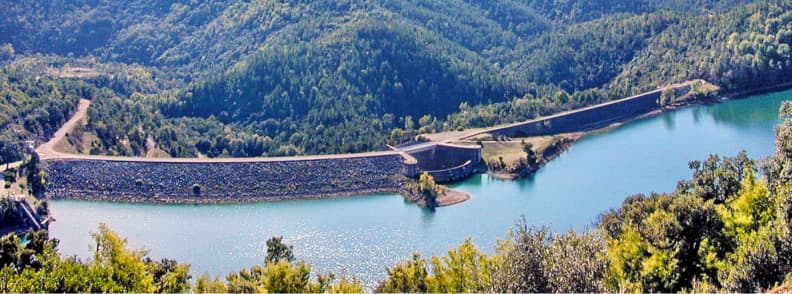
Lake Saint-Cassien adds water and shade to a Tanneron day trip. Lake Saint-Cassien sits a short drive west, and locals use it as a reset after hiking, especially in warmer months.
Lac Saint-Cassien works best when you choose your spot carefully. Some shore areas get muddy and crowded, and the day can feel ruined if you end up on the wrong beach.
Go for simple activities that match the lake. Pedal boats, kayaks, paddles, and calm-water rentals suit the landscape, and they work well for families who want movement without a long hike.
Visit Tanneron Tip: Avoid July and August if you want a peaceful lake day. If you go in summer anyway, arrive early and ask locals where the ground stays firm after rain. We don’t get much rain in summer, anyway.
Drive the Route du Mimosa
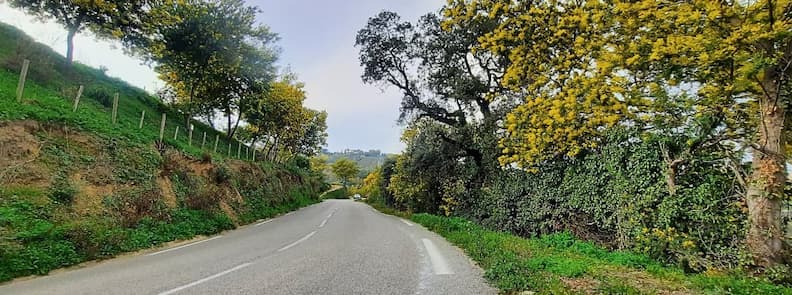
The Route du Mimosa is the classic winter road trip here. It runs about 130 km between Bormes-les-Mimosas and Grasse, and Tanneron sits on it as one of the most scenic inland stretches.
Use a short Route du Mimosa full itinerary segment instead of forcing the whole route. My favourite version is Tanneron to Pégomas to Mandelieu, then finish by the coast for a late lunch.
Bormes-les-Mimosas Tanneron pairings work if you want two different vibes. Bormes-les-Mimosas feels more structured and coastal, and Tanneron feels more forested and quiet, so you get contrast without long driving days.
Route du Mimosa Advice: If you only want one “wow” drive, do Tanneron first, then head downhill toward the sea. The reveal works better in that direction, and it keeps the best light on the slopes in the morning.
Heritage and History of The Village Perché of Tanneron
Tanneron culture shows up in small, local ways. You will not find big museums, ticketed attractions, or curated experiences. You will find a village that still celebrates its seasons, sells what it makes, and welcomes visitors most when they behave like guests vs. an audience.
Notre-Dame de Peygros Church, with 360° Views
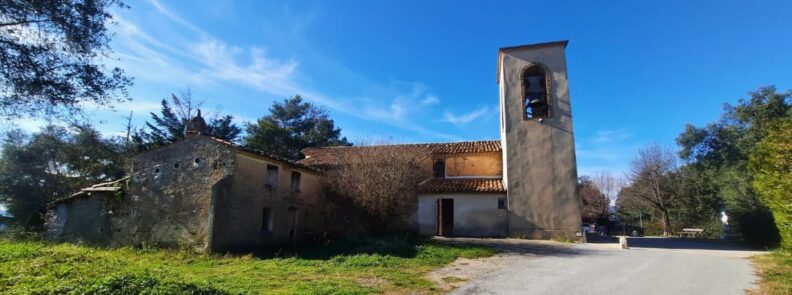
At the highest point of Tanneron, Notre-Dame de Peygros Church stands as a reminder of the village’s past and the dedication of its people. Originally built as a small chapel in the 12th century, it was later expanded into a full-fledged church in 1844. But what makes it truly special is that locals contributed stones to its renovation, each family playing a role in its transformation.
From its elevated position, the church offers unmatched views of the Siagne Valley, the Esterel Mountains, and the Southern Alps. Whether you’re visiting for the history, the architecture, or simply to take in the scenery, this spot is worth the climb.
Visit Tanneron tip: If you’re looking for a serene place to watch the sunset, this is one of the best spots in Tanneron!
Saint-Cassien-des-Bois, the 12th-Century Tower and Chapel
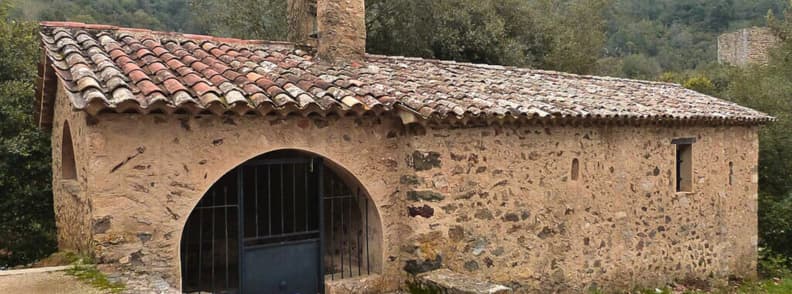
Deep in the hills of Tanneron, hidden among the trees, lies the Saint Cassien des Bois Chapel & Ruins, a place that once welcomed pilgrims traveling the Camino de Santiago (Saint-Jacques-de-Compostelle route). Built in the 12th century, the chapel is one of the oldest religious sites in the region, and though time has weathered its stones, it still holds an air of mystery and spiritual significance.
Nearby, you’ll find the remains of an old fortress, a reminder of the Middle Ages, when this part of Provence was a crucial passage for merchants and travelers. This site reflects how people once lived scattered across the massif rather than concentrated in one village. The tower likely served both as a lookout and a refuge, while the chapel marked a spiritual anchor for small rural communities spread across the hills.
Walking here helps you understand why Tanneron never developed like a compact medieval village. The terrain pushed people outward, not inward, and Saint-Cassien-des-Bois shows how life adapted to isolation, agriculture, and movement between hamlets rather than around a single square.
The setting matters as much as the ruins themselves. The forest absorbs sound, and even in mimosa season, this spot stays calm, making it an ideal pause if you want historical context without crowds or signage overload.
Visit Tanneron Tip: Go early or late in the day. There is no interpretation on site, and that silence is part of the experience.
Oustaou dou Païs, the Tanneron Heritage Museum
Start at Oustaou dou Païs if you want context before you walk. This small stop doubles as the local tourist office and a compact heritage museum focused on the village’s agricultural life.
The visit stays short, but it adds meaning. You learn how mimosa shaped local work, and you get a clearer picture of cultivation, harvest, and the “forcing” techniques used to time blooms.
Treat it as your logistics hub. This is where you can ask about current trail conditions, local closures, and the best loop for your fitness level.
Tanneron Travel Tip: Ask for the simplest marked walk around the village if you travel with kids. Tanneron has routes that feel satisfying without tiring anyone out.
The 22 Hamlets of Tanneron
Tanneron is a constellation of 22 hamlets scattered across the hills, and this structure explains everything about how the area feels today. Instead of a dense center, life here has always spread outward along ridges, valleys, and workable land.
Each hamlet developed around agriculture rather than defense, which is why distances feel long and services feel minimal. Mimosa farming, olives, cork oak, and chestnut groves shaped settlement patterns, with families living close to their land instead of commuting into a core village.
For travelers, this means Tanneron reveals itself slowly. You pass clusters of houses, then forest, then another pocket of life, and the experience feels more like moving through a lived-in landscape than visiting a postcard village.
Visit Tanneron Tip: If you want to understand Tanneron properly, do not rush between highlights. Drive slowly between hamlets, stop where the view opens, and treat the road itself as part of the visit.
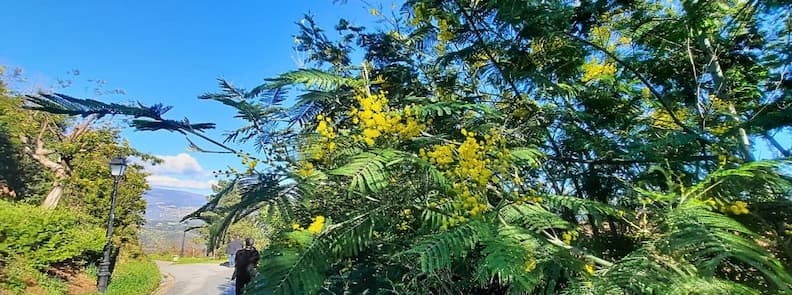
Inside the Mimosa Industry
Behind the yellow hills, Tanneron’s mimosa landscape works like an agricultural system. Visiting here means understanding timing, labour, and controlled conditions that turn a winter flower into a regional economy, and that context changes how the forest looks once you know what happens behind the scenes.
What is a Forcerie de Mimosa? The Secret of 25°C and 85% Humidity
A forcerie is where mimosa finishes its journey from branch to bouquet under controlled conditions. After harvesting, branches enter rooms kept close to 25°C with around 85% humidity, which triggers uniform opening and stabilises colour and scent for transport.
This step explains why mimosa appears everywhere at the same time across markets. Without forcing, blooms would open unevenly and collapse quickly, making winter sales impossible at scale.
For travelers, this matters because not all the yellow you see is wild. Some slopes feed directly into forceries, while others remain unmanaged stands, and the difference becomes visible once you know what to look for.
Tanneron Local Insight: If you notice evenly cut rows and access tracks, you are likely near production zones rather than wild forest.
Visiting the Mimosistes, From Seed to Bloom
Mimosistes treat timing as their main resource. Planting, pruning, harvesting, and forcing follow a tight winter calendar where a few warm days or heavy rain can shift everything.
Several traditional forceries operate in and around Tanneron, including Forcerie Augier, which focuses on mimosa and eucalyptus for export, and family-run sites tied to local growers. These are working agricultural places, not visitor attractions, and access depends on workload, weather, and bloom stage.
Visits stay informal and seasonal. When allowed, you see sorting tables, hydration vats, and preparation for transport, which explains how the mimosa reaches markets across France and beyond.
This perspective changes how you walk the massif. Managed plantations feel intentional, while wilder sections tell a different story about land left to regenerate naturally.
Tanneron Travel Tip: Ask locally before turning up. A quick inquiry can save you from interrupting harvest work during peak hours.
Local Producers. The Vial and Graille Legacies
The mimosa story in Tanneron stays rooted in families who built long-term systems. The Vial family combines mimosa production with beekeeping, selling honey, syrups, and seasonal bouquets when harvest allows.
The Graille family represents another strand of local continuity. Their work connects flower growing with broader Provençal agriculture, reinforcing how mimosa fits into mixed rural livelihoods rather than standing alone.
These producers sell directly when conditions allow, usually during bloom weeks. This is where to buy fresh mimosa in Tanneron village. Tanneron mimosa sales support working farms and keep production viable beyond the festival spotlight.
⚠️ Important: Picking mimosa in the wild is strictly prohibited. The forests of Tanneron are protected, and unauthorized harvesting can harm the delicate ecosystem. If you want a fresh mimosa bouquet, visit a local grower or a market stall in Fayence or Grasse.
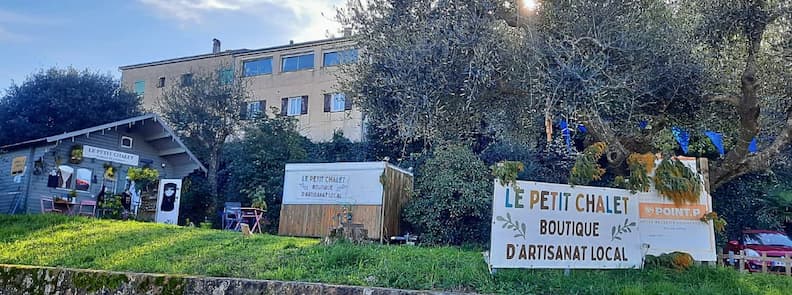
Tanneron Local Crafts and Products
Shopping in Tanneron works best when you focus on meaning rather than variety. The village does not run a large retail scene, so knowing what to buy matters more than browsing.
Mimosa products are the obvious buy and the easiest to carry. Soaps, small scented items, treats, and simple gift packs show up during the festival and sometimes around the local info points.
Perfume links make sense here because Grasse sits close. Some Grasse perfume houses use mimosa as a note, and Tanneron sits inside the wider mimosa-growing zone that feeds regional identity, even when sourcing varies by year and producer.
Mimosa honey is one of the quiet treasures of Tanneron’s terroir, and it tells a more honest story than most souvenirs. Produced by local beekeepers who place hives near mimosa plantations and mixed forest, it reflects not only mimosa bloom but also eucalyptus, winter flowers, and early spring flora, which explains why its flavour stays subtle rather than aggressively floral. The texture tends to be smooth and light, and the taste carries soft notes of vanilla and fresh pollen rather than sweetness alone.
Honey is a smart choice if you want to buy a local treat for someone with a sweet tooth. Look for local beekeepers selling Provence flower honey, and ask what is in bloom when the bees work, because it changes the taste more than people expect.
For a broader Provençal food culture, shop outside Tanneron. Fayence and Callian have weekly markets with fruit, vegetables, cheese, olives, and jars, and you will find more variety there than in a tiny village centre on a busy weekend.
Beyond mimosa, Tanneron has a thriving artisan scene, where local creators bring Provençal traditions to life with their unique crafts. Whether you’re looking for a special souvenir or want to support local artists, these workshops are worth a visit:
- Atelier Lizathoria transforms the landscapes of Tanneron into stunning photographic art. The artist behind this studio has a keen eye for capturing the essence of the mimosa forests, rolling hills, and village life, making each piece feel personal and alive. If you’re looking for a high-quality, locally inspired piece of art to take home, this is the place to find it.
- If you love one-of-a-kind jewelry, Kiousekii offers handmade pieces inspired by Provence’s nature. Using locally sourced materials and traditional craftsmanship, each item reflects the natural beauty of the Tanneron Massif. Whether you’re looking for a meaningful keepsake or a gift with a personal touch, this small jewelry workshop is a hidden gem.
- For those with an appreciation for costume design and theatrical decor, Atelier Coralie Créations is a must-visit. This unique workshop specializes in handmade costumes, stage decorations, and vintage-inspired designs, making it a treasure trove for anyone interested in historical fashion or bespoke decorative pieces.
Many small artisan workshops in Tanneron have limited opening hours or operate by appointment only, so it’s best to call ahead. If you’re visiting in January or February, this is a great rainy-day activity when hiking might not be ideal.
Tanneron Market Advice: If the village feels packed, skip shopping entirely and do a market run in Fayence or Callian instead. You will pay less, carry better produce, and avoid full terraces.
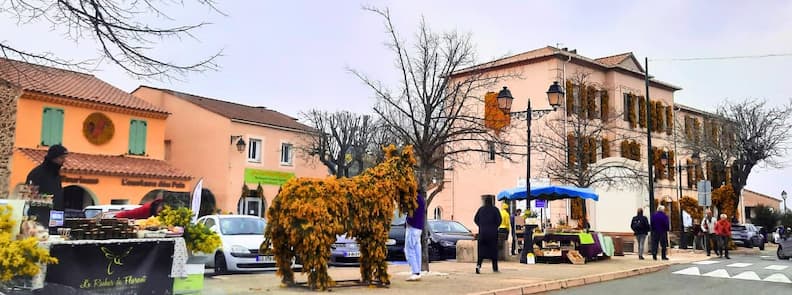
Fête du Mimosa, The Tanneron Mimosa Festival 2026
The Mimosa Festival Tanneron is the one day each year when the village shifts from quiet to festive. Tanneron’s Mimosa Festival takes place on the last Sunday of January each year, and locals treat it as a community day first, a tourist event second.
The day usually starts with a morning church service. You will often hear the local Provençal alongside French, and even if you do not attend for religious reasons, the timing sets the rhythm for everything that follows.
After the service, the village moves into music and folk dance. The performances feel local and informal, and you will see families watching people they know, not some strangers putting on a show for cameras.
The market is the place to go. Stalls sell mimosa bouquets, soaps, honey, and small regional products, and the best purchases are practical ones you can bring home without any fuss.
The flower parade (corso fleuri) is the moment most visitors plan around. Decorated tractors roll through the village, locals are dressed in traditional costumes, and there’s lively Provençal music. There are mimosa blossoms everywhere.
Timing matters if you want the full day without stress. Arrive by 10:00 AM if you want to catch the service and feel the build-up, or arrive well before noon if you only care about food stalls and want to claim a decent spot before the afternoon parade.
Many villagers decorate their homes and gardens with freshly harvested mimosa, creating an immersive golden spectacle throughout Tanneron. Strolling through the streets feels like walking through a painting of Provence in full bloom.
Check out the Tanneron mimosa festival 2026 full schedule here.
Parking is the part that frustrates first-timers. I have passed through during the Fête du Mimosa in Tanneron and saw the village centre clog quickly, so I recommend you plan to park farther out and walk in, especially if you arrive late.
Where to Park in Tanneron: Park near the stadium area and walk. Most people waste time circling the centre, and the extra 10 minutes on foot saves your whole day.
Local Food & Drinks. Where to Eat in Tanneron
Tanneron is small, so food planning matters. You can eat well here, but you need to think like a local in a hilltop village and not like a coastal resort guest looking for endless choice.
Local Cuisine Highlights And Mimosa-Themed Dishes
The food you’ll find in this corner of the Var leans Provençal and straightforward. Expect olive oil, tapenade, goat cheese, seasonal vegetables, honey, and rosé from the region, cooked simply and served without performance.
In Tanneron itself, meals tend to feel hearty and practical, the kind of dishes that nourish you after a walk. You come here for fresh ingredients and generous plates, forgetting about trend-driven menus.
The playful mimosa food scene sits nearby rather than in the village itself. In Mandelieu, you can taste Tanneron mimosa through artisanal mimosa-flavored ice cream at Glacier Chez Louise, which uses the flower for aroma rather than sweetness.
Regional delicacies lean toward light aperitif culture rather than full dishes. Kir Mimosa swaps blackcurrant for mimosa liqueur, creating a floral aperitif that locals drink slowly, while crystallized mimosa flowers appear occasionally as decorative sweets during festival periods rather than everyday treats.
You can also look for Mimocello, a mimosa-based spirit that travels well and captures the winter scent without turning into novelty food once you get home.
Mimosa Foodie Tip: If you want mimosa flavor without paying tourist prices, skip festival stalls and go straight to Glacier Chez Louise in Mandelieu for the mimosa ice cream, then walk the seafront with it.
Restaurants in Tanneron
The best known option in the village is the Café Restaurant des Voyageurs, a traditional spot on the Route du Mimosa with terrace seating and a simple daily rhythm. It opens early, and they always have a budget-friendly plat du jour for lunch, which is exactly what you want after a morning walk.
The menu of this Tanneron restaurant stays traditional and straightforward, and the terrace is the real draw when the weather cooperates. In mimosa season, seats fill quickly, especially on weekends.
Another option in the village is La Famiglia, a small Italian restaurant that draws people looking for familiar flavours after a hike. The menu focuses on pizzas and simple Italian dishes, and it works well for families or mixed groups where not everyone wants Provençal food. Seating fills quickly during mimosa season and on sunny weekends, so arriving early or calling ahead makes a difference.
If you plan to combine Tanneron with the Lake Saint-Cassien, eating later works better outside the village. Le Lac is one of the top choices for relaxed lakeside dining, where you can enjoy fresh seafood, grilled meats, and Provençal specialties while watching the water shimmer under the sun. The peaceful setting makes it an excellent spot for a long lunch or a sunset dinner.
If you’re looking for a place to unwind in the evening, Le Ponton du Club Nautique is also the best spot in Tanneron for nightlife and a semi-gastronomic restaurant. With happy hours, billiard tournaments, and live concerts, it’s a lively and welcoming place to enjoy an evening drink while soaking up the lakeside ambiance. Whether you prefer a classic cocktail, a glass of local wine, or an ice-cold beer, this spot offers a great atmosphere to end the day in style.
Tanneron Restaurants Tip: In peak season, eat earlier than usual in Tanneron. A 12:00 PM lunch gives you options. A 01:30 PM arrival usually does not.
Dining Options Near Tanneroon
If you want a better choice without giving up the hinterland vibe, eat in the Pays de Fayence villages around Tanneron. You get more restaurants, easier parking, and less terrace panic when everything looks full.
Bagnols-en-Forêt is my personal fallback because I live there and I know it delivers. Tripadvisor and local guides consistently list Les Remèdes de Bacchus among the top options in the village. It works when you want something polished without being stiff. The cooking focuses on seasonal ingredients, and the wine list is worth attention.
Despite what travel platforms say, I prefer the other two restaurants. Le Bistrot‘s menu sticks to brasserie classics and comfort dishes like burgers, Caesar salad, pasta with truffle cream, beef pavé, duck breast, risotto, and daily specials, with mains usually between €14 and €21. It also runs a proper kids’ menu, which makes it practical for families after a hike or lake stop.
En Face is the most relaxed and budget-friendly option in Bagnols, and it works well when you want a proper meal without formality. The menu focuses on classic French bistro dishes like mussels gratin, calamari, bavette steak with shallots, veal kidneys in mustard sauce, burgers, and seasonal fish, with mains usually around €18 to €22. Daily suggestions change often and include comfort plates like escalope milanaise, pork stew, baked Camembert with charcuterie, and mulled wine in winter, plus a solid kids’ menu at €11.
Near the lake in Montauroux, Restaurant Les Esclapières remains a reliable choice when you want a shaded terrace and generous Franco-Italian cooking without paying a heavy lakeside premium. For fine dining, there is also Le Carré d’Ange with a more contemporary menu with careful plating and a quieter atmosphere, which works well for a slower lunch or an early dinner. Both places fill up quickly in good weather, so booking ahead avoids frustration.
For other fine dining experiences in the Pays de Fayence, focus on a small number of well-established addresses rather than hunting village by village. In Fayence, Le Castellaras offers the most refined experience in the canton, with elegant Provençal cuisine, a calm setting, and views that justify a longer lunch or a planned dinner. In Tourrettes, Le Faventia delivers Michelin-recognised cooking with seasonal ingredients and a more intimate village feel, making it a strong choice if you want quality without formality overload. Both require booking ahead, especially on weekends and during mimosa season.
Tanneron Foodie Tip: If Tanneron feels crowded or fully booked, don’t wait it out. Drive ten minutes inland and eat better with less stress.
Where to Stay in Tanneron. Accommodation Guide
Choosing where to sleep matters more here than in most Riviera day trips. Tanneron sits close to everything, so you can stay inside the mimosa hills for silence, or base in a larger town for convenience and still reach the trails fast.
Staying in Tanneron vs. Nearby Destinations
Tanneron accommodation stays limited, and that’s exactly why it appeals to the right traveler. Staying in the village or its hamlets means quiet evenings, early access to trails, and no need to fight traffic when mimosa season peaks.
Most places are rural gîtes or villa-style rentals rather than formal hotels. This suits couples, families, and slow travelers who value space and independence over services. Expect terraces, parking on site, and views rather than reception desks or room service.
Tanneron Accommodation Advice: If you want sunrise walks or photography without crowds, sleeping in Tanneron gives you a clear advantage over coastal bases.
Recommendations in Tanneron
You won’t find a classic Tanneron hotel, but you will find well-run rentals that function like one. These places focus on comfort, privacy, and location rather than branding.
Amoureux du Calme et de la Nature is the kind of place you choose when silence matters more than services. Set away from the village core, it offers a genuinely calm setting with open views over the surrounding hills, outdoor space where mornings start slowly, and nights stay dark and quiet even during mimosa season. It suits couples and solo travelers who plan to hike, read, or simply sit outside rather than move constantly, and it works best if you are comfortable driving a few minutes for meals.
Book Amoureux du Calme et de la Nature if your priority is rest, landscape, and waking up already inside the Tanneron hills rather than commuting into them.
Cottage les Marjoris works best as a self-contained base when you want space, independence, and a slower rhythm. This is the kind of place you choose if you plan to cook, eat outside, and structure your days around walks rather than reservations. It suits families and small groups who want separate sleeping areas, outdoor space for kids to move around, and the freedom to come and go without disturbing anyone. Being outside the village center also means easier parking and quieter evenings, which matters during mimosa season weekends when Tanneron fills up fast. You trade walk-to-café convenience for calm, privacy, and the feeling of staying inside the landscape rather than visiting it.
Book Cottage les Marjoris if you want a practical, comfortable base that lets you live at Tanneron’s pace instead of planning around it.
Les Deux Chênes à Tanneron Village suits travelers who want to stay close to the village without dealing with the constraints of the very center. The main advantage here is location. You can park once, walk into Tanneron for coffee, viewpoints, or the start of local trails, and avoid moving the car again during the day. This matters during mimosa season and on weekends, when central parking fills early, and traffic builds fast. The setting stays calm in the evening, and mornings feel unhurried, which works well for couples and slow travelers who plan to explore on foot rather than drive from stop to stop.
Book Les Deux Chênes à Tanneron Village if you want to experience Tanneron on foot, avoid parking stress, and keep your stay simple and efficient.
Tanneron Accommodation Tip: Availability disappears fast here. If you find a Tanneron stay that fits your dates, lock it in immediately.
Staying in Nearby Towns
Staying outside Tanneron often makes sense if you plan a Tanneron day trip from Nice or a Tanneron day trip from Cannes. You gain more accommodation choices while keeping driving times reasonable.
Mandelieu-La Napoule works well for mixed trips. You can combine mimosa hills, coastal walks, and lake stops without changing bases. Book accommodation in Mandelieu if you want flexibility between sea and hinterland.
Grasse suits travelers who want culture and evenings with more life. It also positions you well for exploring several Fayence villages over multiple days. Book accommodation in Grasse if you want variety without coastal intensity.
Fayence offers the most balanced inland base. It feels lived-in, has good services, and keeps drives short across the canton. Book accommodation in Fayence if you want a village atmosphere with practical comfort.
Local Travel Tip: During mimosa season, book accommodation before you book restaurants or activities.
Camping and Nature Stays
Camping Bosi remains the most local-feeling option for campers in Tanneron. It keeps you close to the village without the scale or noise of a large holiday park. It’s especially convenient for early-morning walks and late returns without driving.
Book Camping Bosi if you want a nature-first stay with minimal logistics.
Tanneron Camping Tip: Campers benefit most from Tanneron stays outside July and August, when nights stay cool, and roads stay calm.
Lake-based camping gives you seasonal flexibility. You can hike in Tanneron in the morning and cool off at the lake later in the day. Camping du Lac in Montauroux works best for families and longer summer stays. Shade, water access, and facilities make it easy to settle in. Book Camping du Lac if you want lake access without driving every time you want a swim.
Also in Montauroux, Domaine des Floralies suits travelers who want a quieter, greener setup. It feels less crowded and works well outside peak summer. You should book Domaine des Floralies if you want a quieter camping setup close to both the lake and Tanneron.
Tanneron Camping Advice: In summer, arrive at the Lake Saint-Cassien early, leave mid-day, and return in the evening. It completely changes the experience.
Tanneron Day Trip Combinations
Tanneron works best when you pair it with one nearby theme. You get the quiet hills, then you add either perfume culture, a coastal stop, a village loop, or lake time, without stretching your day into a long drive.
Tanneron + Grasse + Perfume
This combo suits travelers who want both nature and culture in one day. Start in Tanneron early for the light, a short loop hike, and the viewpoints near the church, then drive to Grasse for a late lunch and a perfume visit.
The practical link here is the perfume Grasse Tanneron route, because you can move from mimosa hills to the perfume capital in under an hour and still feel like you changed regions. It’s also the cleanest way to connect mimosa season with scent culture, since mimosa notes show up in perfumery even when the flower is not the star of every formula.
Keep perfume visits simple if you only have an afternoon. Choose one perfume house, do the guided visit, then spend your remaining time walking the old town rather than rushing between multiple factories.
Perfume Grasse Tanneron Route Advice: If you want the most relaxed version of this day, book your perfume visit for late afternoon. Most people do Grasse first, which stacks crowds. Tanneron first gives you space, then Grasse later feels calmer.
Tanneron + Bormes-les-Mimosas + Coast
This is the two mimosas, two moods day. Tanneron gives you wide hills and forest walks, then the coast gives you harbours, palm-lined promenades, and an easier end-of-day meal.
The pairing Bormes-les-Mimosas Tanneron makes sense because each place shows mimosa differently. Tanneron feels raw and landscape-driven. Bormes feels more arranged, more built around strolling, and closer to the sea.
Do not try to squeeze both villages into peak lunch hours. Start early in Tanneron, drive to Bormes for an afternoon walk through the old streets, then finish by the coast for dinner so you avoid parking stress in historic centers.
Local Travel Tip: If you want coast time without big-city hassle, finish in Le Lavandou rather than pushing into Toulon. It keeps the pace slower and the parking simpler.
Tanneron And 9 Villages Loop
This is my local-style day because I live in the area, and I use these villages as quick resets. The goal is not to tick nine pins, it’s to pick a smart loop and stop when a village feels good.
Use Pays de Fayence villages as a cluster vs. a checklist. Tanneron pairs well with Callian for views, Fayence for services and markets, and Seillans for a more postcard photos, while still staying in the same rhythm of stone lanes and hilltop panoramas.
If you want a planning shortcut, pull up my Pays de Fayence 9 villages map and build a loop that avoids backtracking. Choose three or four villages max, then give yourself time for a short walk and a proper coffee stop instead of constant driving.
Pays de Fayence Local Tip: Callian and Tanneron both offer picnic tables near the center, which is rare. Pack food, buy fruit locally, and eat surrounded by nature instead of competing for a terrace.
Tanneron + Lake + Nice (2 Days)
This two-day combo works when you want a Tanneron day trip from Nice but also want water time without committing to the coast. Day one belongs to Tanneron. Day two belongs to the lake and the return to Nice.
Start with Tanneron on day one, then sleep either in Mandelieu or inland near the lake so you do not spend both days driving back and forth from Nice. This keeps your mornings calm and gives you the best light in the hills.
On day two, head to Lake Saint-Cassien for a slower morning. Lac Saint-Cassien works well for a picnic, a short paddle, or a swim in warm months, but the experience depends heavily on where you set up, because some lake edges get muddy and crowded fast.
Arrive early, walk a little along the shore to find a quieter patch, then leave mid-day if you see crowds building, and finish with a late afternoon return to Nice.
Southern France Travel Tip: The lake feels best outside of July and August. If you have to go in summer, arrive early, leave for lunch inland, then return later when day-trippers start packing up.
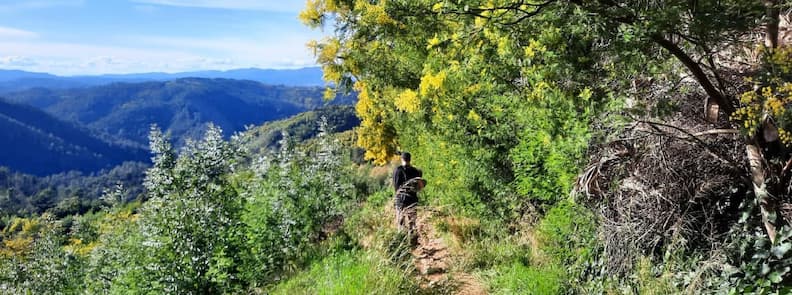
Tips for Visiting Tanneron
Tanneron rewards small decisions. What time you arrive, where you park, what you pack, and how you behave in a tiny village all matter more here than in bigger destinations.
What to Pack
If you come for winter activities French Riviera inland, pack for quick temperature swings. Mornings often feel cold and damp, and afternoons can warm up once the sun hits the hills.
Dress in layers you can remove easily. A light insulated jacket, a fleece, and a breathable base layer work better than one heavy coat, because you will heat up fast once you start walking.
Bring shoes with grip. Trails can turn muddy after rain, and the forest paths around the village can feel slippery even on easy routes.
Pack a small thermos or a hot drink if you travel with kids. I learned this the practical way when we arrived without the baby carrier and still wanted to stay outside longer, and warmth buys you time.
Tanneron Packing Tip: Bring a small picnic and a sit mat. Tanneron has viewpoint picnic tables, and eating outside saves you from full terraces during mimosa weekends.
Visa & Travel Documents
France stays in the Schengen Area, so requirements depend on your passport and residency status. If you live in France as an expat, keep your residency card or proof of status with you on day trips, especially if you cross departments often.
If you are visiting from outside the EU, carry your passport or a copy, plus travel insurance details you can access offline. Rural drives and hikes are not the moment to realise your documents sit in a hotel safe two hours away.
Driving visitors should also carry a valid licence, and non-EU travelers should check if they need an International Driving Permit before renting a car. Keep this part evergreen by verifying your specific case before you travel.
France Travel Tip: Save a photo of your passport, insurance, and accommodation confirmation on your phone and offline. The signal can drop in the hills.
Tanneron Health & Safety Tips
Tanneron is safe, but it is rural, so basic planning matters. The main risks are not crime, they are road mistakes, weather surprises, and being underprepared for a walk.
- Drive calmly on bends and expect locals to move faster than you. If you feel pressured, pull into a safe spot and let cars pass, because that keeps the whole drive relaxed.
- Avoid bringing a large RV up into the village during busy weekends. Roads are manageable, but parking and turning become a headache when the center fills.
- Expect limited facilities. Tanneron offers basic essentials and a café, but do not rely on finding an ATM or a full supermarket in the village, so bring cash and snacks.
- Carry water even in winter. The air can feel cool while the sun dries you out, and the easiest trails still take time when you stop for views.
Tanneron Safety Tip: If rain is forecast, choose the church viewpoint and the village loop instead of the ridge trails. You still get views, and you reduce slip risk on muddy paths.
Local French Etiquette
Small villages run on polite basics. If you say Bonjour when you enter a shop or café, you will get a better response than any translation app can buy you.
Merci matters just as much, especially when someone helps you with directions or parking. People here are used to visitors in season, but they still notice who treats the village like a place to live.
Language can be a barrier because many locals speak only French. Learn a few simple phrases, or use a translation app with short, clear sentences, and keep your tone calm and respectful.
France Etiquette Advice: The small effort of starting with Bonjour makes any conversation smoother, even if you switch languages immediately after. In village cafés, greet the room, not only the staff. A quick Bonjour to the table line sets the tone and stops you from feeling like an outsider.
Best Instagram Spots in Tanneron
If you want photos that look like what Tanneron feels like, plan around light, not only around the mimosa flowers. Mid-morning in winter gives soft sun filtering through mimosa branches and reduces harsh shadows on faces.
The church viewpoint at Notre-Dame de Peygros is the most reliable spot for wide landscapes. You can frame Lake Saint-Cassien, the Esterel line, and distant peaks when the air is clear.
The viewpoint table near the Mairie works well for a quick panorama shot, and it helps you point your camera toward the best angles without guessing.
For a more intimate shot, walk a little into the mimosa trails and shoot along the path rather than toward the road. The image feels quieter and more immersive, and it fits the story better than crowded terrace photos.
Festival day changes logistics. Arrive by 9:00 AM if you care about parking and road closures, and expect your best photo moments to come from side streets rather than the parade route.
Tanneron Photo Tip: For clean shots, avoid the village center at peak hours and shoot on the trail first. Most people post terrace photos. Trail photos stand out.
Off-Season Discoveries
Outside mimosa season, Tanneron becomes a calm stop for walkers who want empty trails and open views. You trade yellow hills France for quiet forests and a slower pace.
Spring brings greener slopes and wildflowers, and autumn brings crisp air that suits longer walks. You also get easier parking, fewer closed roads, and less pressure to book meals. This is where the French Riviera inland angle shines. You can stay in the canton, explore multiple villages, and still feel far from the coast without driving far.
Expect some limited hours outside peak season. Plan meals in nearby villages if you arrive late, and treat Tanneron as a daylight destination rather than an evening one.
Avoiding Crowds Advice: If you want Tanneron with almost no people, pick a weekday outside bloom season and arrive before noon. You will hear birds and wind, not car doors.
Sustainable Travel Practices
The mimosa landscape is not a public garden. Farmers and producers maintain much of what you photograph, and the easiest way to respect that is to keep to paths and not cut through plantations.
Do not pick mimosa from private fields. If you want blossoms, buy a bouquet from a local seller, because it supports the people who keep the landscape alive.
Carry your rubbish out, even small things like tissues and snack wrappers. Rural trail bins are rare, and wind moves plastic fast in the hills.
Drive with patience in bloom weeks. Aggressive overtaking and roadside parking damage verges and create risk for everyone, especially cyclists.
Visit Tanneron Advice: Buy one local product instead of taking one “free” branch. A small bouquet or honey jar costs little and does more for the village than any photo.
Visit Tanneron FAQs
This section answers the questions that travelers and expats ask me most before deciding if Tanneron fits their plans. Use it to plan timing, logistics, and expectations so your visit stays smooth and grounded.
What is Tanneron famous for?
Tanneron mimosa defines the village and its landscape. Tanneron sits at the heart of what is widely considered the largest mimosa forest Europe, covering more than 200 hectares across hills and hamlets. Every winter, millions of yellow blossoms transform the slopes, making the village one of the most recognisable mimosa destinations in France. It forms part of the Route du Mimosa and hosts a yearly Mimosa Festival, which anchors its cultural calendar. The village itself spreads across 22 hamlets, which adds to its rural, lived-in character rather than a single compact center.
Is Tanneron worth visiting?
If you plan to visit Tanneron France for nature, the answer is yes. Tanneron works best for hikers, slow travelers, families, and people who value landscape over attractions. Winter mimosa season offers a spectacle that few places in Europe can match at the same scale. Outside bloom season, the quiet trails, viewpoints, and village rhythm provide a calm alternative to the Riviera coast. Travelers looking for nightlife, shopping, or constant activity usually feel underwhelmed.
How far is Tanneron from Nice and Cannes? How do I get to Tanneron from Nice/Cannes?
Tanneron sits about 50 km from Nice and roughly 35 km from Cannes. By car, the drive from Nice takes around one hour, while Cannes usually takes under 50 minutes, depending on traffic and season. Public transport options remain limited and indirect, which makes driving the most realistic choice for most visitors. Costs vary by rental season, but fuel and tolls stay moderate compared to longer Riviera day trips.
Can I visit Tanneron if I don’t have a car?
Understanding how to visit Tanneron France without a car requires realistic expectations. Tanneron has no train station, and bus connections are infrequent and not designed for tourism. Taxis from Grasse or Mandelieu are possible but expensive for a short visit. During mimosa season, some organised tours include Tanneron as a stop, which can work if you only want a brief overview. Without a car, flexibility and timing become your biggest challenges.
When do mimosas bloom in Tanneron? When is the best time to see mimosas in Tanneron?
Mimosas in Tanneron usually bloom between December and March, with peak intensity from late January to mid-February. Lower and sunnier slopes bloom earlier, while shaded valleys and higher elevations bloom later, which extends the season. Different mimosa varieties also flower at slightly different times, so the landscape changes week by week rather than all at once. By the last Sunday of January, blooms are usually strong enough for festival celebrations, even if some areas continue flowering into February.
What is the Mimosa Festival? When is the Mimosa Festival in Tanneron? Is the Tanneron Mimosa Festival free?
The Mimosa Festival is Tanneron’s main annual event and takes place on the last Sunday of January. In 2026, the festival falls on 25 January, with activities running from morning through mid-afternoon. The day includes a church service, folk dances, a village market, and a flower parade where mimosa branches are thrown to the crowd. Entry is free, and stalls operate independently, so you only pay for what you buy. Arriving early matters because parking and road access change as the day progresses.
What is a mimosa forcing mill or forcerie?
A mimosa forcing mill, known locally as a forcerie, is a controlled environment used to prepare mimosa branches for sale. Branches are placed in warm rooms set around 25°C with approximately 85 percent humidity, which encourages the buds to open evenly. This process allows growers to control timing and quality, especially for export. Tanneron has a long tradition of forceries, and understanding this process explains why mimosa appears uniform and vibrant in markets.
Can you pick mimosas in the Tanneron forest?
You cannot legally pick mimosas in the Tanneron forest because most of the land is privately owned. Mimosa cultivation supports local families, and cutting branches damages both income and future growth. Picking flowers also encourages erosion and trampling in sensitive areas. If you want mimosa, buy a bouquet from a local producer or during the festival. This supports the people who maintain the landscape.
Is Tanneron crowded in winter?
Winter crowds concentrate around weekends in January and February, especially during peak bloom and festival time. Weekdays remain relatively calm, and even busy weekends thin out quickly once you start walking away from the village center. Early mornings stay quieter than midday. Outside of mimosa season, Tanneron feels uncrowded most of the year.
Is Tanneron worth visiting in summer?
Summer in Tanneron stays quiet and works best for early walks and nearby lake visits. Temperatures rise, and activity slows, but the area still suits hikers who start early. Birdwatchers appreciate the nearby Fondurane Reserve, which adds a nature-focused reason to visit outside bloom season. Tanneron itself remains calm, with fewer visitors and easier parking.
What are the things to do in Tanneron?
The main activities in Tanneron revolve around walking, hiking, viewpoints, and seasonal events. Visitors explore mimosa forests, hike ridge trails, visit the church viewpoint, and enjoy picnic areas. The heritage museum and festival add cultural context without overwhelming the village. Tanneron suits travelers who enjoy doing less but experiencing more. Find out more in the dedicated section covering Top Things to Do in Tanneron.
What are the best hiking routes in Tanneron?
The most popular routes include village loops, the Circuit du Grand Duc, and longer ridge walks like the Crêtes de Tanneron. These trails offer views toward Lake Saint-Cassien, the Esterel Massif, and the coast. Difficulty ranges from easy family walks to longer hikes for experienced walkers. Conditions stay best in winter and spring when temperatures remain moderate.
How long is the Crêtes de Tanneron hike?
The Crêtes de Tanneron hike covers approximately 16 km and usually takes around five hours at a steady pace. It involves elevation gain and exposed sections, so it suits experienced hikers rather than casual walkers. Water, proper shoes, and early starts matter, especially outside of winter. The reward comes from wide panoramic views rather than technical terrain.
Are dogs allowed in the Tanneron massif?
Dogs are allowed in the Tanneron massif, but leash rules apply in nesting and protected areas. During spring and early summer, wildlife activity increases, and leashes reduce disturbance. Always carry water for your dog because shade varies along the trails. Respect posted signs, as enforcement increases during busy periods.
Is Tanneron good for families?
Tanneron works well for families who enjoy outdoor time and short walks. Easy loops near the village, picnic tables, and open viewpoints suit children of different ages. Older kids enjoy forest trails and viewpoints, while younger ones benefit from short distances and frequent stops. Families looking for playgrounds or indoor attractions usually prefer nearby towns.
Are there restaurants or shops in Tanneron?
Tanneron has a small number of restaurants, including Café des Voyageurs and La Famiglia, plus very limited local shopping. Services remain basic, and there is no ATM in the village. Most visitors eat at set times and plan groceries or additional meals in nearby villages. This limited choice is part of the village’s character.
Where can I buy mimosa honey in Tanneron?
Mimosa and flower honey are produced locally by the Vial and Graille families. These producers sell directly during the season or through local markets. Buying from them supports small-scale agriculture and keeps the tradition alive. Availability depends on the year and flowering conditions.
What is the four-season mimosa?
The four-season mimosa is a rare variety that flowers at different times throughout the year. In Tanneron, the last known producer of this variety is Monsieur Blanc. This mimosa requires careful cultivation and does not produce the same mass effect as winter varieties. It represents a niche part of local horticultural heritage.
How long should I plan to spend in Tanneron?
For many travelers, a day trip is enough, especially as a Tanneron day trip from Nice or a Tanneron day trip from Cannes. Arrive in the morning, walk, eat lunch, and leave by late afternoon. Nature lovers and hikers often prefer one or two nights to explore multiple trails and enjoy quiet mornings. Staying longer suits travelers who value slow pacing over packed itineraries.
Can you visit Lake Saint-Cassien? How far is Lac de Saint-Cassien from the village?
Lake Saint-Cassien or Lac de Saint-Cassien, lies about ten minutes by car from Tanneron. The lake offers swimming, pedal boats, kayaking, and picnic areas, with seasonal restrictions in summer. Some walking paths connect the wider area, but most visitors drive. Choosing the right access point matters because some shores become crowded and muddy.
What are the nine villages of Pays de Fayence?
The Pays de Fayence includes nine hilltop villages: Tanneron, Fayence, Seillans, Tourrettes, Callian, Montauroux, Mons, Saint-Paul-en-Forêt, and Bagnols-en-Forêt. Each village has its own focus, from views and markets to forest access and dining. Distances between them remain short, which makes looping itineraries easy. Together, they offer one of the most coherent inland village clusters in the Var.
Where can I see mimosa in Provence?
Tanneron stands out as one of the top mimosa locations in Provence. Along with Mandelieu and Pégomas, it forms the core mimosa triangle of the region. Tanneron offers the most immersive forest experience, while the others provide more urban or coastal settings. Seeing all three gives a full picture of how mimosa shapes the region.
What is the Route du Mimosa?
The Route du Mimosa is a 130 km themed itinerary linking the Mediterranean coast to the inland hills, running from Bormes-les-Mimosas to Grasse.
Starting in Bormes-les-Mimosas, the route follows the coast through Rayol-Canadel-sur-Mer, Sainte-Maxime, and Saint-Raphaël, before turning inland toward Mandelieu-la-Napoule, one of the Riviera’s main mimosa hubs.
From there, it continues through Pégomas, follows the Siagne valley, climbs into the heart of the mimosa-growing hills at Tanneron, and ends in Grasse, where mimosa cultivation connects directly with the perfume industry. This inland section between Mandelieu, Pégomas, and Tanneron is where the landscape changes most dramatically, with dense mimosa forests rather than ornamental plantings.
Why You Should Visit Tanneron France
Tanneron earns its place in a Provence itinerary because it offers something rare. A seasonal landscape that changes the way you travel, slow enough to feel grounded, yet close enough to the coast to stay practical. The Travel Bunny’s Tanneron guide walked you through when to come, how to get there, what to do, where to eat, where to stay, and how the mimosa industry shapes everyday life here, so you can plan without guesswork.
What makes Tanneron special is not one sight but its rhythm. Winter mornings scented with mimosa, quiet trails looping through the hills, simple meals after a walk, and views that stretch far beyond the village without demanding effort. Even outside bloom season, the calm holds, and the landscape still works in your favour.
If you value places that feel lived in, Tanneron checks that box. It suits hikers, families, slow travelers, and anyone who prefers nature over noise, and it works equally well as a short escape or a deeper base in the Pays de Fayence.
Whether you come to Tanneron to breathe in mimosa on a clear winter day or to walk shaded paths under summer skies, you leave carrying more than beautiful photos. You leave with a sense of scale, of seasons, and of a corner of Provence that still follows its own pace.
If you have questions, want to share your experience, or need help planning your route, drop a comment. Tanneron rewards good planning, and it gets better the more you understand it.
About the Author

Hi! I am Mirela Letailleur, a Provence-based travel writer living in the Pays de Fayence, one of the nine hilltop villages that shape this part of the Var. I visit Tanneron regularly across seasons, from peak mimosa bloom to quiet off-season walks, and I write from lived experience rather than passing impressions. My work focuses mostly on inland Provence, slow travel, rural villages, and the realities of navigating places preferred by locals vs. curated highlights built for quick visits.
This guide reflects how I travel and how I live here. I walk the trails, deal with parking on busy weekends, eat where locals eat, and follow the rhythms of the mimosa season year after year. If you are planning to visit Tanneron France, explore the Pays de Fayence villages, or understand the mimosa landscape beyond postcards, you are reading advice shaped by repetition, proximity, and familiarity rather than a single trip.
Planning to visit Tanneron? Check out these other guides in Southern France
Visit Saint-Cézaire Cave / Grotte de Saint-Cézaire. Your Full-Day Guide to the Domain
Hike to Étang d’Aubert & Col Aubert. Guide to Estérel’s Pink Water Lilies
Complete Cotignac Travel Guide. Provence’s Cliffside Village with Quince Markets, Royal Miracles & Troglodyte Caves