
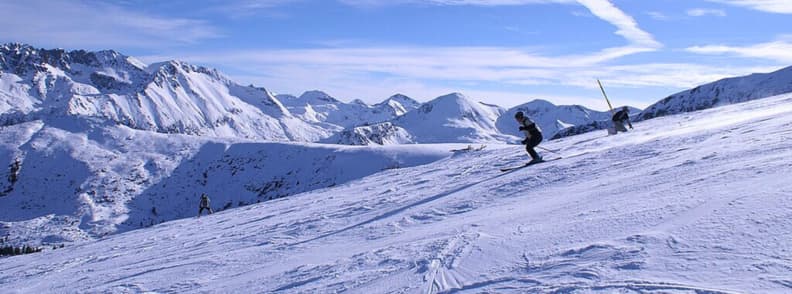
If you are thinking about skiing in Bulgaria for the 2025-2026 season, you are in the right place, but probably a year or two late to the “secret”. For years, I have watched Bulgaria ski resorts get sold as the ultimate cheap skiing fix in Europe. Bansko posters in UK agencies, Borovets deals on Romanian websites, Pamporovo sun claims in French brochures. Prices stayed low, the slopes stayed quiet, and everyone felt clever for choosing “budget Bulgaria” instead of the Alps.
That picture is changing fast, and you need honest, up-to-date numbers before you book. Lift passes in Bansko, Borovets, and Pamporovo cost more each season, accommodation near the gondola fills up earlier, and food, lessons, and rentals follow the same curve. Bulgaria still undercuts France or Austria for a ski holiday, but the gap is shrinking. This guide from The Travel Bunny treats your budget like it matters. You will see real examples in lev and euro, resort by resort, so you can compare a week in Bulgaria with a week in the Alps without guesswork.
Skiing Holidays In Bulgaria Guide
In this complete guide to skiing in Bulgaria, I take you through Bansko, Borovets, Pamporovo, and the smaller Bulgarian ski areas that most visitors never check on a map, with clear planning advice for each. You will see how Bansko’s long valley run and busy town compare with Borovets ski in ski out layout and Pamporovo’s sunny slopes in the Rhodope Mountains. I also include the tiny places with very low-cost lift passes for those who care more about snow and silence than nightlife.
You can treat this as your full planning manual for a Bulgaria ski trip in 2025-2026. I break down pass prices, rentals, lessons, transport from Sofia or from Romania, where to stay in each resort, and when to travel if you want good snow without school-holiday crowds. By the end, you will know exactly which resort fits your level, your group, and your wallet, and you will have a realistic idea of what cheap skiing in Bulgaria still means today.
Disclosure: Some of the links on this page are affiliate links. This means that at no extra cost to you, The Travel Bunny will earn a small commission if you click through and make a purchase. Thank you!
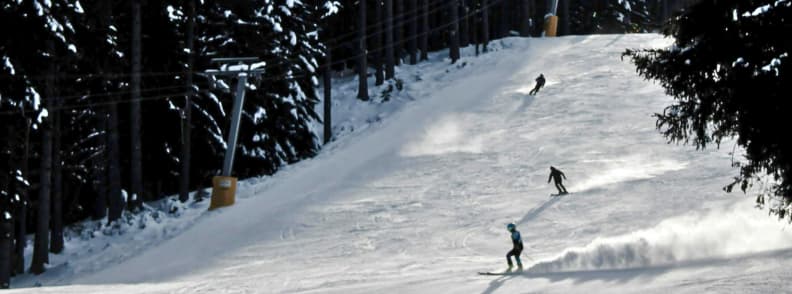
Why Skiing in Bulgaria Deserves Your Attention
Bulgaria pulls in travelers who want real mountain time without breaking their budget, and that is why skiing in Bulgaria keeps growing fast.
I have seen how visitors search my blog for budget skiing Europe, cheap skiing resorts, and simple ways to plan a winter break that still feels like an adventure. You’ll find this combination more easily if you visit Bulgaria. The country offers everything people expect from a classic ski region, from long slopes to forest runs, but at a pace and price that still beat many Alpine destinations. Anyone researching a quick ski in Bulgaria, comparing options for a ski in Bulgaria 2025 trip, or trying to understand whether a Bulgaria ski holiday still counts as value will find clear answers in my guide.
Many visitors only hear about Bansko or Borovets, but the reality is more varied. When people look up Bulgaria skiing, they want to know what makes Bulgarian skiing different and how the terrain spreads across the country. The high ridgelines in Rila and Pirin stack up well against other European ranges, and you see this immediately when you explore the main Bulgarian ski centers. The country has enough altitude and snowmaking to support both casual days out and higher speeds on the steeper faces. That is why interest in Bulgaria for skiing keeps rising, especially among travelers comparing mountain terrain or planning a quick winter escape.
The geography matters. There are several distinct Bulgaria mountains skiing zones, and each one produces its own character. These are split into organised Bulgaria ski areas, higher Bulgaria ski mountains, and smaller Bulgaria ski places that work well for easy laps or tight budgets. All of them fit inside a long Bulgaria ski season that stretches from mid-December into spring. When people ask me about Bulgaria ski slopes or a short Bulgaria ski trip, they often want quick wins, and that is exactly what these mountains give them.
Short breaks are a growing trend. Travelers often combine two or three days on the slopes with city time. This feeds the popularity of a Bulgaria ski weekend, especially among expats and repeat visitors. During the full Bulgaria skiing season, you see people comparing routes, arranging transfers, and slotting ski days between work schedules.
The appeal of a quick escape is real. When someone types ski Bulgaria 2025, they are usually looking for a break that is fast to plan and friendly on the wallet. A ski trip to Bulgaria offers both, and these snowy getaways remain popular because they keep transport simple and food costs low without cutting into the skiing itself.
Snowboarders follow the same pattern. The number of emails I get with questions about snowboarding in Bulgaria and Bulgaria snowboarding resorts rises every year because the terrain suits mixed groups. The parks in Bansko and Borovets help, and the price point makes it easier for riders to join trips with family or friends who ski.
Why Bulgaria is Europe’s Best Kept Secret for Skiing
The secret sits in the balance between terrain and value. Anyone exploring skiing in Bulgaria ends up comparing the country to famous Alpine regions. People researching Bulgaria for skiing or testing whether Bulgarian skiing is worth it discover that the mountains are high enough, the grooming is consistent, and the learning areas are gentle. It helps that the infrastructure keeps improving, from lifts to snowmaking. The result is a region that fits the expectations of both relaxed travelers and experienced skiers.
The landscape is stronger than many assume. The ridges and bowls offer enough variety for different levels, and this fuels the demand for Bulgaria mountains skiing trips. The main resorts sit across a range of altitudes, and the long top-to-bottom connections help visitors feel they are getting more mountain time than they paid for. This is why interest in Bulgaria ski breaks continues to grow.
Price still plays a major role. People planning a ski Bulgaria trip around work schedules often want short, flexible holidays. They compare package offers with DIY options and look for any way to keep the total low. That is how Romania, the UK, and France became big source markets for this region. Many of these travelers see the country as one of the strongest remaining choices for cheap skiing in Europe.
Short bookings keep the demand high. Platforms fill with offers for cheap skiing holidays in Bulgaria, especially during the last two weeks before Christmas and the post New Year lull. Combine that with broad European interest in budget skiing Europe, and you understand why these mountains still draw in such a varied crowd.
The Rise of Bulgarian Ski Resorts
Modernisation changed everything. The core Bulgaria ski resorts invested steadily in lifts, snowmaking, and terrain design. This is why maps of the main Bulgarian ski resorts show networked pistes instead of isolated lifts. A single top Bulgarian ski resort now rivals medium-sized Alpine destinations in capacity and quality.
Travelers notice the difference. People looking at ski resorts in Bulgaria compare prices and facilities, and those used to France and Italy find everything familiar. You see linked runs, clear signage, and village centers that connect directly to lifts.
Value complicated the picture. A broad mix of visitors used to chase ski resort Bulgaria deals because prices were low enough to take bigger risks. That is changing now, but the early commitment to improving the infrastructure still pays off. Many families find it easy to plan around the big Bulgaria ski resort clusters.
The country’s profile is rising online. This explains the jump in interest in Bulgaria skiing resorts during the peak winter months. On my blog, queries for Bulgarian ski resorts maps grow around early December, right when people benchmark flight prices. Travelers are also researching equipment rental, hotel zones, and lesson prices. It is a pattern I see in the data year after year.
Comparisons drive bookings. Many visitors want a full list of ski Bulgaria resorts that fit their level and travel patterns. They dig into Bulgaria ski areas, compare slope numbers, and check how the Bulgaria ski mountains line up with their preferences. Snowboarders mirror this behavior, which explains the increased interest in Bulgaria snowboarding resorts.
How Bulgaria Compares to the Alps on Price
The gap is still visible but shrinking. Anyone looking at Bulgaria ski prices senses how fast costs shift. Bulgaria ski prices 2025 already show increases, and projections for Bulgaria ski prices 2026 suggest yet another jump. You need current data because the old assumptions about Bulgaria no longer hold.
The price of a full trip matters more than ever. You should calculate your full Bulgaria ski cost by stacking lift passes, accommodation, meals, lessons, and transport. When you add everything, you see why people chase the latest Bulgaria ski holiday cost estimates well before winter.
This is where expectations break. People who expect cheap skiing holidays in Bulgaria do not always understand how quickly prices have risen. Many still ask me Is Bulgaria still cheap for skiing?, and the accurate answer depends on how early they book and where they stay.
The bigger economic picture plays a role. The future switch to the euro created worry about Bulgaria ski value, and people track possible Bulgaria euro adoption ski prices because they expect a jump once the currency changes. My guide to skiing in Bulgaria helps by grounding those expectations in today’s numbers.
Financial Reality. Why Bulgaria’s Value Proposition is Changing
Bulgaria built its reputation on affordability. That made it a favorite for British, French, and Romanian travelers, and it kept the resorts full. The infrastructure improvement came quickly, and the mountains became more attractive. This combination placed real pressure on prices.
The shifts are substantial. Accommodation near the gondola fills first, and the rates climb with demand. Pricing for lessons, rentals, and food follows the same pattern. Travelers looking for cheap packages are the ones who feel these changes most clearly.
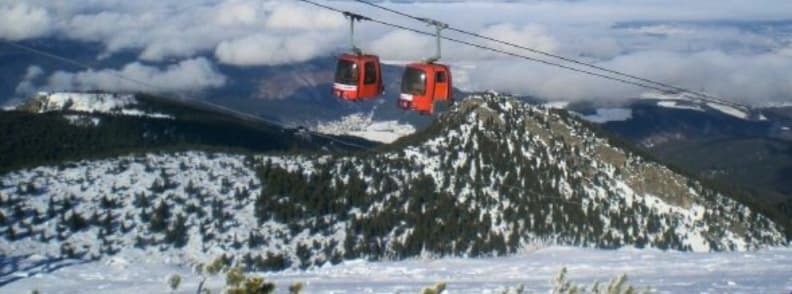
Cost comparison table. Bulgaria vs Austria vs France vs Switzerland
Visitors compare Bulgaria against the Alps before choosing a resort. Many travelers compare Bulgaria vs Austria skiing, Bulgaria vs France skiing, Bulgaria vs Italy skiing, or Bulgaria vs Switzerland skiing early in their planning. The results create expectations about price and terrain.
The numbers help. You see the contrast more clearly when you compare lift passes, hotel prices, and food costs. Bulgaria still offers solid value relative to higher-profile Alpine regions. This is why interest in cheap skiing Europe destinations keeps Bulgaria in the conversation.
| Category | Bulgaria (Bansko/Borovets/Pamporovo) | Austria | France | Italy | Switzerland | Romania (Poiana Brașov) |
|---|---|---|---|---|---|---|
| Adult Lift Pass (6 days) | €210-€330 | €350-€420 | €320-€360 | €300-€380 | €420-€480 | €240-€300 |
| Ski/Snowboard Rental (6 days) | €65-€110 | €120-€160 | €110-€150 | €90-€130 | €140-€180 | €80-€120 |
| Group Lessons (5 days) | €160-€240 | €250-€320 | €280-€350 | €240-€300 | €300-€380 | €150-€220 |
| Private Lesson (2 hours) | €50-€70 | €120-€160 | €130-€180 | €110-€160 | €150-€200 | €45-€60 |
| Hotel (3-star, 7 nights) | €210-€350 | €500-€750 | €600-€900 | €450-€700 | €800-€1200 | €280-€420 |
| Hotel (4-star, 7 nights) | €280-€550 | €900-€1400 | €1100-€1600 | €800-€1200 | €1500-€2200 | €420-€680 |
| Hotel (5-star, 7 nights) | €500-€900 | €1500-€2300 | €1800-€2800 | €1400-€2000 | €2500-€4000 | €700-€1100 |
| On-Mountain Lunch | €6-€12 | €15-€20 | €18-€25 | €14-€20 | €22-€30 | €8-€14 |
| Dinner in Resort (main meal) | €7-€15 | €18-€28 | €22-€32 | €20-€28 | €28-€45 | €10-€18 |
| Beer (0.5L) | €1.8-€3.0 | €4-€6 | €6-€9 | €4-€7 | €7-€10 | €2-€3.5 |
| Coffee | €1.2-€2.0 | €3-€4 | €3-€5 | €2-€3.5 | €4-€6 | €1.5-€2.5 |
| Airport Transfer (return) | €25-€60 | €60-€120 | €60-€140 | €50-€110 | €90-€180 | €25-€50 |
| Total Budget Trip (7 days) | €550-€850 | €1100-€1400 | €1300-€1700 | €900-€1300 | €1800-€2500+ | €650-€900 |
| Total Mid-Range Trip (7 days) | €850-€1200 | €1500-€2100 | €1600–€2400 | €1300-€1900 | €2300-€3300 | €900-€1300 |
| Total Luxury Trip (7 days) | €1400-€2200 | €2500-€4000 | €3000–€5000 | €2400-€4200 | €4200-€7000 | €1600-€2500 |
Key takeaways after looking at the budget skiing Europe destinations comparison table:
- Bulgaria remains the cheapest full-service ski destination in Europe. Even with recent increases, Bulgaria’s lift passes, rentals, lessons, and food cost 50-70% less than in most Alpine countries.
- Romania competes closely on price but not on infrastructure. Poiana Brașov is cheaper than Austria or skiing in France, but still pricier than Pamporovo or Borovets for what you get.
- Switzerland is in another universe for cost. A mid-range week in Switzerland can cost 3-4 times the price of Bulgaria.
- Skiing in Austria and France sits solidly in the mid-to-high tier. Reliable, polished, and expensive once you factor in food and accommodation.
- Italy is the best-value Alpine competitor. Still more expensive than Bulgaria, but it offers the mildest Alpine price structure.
Who Should Choose Bulgaria for Their Ski Holiday?
Many travelers choose Bulgaria because the terrain feels manageable and the resorts stay friendly to new arrivals. First-timers want slopes that build confidence, and the main mountains deliver exactly that, which is why interest in the best ski resorts in Bulgaria for beginners stays high each winter. Calm learning zones and predictable grooming make beginner skiing Bulgaria feel achievable for adults and children who are stepping on skis for the first time.
Families value simple logistics more than anything else, and several Bulgaria ski resorts for beginners place learning zones close to the village. Short distances between lifts, hotels, and ski schools create smooth routines for family ski Bulgaria trips, and consistent lesson structures help parents plan each day without stress. This is why family ski holidays Bulgaria remain popular among visitors who want a reliable, easy-to-manage winter week.
Budget-focused travelers recognise the value immediately because accommodation, lift passes, and food stay within a comfortable range for a budget ski Bulgaria holiday. Many families book short 3 to 5 day stays, and repeat visitors return for cheap ski holidays Bulgaria that avoid the high prices typical of the Alps. Low overall costs keep ski holidays Bulgaria for families accessible during school breaks.
Mixed ability groups benefit from Bulgaria’s flexible layout, because beginners can learn at their own pace while intermediates enjoy longer runs and varied terrain. These travelers often ask whether Bulgaria is good for skiing later in the season or look for the best skiing in Bulgaria for families to balance different abilities. The country handles these needs well, which makes it a dependable choice for friends who want to share a winter break.
Groups planning a shared trip use Bulgaria as a practical meeting point thanks to predictable grooming, straightforward transfers, and enough rental shops for staggered arrivals. This keeps a group ski trip Bulgaria smooth to organise, even for large parties that need flexibility.
Weekend escapes remain common among expats and regional travelers who want the best ski weekend Bulgaria without taking long holidays. These short trips work well because resorts sit close to airports and transfer routes stay efficient.
Travelers watching their spending still find that Bulgaria delivers strong value, even with rising costs, which keeps cheap ski holidays Bulgaria realistic for households managing a tighter budget. The mountains remain suitable for beginners, intermediates, and families, making Bulgaria a solid option for anyone who wants an enjoyable winter trip without the Alpine price shock.
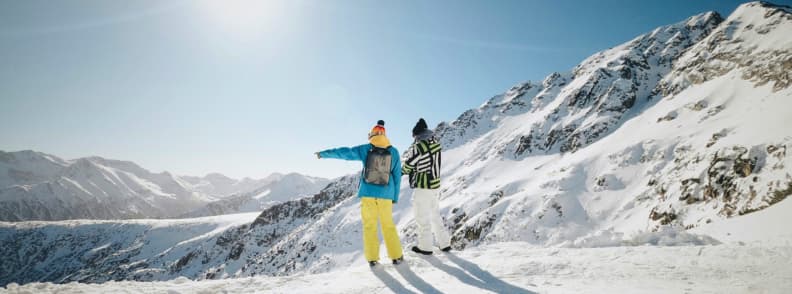
Bulgaria Ski Resorts at a Glance. Quick Comparison
Bulgaria offers a tight cluster of mountain destinations that make planning simple, and each of the major Bulgaria ski resorts delivers a different rhythm on the snow. You see a clear contrast between big linked areas and quieter village bases, yet the overall structure of ski resorts in Bulgaria keeps the week practical and affordable for most travelers. The country’s terrain ranges from compact slopes to long alpine-style runs, giving you enough variety to treat any Bulgarian ski resort as a base for a full winter break.
Deciding where to ski in Bulgaria starts with understanding how the main regions differ. The mix of ski resorts Bulgaria works for beginners, mixed groups, and confident skiers who want altitude and sustained descents. Even smaller pockets of terrain within each ski resort in Bulgaria create different moods, which helps explain why many visitors move easily between relaxed forest runs and steeper upper mountain sections. These contrasts make Bulgaria one of the easiest mountain regions to read.
The country’s geography shapes the feel of each stay. The Bulgarian ski resorts sit across several high valleys, with open bowls and long wooded tracks that hold good snow in winter. This combination supports everything from quiet morning laps to full-day circuits. The best known Bulgarian ski resort areas offer cafés at midstations, modern lifts, and steady grooming. You find full-size learning zones side by side with red and black pistes, which keeps the entire system balanced.
Bulgaria remains one of the most versatile places to plan a winter holiday. Travelers who want compact terrain appreciate the structure of Bulgaria skiing resorts, while those who prefer long technical descents favour the bigger Bulgaria mountains skiing regions. The range of Bulgaria ski areas ensures that even short stays feel complete, and the surrounding peaks create memorable views from most slopes.
Smaller destinations add charm and good value. A few small, cheap ski resorts in Bulgaria sit close to the major towns, and some even offer direct access to forests and ridgelines without complicated transport. These smaller bases make ski Bulgaria resorts trips practical for beginners or weekend visitors.
Bulgaria holds its own among Europe’s mid-sized skiing destinations. Many travelers want reassurance that they are picking one of the 10 best ski resorts in Bulgaria, and the country’s major areas consistently deliver long seasons and modern lifts.
Which Is the Best Ski Resort in Bulgaria?
There is no single answer to which is the best ski resort in Bulgaria, because each mountain suits a different traveler. All the major areas hold their place among the best ski resorts in Bulgaria, but the decision depends on what you want out of your trip. However, Bansko is the strongest all-around option if you want the most variety.
Beginners and families often feel most comfortable in resorts with broad learning slopes and simple navigation, such as Borovets. These are usually counted among the best ski resorts in Bulgaria for beginners, and their calm progression zones make lessons productive. The best Bulgaria ski resort for a family week will not always be the same as a resort designed for advanced skiers.
Families planning school holiday trips need smooth logistics. The easiest pedestrian layouts and closest hotel to lift distances typically define the best ski resort Bulgaria for families, and these resorts tend to return strong reviews for atmosphere and convenience. Once again, Borovets works best for families who want convenience.
Intermediate and advanced skiers often trust the highest and steepest mountains. This is where the Bulgaria best ski resort choices differ, and long runs help build confidence. In my opinion, Bansko is the strongest choice for intermediates and advanced skiers.
Travelers who want lively evenings prefer the bigger towns. These destinations take the top spot for nightlife among the best Bulgaria ski resorts, and they often offer long après sessions, late restaurants, and social streets close to the lifts. Bansko is the clear favorite for nightlife.
The decision ultimately depends on what you want from your winter trip. Different visitors rank terrain, nightlife, lessons, and distance from Sofia differently, which is why it is hard to name a single best ski resort Bulgaria. You simply match your style to the mountain. My recommendation is to choose Bansko for range, Borovets for ease, and Pamporovo for sun and smooth pistes.
The Big Three. Bansko vs Borovets vs Pamporovo
Bulgaria Bansko ski resort, located south of Razlog, deep in the Pirin basin, is known for its dramatic Alpine-style peaks and busy town below. This is why it sits at the top of most comparisons because of its size and long season, in natural contrast with the quieter feel of Borovets and Pamporovo. When travelers weigh Bansko vs Borovets, they often compare long top-to-bottom runs with ski-in ski-out convenience. The energetic town atmosphere makes many treat Bansko as the best ski resort in Bulgaria, but not everyone wants that pace.
The history of Bansko ski resort reflects the town’s long past and the rapid expansion of its lifts during the early 2000s.
Pamporovo ski resort Bulgaria offers the warmest mountain days and gentle, flowing pistes. It sits in the Rhodope Mountains, near Smolyan, and its terrain favours smooth, balanced skiing rather than high exertion. Anyone comparing Bansko vs Pamporovo sees that the two resorts differ sharply. Families who want sun and smooth greens sometimes decide on Bulgaria ski resort Pamporovo.
Pamporovo earned its reputation through steady development in the Rhodope Mountains. The history of Pamporovo ski resort includes the building of Snezhanka Tower and the gradual expansion of the slope network.
Borovets offers a quieter rhythm in the Rila Mountains and is easily reached from Sofia. It appeals to travelers who like wooded slopes and calm evenings. Many visitors weighing Borovets vs Bansko focus on the softer village feel and the easy access to the lifts. I think Borovets is the best fit for skiers who want convenience and a relaxed atmosphere.
Borovets holds the title of the oldest ski resort in Bulgaria, originally developed for royal winter escapes. Its early structures shaped the modern layout.
Those who want a gentler introduction sometimes look at Borovets vs Pamporovo, because both suit early progression. The two resorts share similar virtues, and some trips use them for short, easy winter weeks.
The decision between Bansko or Borovets or Pamporovo depends entirely on your priorities. Longer runs lead you to Bansko, while calm days suit Pamporovo and Borovets. All three belong among the 10 best ski resorts in Bulgaria, and each stands out in its own way.
Bansko vs Borovets vs Pamporovo Comparison Table
Bulgaria holds an unusual advantage because its main mountains differ sharply in altitude, terrain shape, and layout, and this makes a structured overview essential. A clear Bulgaria ski resorts comparison helps you judge everything from grooming to snow reliability.
Each region sits in a distinct corner of the country, which shapes the feel of the week. The mix of Bulgaria ski areas and wide open bowls in the central range produces a visual scale that many winter travelers enjoy. Some prefer steep upper slopes, while others choose soft mid-mountain sections.
Altitude and vertical shape the technical character of each mountain. Several Bulgaria ski mountains rise above the treeline, which gives Bansko a dramatic series of long descents and steady red sections. The highest points across these mountains influence snow reliability. Bansko is the highest ski resort in Bulgaria, followed by Borovets, and Pamporovo compensates with strong snowmaking.
Terrain size is part of the decision-making. Total piste length Bulgaria varies from one resort to another, and this helps define the experience. Bansko earns attention as the biggest ski resort in Bulgaria, while Borovets spreads its slopes across three linked areas.
Vertical drop is another clear marker of difficulty. Some visitors look at the stats to compare the largest ski resort in Bulgaria, which often refers to long top-to-bottom runs rather than surface area.
Price matters too. A summary of ski pass Bulgaria options helps you understand what to expect, and updated ski pass prices Bulgaria confirm that all three resorts remain relatively affordable. Some smaller mountains still act as cheap ski resorts in Bulgaria for short breaks, while Bansko and Borovets carry higher prices because of their size.
Higher comfort levels define the premium end of the market. A few hotels qualify as luxury ski resorts Bulgaria, especially in Bansko, where modern spas sit near the gondola.
Here is a concise technical comparison of the top 3 ski resorts in Bulgaria:
| Resort | Piste Length | Highest Altitude | Largest Vertical Drop | Primary Suitability |
|---|---|---|---|---|
| Bansko | 75 km | 2560 m | 1630 m | Experts, Intermediates, Nightlife |
| Borovets | 58-60 km | 2550 m | 1230 m | Beginners, Families, Convenience |
| Pamporovo | 43 km | 1931 m | 487 m | Intermediates, Sun, Steady Snowmaking |
Bansko, Bulgaria’s Premier Ski Destination
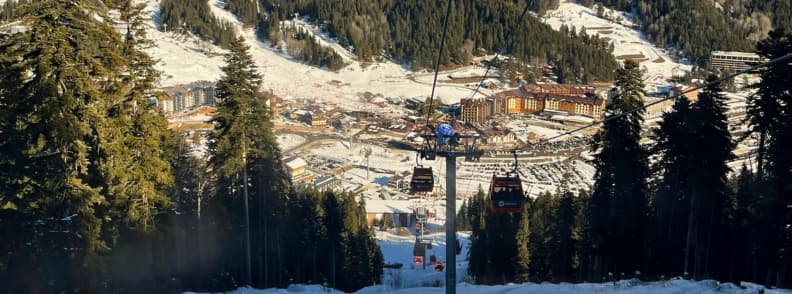
Bansko ski resort sits at the foot of the Pirin Mountains and remains the most complete ski resort in the country. The altitude reaches 2560 meters, which gives skiing in Bansko steady snow from early December into mid-April. The terrain covers long descents, wide blues, technical reds, and the famous black World Cup section known as Tomba. The 16 km valley route links the top of the mountain to the town and gives Bansko skiing a full-day feel. The resort layout keeps skiing in Bulgaria Bansko efficient for short and long trips.
The town supports the mountain without losing its character. You find traditional mehanas, bars, rental shops, and hotels close to the lifts, which makes ski Bulgaria Bansko easy for families and groups. The mix of local food, busy streets, and varied slopes gives Bansko Bulgaria skiing a balance that suits different travel styles.
Snow conditions stay reliable through most of the season. Regular grooming and strong snowmaking help both skiers and snowboarders enjoy Bansko snowboarding holidays, even in warmer weeks. The Bansko ski season lasts long enough for flexible planning.
Arrival and departure stay simple. Sofia sits close enough for weekend trips, so many treat Bansko ski holidays as an easy winter escape. Package deals and self-planned stays keep Bansko ski holiday options open for all budgets.
Bansko works for all levels without feeling overwhelming. Beginners use the lower learning areas, confident skiers explore the upper bowls, and snowboarders enjoy smooth carving terrain. This variety keeps Bansko ski trip planning straightforward.
Why Bansko is #1
Bansko combines terrain, infrastructure, and town life in a way no other resort in the country matches. This balance makes the Bansko ski resort one of the strongest choices for mixed groups and families. Many consider it the best Bulgarian ski resort for week long stays.
Bansko’s awards reinforce this ski resort’s reputation. The resort earned repeated recognition in the World Ski Awards, which helps confirm its status as the best ski resort in Bulgaria.
The mountain layout holds real depth. Those comparing Bansko vs Borovets or Bansko vs Pamporovo see how the terrain variety and town size influence their choice.
Understanding Bansko Ski Area in Detail
The full Bansko ski map reveals a wide selection of pistes that hold their shape across a long winter. The Bansko piste map shows steep bowls above the trees and long winding tracks toward the valley. This mix gives the layout a structured logic that suits many types of skiers.
Bansko ski slopes hold their depth across the season. Total Bansko piste length reaches roughly 75 km, and the range makes the mountain feel larger than expected. The Bansko 75 km pistes include everything from mellow blues to serious reds.
The Bansko Valley Run shapes the entire rhythm of the day. Many visitors treat it as the highlight of their trip because it carries the title of the longest ski run in Bulgaria, dropping from high altitude all the way to the town.
The mountain feels connected. Smooth lifts and well-placed mid stations give the Bansko ski area a clear flow that encourages long days outside.
Bansko for Beginners, Intermediates, Experts
Is Bansko good for beginners? Beginners appreciate the gentle lower slopes and reliable grooming. The schools and soft gradients make Bansko for beginners a comfortable first step on the snow.
The best runs for beginner Bansko are Chalin Valog (green and light blue slopes), the Ski Road (part of the 16km Bansko Valley Run), the Bunderishka Polyana beginner slopes, the lower Shiligarnika blues (plateau section), and the gentle final stretch of the Bansko Valley Run into town. The terrain builds confidence quickly.
Intermediate skiers enjoy the wide selection of reds. The mid-mountain terrain gives Bansko for intermediates enough variety for an entire week. Bansko red runs give confident skiers steady gradients, wide turns, and enough length for full-day progression.
The best red runs in Bansko for intermediates include Balkaniada, Shiligarnik, Todorka, Plato 1 and 2, and the long upper mountain sections feeding into the valley route.
Advanced skiers focus on the upper faces. Bansko for advanced skiers becomes a clear test of technique, and the Tomba black run Bansko stands out as the signature challenge on the Bansko piste map.
The main black runs in Bansko include Tomba, Stara Pista, and the steep upper sections above Shiligarnika, all offering tight pitches, faster snow, and competition-grade angles.
Bansko Gondola Queues and How to Avoid Wasting Your Morning
Queueing for the Bansko gondola can slow the start of the day, especially in peak weeks. Those familiar with Bansko gondola queues know that arriving early makes a big difference. Operating hours give enough flexibility for most trips. Those who structure their mornings well avoid most delays.
Timing helps keep things smooth. Travelers who reach the Bansko gondola before the main crowds enjoy faster access. The pattern of Bansko lift queues shifts through the season, so choosing the right hour matters.
Pre-booking options streamline the experience. Some visitors pick up passes online to manage time, and the Bansko ski pass online system reduces waiting when the line grows. The occasional Bansko fast track gondola tickets offer further convenience.
Bansko Old Town, Where Culture Meets Mountains
Bansko Old Town offers a strong cultural anchor for the week. Those staying near the streets of the Bansko Old Town enjoy stone houses, narrow lanes, and easy access to cafés and mehanas. Many choose Bansko Old Town hotels for this atmosphere.
The heritage sits at the center of the town’s identity. Some zones are tied to Bansko UNESCO Pirin National Park recognition, and the wooden architecture reinforces the historical feel. One landmark stands out in particular. The Bansko Holy Trinity church sits near the main square and forms a natural part of a walk through the old town.
The food scene stays grounded in Bulgarian tradition. Many evenings include time at Bansko mehanas, where local dishes make dinners memorable. Dedo Pene, Matsurev Han, Obetsanova Mehana, Baryakova Mehana, and Mehana Momini Dvori, are all known for steady quality, warm service, and traditional dishes that stay faithful to local cooking. Several Bansko traditional restaurants serve vegetables, grilled meats, and hearty stews.
Après Ski and Nightlife in Bansko
Bansko delivers the strongest nightlife in the Bulgarian mountains. The lively streets create a welcoming Bansko nightlife scene with bars, pubs, and late venues.
Banskoo après ski starts early and lasts long, suiting travelers who want energy after the slopes. Those who want varied evenings explore different corners of town.
Late evenings often include music and mixed crowds Many visitors gravitate toward the best bars in Bansko: The Hush Bar, Pirin 75, Ginger Bar & Dinner, Queens Pub, Happy End, and Smokey Mountain Bar. Each of these places stays active through the winter season with solid drinks, good atmosphere, and reliable opening hours.
Bansko clubs like Bounce Club, Oxygen, The Club Bansko, and Flash Club are also open through the winter season with dependable hours, strong nightlife, and a mix of DJs and themed nights. They’re perfect to keep the Bansko party going until late.
You can also keep things calm. Those who want quieter nights can go to family-friendly places like Penguins Bar, Amvrosia Restaurant, Le Petit Nicolas, The Log House, and Riverside Lounge, designed for visitors who prefer a relaxed pace. Each of these spots keeps noise low, offers relaxed seating, and stays comfortable for children after a day on the slopes. This keeps Bansko apres ski for families practical.
Where to Stay in Bansko. Near the Gondola vs Old Town
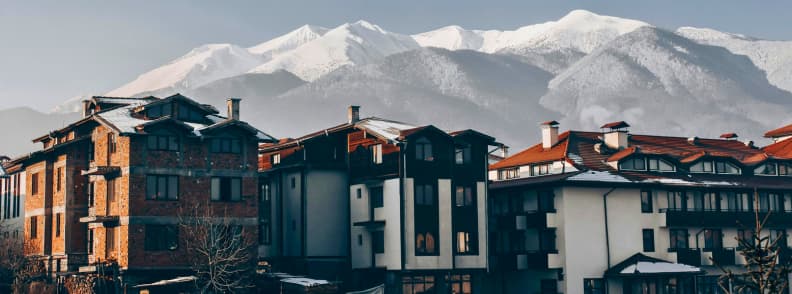
Staying near the lift keeps mornings simple, and the best area to stay in Bansko sits around the main gondola, where highly rated hotels such as Kempinski Hotel Grand Arena, Regnum Bansko Ski Hotel & SPA, and Boutique Hotel Uniqato offer the strongest access and save you the daily walk with your gear. These Bansko hotels near gondola give you quick starts, warm ski rooms, and reliable transfers to the lifts, which makes the location ideal for short winter stays.
Old Town offers more atmosphere and quieter evenings, and some of the best Bansko Old Town hotels include Ores Boutique Hotel, Momini Dvori Boutique Guest House, and Hotel Dumanov, each close to mehanas, cobblestone lanes, and quieter family-friendly streets. This area works well for travelers who want character and local food after the slopes.
Apartments give the flexibility many winter visitors need, and the most reliable Bansko apartments include Double Studio near Ski Lift, Bansko Apart, and Anna Apartment near Gondola, which fit long stays, cooking at home, or mixing nights out in town with quieter meals indoors. These units also help families stay organised with space for drying gear and storing groceries.
Spa hotels add a strong layer of comfort, and the most consistent Bansko spa hotels include Premier Luxury Mountain Resort, Lucky Bansko Aparthotel, and Saint George Palace, all offering warm pools, steam rooms, and large spa zones to reset tired legs after long days outside. These properties suit travelers who want skiing during the day and recovery in the evening.
The overall range of Bansko ski accommodation stays broad, and booking early gives you better prices and more choice across hotel, apartment, or boutique stays.
Borovets, Bulgaria’s Oldest Resort and Easiest for Beginners
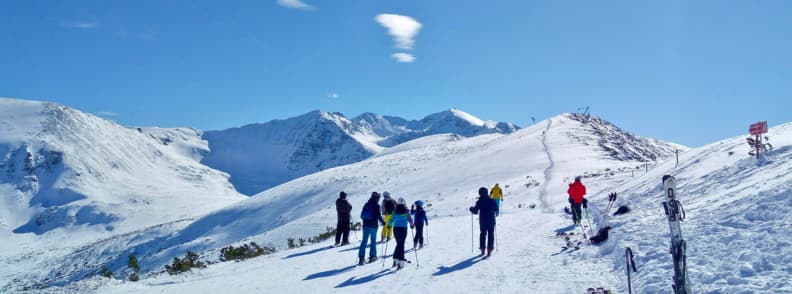
Borovets delivers a calm and practical base for winter trips, and the core Borovets skiing experience suits beginners and families who want simple routines close to the slopes. The Borovets ski area sits in the heart of the Rila Mountains with gentle lower terrain and enough upper sections for steady progression. The resort’s village-style layout creates a true ski in ski out environment, and most hotels sit within a short walk of the lifts. This structure keeps Borovets skiing efficient even on short trips.
As the oldest ski resort Bulgaria, Borovets grew naturally into the forest, and that setting gives the area a soft, quiet feel. The mix of wide greens, warm cafés, and steady blue pistes makes Borovets ski well-suited for families and first timers. The combination of location, layout, and elevation keeps Borovets beginner skiing predictable, and many treat it as a reliable Borovets family ski resort in winter.
The mountain supports relaxed days on the snow. Short distances between hotels and lifts create strong ski in ski out Borovets benefits, and most central properties qualify as practical Borovets ski in ski out stays. The accessible terrain spreads through the Borovets Rila Mountains with 60 km of pistes and a vertical drop of roughly 1230 meters.
Borovets ski resort keeps the week easy. Visitors who want a quiet and friendly base use Borovets as their entry point into Bulgarian skiing, because the slopes sit close to the village and the progression zones stay clear.
Why Choose Borovets Ski Resort
Borovets works because everything sits close together. The central Borovets ski resort layout makes access smooth for families and groups who want predictable days on the snow.
The location helps with short trips. The resort is the closest ski resort to Sofia. It’s roughly Borovets 72km from Sofia, which makes weekend escapes realistic.
Ski in ski out Borovets convenience defines the stay. Well-placed hotels and the compact centre shape the full ski in ski out experience and keep the convenience factor high.
The mountain supports early learning. The soft terrain gives Borovets for beginners a strong foundation. Beginner zones sit near the village, and the Borovets nursery slopes hold gentle gradients perfect for first-day lessons. The quiet village suits Borovets for families who want calm evenings.
Borovets Ski Area Breakdown
The Borovets ski area spreads across three distinct zones that shape the feel of the mountain. These are Sitnyakovo, Yastrebets, and Markudjik, each offering its own mix of gradients and scenery.
Sitnyakovo holds the gentlest terrain and forms the beginner-friendly base of the mountain. This centre anchors the lower pistes and works well for relaxed laps and early progression.
Yastrebets offers long, balanced reds that define the intermediate experience in Borovets. These slopes form the central part of the Borovets piste map and stay wide enough for steady carving.
Markudjik provides the highest and most exposed terrain, with open upper mountain sections suited to confident skiers. This part of the mountain carries most of the steeper lines and gives Borovets 58 km pistes more variety.
These three Borovets ski centers connect through lifts and mid-mountain crossings, which keep full-day circuits simple and predictable. Together, they create the Borovets pistes layout that suits both families and returning skiers.
The strong Borovets vertical drop completes the structure. It gives enough length for satisfying top-to-bottom runs throughout the week, allowing intermediates to keep exploring without repetition.
Borovets Best Areas for First-Time Skiers and Families
The Sitnyakovo beginner zone offers the easiest Borovets beginner slopes, with soft gradients and wide pistes right beside the main village. The area includes the Sitnyakovo 1 and Sitnyakovo 2 greens, along with the gentle sections near the Rila Hotel. Everything sits a short walk from rental shops and cafés, which keeps early days simple.
Borovets Beginner Skiing Tip: Start on Sitnyakovo 1 in the morning because it stays quieter before the ski schools arrive.
Families rely on the calm rhythm around the lower gondola base and the learning areas near the Hotel Rila. This part of the resort supports smooth Borovets family ski routines with safe crossing zones, warm indoor breaks, and easy access to instructors. I recommend using the café terrace beside the Rila lift to watch the kids during lessons without standing in the cold.
Accommodation near the Sitnyakovo Express lift shapes the best area to stay Borovets for families, because the walking distance stays short even with children carrying gear. Borovets hotels like Hotel Rila, Hotel Samokov, and Apart Hotel Flora Residence sit close to the slopes.
Borovets Insider tip: Flora Apartment’s side entrance leads directly toward the Sitnyakovo Express, saving several minutes during peak hours.
Borovets ski schools for kids are spread across a few key meeting points, with the biggest groups gathering near the Sitnyakovo base and the Rila complex. Schools such as Borosport Ski School and Hunters Ski School offer structured programs in English and keep the early progression area controlled and predictable. Request early lesson slots to avoid the midday churn on the nursery slopes.
Borovets Night Skiing, Forest Runs, and Village Feel
Night skiing in Borovets takes place on the Sitnyakovo side, mainly on the slopes served by the Sitnyakovo Express and Martinovi Baraki lifts. The evening routes usually include Sitnyakovo 1, Sitnyakovo 2, and the lit lower sections around the Rila Hotel base. The terrain stays gentle and consistent after dark, which makes the experience relaxed even for early intermediates.
Martinovi Baraki area offers the widest night laps, with a comfortable mix of easy and light blue gradients. The zone sits directly opposite the main hotel cluster, so you can finish skiing and walk to dinner in a few minutes. Use the Baraki 2 line if the main slope feels crowded, because it holds its surface longer and stays quieter.
Borovets Night Skiing Tip: Arrive ten minutes before lights-on, as the first hour offers the best snow before the surface hardens.
Borovets forest runs define much of the terrain, especially on the lower Sitnyakovo pistes, where pine trees flank both sides of the route. The sheltered stretches along Sitnyakovo 1 and Sitnyakovo 2 help beginners feel safe and keep visibility steady during snowfall. The short connector near the base of Sitnyakovo 2 offers one of the calmest tree-lined segments for families.
The best Borovets forest run sections for intermediates sit on the Yastrebets side, particularly along the edges of Yastrebets 1 and Yastrebets 3, where the runs cut deep through the trees. These routes stay quiet, and the slopes remain wide enough for smooth carving without pressure. Ski Yastrebets 3 right after grooming for perfect corduroy through the forest.
Upper Markudjik has fewer trees but offers open bowls with scenic ridge views, which pair well with forest slopes lower down for a full-day loop. This mix helps travelers plan a day that moves from wide alpine stretches to sheltered woodland terrain.
Borovets Skiing Tip: If winds pick up on Markudjik, drop early toward the Sitnyakovo side for calmer laps under the trees.
Warm cafés and steady restaurants shape the calm and traditional Borovets village atmosphere after the lifts close. Places such as Alpin Restaurant, Hunters Restaurant, Black Tiger Bar & Grill, and The Terrace Café keep food and coffee dependable through the season, and each sits close to the main walking routes near the Rila complex.
Borovets après ski stays modest. Bars like Happy Duck Bar, BJ’s Bar, and the lobby lounge at Hotel Rila offer quiet corners, warm seating, and consistent hours for easy evenings after the forest runs or night laps.
Where to Stay in Borovets
Hotels near the lifts define the classic mountain layout, and properties like Hotel Rila, Hotel Samokov, and Alpin Hotel deliver the strongest Borovets ski in ski out hotels experience. Hotel Rila sits directly beside the gondola and chairlifts, so you walk from breakfast to the slopes in minutes. Hotel Samokov is equally convenient, with warm rooms and a reliable spa for recovery after long days outside. Alpin Hotel offers chalet-style rooms a short step from Sitnyakovo Express. These choices remove morning stress, keep gear transitions simple, and give you the easiest start to your ski day.
Central stays offer short walks and good value, and the best Borovets hotels near lifts include Festa Winter Palace, Lion Hotel Borovets, and Euphoria Club Hotel. Festa Winter Palace holds the strongest premium feel with a classic interior and a quiet forest edge location. Lion Hotel Borovets gives you modern rooms at fair prices, and Euphoria Club Hotel blends apartment-style comfort with hotel-level service. Each sits close enough to the slopes to make the week efficient without paying full ski in ski out rates.
Apartments stay practical for families and groups, and the best Borovets apartments include Flora Apartments, Villa Park Apartments, and Iglika 2 Apartments. Flora Apartments sits in the most convenient central position with direct paths toward Sitnyakovo Express. Villa Park Apartments offers large units with kitchenettes for longer stays. Iglika 2 Apartments has modern rooms and is one of the easiest walks to both lifts and restaurants. These options let you cook when you want and create slower evenings after skiing.
Family-friendly hotels stay popular because they create smooth routines, and the best Borovets family hotels include Hotel Rila Family Rooms, Lion Hotel Borovets, and Festa Winter Palace. All three provide warm service, large rooms, and easy access to ski schools. Parents book these because the logistics work, the walk to the slopes stays short, and evenings feel calm even in peak season.
The overall range of Borovets accommodation suits different budgets, but the top-rated hotels above offer the best balance of location, comfort, and value for this skiing season in Bulgaria. Booking early secures stronger prices and better room choices, especially in the hotels closest to Sitnyakovo Express.
Borovets Pros and Cons Compared to Bansko
Comparing Borovets vs Bansko helps clarify priorities. Borovets offers calm slopes and short walking distances, while Bansko offers the biggest terrain. Those who want simple routines often pick Borovets or Bansko based on atmosphere.
All in all, the terrain and layout keep Borovets better for beginners for most winter weeks. Those who want energy in the evenings recognise that Bansko better for nightlife.
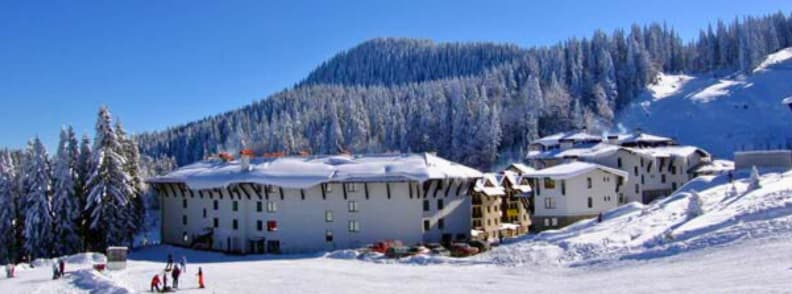
Pamporovo, Bulgaria’s Sunshine Resort in the Rhodope Mountains
Bulgaria ski resort Pamporovo offers a calm, bright mountain base. The soft terrain makes Pamporovo skiing ideal for learners and steady intermediates. The compact shape of the Pamporovo ski resort Bulgaria keeps days simple, and the Rhodope setting gives the slopes a relaxed flow. This structure turns Pamporovo skiing into an easy choice for families and travelers who prefer warm, comfortable winter conditions.
The resort stays friendly and approachable for all levels. The gentle gradients support confidence on snow, so Bulgaria ski Pamporovo works well for those who want a calm pace. The small village footprint helps skiing in Pamporovo feel manageable even on short trips.
Pamporovo suits shorter winter breaks. The layout and grooming routines create an efficient pattern for Pamporovo Bulgaria ski weekends, and the sheltered slopes make Pamporovo Bulgaria skiing reassuring for new skiers. Those who enjoy quiet, sunlit days treat Pamporovo skiing in Bulgaria as a reliable winter base.
Why Pamporovo is Special
Pamporovo Sunshire Resort holds a long reputation as the sunniest ski resort in Europe. It enjoys more than 300 days of bright weather each year, setting it apart from the colder northern mountains.
The Rhodope Mountains give the slopes their gentle character, with rolling valleys, soft contours, and sheltered slopes that work well for relaxed winter days. This terrain helps early learners build confidence. The smooth gradients make Pamporovo for first timers one of the easiest introductions to Bulgarian skiing.
Intermediates enjoy the flowing runs. Several routes hold just enough gradient to make Pamporovo for intermediates satisfying for full day laps.
Pamporovo Ski Area
The Pamporovo ski area spreads across connected slopes with a clear, compact layout that makes navigation simple. Most lifts link easily, which keeps days simple for both families and steady skiers.
The Pamporovo piste map covers roughly 43 km and highlights generous greens and easy blues mixed with balanced reds that form the core of the mountain. Pamporovo pistes include sections ideal for long, slow laps that shape a smooth rhythm for learners and improvers.
Families rely on the easy structure of the mountain. Warm cafés and sheltered lifts support Pamporovo family skiing well. Pamporovo beginner friendly slopes dominate the landscape, thanks to soft gradients and sheltered zones. These slopes help early learners feel safe.
Snezhanka Peak defines the Rhodope Mountains sky line. Runs from Snezhanka peak offer wide views before linking into calm mid-mountain sections.
The mountain remains ideal for relaxed skiing. The gentle slopes Pamporovo layout provides predictable snow and easy navigation. Add to that the proportion of Pamporovo easy runs, and you can plan a comfortable skiing week from start to finish.
Pamporovo Snow Reliability and Season Length
The typical Pamporovo ski season is open from mid-December to early April. Despite being Bulgaria’s Sunshine Resort, Pamporovo holds its snow well into March, and the depth stays stable through the main weeks of the season. This makes Pamporovo snow March a dependable option for late winter trips most years.
Daily grooming supports predictable terrain. The Pamporovo snow report usually highlights soft surfaces, especially on sun-exposed slopes. Snowmaking fills the gaps during warm spells. These systems keep Pamporovo snow reliability strong even in brighter winters.
Best Ski Schools in Pamporovo and Family Facilities
Pamporovo offers structured instruction through well-established centres such as Ski School Steve, Yes Ski School Pamporovo, Snowtec Ski School, and Ski School Extreme. Each of these operates through the full winter with experienced instructors and clear progression programs. These schools anchor the main Pamporovo ski school options near the lower lifts.
Pamporovo ski lessons stay flexible for adults and children. Group and private sessions from Steve, Yes, Snowtec, and Extreme shape Bulgaria beginner skiing experiences with simple meeting points and steady scheduling.
Children’s instruction remains a strong point. Kid-friendly areas and patient instructors from these same centres build the Pamporovo kids ski school routine without stress for families.
Family facilities Pamporovo sit close to the slopes. You’ll find cafés, indoor waiting spots, and short walking paths around the learning zones.
How Pamporovo Compares on Price. is Pamporovo Cheap Ski Resort?
Pamporovo remains one of the best value ski areas in Bulgaria, with an adult full-day lift pass usually costing 38-44 euros. Pamporovo ski pass prices keep Pamporovo positioned as a true cheap ski resort option for winter travelers.
Multi-day passes stay affordable, with a 3-day adult pass averaging about 105 euro and a 6-day pass averaging about 200 euros. These totals keep Pamporovo ski resort trips affordable for long weekends and full weeks.
Pamporovo is often 20-30% cheaper than Bansko during peak season, especially for lift passes, equipment rentals, and lesson packages. This clear difference supports the Pamporovo vs Bansko prices comparison for families who want solid snow at a softer cost.
Where to Stay in Pamporovo Bulgaria
Staying near the main lifts keeps your days simple, and top-rated Pamporovo hotels such as Hotel Orlovetz, Grand Hotel Murgavets, and Hotel Belmont Spa deliver the strongest mix of comfort, access, and value in the central Pamporovo zone. Hotel Orlovetz offers modern rooms, a reliable spa, and quick shuttle links to the slopes. Grand Hotel Murgavets sits in the heart of the village with warm service and steady winter operations. Hotel Belmont Spa provides quiet forest views and a calm atmosphere after skiing. These properties remove daily stress and give you the easiest start to your ski day.
Travelers who want a premium stay in Pamporovo should choose Hotel Perelik. It remains one of the best five-star style experiences in the Rhodope Mountains. Large rooms, a spacious spa, and solid dining options make it a strong choice for couples and families who want comfort without spending Alpine prices. The regular shuttle brings you to the lifts quickly, so you have convenience without staying directly at the base.
Families and groups often book the best Pamporovo apartments in the village, and the top-rated options include Lucky Pamporovo Apartments, Mountain Lake Hotel, and Grand Monastery Apartments. Lucky Pamporovo offers large suites and a dependable shuttle, which helps with gear and mornings. Mountain Lake Hotel gives you kitchenette options and a quiet setting close to Snezhanka. Grand Monastery Apartments sit right beside the Studenets area, keeping walks short for families with young learners.
Skiers who want a quieter mountain base choose Kamelia Hotel Pamporovo, which remains one of the most reliable stays beside the Studenets lift station. The slope-side access saves time, the spa offers warm recovery after long days, and the restaurant stays open with steady quality throughout winter. The layout suits families who prefer calm evenings close to the snow.
The overall range of Pamporovo accommodation stays strong for this ski season, and the hotels above offer the best balance of ratings, comfort, and winter reliability. Booking early helps secure better prices and guarantees availability in the hotels closest to the slopes, which often fill first during school holidays.
Micro-Resorts to Ski in Bulgaria and Hidden Value
Several small ski resorts in Bulgaria offer quiet slopes, low prices, and short walking distances, making them ideal for travelers who want local character without the pace of the bigger mountains. These local Bulgarian ski resorts work well for weekend escapes, long road trips, and slow travel days built around snow rather than crowds. Anyone looking for the cheapest ski resort in Bulgaria for day trips finds strong value here.
Chepelare and Panichishte. Skiing in Bulgaria on a Shoestring Budget
Chepelare provides calm slopes, friendly locals, and one of the best price-to-terrain ratios in the country. The Chepelare ski area sits in the Rhodope Mountains near Pamporovo and stays quiet even during school holidays.
The compact Chepelare ski resort layout makes navigation simple, and passes remain some of the lowest in the region. Typical Chepelare ski lift prices start around 14-88 euros per day, placing the resort among the cheapest ski resorts in Bulgaria for relaxed skiing.
Panichishte offers basic but reliable terrain, perfect for budget travelers and beginner families. The Panichishte ski area includes five short pistes served by the three classic Panichishte drag lifts, keeping operating costs low and passes affordable.
A full day Panichishte ski pass usually costs 10-15 euros, which secures its place as one of the most ski on a budget Bulgaria destinations.
Vitosha Mountain, the Quickest Fix near Sofia
Vitosha ski resort sits just above Bulgaria’s capital and gives travelers the easiest Vitosha ski near Sofia experience for fast winter days. The slopes sit at high altitude and reach the Mountain Vitosha 2290m, which supports steady snow even during short warm spells. The terrain works well for spontaneous trips and planned laps during city breaks.
The Vitosha Mountain serves as the classic day trip ski Sofia option for travelers who want time in the city and time on the slopes in the same weekend. Short transfers help those who want to ski near Sofia without booking an entire week. The combination of height, views, and quick access makes Vitosha the strongest quick ski fix near Sofia for busy travelers.
Planning Your Bulgaria Ski Trip. Cost of Skiing in Bulgaria in 2025 and 2026
Understanding the core Bulgaria ski holiday cost helps you plan a trip that fits your budget, because the main expenses stay predictable across all three resorts. Lift passes, rentals, lessons, accommodation, and daily food costs shape the total, and these numbers make it easier to estimate how much does it cost to ski in bulgaria without surprises.
Most travelers compare prices across the three major mountains before booking, and this keeps ski Bulgaria prices simple to map out. Looking at Bulgaria ski prices 2025 and projected Bulgaria ski prices 2026 helps organize your plans early and secure stronger deals on accommodation and transfers.
To properly plan your Bulgaria ski trip budget, you need a clear cost breakdown. Knowing how much does it cost to ski in Bulgaria for a full day, or how much is a ski trip to Bulgaria for six nights, helps shape decisions on gear, passes, and food. Knowing how much skiing Bulgaria might cost makes it easier to plan ski Bulgaria prices and choose between a budget stay or a more comfortable hotel.
Bulgaria is accessible for beginners, families, and budget travelers who want predictable expenses and strong snowmaking. Strong value keeps ski Bulgaria cheap compared with Western Europe, and the mountains remain attractive for those who want budget skiing Bulgaria without sacrificing snow quality.
Booking early matters, especially for holidays and long weekends. Accommodation and ski school availability shape the total Bulgaria ski cost breakdown, so understanding the best time to book ski Bulgaria helps secure better rooms and stronger rental options.
Bulgaria Ski Pass Prices 2025 and 2026 by Resort
Lift passes form the base of any trip budget, and the typical ski pass Bulgaria costs remain steady across the three main mountains. The combined ski pass prices Bulgaria for 2025 stay aligned with Bansko at the top end, Borovets in the middle, and Pamporovo at the softest price point.
Bulgaria ski pass prices 2025 for adults range from 38 to 65 euros per day, depending on the resort and date. These totals answer early questions about value during peak weeks.
Planning into 2026 helps secure stronger accommodation deals. Projected Bulgaria ski pass prices 2026 remain close to 40-70 euros per day for adults, which keeps costs lower than the Alps, even with yearly increases.
Each resort holds its own pricing structure. A Bansko ski pass remains the highest due to the size of the mountain, and the average Bansko ski pass price for 2025 ranges from 60 to 65 euros per day. Borovets lift pass price averages 45-55 euros, and Pamporovo ski pass price stays between 38 and 44 euros.
Prices stay lower for families. A typical adult day pass Bulgaria costs 38-65 euros, while a child ski pass Bulgaria usually costs 22-33 euros. Frequent visitors choose a season pass Bulgaria, with prices around 850-1000 euros for the full winter.
Pre-booking remains simple. Many travelers use resort portals for skipass Bulgaria purchases to avoid queues during holidays.
Equipment Rental Prices for Ski and Snowboard Gear
Rental shops across the three resorts keep prices predictable, which makes ski hire Bulgaria a practical option for travelers who prefer not to travel with equipment. Many shops sit close to the slopes and hotels, and most offer online booking discounts.
Bansko offers the widest range of rentals. A typical ski hire Bansko package costs around 12-18 euros per day for standard gear and 20-28 euros for premium sets. Ski equipment rental Bansko stays efficient because many shops sit close to the gondola.
Rent your ski or snowboard gear in Bansko before you arrive and skip the morning queues entirely. You get better prices online, newer equipment, and a smooth start to your first day on the mountain.
Borovets prices sit in the middle. A standard set for ski hire Borovets averages 12-17 euros per day, while premium packages sit around 20-25 euros. Snowboard sets follow the same pattern for snowboard rental Bansko levels of cost.
Rent ski or snowboard gear in Borovets ahead of time and walk straight to the lifts with everything ready. Pre booking gives you better gear, faster fitting, and a calm first morning in the resort.
Pamporovo offers the lowest rental prices. Average ski hire Pamporovo costs fall between 10-15 euros per day for standard gear. Premium gear usually costs 18-22 euros. These rates keep equipment rental Bulgaria affordable for families.
Costs remain similar for boards. Typical snowboard rental prices Bulgaria stay between 15-25 euros, depending on the resort and gear level.
Bulgaria Ski School and Lesson Costs
Lessons stay central to early progression, and most travellers start with group sessions from the major ski school Bulgaria centres. These remain steady in Bansko, Borovets, and Pamporovo.
Bansko has the most options. A typical Bansko ski school group lesson costs 35-45 euros for two hours. Private lessons range from 70 to 110 euros, depending on the instructor’s level.
Borovets stays slightly cheaper. A Borovets ski school group session averages 30-40 euros. Private lessons average 65-90 euros for 1-2 hours.
Once again, Pamporovo holds the best value. A Pamporovo ski school group lesson typically costs 25-35 euros. Private lessons range from 55 to 80 euros.
Families should plan ahead. Most ski lessons Bulgaria packages allow mixing group and private sessions. Group programs for kids shape the cost of kids ski lessons Bulgaria, usually 25-35 euros per day.
Bulgaria Ski Resorts Accommodation Costs
Accommodation anchors the total Bulgaria ski accommodation budget, and prices vary strongly by resort and distance to the lifts. Bansko offers the widest range, while Borovets and Pamporovo follow with calm mid-range choices.
Bansko stays affordable. Most Bansko accommodation prices fall between 30-80 euros per night for comfortable hotels. Premium hotels and spas stays cost between 110-160 euro.
Book Bansko accommodation early and stay close to the gondola for smoother mornings and shorter queues. Compare the top rated hotels now and lock in the best rooms before prices rise.
Borovets hotel prices sit in the middle. Good rooms near the lifts cost 35-85 euros. Spa hotels fall between 110-150 euros for peak dates, shaping the typical Borovets accommodation prices range.
Book your stay in Borovets near the Sitnyakovo or Yastrebets lifts and keep your whole week efficient. Browse the most reliable ski in ski out hotels and secure a place that gets you on the snow faster.
Pamporovo stays remain the softest in price. A typical room costs 30-70 euros per night, and larger hotels fall between 90-130 euro. These rates define Pamporovo accommodation prices well for families and groups.
Find your Pamporovo hotel while the best slope side options are still available. The top rated stays near Studenets fill quickly during winter, so check prices now and reserve a room that keeps everything close and simple.
How much is ski accommodation in Bulgaria? Many budget ski hotels Bulgaria cost under 30 euros in all three resorts. Comfortable mid range ski hotels Bulgaria cost 50-90 euros, depending on resort and date. Most luxury spa hotels Bulgaria cost 110-160 euros in winter.
Bulgaria Ski Budget Tip: Apartments remain practical. Self-catering units and ski apartments Bulgaria cost 30-60 euros per night, which shapes cheaper trips.
Daily Food and Drink Budget
Food prices across Bulgaria stay predictable, which helps structure daily budgets for winter trips. Most food prices Bulgaria ski resorts vary between 10 and 30 euros, depending on where you eat.
Lunch on the mountain costs 10-18 euros. This is the average lunch on mountain Bulgaria price for a hot dish and a drink. Dinner prices stay moderate. Most meals cost 12-25 euros, which keeps dinner prices Bansko and restaurant prices Borovets within a comfortable range.
Drinks are affordable. The typical large beer price Bansko costs 2-3 euros. And coffee price Bansko averages 1.50-2 euros. Snacks are also cheap. The pizza price Bulgaria ski resort costs around 2-3 euros in most winter villages.
Bulgaria Ski Budget Tip: Supermarket shopping lowers the cost further. This keeps the supermarket vs dining out Bulgaria choice flexible for families.
Sample Daily Budgets for Budget, Mid-Range, and Splash Trips
A budget ski Bulgaria per day routine typically falls between 60 and 80 euros, and a full day is practical without cutting into the experience. A traveler on this plan wakes up in a simple guesthouse or apartment that costs 25-35 euros. Breakfast is quick and inexpensive, often 3-5 euros from a bakery. The day lift pass costs between 38-50 euros, depending on the resort, and lunch on the mountain sits close to 10 euros for a warm dish. A beer or coffee costs 2 euros, and dinner in town stays around 12 euros if you choose a local restaurant. A budget traveler can keep the daily cost skiing Bulgaria low while still covering everything they need.
A mid range ski Bulgaria per day plan stays closer to 120-150 euros and includes more comfort without losing value. A traveler on this budget stays in a good hotel or aparthotel for 50-80 euros and starts the day with a warm breakfast included. A standard lift pass costs 38-65 euros, depending on the mountain. Lunch runs 12-18 euros for a full plate and a drink. An afternoon stop for coffee adds 2 euros. Dinner in a well-rated restaurant averages 20-30 euros, and the entire day stays balanced without overspending.
A high comfort or luxury ski Bulgaria per day plan starts around 200 euro and increases easily with spa hotels and private lessons. A traveler in this bracket books a premium room that ranges 120-160 euros. Breakfast is included, and the morning begins with a private lesson that costs 70-110 euros. A full-day lift pass sits at 38-65 euros, and lunch in a nicer slope-side restaurant usually costs 18-25 euros. Drinks in the afternoon add 3 to 5 euros. Dinner in a top local spot costs 30-40 euros for a full meal.
These three scenarios can help you map realistic budgets and understand how your preferences shape total spending. The ranges above cover the standard daily cost skiing Bulgaria across Bansko, Borovets, and Pamporovo.
How Rising Prices and Future Euro Adoption Affect Your Budget
Travelers planning winter holidays now notice Bulgaria ski prices rising, and this trend shapes how far your money goes in the next few seasons. Lift passes, rentals, lessons, and accommodation show steady increases, which form the core of Bulgaria ski inflation for 2025-2026. This shifts the question from Is bulgaria still cheap for skiing? to understanding how long the country can hold its position as one of Europe’s strongest value destinations.
Future currency changes add more pressure. The expected shift toward the Euro will influence euro adoption Bulgaria ski prices, because costs for hotels, mountain services, and food will eventually align closer to Western European pricing. The change will not happen overnight, but travelers planning ahead should anticipate gradual increases through the next few years.
The pattern already appears on the ground. There is a confirmed Borovets 8.2 percent price increase year on year, and similar patterns are starting to appear in Bansko and Pamporovo. These movements affect cheap ski holidays Bulgaria future expectations and help define the realistic Bulgaria ski value 2026 outlook for families and returning skiers.
What Has Changed in Borovets, Bansko, Pamporovo in Recent Years
Prices across all three mountains have climbed for several consecutive winters, and each resort shows its own pattern. The Borovets price increase sits near the top because the resort offers many hotels close to the lifts, which raises accommodation demand. The Bansko price increase appears mostly in gondola adjacent hotels and mid-range rentals. Pamporovo shows the smallest change, but even here, the Pamporovo price increase is visible in ski schools and equipment rentals.
Lift pass costs reflect this trend clearly. Tracking lift pass prices Bulgaria over time shows consistent upward movement across all three major resorts, with Bansko increasing the fastest due to its larger infrastructure.
Accommodation follows the same direction. Higher demand during holidays and long weekends drives accommodation prices Bulgaria ski trend increases, especially in hotels closest to the lifts.
Why 2025 Might Still Feel Like a Sweet Spot
The current season still offers solid value, and this forms the best window for travelers focused on cost. The combination of moderate lift pass prices and steady accommodation availability creates the best season for cheap ski Bulgaria before the next round of increases.
Many travelers treat this period as the final soft price window. Gradual cost movements suggest we are close to the last seasons of cheap skiing Bulgaria, especially in Bansko and Borovets.
Booking early helps secure stronger deals. Lower room rates and early rental discounts shape the book ski Bulgaria now advantage. This timing gives you the strongest chance of securing the sweet spot ski Bulgaria prices before seasonal jumps affect next year’s totals.
How to Protect Your Ski Budget for a 2026 Trip
Planning early remains the strongest way to control spending, especially for families and groups. Booking six to eight months ahead offers the clearest savings for saving money on ski Bulgaria without compromising location or room type.
Early room reservations remain essential. Accommodation fills first, and early deals give you the best early booking Bulgaria ski rates for both hotels and apartments.
Travelers also plan around possible currency shifts. Locking in prepaid deals now can help hedge against euro adoption Bulgaria, since prices may standardize upward once the transition strengthens.
Budget planning helps prepare for moderate increases next season. Reviewing lift pass projections and setting aside a clear total supports budget planning for ski Bulgaria 2026 and keeps long winter trips predictable.
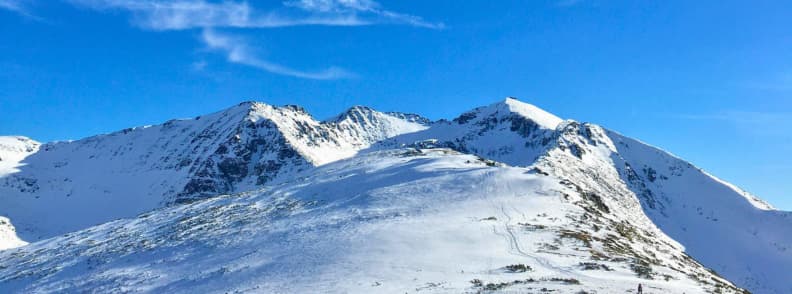
When to Go Skiing in Bulgaria. Best Time to Ski in Bulgaria
Most travelers look for the best time ski Bulgaria based on snow reliability, price, and crowd levels, and Bulgaria’s mountains make this choice straightforward. The core Bulgaria ski season runs from mid-December to mid-April, which creates a long and flexible window. The early weeks suit calm learners, peak winter suits strong snow seekers, and late winter suits value-focused trips.
Timing your winter holiday helps shape the rhythm of the trip. Thinking about ski Bulgaria December, January, February, or early spring changes how busy the mountains feel and how stable the conditions stay. This helps you choose the best time to go skiing in Bulgaria based on what you want from each day.
The season fits all levels of travelers and stays consistent even with warmer winters. Bulgaria’s resorts maintain strong snowmaking, and this reliability helps answer When is the best time to go skiing in Bulgaria? without major uncertainty. This also supports travelers interested in snowboarding in Bulgaria, especially in resorts with long runs and wide pistes.
Each period of the winter offers different advantages. Families often choose holidays around school breaks, while budget travelers plan around quieter weeks. This helps you decide when to go skiing in Bulgaria and understand how the Bulgaria skiing season shifts from month to month.
Bulgaria Ski Season Overview Month By Month from December to April
The full Bulgarian ski season starts in mid-December and stays open through mid-April, and conditions remain steady across Bansko, Borovets, and Pamporovo. Early snowmaking allows skiing in the first weeks, and the typical ski season Bulgaria pattern gives consistent days throughout winter.
December is the best time to go skiing in Bulgaria for beginners and early season travelers who want value. Many travelers enjoy skiing in Bulgaria December because the slopes stay quieter, and early-season prices help with planning. Those looking for a gentle start treat this as a Bulgaria early season ski opportunity.
January brings the coldest temperatures, suitable for strong skiers. It’s the best time to ski in Bulgaria if you’re looking for consistent snow and stable grooming. Many visitors treat Bulgaria January ski time as the peak ski season Bulgaria.
February brings the most stable conditions, perfect for all levels. The mountain atmosphere stays lively, and daily conditions stay predictable. Most experienced skiers consider skiing in Bulgaria February the best overall month.
Can you ski in Bulgaria in March? Is March good for skiing in Bulgaria? Well, March brings bright days and soft spring surfaces. Skiing in Bulgaria March is realistic in all major resorts. Longer daylight hours make Bulgaria skiing March flexible, and warm afternoons create beautiful Bulgaria spring skiing days.
April brings the final weeks of the season. Warmer weather sets the tone for skiing in Bulgaria April, especially in Bansko and the upper areas of Pamporovo. These weeks still offer reliable late season skiing Bulgaria for (very) flexible travelers. Accommodation and ski school spaces stay easier to secure, shaping a quiet end to the season and a soft low season Bulgaria ski price window.
Bulgaria Ski Resorts Snow Reliability and Conditions
Bansko holds some of the strongest late winter depth, and many travelers track snow conditions in Bansko Bulgaria because the high altitude keeps snow stable. Forecasts and the Bansko snow report remain reliable indicators during early spring.
Pamporovo maintains a consistent surface through regular grooming. The Pamporovo snow report highlights predictable corduroy on gentle terrain.
Snowmaking supports all major resorts. These systems strengthen snow reliability Bulgaria ski resorts during warm spells, especially in December and late March.
Wide pistes are great for snowboarders. The mountain layout gives Bulgaria snowboarding resorts solid coverage through the season, especially in Bansko and Borovets.
Peak Weeks and School Holidays to Avoid
Peak weeks create higher prices and more crowded slopes across all Bulgaria ski resorts. These periods define the busiest peak weeks ski Bulgaria patterns.
Bulgarian school holidays shape many of the most crowded days. The Bulgarian school holidays ski window brings more local families to the mountains and narrows accommodation availability.
Romanian and Hungarian school holidays also influence the calendar. This makes the Romanian and Hungarian school holidays ski Bulgaria period a busy time in Bansko and Borovets, especially during mid-winter.
Prices increase during these weeks. Accommodation, lessons, and rentals reflect high season prices Bulgaria ski, so flexible travelers benefit by avoiding these periods.
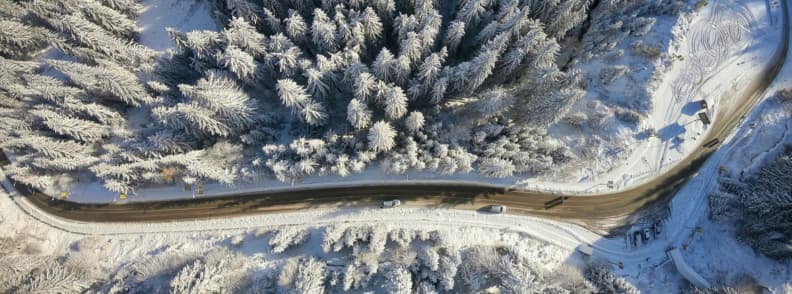
Getting to Bulgaria’s Ski Resorts and Around. Complete Transport Guide
Most travelers start by checking how to get to Bansko or Borovets or Pamporovo from Sofia, because transfers set the tone for the entire trip. The capital sits close to the mountains, and this proximity makes the classic Bulgaria ski transfer routes simple to arrange. The strongest value often comes from shared shuttles, private cars, or quick buses that shape the overall ski transfer Bulgaria network.
Sofia remains the main entry point for winter trips. Those staying in the capital can even enjoy ski near Sofia, with Vitosha Mountain offering a full day on snow and easy access back into the city. Many visitors plan a mixed city and mountain break and use Vitosha ski near Sofia as a warm-up before heading to the main resorts.
Flying to Sofia and Plovdiv (Key Routes and Airlines)
Winter routes make planning straightforward, and most travelers book flights to Sofia for skiing because of the frequent schedules from major European cities. Carriers such as Ryanair, Wizz Air, easyJet, and British Airways anchor the winter flow from the UK, Germany, Italy, and Spain. These options create a strong base for cheap flights Bulgaria ski planning.
Many visitors choose Plovdiv for a quieter arrival. Several regional airlines offer flights to Plovdiv ski, and this helps those heading directly to Pamporovo or Chepelare. A winter approach using airlines to Sofia from UK ski or regional carriers into Plovdiv allows flexible pricing.
Plovdiv airport to Pamporovo transfer takes about ninety minutes, and many travelers prefer this over the three-hour Sofia route. This pattern supports Plovdiv airport ski transfers for families and groups.
Transfers from Sofia Airport to Bansko, Borovets, Pamporovo
Bansko remains the most popular route, and the Sofia airport to Bansko drive takes about two and a half hours. Travelers use shared or private transfers, and most book a Sofia airport to Bansko transfer before arrival. The same applies to transfer Sofia Bansko, which become easier once you pre-book your slot.
Borovets sits much closer to the capital. A typical Sofia airport to Borovets transfer takes a little over an hour. Pre-arranged transfer Sofia Borovets options remain the most efficient approach after late flights.
Pamporovo requires more planning. The Sofia airport to Pamporovo transfer takes close to three hours, and many visitors pre book transfer Sofia Pamporovo to avoid delays at the airport.
Shared shuttles support budget travelers. The shared shuttle Bulgaria ski system covers all three resorts with fixed daily schedules and predictable prices.
Meanwhile, private transfers work well for groups. A private transfer Bulgaria ski arrangement offers direct door-to-door travel, which saves time and simplifies the arrival day.
Some travelers choose to drive themselves. Renting a car makes sense for those driving to Bansko or for those driving to Borovets, especially if you plan visits to nearby attractions.
Buses create another low-cost option. The bus from Sofia to Bansko and bus from Sofia to Pamporovo routes depart from Sofia Central Station. These lines support both bus Sofia Bansko and bus Sofia Pamporovo plans for travelers who want the cheapest approach.
Getting to Borovets from Sofia
Borovets remains the easiest mountain to reach, and the route Sofia to Borovets 72km takes a little over an hour. Travelers who want quick access book a transfer Sofia Borovets for a simple handoff after landing.
Buses provide an inexpensive alternative. A bus Sofia Borovets journey requires a change in Samokov, but the total cost stays low.
Taxis suit late arrivals. A taxi Sofia Borovets journey remains common for small groups and saves time when shuttle schedules do not match your flight.
Getting to Pamporovo from Sofia
Travelers planning a longer journey follow the classic Sofia to Pamporovo 240km route, which takes about three hours. Many visitors choose a transfer Sofia Pamporovo for a comfortable point-to-point trip.
Public transport works well with planning. A bus Sofia Pamporovo route usually includes a change in Plovdiv or Smolyan.
Plovdiv offers a shorter approach. A Plovdiv to Pamporovo transfer takes about ninety minutes, which helps reduce travel time.
Connections between mountain towns add flexibility. Some travelers link Bansko and Pamporovo directly and use the Bansko to Pamporovo route for longer trips through the Rhodope Mountains.
Getting to Bansko from Sofia
Bansko sits about 160 km from Sofia, and this makes getting to Bansko straightforward for most winter travelers. The route follows a main road through Blagoevgrad and takes about two and a half hours in normal traffic. This keeps arrival simple for those who want a predictable start to their ski week.
Shared shuttles remain the most economical transport option, and many travelers book a slot directly after confirming their flights. These services offer fixed departures from Sofia Airport and central Sofia, and the predictable pricing suits those who want a low cost Bulgaria ski transfer. Shuttles drop travelers at hotel doors, which simplifies the first evening.
Private transfers suit families and groups who want a direct, quiet ride without waiting for other passengers. These services offer door-to-door travel and remove the need to carry luggage on public transport. This forms one of the most reliable versions of a ski transfer Bulgaria option for winter holidays.
Driving works well for travelers who prefer flexibility, and the road stays manageable even for those unfamiliar with Bulgaria. Those driving to Bansko follow a clear route with fuel stations and rest stops along the way. Winter tires remain mandatory, and fresh snow on the Predela Pass can slow traffic.
Buses create one of the cheapest ways to reach the resort, and several departures leave daily from Sofia Central Station. The bus from Sofia to Bansko journey takes about three hours, and the station in Bansko sits a short taxi ride from the gondola area. This pattern suits travelers who want the lowest transport cost.
Taxis fill gaps for late arrivals or missed connections, and they remain common for the final stretch from bus stations or nearby towns. A pre arranged taxi helps travelers avoid long waits and keeps the arrival smooth.
Plovdiv offers another valid entry point for winter trips, although the journey is longer. Some visitors take a regional flight and then transfer by bus or private car, especially when combining Plovdiv and Bansko in one itinerary.
Driving from Romania. București to Bansko. Border Crossings
Many travelers coming from Romania build winter trips around a direct drive, and the driving from Romania to Bansko route stays popular for long weekends. The road crosses the Giurgiu-Ruse border, and most queues remain predictable for winter travel.
Border crossings Romania Bulgaria are usually efficient, especially outside peak holiday dates.
Buses, Shared Shuttles, Private Transfers Compared. Pros and Cons
| Transport Type | Price Range (one way) | Travel Time | Best For | Pros | Cons |
|---|---|---|---|---|---|
| Bus | 8-15 euro (Bansko and Pamporovo) | 2.5 to 4 hours | Budget travelers | Cheapest option, regular departures, good for solo travelers | Longer travel times, no hotel drop off, crowded on weekends |
| Shared Shuttle | 15-25 euro (Borovets), 20-30 euro (Bansko), 25-35 euro (Pamporovo) | 1 to 3 hours | Solo travelers, couples, budget friendly groups | Door to door service, predictable schedules, good value, works well with ski bags | Fixed departure times, slower when multiple stops are involved |
| Private Transfer | 60-120 euro per car (Borovets), 90-150 euro per car (Bansko), 120-180 euro per car (Pamporovo) | 1 to 3 hours | Families, groups, late arrivals, those with lots of gear | Fastest option, direct hotel drop off, flexible timing, ideal for night flights | Higher cost, peak season surcharges may apply |
- Shared shuttles Bulgaria ski links remain the strongest option for solo travelers and small groups.
- Buses offer the lowest price. This matters for those comparing bus vs private transfer Bansko, though buses take longer.
- Private transfers shorten the journey significantly. This remains the main advantage for any shuttle Bansko, shuttle Borovets, or shuttle Pamporovo arrangement.
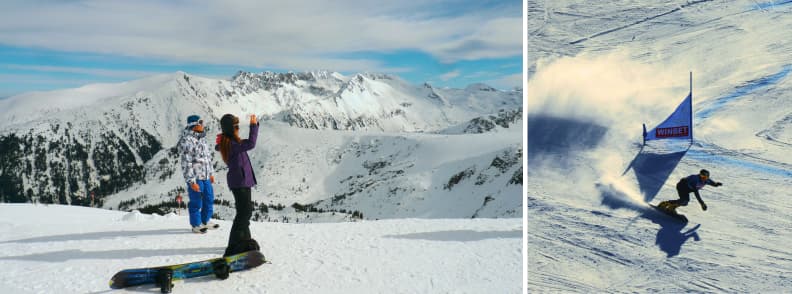
Bulgaria Ski Schools, Lessons, and Equipment Rental
Most travelers start their planning by choosing a reliable ski school Bulgaria option and sorting out rentals before arriving in the resort. Early decisions on lessons and ski hire Bansko or Borovets or Pamporovo shape the rhythm of the first day on snow. A clear plan for equipment rental and instruction helps new skiers progress without stress.
The three main resorts offer strong options for both instruction and equipment. A Bansko ski school provides a wide range of group lessons for beginners, while a Borovets ski school and a Pamporovo ski school support calm learning zones for families and older learners. This makes ski lessons Bulgaria consistent across the country.
Rental shops stay competitive, and most visitors use ski hire Bulgaria services rather than travel with their own gear. Clear pricing and easy locations help with ski hire Borovets or ski hire Pamporovo, and many visitors appreciate how simple it is to arrange equipment rental Bulgaria close to the lifts.
Snowboarders have equal access to gear. The wider runs and gentle slopes support snowboard rental Bansko and similar shops across the mountains, which makes Bulgaria practical for mixed groups.
How to Pick a Ski School in Bansko, Borovets, and Pamporovo
Choosing the right school shapes your progress, and each resort offers reliable centres for different needs. Those who want structured programs often start by comparing how to choose ski school Bansko, where several long-established schools operate near the gondola. In Borovets, calm nursery slopes help travelers choose ski school Borovets for families. Pamporovo’s softer gradients make it easy to choose ski school Pamporovo for first-timers.
Look for clear teaching programs and good ratios. The best ski schools Bulgaria provide small group sizes for beginners and steady progress during the week.
Group and private lessons suit different travel styles. Many visitors choose group vs private ski lessons Bulgaria based on budget and confidence. Groups keep the price low, while private lessons accelerate progress.
English-speaking instruction stays standard. Each resort offers enough English speakers for international guests to feel comfortable from day one.
English, French, and Romanian Speaking Instructors
Most schools provide an English speaking ski instructor Bansko option during the entire season. This helps early learners settle quickly. The same support exists for those who want an English speaking ski instructor Borovets or similar service in Pamporovo.
French speakers have options as well. Several schools offer a French speaking ski instructor Bansko or a French speaking ski instructor Pamporovo, especially during school holiday weeks.
Romanian travelers also receive familiar language support in Bansko. The resort often provides a Romanian speaking ski instructor Bansko, which makes it easier for children and nervous beginners.
Should You Book Lessons and Gear in Advance?
Booking early helps secure good instructors and convenient rental times, especially during peak weeks. Many visitors book ski lessons in advance Bulgaria to avoid sold out slots and long waiting lines.
Pre-booking gear saves time on arrival. Shops allow travelers to pre book ski hire Bansko or similar services in Borovets and Pamporovo. This forms part of the usual routine for those who want a smooth start.
Online deals reduce rental costs. Many stores offer pre book ski hire Bulgaria discounts, and visitors often find online discounts ski rental Bulgaria as part of early promotions.
Skiing in Bulgaria Equipment Rental Guide
Most travelers rely on ski equipment rental Bulgaria services because carrying full ski gear is inconvenient. This suits both regular skiers and beginners, and snowboarders enjoy the same access. Shops across the country provide snowboard rental Bulgaria packages with fair pricing.
Renting gear keeps baggage light. Those who wonder what to rent for skiing bulgaria often start with boots, skis, or boards, and poles. Helmet usage remains standard. Most visitors choose a helmet rental Bulgaria option to avoid packing their own.
Pre booking helps secure better quality gear. Both on site and pre booked options work, but having your reservation ready helps maintain a steady routine during busy mornings.
Ski Clothing for Bulgarian Mountains
Packing the right layers keeps you comfortable across different altitudes, and this forms the base of any ski clothing Bulgaria list. Temperatures shift between the lower villages and the upper slopes, so planning ahead keeps your days smooth.
Renting clothing is possible in most resorts, although availability is limited. Many travelers have asked me Can you rent ski clothing Bulgaria?, and the answer is yes, but stocks remain smaller than equipment rentals.
Careful packing remains the stronger option. A solid plan for what to pack for skiing in Bulgaria includes a waterproof jacket, snow pants, thermal base layers, warm socks, gloves, and a buff.
A simple layering system works best. Drafting a clear Bulgaria ski packing list helps prepare for cold mornings, warm afternoons, and windy upper slopes.
What to Do off the Slopes in Bulgarian Ski Resorts
Travelers often look for things to do Bansko winter or Borovets or Pamporovo once the ski day ends, and these resorts offer enough variety to fill full weeks without touching a lift. Each area supports calm afternoons, cultural visits, warm food, and quiet evening routines. Those wanting Bansko besides skiing or cultural days in the Rhodopes find plenty to explore.
Off-slope activities suit all traveler types. Families enjoy steady winter paths, couples choose spas and hot springs, and groups plan evening outings.
Food becomes a major part of winter life. Each resort highlights Bulgarian food in ski resorts, and the traditional dishes, mehanas, and local wines turn evenings into some of the most memorable parts of a trip. Visitors searching for what to do in Bansko or what to do in Borovets find strong culinary options in every village.
What to Do in Bansko. Snowshoeing, Rila Monastery Day Trip
Snowshoeing gives you a calm way to explore the forests around the resort, and guided routes make snowshoeing Bansko accessible even for first-timers. If you want an organized outing that handles equipment and navigation for you, the Magical Snowshoeing Adventure offers an easy early morning or afternoon session with a local guide and pre-mapped routes.
Book Bansko Magical Snowshoeing Adventure & SPA for a stress-free outing
Rila Monastery remains the most important cultural day trip from the resort, and the quiet courtyards and detailed frescoes create a slow break from skiing. Travelers who prefer a structured visit with transport and commentary often choose the GPS and audio-video guided tour, which removes the need to drive mountain roads or plan entry times.
Book a Rila Monastery day trip from Bansko for a slow morning among frescoes and quiet courtyards.
ATVs give you a more active way to explore the lower valleys, and the winter terrain makes these ATV tours Bansko particularly scenic. The dedicated ATV safari runs with professional guides, steady pacing, and safe winter routes through the Pirin foothills, which works well for groups who want something different from skiing.
What to Do in Borovets. Night Skiing, Snowmobiles, Hot Air Balloon-Rides
Night skiing creates a second session on the mountain and remains one of the most consistent night skiing Borovets activities. The lit slopes offer a warm evening atmosphere for all levels.
The hot mineral springs near Sapareva Banya offer one of the easiest off slope escapes from the resort. The Bansko Hot Mineral Springs day trip runs directly from Borovets, and the pools stay warm even in deep winter. It is an easy way to rest sore legs and enjoy a quiet break from the cold.
Book Borovets thermal springs visit here. The tour handles transport, timing, and entry, which removes the need to plan anything yourself.
Snowmobiles remain the most action-focused activity in the valley, and the guided routes take you well beyond the resort boundary. The Ultimate Snowmobile Adventure to the Seven Rila Lakes and Panichishte offers a structured route with experienced guides, reliable machines, and steady pacing for all levels. The scenery opens up quickly once you reach the higher plateaus, which makes this one of the most impressive winter experiences near Borovets.
Secure your Borovets snowmobile trip to the Seven Rila Lakes and Panichishte
Those who want something quieter choose a sunrise or sunset hot air balloon flight. The Hot Air Balloon Flying Fun experience offers a clear weather window, a stable crew, and a calm ride over the Rila foothills. The view of the forests and valleys stays unforgettable, and the tour handles transport and setup, so you focus only on the flight.
What to Do in Pamporovo. Snezhanka Tower, Rhodope Walks, Buggies
Snezhanka Tower remains the defining viewpoint of the Rhodope Mountains, and clear days give wide panoramas over the forested ridges. It works well for a short morning trip and pairs easily with a slow afternoon walk. These calm routes form the classic Pamporovo forest trails used by families, beginners, and anyone who wants a quiet break from the slopes.
Easy Rhodope walks Pamporovo are one of the simplest ways to enjoy the region without skis. The terrain stays steady, the paths stay quiet, and the scenery remains consistent throughout winter.
Travelers who want something faster can book the Superb Buggy Experience, which takes you through winter forest tracks and open viewpoints in a powerful off road buggy. The tour handles equipment, routing, and safety, which makes it accessible for beginners and fun for groups who want a break from skiing. The guides know the safest winter paths, so you get adventure without stress.
For travelers looking for a full power winter experience, the Pamporovo Ultimate Snowmobile trip offers a controlled but thrilling ride through the Rhodope backcountry. The machines are stable, the guides set a comfortable pace, and the route opens into wide viewpoints that you cannot reach on foot.
Reserve the Pamporovo snowmobile experience here. It is one of the strongest winter activities in the entire region.
Bulgarian Food You Should Try in the Resorts
Local dishes shape winter evenings, and many travelers choose a classic mehana Bansko for warmth and atmosphere. These restaurants highlight traditional recipes and slow-cooked plates. Many meals feature clay pot stews Bulgaria called guvech, alongside grilled meats and hearty soups.
Grilled platters remain popular in the mountains. The selection of Bulgarian grilled meats fits well after cold days outside. Local wine pairs well with the region’s cuisine. Many villages produce small batch bottles, which makes Bulgarian wine ski resorts evenings relaxing and memorable.
Fresh pastries provide simple comfort. Travelers enjoy the flaky layers of Bulgarian pastries, often filled with cheese or spinach.
For a full list of dishes, drinks, and regional specialties, read my guide on what to eat and drink in Bulgaria.
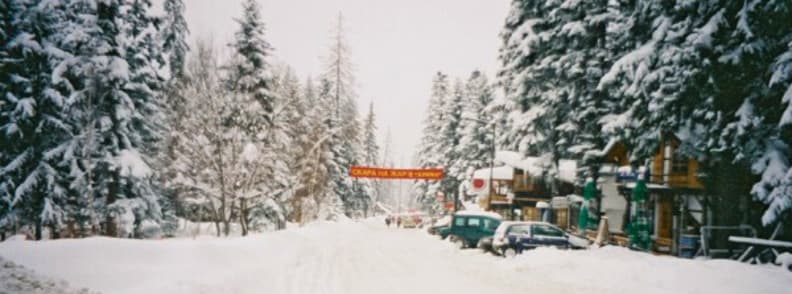
Practical Information. Money, Safety, Connectivity and More
Planning a winter trip goes beyond choosing slopes, so here are the practical details you need for a smooth ski holiday, from visa for ski Bulgaria rules to reliable ways of handling money, safety, and mobile data. You learn whether you need a visa, how to use the Bulgarian Lev, and when euros are accepted, how safe Bulgarian ski resorts are, and what type of travel insurance for skiing in Bulgaria protects you on the mountain. You also get clear advice on SIM cards Bulgaria offers, WiFi availability, and how credit cards and ATMs work across the resorts.
Visa Rules and Entry Requirements
Most travelers do not need a visa for ski Bulgaria trips, but it depends on your passport. EU and Schengen citizens enter freely and stay without limits for tourism in Bulgaria. UK visitors can stay for up to 90 days within any 180-day period. No visa is required, but passports must be valid for the duration of the stay.
Visitors from the United States, Canada, and Australia also enter without a visa for short ski holidays. This covers typical week long trips and extended stays for winter sports. If you plan a longer trip or a remote work stay, check updated rules on official government sites. This keeps your Bulgaria entry requirements ski holiday planning simple.
Currency, ATMs, and Paying in Euro vs BGN
The Bulgarian Lev (BGN) is the only official currency in the country, and all ski resorts use it for lift passes, rentals, and restaurants. Some hotels accept euros, but exchange rates vary, so paying in euros in Bulgaria often increases your final cost. Use BGN for predictable pricing.
ATMs in Bulgarian ski resorts work reliably in Bansko, Borovets, and Pamporovo. Machines accept international cards, but some charge withdrawal fees. Credit cards work in most hotels, ski schools, and restaurants, but small family places still prefer cash. Keep a small amount of BGN for taxis, lockers, and small snacks.
Language and Communication in Bulgaria
Basic English is widely spoken in Bulgarian ski resorts, especially in ski schools and rental shops. This keeps lessons simple for travelers from many countries. You also hear some French in Bansko and occasional Romanian during peak weeks.
Learning a few Bulgarian phrases for skiing helps with simple exchanges. Useful words include Kasa for ticket office, Pista for slope, and Blagodarya for thank you.
Bulgaria Ski Passes and Lift Tickets
You can buy every ski pass Bulgaria offers directly at lift stations or through official resort websites. Buying passes online helps you avoid queues in Bansko and gives you more control over timing.
Reloadable ski cards Bulgaria resorts use are simple and quick. You top them up at machines near the lifts or through official apps. This makes a week-long trip smoother than buying new cards every day.
Safety on the Slopes and Off Piste Rules
Safety skiing Bulgaria follows standard European norms, and all resorts operate active ski patrol teams. Patrols mark hazards, guide lost skiers, and secure accident scenes quickly.
Off piste rules in Bulgarian ski resorts stay strict due to changing weather, forest zones, and avalanche conditions. Follow marked trails unless you are with a certified guide who knows the local terrain.
Travel and Ski Insurance for Bulgaria
Every traveler should have travel insurance for skiing in Bulgaria because regular policies rarely cover mountain sports. You need a plan that includes on slope rescue, medical care, and gear protection.
Ski insurance Bulgaria requirements vary, but the European Health Insurance Card is not enough on its own. A full policy helps with private clinics, mountain rescue, and cancellations.
Protect your ski trip with insurance that actually covers what happens on the mountain. SafetyWing keeps winter sports included as a simple upgrade, handles medical care in private clinics, and supports you if your gear is lost or your flights change.
Get your SafetyWing policy before you travel so every day on the slopes stays covered from the first lift to the last run.
Bulgaria Ski Resorts Weather and What to Expect
Winter temperatures Bulgaria ski resorts experience range from -10 to 5°C, depending on altitude and month. Bansko and Borovets sit at higher elevations, so mornings stay colder.
Altitude considerations Bulgaria ski mountains include stronger winds higher up and quick changes in cloud cover. Carry layers, protect your equipment from frost, and check live webcams before leaving your hotel.
Mobile Data, SIM Cards, and Wi Fi
SIM cards for tourists Bulgaria offers include A1, Yettel, and Vivacom. They sell prepaid data packages at airports and in resort towns, and speeds stay reliable for navigation and calls.
WiFi in Bulgarian ski resorts remains good in hotels, restaurants, and bars. Free networks work for maps and messaging, but mobile data stays more reliable on the mountainside.
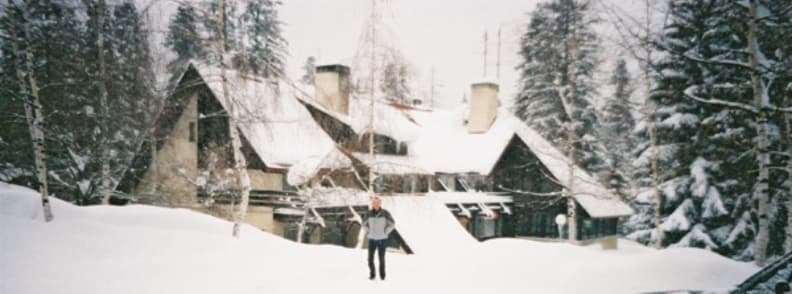
Skiing in Bulgaria Insider Tips from Locals and Expats
These insider tips skiing Bulgaria travelers share come from people who return every season and from expats who live near the mountains. They help you avoid wasted time, skip avoidable costs, and understand the small details that shape winter trips in Bansko, Borovets, and Pamporovo. This section keeps your planning grounded with local tips Bansko regulars use, practical advice from long-term visitors, and clear expat tips ski Bulgaria riders rely on each winter.
10 Things Nobody Tells You About Skiing in Bulgaria
These insider tips skiing Bulgaria locals share help you avoid wasted time, manage crowds, and keep your week smoother than most first timers expect. They are simple, practical, and based on what people who live or return here each winter follow as routine.
- Eat lunch early to avoid queues at the most popular mountain restaurants.
- Start before nine to enjoy the quietest slopes of the day.
- Buy lift passes online to avoid the longest morning queues.
- Fit rental gear the evening before to skip the rush at opening time.
- Expect the busiest lifts between ten and noon, and plan breaks outside that window.
- Avoid driving mountain roads after sunset because ice forms fast.
- Keep cash for small cafés since not all resort huts accept cards.
- Choose midweek arrivals to reduce crowd pressure at Bansko and Borovets.
- Carry a spare layer because the weather changes quickly with altitude.
- Check live webcams before leaving your hotel to pick the best zone for the day.
How to Avoid Gondola Queues in Bansko
The Bansko gondola queues form quickly on weekends, and the main line grows long after nine in the morning. Buying ski passes online Bansko offers is the simplest fix because it removes the ticket counter wait. The next solution is arriving before eight thirty, which keeps you near the front of the line. Groups staying far from the lift avoid gondola delays by using hotel shuttles that drop you at Bunderishka Polyana. A small number of taxis also drive up to the mid station when snow and road conditions allow. These alternatives to Bansko gondola routines keep your first run of the day predictable and help you avoid peak time gondola Bansko delays.
Best Mountain Restaurants and What to Order
The best mountain restaurants Bansko offers include the terrace at Bunderishka Polyana for grilled meats and the small huts near Shiligarnika for soups and kebapche. Borovets regulars enjoy Black Tiger for quick meals and the Yastrebets area for calmer lunches. Pamporovo visitors choose the Studenets zone for slow cooked clay pot dishes and warm bean soups. Ordering hearty stews, grilled pork, or local pastries keeps you warm and gives you a simple taste of what to eat in Bulgarian ski resorts without climbing back down to the village.
Hidden Gem Runs
The hidden runs Bansko locals like include the short forest tracks near Chalin Valog that stay quiet even on busy days. Borovets riders choose the side sections of the Sitnyakovo area for steady snow and calmer slopes. Pamporovo’s secret pistes sit near Malina and stay popular with intermediates who want soft terrain without traffic. These secret slopes Borovets and hidden pistes Pamporovo work well for mixed groups.
Common Mistakes to Avoid when Skiing in Bulgaria
The mistakes skiing in Bulgaria beginners make include starting late, fitting rental gear during rush hours, and ignoring weather swings. Booking lessons too late in the day reduces progress, and skipping layers creates cold afternoons. Many visitors choose accommodation far from the lifts, which adds long walks or crowded shuttles. Keeping these what not to do skiing Bulgaria points in mind helps you avoid the common beginner mistakes Bulgaria ski newcomers face each winter.
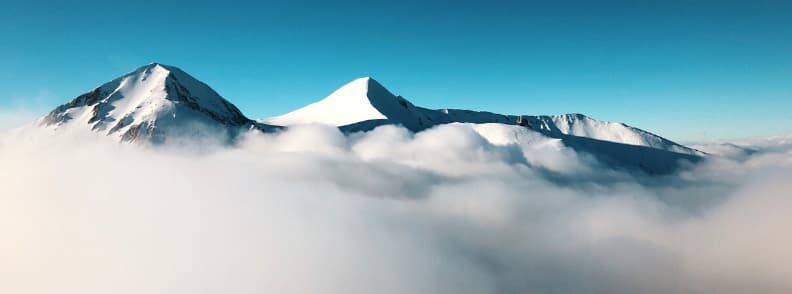
Skiing in Bulgaria FAQs
This FAQ section gives clear answers to the most common questions about skiing in Bulgaria, from practical details like when is the best time to go skiing in Bulgaria to essential planning topics such as how much does skiing cost in Bulgaria and where to ski in Bulgaria for different levels. It also covers safety, terrain, nightlife, and the longest ski run in Bulgaria, helping you make fast decisions without digging through multiple sources.
Can you ski in Bulgaria?
Yes, you can ski in Bulgaria, and the country offers a full winter sports infrastructure with reliable snow, modern lifts, and long seasons across several mountains. The main resorts, Bansko, Borovets, and Pamporovo, operate from mid December to mid April with groomed pistes, snowmaking coverage above 80 percent, ski schools, rental shops, and accommodation close to the slopes. Smaller resorts such as Vitosha, Chepelare, and Panichishte offer short day trips with lower prices, which makes Bulgaria a complete and accessible winter destination for every skill level.
How many ski resorts are in Bulgaria?
Bulgaria has more than ten operational ski areas, including three major resorts and several regional hills that serve local and visiting skiers. The main mountains are Bansko in the Pirin range, Borovets in the Rila Mountains, and Pamporovo in the Rhodopes. Secondary areas include Vitosha near Sofia, Chepelare, Panichishte, Beklemeto, Osogovo, Kartala, and Kulinoto. This gives travelers a mix of full service resorts, budget friendly day trips, and small hills suitable for beginners.
When is the best time to go skiing in Bulgaria?
The best time to go skiing in Bulgaria is from early January to late February, when snow depth, grooming quality, and lift operations reach their strongest level. December offers early season skiing with a higher chance of artificial snow, while March brings stable spring conditions, fewer crowds, and lower hotel prices. April remains possible in Bansko and Pamporovo, which maintain strong snowmaking and higher altitude terrain. If you want reliable snow and shorter queues, aim for midweek dates in January or February.
Where to go skiing in Bulgaria?
The best places to go skiing in Bulgaria are Bansko, Borovets, and Pamporovo, because each mountain offers a complete resort layout, varied terrain, and easy access from major cities. Bansko suits travelers who want long runs and a lively town. Borovets works well for beginners, families, and those who want ski in ski out hotels close to Sofia. Pamporovo offers gentle slopes, sunshine, and a calm atmosphere. Day trip options include Vitosha, Chepelare, and Panichishte for travelers who want shorter, cheaper ski sessions.
Where to ski Bulgaria for beginners?
The best place to ski in Bulgaria for beginners is Borovets, because the nursery slopes sit directly in the village and the progression areas stay wide, gentle, and easy to navigate. Pamporovo offers similarly soft terrain with many green and blue pistes near Studenets and Malina. Bansko also has beginner zones, but they sit at the top of the gondola, which adds queues during peak weeks. If you want fast access to easy pistes, Borovets remains the most efficient choice.
Which is the best ski resort in Bulgaria?
The best ski resort in Bulgaria depends on your travel style. Bansko suits those who want long runs, modern lifts, and lively nightlife. Borovets works best for families and first timers thanks to its compact village and ski in ski out layout. Pamporovo offers the calmest atmosphere, the sunniest weather, and the most comfortable terrain for intermediates. Each resort excels in a different category, so the best choice depends on your priorities.
How much does skiing cost in Bulgaria?
A full day of skiing in Bulgaria typically costs between 60 and 100 euro, depending on resort and season. Lift passes range from 35 to 55 euro per day, ski hire averages 15 to 25 euro, group lessons range from 35 to 50 euro, and lunch on the mountain costs between 10 and 20 euro. These figures make Bulgaria one of the most affordable European destinations for a complete ski day.
How much does it cost to ski in Bulgaria for a week?
A one week ski holiday in Bulgaria costs between 450 and 900 euro for most travelers, depending on accommodation type, lift pass length, and meal choices. Budget travelers spending a week in Bansko or Borovets usually pay 120 to 200 euro for accommodation, 200 to 250 euro for lift passes, 70 to 120 euro for rentals, and 100 to 150 euro for food. Mid range travelers who book spa hotels and private lessons typically spend 800 to 1100 euro.
How much is a ski trip to Bulgaria on average?
A typical ski trip to Bulgaria costs around 600 to 900 euro per person for flights, accommodation, lift passes, lessons, equipment, food, and transfers. Prices remain lower than in Austria, France, or Switzerland, which makes this a strong option for budget conscious travelers and families.
Is Bulgaria good for skiing?
Yes, Bulgaria is good for skiing because the resorts offer modern lifts, long seasons, and terrain that suits beginners, intermediates, and families. Bansko reaches 2,560 meters and offers a 16 kilometre valley run, Borovets gives easy access to slopes from most hotels, and Pamporovo delivers steady snow and sunshine for calm winter trips.
Is Bulgaria good for beginners skiing?
Bulgaria is very good for beginners skiing because the resorts offer wide learning pistes, gentle gradients, and affordable lessons. Borovets has the easiest layout, Pamporovo has the softest terrain, and Bansko offers structured ski school programs with strong English speaking instructors.
Is skiing in Bulgaria cheap?
Skiing in Bulgaria is cheaper than in the Alps, but costs are rising each year due to increased travel demand and upcoming euro adoption. Lift passes remain lower than Austria or France, and accommodation stays accessible, but earlier booking now makes a clear difference in total cost.
Is Bulgaria safe for ski holidays?
Yes, Bulgaria is safe for ski holidays because the resorts operate active ski patrol teams, maintain marked pistes, and keep village centres well lit and walkable. Off piste zones require caution due to rapid weather changes, but staying on marked slopes keeps risk low for families and first timers.
What is the longest ski run in Bulgaria?
The longest ski run in Bulgaria is the 16-kilometer valley descent in Bansko, which starts at Todorka Peak and finishes at the base station in town. It is suitable for confident beginners and intermediates on good snow days and works as one of the most memorable routes in the country.
What are the alternatives to Bansko in Bulgaria?
The main alternatives to Bansko in Bulgaria are Borovets, Pamporovo, Vitosha, Chepelare, and Panichishte. Borovets suits beginners and families thanks to its compact layout, Pamporovo works well for sunny winter trips and intermediate terrain, and Vitosha, Chepelare, and Panichishte offer low cost day trips with simple lifts and calm slopes.
Where is the best nightlife: Bansko or Borovets?
Bansko offers the best nightlife because the town has more bars, clubs, and late restaurants than Borovets, and most venues sit close to the gondola area. Borovets stays quieter and more family focused, which makes it better for early nights and calm evenings.
Can I ski in Bulgaria in March?
Yes, you can ski in Bulgaria in March, and the conditions often remain reliable until early April due to high altitude terrain and strong snowmaking in Bansko and Pamporovo. March also brings fewer crowds, lower hotel prices, and longer sunny days.
What is the cheapest ski resort in Bulgaria for day trips?
The cheapest ski resort in Bulgaria for day trips is Chepelare, where lift passes start around 13 to 15 euro, followed closely by Panichishte with simple drag lifts and budget friendly day rates. Both resorts stay popular with local skiers, families, and travelers who want an inexpensive winter day without committing to a full week.
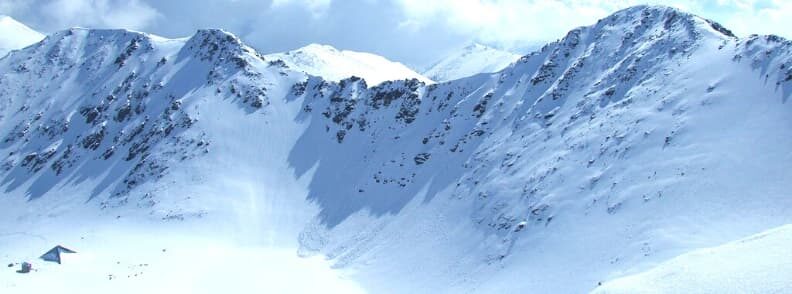
Is Bulgaria the Right Choice for Your Ski Holiday?
The answer to whether is Bulgaria right for your ski holiday depends on what you want from a winter trip, but the country still delivers strong value for beginners, families, and travelers who want an affordable week with reliable snow. The terrain suits mixed groups, the lessons stay accessible, and the main resorts keep logistics simple. This helps anyone asking who should ski in Bulgaria decide whether the mountains match their needs.
Travelers who focus on comfort, gentle pistes, and short transfer times find Bulgaria easy to enjoy. Borovets works well for first timers and families, Pamporovo suits visitors who want sunshine and steady intermediate slopes, and Bansko offers long runs and a lively town.
Is Bulgaria still cheap for skiing? That depends on timing. Prices have risen, but the country remains more affordable than the Alps. Booking early, staying near the lifts, and renting equipment in advance keeps total costs predictable.
About the Author

Hi! I am Mirela Letailleur, a European travel writer who focuses on practical, experience-based guides for cultural travel, slow trips, family adventures, and budget-friendly itineraries across the continent. I specialise in fast trip planning for slow exploration, winter sports travel, beach escapes, and city breaks in the Balkans, Greece, France, Italy, and the wider Mediterranean. My work on The Travel Bunny builds on years of exploring Europe’s mountains, islands, and small towns, and I use every guide to show travelers how to plan smarter, spend less, and enjoy local food and culture without stress.
I live in the South of France, travel often with my husband and child, and bring a clear, personal perspective to everything I publish. My experience includes hiking in the Alps, trekking in Bulgaria, sailing the Mediterranean with no prior experience, and exploring countries through both local friends and expat life. I write honest, detailed travel resources backed by on-the-ground knowledge, official data, and practical tips that help readers make confident decisions about where to go, how to budget, and how to make every trip feel structured and enjoyable.
After planning the best skiing in Bulgaria trip, check out these travel guides on The Travel Bunny blog
Ideas for an amazing vacation in Bulgaria
Travel tips for your trip to Bulgaria
What to eat and drink in Bulgaria