
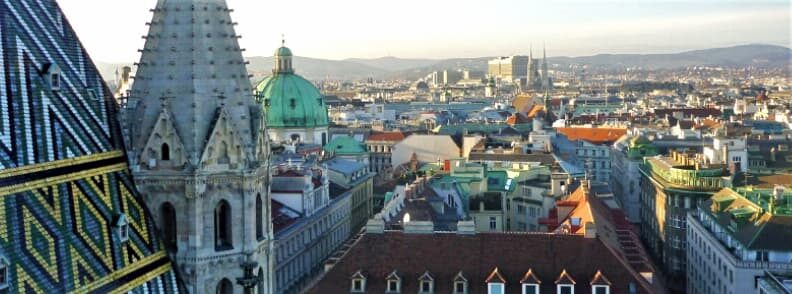
Planning a winter weekend in Vienna? This travel guide gives you everything you need for a perfectly timed 48 to 72-hour stay: a detailed Vienna 3 day itinerary winter edition packed with personal tips, cultural highlights, festive must-sees, and cold-weather comforts. No matter if you’re coming for the Christmas markets or aiming for a quieter post-holiday escape, this itinerary is tailored to help you experience the best of Vienna in winter, without wasting time, freezing unnecessarily, or falling into tourist traps.
What To Do in Vienna in Winter
Vienna is beautiful in winter, and also extremely functional. You’ll glide between imperial palaces and coffeehouses with ease, warm up with Glühwein under twinkling lights, and soak up classical music where it was born. Unlike many European cities that go quiet after New Year’s, Vienna in January and February shifts gears: Ice rinks take over the Rathaus, ball season kicks into high society mode, and thermal spas give locals and travelers alike a place to defrost in style.
This guide is your cold-weather strategy for visiting Vienna. It’s written by someone who spent a weekend in March snow, navigated the cobbled streets with an injured travel partner, made mistakes, found shortcuts, and still left smitten. Inside you’ll find:
- A step-by-step 3-day itinerary built around walkability and warmth
- Planning tips to avoid crowd spikes, closures, and overbooked restaurants
- Budget vs. luxury recs, because Vienna is worth splurging on, but also easy to enjoy on a budget
- Local insights from someone who’s navigated icy streets, unexpected injuries, and the joy of randomly discovering Crossfield’s kangaroo beer pub on a freezing night
- Up-to-date event dates and attractions open during Vienna’s deep winter.
If you’re wondering what to do in Vienna in winter, The Travel Bunny’s Vienna guide shows you how to do it well, avoid bad weather fatigue, and maybe even fall a little in love with the off-season magic. And remember, every journey begins with a single step… or in our case, a little twist!
Disclosure: Some of the links on this page are affiliate links. This means that at no extra cost to you, The Travel Bunny will earn a small commission if you click through and make a purchase. Thank you!
Is Vienna Worth Visiting in Winter?
Yes, absolutely! If you’re asking is Vienna worth visiting in winter, you’re probably wondering whether it’s too cold, too quiet, or too expensive. I’m here to tell you that Vienna in winter is not only beautiful, but also brilliantly functional. This city doesn’t hibernate. Instead, it shifts into something softer, richer, and more relaxed. And there are far more things to do in Vienna in winter than you might think, especially if you plan with purpose. And I’m going to help you do that.
Why Winter Is Vienna’s Best Season
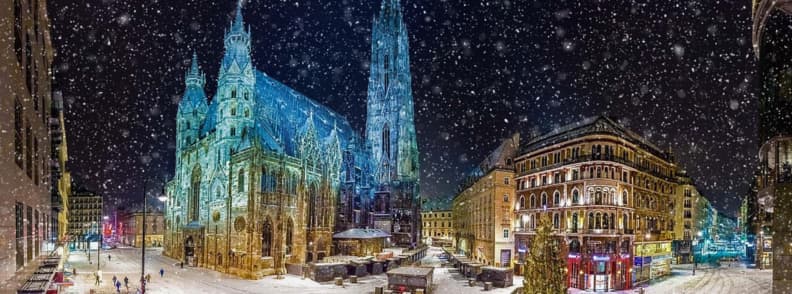
Vienna’s architecture looks better in cold light. The palaces, opera houses, and Baroque facades glow under grey skies. Add frost or snow, and the whole city feels cinematic without trying.
Classical music in Austria dominates the season. From late November to February, you can find daily concerts in historic churches, salons, and concert halls. These performances show Vienna in its element, and you can enjoy Mozart or Vivaldi without needing a black tie or a VIP budget.
Cafés are warm AND cultural. Spend an hour in Café Central or Sperl, and you’ll understand why locals treat cafés like second living rooms. It’s where you warm up, slow down, and stay awhile.
Markets, lights, ice trails, and thermal spas all belong to this season. Winter is not downtime, it’s when Vienna blossoms and is at its most genuine, in my opinion.
the Vienna Winter Traveler’s Choice: Festive vs. Deep Winter
Festive Vienna happens between mid-November and 23 December. That’s when you’ll catch the famous Christmas markets like Rathausplatz, Schönbrunn, and Spittelberg at full steam. This period comes with crowds, cheer, and plenty of Glühwein. Prices spike and availability tightens, but the atmosphere is unmatched.
Deep winter kicks in after Christmas. From 26 December through early March, things change. The markets close (except Schönbrunn, which stays open until 6 Jan), and the crowds thin out. But this is when Wiener Eistraum, the ice skating wonderland at City Hall, opens. It’s also Vienna ball season, with dozens of events ranging from the Coffeehouse Owners’ Ball to the famous Opera Ball.
Vienna Travel Tip: Deep winter is colder, quieter, and often cheaper. It’s ideal for slow travelers, couples, or expats who want substance without the spectacle.
What to Expect from Winter in Vienna. Weather, Crowds & Costs
The temperature ranges from 0°C to 5°C during the day, and it often drops below freezing at night. Snow is possible in December and more likely in January. Windchill can make it feel colder, especially near the Danube.
Crowds peak during the first three weeks of December, especially on weekends. Museums, markets, and cafés stay busy until Christmas. After that, the city empties a little. January and February are calm, with mostly locals, students, and second-time visitors.
Vienna travel vosts rise in early December. Expect hotel prices to increase by 20-40%. After New Year’s, prices dip fast. Flights, accommodation, and tour prices become far more manageable in January and February. Spas and concerts are still popular, but you’ll find more last-minute availability and seasonal deals.
Vienna Winter vs Other Seasons Compared
| Season | Pros | Cons |
|---|---|---|
| Winter | Markets, fewer crowds, concerts | Cold, short daylight |
| Spring | Blooming parks, Easter events | High demand, variable weather |
| Summer | Open-air festivals, long days | Peak tourism, heatwaves |
| Autumn | Wine hikes, low prices | Cooler temps, shorter days |
Winter in Vienna gives you intimacy, beauty, and indoor brilliance. Vienna in winter is a different city, one well worth seeing.
Planning Your Vienna Winter Weekend
Building your Vienna winter itinerary takes more than picking a few attractions and hoping for snow. A smart winter trip means knowing when to go, how long to stay, and how to avoid weather fatigue while maximizing festive energy. The Travel Bunny’s Vienna winter travel guide breaks down exactly how to plan a smooth, cold-season trip, with personal insight and clear logistics designed for both visitors and expats.
Best Time to Visit Vienna. Month-by-Month Breakdown
If you’re planning a Vienna 3-day itinerary winter edition, your experience will shift depending on your arrival window.
Mid-November to 23 December is Vienna’s peak festive season. The entire city transforms into a glowing, decorated maze of markets, concerts, and cozy cafés. Christmas trees go up, Glühwein flows, and nearly every major square hosts a market. It’s magical, but it gets crowded, especially on weekends.
26 December to 6 January is quieter, but still festive. The lights and some smaller markets (like Schönbrunn) remain. Concerts and balls start to ramp up, and the atmosphere feels more local. Prices begin to drop.
January and February bring true winter mode. Snow becomes more likely, the Wiener Eistraum opens for skating at City Hall, and Vienna’s famous ball season takes over palaces and hotels. It’s the best time to visit if you want intimacy, value, and a cultural deep dive.
March is overlooked. While the city shakes off the frost, the indoor activities stay strong. If you missed the markets but still want the Vienna experience without heavy crowds or cold extremes, March delivers. This is the deep winter advantage. You get to visit Vienna with all its beauty and none of the peak-season pressure.
How Long Should You Stay in Vienna? 1, 2, 3, or 4 days?
You can see Vienna’s highlights in 2 days, but it will feel rushed. A 3-day winter itinerary for Vienna gives you enough time to explore historic sites, warm up in cafés, visit a museum or two, and still have energy left for the evening. It’s the ideal length for balancing indoor culture and outdoor atmosphere without burnout.
Four days give room for day trips to Hallstatt, Salzburg, or even Bratislava, and let you experience a slower version of the city. If you’re living nearby or you’re on a second visit to Vienna, this extra day changes the tone from sightseeing to absorbing.
Vienna Budget Breakdown. What Will You Spend in a Weekend in Vienna?
If you’re wondering how much a weekend in Vienna will cost, here’s a practical range based on real trips and updated prices. Whether you’re a student, mid-range traveler, or in splurge mode, you’ll find Vienna surprisingly adaptable.
| Expense | Budget | Mid-Range | Luxury |
|---|---|---|---|
| Hotel | €50-90 | €90-160 | €200+ |
| Food | €20-30 | €40-60 | €80+ |
| Attractions | €10-20 | €30-50 | €60+ |
| Transport | €8 | €8-20 | €25 |
| Total/day | €88-148 | €168-290 | €365+ |
Traveling to Vienna in January or February? Expect slightly lower rates across the board. Booking early is still smart, but last-minute deals are common outside the Vienna Christmas season.
Essential Logistics and Cold-Weather Comfort
Even the best-planned Vienna winter itinerary can unravel if you land at the wrong station, freeze through dinner, or book a flat 30 minutes from where you want to be. This section solves that. It covers airport transfers, smart neighborhoods, cold-proof packing, and insider tips for staying comfortable and connected during winter in Vienna.
Getting to Vienna Austria. Flights & Transport to Hotel
Vienna International Airport (VIE) is 16 kilometers from the city center. It’s well-connected and efficient. You’ve got three solid options to reach the city center:
- CAT (City Airport Train) is the fastest and easiest option. It takes 16 minutes to Wien Mitte for €11 one-way or €19 round-trip. We used this on arrival and were in the city in no time. The ride was smooth and comfortable, without crowds, confusion, or stairs with luggage.
- S-Bahn (S7) is cheaper at around €4.30, but a bit slower, taking about 25 minutes. It runs frequently but might feel cramped during peak hours or weekends because it’s the local commuter train. It’s not always ideal with luggage.
- Taxis or Uber cost around €35-45 to central Vienna. They’re not the most budget-friendly option, but they’re worth it if you’re arriving late, staying outside the U-Bahn zones, or carrying heavy bags.
Book your CAT tickets online now to lock in the best rate and avoid queues at the station.
Once in the city, Vienna’s public transport system makes getting around easy. The U-Bahn, trams, and buses are heated, reliable, and run like clockwork, which is a huge plus in winter. You can grab a 48 or 72-hour travel card at most stations.
Where to Stay in Vienna Neighborhoods & Accommodation Tips
Vienna’s districts aren’t confusing once you know the layout. For a winter trip, you want warmth, walkability, and access to indoor activities.
- 1st District (Innere Stadt) is ideal for a short trip. You’ll be steps from St. Stephen’s Cathedral, Hofburg Palace, top museums, cafés, and most markets. Prices are higher, but you’ll make up for it in convenience.
- 7th District (Neubau) is the creative hub. It’s full of boutique hotels, indie boutiques, cool cafés with excellent coffee, and has a more local vibe. Ideal for repeat visitors, creatives, or travelers who want to feel like a local.
- Around Hauptbahnhof (10th District) is functional and better for budget hotels, quick transport links, and early train access. It’s not charming, but if you’re prioritizing savings or onward travel, it works.
Mathieu booked late, and we ended up in an Airbnb in a cheaper area surrounded by sex shops, and the kitchen window looked directly into the bathroom. It was an old building that had been restructured, and while this led to some strange apartment layouts, I remember adoring the ceilings. It might sound funny now, but in winter, location and comfort matter more than novelty.
Check deals on winter stays in Vienna, from central guesthouses to cozy apartments with heating that actually works.
What to Pack for Vienna in Winter. Complete Winter List + Outfit Ideas
The difference between a fun Vienna trip and a miserable one often comes down to your shoes and coat. When it comes to Vienna weather what to pack, think insulation, layers, and waterproofing. Choose function over fashion.
- Layers. Start with a thermal base layer. Add a fleece or sweater, then top it off with a warm, windproof coat. This layering lets you adjust for heated trams and freezing courtyards without sweating or freezing.
- Waterproof boots with grip. Footwear matters more than you think. Waterproof boots with good tread are non-negotiable. Cobblestones get slippery, and markets stay open even when it snows.
- Hat, gloves, scarf. Ideally, ones that cover the ears and seal out wind.
- Power bank. Cold drains phone batteries faster, especially if you’re using maps or e-tickets all day.
- Crossbody or zip bag for crowded markets and public transit.
Coming from Romania, we were used to icy winters, so we didn’t bring anything fancy. Layers and solid boots kept us warm without needing any special winter tech gear.
Our 48-Hour Winter Weekend in Vienna Itinerary
If you want a real Vienna 3-day itinerary winter version, here’s mine. Two full days, freezing weather, one injured partner, and a lot of good food. We didn’t follow some script. We made changes, got lucky, got tired, and still left with zero regrets. So here’s the actual experience that built this guide for travelers and expats who want something genuine, flexible, and fun even when the weather turns sharp.
Friday Night in Vienna. Arrival & Burgers
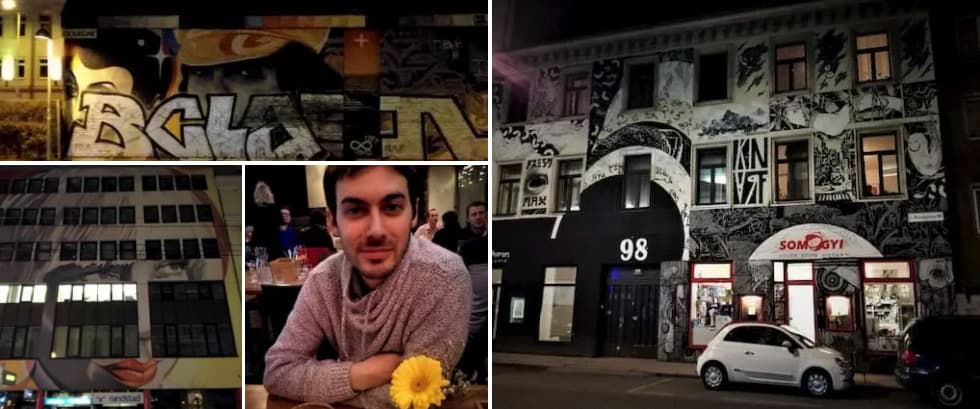
We landed in Vienna late on a cold Friday evening. The streets were quiet, but the air had that crisp bite that makes winter feel real. Navigating through hushed neighborhoods wrapped in amber streetlight, we found warmth exactly where we didn’t expect it.
Somewhere near Siebensterngasse, we stumbled across Weinschenke am Siebensternplatz Wien. The inside was a glow of noise and heat. Local beers, thick burgers, and a menu built for freezing nights. We ordered different dishes to try more without wasting food, something Vienna didn’t frown on as other destinations might. The service was relaxed, but the portions came fast.
Walking back to our Airbnb through the cold, the city felt both grand and gentle. Vienna was lit up, calm, and promising. We didn’t rush… we didn’t need to.
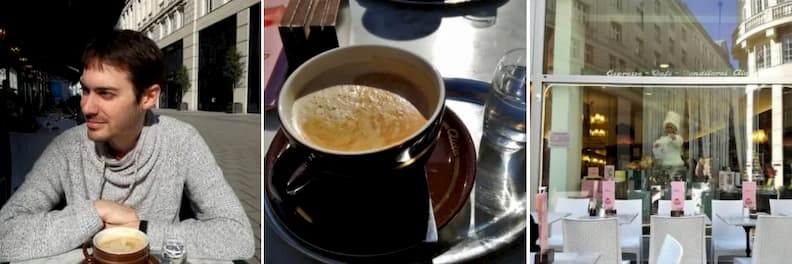
Saturday Morning at Aida Café & Cathedral Climb
We had a free walking tour scheduled, but Mathieu’s ankle had other plans. It was sore from a misstep he took on his way back from work right before our flight to Vienna. So we decided to forego the tour and instead prioritize Mathieu’s health. We stopped at a pharmacy, grabbed an ankle brace, and slowed our plans.
That unexpected change gave us a better start. We had breakfast at Aida Café Konditorei by Stephansplatz. Pink walls, playful charm, and a terrace drenched in winter sunlight. The two-tier platter with meats, cheeses, and pastries looked dramatic but tasted great. And the huge Lorelai Gilmore-sized coffee was the warm kick we needed.
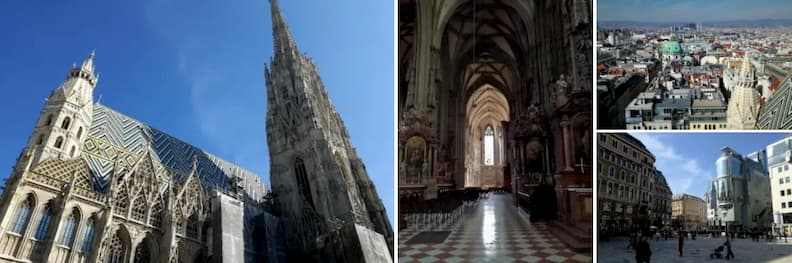
Our next stop was St. Stephen’s Cathedral, the majestic Gothic masterpiece. With a Roman-style foundation dating back to 1147, the cathedral is a symbol of Vienna’s architectural prowess and cultural heritage. The intricate details of the cathedral, both inside and out, left us spellbound.
Next came the climb. 343 steps to the top of St. Stephen’s Cathedral. The view was worth every stair. Despite his discomfort, Mathieu was eager to get to the top of the South Tower. Coming down was harder on his ankle, but we took our time. And once we were back in the square, he finally confessed to feeling pain, a clear sign we needed to slow down.
Skip the wait and explore Vienna’s most iconic cathedral with a guided tour that goes beyond the basics. Book your skip-the-line St. Stephen’s Cathedral tour now and step straight into history.
We rested in Stadtpark, designed in 1862 as an artificial landscape within the city. There, we admired the Johan Strauss statue, and soaked in some peace before the next round of sightseeing. It was the perfect ending to our morning in Vienna.
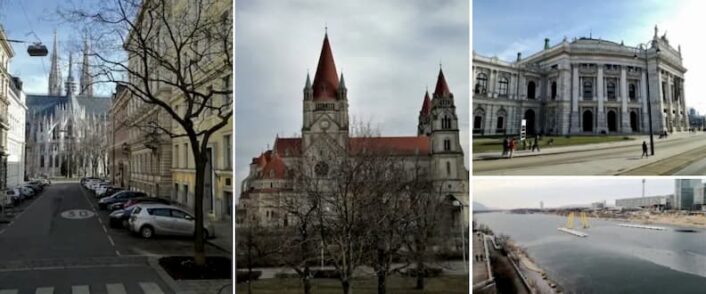
Saturday Afternoon with Big Bus Vienna, Schnitzel & Sachertorte
To keep things easy on Mathieu’s ankle, we picked up Premium tickets for Big Bus Vienna. The double-decker ride gave us warmth, context, and flexibility. We were free to hop off for food, photos, or rest when we wanted. It’s the kind of lazy sightseeing that works well in the cold.
Vienna Big Bus‘s service is structured with visitors in mind. You can choose from Classic (24-hour), Premium (48-hour), or Deluxe (72-hour) tickets. Routes include all the major sights and run reliably, even in winter. There are two sightseeing loops, and audio guides are available in 13 languages. The Premium pass adds a guided walking tour and a Hundertwasser tour. The Deluxe version goes further with a Historic Night Tram Tour and a full Vox City walking tour app.
Book Big Bus Vienna here to see the city without freezing your feet or wasting your time. It’s ideal for cold-weather travelers who still want to cover real ground, and one of the smartest choices we made on this trip.
We hopped off near the State Opera, stomachs rumbling and timing perfect. Right across the street stood Plachuttas Gasthaus zur Oper, a must on any winter weekend in Vienna. Known for serving some of the best Wiener schnitzel in town, it was packed with that lunchtime mix of locals, business types, and travelers chasing tradition. We grabbed a cozy corner table just before the rush hit. The schnitzel was paper-thin and crisp, the potato salad tangy and balanced. Every bite felt like a direct line to the heart of Viennese cooking. And we left with the recipe to redo it at home!
Dessert wasn’t up for debate. Just across the street, we stepped into the plush quiet of Hotel Sacher Wien. We ordered the original Sachertorte, of course, dense, dark, and far less sweet than expected. It’s the kind of cake that earns its legacy in layers, not sugar. If you only try one dessert in Vienna, make it this one!
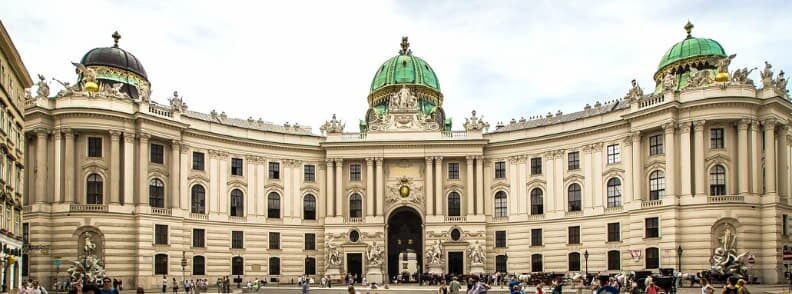
Recharged, we walked into the Hofburg Palace complex, a sprawl of imperial architecture that felt more like a self-contained city than a single palace. Grand halls opened into quiet courtyards. Stone paths turned into gardens. Every corner carried traces of Vienna’s Habsburg past.
The New Palace, with its sweeping facade and modern design, stood in sharp contrast to the medieval walls behind it. The blend of eras made the entire complex feel alive, layered, and still relevant.
Inside the heart of the Hofburg, we paused at the entrance to the Spanish Riding School. We didn’t catch a full performance, but even watching the horses in training gave us a glimpse into a tradition shaped by centuries. The riders and animals moved in practiced harmony, more dance than dressage.
In Heldenplatz, two massive equestrian statues rose from the stone: Prince Eugene of Savoy and Archduke Charles cast in bronze, frozen mid-charge. They felt watchful.
Visit Vienna Tip: If you’re in Vienna on a Sunday, book ahead for the Vienna Boys Choir. They perform at 9.15 Am in the Imperial Chapel, and it’s one of the most intimate experiences you can have in the city. It’s quiet, moving, and absolutely worth it.
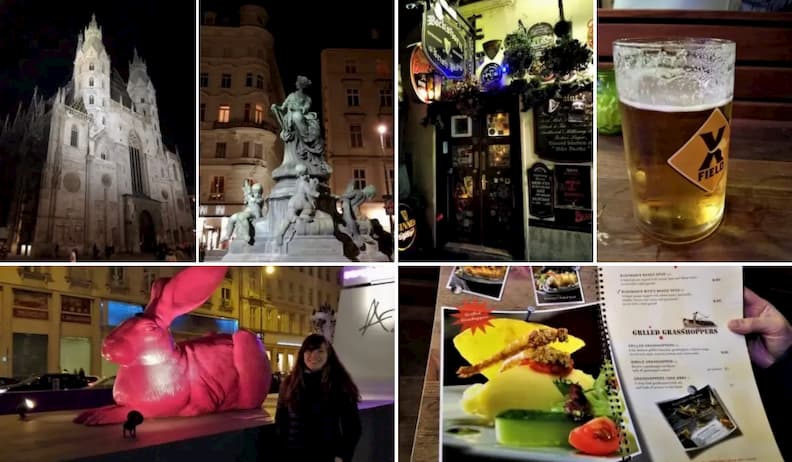
Saturday Evening in Vienna at Crossfield’s & Irish Pubs
We tried the Bockshorn Irish Pub first. It looked perfect, all cozy, crowded, full of music… But it was packed with no seats. We lingered for a moment, soaked up the vibe, then moved on.
A few streets away, we hit Crossfield’s Australian Pub, the kangaroo pub Wien. It was loud, lively, and themed to the extreme with crocodiles on the walls and kangaroo logos on the beer. So I guess there are kangaroos in Austria, after all.
What caught our attention was the menu, an adventurous blend of Australian and Austrian cuisine. We passed on the grilled grasshoppers and ordered the crispy chicken instead. The food was better than expected, and the vibe was weird in a good way.
After dinner, we wandered toward the Vienna Opera House, full and tipsy. On the plaza, I made friends with a giant pink bunny. That’s the photo we send people when they ask what Vienna was like. It makes no sense, that’s what makes it perfect.
Sunday Visit to Belvedere Palace & Zoo Surprise
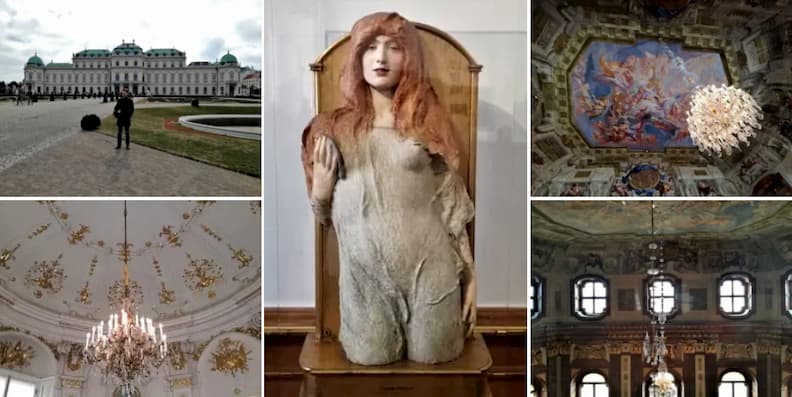
Sunday started cold. Belvedere Palace looked stunning against grey skies, but the fountains were frozen, and the gardens were stripped bare. Still, the combo ticket to Upper and Lower Belvedere and the 21er Haus gave us access to Klimt’s The Kiss, plus quiet halls filled with Austrian art.
See Klimt’s The Kiss without the crowds. Book your skip-the-line Belvedere Palace tour now and explore with an official guide.
We stopped at Café Pierre for lunch. It’s a small French bistro run in German, with Parisian quotes on the wall. The food was simple but good, and the mood matched our pace.
Mathieu had talked to someone on our flight over who raved about the Haus des Meeres Aqua Terra Zoo. We had a few hours to spare, so we decided to try it. It became one of the most surprising highlights of the trip.
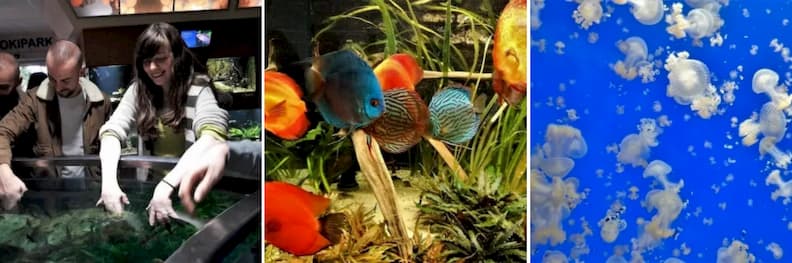
Built inside a former WWII flak tower, the Haus des Meeres has transformed from a concrete relic into one of the most engaging educational spaces in the city. Across 11 immersive floors, the exhibits cover every type of ecosystem, from an Atlantic tunnel surrounded by swirling fish to a living rainforest filled with monkeys and birds. We didn’t expect much, but we were hooked by the biodiversity on display.
What stood out more was the mission. Profits from the Haus des Meeres go toward conservation and wildlife protection. That gave the experience more weight.
The final climb of 192 steps to the rooftop terrace gave us one last, unforgettable view of Vienna. The skyline stretched out in every direction, quiet and soft in the winter light. That moment sealed the trip.
If you’re in Vienna for the weekend, make time for this place. It’s unexpected, warm, and meaningful.
Book your ticket to Haus des Meeres here and support their conservation efforts while getting one of the best views in the city.
As we stood at the top, wind biting at our jackets, we knew the trip was over. It had been a slower city break than usual, because Mathieu was a bit injured. But Vienna delivered anyway through its art, its food, its quiet, and its resilience. These 48 hours gave us more than we planned for, and every minute stayed with us long after the flight home.
Alternative Vienna Weekend Itinerary. Classic Winter Vienna Route
Not every traveler visits with ankle braces or unplanned detours. This classic winter weekend in Vienna route is for those ready to cover ground without limitations. It’s structured for comfort and culture, balancing top indoor attractions with festive outdoor energy. If you’re after a smartly sequenced, weather-resilient plan, start here.
Day 1. Imperial History and The Grandest Vienna Market
Begin your trip in the heart of Vienna’s imperial past. This route keeps you mostly indoors until evening, then delivers the full Christmas spectacle when the lights come on.
Morning at Hofburg Palace, Sisi Museum, and the Imperial Crypt
Begin your morning at the Hofburg Palace, the former seat of the Habsburg monarchy. The full imperial combo ticket includes access to the Imperial Apartments, the Sisi Museum, and the Imperial Silver Collection. The museum highlights Empress Elisabeth’s life with personal artifacts and sharp historical context. Tickets cost €17.50 for adults and €11 for students under 25.
From there, head underground to the Imperial Crypt beneath the Capuchin Church. You’ll see the ornate sarcophagi of Habsburg royalty, including Maria Theresa and Franz Joseph. Entry is €8.50.
Both experiences are entirely indoors and ideal for cold mornings.
Walk through imperial Vienna with zero waiting. Book your skip-the-line Sisi Museum and Hofburg tour now for fast entry and expert insights.
Warm-up Break with Viennese Coffee Culture and Sachertorte
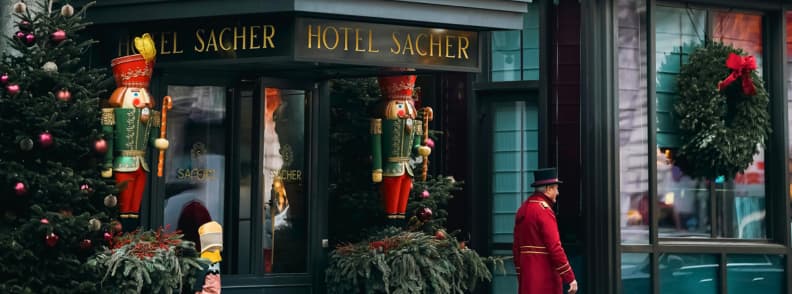
After a few hours inside palaces and crypts, step into one of Vienna’s café legends. If you want to try the original Sachertorte, go to Café Sacher behind the Opera House. The classic slice costs about €8.90 and comes with unsweetened whipped cream. The experience is formal but memorable.
For a slightly more local feel, head to Demel near Kohlmarkt. Their version of Sachertorte is less dense and often preferred by locals. Alternatively, Café Central offers an iconic setting with vaulted ceilings and a wider pastry selection. Expect coffee and cake to cost €10 to €12 at any of these spots.
Make your pick based on seating, queues, or your preferred dose of sugar. All three cafés are walkable from Hofburg Palace.
Afternoon at St. Stephen’s Cathedral and the Graben Illuminations
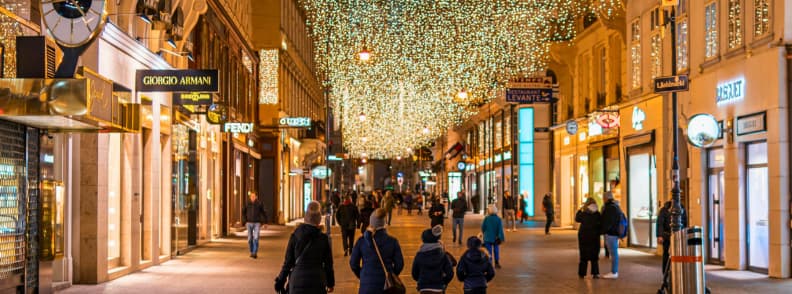
Walk along the Graben and Kärntner Strasse, where Christmas chandeliers are strung between 19th-century facades. The walk ends at St. Stephen’s Cathedral, Vienna’s Gothic landmark. Entry is free, but to explore further, the South Tower climb (343 steps) costs €5.50, while the North Tower elevator ride is €6. Cathedral tours with an audio guide are also available for €6.
Go beyond the facade with fast-track entry and expert commentary. Book your skip-the-line St. Stephen’s Cathedral tour now and see the landmark from inside out.
Vienna Winter Tip: If you want to stay outdoors without freezing, visit just before sunset. The play of light on the cathedral roof tiles and the warm glow from surrounding cafés is hard to beat.
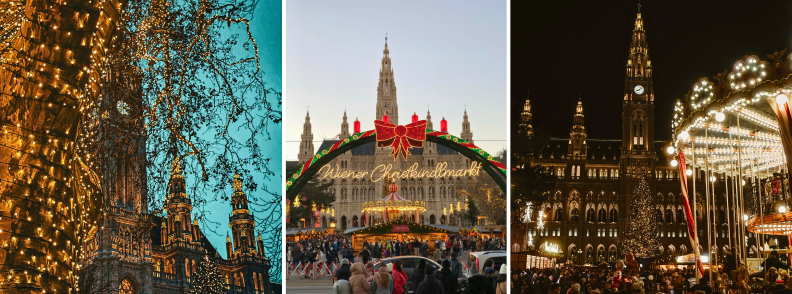
Evening at Christkindlmarkt at Rathausplatz Vienna
In the evening, head to Rathausplatz, home to Vienna’s largest and most photogenic Christmas market. You can visit this Vienna Christmas market for free. It has over 150 stalls filling the square in front of City Hall, serving hot punch, sausages, baked goods, and crafts. Ice skating trails wind around the illuminated square from mid-November to early January.
The market is busiest on weekends after 6 PM and closes early on 24 December, typically by 7 PM. You can also use this time to attend a seasonal concert nearby.
Buy the Vienna Pass for fast-track entry to over 70 attractions, including Hofburg and Belvedere Palaces. It has incredible bundled savings for weekend visitors.
Day 2. Art, Music, and Baroque Splendor
The second day mixes imperial glamour with high art and winter-only activities. You’ll spend more time indoors with options to go active or unwind.
Morning at Schönbrunn Palace and its Christmas Market
Start the day at Schönbrunn Palace, the former Habsburg summer residence. In winter, it’s calm and beautiful. The Grand Tour includes 40 rooms and costs €26. Guided tours are optional but helpful for context.
Outside the palace gates, you’ll find the Schönbrunn Christmas Market, one of the last to close for the season. It stays open until 6 January. The backdrop of the Baroque palace, paired with the scent of cinnamon, roasted nuts, and brass bands, makes this one of the most atmospheric markets in the city.
Avoid the lines and explore Austria’s most famous palace with a guide who brings it to life. Book your skip-the-line Schönbrunn Palace tour now for seamless access and deeper stories.
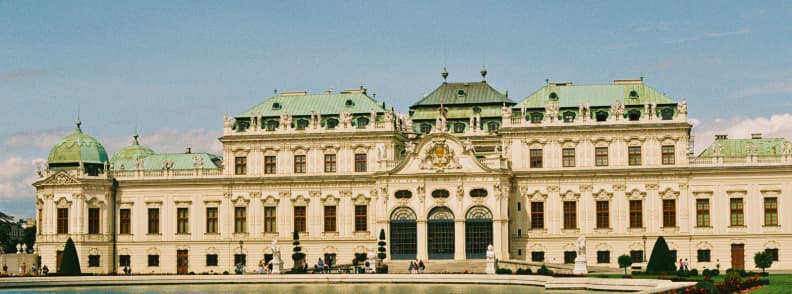
Afternoon at Belvedere Palace or Kunsthistorisches Museum
For art lovers, choose between two heavyweights. Belvedere Palace houses the most famous collection of Austrian art, including Gustav Klimt’s The Kiss. A ticket for the Upper Belvedere costs €17.50. The palace itself is smaller and easier to manage in an afternoon. It’s ideal if you’re short on time.
Alternatively, you can visit the Kunsthistorisches Museum (KHM). It holds the world’s largest Bruegel collection, plus Rembrandts, Rubens, and imperial artifacts. General admission is €21. The building is a showpiece in itself, with marble staircases and frescoed domes.
Choose your art experience in Vienna. Book your skip-the-line Belvedere Palace ticket for Klimt and baroque elegance, or grab a Kunsthistorisches Museum pass to explore Bruegel, Rubens, and imperial treasures without the wait.
Visit Vienna Advice: Go to Belvedere for romance and Klimt, KHM for scale and Renaissance depth. But if it’s snowing or windy, go to KHM. It’s closer to the city center and more protected from the weather.
Optional Ice Skating at Wiener Eistraum from January to March
From January through early March, the Wiener Eistraum transforms Rathausplatz into an enormous open-air skating trail with music, lights, and food stalls. Skating costs €8.50 for adults, plus €7.50 for skate rental. It’s one of the most scenic ice rinks in Europe, and it’s open until 10 PM most nights.
December visitors won’t catch it. The rink only opens after the main Christmas market closes, so plan accordingly.
Vienna Winter Travel Tip: Avoid weekends if you want more space to move.
Evening of Classical Music at Opera, Musikverein, or Karlskirche
No winter trip to Vienna is complete without live classical music. The Vienna State Opera has daily performances with standing-room tickets starting at €10. It’s an affordable way to see top-tier opera in a world-class venue.
The Musikverein, the gold-plated home to the New Year’s Concert, offers orchestral concerts in its Goldener Saal. Tickets vary from €15 to over €100, depending on the performance.
For a more intimate and often more moving experience, attend a candlelit concert in Karlskirche, where Vivaldi’s Four Seasons is frequently performed. Tickets range from €36 to €50 and sell out fast, so book early.
Hear Vivaldi where it echoes best. Book your Four Seasons concert tickets at Karlskirche now for a night of music in Vienna’s most stunning Baroque church.
Vienna Winter Visit Tip: All venues are heated. Dress in layers and avoid heavy boots if you’re planning to stay seated for two hours.
Day 3. Cozy Gems, Family Fun, and Local Tastes
On your final day, explore Vienna’s food scene and offbeat attractions before catching your train or flight.
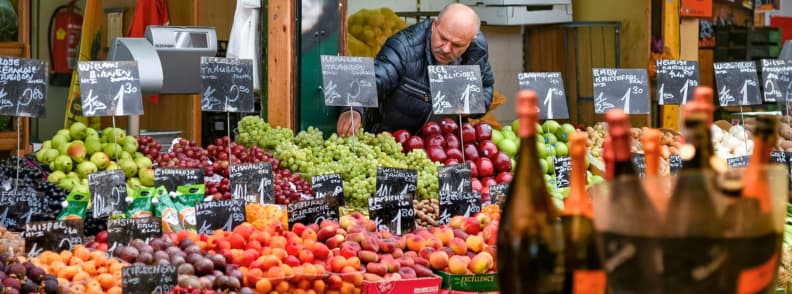
Morning Visit to Naschmarkt for the Local Food Scene
Start your morning at Naschmarkt, Vienna’s best-known market. Weekdays are quieter, with restaurants open from 9 AM. Grab fresh bread, falafel, Viennese spreads, or a strong Turkish coffee. The market is partially covered, and some restaurants at Naschmarkt have indoor seating with heaters. This makes it a good choice even if it’s snowing.
Vienna Budget Travel Tip: There’s no entry fee, and it’s a great place for an affordable breakfast or lunch.
Mid-Day at the Chocolate Museum and Hundertwasserhaus
Hop on the tram toward SchokoMuseum Wien, Vienna’s chocolate museum, located inside the Heindl chocolate factory. It’s hands-on, with tastings and exhibits on chocolate history. Entry is €8.90 for adults, €6.90 for students and teens. It’s a great choice for families and anyone with a sweet tooth.
Not far away, you can visit Hundertwasserhaus, Vienna’s most whimsical architectural experiment. While you can’t enter the residential building, you can explore the façade and visit the nearby KunstHausWien for deeper insight into Hundertwasser’s work.
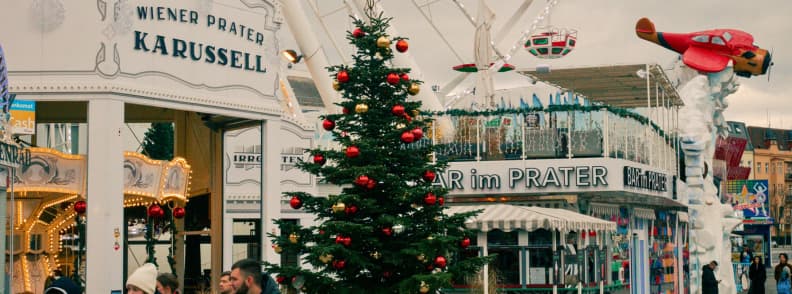
Afternoon at the Prater and Riesenrad
The Prater amusement park quiets down in winter, but the Wiener Riesenrad (the historic Ferris wheel) keeps spinning. A ride costs €14 and offers a relaxed way to see the city from above. Cabs are heated, and lines are minimal this time of year.
It’s especially beautiful at twilight, when the city lights begin to shimmer.
Evening Rooftop Drinks with a View
End your weekend getaway above it all. For panoramic drinks, try Das LOFT on the 18th floor of SO/ Vienna Hotel. The floor-to-ceiling windows and curated winter cocktails make it a cozy final stop. Alternatively, Lamée Rooftop offers fleece blankets, a more casual vibe, and views of Stephansdom.
Both spots are walkable from the city center and stay open late. If you’ve got time for one last toast, make it up high.
Vienna Winter Travel Tips: Many rooftop bars switch to winter menus with hot cocktails and mulled wine variants. Check opening hours, especially on Sundays.
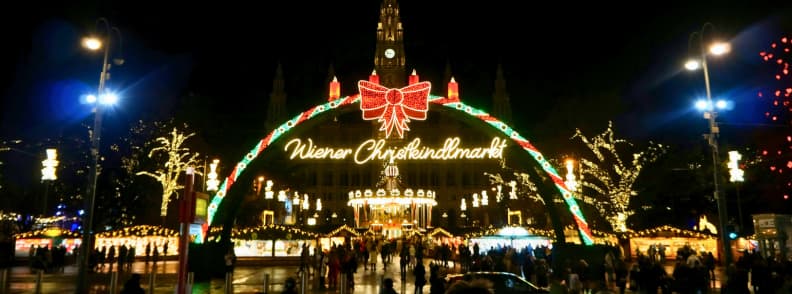
Must-Experience Christmas Markets in Vienna
If you’re planning a cold-season visit, experiencing at least one Vienna Christmas market is non-negotiable. These pretty squares with fairy lights are full-blown cultural hubs packed with food, craftsmanship, music, and nostalgia. Whether you want the grandeur of the Rathausplatz Christmas Market or the quieter vibe of a local stall-lined alley, this guide breaks down where to go, when, and why. It also answers a common question: what’s the best Christmas market in Vienna?
Rathausplatz Market
This is the headline act. Set in front of Vienna’s neo-Gothic City Hall, the Rathausplatz Christmas Market is massive, illuminated, and framed by an ice rink that loops through trees and arches. It usually opens in mid-November and runs until 26 December, from 10 AM to 10 PM daily, closing early on Christmas Eve around 6.30-7 PM.
Expect over 150 stalls selling everything from spiced nuts and wooden toys to hand-blown glass ornaments. The skating trail costs €8.50 for adults, with rental available on-site. Crowds peak on Fridays and weekends after 5 pm. Visit midweek in the early afternoon for elbow room and better light for photos.
Schönbrunn Market
Set against the yellow Baroque facade of Schönbrunn Palace, this market trades urban hustle for imperial calm. The Schönbrunn Christmas Market is one of the most atmospheric in the city and perfect for families or travelers wanting a more relaxed scene.
It opens later than most, often running until 6 January, making it the best option for visitors arriving post-Christmas. You’ll find handcrafts, Austrian woolens, and mulled wine in real mugs instead of plastic. Food is traditional (bratwurst, gingerbread, hot chestnuts) and there’s usually a brass band playing beneath the palace steps.
Spittelberg Market
On narrow cobblestone lanes of the 7th District, the Spittelberg Market is all about mood. You won’t see any giant tree or a skating rink. It’s just tiny wooden stalls, glowing lanterns, and vendors selling handmade soaps, ceramics, and textiles.
Spittelberg Market is less touristy than Rathausplatz and attracts more locals. The crowd here skews younger and more bohemian. If you’re shopping for actual gifts (not only souvenirs), then this is your best bet. Arrive after 5 PM when the lights kick in and the after-work crowd adds a buzz.
Am Hof & Karlsplatz Markets
These two markets share a more curated, craft-forward focus.
Am Hof Market is known for fine Austrian goods (woodwork, leather, jewelry), and the backdrop of the Baroque square gives it a calm, regal feel. It’s a great stop if you’re heading toward the Graben or Stephansdom.
Karlsplatz Market, in front of the Karlskirche, is a favorite for families. The central square fills with hay bales for kids and stalls focused on organic, sustainable products. Live music and artisan demonstrations make it feel more like a local festival than a commercial event.
Hidden Gems in Vienna. Lesser-Known Markets by Neighborhood
If the main markets feel too polished or crowded, you still have great options:
- Altes AKH in the 9th District is cozy, low-key, and ideal for couples.
- Belvedere Palace hosts a small, beautiful market with views over the garden pond.
- Stephansplatz has a compact market with cathedral views and quick access to shops.
These smaller setups often have shorter lines, cheaper food, and a better chance of finding a quiet bench or photo spot.
Vienna Christmas Markets 2025/2026. The Essential Comparison
| Market | Dates | Hours | Highlights | Tram Access |
|---|---|---|---|---|
| Rathausplatz | 16 Nov-26 Dec | 10 AM-10 PM (6.30 PM on 24 Dec) | Ice rink, 150+ stalls, giant tree | Tram D, 1, 71 |
| Schönbrunn | 23 Nov-6 Jan | 10 AM -9 PM | Palace view, family-friendly, music | Tram 10, 60 |
| Spittelberg | 14 Nov-23 Dec | 2-9 PM (weekends later) | Artsy vibe, local crafts | U3 Neubaugasse |
| Karlsplatz | 22 Nov-23 Dec | 12-8 PM | Organic focus, kids’ zone | U1, U2, U4 Karlsplatz |
| Am Hof | 15 Nov-23 Dec | 11 AM-9 PM | Artisan goods, elegant square | U3 Herrengasse |
All Vienna Christmas Markets are walkable from the inner districts and easily connected by tram or U-Bahn. Tram D links most of the major sites directly.
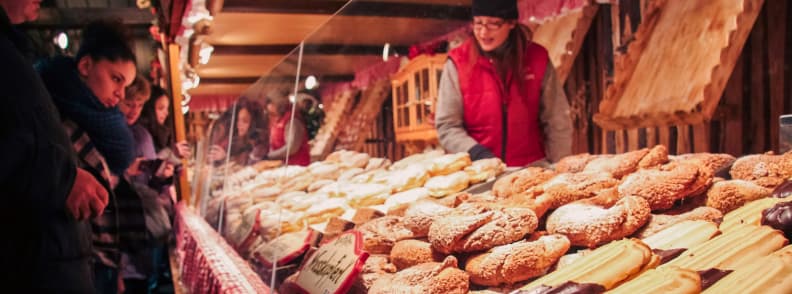
Glühwein, Punch, and Traditional Market Foods
Every market has its own take on hot drinks. Glühwein (mulled wine) comes in red, white, or fruit versions, often with a branded mug that you can return for a deposit or keep as a souvenir.
Orangenpunsch and Eierlikörpunsch are creamy, spiked alternatives. Many stalls also serve non-alcoholic fruit punches.
Classic snacks include Käsekrainer (cheese-filled sausage), Maroni (roasted chestnuts), Kartoffelpuffer (potato fritters), and fresh Lebkuchen (gingerbread). Prices range from €4 to €7 for food, €4 to €5 for drinks, plus a €3-4 mug deposit.
Vienna Christmas Market Insider Tips
The best time to visit any Vienna Christmas market is on weekday afternoons between 2 and 5 PM. Crowds are lighter, vendors are more relaxed, and you’ll still get the magic before sunset.
Bring cash because not all stalls accept cards. Most vendors speak some English, but knowing Danke and Bitte will go a long way.
If you’re gift shopping, aim for earlier dates. The closer it gets to Christmas, the more picked-over artisan goods become.
Set a drink budget, especially if you’re collecting mugs. You can easily spend €20 before dinner without realizing it.
And finally, don’t rush through them. The best Christmas market in Vienna is the one that matches your pace, your mood, and your appetite that day. Let the lights and smells do the work. Your job is to enjoy it.
Top Vienna Winter Attractions & Experiences
Vienna is a city that adapts to winter. From palaces lit by snowlight to steaming thermal baths and festive classical performances, the cold doesn’t stop anything, it just reshapes the rhythm. This section of my Vienna winter guide explores the top seasonal things to do in Vienna, focusing on indoor treasures and unique outdoor experiences like Wiener Eistraum and the Vienna State Opera, while also helping you decide where to go when you want to warm up or escape the city for the slopes.
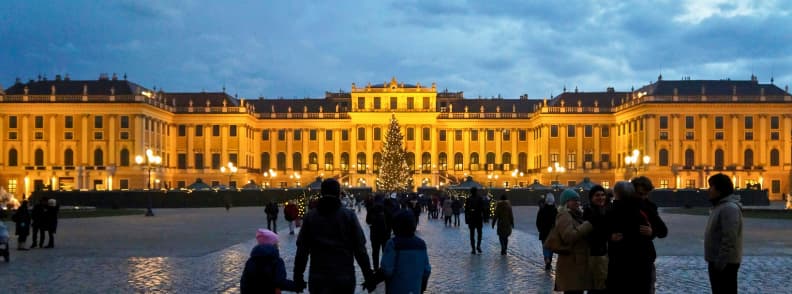
Visit Schönbrunn Palace in Winter
Touring Schönbrunn Palace in winter offers a different kind of magic. The crowds thin out, the Baroque architecture glows against the grey skies, and the imperial apartments feel even more intimate. The Grand Tour covers 40 rooms, including Maria Theresa’s audience chamber and Franz Joseph’s study. Tickets cost €26 for adults.
Out front, the Schönbrunn Christmas Market brings warmth to the cold with Glühwein, handicrafts, and live music. It runs until 6 January, making it ideal for post-holiday visitors. Even if you skip the gardens, which are bare this time of year, the palace’s interiors and festive square are more than enough for a winter visit.
Belvedere Palace & KHM Museums
If you only have time for one major art museum, choose based on your taste.
Belvedere Palace is split into Upper and Lower sections. The Upper Belvedere houses Gustav Klimt’s The Kiss and is perfect for those drawn to Art Nouveau, romantic symbolism, and Austrian modernism. Entry is €17.50 for the Upper Belvedere alone.
The Kunsthistorisches Museum (KHM) offers a broader and deeper collection. You’ll find Greek and Roman antiquities, Egyptian sarcophagi, and the world’s largest collection of Bruegel paintings. It’s a dense, visually overwhelming experience in the best way. Admission is €21.
Both of these art museums are ideal winter stops, but if you’re traveling with kids or prefer decorative arts and grandeur, choose Belvedere Palace. For academic depth and full-day exploration, go with KHM.
Wiener Eistraum Ice Skating
From mid-January through early March, Wiener Eistraum takes over Rathausplatz with one of Europe’s most impressive urban skating setups. The rink is a full ice trail weaving through the square, with bridges, turns, and mood lighting. There’s even a smaller kids’ section.
Skating costs €8.50 for adults, with €7.50 for rentals. Weekday mornings are quiet, while evenings glow with lights and music. You’ll also find warm punch, bratwurst, and outdoor heaters at food stands lining the square.
Wiener Eistraum Tip: Bring gloves and some patience if you’re skating at night. It gets busy, but the atmosphere is worth it.
Vienna State Opera & Classical Music Venues
No winter trip to Vienna is complete without live music. The Vienna State Opera remains one of the top institutions in Europe, with daily performances ranging from Mozart to Puccini. Standing tickets start at just €10, though you’ll want to arrive early to secure a spot.
If opera feels too formal, opt for a concert at Karlskirche, where Vivaldi’s Four Seasons is performed often in candlelight. The church’s acoustics and atmosphere offer an immersive experience for €36 to €50.
Prefer orchestral precision? The Musikverein offers golden-hall performances that deliver the full symphonic impact. Be sure to book early, especially for weekend or holiday programs.
Thermal Spas & Wellness Retreats in Vienna
For many visitors (especially those coming from France or Switzerland), winter means warm water and relaxation. Therme Wien, Vienna’s largest and most accessible thermal spa, is located in the Oberlaa district and reachable via U1.
Inside, you’ll find steam rooms, heated indoor and outdoor pools, and a full wellness zone. Day passes start around €27 for adults. It’s popular with locals and not touristy, which makes it feel more like a hidden perk than a destination.
Vienna Winter Travel Tip: If you’re feeling cold, tired, or over-socialized after the markets, this is the place to reset. Bring your own towel and sandals if you want to avoid the rental fees.
Snow Sports Day Trips from Vienna
Vienna doesn’t sit in the Alps, but that doesn’t mean snow lovers are out of luck.
Day trips to ski areas like Semmering or Stuhleck are easy via train or car. Semmering is just over an hour away and offers sledding, skiing, and snowshoe trails. Ski passes start around €45 per day.
These spots are beginner-friendly, with rental shops and cafés on-site. If you’re traveling with kids or want to experience winter sports without committing to a full ski holiday, this is the way to do it.
Even if you’re not skiing in Austria, the scenery and fresh air make for a worthwhile break from the city’s museums and markets.
Authentic Viennese Winter Experiences
Beyond palaces and ice rinks, Vienna offers a cultural rhythm that doesn’t freeze when the temperatures drop. Winter brings out the city’s quieter, more refined side, found in candlelit cafés, cellar wine taverns, and glittering dance floors. Whether you’re curling up with Vienna Sachertorte, sipping red in wine taverns Grinzing, or dressing up for the Vienna Opera Ball, these are the experiences that define winter in Vienna for locals and in-the-know travelers alike.
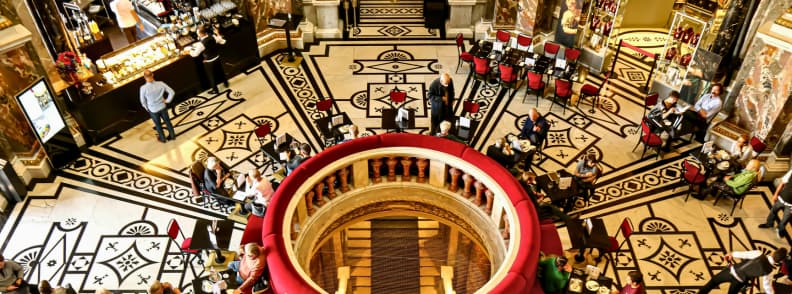
Vienna Coffee House Culture. Where Locals Gather
Winter is peak season for Vienna coffee houses, not because they change, but because they stay exactly the same. These are warm, lived-in spaces where locals read, write, or people-watch over a single cup for hours. You’ll find marble tabletops, coat hooks by the chairs, and that distinct sound of spoons clinking against porcelain.
Whether it’s Café Sperl, Café Hawelka, or Café Korb, the rule is simple: you can’t go wrong in Vienna. Order a Melange if you want something like a cappuccino, or a Kleiner Schwarzer if you prefer straight espresso. And if it’s cold, stretch it out with a slice of Vienna Sachertorte or an apple strudel. No one will rush you.
Grinzing Wine Taverns & Cellars
In the 19th District, the former village of Grinzing still holds onto its roots, with cobbled lanes, wooden signs, and glowing windows that signal open taverns. These wine taverns in Grinzing, called Heuriger, are where locals drink new wine straight from the barrel, eat hot food, and sing along to live accordion music in low-lit rooms.
Heuriger culture is casual but steeped in ritual. You’ll order plates of cold cuts, Liptauer cheese, or roast pork with sauerkraut, poured out in communal style. The wine is local, affordable, and comes in half-liter jugs. In winter, many taverns serve hot mulled wine, adding to the draw.
Vienna Travel Tip: The U4 or tram D can get you close. Just look for the hanging pine branch outside. That’s the sign they’re open.
Traditional Austrian Food Must-Trys
Viennese cuisine thrives in winter. This is the season for schnitzel, but also for the slow-cooked dishes that rarely make the Instagram roundups.
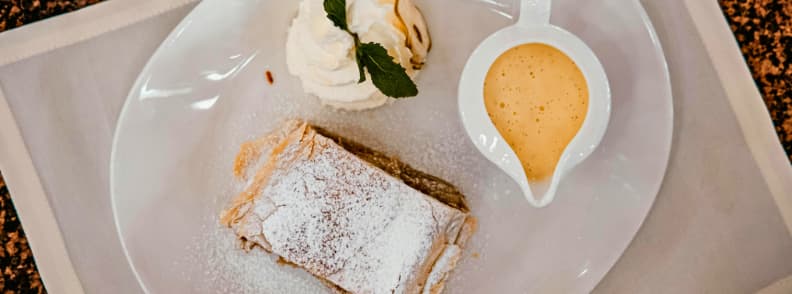
Try Tafelspitz, boiled beef served with apple-horseradish and broth. It’s rich, comforting, and a Habsburg favorite. Käsespätzle, Austria’s answer to mac and cheese, comes topped with crispy onions. Apfelstrudel is lighter than it sounds, with thin dough wrapped around tart apples and raisins, often served warm with vanilla sauce.
These aren’t novelty meals. Locals eat them year-round, but they hit especially well after walking through sleet or skating in Rathausplatz.
Opera Ball Season & Winter Balls in Vienna (Jan-Feb)
Each winter, Vienna becomes the ballroom capital of Europe. From mid-January through February, over 400 balls take place, ranging from small guild events to the world-famous Vienna Opera Ball.
Attending is possible, even for visitors. The Vienna Opera Ball is the most exclusive, held inside the State Opera House with debutantes, tuxedos, and global media. Tickets start at €350 for standing room, but more accessible options include the Coffeehouse Owners’ Ball or the Medical Doctors’ Ball, which are festive and slightly less formal.
Dress codes are strict. For women, floor-length gowns are mandatory. Men wear black tie or white tie, depending on the event. Dancing isn’t optional, and a basic waltz will get you far. And yes, you can rent formalwear in Vienna if you’re not packing one in your suitcase.
We didn’t go during our trip, but it’s on the list for our next time in Austria’s capital. There’s something timeless about a city where thousands still dress up and dance each winter just because it’s tradition.
Vienna Visitor Tips & Practical Logistics
Vienna in winter is elegant, accessible, and surprisingly easy to navigate… if you know a few things in advance. From transport passes to safety, weather layering, and budget tactics, here I am giving you straight answers to questions like Do I need concert tickets in advance? or How cold is Vienna? with practical tips tailored to travelers and expats alike.
Vienna Weather Reality Check
Vienna winters are dry, crisp, and mostly manageable. From late November through February, daily highs hover between 0°C and 5°C, while nights often dip below freezing. Snow does fall, but usually in light, brief bursts. December tends to be greyer, with as few as two hours of sunshine per day.
Don’t expect blizzards. Expect dry sidewalks, biting wind, and the occasional frozen fountain. Dress with a layered base, warm midlayer, and insulated coat. Waterproof boots are essential for cobblestones and slush. Add a hat, gloves, and scarf, because wind chill is real, especially in open areas like Stephansplatz or the Belvedere gardens.
Navigating Vienna in Winter. Public Transport and Vienna Passes
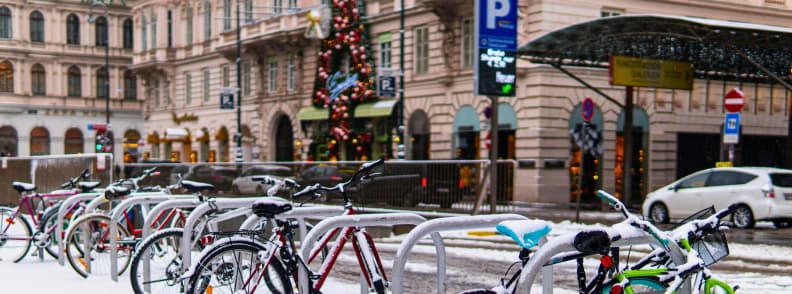
Vienna’s public transport system runs smoothly in every season. In fact, during winter, it’s your best friend. The U-Bahn (subway), trams, and buses connect all major neighborhoods and attractions without requiring long walks in the cold.
You don’t need to rent a car. Even in snow, everything runs on time. The WienMobil app makes it easy to buy digital tickets and check schedules in real-time.
Buy a 48 or 72-hour travel card if you’re planning to explore different districts or want to avoid fumbling for change at machines. These cards cover all transport modes and save both money and exposure to the elements.
Vienna City Card. Worth It or Skip?
The Vienna City Card is worth it if you’re doing at least three attractions per day. It includes public transport, discounted admission to over 200 sites, and even restaurant deals.
It’s not a skip-the-line pass, but it does cut entry costs at places like Belvedere, Hofburg, and the Kunsthistorisches Museum. If you’re planning a museum-heavy trip or using Big Bus Vienna, it pays for itself quickly.
Compare the Vienna City Card options here to choose the right version based on your itinerary.
Vienna Safety & Solo Travel Tips
Vienna is one of the safest cities in Europe. Crime rates are low, even at night. Public spaces are well-lit and active until late, especially during market season.
Solo travelers (especially women) can feel confident walking, taking public transport, and dining alone. Harassment is rare. Common sense still applies, so avoid unlit parks late at night and keep an eye on your valuables in crowded markets or trams.
Police presence is visible but unobtrusive. Emergency numbers are easy to remember (112 for general emergencies), and most locals speak basic English if you ever need help.
Vienna Money-Saving Tips & Budget Hacks
Vienna doesn’t have to break the bank. Smart planning keeps costs reasonable, especially in winter when flights and hotels drop after New Year’s.
- Skip taxis. The U-Bahn is faster and cheaper.
- Eat at local Gasthäuser instead of hotel restaurants.
- Book standing tickets for the Opera from €10.
- Use supermarkets like Billa or Spar for snacks and water.
- Reuse your Christmas market mugs for a deposit refund.
- Visit museums on discounted days (some offer reduced admission late in the afternoon).
If you’re traveling as a couple or group, apartment rentals near a U-Bahn line can save more than city-center hotels. And don’t over-plan. Vienna rewards lingering, not rushing.
Vienna Weekend Variations by Traveler Type
No two winter weekends in Vienna look the same. Whether you’re chasing intimacy, navigating with kids, treating yourself to a Vienna luxury weekend, or traveling solo, the city adapts. Let’s break down itinerary tweaks tailored to different traveler types, built from real winter experiences and grounded in local detail.
Couples Romantic Winter Weekend in Vienna
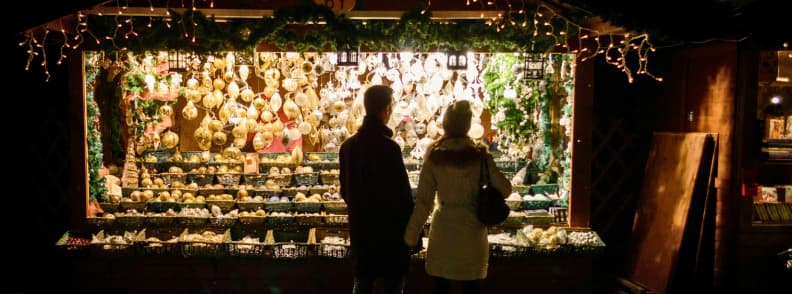
A Vienna romantic winter getaway builds itself. Candlelit cafés, horse-drawn carriages, classical music, and snow-dusted palaces do the heavy lifting.
Start with rooftop drinks at Das LOFT or Lamée, both offering sweeping city views and glowing sunsets. Wander through Spittelberg’s narrow lanes after dark for handmade gifts and a quiet festive vibe. Book a Fiaker carriage ride through the historic center for a classic, if a little kitschy, memory.
Cafés like Café Sperl and Café Central offer low lighting, mirrored walls, and plush booths, ideal for lingering over a Melange. End the evening with a concert at Karlskirche or a waltz at a winter ball if your timing lines up.
Family-Friendly Winter Activities in Vienna
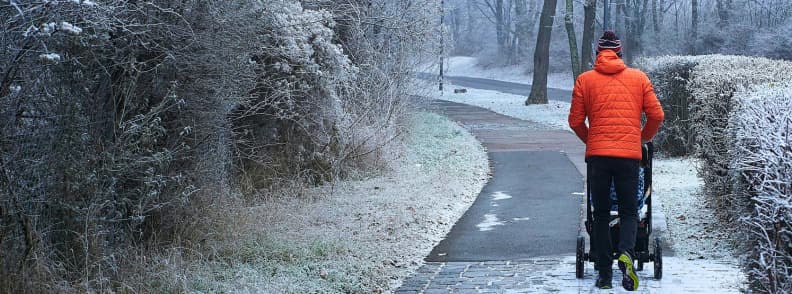
If you’re traveling with kids, Vienna gets better in winter, not worse. Many attractions are indoors, hands-on, and never too crowded. Start your Vienna family activities winter lineup with the Haus des Meeres, with 11 floors of aquariums, monkeys, and a rooftop terrace with views.
Visit the SchokoMuseum for chocolate sampling and interactive exhibits, then ride the Riesenrad at Prater for a slow, scenic loop over the city. For younger kids, markets like Karlsplatz offer hay play areas, puppet shows, and warm punch without alcohol.
Vienna Family Travel Tip: Public transport is stroller-friendly, and almost every café has baby chairs and warm milk on request.
Budget Backpacker Guide to Vienna Austria
Winter works well for budget travelers in Vienna. Prices dip after New Year, museums offer deals, and bakeries become your best friend. Base yourself near Hauptbahnhof or in the 7th District for cheaper Airbnbs and easy U-Bahn access.
Skip restaurant dinners a few nights and load up on pastries and sandwiches from Der Mann or Anker. They open early, they’re central, and filling. Save on culture with Sunday discounts at places like the Leopold Museum or Jewish Museum.
Pick up a 48-hour transport card, eat warm at Naschmarkt, and book standing tickets at the Opera. That’s Vienna on €60 a day or less.
Vienna Luxury Weekend Splurge
For a Vienna luxury weekend, winter is your season. Five-star hotels like Hotel Sacher Wien, Palais Coburg, or Park Hyatt Vienna turn cold weather into a feature, with fireplaces, velvet interiors, and spa access.
Reserve dinner at Steirereck or Mraz & Sohn, both Michelin-starred and heavy on seasonal, local ingredients. Book a box seat at the Vienna State Opera or a VIP concert ticket at the Musikverein. Some hotels can arrange behind-the-scenes tours or ball-night access if you’re visiting in February.
Use a private guide for Schönbrunn or Belvedere and skip the lines altogether. Luxury in Vienna is discreet, slow-paced, and always tied to history.
Vienna Solo Female Traveler Safety & Tips
Vienna is one of the safest cities in Europe for solo travelers. The U-Bahn runs late, the streets are well-lit, and most neighborhoods feel calm and walkable even after dark.
If you’re solo, spend your mornings in cafés. Café Phil and Kaffeemodul are especially welcoming to readers and laptop users. Museums offer quiet company, while concerts provide evening plans that don’t feel awkward alone.
You’ll get the best value from a 72-hour transport card, giving you flexibility to explore without overthinking logistics. Don’t hesitate to ask locals for help. They’re polite, if reserved, and almost always speak English.
Winter Day Trips from Vienna
If you have a third day or want to see more of Austria without packing up and relocating, winter day trips from Vienna deliver variety. Whether you’re after lakeside villages, classical history, or vineyard landscapes, options like a Hallstatt day trip from Vienna, Salzburg from Vienna, or a drive through the Vienna Danube Valley are all doable, even with snow on the ground.

Hallstatt Day Trip from Vienna for Alpine Village Perfection
A Hallstatt day trip from Vienna is long, cold, and still completely worth it if you plan right. Expect a 6 to 12-hour commitment, depending on your method of travel. Trains via Attnang-Puchheim take about 3.5 hours one-way, while driving can shave an hour off each leg.
Hallstatt in winter is almost surreal, with pastel houses dusted in snow, frozen lake edges, and a deep silence that’s rare in more accessible spots. But winter also limits daylight and ferry access across the lake. Many shops and restaurants close mid-week. Roads can be icy.
If you’re going, go early. Dress in layers, wear waterproof boots, and pack food in case limited options are open. Still, walking through the quiet village while smoke curls from chimneys and the lake reflects the Alps is one of https://www.the-travel-bunny.com/category/europe/austria/Austria’s most photogenic moments.
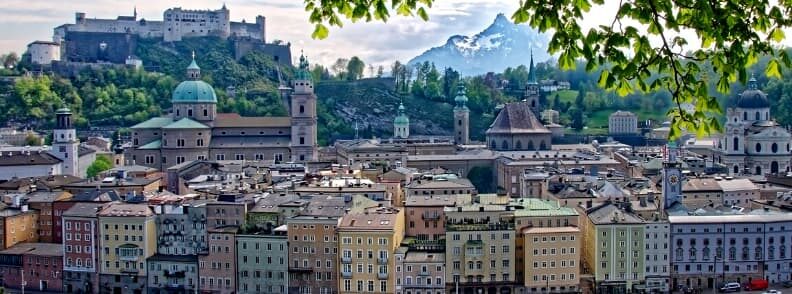
Salzburg from Vienna to Visit Mozart’s Birthplace
Taking a train to Salzburg from Vienna is easy, fast, and ideal for travelers craving a rich mix of Baroque architecture, mountain views, and classical music history. The ÖBB Railjet gets you there in 2.5 hours and drops you close to the city center.
Winter highlights include Mozart’s birthplace, the Hohensalzburg Fortress, and panoramic views from Mönchsberg. The city’s Old Town remains lively even in the off-season, and the Christmas markets (open through December) have a more intimate feel than Vienna’s.
Salzburg also works well in January and February thanks to events like Mozart Week and the generally lighter crowds. You can cover the essentials in a full day if you start early and focus your route.
Trade the city for alpine charm. Book your guided day trip to Hallstatt and Salzburg now and see Austria’s most iconic towns without the planning hassle.
Wine Region Escape to Vienna Danube Valley
In summer, the Vienna Danube Valley (specifically the Wachau wine region) gets crowded. Winter strips away the traffic, leaving terraced vineyards, sleepy villages, and icy riverbanks almost entirely to you.
Base your trip around Dürnstein, with its blue abbey tower and hilltop castle ruins. Or head to Krems, where wine bars and shops still open on weekends. Many Heuriger close in winter, but some stay open for lunch or by reservation.
You won’t get grape harvests or green hills, but the misty cold adds drama to the stone churches and quiet trails. A Danube day trip is ideal if you want fresh air, local wine, and zero pressure to sightsee aggressively. The valley is reachable by car or train in under 90 minutes.
Cover more of Austria in one unforgettable day. Book your Wachau, Melk, Hallstatt, and Salzburg tour with boat ride now and let someone else handle the details.
Winter Weekend in Vienna FAQs
If you’re planning a trip to Vienna in winter, odds are you’ve typed at least one of these questions into a search bar. Here are clear, in-depth answers with details sourced from experience and current local knowledge.
How many days are enough for Vienna in winter?
Three days is the ideal length for a winter weekend in Vienna. It gives you time to explore core imperial sights like Schönbrunn Palace and Hofburg, take in world-class art at Belvedere or the Kunsthistorisches Museum, and still leave space for seasonal experiences like the Christmas markets, rooftop punch, or a few slow hours in a Viennese café. Anything shorter feels rushed. Anything longer is best reserved for repeat visitors or those venturing into day trips like Hallstatt.
What is the best time to visit Vienna in winter?
December brings peak festive atmosphere with markets and lights everywhere, but also bigger crowds. If you’re after a quieter experience with better prices and fewer tourists, aim for mid-January through early March. You’ll still find ice skating, concerts, and museums open, but without the holiday surge.
How cold does it get in Vienna in winter? What are typical Vienna winter temperatures?
Average daytime temperatures range from 0-5°C. It often drops below freezing at night. Dress in layers, including a thermal base, an insulated jacket, gloves, and waterproof shoes to stay comfortable outdoors.
Does it really snow in Vienna in winter?
Yes. Snow is part of the experience, though it doesn’t blanket the city daily. It’s more likely in January and February. Snow tends to be light and short-lived, but still enough to transform rooftops and parks into something storybook-like.
What is the coldest month in Vienna?
January is typically the coldest. Expect lows of -3°C and highs just above freezing. It’s also the best month for ice skating, spa visits, and attending winter balls. Bring layers, wool accessories, and solid boots for warmth and grip.
What are the best indoor activities in Vienna in winter?
Spend cold days exploring the Kunsthistorisches Museum, the Sisi Museum at Hofburg, and the Vienna State Opera. These attractions keep you warm and also give deep insight into Vienna’s imperial and artistic legacy. Evening concerts or museum night hours round out a full indoor itinerary.
Do I need to book Vienna concert tickets in advance?
Yes, especially for winter events like Mozart or Strauss concerts, and major venues like the Musikverein or Vienna State Opera. December and New Year’s Eve sell out weeks in advance, even for standing-room spots.
Are Vienna Christmas markets worth visiting?
Absolutely. Markets like Rathausplatz, Schönbrunn, and Spittelberg offer food, live music, handcrafted gifts, and that immersive festive atmosphere Vienna does best. Check our Market Comparison Chart for full details.
What is the best Christmas market in Vienna?
It depends on what you’re looking for. The Rathausplatz Christmas Market is the most iconic, especially for families, with its massive skating rink and over 150 stalls. Schönbrunn has the most elegant setting in front of the palace and stays open until January 6, perfect for post-holiday travelers. Spittelberg feels more local, tucked in cobbled lanes with handmade goods and a more relaxed crowd.
Can you visit Christmas markets if you’re not Christian?
Yes, Vienna’s Christmas markets are cultural, not religious. They focus on food, music, seasonal decorations, and crafts. Everyone is welcome, no matter their background or beliefs.
Best food to try at Vienna Christmas markets?
The staples are Käsekrainer (cheese-filled sausage), Kartoffelpuffer (potato fritters), and Maroni (roasted chestnuts). For sweets, go for Lebkuchen (gingerbread) or warm Apfelstrudel. Wash it down with Glühwein or Orangenpunsch served in a souvenir mug.
When do Vienna Christmas markets close?
Most markets shut down on 23 or 26 December. But two of the best Schönbrunn and Prater remain open through 6 January, which makes them ideal for travelers arriving after Christmas.
What should I pack for a weekend in Vienna?
You’ll need layers: thermal shirts, a warm midlayer, an insulated coat, gloves, scarf, hat, and waterproof boots. Cobblestone streets and slushy corners are no joke.
Is Vienna crowded during Christmas season?
It depends on timing. Weekends in December, especially the two before Christmas, get packed around the big markets. Weekdays are much quieter. Early December (before the 10th) is the sweet spot: all the atmosphere, none of the elbowing. Visit markets before 4 PM for fewer crowds and better light for photos.
Is Vienna expensive in winter?
Prices peak mid-December due to market season, but drop after Christmas. You can still find mid-range hotels under €110 per night and great value meals for €10 to €20 if you avoid tourist zones. Many museums offer discounts on Sundays or late afternoons.
How much does it cost to visit Vienna in December?
For a 3-day winter weekend in Vienna, expect to spend around €250-400 per person. That includes €70-110 per night for a hotel, €30-50 per day for meals, €20-40 for museum entries and activities, and about €20 for a public transit pass.
Where’s the best Sachertorte in Vienna?
Hotel Sacher serves the original dense, dark, and iconic. Demel offers a slightly smoother, sweeter version in a more intimate setting. Café Landtmann gives you great cake without the crowds in a refined, old-school interior. All are worth trying if you have time.
Is Prater open in winter?
The Prater amusement park itself stays open all year, but most rides close for the season. The exception is the Riesenrad Ferris Wheel, which operates daily, is enclosed, and offers sweeping views of the city. It’s a great winter photo op.
Can you ice skate in Vienna in winter? What is the Wiener Eistraum?
Yes. Wiener Eistraum, the biggest and most impressive rink, runs from 22 January to 1 March 1. It covers 9,000 square meters in front of Rathaus with trails, lights, and music. Open daily into the evening, it’s perfect for skaters of all levels and makes a great post-market activity.
Other rinks include Eislaufverein near Stadtpark and Engelmann in Hernals. Weekend rentals book fast, so go early if possible.
Can I visit Hallstatt as a day trip from Vienna in winter?
You can, but plan carefully. By train, the journey takes 3.5 hours each way with a transfer in Attnang-Puchheim. Driving takes closer to 3 hours. Expect limited daylight and fewer restaurants open. Still, the alpine village blanketed in snow is one of Austria’s most photogenic sights and a good fit if you’re OK with a long travel day. Leave early and dress for sub-zero temps.
Book Your Vienna Winter Weekend
Once your Vienna winter itinerary is set, it pays to secure the essentials early. Hotels fill up quickly during Christmas market season, and activities like concerts or guided palace tours often sell out weeks in advance. Whether you’re planning a Vienna winter weekend, a festive getaway, or a romantic holiday break, here’s how to lock in everything efficiently, with reliable partners we use and trust.
For accommodation in Vienna, use Booking.com to compare hotels, guesthouses, and winter-friendly apartments. Filters let you search by heated floors, breakfast included, or proximity to U-Bahn stations. Booking early in December or after Christmas gets you the best value. Central districts like Innere Stadt or the 7th are ideal for walkability and atmosphere.
To organize Vienna day tours and skip-the-line entry for Schönbrunn Palace, Belvedere, or the Kunsthistorisches Museum, book through GetYourGuide or Viator. These platforms offer small-group walking tours, market food tastings, and reserved concert seating, ideal when your trip is short and your time matters.
From the airport, the fastest and most reliable transfer is the City Airport Train (CAT). It takes 16 minutes to reach the city center, runs every 30 minutes, and avoids taxi delays in winter traffic. Buy tickets online in advance through this CAT booking link. If you’re planning day trips or Austrian countryside visits, rent a car via DiscoverCars for competitive winter rates and flexible pickup options.
And finally, protect your plans with SafetyWing travel insurance. It covers medical needs, trip interruptions, and winter sports incidents. It’s especially useful in snowy months or if you’re heading to Hallstatt or Semmering.
Book smart, travel warm, and keep your focus on the experience, not the logistics.
Why a Vienna Winter Weekend Is Always the Right Choice
Vienna in winter offers a balance few cities can match. You get world-class culture without long lines, outdoor magic without chaos, and holiday atmosphere without gimmicks. Heated trams take you between palaces and punch stalls in minutes. Ice skating trails loop around City Hall, while Mozart and Klimt wait indoors when the cold bites harder.
This guide was built for travelers who want both depth and ease. Whether you’re here for three days or longer, it gives you every option, from luxury concerts to late-night Glühwein, from family outings to solo café sessions. Each section of The Travel Bunny’s Vienna winter weekend guide above reflects up-to-date info, local insight, and smart planning to help you make the most of every cold-weather hour.
Have questions? Found a great winter tip I missed? Share it in the comments! Your insight helps keep this guide useful and personal for every future visitor.
About the author

I’m Mirela Letailleur, a Romanian-born travel writer living in the south of France and the voice behind The Travel Bunny. I specialize in practical, experience-rich European travel guides, with a focus on cultural depth, budget strategies, and seasonal itineraries. My goal is to help curious travelers see more with less, whether that’s navigating Vienna in winter or uncovering quiet corners of Paris that locals love. You won’t find fluffy lists or tourist traps here. I write from the ground, always with a suitcase packed and a metro pass in hand.
Over the years, I’ve helped thousands of readers plan smarter city breaks, day trips, and long weekends across Europe. From solo travel safety tips to multi-generational family logistics, I blend firsthand stories with data-driven planning. I’m fluent in three languages, travel light, and never skip coffee. If you value honesty, detail, and itineraries that actually work, you’re in the right place.
If you’re planning a weekend in Vienna, you should also read
Best things to do and places to visit in Vienna
The Spanish Riding School of Vienna and its amazing Lipizzaners horses
Delicious coffee map for travelers