
I didn’t even know AI interpreter earbuds existed until Timekettle asked me to test them. That alone made this review worth writing. As someone from a trilingual family, I was curious to see if the Timekettle W4 AI Interpreter Earbuds could move past gadget hype and help with real cross-language communication at home, on the road, and in situations where a phone app slows everything down. After testing these translation earbuds in English, French, and Romanian, I found a tool that feels most useful as one of those travel language gadgets you pack for the trips where you know you’ll struggle without local language skills.
In this ultimate Timekettle W4 AI Interpreter review, I’m looking at how these wireless translator earbuds handle real-time conversations, how they perform in different modes, where they still fall short, and how they compare with apps and other translator devices. I tested them in family conversations, small talk, and offline situations where a global travel translator could shift from convenient to genuinely useful. I also paid close attention to what most reviews skip, such as comfort, speed, accuracy, the need to stay close to the phone, and how much trust you can place in them when the conversation matters.
Timekettle W4 AI Earbuds Review
What makes the W4 stand out is its pitch around bone-conduction translation. On paper, that sounds like the next step for travel and business communication. In practice, the results depend a lot on the mode you choose, how clearly you speak, and how you use the app. So this review by The Travel Bunny covers field testing, real-time translation, and direct comparisons, with one main question in mind: is AI bone-conduction translation the future of travel, or are we still in the stage where this works best as backup, support, and a smart extra in the right situations?
Disclosure: Some of the links on this page are affiliate links. This means that at no extra cost to you, The Travel Bunny will earn a small commission if you click through and make a purchase. Thank you!
Timekettle W4 AI Interpreter Earbuds Review. Are AI Translation Earbuds Ready for Travel? Quick verdict
The short answer is yes, but with limits that matter. This part of my Timekettle W4 review is the fast, practical version for people who want to know whether these Timekettle W4 AI earbuds deserve a place in their bag before a trip, a move abroad, or a multilingual family visit. I tested these Timekettle W4 earbuds in real conversations, not in a lab, and the result sits somewhere between impressive and not fully there yet.
Get the Timekettle W4 AI Interpreter Earbuds here if you want real-time translation support for travel, family visits, or everyday conversations where language slows you down.
The Timekettle W4 AI Interpreter makes the strongest case for people who need support with everyday conversations in languages they don’t already speak. That puts these AI translation earbuds in a useful niche between a phone app and a human interpreter. They aren’t the same as fluency, and they aren’t magic, but they can reduce friction in travel, family visits, and light professional use.
What makes this Timekettle W4 AI earbuds review worth reading is that I approached the product as someone who already moves across languages. I come from a trilingual family, so I didn’t need a sales pitch. I just needed proof. And that proof came in mixed results. English and French worked better than I expected in the right mode. Romanian made the limits more obvious. Offline mode felt slow. Staying close to the phone improved results. These are the details people comparing the best translation earbuds, translator earbuds, AI interpreter earbuds, and language interpreter earbuds need before spending money.
For travelers and expats, the Timekettle W4 AI Interpreter Earbuds are travel translation gear for specific situations. Think unfamiliar destinations, mixed-language family time, hotel check-ins, simple questions, and help in places where you would otherwise feel stuck. For business users, I see more value in low-stakes conversation support than in high-risk negotiations. For everyone else shopping for a hands-free translation gadget, interpreter earbuds for travelers, or a wireless translator headset, the key point is simple. These earbuds help most when you understand what they can do and what they still can’t do.
Check availability for the Timekettle W4 AI earbuds and see if this hands-free translation gadget fits your next trip or multilingual setup.
Why the Timekettle W4 is the 2026 Travel Essential. TL;DR summary
I wouldn’t call the Timekettle W4 earbuds a must-buy for every traveler. I would call them some of the most interesting travel essential earbuds for people heading somewhere they can’t comfortably manage with their own language skills. That’s where this Travel AI interpreter starts to be interesting. It’s a support tool for movement, not a replacement for knowing the language or learning a few basics before you go.
Think of Timekettle W4 AI earbuds as on-the-go translation in places where conversation is more important than perfection. This includes asking questions, understanding quick replies, handling family visits, and dealing with small bits of daily life abroad. I can also see their value for expats hosting relatives, couples from different language backgrounds, and parents raising multilingual children. In those situations, the W4 feels less like a gimmick and more like an immersive conversation gadget that lowers stress.
I would still be careful in serious work settings. For international business communication, the W4 AI translation earbuds can handle simple exchanges, but I wouldn’t trust them as my sole language bridge in a meeting where precision carries legal or financial consequences. They can help as a small business meeting translator when expectations are realistic. However, they can’t replace a skilled bilingual employee or professional interpreter.
Where I see long-term value is in repeated use. If you often host relatives, welcome international guests, or move between languages at home and while traveling, the W4 AI interpreter earbuds become a multilingual meeting companion you might reach for more often than expected. But if you only travel to places where English gets you through, it’s harder to justify the price.
Quick Specs. Price, Battery, and Language Support
The W4 translator earbuds have solid specs, but this is one of those products where the features list only tells part of the story. On paper, the numbers look great enough to pull in buyers who are comparing translator devices for travel. In practice, the user experience depends heavily on mode, language pair, distance from the phone, and the pace of conversation.
The claimed Timekettle W4 battery life looks decent for travel days built around short conversations instead of constant use. I haven’t finished my full battery drain test via uninterrupted use yet, so I won’t fake certainty here. What I can say already is that battery is one of the make-or-break points for the best interpreter earbuds because no traveler wants a translation device that needs constant babysitting. I’ll update the final review with hard numbers from my own test.
Timekettle positions the W4 language interpreter earbuds around continuous translation and standard earbud use, and that distinction matters. Translation mode drains faster than casual listening. Music playback time gives you one set of expectations, and active interpreting gives you another. Anyone buying translation earbuds should care much more about conversation endurance than generic listening figures.
The split charging case is one of the more practical design choices because it matches how the product is meant to be used. Two people can each wear one bud and stay in the same conversation flow. This design detail supports the actual use case better than many normal earbuds repurposed as translation tools.
Language coverage is one of the W4’s biggest selling points. The Timekettle W4 languages list is broad enough to appeal to frequent travelers, and the brand positions it with supported languages (40+) plus a large set of accents supported. But coverage isn’t the same as equal quality. My testing already showed that English and French performed more smoothly than Romanian in the same household setup.
Price is where many readers will pause. The Timekettle W4 price places it in premium gadget territory, so this isn’t an impulse buy. The retail cost only feels reasonable when you compare them with repeated interpreting needs, not with a free app. In terms of travel gadget pricing, I see the W4 global travel translator as a niche investment that becomes more rational for multilingual families, frequent travelers to difficult language environments, and people who would otherwise spend money on human help more than once.
Rating for travelers, business users, and language learners
My user rating for the Timekettle W4 interpreter earbuds depends a lot on who is buying it. For travelers, it’s a useful support tool. For business users, it helps in some settings and feels risky in others. For language learners, it can reduce fear, but it shouldn’t become a crutch.
In a traveler gear review, I would score the W4 interpreter earbuds for travelers highest for people who visit destinations where language friction can ruin the day. In business travel tech, I would rate them lower because the margin for error is smaller. As a language learner gadget, it’s interesting, especially for confidence and exposure, but I would still push readers to use them alongside active learning, not instead of it.
The strongest point is ease of use once the basics click. You don’t need to be highly technical to get started. You do need to understand which mode works better, how close to stay to the phone, and how much patience real-world AI translation still asks from you. That makes the W4 wireless translator earbuds’ travel technology rating stronger for practical travelers than for people expecting seamless sci-fi.
Here is my quick portable interpreter score and translator device score breakdown:
| Verdict | Best for | Not ideal for |
|---|---|---|
| Very good with a few practical limits | Travelers going somewhere with an unfamiliar language, multilingual families, simple host and guest conversations, and low-pressure work chats | High-stakes business settings, fast group conversations, people expecting full hands-free use, buyers who only need a few phrases |
| Good support tool | Expats hosting relatives, couples with different native languages, and travelers in rural areas with weak internet | People who already manage well with basic local phrases and a phone app |
| Worth considering, not universal | Travelers willing to pay for convenience and repeated use | Budget travelers, occasional tourists, users who want perfect audio or instant offline performance |
My star rating by category looks like this right now, based on testing so far:
| Criteria | Rating |
|---|---|
| Translation accuracy | 4/5 |
| Battery | Pending full test |
| Comfort | 4/5 |
| Portability | 4.5/5 |
| Audio quality | 3.5/5 |
My overall travel technology rating so far is good enough for a recommendation with clear limits. I would place the Timekettle W4 travel translation gear in the category of smart niche gear. They solve a real problem well enough for the right buyer, but they don’t deserve blind praise.
Pros and Cons at a Glance
The easiest way to understand this device is through its pros and cons. The W4 global travel translator has clear advantages and disadvantages, and ignoring either side would make this review useless.
Timekettle W4 Pros
- Good translation speed in online mode when you speak clearly
- Better-than-expected voice isolation in simple conversations
- Useful in family travel and expat life
- Helpful noise cancellation support when the background sound stays distant
- Secure fit improved by clips and silicone support
- Decent bone-conduction comfort for users whose normal earbuds slip
- Strong open-ear convenience for awareness in public spaces
- Solid accuracy in the right mode and at close range
- Practical case design for two-person use
- Stable enough connectivity for everyday testing so far.
Timekettle W4 Cons
- Offline mode is noticeably slow
- Results improve when both users stay close to the phone, so it’s less independent than it looks
- Business mode performed better than one-to-one mode in my testing, which adds setup friction
- Audio still feels like AI audio
- Group use and fast talkers are a challenge
- You still want the phone visible to verify what was said
- The price is high for occasional use
- Not ideal to share with strangers because of hygiene concerns
- Comfort is better with the clips, but I still don’t forget I’m wearing them.
When a Translation App Is Still Enough
There are plenty of situations where a translation app is still the smarter choice. If you only need to check a menu, ask for a train platform, or show one sentence to someone, a smartphone translator often gets the job done with less setup and less cost. For many casual tourists, that’s enough.
The comparison between Google Translate vs earbuds becomes clearer the lower the stakes are. A phone app wins on price, flexibility, and convenience for one-off interactions. It also feels easier to hand a screen to someone than to share an earbud. That matters more than gadget lovers like to admit.
When I think about quick backup tools, I would still tell readers to learn some basic travel phrases before relying on hardware. Even a simple offline phrasebook or a free translation tool can cover a surprising amount of ground if your trip doesn’t require ongoing conversation.
Where apps lose is in repeated back-and-forth exchanges, especially when your hands are busy, your attention is split, or you’re trying to reduce friction over time. This is where the Timekettle W4 hands-free translation gadget starts to justify itself. So yes, a phone app is still enough for many trips. But a phone app stops being enough when communication becomes a repeated problem instead of a one-minute inconvenience.
What Are AI Interpreter Earbuds and Do You Really Need Them?
Before deciding if the Timekettle W4 is right for you, you need to understand what the product actually is. Most people still ask the same questions. Do AI translator earbuds actually work? and How accurate is real time AI translation in 2026? are at the top of that list. These devices promise smooth conversations across languages, but the reality depends on how you use them, where you use them, and what you expect from them.
At their core, Timektettle W4 AI Interpreter Earbuds are compact tools designed to reduce friction in conversations when you don’t share a common language. A real-time language translator like this acts as an AI language interpreter that listens, processes, and speaks back in another language. That turns them into a wearable translator device you can use while walking, ordering food, or asking for help in unfamiliar places.
The big question is value. Are AI interpreter earbuds worth the money compared to a phone app or a simple translation tool? It depends on how often you face language barriers and how much you care about speed and flow in conversation. If you only need quick translations, a basic language translation device or app is enough. If you need repeated interaction, these earbuds start to make more sense.
You’ll also see different promises across brands. Some claim to be an instant translation device with near real-time results. Others focus on flexibility, offering offline translation earbuds, language translation earbuds no subscription, or even AI translation earbuds that work without phone. In reality, most still depend on a smartphone for the best results.
There is also a learning angle. For some people, these become earbuds for language learning that help with exposure and confidence. For others, they are simply a support tool when traveling or dealing with international situations. The key is to understand what they do well and where they still fall short.
From Apps to AI Earbuds. Why This Product Exists
The rise of translator earbuds for travel comes from a simple frustration. Phone apps interrupt the flow of conversation. You stop, type, show the screen, wait, then repeat. That works for short interactions, but it becomes tiring fast. That gap between convenience and real conversation is where this product fits.
The shift from travel language apps vs earbuds reflects a change in expectations. Travelers want smoother communication, not just correct words. A good travel translator device should reduce pauses, keep both people engaged, and make them feel closer to a normal exchange. That’s the promise these earbuds are trying to deliver.
There is also a strong business angle. Business translation technology has always been expensive or dependent on human interpreters. Wireless translation headsets offer a lighter option for simple conversations, quick meetings, and everyday communication without bringing in external help.
The family use case is often overlooked but important. These devices can act as a family language bridge when relatives speak different languages. In multilingual households, they become a multilingual communication gadget that helps everyone stay included in the same conversation.
This shift shows a clear translation solution evolution. We moved from dictionaries to apps, and now to wearable tools that aim to make translation feel more natural. The technology isn’t perfect yet, but the direction is clear.
Understanding Bone Conduction vs. Traditional Microphones
One of the biggest differences is how sound is captured and delivered. The Timekettle W4 wearable translator device uses bone conduction earbuds with an open-ear design headphones approach, which changes both comfort and performance compared to traditional in-ear designs.
A bone conduction translator works by sending sound through vibrations along your cheekbone instead of directly into your ear canal. This creates an open-ear translation experience where you still hear your surroundings while receiving translated speech. This becomes relevant when you’re walking in a city or navigating busy environments.
The key advantage is voice isolation. Instead of relying only on a microphone translator placed near your mouth, the system uses a bone-voiceprint sensor that detects vibrations from your voice. This helps separate your speech from background noise.
In simple terms, your voice travels through your bones while other sounds travel through the air. That difference allows the device to prioritize your speech even when there is noise around you. This is often described as skull vibration audio, and it plays a major role in how these earbuds perform in real environments.
Another benefit is situational awareness. Because your ears remain open, you stay aware of traffic, announcements, and people around you. This makes this design more practical for travel than fully sealed earbuds, especially in unfamiliar places.
How Real-Time AI Translation Works in 2026
Behind the scenes, these AI interpretation earbuds rely on a multi-step process. Real-time speech recognition captures what you say and converts it into text using automatic speech recognition (ASR). This is the first stage of the translation pipeline.
Once your speech is converted into text, it moves through an AI translation system powered by neural machine translation (NMT). This is where the meaning is interpreted and converted into the target language.
The final step uses text-to-speech (TTS) to turn the translated text back into audio. This creates a speech-to-speech translator experience where the other person hears the result directly through the earbuds or speaker.
All of this happens within seconds, but not instantly. There’s always some level of latency in the process. This delay is the result of the full translation pipeline, from capture to processing to playback.
In practical terms, this means conversation flows differently from normal speech. You speak, wait briefly, then listen. The better the system handles this delay, the more natural the interaction feels.
See how the Timekettle W4 translation earbuds compare to apps and decide if a wearable translator device makes sense for your travel style.
Babel OS 2.0, the Brains Behind the AI
Timekettle runs its system on Babel OS, which is the software layer controlling how translation works. The newer Babel OS 2.0 improves speed, accuracy, and stability compared to earlier versions.
This Timekettle software acts as the control center for the earbuds. It manages connections, selects translation models, and updates performance through AI firmware improvements.
At the core is a multilingual AI engine that handles multiple languages and accents. This engine is what allows the device to switch between language pairs without requiring separate hardware.
SOTA Translation Engine Selector. Real-time Optimization
Modern systems rely on state-of-the-art translation models that adapt to different languages and contexts. The Timekettle W4 language translation device uses a dynamic translation engine selection process to choose the best available model for each situation.
This includes integration with an AI LLM engine and other machine learning translator systems that improve results over time. The goal is to act as a SOTA AI translator that adjusts based on language pair, speech pattern, and context.
Behind the scenes, this involves constant algorithm optimization and a hybrid translation model that combines different approaches for better accuracy. This is why performance can vary depending on language and conditions.
Limitations. Accents, Slang, Latency, and Privacy Concerns
Even with advanced technology, there are still limits. One of the biggest challenges is accent recognition issues. Strong accents or unclear pronunciation can affect how accurately the system understands speech.
Another common issue is idiomatic expressions translation. Slang, humor, and cultural phrases often don’t translate cleanly. This can lead to awkward or confusing results, especially in informal conversations.
Speed is another factor. Translation latency and processing delay are still noticeable in real use. This doesn’t break the conversation, but it changes the rhythm and requires some patience.
There are also valid privacy concerns. These devices rely on data processing, which raises questions about data security, data collection, and how your conversations are handled. Some systems offer encrypted translation, but users should still understand how their data is managed.
GDPR and FERPA Compliance. Are Your Talks Recorded?
Privacy rules like GDPR and FERPA play a role in how these devices operate, especially in Europe and educational environments. These regulations focus on protecting personal data and giving users control over how information is handled.
- Most devices include a clear privacy policy and features like no-record mode to limit data storage. This helps reduce concerns about conversations being saved or reused.
- The difference between on-device translation vs cloud processing also matters. Cloud-based systems are often more accurate but involve sending data online. On-device processing offers better data protection, but may reduce performance.
- In all cases, user consent is central. You should always know what data is being used and how it is handled before relying on any translation device.
Timekettle addresses privacy concerns through a mix of app-level controls and system design, but you still need to understand how the data flows. Their ecosystem, built around Babel OS 2.0, relies mainly on cloud processing for better accuracy, which means some voice data is transmitted during translation.
The Timekettle app provides transparency through its privacy policy, where you can see what type of data is processed and why. In practical terms, this means your speech is converted, translated, and delivered without being kept as a permanent record in normal use. That said, because translation relies on cloud infrastructure, this isn’t a fully offline or fully private system.
Timekettle also emphasizes user control. You connect the instant translation device through your own phone, which means permissions, Bluetooth access, and data usage remain tied to your device settings. This supports user consent and gives you a layer of control over how the language translation device operates in real situations.
When it comes to FERPA or sensitive environments, these earbuds are not positioned as a secure solution for confidential conversations. They’re designed for travel, everyday communication, and low-risk interactions. I wouldn’t rely on them for private business negotiations, medical discussions, or legal conversations where strict data protection is required.
The trade-off is clear. Cloud-based translation improves speed and accuracy, but it introduces a level of dependency on external processing. If privacy is your top priority, you should lean toward limited use, avoid sensitive topics, or switch to offline mode when possible, even if performance drops.
Earbuds vs. Handheld Translator vs. Phone App. Which Is Better?
Choosing between devices comes down to how you communicate. The debate around translator earbuds vs phone app is really about convenience versus simplicity. A phone app is flexible and free, while earbuds aim to make conversation smoother.
A handheld translator device sits somewhere in the middle. It offers dedicated translation without needing to share earbuds, but it still requires taking turns and holding a device. That makes it less natural in ongoing conversations.
For travel, each tool fits a different situation. A travel translator gadget like earbuds works best for back-and-forth exchanges. A pocket translator or phone app works better for quick questions or one-time interactions.
The comparison between phone vs earbuds translation depends on how much you value flow. Earbuds reduce friction in repeated conversations, while apps remain easier for simple tasks.
In a broader AI interpreter comparison, no single option wins everywhere. The choice depends on your travel style, your language needs, and how often you expect to rely on translation.
From a practical standpoint, wireless earbuds vs smartphone translation is not about replacing one with the other. The smartest approach is to see them as complementary tools, each solving a different part of the same problem.
Timekettle W4 AI Interpreter Earbuds First Impressions and Unboxing
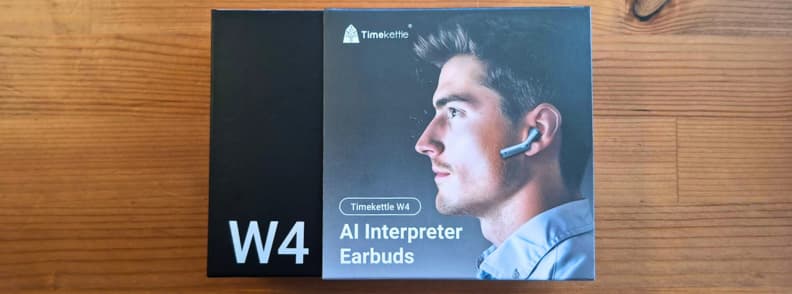
The first contact with any travel gadget sets expectations fast. In this case, the unboxing W4 experience feels closer to premium earbuds than to a niche translation device. Most people approaching this real-time language translator are still unsure what to expect (myself included at first). My first impressions were shaped by how familiar everything looked, even though the function is very different from standard earbuds.
From the moment you open the box, this speech-to-speech translator signals that it belongs in the same category as everyday tech, not experimental gear. The packaging contents are clean and well-organized, and the overall out-of-the-box experience is simple enough to get started without digging through instructions for too long. It’s important for travelers who want something that works quickly after arrival.
Looking at the Timekettle W4 specs on paper is one thing. Holding the AI language interpreter in your hand gives you a better sense of whether this will survive real use. The finish, weight, and assembly all contribute to how much you trust it before even turning it on. The build and design carry weight almost as much as software.
If you’re searching for a Timekettle W4 open ear design comfort review, my first impression is that these earbuds aren’t trying to feel invisible like traditional earbuds. They’re designed to sit differently on the ear, and that changes both comfort and expectations. The real test comes later with extended wear, but the initial feel already hints at how they will behave during travel.
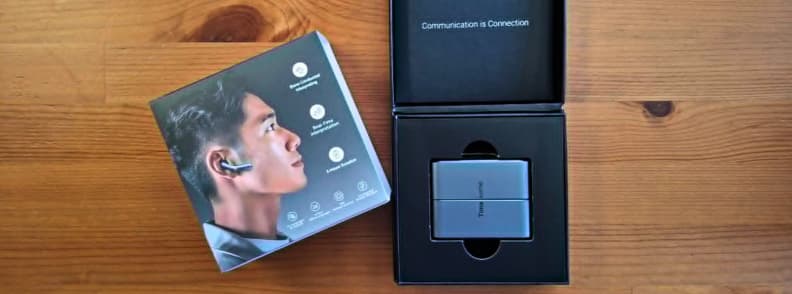
Box Contents & Build Quality
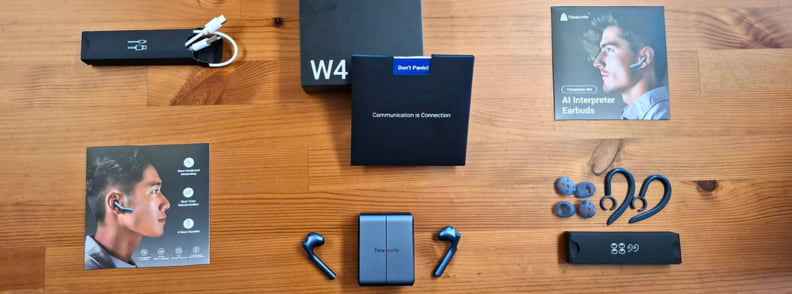
Inside the box, you get everything you need to start using the device without extra purchases. The box contents include the AI earbuds, a split charging case, and a set of accessories designed to improve fit and stability. These small details show that comfort isn’t optional for a device meant to support conversations.
You also receive interchangeable eartips, clip-on supports, and a standard charging cable. The clip system stands out because it directly addresses a common issue with earbuds that don’t stay in place. For me, this made a noticeable difference in daily use, because I usually struggle with earbuds slipping out.
The overall build quality feels solid from the start. The materials don’t seem fragile, and the hinge and contact points hold well during handling. This is important for something you will carry in a bag, pocket, or backpack while traveling.
Timekettle positions the W4 earbuds as travel-ready, but there’s limited emphasis on an official IPX rating in everyday use. So treat them as durable but not fully rugged. Light exposure to sweat or brief outdoor use should be fine, but this isn’t travel gear designed for heavy rain or extreme conditions.
The ergonomic design shows up in small details. The way the earbuds sit, the way the case opens, and the way the clips attach all contribute to a setup that feels practical rather than experimental. This isn’t always the case with newer tech categories.
Check current deals on the Timekettle W4 AI translation earbuds if comfort and real-world usability matter more than specs alone.
Design and Comfort. Can You Wear Them All Day?
The shift to open-ear comfort changes how these earbuds feel compared to standard in-ear models. Instead of sealing your ear canal, they rest outside, which reduces pressure and allows you to stay aware of your surroundings. This is especially useful when walking through cities or waiting in busy transport hubs.
When it comes to all-day wearability, the experience depends on fit. Without the clips, I would need to adjust them more often than I like. With the clips, they stay in place more reliably, which reduces friction during use. That difference alone can determine whether you reach for them or leave them in your bag.
The bone conduction fit is noticeable from the start. You are aware of how the device sits on your ear, and it doesn’t disappear the way some earbuds do. Over time, this becomes easier to ignore, but it never fully fades into the background. That’s something to consider if you are sensitive to how earbuds feel.
In terms of comfort after hours, I didn’t reach a point where they became painful, but I also didn’t forget I was wearing them. The benefit is that you avoid the discomfort of pushing earbuds deeper into your ear. The trade-off is that you remain aware of their presence.
The lightweight design helps balance this out. Even though they sit differently, they don’t feel heavy or intrusive. Combined with the support clips, this creates a stable setup that works well for conversations, walking, and short sessions of use throughout the day.
The 30° Fold-Line Design and Ear Ergonomics
One of the more distinctive features is the 30° fold-line design, which allows the earbuds to adjust to different ear shapes. This isn’t just a visual detail. It directly affects how securely they sit and how comfortable they feel over time.
These foldable earbuds use a simple hinge design that lets you fine-tune the position. This adds a level of adjustability that standard earbuds do not offer. It also helps explain why the device feels more stable once properly fitted.
The focus on earbud ergonomics shows in how the earbuds distribute weight across the ear instead of relying on pressure inside the ear canal. This makes them more suitable for longer sessions, even if the feeling is different from what most users are used to.
The folding mechanism also supports a more practical compact travel case experience. The earbuds fit neatly inside, and the case design reflects how the product is meant to be shared between two users. That reinforces the core use case of conversation rather than solo listening.
Midnight Blue vs. Sandy Gold. Style and Build Quality
Timekettle offers two main color variants, which are Midnight Blue and Sandy Gold. Both options aim to position the product closer to premium audio gear than to a niche tech device.
The aesthetic finish is clean and understated. The colors aren’t flashy, which makes them easier to use in both casual and slightly more formal environments. This matters more than expected when you are using them in public or in semi-professional situations.
In terms of premium look, the W4 holds up well. The surface treatment, edges, and assembly all contribute to a device that feels intentional rather than experimental. This helps justify its place in the higher end of travel tech.
The chassis material feels durable enough for regular use without adding unnecessary weight. Combined with the overall design, this creates a product that feels ready for travel, even if you still need to treat it with the care you would give any electronic device.
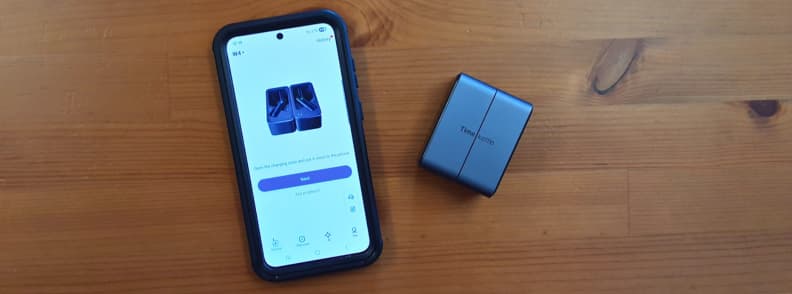
Timekettle W4 Setup and App Walkthrough (Step-by-Step)
A translation device can have strong hardware and still fail if the setup is clumsy. That is why this part matters. If you’re looking for a Timekettle W4 setup guide step by step, the good news is that the setup feels far less intimidating than the product category suggests. I tested the Timekettle W4 speech to speech translator earbuds with a Samsung phone, so this section reflects the real experience of setting it up through the Timekettle W4 app on Android.
The initial setup is straightforward enough for travelers who want to get started quickly in a hotel room, at home before a trip, or right after unboxing. You don’t need deep tech knowledge to make it work, but you do need to follow the sequence properly. That matters more here than with normal earbuds because translation depends on both the hardware and the app working together.
Most of the work happens inside the app. That means the Timekettle W4 earbuds with live translation aren’t a device you simply pull out and use without a phone. The pairing instructions, permissions, and mode selection all run through the app, so your phone remains part of the experience from the first minute. This also means that the quality of the Bluetooth connection and the app interface matter almost as much as the earbuds themselves.
The Timelettle app is available as an iOS and Android app, but my own testing was on a Samsung. On Android, the interface felt clean and easy enough to understand without guesswork. That said, this is still a translation product, so you should expect a short learning curve while figuring out what each mode is for and when to use it.
If the setup feels manageable, check the latest price for the Timekettle W4 interpreter earbuds and get them ready before your next trip.
First-time Pairing and Firmware Updates
The pairing process is simple and fast when everything works as it should. After downloading the app, you turn on the earbuds by opening the case, open the pairing screen on your mobile, and let the phone detect them. In my case, the first-time pairing took less than three minutes, which is exactly what you want from travel tech.
The first step is Bluetooth initialization. The app prompts you through the basic connection, and the earbuds appear quickly on the phone. This feels closer to pairing standard earbuds than to setting up a specialist translation tool, which lowers the barrier for first-time users.
The overall quick start experience is one of the product’s strengths. You aren’t buried under technical menus from the start. The app leads you through the basics, and that keeps the setup from becoming the kind of chore that makes people abandon new gadgets on day one.
A firmware update may appear during setup, depending on when you bought the device and whether Timekettle has pushed improvements since launch. (In my case, there was one.) This step matters because translation hardware relies heavily on software fixes and optimization. Even small updates can affect speed, stability, and accuracy.
The same goes for an app update. If the app is outdated, you risk starting with older features or performance bugs that may already have been fixed. For that reason, I would always recommend checking both firmware and app versions before your first serious test.
What makes the setup feel strong is that it comes close to a seamless setup once the basic connection is done. The app recognizes the device quickly, and from there, the main challenge isn’t technical difficulty but understanding which mode fits your situation best.
Timekettle W4 travel translator devices also support the idea of multi-device use, which matters for people who move between work and travel setups. In theory, you can use a single device ecosystem across a phone and computer, which is useful if you want to explore meetings, media playback, or app-based translation beyond simple travel use. I would still recommend doing your main setup on the phone first, then expanding later once you already know how the system behaves.
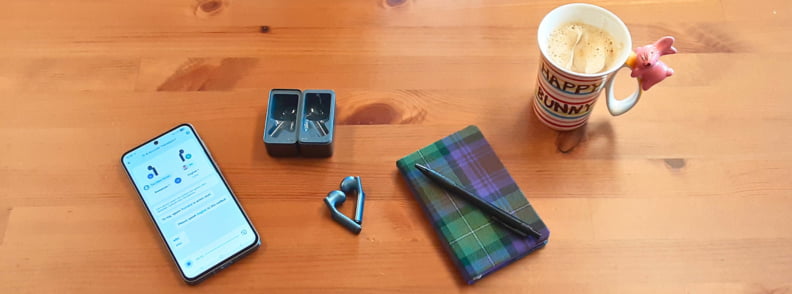
Test Methodology. How This Review Was Done
A good travel gear review should show what happened in real use, not repeat brand claims in prettier words. This matters even more with AI translation earbuds, because AI translation earbuds sound impressive on paper and even more impressive if you only test them in a quiet room with perfect pronunciation. I wanted this review to reflect how travelers and expats would actually use the Timekettle W4, which means mixed languages, public spaces, ordinary conversations, and the small frustrations that appear once you stop treating a gadget like a demo.
See full details for the Timekettle W4 AI earbuds if you want translation earbuds tested in real travel situations, not just demos.
I also approached this as someone who didn’t already believe in the AI earbud interpretation. Before testing the W4, I didn’t even know AI interpreter earbuds were a real product segment. That skepticism helped. It pushed me to pay attention to what felt genuinely useful, what felt forced, and what only worked once the conditions were favorable. This section explains the framework behind the tests, so when I say something worked well or poorly later in the review, you know exactly what I measured it against.
Real-World Travel Scenarios
My approach was based on travel scenario testing. The point was to understand whether the Timekettle W4 AI earbuds could help in the kinds of places where people actually reach for translation support, not in ideal conditions designed to flatter the product.
That meant thinking in terms of movement, interruptions, and public noise. A translation device that only works in silence isn’t much use once you leave home. I wanted to see how the Timekettle W4 earbuds handled noisy environment translation when background sound and human speech were competing for attention.
The first obvious scenario was the airport gate test. Airports are chaotic in a very specific way. People speak over one another, luggage rolls past, public announcements interrupt, and the stress level is already high. If a translation device can stay useful there, it has a real travel use case.
I also kept train station use in mind because stations create a different kind of noise. Instead of one constant wall of sound, you often get bursts of movement, announcements, and short interactions. Translation earbuds don’t just need to hear words. They need to hold a conversation together when timing is messy.
Another useful setting is the café conversation test. Cafés are one of the most realistic places to judge whether translation feels natural or awkward. You’re close enough to hear the other person, but there’s still enough background movement to interfere with the device if the system is weak.
The same logic applies to street market ambient noise. Markets are useful testing grounds because voices, traffic, and surrounding chatter create the kind of layered sound that can expose weak speech capture. Translation that works in a quiet room can collapse fast once several nearby voices overlap.
I also considered guided tour translation as a strong use case because many travelers don’t need long philosophical conversations abroad. They need practical comprehension in motion. A device that helps with directions, quick explanations, or cultural context during a visit could become much more valuable than one designed only for a seated one-to-one conversation.
In practical use, I tested the Timekettle W4 app and earbuds in various environments, and I pre-downloaded languages for offline use before trying situations where weak or missing internet might matter. This gave me a better sense of how the product shifts between convenience use and last-resort use.
I also paid attention to business vs leisure contexts because not all communication needs carry the same risk. A translation error during small talk is mildly annoying. A translation error during work can be expensive or embarrassing. This difference shaped how strict I was when judging the product.
Languages Tested
Language choice matters more than marketing pages admit. A translation product can claim broad coverage and still perform unevenly depending on the pair you actually use. This is why I focused on the languages most relevant to my real life instead of trying to pretend I could test dozens of them meaningfully.
My main testing covered English-French, French-English, English-Romanian, Romanian-English, French-Romanian, and Romanian-French, because those are the language directions most relevant in my family setting. This gave me a more honest result than running superficial tests in languages I don’t actually use or understand enough to check accuracy properly.
This Timekettle W4 review also benefits from something most tech reviewers don’t bring to the table, which is real trilingual testing in a household where these languages already matter. We are a trilingual family, so the testing reflected how translation tools behave when used by people who already shift between languages in daily life.
I could also compare several language combinations under the same conditions instead of changing both the environment and the language at the same time. Keeping the setup consistent made it easier to notice when one language pair was simply working better than another.
Buyers aren’t choosing abstract technology. They’re choosing help for specific travel language pairs. A product that handles English and French smoothly may still be less convincing once Romanian enters the picture. That kind of difference changes whether a device feels worth packing.
I was also tempted to try Italian-English in a more public travel setting because that would fit a realistic airport use case. I chose NOT to test it by listening in on a private conversation, because that would have crossed a line I don’t think a review should cross. I would rather admit a limit in my testing than create a scenario that feels invasive just to make the article look more complete.
The result is a narrower but more trustworthy language sample. Instead of pretending to review the W4 as a universal device for every language on its list, I tested it where I could judge the results with confidence. I think that gives this review more value if you’re looking for authenticity vs. inflated coverage.
Metrics Considered: Accuracy, Latency, Ease of Use, Battery, App Reliability
I judged the Timekettle W4 earbuds on both measurable performance and actual user experience, because either one without the other would be incomplete. A translation device can be technically capable and still annoying enough that you stop using it. It can also feel easy to use while quietly making too many mistakes to trust.
The first and most obvious metric was the translation accuracy test. I looked at whether the translated meaning stayed close to what was actually said, not whether every single word matched perfectly. For travelers and expats, meaning matters more than flawless sentence structure.
The next metric was response time. Translation doesn’t need to be instant to be useful, but it does need to be fast enough that the conversation doesn’t break apart. A slight pause is manageable. A long delay changes the whole interaction.
That is where latency (0.2s claim) became important. Brands love quoting tiny delay numbers, but what matters in real life is whether the system feels smooth or whether you start waiting on it instead of talking through it. I paid more attention to the lived effect of delay than to marketing shorthand.
I also tracked user-friendliness because setup, mode switching, and daily use all affect whether the product earns a place in your bag. Translation tools ask for more from the user than normal earbuds do, so ease matters early and often.
Battery life is another aspect where claims mean little until you test them properly. I considered Timekettle W4 battery life measurement essential because travelers need to know whether the device survives a day built around repeated use or starts feeling fragile the moment they rely on it. My battery testing is still ongoing. I prefer to state this clearly instead of inventing certainty.
The software side matters just as much as the hardware, so I also watched Timekettle app stability closely. If the app freezes, loses settings, or turns simple tasks into a chore, the whole device becomes harder to recommend, no matter how good the translation engine is.
Alongside that, I tracked connection reliability because these earbuds depend on the phone more than standard earbuds do. If the link between phone and earbuds weakens or becomes unstable, the translation experience suffers immediately.
Some of these measures are quantitative. I looked at practical estimates of accuracy percentage, lag in seconds, and basic endurance. Some are qualitative. I also judged comfort, clarity, confidence in the result, and how natural the device felt to use once the novelty wore off.
That combination matters because travelers buy a translation device to reduce friction in real life, not to admire a specifications list. My methodology reflects that. If a result helped a conversation happen more easily, it mattered. If it looked good on paper but still felt awkward in practice, that mattered as well.
Real-World Translation Accuracy Tests
This is the part most people care about, because no one buys translation earbuds for the box or the app alone. They buy them to answer one question: how accurate is the Timekettle W4 when real people are speaking in real situations? That is why I focused on translation tests that reflect the kind of conversations travelers, expats, and multilingual families actually have, not polished demo scripts designed to flatter the product.
The Timekettle W4 AI translation earbuds can be impressively useful when the setup is right. Real-world accuracy changes with the language pair, the mode you choose, the amount of background noise, and how close both people stay to the phone. My multilingual conversation results were best when speech was clear, the conversation stayed simple, and the environment did not fight the device too hard.
That also means the Timekettle W4 translation isn’t equally strong in every context. The difference between online and offline use is real. The difference between English and French versus Romanian is real. The difference between calm conversation and public noise is real. If you want the truth about Timekettle W4 translation accuracy in noisy environments, you need to judge it the way you would judge any travel tool, by where it helps, where it slows you down, and whether the trade-off still feels worth it.
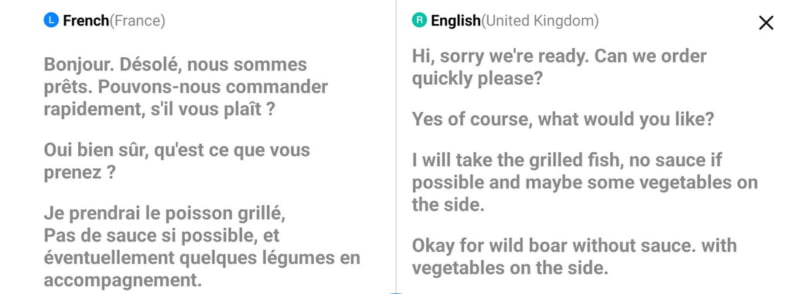
Test 1. Quiet Restaurant Conversation
The first test was the most natural starting point because this is exactly the kind of situation many travelers imagine first. A simple meal, a calm setting, and a practical exchange. In this kind of setup, restaurant order translation is a fair benchmark because the vocabulary is ordinary, the pressure is low, and the goal is clear.
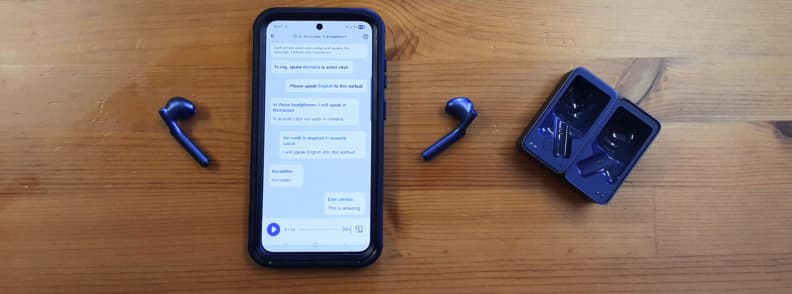
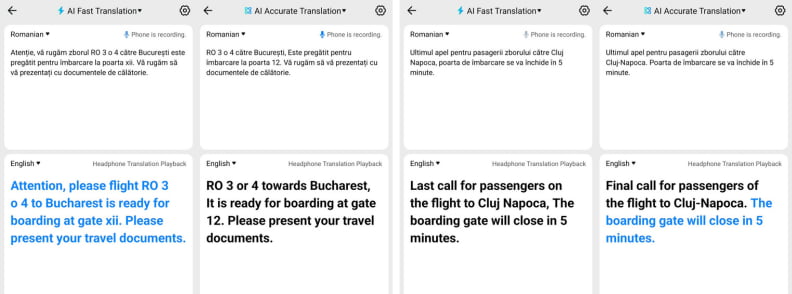
In a quiet environment, the Timekettle W4 AI interpreter earbuds performed better than I expected once I stopped assuming the default mode would automatically be the best one. My first trial with my husband roleplaying the server in one-to-one mode wasn’t as accurate as I had hoped, even though French and English are both common languages for this kind of product. When we switched to the accurate, more business-oriented mode, the quality improved. That was one of the first signs that mode selection matters more than many users will expect.
This is where quiet environment accuracy became easier to judge. In a low-noise setting, the earbuds had less work to do filtering out distractions, so the strengths and weaknesses came through more clearly. If we spoke slowly, enunciated, and stayed close to the phone, the conversation usually worked without needing too much repetition.
For this English-French translation test, the result proved that the device is able to carry small talk and simple exchanges well enough that it can help in restaurants, check-ins, or everyday travel interactions where a phone app would feel more clumsy.
This was also the first point where I noticed that the phone still matters. The text appeared slightly faster on the screen than in the earbuds (although with some lag when the same person paused and added another idea before the second person replied), so I often checked the display while listening. That reassured me that the message being sent matched what I meant. It also means I don’t see the W4 as fully hands-free in practice, at least not yet.
Buy the Timekettle W4 AI translation earbuds here if you want a device that actually helps in everyday conversations, not just controlled conditions.
Test 2. The Airport Noise Challenge
Airports are where translation gear starts proving its value. This is why I wanted an airport noise scenario in the review. A crowded airport combines stress, speed, multilingual announcements, and shifting background sound in a way few travel settings do. It’s one of the best places to expose weak speech capture.
To be fully honest, this is also the test I still want to push further. I have enough real-world experience to talk about public-noise performance and to judge the category with confidence, but I still want to run a sharper airport-specific retest when I can catch a bilingual announcement in an international airport or train station outside France or Romania. It would allow me to test other languare pairs.
What I can already say is that the Timekettle W4 translator earbuds handled distant surrounding voices better than I expected when the main conversation stayed close to the phone. I wasn’t glued to another group of people, so much of the public noise became background hum instead of a direct competitor. Travel noise isn’t all the same. Noise that surrounds you is easier for the device to manage than a second loudspeaker right next to you.
As already mentioned above, I also considered an English-Italian scenario for travel hub translation, because that would fit a real airport test well, but I didn’t want to intrude on someone else’s private conversation for the sake of the article. That means I am keeping this section grounded in what I genuinely tested and what I am still planning to verify more deeply.
The marketing claim around a 100dB environment sounds dramatic, and it’s exactly the sort of promise buyers remember. My take is cautious optimism. Based on how the Timekettle W4 language interpreter earbuds handled clearer close-range speech with background noise further away, I think the bone-voiceprint system gives them a real advantage over standard earbuds. I still want a more punishing airport retest before turning that into a stronger claim.
The same caution applies to delay. For a proper latency check, what matters isn’t only whether the product can quote a small technical number, but whether the rhythm feels smooth enough in a live travel setting. In online mode, the lag felt manageable. In offline mode, it felt noticeably slow. So even before a formal stopwatch-style airport retest, I can already say that the smoothness depends heavily on whether the system has strong network support.
Check the Timekettle W4 here if you need translation earbuds that can handle noisy environments better than a standard smartphone translator app.
Test 3. Street Market Noise
A market is one of the best places to test whether translation still feels usable once voices, movement, and open-air distractions all mix together. Street market translation is a practical test for travelers who expect to use the Timekettle W4 wireless translator earbuds outside calm indoor settings.
This kind of outdoor noise test reflects the kind of travel conversation people actually have. You ask a question, someone answers quickly, there’s movement around you, and the exchange happens on the go instead of at a table. The problem is a combination between noise level and unpredictability.
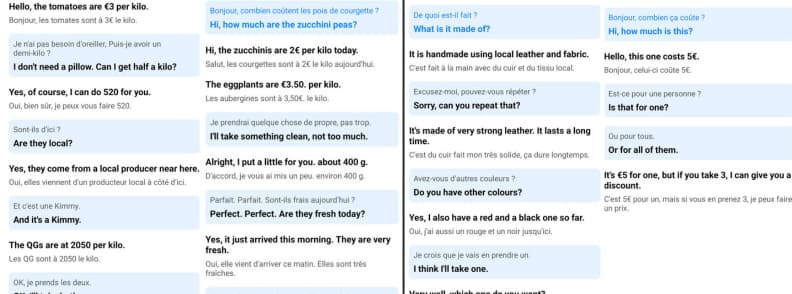
In a French-English context, I found that the earbuds could still work when the surrounding noise stayed more distant than the main speaker. It’s an important distinction. If the person you are talking to is close and clear, the Timekettle W4 interpreter earbuds for travelers can remain useful even when the environment is lively. If multiple nearby voices compete at the same level, the result becomes less trustworthy.
Crowd conversation becomes a harder category than many people assume. The challenge is deciding whose words should count. That is why I see the W4 as stronger in two-person interactions than in environments where several people are speaking into the same space at once.
As a market translator test, the result was encouraging rather than flawless. Just make sure you’re not asking for zuchinni / courgettes, double check the quantities and numbers, in general, and you should be fine. I would trust them for practical questions and small talk. I wouldn’t trust them for subtle explanations, fast humor, or situations where several voices overlap and precision matters.
Test 4. International Business Meeting
A product can look excellent for travel and still fall short in work situations. This is why a conference room test matters. A business environment raises the standard because mistakes carry more weight.
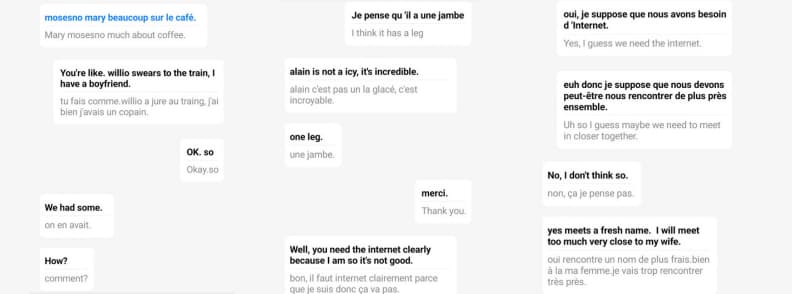
I tested the Timekettle W4 AI earbuds in language directions relevant to my own life, which included English-Romanian. This makes this section more honest than a generic corporate test with languages I don’t use well enough to judge. It also exposed one of the product’s limits. Romanian didn’t feel as smooth or as strong as English and French in my household tests.
This is relevant for formal meeting translation because work conversations usually ask for more precision. The words may be simple, but the stakes are higher. In a professional setting, a near miss can be more damaging than a clear pause. I wouldn’t rely on Timekettle W4 business translation technology alone for sensitive negotiations, legal contexts, or anything where exact wording matters.
In terms of business context accuracy, I would describe the Timekettle W4 AI language interpreter as a support tool rather than a substitute for a bilingual employee or human interpreter. It can help bridge low-pressure exchanges. It can reduce dependency on one multilingual person in the room. It can save money compared with repeatedly hiring an interpreter for lighter needs. It still doesn’t replace human judgment and speed.
That is also why I keep coming back to the difference between useful and sufficient. For professional conversation, the W4 may be useful in the room. It isn’t always sufficient as the only language solution in the room. For travel-related work, reception desks, routine guest interactions, and everyday hospitality communication, I see more potential. For serious business, I would still treat it as support.
(No print screens here, to protect the confidential nature of my business meetings.)
Test 5. The Offline Remote Challenge
Offline performance is where translation gadgets often reveal what they’re really made of. It’s also where many travelers quietly hope the product will save them in the exact places where they feel most exposed. That makes offline translation one of the most important tests in the whole review.
My own result here was clear. Offline mode works, but it feels much slower. I wouldn’t choose it when online mode is available. I would treat it as a backup, not a preference. That makes it useful in a no-WiFi test, but not elegant.
This still matters because travel is full of situations where backup is what counts. A weak signal in a mountain village, a remote place where you need directions, or a moment where you need help and have no internet access can turn a mediocre offline tool into an important one. In that sense, the W4 can still function as a remote location translator even when it’s no longer quick.
The brand highlights support for 13 offline language pairs, and that is the right way to think about this mode. It isn’t a broad cloud translation shrunk into your pocket. It’s a limited safety net built around selected pairings. That gives it value, but it also means travelers need to plan ahead and check language availability before relying on it.
From a technical perspective, the slower feeling likely comes from the constraints of offline speech recognition compared with cloud-based processing. In practice, that means more waiting, less fluid conversation, and a stronger need for patience from both sides.
Check offline capabilities of the Timekettle W4 translation earbuds here if you travel to places where internet access is unreliable.

Navigating Without Wi-Fi. Testing essential offline language packs
The first step in judging offline use is preparation. If you are heading somewhere with uncertain internet, you need to download the language packs before you leave. That makes offline translation a planning tool as much as a communication tool.
This is where the essential offline language packs idea becomes practical for travelers. You aren’t trying to cover every imaginable exchange. You are preparing for the moments where basic information, help, or reassurance matters more than elegance. That is the mindset I would bring to offline mode.
I see these packs as most useful for emergency-level communication, very simple practical questions, and travel situations where any translation is better than none. They are far less convincing for flowing conversation.
Offline vs. Online Accuracy. Compare local (on-device) vs cloud translation quality
The difference between offline and online mode isn’t subtle. Online translation feels more responsive, more usable, and closer to what buyers expect from AI earbuds. Offline translation feels slower and more fragile. That was one of the clearest findings from my testing.
This gap shapes how I would recommend the product. If your trip keeps you mostly connected, the W4 has a much stronger case. If you’re buying it mainly for disconnected travel, you need to go in with realistic expectations. The device still helps, but it just stops feeling smooth.
So the final offline verdict is simple. Online mode is where the W4 proves its value. Offline mode is where it proves its backup value. Those aren’t the same thing, and buyers should know the difference before they spend the money.
Test Results and Observations
This is where brand promises meet ordinary use. Specs are easy to admire on a product page. Real conversations are messier. In this section, I am focusing on what the Timekettle W4 felt like once I stopped treating it like a novelty and started judging it as a tool for travel, family communication, and everyday multilingual friction.
The pattern was clear quite fast. The W4 worked best when the setup was controlled, the speakers stayed close to the phone, and the conversation remained simple. It became less convincing when speed, distance, noise, or language complexity increased. That doesn’t make it bad, it just means you should buy it with specific expectations to get the most out of it.
Translation Speed and Accuracy
The first thing I noticed was that translation speed depends heavily on mode and connection quality. In online use, the delay felt manageable enough for small talk and practical exchanges. In offline use, the slowdown became much more obvious and broke the rhythm far more often.
The second thing I noticed was that translation accuracy is not one fixed number. It moves depending on language pair, speaking style, and context. When we spoke slowly, enunciated clearly, and stayed close to the phone, the results were much better. When we assumed the earbuds would carry the whole exchange on their own, the system felt less impressive.
My real-world results convinced me that the product category has real value, but I can’t trust it blindly. The W4 proved useful faster than I expected, especially once we switched from one-to-one mode to a more business-focused setting.
Check the Timekettle W4 AI Interpreter Earbuds here if you want translation earbuds that let you choose between speed and accuracy depending on the situation.
I would treat the marketed 98% accuracy claim as an ideal-condition figure instead of a universal promise. In my own use, accuracy felt good in favorable conditions and clearly weaker once Romanian entered the mix or when offline speed slowed the whole exchange. I care more about whether the meaning gets across than whether a percentage looks impressive in a headline.
A product also lives or dies by lag time. A short pause is fine. A pause that makes both people wait and wonder if the device heard them is where confidence starts slipping. Online mode stayed on the usable side of that line. Offline mode moved closer to frustration.
One-on-One Conversations (restaurant orders, check-ins, small talk)
The most natural first use case is still the one-on-one mode. Two people, one conversation, simple goals. This is the setup most buyers imagine when they think about ordering food, checking into accommodation, or handling basic small talk on the road.
In this kind of context, the W4 worked better once I lowered my expectations and adjusted how I used it. My first test with my husband in the dedicated one-to-one setting was not as sharp as I expected. Once we changed modes and stayed closer to the phone, the experience improved.
The device is useful for buddy conversation translation, especially if you are traveling with someone and both of you need support. That could mean a couple on a trip, relatives trying to communicate, or family members switching between languages in a shared conversation.
Get the Timekettle W4 translation earbuds if you want smoother one-on-one conversations without constantly passing your phone back and forth.
It’s most convincing in transactional dialogue. Simple requests, practical questions, short exchanges, and low-stakes back-and-forth work better than nuanced, emotional, or highly detailed speech. That isn’t a flaw unique to Timekettle, it’s just the current state of the market.
Group Chats and Meetings in Noisy Environments
This is where the W4 becomes less straightforward. Translation in groups is harder because several voices compete for attention, and the device has to decide which input matters most. That is why I see this as the point where expectations need to stay realistic.
The product may offer forms of multi-speaker mode, but the real challenge isn’t the menu option. The challenge is whether the conversation structure stays clean enough for the technology to follow. In loosely organized group talk, it becomes difficult fast.
I’d trust the W4 more in calm, turn-based situations than in overlapping chatter. A round-table discussion with pauses is one thing. Several people jumping in at once is another.
In places with coworking noise, cafés, and shared public spaces, the soundscape is layered vs. explosive. There may not be one single loud distraction, but there are enough moving parts to put pressure on speech recognition.
As a background noise test, these environments show the W4’s limits more clearly than a quiet room does. It can still be useful, but only if the main speakers stay clear and the pace remains patient. In a true simultaneous conversation setting, I wouldn’t rely on it as my only communication tool. It can support, but it doesn’t fully control chaos.
See how the Timekettle W4 handles noisy environments and decide if this travel translation gear fits your real-world use.
Troubleshooting Connectivity and Audio Lag
Most of the time, the experience depends less on the earbuds alone and more on the whole chain working together. That means phone, app, Bluetooth, mode selection, and network quality all influence the result.
I didn’t hit major connectivity issues in my initial household tests, but I still see this as one of the most important pressure points for travelers. A translation device can become frustrating quickly if even one link in the chain becomes unstable.
A Bluetooth dropout is more serious here than with music earbuds. When music cuts for a second, it’s annoying. When a translated sentence cuts, the whole exchange can become confusing. That raises the standard for reliability.
So far, the app reliability felt decent in basic use on my Samsung phone. The interface was understandable, and the system didn’t feel chaotic. That said, understanding which mode to use still matters almost as much as technical stability.
The more noticeable issue in practical use was connection lag, especially in offline mode. The system still worked, but the delay was obvious enough to remind me that this isn’t seamless conversation yet.
Related audio sync problems also show up in a softer way because the text often appears on the phone slightly faster than the spoken translation reaches the earbud. That is part of the reason I kept checking the screen while listening. It felt safer to verify the message visually instead of trusting the audio alone.
Noise Cancellation in Real Life. Airport, Café & Street Test
Noise performance is one of the biggest reasons this product stands out from cheaper competitors. Translation earbuds are easy to market in silence. They become useful only when they still function in public.
My experience with Timekettle W4 noise cancellation in airport style conditions is promising but not final. I have enough testing to say the system handles distant surrounding noise better than I expected, but I still want a harsher airport retest around bilingual announcements before I lock in stronger conclusions.
Check the Timekettle W4 AI earbuds here if voice isolation and background noise handling matter for your travel conversations.
What already seems clear is that the W4 benefits from bone conduction noise filtering when the person speaking is close and the competing sound remains more distant. That gives it an advantage over translation tools that rely on weaker speech capture.
The strongest practical result was improved voice isolation in ordinary public settings. The earbuds were better at staying focused on the main speaker than I expected from a first test. That is a big reason I remain optimistic about the category.
Its background noise resistance is good enough to support simple travel use in everyday public spaces. I would still be cautious in crowded, overlapping, or announcement-heavy settings where several strong sound sources compete at once.
How the Bone-Voiceprint Sensor Filters Your Voice From Background Noise
The most interesting technical part of the W4 is the bone-voiceprint sensor. This is the feature that tries to separate your speech from the sound around you by picking up vibrations from your own voice rather than relying only on air-based sound capture.
In practice, this improves background noise filtering because your voice arrives through a more direct signal path than surrounding chatter does. That doesn’t erase noise. It simply gives the system a better chance of knowing which voice belongs to you.
This kind of voice capture technology matters more than flashy accuracy claims because it affects performance before the translation even begins. If the input is wrong, the output will be wrong too.
I have not completed a controlled 100dB noise test with formal measuring gear, so I’m not going to pretend I did. What I can say is that the product’s speech capture feels more promising than I expected in public-noise situations where the main speaker remains close and clear.
The best way to describe the effect is auditory separation. The system seems better at deciding who matters in the immediate exchange, which is exactly what a travel-focused translation device needs.
100dB Noise Claim, Tested at a Real Airport
This is the claim buyers remember because it sounds bold. If a device can survive a 100dB environment, it sounds ready for anything. Real life is less dramatic and more uneven than marketing language suggests.
In true airport gate noise, the challenge is the loud mix of rolling luggage, nearby voices, overhead announcements, and constant interruption. That makes airports one of the best places to test whether translation remains usable when attention is divided.
As a loud crowd test, I would currently describe the W4 as encouraging but not fully proven. I have enough experience to say the product doesn’t collapse the moment public noise appears. I do not yet have enough direct airport-announcement testing to treat the brand claim as fully confirmed.
So my current view of Timekettle W4 100dB performance is cautious rather than dismissive. The technology seems to give it a real edge, but I still want one tougher travel-day retest before I call that promise fully earned.
Language Support Deep Dive, from Arabic to Vietnamese
Timekettle sells the W4 partly on coverage, and broad coverage is a real advantage in a category where language support can vary a lot from brand to brand. On paper, the product looks strong enough to attract travelers well beyond Western Europe.
The headline promise of 43 supported languages and 95 accents puts it in a competitive position for people who want broad utility instead of one or two niche pairs. That matters if you travel often or want one device that covers multiple future trips.
Verify supported languages for the Timekettle W4 before buying if your travel plans depend on specific language pairs.
A wide language list is useful, but it shouldn’t be confused with equal quality across every option. Coverage tells you what is available. It doesn’t tell you how natural, fast, or reliable each pairing will feel in practice.
This is where accent variations also matter. Strong support on paper can still feel uneven once pronunciation, speech rhythm, and regional speech patterns come into play.
For travelers, the real advantage is wide language coverage as a planning tool. It increases the chance that the device will still be useful for future destinations, not only for the trip you are currently planning.
At the same time, Timekettle language support still has limits that matter in Europe. One missing example that stood out to me was Albanian. That isn’t a small detail if you are buying the device for a specific destination or family use case. Broad coverage is great, but unsupported gaps still matter.
Accents Matter. 96 Regional Variants Analyzed
Accent handling is one of the hardest parts of AI translation because even familiar languages can become difficult once pronunciation shifts. That is why accent recognition deserves more attention than it usually gets in gadget reviews.
Good dialect support matters for travelers because the version of a language you meet on the road isn’t always the clean textbook version. Regional speech is part of real life.
This is also where regional variants can influence trust. A device that works well with one speaker may struggle more with another, even inside the same language, simply because the sound patterns change.
The same problem appears with pronunciation differences in multilingual families, older speakers, and young children. That is one reason I am curious to keep testing the W4 in family settings over time, especially once a toddler’s pronunciation becomes part of the equation.
LLM Context-Awareness. Fixing the Homophone Problem
One of the more ambitious claims around newer AI translation tools is that they handle meaning better because they use context vs. word matching. That matters because language often includes ambiguity.
The practical version of this is homophone disambiguation. A smart system should have a better chance of knowing which similar-sounding word you mean based on the rest of the sentence.
That depends on context-aware translation, which is one of the biggest upgrades AI systems try to bring to real-time translation. If it works well, the output feels less robotic and less random.
I cannot confirm every advanced claim from Timekettle in a scientific way, but I can say the product does seem stronger when the surrounding sentence gives the system something clear to work with. That is where AI context starts to matter.
This is also where features connected to AI memo technology and broader language modeling become more interesting. Even if you aren’t using meeting summaries directly, the same push toward contextual understanding can help live translation feel less mechanical.
At the most practical level, this is about meaning differentiation. Buyers don’t care whether the system sounds clever. Users care whether the right meaning reaches the other person without turning the moment awkward.
Accuracy by Language. My Personal Ranking Table
Because coverage isn’t the same as quality, I find it much more useful to rank the language pairs I actually tested. That gives travelers and multilingual families something concrete instead of a long support list that tells them little about performance.
My own language pair accuracy ranking, based on current tests, looks like this:
| Language pair | Environment | Approx. lag | Approx. accuracy | Notable issue | Verdict |
|---|---|---|---|---|---|
| English ↔ French | Quiet indoor conversation | Low | Best result so far | One-to-one mode weaker than expected at first | 🙂 Strong for simple talk |
| French ↔ English | Quiet indoor conversation | Low | Strong | Improved noticeably when close to phone | 🙂 Useful and practical |
| English ↔ Romanian | Family setting | Moderate | Mixed | Less smooth than English and French | 😐 Usable with patience |
| Romanian ↔ English | Family setting | Moderate | Mixed | Hearing and clarity affected experience more | 😐 Useful but less polished |
| Offline language use | Low-connectivity scenario | High | Clearly weaker | Slow enough to break the rhythm sometimes; limited language packs | 😕 Backup only |
This accuracy comparison matters more than a single headline score because it reflects how the product behaves in practice. For me, the W4’s translator performance by language was strongest with English and French, and less convincing once Romanian entered the conversation. This doesn’t make it a failure. It simply means buyers should judge it by their actual language needs, not by the broadest possible promise.
Call & Media Translation
This is where the Timekettle W4 AI Interpreter Earbuds start to show a different kind of value. I focused on media consumption rather than calls, because this is something I could test in real conditions at home.
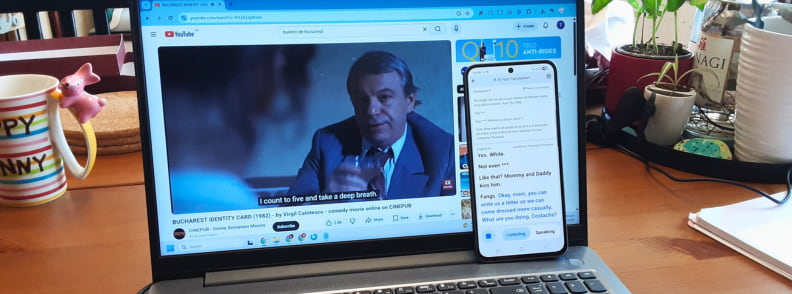
Listening to Romanian news worked better than expected. The accurate mode introduced a noticeable lag compared to what appeared on the screen, but it kept a strong memory of what was said and delivered consistent, reliable meaning. This made it possible to follow the story without needing subtitles, even with the delay.
Fast mode behaved differently. The translation came through quicker, but it skipped words or misinterpreted parts of the sentence. Even so, it adapted well enough that I could still understand the overall message. Names and specific details were sometimes off, but the general idea remained clear.
This creates a clear trade-off. Accurate mode favors reliability and context, while fast mode favors speed and flow. Depending on what you watch, one may feel more usable than the other.
Movies pushed the system much harder. When I tested a Romanian film, the lag increased significantly in both modes. Accurate mode took longer to deliver translations and struggled to keep pace with dialogue changes, while fast mode lost precision more often.
Another challenge came from multiple speakers. The system treated overlapping dialogue as a single stream, which made it harder to follow conversations between characters. This becomes noticeable in scenes with fast exchanges or emotional shifts.
For this type of content, subtitles still offer a smoother experience. Translation through earbuds adds a layer of delay that makes it harder to stay connected to the action, especially in fast-moving scenes.
There is still real potential here. For expats, multilingual households, and anyone trying to access content in a language they don’t fully understand, this opens a new way to consume media. It also hints at a future where more people explore foreign-language content without relying entirely on subtitles or dubbing.
Check the Timekettle W4 here if you want translation earbuds for media and conversations, knowing where they still need improvement.
Call translation remains something I want to test more thoroughly in real scenarios like phone conversations or video meetings. This is a different type of challenge that deserves separate testing before drawing strong conclusions.
Offline use is an important feature, so let’s cover this a bit more in-depth.

Does Timekettle W4 Work Offline?
Yes, the W4 does have an offline mode, and this is one of the reasons the product would bring value to travelers in the first place. If you are going somewhere remote, crossing areas with a weak signal, or simply trying to avoid relying on mobile data all day, the idea of translation earbuds offline is a real selling point.
Timekettle supports downloadable offline language options through its app, but this is one of those features where the headline sounds smoother than the lived experience. The offline option is useful, but it isn’t the best feature of W4. Official product material describes offline support as a backup rather than a full replacement for online translation.
What matters for travelers and expats is how well this feature works when you are tired, lost, or trying to get help fast. In my own testing, the W4 did work offline without internet, but the delay was much more noticeable, and the whole exchange felt slower. That turns offline functionality into something practical for emergencies, rural travel, and weak-signal moments, not something I would choose when I have stable internet and a better option.
Offline Language Packs. How to Download, How Many Are Free
The offline system relies on language downloads inside the app. To use it properly, you need to download languages before you travel, not after you lose signal. That sounds obvious, but it’s the kind of detail many people skip until they need help in a place where the network has already disappeared.
Inside the app, you choose the relevant offline packs for the language pair you need and save them in advance. The process itself is simple enough, but it adds one more pre-trip task to remember. For travelers heading somewhere with uncertain coverage, this is as important as checking maps or downloading boarding passes.
The number of included packs matters because buyers often assume broad offline use comes built into the price. However, there is limited included access, and you’ll find optional extra pack purchases for wider/rarer language needs. In other words, you should treat the system as having some free language downloads, but don’t assume unlimited offline coverage for every language pair without checking the app first.
That also means some users will run into paid languages or extra offline add-ons if they want more than the basic included coverage. This is one of those details worth checking before you buy, especially if you’re planning a specific trip and only care about one destination language.
The practical takeaway is simple. The W4 offers offline vs online support, but those are not equal modes. Online is the full-strength version. Offline is the fallback version. You should plan around that from the start.
The best place to verify and manage this is the Timekettle W4 app offline settings. That’s also where you will see which packs are available, what you already have, and what still needs to be downloaded before departure.
Offline vs. Online Accuracy Difference
This is where the gap becomes obvious. In my own use, offline accuracy was clearly weaker than online performance, and the difference wasn’t subtle enough to ignore. The device still translated, but it felt slower and less fluid, which changes how natural the whole conversation feels.
By contrast, cloud translation accuracy is where the W4 feels like the product Timekettle wants to sell you. Online, the system moves faster, sounds smoother, and feels more capable in practical conversation. Offline, it shifts from a convenience tool to a survival tool.
That difference affects offline performance in a very direct way. With internet, I could imagine using the W4 for repeated back-and-forth interaction during travel. Without internet, I would use Timekettle W4 for shorter, more essential exchanges where speed matters less than simply getting basic information across.
The drop in translation quality is about wording and rhythm. A translation that arrives late feels less trustworthy, even if the core meaning survives. That’s why offline mode can feel more stressful than online mode, especially when both people are waiting for the device instead of talking naturally.
The most likely reason is that the offline system relies on a more limited on-device model than the cloud-based engine. That’s normal for this tech product category. A smaller local system can be useful without internet, but it usually can’t match the speed and flexibility of full online processing.
Offline Translation Performance and Its Limits
The value of offline mode depends heavily on the specific offline language pairs you need. Broad online language support doesn’t automatically mean broad offline support. Travelers need to check their exact pairing before assuming the device will help in a disconnected destination.
That is why supported languages offline matter almost more than the broader language list. A product can support dozens of languages online and still offer a much smaller practical set once you remove the cloud. That difference changes whether the W4 is a smart buy for your trip or just an interesting gadget.
The same issue appears with language coverage offline. Coverage exists, but it is selective. This pushes the offline feature into a planned usage rather than a spontaneous one. If your key destination language is unavailable or locked behind paid extra downloads, the usefulness drops fast.
I would describe the current system as a limited offline mode that still deserves credit for existing. It isn’t strong enough to replace online translation. It is strong enough to matter when you have no other option. For mountain villages, rural roads, border crossings, weak reception, or practical help in an unfamiliar place, that distinction is important.
That is why I see the best use case as a shortlist of essential offline languages you prepare before travel. If you know the destination, know the likely conversations, and know the mobile signal might be weak, the W4’s offline mode becomes a smart safety net. If you are expecting fast, natural, stress-free interpreting without internet, it will feel too slow.
So yes, the Timekettle W4 works offline with some caveats. You need to treat offline mode as backup communication, not as the full product experience. For many travelers, that’s still enough to make the feature worth having.

Battery Life Test. How Long Does It Last on a Travel Day?
Battery matters more on translator earbuds than on normal earbuds because you use them both for passive listening and when communication matters. If the device runs out of power halfway through a travel day, it stops being smart tech and turns into dead weight. That is why a proper Timekettle W4 earbuds battery life test needs to look at translation use, not only music playback.
The claimed Timekettle W4 battery life looks decent on paper, but travel is never paper. A normal tourist day includes waiting, walking, talking, checking directions, and switching between short bursts of activity and quiet stretches. That makes continuous use different from the way most people will actually use the product.
I am still running my own full endurance test, so I’m not going to invent numbers I haven’t personally confirmed yet. What I can say already is that the advertised figures place the W4 in the range of about 4 hours of continuous translation, around 6 hours of music playback, and roughly 10 hours total with the charging case, depending on how you use it. Those are the figures repeated across the research material and competitor summaries I reviewed.
For travelers and expats, the more useful question isn’t the laboratory run time. It’s whether the battery survives the kind of day where you only need translation in key moments. If you use the earbuds for short conversations instead of constant interpreting, the W4 is much easier to trust than if you expect it to stay active for hours without a break. This distinction matters.
We will look at battery through the lens of a real-world battery test. In other words, we will check how long the earbuds stay on, and how realistic the battery promises feel once you factor in translation mode, music mode, and the role of the case.
See full specs and battery performance for the Timekettle W4 earbuds if you need a travel translator that lasts through real daily use.
Timekettle W4 vs. Competitors. Who Should Buy What?
This is where buying decisions get easier. A good Timekettle earbuds comparison should ask which one fits the way you travel, work, and communicate. Some buyers need lightweight support for day-to-day trips. Others need stronger meeting tools, built-in data, or a phone-first ecosystem. This is why any honest look at translation earbuds vs alternatives needs to focus on use case first.
The W4 is an excellent choice for travelers, expats, and multilingual families who want a more wearable option than a handheld device and a more dedicated option than a phone app. It isn’t automatically the best choice for professionals, Apple users deep in the iPhone ecosystem, or buyers who mainly want phone-call translation through a Samsung setup.
Timekettle W4 vs. Timekettle W4 Pro. Is the Extra $100 Worth It for Travelers?
The easiest comparison to start with is Timekettle W4 vs W4 Pro because the two products target different people. The W4 feels like the more approachable travel model. The Pro feels more clearly aimed at structured work and professional communication. Timekettle itself positions the W4 Pro as a privacy-first, business-focused interpreter earbud with 42 languages, 95 accents, and up to 6 hours of continuous translation.
In a pure W4 Pro vs W4 decision, the first thing to weigh is form factor. The W4 looks and feels closer to normal modern earbuds, while the Pro keeps a more specialized work-first identity. For many travelers, that matters. If the product feels too technical or too corporate, it becomes harder to imagine using it casually on the road.
The second issue is the feature split. The main W4 Pro features lean toward professional use, longer translation sessions, and stronger confidence in formal settings. The regular W4, by contrast, is the model for casual travel, family interaction, and lower-pressure communication. That difference is visible in both branding and practical fit.
Battery life also pushes the Pro toward work use. The simplest way to think about it is W4 Pro battery 6h vs 4h for W4 earbuds. The W4 Pro is rated up to 6 hours of translation, while the W4 is commonly positioned around 4 hours of continuous translation and roughly 6 hours of music playback.
So which one should travelers buy? My answer is practical. The W4 is the better professional vs consumer model split for most travelers because it feels less intimidating and more realistic for casual use. The W4 Pro is better if your trips involve repeated meetings, heavier business communication, or a stronger need for privacy and longer sustained interpreting.
Check the Timekettle W4 Pro if you need translation earbuds built for business meetings, longer battery life, and more stable real-time communication in professional settings.
Timekettle W4 vs. Timekettle WT2 Edge. Pros and Cons
The next useful comparison is Timekettle WT2 Edge vs W4 because these two are more similar than the W4 and W4 Pro are. The WT2 Edge is one of Timekettle’s long-standing translation-first products, while the W4 tries to modernize the category with a more everyday earbud shape.
In a W4 vs WT2 Edge decision, the main trade-off is between familiarity and specialization. The W4 feels closer to something you might already wear. The WT2 Edge feels more clearly built around translation first. That will appeal to different buyers for different reasons.
Any real Timekettle comparison between the two has to start with language support and core function. The WT2 Edge officially supports 43 languages and 96 accents, plus an 8-language offline package, and Timekettle describes it as a product built specifically for natural, efficient conversations.
The strongest WT2 Edge features are its translation-first identity and lower-latency positioning. WT2 Edge is supposed to offer low-latency translation around 0.5 seconds and continuous translation support, which makes it a serious option for buyers who care more about interpreting than about looking like they are wearing standard earbuds.
The W4 still wins on everyday visual appeal. If you care about not looking like you are wearing specialized hardware, the W4 is easier to live with. The open-ear WT2 vs W4 choice becomes personal. The W4 looks more modern and easier to integrate into normal travel days. The WT2 Edge looks more obviously task-specific.
Explore the Timekettle WT2 Edge if you prefer a focused two-person translation setup with strong accuracy for structured conversations and one-on-one use.
Timekettle W4 vs. Timekettle M3. Entry-Level vs. Mid-Range
A Timekettle M3 vs W4 comparison is useful because it shows where the W4 starts to justify its price. The M3 sits lower in the range and is a good option for buyers who want a more affordable entry into AI translation earbuds. Timekettle lists the M3 with 40 languages and 93 accents.
In a Timekettle entry-level vs W4 choice, the M3 is easier to recommend to cautious first-time buyers. It covers the core translation idea without asking for the same spend. The W4 is more approachable once you know you want a more refined product category fit and stronger positioning around newer AI features and design.
Offline support is one of the clearer technical dividing lines. For M3 vs W4 language packs (M3 has 13 pairs offline), the M3 is commonly associated with an 8-language offline package on the official product page, while the broader research material around Timekettle’s range often frames the W4 as the more capable option for offline use within the lineup.
The price difference matters because this is where buyer intent shifts. The M3 pricing is easier to justify for occasional use. The Timekettle W4 price becomes easier to justify when you want something that feels more current, more polished, and more aligned with repeated travel or multilingual family use.
See the Timekettle M3 if you want a more affordable entry into AI translation earbuds for travel and simple everyday conversations.
Here is the simplest way to compare the three main Timekettle options side by side.
| Model | Languages | Translation battery | Offline support | Positioning | Price level |
|---|---|---|---|---|---|
| W4 | 52 languages, 106 accents | About 4h | 13 offline language pairs | Casual travel and family use | Mid-range premium |
| W4 Pro | 52 languages, 106 accents | Up to 6h | 13 offline language packs | Business and professional use | Higher premium |
| M3 | 43 languages | Up to 7.5 hours | 13 language offline packages | Entry-level translation earbuds | More affordable |
Compare the Timekettle W4 with other translation earbuds and pick the model that actually matches your language needs and travel habits.
Timekettle W4 vs. Pocketalk W. Different Philosophy, Same Goal
The most important difference in Pocketalk vs Timekettle W4 is that these products solve the same problem in very different ways. The W4 tries to make translation feel wearable and closer to conversation. Pocketalk stays proudly device-first and gives you a larger touchscreen, built-in mobile data, and camera translation.
A Pocketalk translation device is easier to explain to someone who has never seen translation earbuds before. You hold it, speak into it, and read or hear the answer. Pocketalk says its device supports voice translation across 82 or more languages, includes built-in LTE data on supported models, and offers camera translation as part of the wider product ecosystem.
It’s a classic dedicated translator vs earbuds choice. If you want one purpose-built device with a screen, mobile data, and less dependence on sharing earbuds, Pocketalk makes strong sense. If you want something more wearable and less obvious in conversation, the W4 feels more modern.
A W4 vs Pocketalk Plus comparison or Pocketalk W comparison really comes down to travel style. I would pick Pocketalk for users who value screen-based clarity, camera translation, and built-in data more than hands-free potential. I would pick W4 for users who want less visible hardware and more natural back-and-forth support.
Timekettle W4 vs. Apple AirPods Pro 3. The Ecosystem War
This comparison is about ecosystem power. Apple officially added Live Translation support to AirPods 4 with ANC, AirPods Pro 2, and AirPods Pro 3 when paired with a compatible iPhone that supports Apple Intelligence.
That means AirPods built-in translation is now a real part of the market. Apple says Live Translation works with supported AirPods, an iPhone 15 Pro or later, iOS 26 or later, Apple Intelligence, and Apple’s Translate app.
For buyers deciding on AirPods vs W4, the answer is simple. If you already live fully inside Apple’s ecosystem and own the required iPhone, AirPods become a much stronger alternative than they used to be. If you are on Android, that advantage disappears immediately.
Apple Translate earbuds are tied to the brand’s broader ecosystem. That is their strength and their weakness. You get smoother integration if you’re already all-in with Apple. You get very little value from it if you aren’t.
This is why I think of this comparison as ecosystem translation versus dedicated translation hardware. Apple offers a polished ecosystem benefit. Timekettle offers a product built around translation first. Travelers who already carry the right iPhone may lean Apple. Travelers who want the product built around translation itself may still prefer Timekettle.
Timekettle W4 vs. Google Pixel Buds Pro 2. Google Ecosystem Integration
The same ecosystem logic applies to Google Pixel Buds Pro 2, but in a different way. Google’s translation setup isn’t a dedicated earbud-first system in the Timekettle sense. It’s built around Google Translate, Google Assistant, and your Android phone.
Pixel Buds live translate works through the Google Translate app with an Assistant-enabled Android phone and an internet connection. Conversation Mode lets you speak and then plays translation through the buds, while the phone still handles the visual side of the interaction.
Pixel Buds vs W4 is a question of integration versus specialization. Pixel Buds are a smart extension of Google Translate. The W4 is a dedicated translation product that still relies on a phone, but is built around translation as the main event rather than an added app feature.
Pixel Buds are just Google Translate hardware. They’re excellent if you already trust Google Translate and want it closer to your ears. They’re less interesting if you want a product whose hardware, modes, and form factor were designed from the start around interpreting.
Timekettle W4 vs. Samsung Galaxy Buds with Translation Features
Samsung has also become part of this space, though in a slightly different way. Samsung Galaxy Buds translators are a thing since Samsung began supporting real-time translation through Galaxy AI when certain Galaxy Buds models are paired with compatible Samsung devices.
Galaxy Buds3, Buds3 Pro, and Buds3 FE can work with the Interpreter app to deliver translated speech through the earbuds, with text also visible on the phone screen. Samsung also supports Live Translate for phone calls and some third-party apps on compatible Galaxy devices.
That means Samsung live translate is strongest for people already deep in the Samsung ecosystem. If you already carry the right Galaxy phone, Samsung’s ecosystem can cover both in-person interpreting and call-related translation in a way that feels quite powerful.
The branding of Buds Live translation can be a little misleading if it makes buyers think all Samsung earbuds do this equally well. In practice, supported Galaxy AI earbud experiences are tied to newer Galaxy Buds models and compatible phones. That makes Samsung a serious competitor with the support of Samsung loyalists, but not a universal replacement for dedicated translator earbuds.
W4 vs Cheaper Amazon AI Translation Earbuds (Accuracy vs Hype)
This is where the category gets messy. Search results are full of cheap translator earbuds, and many of them promise the same future-facing language as far more established products. That doesn’t mean they deliver the same experience.
A lot of so-called Amazon translator earbuds rely heavily on generic apps, vague language support claims, and product pages that make everything sound effortless. Some may be usable. Many look more like speculative purchases than trustworthy travel tools.
The appeal is obvious. A budget translation device is easier to justify, especially if you’re curious about the products but not ready to spend premium money. The problem is that once translation fails in real use, the lower price stops feeling clever and starts feeling expensive in a different way.
That is why I would be especially cautious with knockoff translator earphones. Reliability matters more than novelty. If you’re buying a toy, failure is funny. If you’re buying help for travel or family communication, failure gets old fast. So this is really a question of accuracy vs gimmick.
| Device | Best For | Translation Type | Languages Supported | Battery (Translation) | Works Without Phone | Price Level |
|---|---|---|---|---|---|---|
| Timekettle W4 | Travelers, expats, families | Earbuds (AI, real-time) | 40+ languages, 90+ accents | ~4h (10h with case) | No (phone required) | Mid–high |
| Timekettle W4 Pro | Business, meetings, professional use | Earbuds (AI, enhanced privacy) | 40+ languages, 90+ accents | ~6h | No (phone required) | High |
| Timekettle WT2 Edge | Frequent cross-language conversations | Earbuds (translation-first) | 40+ languages, 90+ accents | ~5h | No (phone required) | Mid |
| Timekettle M3 | Budget-conscious beginners | Earbuds (entry-level AI) | 40 languages | ~4h | No (phone required) | Low–mid |
| Pocketalk (W / Plus) | Offline use, simplicity, seniors | Handheld translator device | 80+ languages | Full-day (device-based) | Yes (built-in data on some models) | Mid–high |
| Apple AirPods Pro 3 | iPhone users | App-based (Apple Translate) | Limited (Apple-supported languages) | ~6h audio (translation varies) | No (iPhone required) | High |
| Google Pixel Buds Pro 2 | Android users (Google ecosystem) | App-based (Google Translate) | 100+ languages (via app) | ~5–7h audio | No (phone required) | Mid–high |
| Samsung Galaxy Buds (AI models) | Samsung users | App-based (Galaxy AI Translate) | Limited (Samsung-supported languages) | ~5–6h audio | No (Samsung phone required) | Mid–high |
Buy the W4 if you want a wearable translation-first product for travel, expat life, and multilingual family use. Buy the W4 Pro if work is the priority. Buy Pocketalk if you want a dedicated handheld translator with data and screen support. Lean toward AirPods, Pixel Buds, or Galaxy Buds if you’re already deeply invested in those ecosystems and want translation as one part of a broader device setup.
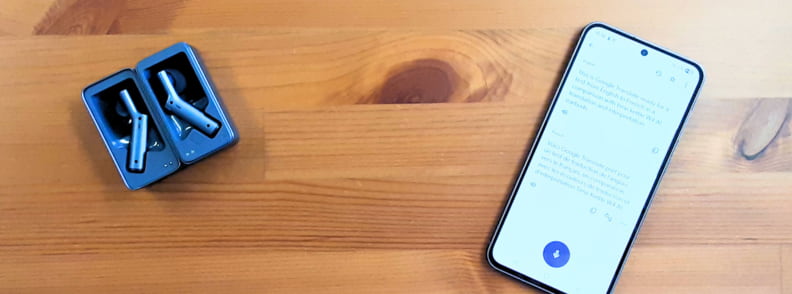
W4 vs. Translation Apps. Do You Still Need Your Phone?
Before spending money on translator earbuds, you need to know whether they solve a problem your phone already handles well enough. The debate around translation earbuds vs Google Translate isn’t really about which tool sounds more futuristic, but about flow, convenience, and how much friction you’re willing to accept during real conversations.
A good smartphone translator app already covers a lot of travel situations. You can type, speak, show the screen, and even save useful phrases before your trip. For many people, that makes the free option hard to ignore. It gets even stronger when you consider how familiar most travelers already are with using their phones abroad.
Google has a clear advantage in simplicity. Google Translate conversation mode is easy to understand, widely available, and good enough for many low-stakes interactions. That means the W4 is competing against a tool millions of people already trust.
The most important difference is the experience of using it. A proper cost comparison makes that obvious. Google Translate costs nothing, while the W4 asks for a serious upfront investment. So the only way the earbuds make sense is if they improve the conversation enough to justify that cost.
That brings us to the accuracy app vs earbuds comparison. In some cases, the phone app can be just as good or better, especially if you’re happy reading and showing text. In other cases, the earbuds feel smoother because they reduce the constant stop-and-show rhythm that makes app-based conversations feel clumsy.
Timekettle W4 vs. DeepL and Other Phone-Based Translators
The comparison gets more interesting once Google Translate is no longer the only app in the picture. The DeepL translator has built a strong reputation for more natural phrasing, especially in major European languages. It’s a serious benchmark.
In a DeepL vs W4 choice, the core question is whether you need wearable support or simply better translation text on a screen. DeepL can produce strong written translations, but it doesn’t solve the same hands-on conversation problem in the same way earbuds try to solve it.
Phone apps often have strong translation engines because they rely on powerful cloud systems and mature language databases. If your main goal is to understand meaning accurately, especially in writing, a strong app can still be the better tool.
A smartphone live translator is also easier to trust in certain situations because you can see every word on the screen. That visual confirmation matters. I already noticed during testing that the phone display often felt reassuring because it let me verify what was being sent before the audio reached the other person.
This creates an awkward truth for translator earbuds. Even when the W4 is doing its job, the phone still remains part of the experience. That means the earbuds don’t replace apps completely. They shift the balance slightly toward more natural interaction, but they don’t free you from the phone in the way some buyers might imagine.
When Earbuds Are Clearly Better (Hands-Free, Multi Speaker, Noise)
There are still situations where earbuds have a clear edge. The first one is hands-free translation. If you’re walking, carrying bags, checking into accommodation, or trying to keep a conversation moving without staring at a screen, earbuds make the process feel less mechanical.
The second advantage appears in simultaneous conversations or at least near-simultaneous back-and-forth. A phone app usually forces one person to speak, wait, look, then swap turns. Earbuds can make this exchange feel closer to an actual conversation, even if there is still a delay.
This becomes more relevant in multi-user translation situations such as multilingual family visits or repeated interactions over the course of a day. If you know the same people will need help understanding each other again and again, earbuds start to feel less like a novelty and more like a useful support tool.
Another place they help is the noisy environment advantage. A phone app can still translate in loud places, but earbuds built around speech capture and voice isolation are better positioned to keep the conversation going when there is movement and background sound around you.
Earbuds also offer a kind of discreet translation that apps don’t. Pulling out a phone and holding it between two people turns the device into the center of the interaction. Earbuds reduce that visual barrier a little, which can make the exchange feel less awkward in settings where you want to stay socially present.
The final edge is ambient awareness. Because the W4 uses an open-ear setup, you can still hear what’s happening around you while using it. That matters for travel because full isolation isn’t always desirable in stations, airports, or unfamiliar streets. A phone app keeps your ears open, too, but it doesn’t give you the same in-ear support during conversation.
Check the Timekettle W4 AI earbuds here if you want hands-free translation that works alongside your phone instead of replacing it.
When Apps Win (Rare Languages, Photo Translation, Cost)
Phone apps still win in several important ways, and pretending otherwise would be stupid. The first is camera translation. If you want to read menus, signs, museum panels, or transport instructions, your phone remains the better tool. Earbuds don’t solve visual language barriers.
The second advantage is rare language support. Earbuds often perform best in major languages with strong training data. Apps usually cover more languages, more scripts, and more edge cases. If you’re traveling somewhere linguistically less common, this matters a lot.
Apps also work better as an offline phrasebook. Even when live offline translation is available, it can be slower and less reliable than online use. A saved phrase list or app-based phrase support often feels more dependable for basic needs than forcing real-time offline translation to carry the whole situation.
Another obvious strength is that there is no other device needed beyond the phone already in your pocket. That removes one more product to buy, charge, pack, and troubleshoot. For many travelers, that alone is enough reason to stay with apps.
If you only need translation for occasional questions, menus, and simple practical exchanges, start with your phone. Learn a few local phrases, download a good app, and use your money elsewhere. The W4 only becomes worth considering when the language barrier is repeated, personal, and disruptive enough that reducing friction has real value.
So yes, you still need your phone. The W4 doesn’t replace it. But what it can do is make some conversations smoother than a phone app alone. Which is useful, but isn’t the same as independence. Travelers and expats should see the W4 as an upgrade for certain situations vs. a replacement for app-based translation altogether.
Who Is the Timekettle W4 Actually For?
A lot of people searching for translator earbuds are really asking two things without saying them directly. Is Timekettle W4 worth it for tourists? Are AI interpreter earbuds worth the money? The answer is favorable when you match the product to the right person.
The W4 isn’t for everyone, and that’s fine. A good travel gadget doesn’t need to fit every buyer. Like every product, it has its target audience. In this case, that audience sits somewhere between practical travelers, multilingual families, expats, and people who face repeated language friction often enough to care about smoother conversations.
I recommend the Timekettle W4 earbuds to travel enthusiasts who move through unfamiliar places often, to global business users who need lightweight support during work travel, and to language learners who want a little help while practicing abroad. It’s much harder to recommend to people who only want a gadget that sounds futuristic.
The Solo Traveler on a Budget
For budget travel, the W4 is a harder sell. Free apps already handle a lot of simple situations well. If you travel cheaply and mostly rely on basic phrases, signs, and quick phone translations, this may feel like more gadget than you need.
That said, traveling alone means there’s nobody beside you to bridge the gap when communication gets awkward. In that kind of situation, translation support can feel less like convenience and more like backup.
As a backpacker translator, though, it still feels like a niche buy. Most backpackers will probably get more value from a power bank, eSIM, and a good translation app than from premium earbuds built around speech. The W4 only starts to make sense if your route includes repeated real conversations in places where language barriers would slow you down all day.
If you’re heading to a destination where you know you will feel lost without local language support, the value of this travel translation gadget goes up fast. If your trip stays inside major tourist zones where English is everywhere, the argument weakens.
Is Timekettle W4 a cost-effective translator for solo travelers? Sometimes yes, but only in the right destination and only when you expect repeated need. For occasional use, the free option still wins.
The Business Traveler Going Global
The W4 makes more sense for the business traveler than for the budget tourist. Work trips often include repeated introductions, practical logistics, casual networking, and low-stakes conversations that still matter. In those moments, fast support can be genuinely useful.
As part of corporate travel gear, the W4 sits in an interesting middle ground. It’s cheaper and easier than hiring an interpreter for every small interaction, but it’s still more dedicated than a phone app. It’s attractive for people who travel often enough to justify the investment.
But I don’t think the W4 is the answer to everything. If you’re planning to use the W4 for meetings, it can support lighter business communication, but it shouldn’t be your only language bridge in conversations where precision carries serious consequences.
Used this way, it starts to make sense as a multilingual conference solution for informal exchanges around meetings, travel logistics, and casual conversation. It’s much less convincing as a replacement for a trained interpreter in formal negotiation or legal situations.
This is why I see it more as an AI meeting assistant than a professional interpreter substitute. It can reduce friction and save time, but it can’t fully replace expertise.

Meeting Summaries. How AI Memo Saves Time
One of the more interesting features for work use is AI Summary. This pushes the W4 beyond simple back-and-forth translation and into the space of productivity support, which makes it more relevant for travelers mixing movement with meetings.
The appeal of meeting summary translation is obvious. A product that helps you understand the exchange and capture its main points saves mental energy, especially when you’re already processing a foreign language, travel stress, and a packed schedule.
Seen this way, the Timekettle W4 can act partly like a voice note translator. It’s more useful for travel days built around quick conversations, site visits, or recurring business interactions where you want support before and after the exchange.
It also starts to resemble note-taking earbuds, even if that isn’t the main reason most people would buy it. The more often you move between languages in work settings, the more attractive this side of the product becomes.
This can create real value around conference call transcription and meeting follow-up. I still wouldn’t treat it as the same thing as dedicated professional transcription software, but for quick support and recap, the feature adds practical weight to the business case.
Media Translation. Translating TikTok and YouTube in Real-Time
Features around content listening expand Timekettele W4’s value into daily life, which matters if you want one device that does more than help you ask for directions.
A feature set like this makes the W4 interesting as TikTok translator earbuds because it lets you consume spoken content in languages you don’t fully understand. That is useful for people who follow creators across countries or want extra language exposure in casual settings.
The promise becomes even stronger when paired with live subtitles or app-level support that helps you follow the flow of spoken media. This doesn’t turn every short video into perfect study material, but it does lower the barrier to understanding more than you otherwise would.
The same applies to YouTube translation. Travel planning, relocation research, and local discovery increasingly happen through video. A device that helps you access more of that content can become useful before the trip even begins.
That broader role is what makes the W4 feel partly like a content translator device instead of only a travel aid. It still centers on spoken language, but spoken language now includes media as much as live conversation.
The idea of a media streaming translator becomes relevant. It isn’t the main reason I would tell someone to buy the W4, but it does make the device easier to justify if you plan to use it beyond a few trips per year.
The Language Learner Practicing Abroad
For the right language learner, Timekettle W4 earbuds can be useful, but only if used with discipline. The risk with any translation tool is dependence. If you rely on it to avoid engaging with the language, it slows learning instead of supporting it.
Used carefully, though, it can act as language practice earbuds that reduce hesitation without removing exposure. This is great for people who freeze during real conversations, especially abroad, where the pressure feels higher than at home.
In that role, the W4 works best as an immersion travel tool. It supports you while keeping you in the conversation instead of pushing you back to your phone every few seconds. That makes exchanges feel more natural, even if the phone still plays a central role behind the scenes.
For students or long-stay travelers, it can also function as a study abroad translator. It works best for people who already understand some of the language and need help filling gaps without constantly breaking the flow of daily life.
There is also some value in hearing and checking speech patterns, which gives the device a minor role as a pronunciation tool. I wouldn’t buy it for this purpose alone, but it does support listening and confidence in ways an app like Google Translator doesn’t.
The AI language tutor feature adds another layer to this. It offers pre-set scenarios like ordering coffee, visiting a library, job interviews, boarding gates, dating situations, and open conversation. The structure is useful because it gives you a safe space to practice predictable interactions before facing them in real life.
The idea is great, but the execution… not so much. Most of the characters are female, while the only male roles are the interviewer and the librarian, which feels oddly distributed. It would make more sense to balance better, for example, having a man serving coffee and a woman reading books or in a position of authority during the interview scenario.
Representation is there, but it still feels limited and not fully thought through. There are a couple of Black characters and some variation, but it could go further. A wider mix of backgrounds and more intentional role assignment would make these scenarios feel more realistic and inclusive.
And one scenario in particular stands out for the wrong reason. The dating interaction uses a character that appears underage, which feels inappropriate in that context. This breaks immersion and raises questions about how these characters are designed and validated.
I like the idea of this feature, and it has real potential as a structured learning tool. With better character design, more balanced roles, and more thoughtful scenario building, it could become one of the most valuable parts of the W4 for language learners.
Who Should NOT Buy the W4 (and What to Buy Instead)
This is the part that many reviews soften too much. The W4 isn’t for everyone, and saying that clearly helps more than pretending it’s universal. There are plenty of solid travel translator alternatives depending on budget, destination, and how often you really need support.
First, this product isn’t for casual use if your idea of language help is asking for a table, buying a ticket, or reading a menu once in a while. In that case, the price is difficult to justify. A phone app will be enough.
It’s also a weak fit for infrequent travelers. If you only leave the country once in a while and mostly stay in tourist-friendly destinations, this is probably not where your travel budget should go.
Timekettle W4 doesn’t have much use for native speakers only situations, where language friction is rare and temporary. If you already move comfortably through the languages you need, the product solves a problem you don’t really have.
For those buyers, a translation app might suffice. In many cases, it will do more than suffice. It will be the smarter choice. Google Translate, DeepL, and saved phrase tools already cover a lot of ground at no extra cost.
I would also steer away from the W4 if your trip focuses on languages that the device doesn’t support well enough. Unsupported or weakly covered languages immediately reduce the value of the whole product. A translator is only useful if your actual destination sits inside its strengths.
The same caution applies to users who dislike open-ear products or feel discomfort from bone conduction fit. Even if the device works well, the hardware still has to be wearable enough that you reach for it. If the fit irritates you, the translation quality stops mattering very quickly.
So what should those buyers choose instead? For low-cost needs, use a strong phone app. For screen-based clarity and built-in connectivity, a handheld translator can make more sense. For users deep in Apple, Google, or Samsung ecosystems, their own earbud options may already be enough.
Buy the Timekettle W4 earbuds if language barriers are a repeated part of your travel, family life, or work. Skip it if you only need occasional help, travel in well-supported tourist bubbles, or expect it to replace human fluency.
Buying Guide: Choosing the Right AI Translation Earbuds in 2026
If you have made it this far, you already know this product category is real and here to stay and evolve. The harder question is whether it’s right for you. A solid buying guide translator earbuds should help you avoid buying the wrong product for the wrong trip, because this is still a young category with a lot of hype and a lot of uneven performance.
The market now offers more AI earbuds features than it did a short time ago, but not every feature deserves the same weight. What matters most is whether the product helps you communicate more easily in the places you actually go.
Checklist: translation accuracy, offline mode, battery, comfort, ecosystem
Start with translation accuracy because everything else depends on it. If the device can’t handle the language pair you need in a way that feels reliable enough, the rest of the feature list does not matter. For travel, accuracy means useful meaning, not literary perfection. For work, the margin for error is much smaller.
The second question is your offline mode requirement. If you travel mostly in cities with stable internet, offline support matters less. If you go to rural areas, mountain villages, islands, or places with unreliable coverage, offline speed and usability become much more important. This is one of the clearest lines between something that feels convenient and something that feels genuinely useful.
Next comes the battery check. You don’t need a device that survives endless nonstop translation unless your travel style is built around constant conversation. You do need something that can handle repeated bursts of use through a normal day without turning into one more battery problem in your bag.
Then think seriously about comfort. This is where many buyers get carried away by features and forget the obvious. If the earbuds don’t stay in place, feel wrong on your ears, or become tiring fast, you’ll stop using them, no matter how good the translation engine looks on paper.
The last major filter is ecosystem compatibility. This matters more now because Apple, Google, and Samsung all offer translation support inside their own worlds. If you already use the right phone and the right earbuds from one of those brands, your best option may be to start there. If you want a product built around translation itself, a dedicated brand like Timekettle still makes more sense.
When to buy now vs. wait for the next generation?
The easiest reason to buy now is need. If you already know you’re traveling somewhere that will leave you stuck without language support, waiting for the perfect future model isn’t always useful. In that situation, a good-enough product you can use now often beats a hypothetical better one later.
The strongest reason to wait is hesitation about product category maturity. AI translation earbuds are improving fast, but they still feel like an early market in some ways. The devices are more capable than many people expect, yet still less natural than the marketing suggests.
Waiting can also make sense if you are closely watching upcoming models. This is a product category where software updates, language expansion, battery changes, and stronger ecosystem integration can quickly shift the value of a product. Buyers who are curious but not urgently in need may benefit from holding off a little.
I would buy now if you have a real trip, a clear language gap, and a realistic understanding of what the device can do. I would wait if you are buying out of curiosity alone, or if you suspect the product would spend most of its life in a drawer after one trip.
Where Timekettle W4 fits in the current market
The Timekettle W4 sits in a strong middle position. It’s more focused and purpose-built than general ecosystem earbuds with translation features, but less intimidating and less work-heavy than the more business-shaped W4 Pro. This makes it one of the clearest options for travelers, expats, and multilingual families who want dedicated support without going fully corporate.
Timekettle W4 AI Interpreter Earbuds are best for people who need repeated low to medium stakes spoken translation and want a wearable format.
The W4 also benefits from feeling more like modern earbuds than earlier translation-first hardware. It may sound superficial, but it matters. People are more likely to use a product that looks and feels socially normal, especially in public spaces or casual travel settings.
Where it loses ground is in situations where your phone ecosystem already gives you decent translation, or where a handheld device with a screen and built-in connectivity would be more practical. That doesn’t make the W4 weak. It simply makes it specific.
Alternatives worth considering
If your first priority is professional use, the W4 Pro is still the stronger Timekettle option. It offers a more work-oriented setup, longer translation battery claims, and a better fit for people who care more about structured meetings than casual travel flow.
If your priority is price, the Timekettle M3 is worth a look. It makes more sense for first-time buyers who want to explore the category without spending as much, even if it doesn’t feel as refined or as current as the W4.
If you want a dedicated screen-based product, Pocketalk remains one of the strongest alternatives. It’s easier to understand at first glance, more obvious to use with strangers, and often more reassuring for people who prefer reading and showing text rather than sharing earbuds.
If you already own the right Apple, Google, or Samsung hardware, their ecosystem options deserve serious attention. They may not replace dedicated translator earbuds in every situation, but they can cover enough ground that buying a separate product becomes harder to justify.
If your budget is tight, don’t ignore apps. A strong translation app, a downloaded phrase list, and a few learned basics still beat spending money on the wrong gadget. For many trips, that combination is the smarter choice.
Buy the Timekettle W4 if you need repeated spoken support in languages you don’t cover, and you want a wearable conversation tool. Buy something else if your needs are mainly visual, occasional, ecosystem-based, or too rare to justify the spend.
The Travel Bunny’s Tip: Before buying any AI translation earbuds, write down the three exact situations you want them for. If all three can already be handled comfortably with your phone, keep your money. If all three involve repeated spoken interaction, the Timekettle W4 AI earbuds are the right choice for you.
Sound Quality for Music. Is It a Daily Earbuds Replacement?
This is the question most translation-earbud reviews barely touch, and I think that’s a mistake. If you’re paying this much for the Timekettle W4 earbuds, you’ll probably want to use them for more than translation. This makes Timekettle W4 sound quality worth judging on its own, not as a side note buried under language features.
The first thing to understand is that the Timekettle W4 earbuds weren’t built to win against premium music earbuds but to help people communicate across languages. That difference shapes everything about the listening experience. You can use them for music and calls, but the sound profile clearly comes second to translation.
As far as music playback quality goes, the result is acceptable, but not exciting. I would call it good enough for casual listening during travel, commuting, or background audio, but not strong enough to make you forget why these earbuds were designed in the first place.
The biggest factor behind that sound is the open-ear audio performance. Because the earbuds don’t seal your ears the way traditional in-ear models do, you lose some of the immersive effect people expect from music-first earbuds. That changes how full and private the sound feels.
This becomes obvious in the bass and treble balance. The bass doesn’t hit with the depth or warmth you’d expect from earbuds built mainly for music, and the higher end can feel more functional than rich. The result is clear enough for podcasts, calls, and casual playlists, but less satisfying if you care deeply about audio.
Another thing to consider is noise leakage. Open-ear designs are practical for awareness, but they are less private for music. If you are sitting in a quiet train, sharing a room, or using the earbuds in public spaces, you won’t want everyone nearby hearing the edge of your playlist.
The lack of ANC absence is also worth mentioning. There is no active noise cancellation here, and that’s not a small detail. If you’re used to noise-canceling earbuds for flights, public transport, or focused listening, the W4 won’t replace that experience.
As far as normal earbud features go, Timekettle W4 earbuds cover the basics well enough to stay useful beyond translation, but can’t compete like a dedicated audio product. That isn’t a flaw so much as a design choice. The product is prioritizing open-ear awareness, speech handling, and translation support.
Are W4 earbuds daily headphones replacement? For some people, yes, but only in a light, practical sense. If your daily listening is mostly podcasts, calls, travel audio, and occasional music, the W4 can handle that. If you care a lot about rich sound, deep isolation, or premium music performance, you will still want a separate pair of earbuds built for that job.
The W4s are useful enough as a secondary everyday pair, but not good enough to replace proper music earbuds if sound is high on your priority list. They work as a translator first and as a decent extra pair of wireless earbuds second. This balance will be fine for some travelers and disappointing for others.
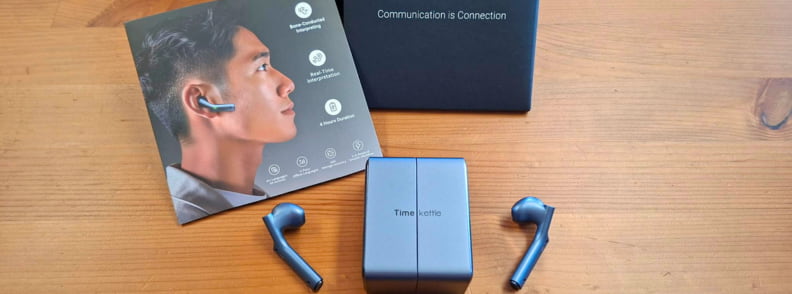
Final Verdict. Are the Timekettle W4 the Best AI Translation Earbuds for Travel?
After all the testing, setup, comparisons, and day-to-day use, the question is no longer whether AI translation earbuds are real. The question is whether Timekettle W4 is good enough to earn a place in your bag. My final verdict is clear. The Timekettle W4 AI Interpreter Earbuds are one of the most convincing translation earbud options for travelers right now, but they’re still best for the right person, not for everyone.
I would not call Timekettle the universal travel earbuds winner across every category, because the market is now split between dedicated translator devices, business-focused interpreter hardware, and ecosystem-based earbuds from Apple, Google, and Samsung. But I would call Timekettle translation earbuds some of the strongest dedicated options for travelers, expats, and multilingual families who want spoken support in real situations instead of another screen-first tool.
If you want a simple buy recommendation, here it is:
Buy the Timekettle W4 AI Interpreter Earbuds if you expect real spoken language friction often enough that smoother conversations would genuinely improve your trips or daily life. Skip them if your phone app already covers your needs, if you only travel occasionally, or if you expect the earbuds to replace a skilled human interpreter.
The W4 are not magic, but they aren’t gimmicky either. They’re a useful product in a category that still feels early, and that’s already more than many people expect when they first hear translator earbuds exist.
Pros & Cons Summary by Traveler Type (solo, couple, family, business)
For solo travelers, the biggest advantage is support when no one else is there to bridge the gap. The W4 helps with ease of conversation in destinations where language barriers would otherwise slow you down repeatedly. The downside is the premium price, which is hard to justify for low-budget or infrequent travel.
For mixed-language couples, the W4 becomes more interesting. It can reduce the interpreting burden on the stronger language partner and make shared travel feel less uneven.
For multilingual families, this is where I think the W4 becomes uniquely useful. Multilingual households, visiting grandparents, and children growing up across languages create a kind of daily friction that apps don’t handle elegantly. In this context, the W4 stops being a gadget and starts feeling like a bridge.
For business travelers, the biggest advantage is convenience. The W4 offers useful support without the full cost or logistics of a human interpreter in every minor situation. The biggest risk is overtrusting it in settings where mistakes cost more than awkwardness.
The hardware also shapes the verdict. The bone-sensor accuracy does improve the product’s value in real conversation, especially when background noise stays manageable. That said, the benefits are strongest in realistic public use, not in chaotic environments that overwhelm everything.
The open-ear convenience is another real strength. You stay aware of your surroundings, which makes more sense for travel than total isolation. But at the same time, this also limits the music experience and changes how “premium” the listening side feels compared with dedicated audio earbuds.
That is why sound quality remains a secondary win, not a primary one. It’s good enough for casual listening, but not what makes the product worth buying.
The biggest caveat is still the environment limitations. If you expect flawless results in weak offline conditions, unsupported languages, or fast, messy group conversations, the Timekettle W4 will disappoint you. If you treat them as a strong support tool instead of a miracle device, they become much easier to appreciate.
Key Lessons from Testing AI Interpreter Earbuds in the Real World
- Setup and mode choice matter more than most buyers expect. You can’t judge this product category fairly by trying one mode once and giving up. Some settings simply work better than others for the same language pair and the same people.
- The phone is still part of the experience. One of the most useful real-world insights from my testing is that I still wanted the screen visible while using the earbuds, because it helped me verify what had been translated and gave me confidence before the audio reached the other person.
- Speaking style matters. If you slow down, enunciate, and stay reasonably close to the phone, the results improve. That may sound obvious, but it’s the kind of thing many reviews skip, even though it changes the whole experience.
- Real usefulness appears in ordinary situations. This isn’t mainly a product for impossible negotiations or cinematic language barriers. It shines more in travel logistics, family visits, small talk, and repeated practical conversations.
- Honesty. A lot of the value here comes from knowing what the device should and shouldn’t do. Use the right mode. Keep the phone accessible. Treat offline as backup, not as your ideal plan.
In simple terms, what we learned is that AI translation earbuds are now useful enough to matter, but still limited enough that expectations decide whether you love them or resent them.
My best travel translation advice is to buy the Timekettle W4 for a specific trip, specific language gap, or repeated family need, not because the product category sounds futuristic. Concrete need makes much better buying logic than curiosity.
Get the Timekettle W4 translation earbuds if you already know the exact situation where you need help with language barriers.
The same goes for AI translation do’s and don’ts. Do use it for repeated spoken interactions. Do use it in supported languages you actually need. Do not expect it to replace fluency, human interpretation, or common sense.
My Rating at the end of the Timekettle W4 review
My star rating for the Timekettle W4 is based on what it’s trying to be, not on what marketing wants it to sound like. This isn’t a perfect audio product. It isn’t a perfect translator. It is a strong niche travel tool with a clearer purpose than most of its rivals.
My overall final score is 4 out of 5 for the right buyer. This score reflects strong travel and family use potential, a more polished form factor than older translation devices, and enough real-world usefulness to justify its place in the category.
My full review rating breaks down like this:
- Translation performance: 4/5
- Comfort and fit: 4/5
- Ease of use: 4.5/5
- Travel practicality: 4.5/5
- Music and daily audio use: 3.5/5
- Value for money: 4/5
That average lands at a product I would recommend with conditions, not blindly. I would be much less positive if the product category were still mostly hype. The fact that I can genuinely see where this would help in real travel and family life is what keeps the score high.
Buy the Timekettle W4 AI interpreter earbuds here if you want a practical travel translation tool that works when used the right way.
Where to Buy Timekettle W4 earbuds at the Best Price
If you decide the W4 fits your needs, the safest starting point is the official Timekettle store. That is the easiest place to check color options, warranty terms, and current bundles before buying. It’s also the simplest route if you want confidence that you are getting the real product.
Check the official Timekettle W4 price and current bundles here to avoid fake listings and get full warranty support.
If you are searching for where to buy Timekettle W4 in your region, I would also check major marketplace listings and local established electronics retailers, but only if they are clearly trustworthy. With newer tech categories, fake or vague listings aren’t worth the risk just to save a little money.
The best price isn’t always the lowest visible number. It’s the best overall deal once you include warranty, returns, delivery, and whether you are buying from a seller that will still matter if something goes wrong.
If you are patient, a Timekettle W4 discount may show up through official promotions, seasonal sales, or color-specific deals. It can make a meaningful difference because the base price is high enough that even a moderate discount feels worthwhile.
I would stick to authorized dealers or the official store. This matters more here than it does for generic earbuds, because support, authenticity, and after-sales confidence are part of the product value.
The Travel Bunny’s Tip: If you are still unsure, imagine your next trip and write down the exact three conversations you fear most. If those are spoken, repeated, and likely to happen in a supported language, the Timekettle W4 are probably worth a serious look.
Timekettle W4 FAQs
If you’re trying to decide whether the W4 will help on your next trip, move abroad, or in your multilingual family life, these are the questions that matter most. I wrote these answers for travelers and potential buyers who want clear, direct help before spending money on AI translation earbuds.
Do translation earbuds really work for travel?
Yes, translation earbuds really do work for travel, but not in the flawless sci-fi way many people imagine. They work best when you use them for repeated spoken interactions where a phone app would feel clumsy, slow, or awkward. That includes family visits, hotel check-ins, simple local conversations, guided exchanges, and low-pressure day-to-day communication abroad.
They work less well when the situation is chaotic, the language pair is weaker, or the conversation carries high stakes. In other words, they are useful travel support tools, not perfect replacements for language skills, human interpreters, or common sense. That distinction is what separates realistic expectations from disappointment.
How do AI translation earbuds work?
AI translation earbuds work by listening to speech, turning that speech into text, translating the meaning, and then playing the result back in another language. That process usually runs through an app on your phone, which means the earbuds and the phone work together rather than independently.
In simple terms, the device hears your voice, the software recognizes the words, the translation engine converts them into the target language, and then a synthetic voice reads the translation out loud. Some products also show the text on the phone screen slightly faster than you hear it in the ear, which can be useful for checking whether the meaning came through correctly.
How accurate are AI translator earbuds?
AI translator earbuds can be surprisingly accurate in the right conditions, especially for major language pairs, clear speech, and simple everyday conversations. They become less accurate when you add slang, strong accents, fast speech, poor connectivity, or unsupported languages. Accuracy in this category is always situational, not absolute.
The best way to think about them is as meaning-first tools, not perfect sentence machines. If the goal is to understand and be understood well enough to move the conversation forward, the better products can do that. If the goal is exact nuance in legal, medical, or sensitive business settings, they are still not enough on their own.
Are translation earbuds better than translation apps?
Translation earbuds aren’t automatically better than translation apps. They are better in specific situations where speaking and listening back and forth matters more than reading from a screen. If you are trying to have a more natural conversation while walking, carrying luggage, or talking with the same person several times, earbuds can feel smoother than pulling out your phone every few minutes.
Apps still win when you need visual translation, quick one-off help, camera translation for signs and menus, rare language support, or the lowest possible cost. That is why I don’t see earbuds as replacements for apps. I see them as upgrades for travelers who face repeated spoken language friction often enough that smoother conversation becomes worth paying for.
What are the best translator earbuds?
The best translator earbuds depend on who you are and what kind of travel or work you do. SoundGuys highlighted the Timekettle W4 Pro in its roundup of the best translation earbuds in 2026, which fits with the Pro’s stronger business positioning and longer translation battery claims.
Other rankings are much less focused and often mix dedicated translation devices with generic earbuds that happen to support translation through an app. That is why many best translator earbuds lists feel messy. They compare products that aren’t really trying to solve the same problem. The best dedicated options right now still tend to come from Timekettle, while Apple, Google, and Samsung make more sense if you’re already deeply invested in their ecosystems.
What are the best translation earbuds for travel?
For travel specifically, I think the strongest dedicated options are the Timekettle W4 and W4 Pro, but they serve different travelers. The W4 is best for people who want a more casual, wearable translation product for family visits, day-to-day travel friction, and repeated spoken support. The W4 Pro makes more sense for travelers whose work and meetings matter more than casual travel flow.
If you already use Apple, Google, or Samsung hardware that supports translation features, those can also be good travel solutions, but they’re ecosystem solutions first and translation products second. That means they’re often easier to justify if you already own the right phone and earbuds, but less compelling if translation itself is the main reason you are shopping. For a traveler who wants a dedicated conversation tool rather than an extra app feature, the W4 is one of the most convincing choices right now.
Are Timekettle W4 earbuds worth it for travel?
Yes, Timekettle W4 earbuds are worth it for travel, but only when the problem they solve is real enough in your life. If you travel to places where language barriers repeatedly slow you down, stress you out, or make you dependent on someone else, the W4 starts to make sense. If you mostly travel in tourist-heavy places where a few basic phrases and your phone are enough, the price becomes much harder to justify.
For me, the value is clearest in repeated spoken interaction, multilingual family use, and destinations where I would feel lost without stronger language support. That is why I wouldn’t recommend the W4 to every tourist. I would recommend Timekettle W4 to travelers, expats, and families who know exactly where the friction sits and want to reduce it without carrying a handheld translator everywhere.
What is a bone-voiceprint sensor? How does bone voiceprint sensor work?
A bone-voiceprint sensor is a feature that helps the earbuds focus on your voice more accurately by detecting vibrations from your speech through the bones in your head rather than relying only on sound moving through the air. In plain English, it gives the device another way to “hear” you that is less affected by background noise.
That matters because normal microphones pick up everything around you. A bone-voiceprint sensor helps isolate your own speech from nearby noise, which can improve recognition in public spaces. It doesn’t erase noise completely, but it gives the system a better chance of telling your voice apart from the rest of the environment. This is one of the main reasons the W4 stands out in a crowded category.
How accurate is Timekettle W4 translation?
Timekettle and several tech sources repeat headline accuracy claims that go as high as 98 percent in ideal conditions. Those numbers are useful for context, but they should never be read as a guarantee for every language, every mode, and every environment.
What matters more is benchmark-style reality. In my own testing, the W4 performed better in English and French than once Romanian entered the picture. It also performed better when we switched away from one-to-one mode and used the more business-like mode instead. Accuracy improved when both users stayed close to the phone, spoke clearly, and didn’t rush. Offline mode was noticeably slower and felt more like emergency backup than smooth conversation support.
In quieter conditions, I would describe W4 translation as good enough to be genuinely useful. In noisy environments, I would expect stronger results when the background remains more like distant humming than aggressive overlapping voices. That is why airport or station announcements matter so much as a real benchmark. Based on the technology and the early tests, I am optimistic about its voice matching, but I would still treat any loud public environment as a stress test rather than as the default promise.
So the honest answer is that Timekettle W4 translation can be very good in supported languages and controlled real-world use, but it is still sensitive to mode choice, language pair, distance to the phone, and the amount of chaos around you. That makes it strong enough to trust in many travel conversations, but not strong enough to trust blindly.
Can Timekettle W4 earbuds work without internet? Do Timekettle W4 earbuds work offline?
Yes, the Timekettle W4 earbuds can work offline, but with clear limitations. You need to download language packs in advance through the app, which means you must plan before your trip rather than rely on last-minute access.
The download process is simple inside the app, where you select the languages you expect to use and store them on your device. The trade-off is that offline mode supports fewer languages and delivers slower results compared to online use.
In real travel situations, offline translation feels more like a backup tool than your primary solution. It helps when you lose signal or data, but it doesn’t match the speed or fluidity you get with a stable internet connection.
How many languages do Timekettle W4 earbuds support?
The Timekettle W4 supports around 42 to 43 languages and up to 95 accents according to official information. That puts it ahead of many cheaper alternatives that only cover a handful of major languages.
This range is strong enough for most international travel routes, especially across Europe, North America, and parts of Asia. The real value comes from accent support, which helps the system handle regional variations more effectively than basic translation tools.
What languages does the Timekettle W4 support?
The W4 covers widely used languages such as English, French, Spanish, German, Italian, Chinese, Japanese, and Korean, along with a broader list that includes less commonly supported languages compared to entry-level devices.
That said, it still doesn’t cover every language. Some gaps remain, which matters if you travel to regions where local languages are not part of the supported list. This is one of the key things to check before buying, because missing your target language makes the device far less useful.
How accurate is the W4 in French, Romanian, and other languages?
In my experience, the W4 performs best in English and French, where translations feel more stable and consistent in everyday conversation. Romanian works, but the results are slightly less reliable, especially when speech becomes faster or more complex.
This pattern follows what you would expect from most AI translation systems. Major languages benefit from more training data and better optimization, while smaller languages still lag behind slightly. The difference isn’t dramatic, but it is noticeable in real conversation.
If you are planning to use the W4 mainly in French or other widely supported languages, you will likely get stronger results than if your primary need involves less common language pairs.
Can both people use Timekettle W4 at the same time?
Yes, both people can use the Timekettle W4 at the same time, and this is one of its most practical features for real conversation. In One-on-One mode, each person wears one earbud, and the system translates speech back and forth automatically.
The flow is simple in practice. You speak in your language, your voice gets translated, and the other person hears the result in their ear. When they reply, the process reverses, creating a natural conversation loop without passing a phone back and forth.
This setup feels much closer to a real conversation than using a phone app, especially when both people stay relatively close to the connected device and speak at a normal pace.
Can W4 translation earbuds translate phone calls and video meetings?
The W4 can support translation during phone calls and video content through specific modes, but it isn’t designed as a full replacement for dedicated meeting translation software. It works best when the audio source is clear and consistent.
Media Translation mode allows you to translate spoken content from videos or online media in real time, which makes it useful for watching content in another language. For live meetings, results depend heavily on audio clarity, speaker overlap, and connection quality.
In practical terms, it can assist with understanding conversations, but it isn’t yet a perfect tool for complex multi-speaker business meetings where precision matters at every sentence.
Is Timekettle better than Google Translate?
Timekettle isn’t universally better than Google Translate, but it’s better in specific use cases. The main advantage is hands-free conversation, which makes real dialogue feel smoother and more natural compared to using a phone screen.
Google Translate still leads in flexibility, cost, and feature range. It supports more languages, includes camera translation, and works instantly without extra hardware. That makes it the stronger general-purpose tool for most travelers.
Where Timekettle stands out is in repeated spoken interaction. If you find yourself having the same type of conversations again and again, the W4 reduces friction and makes those interactions feel less mechanical. That’s where it can outperform a phone app.
How do I set up the Timekettle W4?
Setting up the Timekettle W4 is straightforward and takes only a few minutes. You start by installing the Timekettle app on iOS or Android, then power on the earbuds and pair them through Bluetooth.
Once connected, the Timekettle app guides you through initial setup, including language selection and any available firmware updates. The interface is simple enough that you can start using the earbuds quickly without digging through complex menus.
From there, you choose your translation mode and begin using the device. The process feels intuitive, especially if you have used wireless earbuds before.
How long does the Timekettle W4 battery last? What is the battery life of Timekettle W4?
The Timekettle W4 offers around four hours of continuous translation in real-world conditions, with longer endurance in music playback that can reach roughly six to eight hours depending on usage.
The charging case adds additional power, extending total use to around ten hours or more across a full day. That makes it usable for travel days, but not something you want to forget to recharge overnight.
In practice, battery performance depends heavily on how often you use active translation versus passive listening. I am currently running a more detailed endurance test to push these numbers further in real travel conditions.
Are AI translation earbuds safe and comfortable to wear all day or for long flights?
AI translation earbuds like the W4 are generally safe to wear for long periods, especially because of their open-ear design, which avoids sealing the ear canal and reduces pressure compared to traditional in-ear earbuds.
Comfort depends on fit and personal sensitivity. Some people will find the open-ear style easier for long wear, while others may need time to adjust to the bone conduction feel. The lightweight design helps, but it’s still a wearable device that you will notice after several hours.
For long flights or full travel days, the W4 is comfortable enough for extended use if you take short breaks. It is better suited for intermittent use throughout the day than for continuous wear without pause from morning to night.
My advice is to test them at home for a few hours before your trip. If they feel natural after that, you’ll be much more confident using them all day when it actually matters.
Are Timekettle earbuds waterproof?
Timekettle earbuds aren’t designed for full water exposure, but they can handle light moisture. The W4 Pro is rated IPX4, which means it resists sweat and light splashes such as rain during a short walk.
For the standard W4, there is no clearly stated official rating at the time of writing, but based on build and positioning, it’s reasonable to expect similar splash resistance rather than full waterproof protection.
In practical travel terms, you should be able to use them in light rain or while moving between locations, but you shouldn’t expose them to heavy rain, showers, or water activities. These are communication tools, not sports earbuds.
What is the difference between Timekettle W4 and W4 Pro?
The main difference between the W4 and W4 Pro comes down to target use and performance priorities. The W4 is built for casual travel, family use, and everyday multilingual situations, while the W4 Pro is designed with business use in mind.
The W4 supports around 43 languages and offers about four hours of continuous translation, which fits most travel days with breaks. The W4 Pro supports slightly fewer languages but focuses more on stability and extended use, with around six hours of continuous translation.
The Pro model also includes features that lean toward professional use, such as better support for structured conversations and call-related translation scenarios. That makes it more suitable for meetings, negotiations, and frequent business communication.
If you travel occasionally or want something for personal use, the W4 is easier to justify the budget. If your work depends on regular multilingual communication, the W4 Pro starts to make more sense despite the higher price.
Do you need a subscription for Timekettle W4?
You don’t need a mandatory subscription to use the Timekettle W4, which is one of its strongest advantages compared to some competing translation devices. The core functionality works after a one-time purchase, and the app receives free updates over time.
That said, there can be additional costs depending on how you use the device. Offline language packs aren’t always fully included, and some may require separate purchase or limited free access depending on the bundle you choose.
This creates a simple pricing structure in practice. You pay once for the device, you use online translation with your own data connection, and you optionally pay for offline language support if you need it for travel without internet.
Compared to devices that require ongoing membership fees or subscription plans, the W4 is easier to manage financially over time, especially for travelers who prefer predictable costs.
Is there a cheaper alternative to Timekettle W4?
Yes, there are cheaper alternatives, but they come with clear trade-offs that you need to understand before choosing them. The most obvious alternative is to skip hardware entirely and rely on a smartphone translator app such as Google Translate or DeepL. That is the lowest-cost option and often the most flexible.
There are also budget translator earbuds sold online at much lower prices. These often rely entirely on basic app integration and lack the advanced voice isolation, hardware design, and software optimization that make products like the W4 usable in real conversation. In practice, many of these cheaper options feel inconsistent or frustrating in noisy environments.
Another alternative is a handheld translator device such as Pocketalk. These are often cheaper than premium earbuds and offer reliable translation in a dedicated device format, but they remove the hands-free advantage and feel less natural in conversation.
If your goal is to spend as little as possible, your phone is still the best option. If your goal is smoother conversation and repeated use, cheaper earbuds rarely deliver the same level of usability as the W4.
Are translator earbuds worth it?
Translator earbuds are worth it for some people, but not for everyone. Their value depends entirely on how often you face real spoken language barriers and how much those barriers affect your experience.
If you travel occasionally, stick to tourist-friendly places, or only need help reading menus and signs, a free app is usually enough. In that case, earbuds can feel like an expensive extra that does not change your experience much.
If you deal with spoken interaction regularly, whether in travel, family life, or business, the value becomes much clearer. Being able to speak and listen naturally without passing a phone back and forth reduces friction in a way that apps cannot fully replicate.
The mixed reviews you see online usually come from mismatched expectations. People who expect flawless, instant, human-level translation tend to be disappointed. People who understand the limits and use the earbuds in the right situations tend to find them genuinely helpful.
Before buying, think about your last trip and count how many times you struggled to speak, not just to read. If that number is high, translator earbuds start making real sense.
About the Author

Hi, I’m Mirela Letailleur, founder of The Travel Bunny. I test travel gear in real situations. I travel as part of a multilingual family and deal with cross-language communication daily. I speak English, French, and Romanian, and I’ve been the unofficial interpreter in my relationship from the start. This gives me a clear baseline to judge tools like the Timekettle W4 AI Interpreter Earbuds against real conversations vs expectations.
I focus on what actually works on the road. My reviews combine personal experience with practical insights, so you know what to expect before spending money on travel language gadgets or AI translation devices.
Check out other travel gear reviews by The Travel Bunny
Ostrichpillow Go Neck Review. The Definitive Guide for Travelers & Commuters
Ocoopa Union 5S Hand Warmer Review: Stay Warm in Cold Weather Comfortably
Nayo Almighty Backpack Review: The Best Smart Travel Companion