
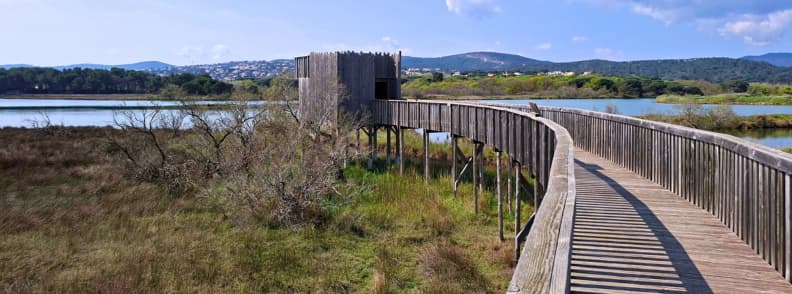
The Étangs de Villepey are one of the few places in the Var that seem to grow greener as August gets harsher. By then, much of the countryside around Fréjus has gone the colour of old straw, but these 271 hectares of wetlands between Saint-Aygulf and the Argens are still full of reeds, water, and improbable patches of green.
I have been several times, including in summer with our toddler wobbling along on his draisienne, and I should admit at once that I have never seen the flamingos. The Villepey ponds are famous for birds, with more than 270 species recorded here, but on our visits the cast has been less glamorous: egrets, fish, and whatever was rustling beyond the reeds.
Les Étangs de Villepey Guide
The Étangs de Villepey France wetland sits in the Var, Provence-Alpes-Côte d’Azur, and forms one of the rare Mediterranean wetlands left between the Camargue and Italy. In this Étangs de Villepey guide on The Travel Bunny, I’ll cover how to visit Les Étangs de Villepey, the walks, parking, birdwatching, practical access, and the easy pairing with Plage de Saint-Aygulf across the road.
Disclosure: Some of the links on this page are affiliate links. This means that at no extra cost to you, The Travel Bunny will earn a small commission if you click through and make a purchase. Thank you!
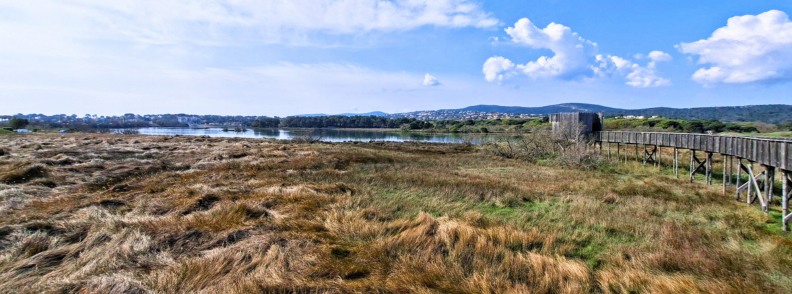
Wildlife and Nature at Étangs de Villepey
August in the Var does a thorough job of removing green from the scenery. Fields fade, roadside grass turns the color of straw, and whole hillsides start to look tired of summer. Then you cross the road from Plage de Saint-Aygulf to the Étangs de Villepey and find reeds, open water, and great patches of green carrying on as if August had been greatly exaggerated.
I’ve visited several times, during quieter months and in summer, often with our toddler rolling beside us on his balance bike. Among Fréjus nature activities, the Villepey ponds have always seemed unusually detached from the busy coast surrounding it. The Mediterranean sits across the road, Saint-Aygulf is close by, yet inside the wetlands the scenery breaks into lagoon, mudflat, salt meadow, reed bed, dunes, woodland, and ponds. There’s a mosaic of habitats across the reserve.
Calling it a Saint-Aygulf nature park is useful shorthand for travelers and expats unfamiliar with the area. Its formal identity is richer. Villepey is protected Conservatoire du Littoral land, included within the Natura 2000 Embouchure de l’Argens site and listed as a Ramsar wetland protected area since 2008.
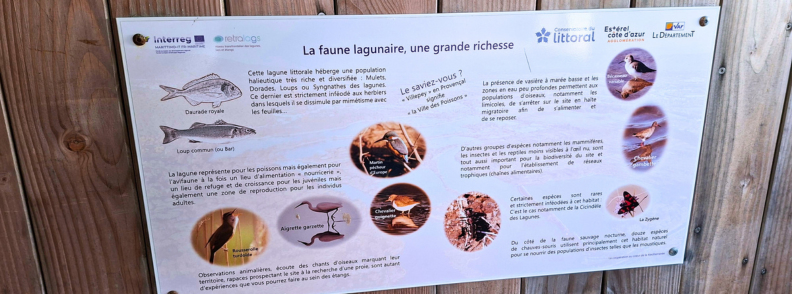
Birds, Flamingos, Egrets, and Other Fauna at Étangs de Villepey
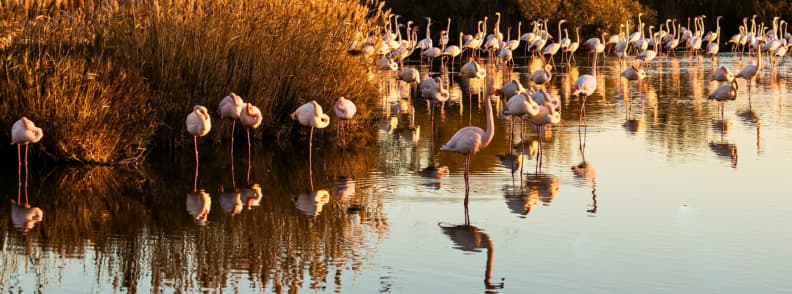
For all the talk of pink flamingos Villepey, I have never seen one here. I’ve visited several times, including in August, and the flamingos have evidently kept a different schedule. We have seen fish moving through the shallows and plenty of egrets, which is a useful reminder for anyone researching what birds might you see at Villepey ponds. Wildlife sightings depend heavily on season, weather, water levels, and sheer luck.
There are 276 bird species at Villepey Ponds in the Var. The Villepey bird species include flamingos, ducks, grebes, terns, waders, herons, raptors, and reed-dwelling passerines. Among the rarer breeding birds are Little Bittern, Eurasian Reed Warbler, Great Reed Warbler, and Moustached Warbler.
| Wildlife | What to watch for |
|---|---|
| Greater Flamingo | Seasonal visitor using the lagoon. Flamingos use the lagoon during migration and wintering, with best chances for spotting from October through February or even April. |
| Egrets and herons | Mudflats, reed margins, and shallow water. Great Egrets and other herons use the wetland, and these are among the birds Villepey has reliably produced on my own visits. |
| Ducks and grebes | Open lagoon water |
| Little Bittern | A notable nesting species associated with reed beds |
| Reed Warbler | Reed beds and wet vegetation |
| Great Reed Warbler | Taller reed stands |
| Moustached Warbler | Wetland vegetation |
| European pond turtle, cistude | Freshwater wetland habitat. The rare European pond turtle, or cistude, lives around the wetlands, alongside bats, amphibians, reptiles, and small mammals. |
| Fish | The lagoon system holds freshwater fish arriving from the Argens as well as marine fish entering from the Mediterranean. |
For anyone wondering what birds might you see at the Villepey ponds, the answer changes through the year. The best time to see flamingos at Villepey appears to fall outside high summer. March and early September are the best periods for migrant birds, but flamingo wintering takes place from October to late winter or even spring. So the best time to visit Villepey ponds for flamingos is less precise than most travel pages would suggest.
How to see pink flamingos in the Var region: Come during migration or winter, use the observation points, bring binoculars, and leave room for disappointment. The Villepey flamingos have no obligation to report for duty.
Les Étangs de Villepey reed beds wildlife spotting extends well past flamingos. Reedbeds support marsh birds, while mudflats attract waders and herons. This mix explains the richness of Villepey flora and fauna and makes the site an excellent stop for anyone interested in French Riviera wildlife rather than a single headline species.
Photography tips for wildlife at Etangs de Villepey: The observation areas give you distance from feeding birds, while quieter hours improve your chances of watching natural behavior. Stay on the marked paths, keep your distance, and let the birds decide whether your visit produces a photograph.

Bird Species Checklist for Étangs de Villepey in the Var
| Species | Winter | Spring | Summer | Autumn | Notes |
|---|---|---|---|---|---|
| Flamingo | ✓ | ✓ | ✓ | Most likely Oct–Apr | |
| Great Egret | ✓ | ✓ | ✓ | ✓ | Year-round |
| Little Egret | ✓ | ✓ | ✓ | ✓ | Year-round |
| Little Bittern | ✓ | ✓ | Reed beds breeder | ||
| Great Reed Warbler | ✓ | ✓ | Breeding season | ||
| Moustached Warbler | ✓ | ✓ | Localized | ||
| European Pond Turtle | ✓ | ✓ | ✓ | ✓ | Freshwater zones |
| Ducks (various) | ✓ | ✓ | ✓ | Seasonal peaks | |
| Waders | ✓ | ✓ | ✓ | Mudflats |
The Travel Bunny’s local tip: Keep the bird list flexible. We’ve visited several times and our most dependable sightings have been egrets and fish. The flamingos have remained magnificently indifferent to our plans.
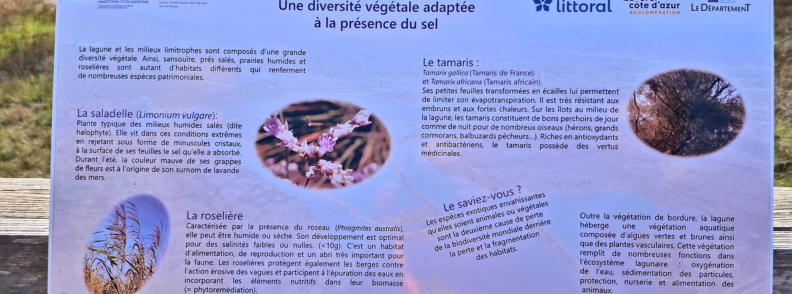
Flora and habitats at the Villepey wetlands
The Villepey wetlands sit where fresh Argens water meets the Mediterranean, creating lagoon, mudflat, reedbed, salt meadow, dune, grassland, riverside woodland, and pinewood within one protected site. The Villepey lagoons in Fréjus show how French Riviera wetlands shift from fresh to brackish and marine influence within a short walk.
The Esclamandes sand dunes support sea lily, sea holly, Nice catchfly, and protected euphorbias. Behind them, the Villepey salt marshes and salt meadows carry glasswort, sea purslane, sea aster, and rushes, while the Villepey reed beds are dominated by common reed. There are 27 rare or protected plant species in the wider Villepey ecosystem.
The Fréjus wetlands also illustrate the marine and freshwater lagoon ecosystems in Var, France unusually clearly because fish enter from both the Argens and the sea.
Walking around the Étangs de Villepey lagoon system makes those changes visible underfoot. The Villepey wetlands trail difficulty level is easy on the official family route, which crosses earth, gravel, hard paving, and boardwalk.
A day hike from Fréjus to the Étangs de Villepey lagoons pairs naturally with the reserve’s marked links toward the Petites Maures or the coastal path. Just keep in mind that the best hiking shoes for the Villepey wetlands trail are ordinary walking shoes with grip.
The Villepey wetlands are good for photography, with dunes, reed edges, open water, and salt-tolerant vegetation packed close together. The best sunrise spots at Villepey wetlands are around Esclamandes facing the Mediterranean, while the ponds take the evening light. Visiting Villepey lagoons during spring bird migration adds March migration activity to the scenery.
World Wetlands Day events at Étangs de Villepey Fréjus take place in February.
Fishing at Villepey wetlands is limited to line fishing, and only in the sections where the pedestrian path runs directly along the shore. Swimming in the Étangs de Villepey lagoons is not allowed, and both bathing and navigation on the ponds are strictly prohibited.
For any marine access or use of a dinghy dock near the Villepey lagoons, visitors must stay on the coastal side outside this Var wetland reserve system, as navigation inside the protected lagoons is barred. As a result, walking through wetlands on the French Riviera here remains confined to the marked visitor routes.
The Villepey lagoons in the Var are small, yet rich enough to show several habitat types in one visit. It’s a rare concentration among wetlands on the French Riviera.
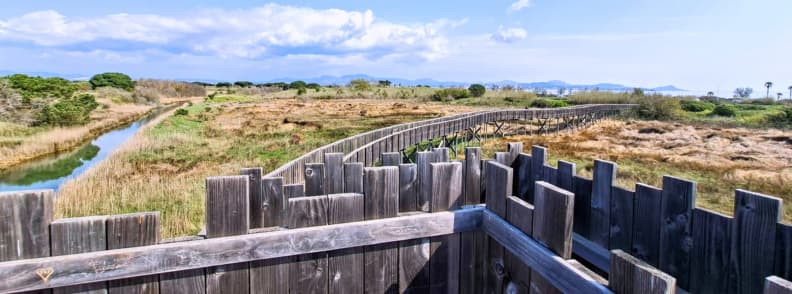
Activities and trails around the Étangs de Villepey
The Étangs de Villepey are best explored slowly and on land. On our visits, that has meant walking while our toddler rattled ahead on his balance bike, stopping whenever something moved in the reeds. The Villepey cycle path and surrounding tracks make Villepey cycling an easy addition to a visit, while the marked walking routes lead between open water, reed beds, dunes, and the observation points. The Villepey Fréjus route is an easy family walk.
Water activities require a little geographical discipline. Villepey kayaking takes place on the nearby Argens or along the coast, since navigation inside the protected ponds is prohibited. Kayaking near the mouth of the Argens River gives you the watery side of the area without entering the sanctuary itself. Kayak Paddle Fréjus operates upstream on the Argens from Chemin de la Sablière, with kayak, stand-up paddle, pedal boat, and electric boat rentals.
Kayaking and paddleboarding near Étangs de Villepey belongs to the river-and-coast part of your day rather than the lagoon trail. A Villepey paddle board outing starts outside the ponds, and a session on the Argens gives a quieter view of the riverside vegetation before the river reaches the Mediterranean.
Étangs de Villepey paddle rental and eco-tour options are nearby and not inside the reserve, which is worth knowing before arriving with visions of Villepey paddleboard sessions between the reeds. Among Fréjus outdoor activities, Villepey is best as a walking, cycling, and wildlife stop, with river and coastal water sports added separately nearby.
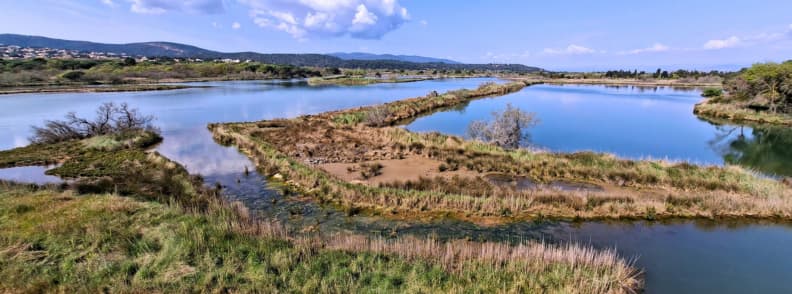
Hiking routes around the Étangs de Villepey
The official Villepey hiking trail is a loop, which is perfectly convincing until you compare the Étangs de Villepey map with the present state of the bridges. The marked circuit measures 7.8 km, climbs a barely noticeable 14 m and carries an easy, family-friendly rating. You should expect 2 hours 15 minutes for the full route.
Birdingplaces reported in January 2026 that the bridge on the northern side was destroyed and has not been rebuilt. In other words, the Villepey loop trail currently has a rather important absence in the middle of it.
This is worth remembering when planning Villepey ponds hiking. The Étangs de Villepey trail has suffered flood damage which made some bridges inaccessible, so walkers may have to retrace their steps. So although official Villepey ponds hike distance and difficulty remain 7.8 km and easy, the distance you actually walk depends on the route available on the day. The official figure says how many kilometers the Villepey ponds hike covers on paper, but current access decides what your legs end up doing.
The best Les Étangs de Villepey trail starting point is the Étangs de Villepey parking area beside Plage des Esclamandes on Avenue de la Corniche d’Azur, the D559. Cross toward the ponds and find the trail sign between Kokonut Plage and Mas d’Estel. The route begins beside the newer observation footbridge, then returns toward the road before turning onto the Chemin des Étangs.
Where to park for a Villepey nature walk: The main parking is at Plage des Esclamandes on Avenue de la Corniche d’Azur (D559), with additional parking at La Galiote in Saint-Aygulf
La Galiote gives access from the Saint-Aygulf side, but summer complicates matters. The entrance at Plage de la Galiote closes from 15 June to 15 September, while the other accesses remain open. The parking lot itself operates during summer, which produces the mildly absurd situation of having a perfectly usable parking place beside an entrance you can’t use for the full Saint-Aygulf walk.
Villepey trail detour: During the summer closure, hikers are typically redirected from the observatory area and advised to return via local streets in Saint-Aygulf (often including Avenue de Saint-Aygulf, Rue Roger Martin du Gard, and Boulevard Hamon), before rejoining Avenue de la Corniche d’Azur and crossing the Saint-Aygulf road bridge.
Outside the closure period, Plage de la Galiote makes a convenient alternative for a shorter Saint-Aygulf nature walk linked with the northern edge of the ponds.
From Esclamandes, the Villepey walking route follows the ponds northward. After joining Chemin des Étangs, you pass the first houses, cross two wooden footbridges, and continue beside the water toward Camping Le Grand Calme. A later turn leads toward the Vasière observatory and the beach beyond. The terrain mixes earth, gravel, hard surfacing, and wooden sections, with almost no climbing. Among Var nature walks, this is one where the scenery changes a lot faster than the altitude.
We have visited with our toddler, but only went out onto the bridge to the observatory, and even that short section was enough to give him a bit of space to explore on his balance bike. I wouldn’t take this as a promise that every meter of the Villepey trail is equally convenient on small wheels, especially after rain or wherever damaged infrastructure forces a change of route. Still, our experience should give you some useful context to the trail’s easy rating.
The Villepey nature walk is substantially gentler than the rocky Estérel hiking trails nearby, where red stone, steeper gradients, and rougher footing change the character of the outing completely. But unlike many of the best hiking trails near Fréjus and Saint-Aygulf in the Var, Villepey has the advantage of making you pay attention to small things.
Les Étangs de Villepey trail markers and signage are easiest to follow from the official Esclamandes start, where the signed route directs walkers toward Chemin des Étangs and the observation areas.
Click here for a downloadable GPX file for the route. This will make your self-guided walking tour of Étangs de Villepey straightforward, provided you treat the digital route as a guide rather than a guarantee of an uninterrupted circuit.
How long does the Étangs de Villepey walk take? Allow around 2 hours 15 minutes for the 7.8 km circuit in normal conditions. A relaxed Étangs de Villepey walk with bird stops, photographs, or a child will naturally take longer. Current bridge damage can also turn part of the outing into an out-and-back walk. How long to walk the Villepey ponds trail depends on your group and current trail conditions.
The Étangs de Villepey hiking trail distance and difficulty make it one of the easier Fréjus hiking trails for visitors who prefer flat terrain. The ground is flat, sandy, and sometimes marshy, with open stretches and little shade. A Fréjus Villepey hike is therefore easy in terms of climbing but potentially tiring in summer heat.
The route also connects naturally with the coast. An Esclamandes beach trail start lets you walk the wetlands first and cross the road for the Mediterranean afterward, which is how we often pair Villepey with Plage de Saint-Aygulf. A Villepey beach walk around the southern end takes you to dunes, wetland, and sea within a relatively small area. Continue toward Saint-Aygulf and the outing starts to resemble the gentler end of Var coastal hiking.
A longer Villepey coastal path outing can also form part of the scenic coastal walks in Saint-Aygulf, Var Riviera, while walking from Port de Saint-Aygulf to Villepey ponds approaches the reserve from the opposite direction. Those options are useful if you are staying locally and prefer to leave the car behind. They also turn a short Saint-Aygulf trail into a broader day on foot vs. treating Villepey as an isolated circuit.
Cyclists need to separate the perimeter roads and cycle infrastructure from the pedestrian wetland paths. Villepey ponds cycling route directions should follow designated cycling routes around Saint-Aygulf and Fréjus, without assuming every boardwalk or narrow path on the hiking circuit welcomes bicycles. The main route as pedestrian.
Dogs are another case where the route and the reserve rules intersect. At Les Étangs de Villepey, dogs are allowed on trail. This means dogs may accompany walkers where access permits, but they should remain under control and on the designated paths around this sensitive wetland.
A guided nature walk at Étangs de Villepey, Fréjus occasionally offers something a map cannot, particularly during wetland events and organized nature outings. The local agglomeration and partner groups have run guided walks focused on habitats, wildlife and ecological restoration.
The Travel Bunny’s local tip: A nature observation hike at Villepey makes particular sense during migration periods when much of the interest is standing still and looking rather than covering kilometers.
The ponds provide one of the best quiet nature walks near Saint-Raphaël and Fréjus, particularly outside summer, when we have found the area calmer and the parking free.
Can you hike around the Villepey Ponds? Yes, but at present you should think of the Étangs de Villepey hiking trail as an easy 7.8 km published circuit with current interruptions and not a guaranteed unbroken loop. Check Étangs de Villepey trail conditions and bridge repairs before departure.
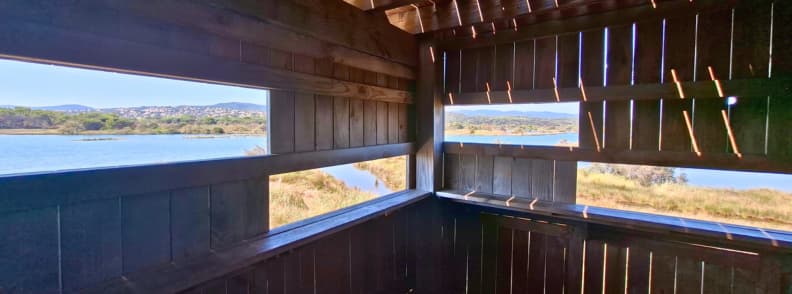
Birdwatching at the Étangs de Villepey
The clever thing about Étangs de Villepey birdwatching is that you don’t have to spend half the morning marching around in pursuit of a bird that has already flown somewhere else. Several observation points let you stop beside the water and wait. This is a much better arrangement, where you relax and the birds expend the energy.
From the Esclamandes entrance, the first Villepey observation deck is almost immediate. Go across the D559 from Plage des Esclamandes, between Kokonut Plage and Mas d’Estel, where a recently installed observation footbridge overlooks the ponds. It is the easiest Les Étangs de Villepey observation deck location to combine with the beach, especially if you’re visiting with children or only have time for a short stop.
Farther north, the area known as Pas-des-Vaches has an interpretive trail with wooden walkways and information panels. The Villepey observation tower overlooking the lagoon is especially useful because it’s accessible to visitors with reduced mobility. During the 2026 World Wetlands Day program, the LPO used this tower for staffed bird-observation sessions, which is a fairly good endorsement of its position.
The other place worth marking is the Vasière observatory. The walking route reaches it after passing Camping Le Grand Calme, with a path continuing from the observatory toward the beach. So where the observatory at Villepey is depends on which one you mean. There is no single grand hide commanding the whole reserve, but a series of platforms positioned around different habitats.
That distribution is what makes the Villepey ponds birdwatching best spots useful for different kinds of visits. Esclamandes is easiest for a quick look, Pas-des-Vaches adds interpretation and accessible viewing, and the Vasière rewards hikers following the longer trail. Together they form the best birdwatching spots at Étangs de Villepey, rather than one obligatory Villepey bird hide.
My Villepey birdwatching tips: Bring binoculars, stop longer than feels necessary, and resist the temptation to regard every distant pale shape as a flamingo. We have managed egrets and fish on several visits, including in August. The flamingos have so far maintained an impeccable record of being elsewhere.
Within Fréjus birdwatching and wider Var bird watching, Villepey has one useful advantage: the observation infrastructure is concentrated around a relatively small wetland. There’s less emphasis on chasing sightings and more on choosing the right platform, sitting still, and giving the place time to produce something of its own.
The best bird watching times at Villepey ponds depend on what you hope to see, but March and early September are migration times. Winter adds another character to the reserve.
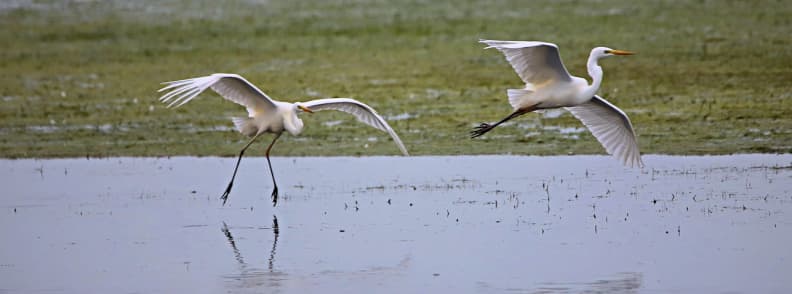
Étangs de Villepey winter birdwatching photography guide
Winter changes the odds at Villepey. The Greater Flamingo wintering period is roughly between October and February, sometimes extending into April, so this is the season when turning up with hopes of pink birds is rather less optimistic than it was for me in August. Herons, including Great Egrets, and several ducks are also recorded around the ponds throughout the year.
In winter, the sun stays lower for longer, giving the water, reeds, and pale birds softer side light without the hard overhead glare of a summer afternoon. Cooler air also reduces the heat shimmer that becomes troublesome when photographing birds across a wide lagoon. I would still favor the first hours after sunrise or the latter part of the afternoon, when low light picks out the edges of reeds and reflections without bleaching the water into silver.
The Esclamandes side is the easiest place for a short winter birdwatching session. You can reach open views of the ponds quickly, which is useful on a cold morning when standing around for an hour in pursuit of an absent flamingo begins to seem less noble than it did over breakfast.
The Observatoire de la Vasière is better for a longer session. Its position deeper along the wetland route gives you a different angle on the feeding and resting areas, and you have already left much of the road activity behind by the time you reach it.
Winter also has one practical advantage that summer can’t compete with. The reserve remains open year-round, while the summer passage closure no longer interferes with the route. Flood-damaged bridges still require attention, so I would check trail conditions before setting out with a tripod and a carefully planned circuit.
The Travel Bunny’s Villepey photography tip: Bring binoculars even if photography is your priority. A long lens narrows your view so efficiently that an egret twenty meters to the left can spend several minutes living an entirely private life.
Visiting the Étangs de Villepey with children and reduced mobility
Villepey is one of the easier nature outings we’ve done with our toddler. He took his balance bike, which gave the expedition an importance far beyond the modest gradient, and handled the flatter stretches comfortably. I’d readily suggest a Villepey family walk to parents wanting a family hike without the climbing and rough rock common on many nearby trails.
Flat paths and wooden boardwalks make visiting Étangs de Villepey with kids practical. I think the Esclamandes parking area gives the simplest starting point for Les Étangs de Villepey with children as a family. This is one of the best family-friendly hiking trails in Saint-Aygulf precisely because nobody needs to pretend that pushing a stroller over loose Provençal rock is an enjoyable recreational activity.
A Villepey ponds walk with a stroller still deserves a little caution. Flood damage has left parts of the wider trail network inaccessible, and the full circuit is currently interrupted. I’d therefore use the Esclamandes side for a shorter outing to cover the accessible portion first, then extend the walk only where the surface and current trail condition allow.
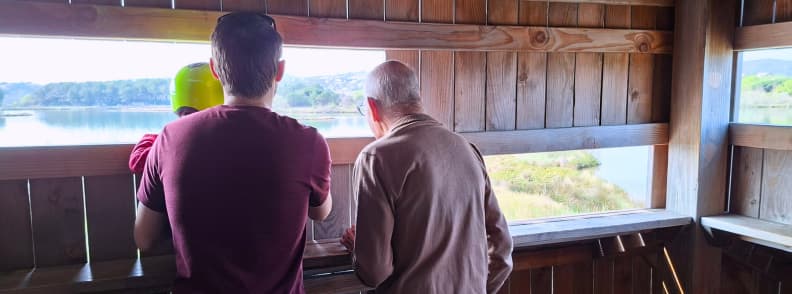
Villepey accessibility is better in selected areas but not across the entire reserve. There are wooden boardwalks, widened paths, and at least one lagoon observation tower is accessible to people with reduced mobility. This makes Étangs de Villepey wheelchair access realistic for part of the site, rather than for the complete hiking circuit.
Are the Villepey ponds accessible for wheelchairs? Partly. A Villepey wheelchair trail is better understood as an accessible visit using the adapted boardwalks and observation areas, especially around the easier developed sectors, rather than a wheelchair circuit around all 7.8 km. Visiting Étangs de Villepey with reduced mobility or a wheelchair deserves that distinction, because an accessible viewpoint and an accessible full loop are two quite different promises.
Is Villepey trail suitable for elderly visitors? The terrain is mostly flat, but distance, damaged bridges and uneven natural surfaces still affect the outing. A shorter family-friendly walk in the Saint-Aygulf nature reserve around Esclamandes is the safer choice for anyone who prefers level ground and frequent opportunities to stop. For example, when we invited my father-in-law for a short nature walk in Villepey, we just went to the nearest observation tower from the Plage de Saint-Aygulf parking.
Among things to do near Fréjus with children, Villepey also has the considerable advantage of sitting opposite Plage de Saint-Aygulf, and we always pair the two. The ponds give our toddler somewhere to move, stop, peek into the water, and inspect whatever has attracted his attention. Then, the beach across the road gives the day an entirely different experience: swimming and building sandcastles in summer, running on the sand and playing tag with incoming waves on the shore in winter. This combination has proved far more successful for us than trying to persuade a small child that a long uninterrupted walk is an entertainment in itself.
Étangs de Villepey acess and practical information
Villepey is easy to reach, which is fortunate because protected wetlands already provide enough opportunity for uncertainty once you start following paths around water. The official Saint-Aygulf location is along the D559, Avenue de la Corniche d’Azur, within the commune of Fréjus. Plage de Saint-Aygulf and Plage des Esclamandes stretch on the Mediterranean side of the road, while the main access to the ponds begins opposite.
That close relationship between beach, road, and wetland makes a visit unusually simple to organize. Parking, seasonal charges, trail access, and a few reserve rules still deserve attention before you set off, especially in summer when arrangements change and a parking lot separated from another by a crosswalk can somehow acquire a different price.
Getting to the Étangs de Villepey
Étangs de Villepey access is easiest from the D559, Avenue de la Corniche d’Azur, at Saint-Aygulf. The official trail entrance sits on the pond side of the road, opposite Plage des Esclamandes. You go over one pedestrian crossing and you have gone from Mediterranean beach to protected wetland.
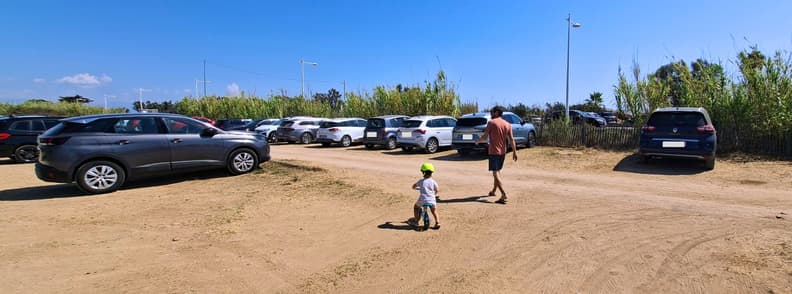
The most useful of Les Étangs de Villepey parking locations is the dedicated Parking Étangs de Villepey at Esclamandes. It has 500 spaces and charges from mid-June to mid-September between 8:30 am and 6:30 pm. The Étangs de Villepey parking price at Esclamandes is €4.50 for the day or €3 for a morning. We have parked here for free outside the summer charging period.
There is a small local absurdity worth knowing about Villepey parking. In August, we found the parking on the ponds side slightly cheaper than the beach parking opposite, despite the two being separated by little more than the two-lane road and its crosswalk. If you’re combining the ponds with Plage de Saint-Aygulf, as we often do, check both tariffs before choosing where to park for the Villepey ponds.
How to get to Villepey Ponds from Fréjus: Follow signs toward Saint-Aygulf and continue on the D559 until Esclamandes. This is the straightforward route for driving from Fréjus to Les Étangs de Villepey, with the trail entrance on the inland side of the road. Open the Étangs de Villepey parking area in Google Maps.
From Saint-Raphaël, continue through Fréjus toward Saint-Aygulf and Esclamandes. Getting to the Étangs de Villepey from Saint-Raphaël therefore requires no complicated inland detour.
How to get to the Villepey ponds from Nice: Take the A8 to exit 37 at Puget-sur-Argens, then following Saint-Aygulf and the coast toward Esclamandes.
A car isn’t essential. Current Le Bus timetables for bus line 430 include stops named Les Esclamandes and Chemin des Étangs, placing public transport directly beside the wetland and beach area.
Les Étangs de Villepey public transport access is therefore realistic from Fréjus and Saint-Raphaël. However, keep in mind that services can change with season and school periods, and that can increase your travel time for reaching the Étangs de Villepey by public bus.
Villepey sailing access: You can’t sail into the protected lagoons. Boaters use the Mediterranean coast or nearby Port de Saint-Aygulf, then approach Villepey by land. The port sits close to Plage des Esclamandes and provides the sensible nautical base if you’re arriving along the coast.
As for Les Étangs de Villepey free parking spots, the dependable free option is seasonal rather than a secret roadside patch. Our visits outside summer have involved free parking at Esclamandes, while the official car park becomes paid from mid-June to mid-September. I really wouldn’t build a summer visit around finding an unofficial free space nearby.
Facilities and parking at Villepey are concentrated around Esclamandes, they’re not inside the protected wetland. The dedicated car park gives you the easiest start for the trail, while the beach side has seasonal beach services. Once you cross toward the ponds, the experience becomes deliberately sparse.
Hours and fees
There is pleasantly little ceremony involved in visiting Villepey. Étangs de Villepey free entry applies throughout the year, with no Villepey entrance fee and no ticket office waiting to turn a walk among reeds into an administrative exercise.
The Villepey opening hours are equally simple: the reserve is listed as open all year, without set daily visiting hours. So Les Étangs de Villepey winter visiting hours are not reduced to a seasonal timetable. Winter visitors can use the site under the same year-round access arrangement.
There is one summer wrinkle. The Galiote entrance closes from June 15 to September 15, while the other entrances remain open. Parking charges are separate from admission. In short, Étangs de Villepey opening times and entrance fee amount to year-round access and free admission, with seasonal restrictions affecting one entrance rather than the reserve as a whole.
Are the Villepey Ponds free and open to the public? Yes, the protected site is open to visitors free of charge throughout the year.
Rules and amenities at the Étangs de Villepey
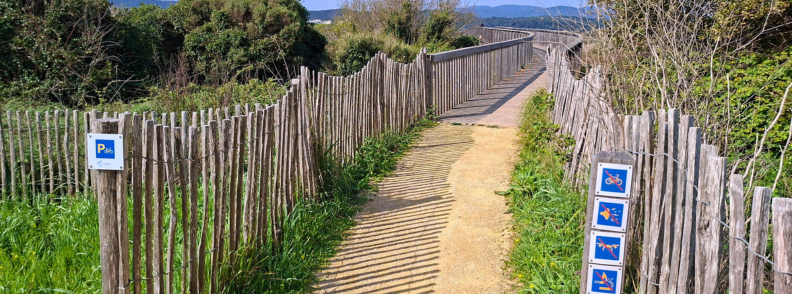
Villepey has the relaxed appearance of somewhere you might wander wherever curiosity takes you, but the little pictograms at the entrances tell a different story. Visiting Villepey rules are strict because this is protected habitat, and the birds, reeds, fish, turtles, and other residents have priority over our recreational ambitions. Stay on marked paths, leave plants where they grow, don’t feed wildlife, don’t smoke or light fires, don’t camp, and take every scrap of rubbish away with you. Coastal guards patrol the reserve and infringements can carry fines starting at €135.
Étangs de Villepey dog regulations
Are dogs allowed at Villepey? Yes, but dogs at Villepey must stay on a leash throughout the protected site. So Villepey dogs are allowed, but this isn’t the place for an enthusiastic spaniel to investigate a reed bed independently. The same rule applies when visiting Étangs de Villepey with dogs across the marked walking routes.
Villepey swimming
Swimming is a firmer no. Villepey swimming isn’t allowed inside the ponds, and the municipal regulations prohibit bathing, entering the water, and navigation. So you can’t swim in the Étangs de Villepey, even on a hot August afternoon. The Mediterranean is just on the other side of the road.
Étangs de Villepey water quality for swimming isn’t a visitor swimming consideration because bathing there is prohibited. For swimming, cross to Plage des Esclamandes, where you have published beach safety and bacteriological water-quality information during the monitored season.
Étangs de Villepey fishing regulations for 2026
Villepey fishing is permitted, but only under specific conditions. Current Villepey fishing regulations require a valid fishing card, compliance with fishing rules, and use of the designated fishing posts or authorized paths giving direct access to the water.
Boats and entering the water remain prohibited. The Fédération de Pêche du Var lists the Villepey ponds as second-category waters, open to fishing year-round, with up to four lines per angler. Check Étangs de Villepey fishing regulations again before bringing equipment, since fishing rules and permitted methods can change.
Étangs de Villepey visitor center facilities
The reserve itself is deliberately sparse. Don’t plan around Étangs de Villepey visitor center facilities, because there is no conventional visitor center with cafés, bathrooms, and souvenir racks waiting beside the reeds. All you’ll find are trails, observation structures, and information panels.
For Villepey facilities such as food, drinks, showers, and public toilets, the Esclamandes beach side is the useful stop.
I also wouldn’t go hunting for a Villepey picnic area inside the protected wetlands. You can pair the walk with a picnic on Plage des Esclamandes, which is the more sensible option anyway. Among the Étangs de Villepey picnic areas nearby, the beach wins by virtue of having sand, sea views, and no need to balance sandwiches beside sensitive habitat.
Étangs de Villepey local regulations for 2026
The broader Étangs de Villepey regulations come down to staying on the marked visitor routes and resisting the human urge to improve nature by touching it. Étangs de Villepey conservation rules for visitors prohibit picking vegetation, collecting wildlife, leaving marked paths, feeding animals, smoking, lighting fires, camping, and using motor vehicles. These Étangs de Villepey local regulations protect a site that receives heavy summer use despite looking, from a distance, wonderfully empty.
My main Étangs de Villepey safety tip for visitors is to treat the reserve and the beach as two separate environments despite the absurd convenience of having them across one road from each other. Walk and watch wildlife inside the protected site. Swim, eat and use beach services at Esclamandes. It saves a surprising amount of confusion.
The Travel Bunny’s local tip: Check Fréjus tourism office website before your visit for guided walks, nature events, and wetland workshops. February’s Journées Mondiales des Zones Humides regularly brings guided visits, activities, and exhibitions to Villepey.
Nearby attractions around the Étangs de Villepey
Villepey is easy to turn into half a day and equally easy to let consume the whole thing. This has happened to us several times. We arrive with the intention to walk around the ponds, cross the road to Plage de Saint-Aygulf afterward, and suddenly the afternoon has disappeared. The geography encourages this sort of poor timekeeping. Several of the most useful Saint-Aygulf attractions sit within a small area around the wetlands, beach, village and coast.
There is plenty to do in Fréjus once you leave the ponds, while the choice of what to do in Saint-Aygulf stays pleasantly local. Beaches, coastal paths, the small port, and the village itself are all close enough to combine with Villepey without spending half the day in the car. The nearby attractions in Fréjus from Les Étangs de Villepey also extend inland toward the historic center and farther east toward the Estérel.
A Saint-Aygulf day trip therefore makes sense even if Villepey is your main reason for coming. I would especially recommend it among things to do in Saint-Aygulf for nature lovers, since you can move from wetland to sandy beach, and then onto the coastal path within the same outing. Several of these are also free things to do in Fréjus and Saint-Aygulf, assuming you manage to resist the beach restaurants, ice cream, and every other small expense designed to catch a person who thought she was going for a walk…
Where to stay near Étangs de Villepey depends mostly on how close you want to remain to the coast. Hotels in Fréjus give you better access to the wider town, while Saint-Aygulf keeps the beach and ponds close at hand. If you stay near Villepey, you can treat the reserve as an early-morning or evening walk instead of a single excursion squeezed between other plans.
Camping is particularly well represented here. There is camping near Villepey, including established sites around Saint-Aygulf and the Argens. Camping near Villepey Ponds in Fréjus ranges from sites close to the wetlands to seaside campgrounds within walking or cycling distance. Camping La Plage d’Argens, for example, reaches the beach by a 900 m pedestrian route through the Villepey area, while Camping Saint-Aygulf Plage sits within 300 m of an étang and the sea.
Finding Villepey camping nearby is relatively easy. Villepey camping also has the practical advantage of putting early and late visits within reach, when the ponds are quieter. The broader camping Saint-Aygulf choice is good enough that campers have considerably more nearby options than the protected landscape might first suggest.
So what else can you do near Villepey Ponds? Quite a lot, without turning the day into an exhausting tour of pins on a map. The sections below cover the nearby beaches first, then the wider Estérel and Camargue comparisons, which are the two most useful directions to take once Villepey has had its share of your day.
Saint-Aygulf and Fréjus beaches near Villepey
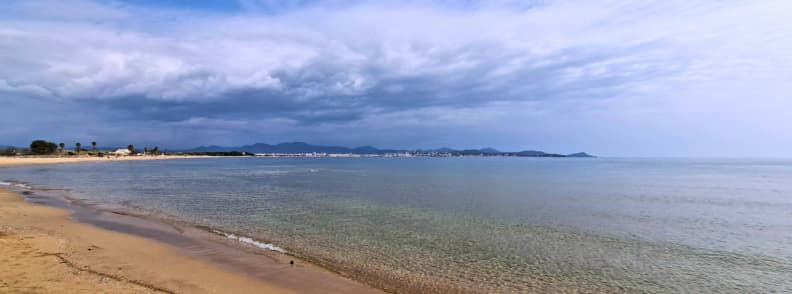
I rarely visit Villepey without crossing the road afterward. Esclamandes Beach is directly opposite the ponds on the Mediterranean side of the D559, which makes the combination almost too easy. One minute you’re looking in the reeds for an egret, the next you’re shaking sand out of your shoes. We always call it Plage de Saint-Aygulf, and for us an Étangs de Villepey beach day and a Saint-Aygulf beach day are, in practical terms, the same outing.
Plage des Esclamandes is the broadest and most useful of the nearby Saint-Aygulf beaches. Its 600 meters of sand are divided into four areas: family swimming, naturism, kitesurfing, and a dog zone. The Villepey naturist beach is therefore not a separate hidden cove somewhere inside the reserve, but a designated part of Esclamandes beside the Mediterranean. Access is free, except when you go to one of the private Esclamandes beach clubs.
The beach also sits on the coastal edge of the protected wetland system. Part of the Embouchure de l’Argens, the Natura 2000 site near Saint-Aygulf beach, Esclamandes beach went through dune-restoration works using wooden barriers to protect fragile dune vegetation from trampling. The protected habitats begin almost where the beach infrastructure ends.
On the inland side, the Ferme des Esclamandes serves mainly as a useful landmark rather than a place I would present as a visitor attraction. Observatoire des Cisticoles is located just behind the farm, close to the pond. Beach, wetland, and observation zones are all tightly interwoven here, even though each one serves a very different function.
Farther toward Saint-Aygulf village, Galiote Beach gives the day a busier, more conventional seaside ending. Galiote Beach in Fréjus has showers, seasonal lifeguards, easy access for families, and an adapted entrance to the sea for disabled visitors. It also has the considerable advantage of numerous restaurants immediately around the sand, which saves you from trying to improvise lunch out of whatever survived at the bottom of a day bag.
The Les Étangs de Villepey cycle path to the beach is less a grand expedition than a useful local connection. Esclamandes is already across the road, while Saint-Aygulf and La Galiote can be reached along the surrounding coastal road and cycle network. Keep bicycles off the fragile wooden wetland boardwalks, which the Natura 2000 authority reserves for pedestrians.
Boaters have a slightly different problem. There is no designated Esclamandes anchoring point or an Étangs de Villepey anchorage area, so dropping the hook off the beach and calling it a nautical entrance would be optimistic. The nearby recognized option is Anchorage La Galiotea little farther along the coast, while Port de Saint-Aygulf offers proper harbor access. From either one, visiting Étangs de Villepey by boat or from a yacht at anchor becomes a land excursion. The boat stays with the Mediterranean, and you continue to the ponds on foot.
You have plenty of nearby restaurants and beach clubs near Étangs de Villepey once you cross toward the sea. Esclamandes has seasonal beach spots, while La Galiote puts several restaurants right beside the sand. Just let the day decide. If you finish at Esclamandes, stay there. If you continue toward La Galiote, dinner follows you. After several hours of ponds, birds, toddler negotiations, and beach sand, I personally have little enthusiasm left for driving somewhere else in pursuit of a supposedly better table.
Villepey, the Petite Camargue, and the Estérel
Fréjus Tourism calls Villepey La Petite Camargue, which is one of those flashy tourism nicknames that, for once, isn’t entirely fanciful. Stand beside the lagoons with reeds on one side and waterbirds picking their way through the shallows, and the comparison becomes obvious. The Petite Camargue of Fréjus has the salt water, fresh water, low vegetation, and wetland birds associated with the Camargue in Provence, only without the enormous Rhône delta stretching around Arles and Saintes-Maries-de-la-Mer.
A Villepey ponds vs Camargue comparison falls apart if you start comparing scale. Villepey vs Camargue is closer to comparing a good local theater with the Opéra Garnier. They share certain ingredients, but nobody is likely to confuse the two after arriving. Villepey is small enough for a morning walk from Saint-Aygulf, while the Camargue occupies a substantial piece of southern France.
Calling Villepey the Camargue Côte d’Azur gives the right general picture, but the comparison starts to wobble if you push it too far. Petite Camargue Var fits better, because Villepey has the same wetland character on a far smaller scale.
Villepey is flat, watery and full of reeds. Then, almost immediately to the east, the scenery changes its mind. The Massif de l’Estérel rises in red volcanic rock, pine forest and considerably rougher paths between Fréjus and Saint-Raphaël. If you’re looking how to combine Villepey ponds and Estérel Massif, give each half a day.
I’d pair Villepey, one of the best nature reserves on the French Riviera, with my Estérel hiking route through the Ravin du Gratadis to Étang d’Aubert and Col d’Aubert. The change from lagoon boardwalks to red rock is so complete that you could be forgiven for checking whether you had driven farther than you thought.
Conservation and history of the Étangs de Villepey
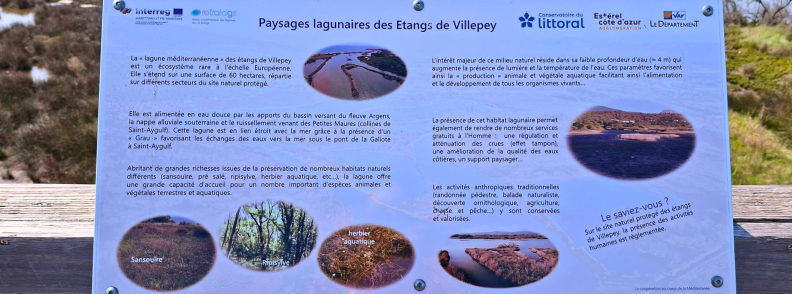
Étangs de Villepey look at first like a collection of ponds that happens to have ended up beside Saint-Aygulf. The geography is rather less accidental. The wetlands lie in the lower Argens valley, close to the Argens River mouth, where the Argens River meets the sea, with the lagoons connected to the Mediterranean through a natural opening in the coastal sand barrier known as a grau.
That relationship between the Argens River and Villepey has shaped a place where water, sand, salt, and sediment keep rearranging the boundaries for centuries. There are lagoons, mudflats, reed beds, dunes, wet meadows, and patches of woodland. This variety also gives the Argens delta birds different places to feed, rest, and shelter, particularly during migration.
Human activity has altered the area too, sometimes considerably, and the present protected reserve is the result of a much newer conservation story. Understanding those two histories, the natural one and our own habit of interfering with it, makes the landscape around Villepey much easier to read.
Protection status at the Étangs de Villepey
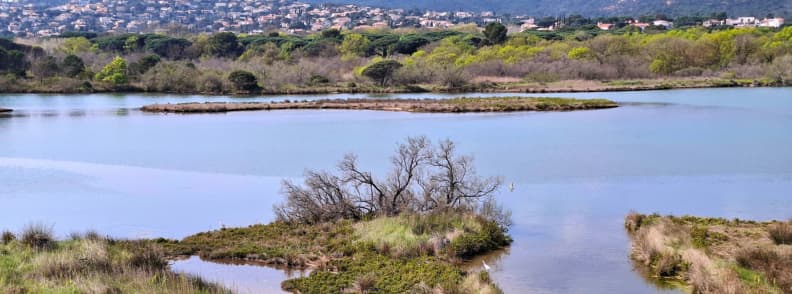
Villepey has survived the coastal building boom through a rather serious stack of protections. The Conservatoire du Littoral began acquiring land here in 1982, removing much of the wetland from development pressure at a time when the surrounding Côte d’Azur was hardly suffering from a shortage of concrete. Today, the Villepey protected area belongs to the Conservatoire du Littoral and is managed by Estérel Côte d’Azur Agglomération.
French environmental inventories add another layer. The site of the Les Étangs de Villepey is inventoried as the ZNIEFF Étangs de Villepey et Esclamandes under number 930012551. Villepey also lies within Natura 2000 Embouchure de l’Argens, code FR9301627. This 1,380-hectare Zone Spéciale de Conservation or ZSC stretches between central Fréjus and Saint-Aygulf and includes the ponds, lower Argens, agricultural plain, riverbank woodland and a marine strip offshore. The designation comes under the EU Habitats, Fauna and Flora Directive.
International recognition arrived on September 15, 2008, when Étangs de Villepey became Ramsar site no. 1836. The official Ramsar Étangs de Villepey listing covers 270 hectares and identifies the wetland as one of the surviving Mediterranean lagoon systems in the lower Argens valley. Ramsar status recognizes ecological importance at international level instead of creating a separate fenced reserve.
Those overlapping designations explain how protected the Villepey nature reserve is in practical terms. Villepey remains open to walkers, birdwatchers, and families, yet visitor access is directed onto paths, footbridges, and observation areas so that sensitive habitat receives some breathing room.
Among protected areas near Fréjus and Saint-Aygulf, few sit in such immediate contact with beaches, campsites, roads, and residential development.
Of course, accommodation stays outside the protected boundary for Villepey conservation. A campsite next to Villepey nature reserve gives you the advantage of early or late visits without putting tents among the reeds, where camping is prohibited. The choice of where to stay near Étangs de Villepey nature reserve therefore leads naturally toward Saint-Aygulf and the established campgrounds around the lower Argens.
Protection also changes how you should photograph the reserve. The best photography locations in Villepey nature reserve are the established observatories and open viewpoints along authorized paths, where a long lens lets the birds remain birds rather than unwilling portrait clients.
What to bring to Villepey nature reserve: Binoculars, water, sun protection, and a camera with reach if wildlife photography interests you.
Cultural heritage
The history of the Étangs de Villepey is inseparable from the formation of the Argens River delta. In antiquity, the lower Argens valley was a broad marine inlet reaching inland toward the Rocher de Roquebrune. Sediment gradually pushed the shoreline seaward. The Bronze Age coast was over 4 km behind its present position. The same slow silting also affected the ancient Roman port of Fréjus.
Human intervention later altered the Argens River delta considerably. The natural lagoon survived, but several ponds around Villepey began as sand and gravel pits worked from the 1960s. Other sectors were cultivated or grazed.
Villepey is easy to misread as an old saltworks, mainly because the place is full of salt-tolerant plants and ground that turns white with salinity. However, its salt meadows and schorre are natural saline habitats, shaped by flooding, evaporation, and salt accumulating in the soil.
Plants here survive conditions that would finish off most garden species rather quickly, while the habitats form a shifting middle ground between freshwater wetland and the Mediterranean. Villepey therefore belongs in a different category from the Salins d’Hyères, where salt production shaped the site for centuries.
The Ferme des Esclamandes brings people back into the story. Built in the 1930s, the farm later became a base for reed work, vegetable growing, and environmental education. Regular farm activities stopped in 2018, but the site still has a role in Villepey’s environmental life. Today, nature workshops and educational events still take place here, alongside an eco-solidarity garden and animals. It’s an unexpectedly domestic little presence beside a landscape otherwise given over to water, reeds and birds.
Visitor tips and FAQs
The Étangs de Villepey are easy to visit once you know which parts of the reserve are open, where to start, and what changes with the season. These are the practical details I would check before heading to Saint-Aygulf, especially for birdwatching, photography or a summer visit.
What are the Étangs de Villepey?
Les Étangs de Villepey are a protected coastal wetland at Saint-Aygulf in Fréjus. Under the protection of the Conservatoire du Littoral, the Villepey wetland stretches over 271 hectares, including 61 hectares of permanent water, with around 270 recorded bird species and 27 rare or protected heritage plant species. The Ramsar boundary covers 270 hectares.
Why are Étangs de Villepey special?
Freshwater from the lower Argens and saltwater from the Mediterranean have produced the lagoons, mudflats, reed beds, dunes, wet and dry meadows, and woodland within the remarkably small Villepey area.
Villepey became Ramsar wetland no. 1836 on September 15, 2008 and also lies within the Natura 2000 Embouchure de l’Argens site.
How do I get to Villepey ponds?
Drive along the D559, Avenue de la Corniche d’Azur, and use Parking Étangs de Villepey at Esclamandes. The official walking start is across the road from the beach, between Kokonut Plage and Mas d’Estel. During summer 2026, Le Bus line 430 stops at both Les Esclamandes and Chemin des Étangs. Cyclists also cross the Villepey area, although the wooden wetland boardwalks are reserved for pedestrians.
Is parking free at Villepey?
Outside the summer charging period, we have parked at Esclamandes without paying. It has 500 spaces and charges from mid-June to mid-September, daily from 8:30 to 18:30, at €4.50 for the day or €3 for the morning. Cheaper parking is available on the Étangs side, just across the road and next to the ponds.
Is there an Étangs de Villepey entrance fee or fixed opening hours?
Admission is free and Les Étangs de Villepey are open all year. One trail passage toward La Galiote closes from 15 June to 15 September, while access to the wider site continues.
Are dogs allowed at the Étangs de Villepey?
Yes, dogs and other pets must remain on a leash. Visitors must also stay on authorized marked paths, leave vegetation alone, avoid feeding wildlife, and keep motor vehicles outside the protected paths.
What wildlife lives at Villepey, and when is the best time to visit for bird migration?
The best season to visit Étangs de Villepey for birds changes with migration. March and early September are the official peak periods, making Villepey spring migration especially interesting.
Greater Flamingos use Villepey during their wintering period, generally from October through February and sometimes into April, while herons, Great Egrets, ducks and other waterbirds appear according to season and water conditions.
I’ve visited several times in spring, and even in August, and have seen egrets and fish but still no flamingos, which is a useful reminder that wildlife declines to follow tourism advertising.
What are the best trails and activities at Villepey?
The official Fréjus route is 7.8 km, about 2 hours 15 minutes, with only 14 m of ascent, and is rated easy and family-friendly. The published loop no longer operates as a complete circuit because the northern bridge in the Défens sector was destroyed after flooding, so expect backtracking or taking the Villepey road detour detailed earlier in this article. The route includes the Esclamandes observation area and continues toward the Observatoire de la Vasière.
Is Villepey open in summer?
Yes, a Villepey summer visit remains possible, although the La Galiote passage closes between 15 June and 15 September. My Les Étangs de Villepey summer heat precautions are an early start, plenty of water, a hat. and sun protection. The lagoon and open wetland stretches offer little protection from a hard Var afternoon, even though some routes pass through pine woodland.
What is Villepey’s best time to visit overall?
A Villepey visit is best timed around your priority. Choose March or early September for migration, Étangs de Villepey in winter for seasonal waterbirds and a better chance of flamingos, and early morning during summer before going to the beach. Photography also favors lower light rather than the bright middle of the day.
Is Villepey wheelchair accessible?
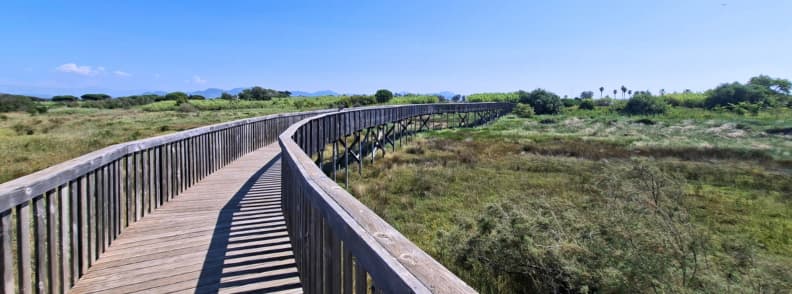
Part of the reserve has genuinely useful adapted infrastructure. From the Esclamandes parking area, a 140 m wooden boardwalk adapted for people with reduced mobility runs about 3 m above the ground to the two-level lagoon observatory. That doesn’t make the whole 7.8 km trail wheelchair accessible, since the wider route includes earth, gravel, damaged crossings and changing trail conditions.
Are Les Étangs de Villepey guided tours available?
Yes, and the current offers are unusually specific. Estérel Côte d’Azur lists a Villepey guided tour for groups of 10 to 30 people, lasting 2 hours and costing €280 per group, outside mid-June to mid-September and subject to weather. Les Balades d’Alex offers separate Villepey guided tours throughout 2026, with an easy 6 km naturalist walk lasting about 2 hours and gaining only 5 m in elevation. Book a Villepey Ponds guided tour directly with the listed provider before arrival, since there is no tour desk beside the reeds.
Where are the best Villepey photography spots?
A useful Villepey photography guide should start with the actual observation structures. The lagoon observatory near Esclamandes has an elevated accessible approach and panoramic upper level, the Observatoire des Cisticoles sits behind the Ferme des Esclamandes, the Observatoire du Pérussier faces a mudflat through viewing windows spanning over 180 degrees, and the Vasière observatory lies farther along the official walking route beyond Camping Le Grand Calme.
Is Villepey better at sunrise or sunset for photography?
Villepey sunrise and sunset both avoid the harsh overhead light of midday. A practical Villepey sunset spot is the elevated lagoon observatory, whose upper level provides a broad panorama across the wetlands. Official Côte d’Azur imagery shows a Villepey sunset reflecting across the ponds, and the best sunset viewing spots at Étangs de Villepey are the authorized open-water viewpoints where reeds don’t close the horizon.
Are there toilets, drinks, or food at Villepey?
The reserve itself has no conventional visitor center packed with services. Across the D559, Plage des Esclamandes has toilets and showers, while beach businesses provide seasonal restaurants, snack, and drinks.
Bring your own water bottle before starting the longer walk. Wetlands have many admirable qualities, but vending machines have so far failed to establish themselves among the protected species.
Why Villepey deserves a stop in Saint-Aygulf
Are the Villepey ponds worth visiting? I think so. I’ve returned several times because every visit has been different, even when the flamingos have once again failed to attend.
What makes Villepey ponds special as a protected wetland is the fact that this much water, reed bed, dune, and bird habitat still survives beside a heavily developed stretch of the Var coast. The Ramsar designation covers about 270 hectares, but that number alone doesn’t explain the place. You notice the difference when you step away from the road and the beach traffic begins to disappear behind the reeds.
Are the Étangs de Villepey worth visiting on the French Riviera? Yes, particularly if you value wildlife, easy walking, and places where the Mediterranean coast briefly stops behaving like a seaside resort.
Villepey has the rare atmosphere of somewhere left mostly to water, reeds and birds, with people passing through rather than taking possession of the place.
About the Author

Hi, I’m Mirela Letailleur, founder of The Travel Bunny and a Romanian-born travel writer based in Provence-Alpes-Côte d’Azur. I write practical Mediterranean and South of France travel guides built around firsthand visits, local research, and the details I want before heading somewhere myself.
Living in the Var gives me the chance to return to places such as Saint-Aygulf, Fréjus and the Étangs de Villepey across different seasons. I’ve visited the Villepey ponds several times, including with my toddler, so my advice on walking trails, birdwatching, parking, beaches, and this protected Mediterranean wetland comes from repeated visits rather than a single afternoon with a map.
After reading my Étangs de Villepey Guide, discover other Var travel guides on The Travel Bunny
Visiting Tanneron France. The Complete Travel Guide to Provence’s Mimosa Village
Complete Cotignac Travel Guide. Provence’s Cliffside Village with Quince Market, Royal Miracle & Troglodyte Caves
Provence Weekend in Carcès: Village, Caramy Falls & Thoronet Abbey