
There was a time when planning a European city break felt exciting to me. I’d make a cup of coffee, open my laptop, and happily lose an evening looking at hotels, restaurants, museums, and little streets I hoped to discover.
Somewhere along the way, that changed.
Before my recent Kraków city break, I found myself staring at what felt like an impossible wall of information. One hotel had thousands of glowing reviews, but several recent guests complained about noise. A restaurant appeared on every best places to eat in Kraków list I found, yet half the recommendations looked suspiciously similar. One travel site insisted I needed to squeeze twelve attractions into a day. Another told me the secret to enjoying Kraków was avoiding practically every place I’d heard of.
Krakow city break
After an hour, I had 17 browser tabs open.
After two hours, I’d achieved something remarkable: I knew considerably more about Kraków, but felt less capable of making a decision.
Perhaps this is one of the less discussed problems with modern travel. We have access to more information than any generation of travelers before us, yet more choice doesn’t necessarily make travel planning easier.
For those of us who prefer slow travel, the problem becomes particularly frustrating. I wasn’t interested in racing from landmark to landmark simply because an algorithm or influencer told me I should. I wanted time for coffee, conversations, museums enjoyed properly, and the luxury of sitting somewhere beautiful without checking my watch.
What I needed wasn’t more information. I needed better information.
When Travel Research Starts Feeling Like Work
My original plan had been straightforward: spend a few days in Krakow, stay somewhere convenient, experience its history, eat well and allow enough empty space in the itinerary to actually notice the city.
Then the internet got involved.
Every hotel search seemed to produce hundreds of possibilities. Ratings were helpful until they weren’t. A property with an impressive average score could still have dozens of reviews mentioning precisely the things that mattered to me, like street noise, difficult access, or an inconvenient location.
Restaurant recommendations presented another problem. Search for the best Polish food in Kraków, and you quickly discover how many websites have apparently found the ultimate hidden gem.
When twenty places are described as hidden gems, you start to question how hidden they actually are.
This kind of cognitive overload matters more than travel companies sometimes acknowledge. I don’t want to spend three evenings studying reviews to work out whether a hotel is genuinely peaceful. I don’t want to cross-reference five platforms before deciding where to eat lunch.
And at this stage of my traveling life, I certainly don’t want to arrive exhausted from planning the holiday that’s supposed to help me relax.
This frustration pushed me toward a very different approach.

The Data-Driven Change That Simplified My Krakow City Break
Instead of reading another hundred individual opinions, I started looking for ways to use AI to identify the patterns behind them.
What interested me wasn’t AI for the sake of AI. Plenty of travel tools now make impressive claims about artificial intelligence. What mattered was using AI to sort through huge amounts of travel information faster than I ever could on my own.
Rather than comparing reviews one by one, I started using AI-powered travel research to pull together recurring themes across traveler feedback, prices, accommodation details, locations, and other practical factors. The goal wasn’t to hand over every decision to an algorithm. It was to cut through endless scrolling, conflicting recommendations, and marketing noise.
In practical terms, this changed how I approached Kraków.
Instead of asking, What are the 50 most recommended things in Kraków? I could focus on a much more useful question: Which experiences consistently stand out for the kind of trip I actually want?
That distinction sounds small. It transformed my holiday.
I stopped planning according to quantity and started planning according to confidence. Once I felt comfortable with the areas, accommodation options, and experiences I’d chosen, I deliberately left the rest of the schedule loose.
For a slow traveler, that empty space isn’t wasted time. It’s often where the best part of the trip begins.
My First Morning: Letting Krakow Come to Me
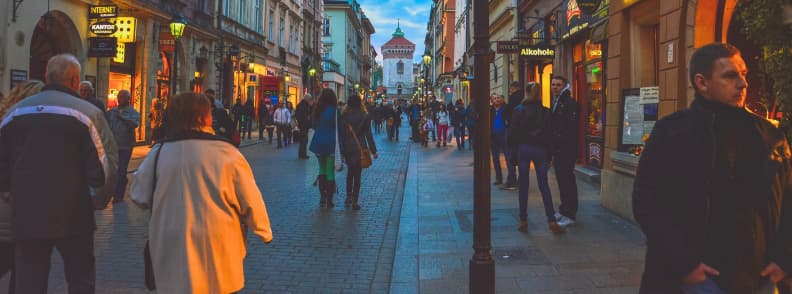
I began at Rynek Główny, Krakow’s Main Market Square.
There’s no clever alternative-travel argument for avoiding it. Sometimes famous places are famous because they deserve to be.
The square was laid out after Kraków received its city charter in 1257, with sides measuring a little over 200 meters. The medieval layout of Kraków’s historic center later became part of the city’s UNESCO-listed area.
But numbers tell you little about what being there feels like.
I arrived without an agenda to “complete” the square. That mattered.
Rather than photographing everything immediately, I walked around once. I looked at the façades. I watched people disappearing beneath the arcades of the Cloth Hall, or Sukiennice. I listened as the square grew busier around me.
And then I sat down. Travel writers don’t talk enough about sitting down.
There’s a peculiar pressure attached to city breaks, the feeling that if you’re not actively sightseeing, you’re somehow wasting your expensive time abroad. I’ve started believing the opposite. Twenty unhurried minutes with a coffee can tell you more about the rhythm of a place than sprinting between three monuments.
From the square, St Mary’s Basilica, the Cloth Hall, and the surrounding historic streets all sit within the same compact area. Kraków’s official tourism information describes the Main Market Square as the central point around which the medieval city developed.
So I explored them slowly. No stopwatch. No checklist. That became the rule for the entire break.
Planty Park Taught Me Something About Slow Travel
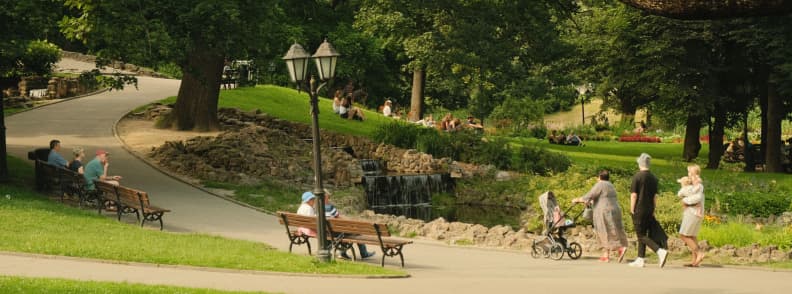
Eventually, I drifted away from the square and into Planty, the green ring surrounding Kraków’s Old Town.
This was one of those simple experiences I might once have ignored because it didn’t look impressive enough on an itinerary.
That would’ve been a mistake.
Planty occupies the area where much of Kraków’s old fortifications once stood and now forms a green walking route around the historic center. The city’s tourism materials describe it as one of Kraków’s characteristic places for walking and relaxing.
For me, it became a reset button. Benches matter when you’re over 50. Shade matters.
The ability to stop for ten minutes without feeling like you’re interrupting an itinerary matters.
These are small considerations, but they’re exactly why I’ve become skeptical of travel guides built around maximizing the number of attractions per hour.
My ideal city break no longer resembles a competition.
Planty let me move through central Kraków while periodically doing absolutely nothing. And because I wasn’t mentally calculating my next five stops, I started noticing the ordinary details around me: bicycles passing, snippets of Polish conversation, dog walkers, and church towers appearing between the branches.
This was the Kraków I’d hoped to find beneath all those browser tabs.
Wawel Without the Rush
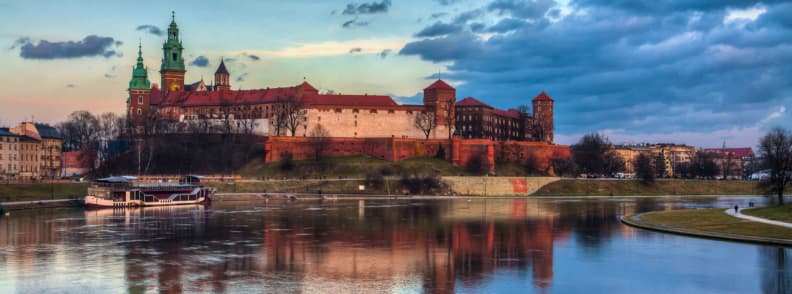
The following morning, I made my way toward Wawel Hill and Wawel Royal Castle.
Again, this isn’t some obscure discovery. Wawel is one of Kraków’s defining landmarks, and it deserves enough time to be appreciated properly.
The Renaissance palace visible today developed from an earlier Gothic royal castle, with major rebuilding taking place during the first half of the 16th century. Polish kings and their families lived here, and the complex now contains royal rooms, collections, and exhibitions.
The important decision I made was what not to do afterward.
My old style of city-break planning would’ve placed another major museum directly after Wawel, followed by lunch at a meticulously researched restaurant, then another attraction.
This time, I let Wawel be the morning. This one change made the visit more memorable.
I had time to look at architectural details instead of simply photographing them. Time to wander around the grounds. Time to absorb what I’d seen before immediately replacing it with another experience.
The climb and approach also reminded me why pacing matters when planning travel for older visitors. Kraków rewards walking, but a slow itinerary also gives you permission to take a tram or taxi when it makes sense, instead of treating your daily step count as a test of character.
Everything in this itinerary stays within Kraków itself and follows the city’s paved streets, pedestrian routes, and central neighborhoods. There are no countryside detours or day trips squeezed into what is meant to be a relaxed Kraków city break.
Kazimierz, Where I Finally Stopped Looking at Reviews
My favorite realization came in Kazimierz, Kraków’s historic Jewish quarter.
Before traveling, I’d researched this area obsessively. Which street felt most atmospheric? Which café felt authentic? Which restaurant was too touristy? Where should I have lunch?
I’d nearly turned a neighborhood into a spreadsheet. Once I was there, I realized how absurd that was.
Around Szeroka Street and the surrounding streets, I did something embarrassingly radical. I put my phone away. I walked. I read menus outside restaurants instead of immediately checking rankings. I stopped when somewhere looked inviting. I let architecture, sounds, smells, and my own curiosity shape the afternoon.
This didn’t mean the data had failed me. Quite the opposite.
Good data had already done its job. By reducing uncertainty during the planning stage, it gave me enough confidence to stop researching once I arrived.
That might be the greatest advantage of smart travel technology for slow travelers. The goal shouldn’t be to let an algorithm make every decision. It should remove enough doubt for spontaneity to return.
There’s something wonderfully contradictory about using sophisticated technology to help yourself look at your phone less. But that’s exactly what happened.
One Museum I Was Glad I Chose Carefully
I also wanted the trip to include deeper historical context, so I visited Oskar Schindler’s Enamel Factory on Lipowa Street.
The former factory’s administrative building is now part of the Museum of Kraków. Its permanent exhibition explores Kraków during the German occupation of 1939-45, alongside the story of Schindler and the Jewish workers whose lives he helped save. The official city tourism site recommends booking ahead, which makes sense given the museum’s popularity.
This isn’t somewhere I’d recommend squeezing between two lighter attractions. The exhibition deserves emotional and intellectual space.
So that afternoon, I didn’t schedule much else. Slow travel is sometimes described as lingering over lunch or spending an hour in a café. It can mean those things. But it can also mean giving difficult history enough time to register.
I left the museum reflective rather than hurried. That evening, I returned toward the center without trying to “fit in” another major attraction.
It was one of the best planning decisions of the trip.
Why AI Made the Trip Feel More Human, Not Less
Before using AI as part of my travel planning, I’d assumed smart travel technology might make a trip feel overly optimized.
I imagined an algorithm telling me exactly where to sleep, what to eat, which museum to visit, and how long I should spend there.
The experience was almost the reverse. The more confidence I had in my core choices, the less I felt the need to plan everything else.
That’s why using AI felt especially useful at this stage of my traveling life. I wasn’t looking for another tool to hand me an endless list of recommendations. I wanted help sorting through large amounts of information, spotting recurring patterns, and separating useful signals from marketing noise.
AI helped me compare reviews, prices, locations, accommodation details, and travel priorities without spending hours cross-checking every source myself.
For someone who enjoys research, that might simply save time. For me, it also reduced decision fatigue and made it easier to stop planning once I had enough information.
What I’d Do Differently on My Next Kraków Visit
Strangely, I’d plan even less.
I’d choose a comfortable, well-positioned stay using reliable data. I’d reserve only the attractions where advance planning genuinely improves the experience, and I’d keep one meaningful cultural activity as the focus of each half-day.
Everything else could emerge naturally.
A morning around the Main Market Square could turn into lunch on a side street. A walk through Planty could stretch for another hour because the weather is beautiful. An afternoon in Kazimierz could become an evening because you find somewhere you don’t want to leave.
That’s not poor planning. It’s planning with enough confidence to leave room for life.
And for travelers who no longer want holidays dictated by packed schedules, I think that distinction matters more and more.
The New Luxury of Travel Is Clarity
Kraków reminded me why I fell in love with European city breaks in the first place.
Not because I saw everything. I didn’t.
Not because I found some secret version of the city unknown to other tourists. I didn’t do that either.
I loved the trip because I finally stopped treating travel planning like an exam where every decision had one correct answer. Data helped me narrow the field. Technology helped cut through the noise. Then I let Kraków itself take over.
I wandered through Rynek Główny when I had nowhere else to be. I rested beneath the trees in Planty without worrying about falling behind schedule. I gave Wawel an entire morning. I walked through Kazimierz without constantly checking whether someone online approved of my choices. And when I visited Schindler’s Factory, I gave the experience the space it deserved.
For me, smart travel planning is no longer about creating the most efficient itinerary possible. It’s about using reliable information to make fewer, better decisions.
If you’ve ever closed your laptop after an evening of travel research feeling more confused than when you started, you’ll understand the appeal.
Our holidays are precious. We shouldn’t need 27 open tabs to enjoy them.
Sometimes the smartest thing technology does is clear away the noise and give us our curiosity back.
About the author

Jessica Harris is a travel writer who has an interest in global travel, travel destinations and travel culture. She is particularly focused on writing well researched, informative and engaging content that offers readers valuable insights about destinations and trends in travel. In her articles, Jessica sets out to inspire travelers to make well-informed choices and find meaningful and memorable experiences around the globe.
After reading this article, check out these guides on The Travel Bunny
12 best things to do in Krakow
25 best romantic vacation ideas for couples
How to Plan a Budget Winter Trip to Europe Without Overpaying