
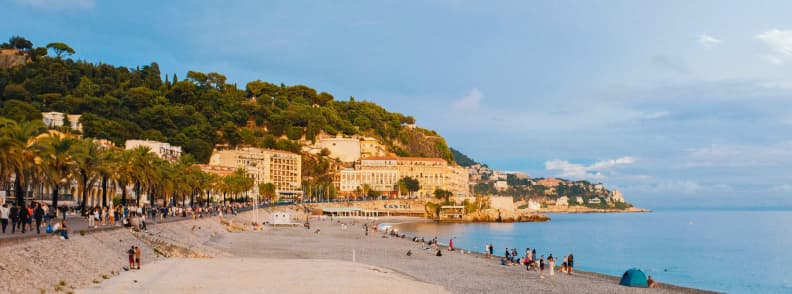
My favorite time for an autumn French Riviera trip is September. I’ve been living in the Pays de Fayence, 30 minutes inland from Fréjus, since spring 2021, and this is when I start enjoying the coast again after summer. The Mediterranean Sea is still warm enough for swimming in autumn on the French Riviera, I spend beach days around Fréjus and Saint-Raphaël, traffic lightens, and finding a parking space stops requiring a strategy worthy of a military exercise. I still wear summer clothes during the day, adding long pants and a light jacket after sunset.
The biggest advantage of Côte d’Azur autumn travel is how much the region changes from one month to the next.
September keeps much of summer without the July and August crowds and heat waves. Families tied to school calendars largely disappear, which leaves a useful travel window for couples, parents with preschool children, students whose term starts later, and visitors from countries such as Romania where the school year begins later.
French Riviera autumn guide
By October, the coast is quieter, rainy spells become more frequent, evenings cool inland, and some seasonal businesses shorten their hours or close. But I’ve still swum at La Base Nature in Fréjus during the first week of October.
November belongs increasingly to the people who live here. On the coast, entire apartment buildings sit behind closed shutters once owners of second homes leave for the colder months. Some seaside areas become almost eerie. But sunny afternoons still bring T-shirt weather, beaches remain good for walks and picnics, and towns with enough permanent residents carry on, without pretending they’re living an endless summer.
This Côte d’Azur guide on The Travel Bunny follows the French Riviera from late-summer September through increasingly local November, with firsthand notes on swimming, beaches, weather, parking, hiking, events, markets, food, seasonal closures, public transport, sailing, and the difference between the coast and the arrière-pays. I’ll also cover the less photogenic details that affect a trip, including hunting season inland, beach clubs shutting for winter, ferry services thinning out, autumn storms, and road crews appearing once the summer crowds finally give them some room.
Disclosure: Some of the links on this page are affiliate links. This means that at no extra cost to you, The Travel Bunny will earn a small commission if you click through and make a purchase. Thank you!
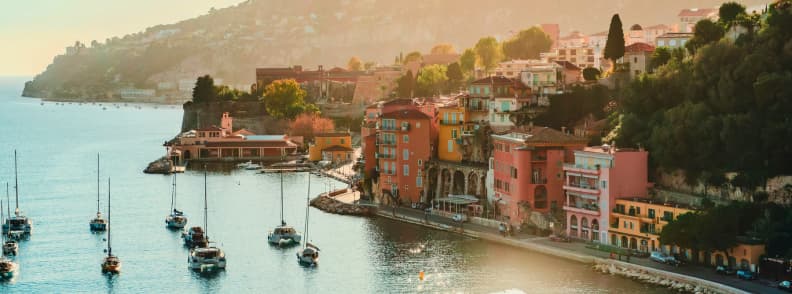
Is autumn a good time to visit the French Riviera?
Yes, an autumn French Riviera trip is excellent especially in September, when the Mediterranean is still warm, beaches are quieter, and traffic not as busy. I live 30 minutes inland from the Côte d’Azur, and I’d choose September first. October stays mild and quieter, while November brings shorter days, colder inland evenings, and a Riviera increasingly occupied by year-round residents.
| Month | Coast | Arrière-pays | My take |
|---|---|---|---|
| September | Warm sea, beach weather, most seasonal businesses still open | Warm days, cooler evenings | My first choice |
| October | Early swimming remains possible, then beaches quieten considerably | Better hiking weather, cooler evenings, autumn events | Best coast-and-inland balance |
| November | Good for walks and picnics, many seasonal businesses closed | Colder after sunset, quieter villages | Most local, but less lively |
A Côte d’Azur autumn changes surprisingly fast once you leave the coast. Thirty minutes inland, autumn in Provence brings colder evenings earlier, restaurants shift back toward their resident clientele and village life takes over from the summer season. So a South of France autumn trip can look pretty different, depending on where you sleep. Nice may still have busy terraces while a village in the Pays de Fayence has already settled into its winter rhythm.
September is the best time to visit the French Riviera if swimming still belongs in your plans, at least in my opinion. It’s also my choice for the best month to visit Nice France if you want to enjoy beach weather plus sightseeing without the terrible July and August traffic.
The Travel Bunny’s family travel tip: Families visiting the French Riviera in autumn also have an easier time at beaches and coastal towns once the main European school holidays finish, especially with preschool children.
The best time of year to visit the Côte d’Azur changes if swimming isn’t important. October is better for long walks, the Estérel Massif, village outings, and major events such as Roc d’Azur.
The best places to visit on the French Riviera in autumn also start shifting inland as the season advances. Many of the best things to do on the French Riviera in autumn involve hiking, markets, and local events once spending an entire day beside the sea becomes less tempting.
The wide range of Côte d’Azur autumn activities is exactly why I wouldn’t reduce the season to cheaper hotels and empty beaches. Things to do on the French Riviera in autumn can be anything from swimming around Fréjus in early October to walking the red-rock Estérel, visiting Riviera towns without summer traffic and spending sunny November afternoons eating a picnic beside the sea.
The Travel Bunny’s complete travel guide to the Côte d’Azur in autumn also shares the unglamorous seasonal details. Beach clubs close. Ferry services thin out. Parking gets easier. Hunting season affects inland walks. Heavy Mediterranean rain sometimes brings flash floods, fallen trees and damaged roads. These details separate my useful Côte d’Azur fall guide from a collection of nice photographs taken in autumn.
Visiting the French Riviera in fall also makes you feel as if you’re visiting a different region in each month. September extends summer, and October is quieter but still active. The Côte d’Azur fall season becomes distinctly local by November, especially around secondary-residence areas where entire apartment buildings stay silent behind closed shutters.
Choosing when to visit Nice or the wider Riviera ultimately depends on what you want from the trip. The Riviera fall vs. spring choice favors autumn for warmer sea water and the lingering summer season, while spring in the South of France has its own advantages.
Should I visit the Riviera in fall? I would. And unless your priority is hiking or deep off-season quiet, I’d start planning a trip on the Côte d’Azur in September.
French Riviera in autumn month by month
French Riviera autumn weather refuses to stay conveniently consistent from September through November. The sea softens temperature swings along the coast, while the Pays de Fayence and other parts of the arrière-pays cool faster after sunset. This difference becomes increasingly noticeable as autumn advances.
Côte d’Azur autumn weather also varies over surprisingly short distances. A sunny afternoon on the coast might still call for a T-shirt while the evening back inland has me reaching for long pants and a jacket. French Riviera autumn temperatures need to be checked month by month and location by location. A regional average isn’t relevant.
Rain is the less photogenic part of the story. Autumn rainfall in Nice France and elsewhere along the southeastern Mediterranean coast includes periods of intense rain, especially during the Mediterranean storm season. The rainy season on the French Riviera doesn’t mean weeks of uninterrupted drizzle. In my experience, the bigger concern is an intense episode bringing flash floods, fallen trees or damaged roads within a relatively short period.
This variability explains why French Riviera fall weather deserves a closer look before choosing travel dates. Cote d’Azur weather in autumn is mild enough to support outdoor plans, but the balance between beach time, hiking, sightseeing, and indoor alternatives changes considerably across the three months.
What is the weather like in the French Riviera in autumn? Expect a gradual move away from summer, with the coast staying milder than the inland hills, evenings cooling first, daylight shortening and periods of heavy Mediterranean rain becoming an important part of trip planning.
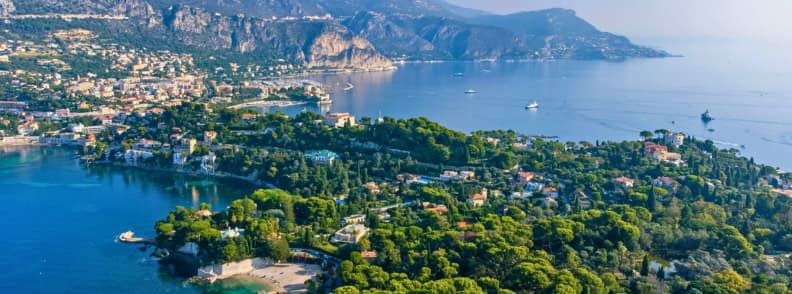
September on the French Riviera. Warm sea, major sailing events, and late-summer conditions
September is when I start going back to the coast. The French Riviera in September still runs largely on its summer rhythm, but the school-holiday crowd has thinned out. On the coast, beaches are calm again, traffic is lighter, and parking becomes less of an afternoon project. For me, this is the best part of late summer!
I still swim in September, usually close to home, around Fréjus and Saint-Raphaël. Saint-Aygulf is an easy choice with my young son, and I like the smaller creeks around Les Issambres when I want something less exposed. The Mediterranean Sea has spent the whole summer warming up, so September remains a proper swimming month. I prefer checking the conditions on the day instead of relying on a monthly sea-temperature average.
September is also the last month when much of the summer setup is still in place. Beach restaurants and seasonal businesses are generally operating, although individual closing dates start appearing as the month advances. Nice keeps selected beaches supervised into mid-September, while Cannes schedules its seasonal lifeguards through 15 September at the latest. In Fréjus, the eight lifeguard stations remain staffed daily through the third Sunday of September.
Private beaches and other seasonal facilities follow their own calendars. The Mediterranean, inconveniently, has no interest in municipal schedules, so swimming conditions might remain excellent after the lifeguard chair is empty. But by late September, I advise you to check the specific beach for supervision and facilities before planning your day on the coast. After that point, the beach is still there, of course, but the safety setup changes.
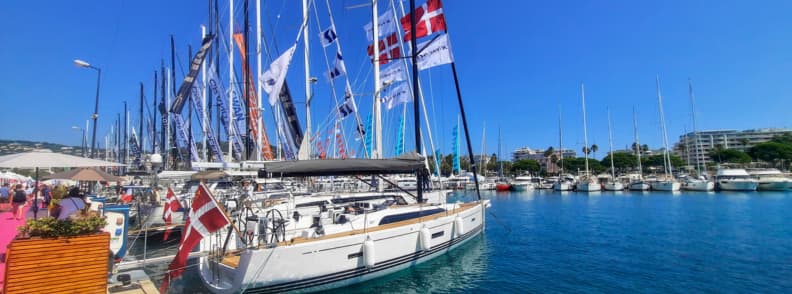
September also has an unusually busy event calendar for a month with fewer ordinary vacationers. The first big date in 2026 is the Cannes Yachting Festival, from 8 to 13 September at the Vieux Port and Port Canto. I’ve attended before, and our parking solution eventually involved abandoning the waterfront and heading uphill until a street space appeared. Cannes was not giving those away near the harbor.
Once inside, moving between the two ports was much easier. The festival runs free sea shuttles for ticket holders between Vieux Port and Port Canto, with departures every 15 minutes during opening hours. If you’re staying in Cannes during the festival, I’d book accommodation well ahead. September room prices are usually lower than July and August in my experience, but major events create their own little high season.
Fréjus takes its turn a week later. The Festival International de l’Air in Fréjus is from 18 to 20 September 2026 at Base Nature François Léotard, with free admission. I went before and plan to return this year. The Base Nature is large enough to absorb a large crowd, although parking still takes patience. We found a space toward the train-station side last time. This year, we’re bringing a picnic after noticing how many families had sensibly arrived with their own food.
Then the boats take over again. Les Régates Royales are in Cannes from 19 to 26 September 2026, with over 150 classic yachts expected in the bay. The following weekend overlaps with the start of Les Voiles de Saint-Tropez, from 26 September to 4 October, which brings around 250 boats into the Gulf of Saint-Tropez. I’d avoid thinking Saint-Tropez is an easy spontaneous road trip during this period. I prefer visiting only after Les Voiles, once the traffic has settled down.
Away from the marinas, September is also grape-harvest season across Provence, although the exact timing shifts from one estate to another and increasingly starts earlier. The 2026 Vins de Provence harvest was already underway in August in the earliest coastal vineyards. By September, vineyards are still in their busiest part of the agricultural year across different sectors. A winery visit during harvest is interesting precisely because the estate is busy producing wine.
The Travel Bunny travel tip: Always check visitor arrangements directly instead of assuming the tasting room follows its usual schedule during harvest season.
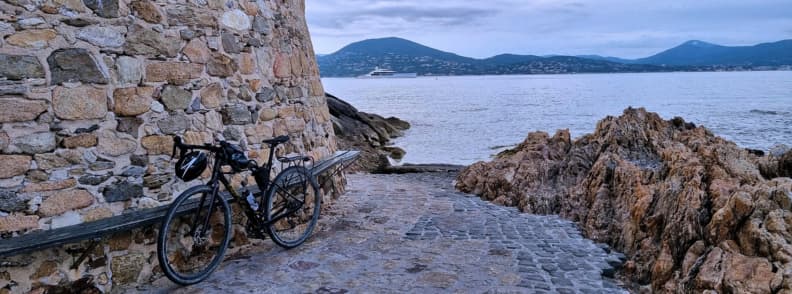
October Hiking, Roc d’Azur, chestnuts, and the Best coast-inland balance
The French Riviera in October is in an awkwardly beautiful place between beach season and proper autumn. The coast is quieter than in September, especially before the French school holidays, but sunny days still bring people back to terraces and beaches. October is a good time to visit the French Riviera if you want to divide a trip between coastal towns, hiking, and the nearby countryside instead of planning every day around swimming.
I’ve swum here during the first week of October, but I’d still consider swimming as a bonus, not the main part of an October trip. Early in the month, the sea retains summer heat, but air temperature, wind, and recent rain increasingly decide how appealing getting into the water seems. Later in October, I’m happier planning a coastal walk or picnic.
The South of France in October is sometimes still sold as summer with cheaper hotel rooms. This description skips the rain. French Riviera October weather swings between warm, bright spells, and Mediterranean rain episodes that arrive with considerably less restraint. These episodes are short periods of intense precipitation, most common from September to mid-December, when several months’ worth of rain sometimes falls within hours or days.
French Riviera temperature in October: For Nice in October, expect an average daytime maximum of 21°C and a monthly mean of 17.5°C, with an average minimum of 14°C. Nice has an average 127.9 mm of rain in October.
Nice October weather is a useful coastal benchmark, but it isn’t a forecast for the entire Côte d’Azur. A typical Nice October temperature still allows plenty of light clothing during a sunny afternoon, while evenings need another layer to feel comfortable.
Now let’s put how many days of rain the French Riviera gets in October into perspective. Nice averages 7.5 October days with at least 1 mm of rain, including 3.6 days with at least 10 mm. Seven or eight rainy days don’t translate into seven or eight days lost indoors. Mediterranean rain is often concentrated, which is why I’ve seen flash floods, fallen trees, and damaged roads after severe episodes here.
Taken together, this is what the weather is like on the French Riviera in October. Expect mild coastal days, cooler inland evenings, and rain that arrives unevenly. The French Riviera is nice in October, with one rather important footnote: keep enough flexibility in the schedule to move a hike, beach day, or long drive when Météo-France Côte d’Azur issues a warning.
Early October also inherits one last piece of September. Saint-Tropez in October starts with Les Voiles de Saint-Tropez still in full swing. The 2026 edition ends on 4 October, with racing for modern yachts, classics, and maxis during the first days of the month. The public Village des Voiles also stays open until 4 October.
Fréjus goes in the opposite direction a few days later. One of the biggest things to do on the French Riviera in October is Roc d’Azur, held from 7 to 11 October in 2026. The mountain-bike event is based at Base Nature François Léotard and now brings over 20,000 amateur and professional participants across its program. This makes early October around Fréjus an exception to the general rule that autumn accommodation is easier and cheaper. Event dates create their own miniature peak season.
Roc d’Azur also points toward October’s main outdoor advantage. Hiking and cycling are among the best things to do on the Côte d’Azur in October, once summer heat has eased and the recurring high-fire-risk restrictions are less dominant. Around my side of the Var, autumn makes the Estérel Massif, the Gorges du Blavet, and other inland walks much easier to approach. Parking improves too. Just keep in mind that the hunting season deserves attention inland, and heavy rain leaves some paths muddy long after the clouds have moved on.
The color change is subtler than many autumn guides suggest. The Mediterranean coast stays largely evergreen, so I wouldn’t promise red-and-gold hills around Nice, Cannes, or Saint-Raphaël. Changes become easier to notice inland, including around Lac de Saint-Cassien and areas with more deciduous vegetation. Even there, autumn arrives gradually. A September photograph beside a late-November photograph often reveals the change better than standing in front of the same hillside waiting for Provence to compete with Vermont fall foliage.
Chestnut country gives October a better defined seasonal identity. Collobrières, in the Massif des Maures, holds its 2026 Fêtes de la Châtaigne et du Terroir on 11, 18, and 25 October. I recommend arriving before 9 am and leaving before 3 pm for easier circulation, which says quite a lot about how th so-called quiet autumn changes as soon as a popular local fête appears.
The Travel Bunny Côte d’Azur tip: Chestnuts, markets, and village events are among the things to do on the French Riviera in October that make a trip inland worthwhile even when the beach forecast is mediocre.
Mid-month brings another crowd change. The 2026 Toussaint school holidays in metropolitan France are scheduled after classes on 17 October until school resumes on 2 November. Family-friendly activities on the French Riviera during the October break move away from full beach days toward local fêtes, shorter walks, museums, and seasonal events. Everywhere in France, Halloween celebrations also start appearing. The coast becomes busier again during this period, although nothing resembles the July and August crush.
Nice France in October is one of the easier bases during unsettled weather because the city keeps a full year-round life around the visitor. Nice in October welcomes you with Old Nice, museums, restaurants, the Promenade des Anglais, and rail connections for dry or wet days. Rain changes what to do in Nice France in October less than in a small seasonal beach resort, where several of the obvious summer choices have already closed.
Cannes in October has a similar advantage. A dry day is great for the Croisette, Le Suquet, and the waterfront, while rain shifts what to do in Cannes in October toward museums, restaurants, and indoor visits. The city stays active after the beach season, although October event dates still deserve a check before booking accommodation.
Èze village in October belongs on a dry-day plan. The steep lanes and exposed viewpoints are more pleasant without wet stone underfoot, and cooler weather makes the climb through the village easier than during peak summer heat. From Nice, Èze is also an excellent day trip that keeps you close enough to retreat toward the coast if the weather turns.
October’s appeal comes from having several good plans. A sunny morning might become a hike, a warm afternoon might end at the beach, a wet forecast points toward Nice or Cannes, a Sunday might lead inland for chestnuts… This flexibility is why I rate October second only to September on the Côte d’Azur.
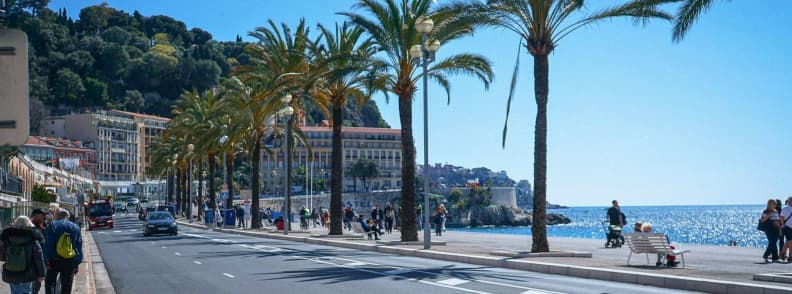
French Riviera in November. Quiet towns, cooler water, shorter days, and more seasonal closures
The French Riviera in November has stopped pretending summer is around the corner. In many coastal towns, the change becomes visible in the apartment buildings. Entire blocks of second homes sit behind closed shutters once their owners leave for the colder months. Some streets become almost eerie. November is quieter, but also distinctly more local. The restaurants, markets and cafés that depend on permanent residents keep going after the seasonal layer has peeled away.
French Riviera November climate: At Nice airport, the average daytime maximum is 17°C, with a monthly mean of 13.3°C, and an average minimum of 9.7°C. November also averages 138.4 mm of rain, slightly above October, spread across 8.5 days with at least 1 mm of precipitation.
These averages hide the personality of French Riviera weather in November. A sunny afternoon beside the Mediterranean and a wet day under a stalled rain system belong to the same month. I still spend comfortable days outdoors in a T-shirt when the sun is out, and we sometimes do that even in winter.
The French Riviera is warm in November on some sunny coastal afternoons, but November is no longer reliable beach weather. The sea has cooled, wind becomes a bigger factor, and many beach facilities have already packed up for winter. Beaches themselves remain excellent for walking, sitting in the sun, or bringing a picnic. I especially like pebble beaches at this time of year.
Daylight becomes a genuine planning limit. In Nice in November 2026, sunset moves from 5:21 pm on 1 November to 4:55 pm on 20 November, while total daylight drops from about 10 hours 15 minutes to 9 hours 12 minutes. A late lunch followed by a long hike therefore needs some calculation. By the end of November, 3:30 pm is no longer the beginning of an ambitious afternoon.
Seasonal closures become much easier to notice too. Beach clubs and many seaside restaurants close, boat services shrink, and tourist businesses reduce their hours. A few beach restaurants continue serving lunch, especially where enough residents live nearby. Autumn is still easier than deep winter to plan attractions, but checking opening days ahead saves a wasted drive.
The French Riviera is worth visiting in November if you don’t care about swimming or nightlife in a seasonal resort. Nice and Cannes are better bases at this point because museums, restaurants, shops, and cultural venues give you somewhere to go when rain wipes out the outdoor plan. A wet afternoon in Nice might become a museum visit, but the same weather in a tiny coastal resort with half its shutters down gives you considerably fewer options.
One November weekend is anything but sleepy. The Nice-Cannes Marathon takes place on 8 November 2026, starting at 8 am on the Promenade des Anglais and finishing 42.195 km later on the Croisette in Cannes. The official marathon distance is already sold out. The course follows the coast, so visitors staying along this corridor should check race-day access before setting out for an ordinary Sunday drive.
Menton in November still has enough everyday life to carry a visit once beach season has faded. The old town, covered market, restaurants, and train station keep the center active, while the waterfront is easier to enjoy without summer crowds pressing into every available space. November is a good month for seeing Menton as a town people actually live in. Don’t turn it into a day-trip backdrop.
Monaco in November is equally dependable when the weather turns. Monaco is a separate sovereign country, even though it often appears inside Côte d’Azur itineraries, and its museums, restaurants, hotels, and cultural venues operate well beyond summer. The amazing Oceanographic Museum stays open year-round. Monte Carlo remains busy in the month of November, especially compared with smaller Riviera resorts where seasonal businesses have already closed.
By November, the coast and the mountains are living in different seasons. A mild afternoon beside the Mediterranean tells you very little about conditions in the Mercantour. In November 2023, Mercantour National Park warned that some trails above 2,000 meters had become impassable without crampons after the first snow and refreezing. Snow arrives differently each year, so check the forecast and trails before drawing up any mountain plans.
The best things to do in the French Riviera in November shift accordingly. Coastal walks, markets, museums, galleries, old towns, Roman sites, and long lunches become safer bets, with shorter hikes fitted around the reduced daylight. A sunny day is still inviting for a spontaneous outing. A wet one makes Nice, Cannes, Menton, or Monaco better bases than a small seasonal resort.
What is the weather like on the French Riviera in November? Expect mild days along the coast, colder evenings inland, more unsettled rain. and possible winter conditions at altitude. November shows you a side of the Riviera that summer visitors rarely see. The shutters come down, the seasonal businesses retreat, and authentic daily local life becomes much easier to notice.
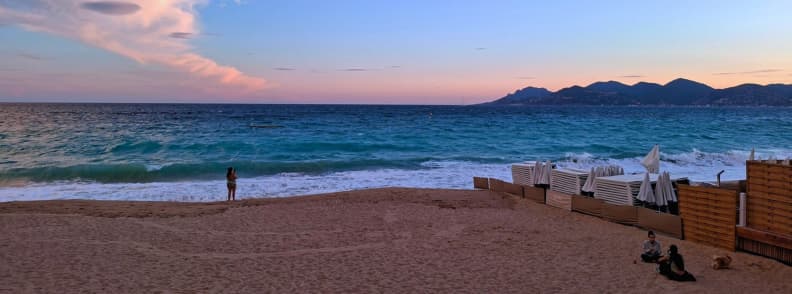
What changes on the French Riviera after summer. Crowds, prices, opening hours, and atmosphere
The French Riviera is less crowded in autumn, but the change happens in stages. September still has plenty of visitors, especially around Cannes, Nice, and major events. October becomes noticeably quieter between event weekends and the Toussaint school holidays. By November, seasonal resorts lose much of their temporary population, while cities with large year-round communities carry on at a steadier pace.
Official tourism figures back up the idea that September now belongs partly to the extended summer season. Côte d’Azur France Tourisme reported hotel occupancy of 87% in both June and July 2026, while September vacation-rental bookings were already 16% ahead of September 2025 when the August report was published. This covers the Alpes-Maritimes and Monaco, so I wouldn’t use those figures to describe Fréjus or the Var.
The Var has a bigger seasonal drop. 56% of stays take place in summer and only 11% in autumn. This matches what I see around Fréjus, Saint-Raphaël, and inland in the Pays de Fayence. The French Riviera shoulder season is quieter, especially once September ends, but quieter never means uniformly empty.
A single French Riviera crowd calendar would therefore be misleading. How crowded the French Riviera is in September changes sharply according to town and event dates. Cannes fills for the Yachting Festival and Régates Royales, Saint-Tropez gets another surge for Les Voiles, Fréjus has the Festival International de l’Air and, in early October, Roc d’Azur.
French Riviera crowds in October drop considerably outside those dates. I notice the difference immediately on the roads, at beaches, and when parking. Then Toussaint arrives and families return for the school break. How crowded the French Riviera is in late October also depends on local events. Saint-Tropez, for example, holds its Grande Braderie from 23 to 25 October 2026, an event which draws tens of thousands of visitors. Quiet season, yes. Quiet weekend, absolutely not!
The Travel Bunny budget tip: The cost of traveling to the French Riviera in shoulder season generally improves compared with July and August, particularly for accommodation. That’s also what I’ve seen locally. French Riviera prices in October often become easier on your pocket once the main summer demand has passed, especially away from school holidays and big events.
I still wouldn’t book on the assumption that autumn automatically means cheap. Riviera autumn deals appear, but major festivals, regattas, sporting events, and Toussaint create short bursts of demand. Cannes during the Yachting Festival, Saint-Tropez during Les Voiles or the Braderie, and Fréjus during Roc d’Azur require an accommodation check before you commit to any dates. A bargain twenty kilometers away might suddenly become more interesting (as in cheaper and less crowded).
The practical difference between the French Riviera in fall vs summer becomes obvious at street level. Parking spaces reappear, roads thin out, and summer night markets disappear. Municipal crews start digging, resurfacing, and repairing things that nobody wanted fenced off in August. Around Fréjus and Saint-Raphaël, I’ve seen autumn roadwork become part of the seasonal scenery almost as reliably as closed parasols.
The Côte d’Azur shoulder season also changes the way businesses use their day. In the arrière-pays, some restaurants shorten evening hours once summer ends. Others start offering delivery again because their customers are mostly local. Sunny terraces still fill at lunchtime, but after dark, particularly later in autumn, the village might suddenly look as though everyone remembered they own a dining room.
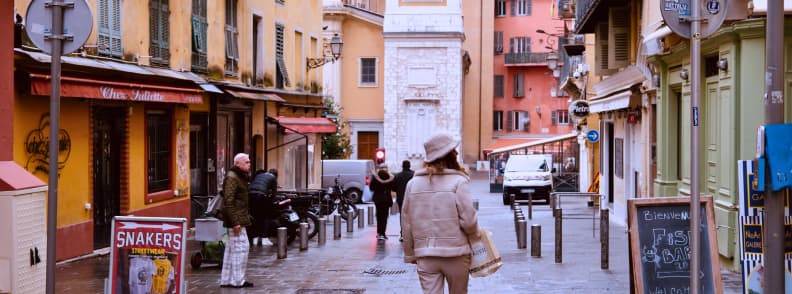
What stays open on the French Riviera in autumn?
| Service | September | October | November |
|---|---|---|---|
| Public beaches | Open, with supervision still operating at some beaches for part of the month | Open, usually with reduced or no seasonal supervision | Open, mostly without summer services |
| Private beaches and beach clubs | Many still operating | Increasing number closed or on reduced schedules | Many closed for the season |
| Seafront restaurants | Broad choice | Mixed, especially in seasonal resorts | Mostly year-round addresses in quieter areas |
| Museums and major cultural sites | Open | Dependable | Among the safest sightseeing choices |
| Weekly town markets | Continue | Continue | Continue, often smaller |
| Summer night markets | Many finish during September | Largely finished | Finished |
| Ferries and boat excursions | Best autumn choice, although schedules already start changing | Fewer routes and departures | Limited services on many seasonal routes |
| Tourist attractions | Broad choice | Some reduce days or hours | Seasonal sites increasingly close |
| Parking | Easier as the month advances | Much easier | Usually easy outside events and city centers |
Restaurants and beach clubs are open on the French Riviera in October, but not all of them. In my experience, beach clubs are among the first obvious casualties of the end of summer. Many beach restaurants close too, while a smaller number keep lunch service for local customers. A place packed every evening in August might have its chairs stacked behind the windows six weeks later.
Public beach access is a different issue. The beach itself doesn’t close because the beach club has packed away its loungers. Supervision, showers, toilets, and other seasonal services follow local timetables, so an October beach day increasingly means bringing what you need and checking the each town’s current information first.
Most museums are open on the Côte d’Azur in autumn, particularly in Nice, Cannes, Antibes, Menton, Monaco, Fréjus, and other places with a year-round cultural life. Smaller attractions sometimes reduce their opening days as autumn advances. This is one reason I recommend staying in larger towns in November. Rain is less irritating when the alternative plan involves a museum, market, or gallery instead of sighing by a locked restaurant door.
Boat transport needs closer attention. Ferry reductions become significant once the main season ends, and a route you used in August might run fewer departures, operate only on selected dates, or stop completely. Les Bateaux Verts 2026 timetable illustrates the pattern well, with dense summer services followed by special schedules around Les Voiles de Saint-Tropez and the Saint-Tropez Braderie.
This makes September my preferred month for ferry-based days. By October, I check the operator before making any plan around a boat. By November, I plan my day around land transport unless a current timetable confirms otherwise. My French Riviera off-season travel tips start with checking the current schedule. Seasonal transport is particularly good at turning a perfectly sensible plan obsolete.
Saint-Tropez in autumn requires a caveat because people sometimes talk about the town as though everybody locks the gates after Les Voiles. Saint-Tropez is open in October and November. What changes is the proportion of businesses serving permanent residents and visitors all year compared with businesses built around the summer season.
October is still surprisingly active here. Saint-Tropez event calendar lists regattas, cultural events, exhibitions, the Saint-Tropez Classic, and the Grande Braderie across October 2026, with some exhibitions continuing into November and beyond.
I prefer a Saint-Tropez off-season visit once Les Voiles de Saint Tropez has finished. Driving becomes less tedious, parking gets easier, and the village is easier to look at without spending half the day trapped in traffic. My first visit to Saint-Tropez was by ferry in June, and during warm busy months I think arriving by sea is the saner choice. In autumn after the main events, the car gets less objectionable.
Nice, Cannes, Monaco, and parts of Antibes never enter the kind of deep seasonal shutdown seen in smaller beach resorts. Their hotels, restaurants, museums, transport and resident populations keep them active. Riviera off-season travel is increasingly uneven as you move from a large urban center to a small place built heavily around summer visitors.
By November, the French Riviera off season is most visible in second-home areas. Around Fréjus and Saint-Raphaël, I’ve seen entire apartment buildings with every shutter closed. It changes the atmosphere more than visitor statistics ever could. Streets that were noisy in August suddenly have plenty of parking and very few lit windows.
That quieter period has advantages. The Côte d’Azur shoulder season gives you easier access to beaches, coastal walks, villages, and restaurants that remain open. It also exposes which places have a genuine local life underneath tourism and which ones depend heavily on the summer machine.
Mediterranean Coast vs arrière-pays. where should you stay?
Choosing between the Mediterranean coast and the arrière-pays changes the character of an autumn trip almost as much as choosing the month. The coast has the Mediterranean sea, rail connections, larger towns, and a broader choice of restaurants and cultural venues. Inland, the pace slows quickly. Evenings cool earlier, villages settle back into local routines, parking becomes easier, and a car becomes necessary.
I live in the Pays de Fayence, about 30 minutes inland from Fréjus, so I make this coast-to-hills trip constantly. The arrière-pays Côte d’Azur is close enough for the sea to remain part of daily life, but still far enough inland for autumn to arrive differently. I might leave the coast in a T-shirt after a sunny afternoon and need long pants by the time I’m home.
The same contrast appears farther east. Autumn in the arrière-pays near Nice takes you into hill villages and higher ground while Nice holds the advantages of a large coastal city. The region extends from Mediterranean towns and beaches into perched villages, valleys, and mountain territory, which is precisely why choosing one base for the entire area deserves some thinking ahead.
A French Riviera hinterland stay is ideal if you’re interested in visiting villages and markets, going hiking, and discovering local life. A coastal base may be better for swimming, seaside walks, museums, trains, and evenings out. In September I’d happily choose either. By November, I favor a larger coastal town for tourists with a limited time here who want plenty to do after dark or during bad weather. The hills appeal most to people who actively want the quieter side of autumn.
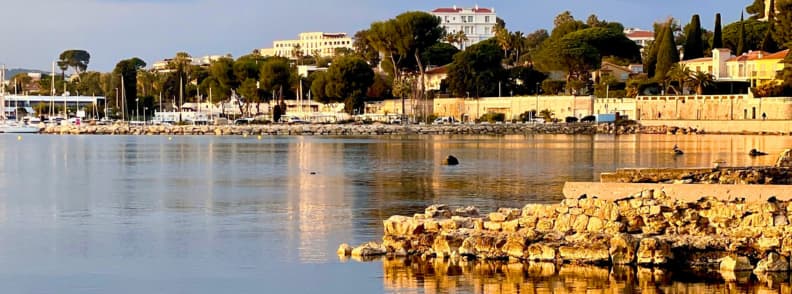
Nice, Antibes, Cannes, Menton, and Monaco for year-round services
The eastern Côte d’Azur becomes increasingly attractive as autumn advances because Nice, Antibes, Cannes, Menton, and Monaco maintain a larger share of their everyday services after the beach season ends. Trains still run, museums keep regular calendars, restaurants serve residents as well as visitors, and bad weather doesn’t automatically reduce the day to coffee followed by another coffee while watching rain hit the harbor.
Staying in Nice France in autumn gives you the best no-car base in this part of Provence-Alpes-Côte d’Azur. Nice has four tram lines, including Line 2 between Nice Côte d’Azur Airport, the city center, and the port, plus over 140 bus routes across the metropolitan network. Regional trains extend the useful radius along the coast. Nice in autumn also has lots of museums, restaurants, and cultural events after seasonal beach towns have started switching off their lights for winter.
Things to do in Nice in autumn include the Matisse and Chagall museums, Old Nice, markets, galleries, and long restaurant lunches, with the tram taking you to much of the useful urban area. If I were choosing a November base for somebody without a car, Nice would be one of my first choices because a transport disruption or wet forecast wouldn’t really affect you. You’d still have an entire city around you.
Autumn travel in Cannes has a similar advantage, though on a smaller scale. Cannes station is close to the center, the Croisette, Rue d’Antibes, Le Suquet, and the Old Port, and Palm Bus operates 30 regular daytime lines and five evening lines. Cannes in autumn also has restaurants, cinemas, cultural venues, and evening life long after many seasonal addresses elsewhere have closed.
Cannes is especially useful for visitors who want coast and nightlife without depending heavily on a car. The trade-off appears during major congresses, festivals, and sailing events, when hotel rates and traffic stop behaving like low season. Outside those dates, Cannes gives you a dense center, rail access in both directions, and plenty of indoor options to survive a wet day without reorganizing your entire trip.
Antibes is between Nice and Cannes on the main coastal rail corridor and it’s a calmer base with proper town services. Antibes station handles regional and long-distance trains, while Juan-les-Pins and Biot also have local rail stops. Antibes Old Town is easy to explore on foot, and the Picasso Museum in a beautiful rainy-day alternative. From 16 September through mid-June, the museum is open according to its cooler-season schedule from Tuesday to Sunday, closing only on a few public holidays including 1 November.
Menton in autumn is quieter than Nice or Cannes, which is part of its appeal. The Old Town, covered market, museums, restaurants, and station make Menton a good destination even after beach season, and the rail line makes day trips toward Nice or Monaco easy to plan. There are also several museums in Menton, including the Jean Cocteau Bastion and the Museum of Regional Prehistory.
I’d choose to be in Menton for a slower trip, especially in September or October. By November, visitors who want busy evenings have better options farther west. Although Menton has enough year-round life to avoid the shuttered-resort problem, the pace after dinner is much calmer than Nice, Cannes, or Monte Carlo.
A Monaco autumn holiday offers the highest concentration of year-round services in the smallest area. Monaco is a separate sovereign country, not part of France, even though Côte d’Azur itineraries regularly group the Principality with nearby French destinations. Six regular bus lines serve Monaco during the day, with night routes continuing after 9 pm.
Monaco also gives bad weather relatively little power over the day. The Oceanographic Museum is open throughout the year, and Monte Carlo has hotels, restaurants, casinos, and evening venues active after summer. For nightlife and rainy-day resilience, Monaco is as good as Nice or Cannes, though accommodation usually requires a healthier budget.
The smaller places between these urban bases deserve a different approach. Èze village in autumn is easier to appreciate once summer heat and peak crowds ease, but the hilltop village has fewer indoor fallbacks if rain arrives. I’d keep Èze to visit on a dry day and use Nice, Menton, or Monaco as the main base.
Èze village Exotic Garden in autumn are open daily, with opening hours changing as daylight shortens. You can visit from 9 am to 7:30 pm in September, from 9 am to 6:30 pm in October, then from 9 am to 4:30 pm from November through March. This closing-time shift is a useful reminder that late-autumn sightseeing needs an earlier start even when the weather is excellent.
Saint-Jean-Cap-Ferrat fills another useful gap between Nice and Monaco. You can visit Villa Ephrussi de Rothschild in the off-season. It stays open daily throughout the year, from 10 am to 6 pm until 1 November, then switches to reduced winter hours on weekdays. A rainy autumn day is a good reason to spend longer inside the villa, while a dry one gives the nine gardens equal billing.
Farther inland, Saint-Paul-de-Vence in fall benefits from cooler walking weather and fewer summer visitors. However, public transport takes more planning than along the railway coast. Bus 655 links the village with Cagnes-sur-Mer, La Colle-sur-Loup, and Vence. The summer Maeght-Matisse tourist shuttle ends in late August, so autumn visitors lose this seasonal shortcut.
A Saint-Paul-de-Vence autumn day fits best into a trip with a little flexibility. The pedestrian village, galleries, and Fondation Maeght are plenty to see in several hours, but a coastal base keeps the evening simpler. Reaching Saint-Paul-de-Vence from central Nice by public transport takes around 1 hour 10 minutes with connections.
The Travel Bunny’s local advice: Nice, Cannes and Monaco offer the best year-round transport, indoor culture, restaurants, and evening life. Antibes is a quieter version with excellent rail access. Menton stays active but calmer. Èze and Saint-Paul-de-Vence are better as day trips once autumn weather and shorter daylight enter the equation.
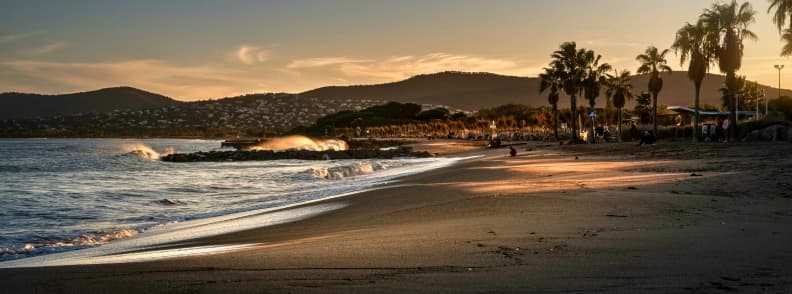
Fréjus, Saint-Raphaël, and the Estérel for beaches, trails, and the western Riviera
Fréjus in autumn is where I notice the seasonal change most clearly because it’s the stretch of coast I visit most often. Summer traffic thins, parking becomes easier, and the beaches recover some breathing room, while the center slips back toward ordinary town life. I go for grocery shopping, walks through central Fréjus, events at the Base Nature, and days along the coast.
Base Nature François Léotard is a good place to visit once the heat eases. The huge seafront recreation area is open year-round, with walking and cycling space, sports facilities, public toilets, and direct beach access. Entry is free, and its large parking area is also free from September 2026 to June 2027.
Fréjus-Plage is easier to visit in the shoulder season as well. Parking that requires considerably more patience in summer is less troublesome after the main season. The Base Nature lot becomes free from September, while the Port Fréjus P1 parking remains paid all through October before the winter period. Autumn is when I stop planning my day around the possibility of circling for a parking spot. This sounds mundane until you’ve spent a good part of August doing exactly that.
The center deserves allocating time away from the beach because Fréjus is the Roman Forum Iulii. Among the historical Roman sites to visit in Fréjus during autumn, the amphitheater, Roman theater, aqueduct remains, and Porte des Gaules will give you the clearest picture of the ancient city.
The Fréjus aqueduct is my favorite geographical link between the coast and the arrière-pays. The Roman aqueduct carried water for about 42 km from springs around Montauroux and Mons to Fréjus, crossing 36 aqueduct bridges along the route. These places now belong to the Pays de Fayence area I know as home, so the Roman story makes this modern coast-and-hills relationship unexpectedly literal.
The Roman monuments also switch to shorter opening hours from 1 October. The amphitheater and theater are open from Tuesday to Saturday between 9:30 am and 12:30 pm and 2 pm to 5 pm during the cooler season, with Sunday, Monday, and public-holiday closures.
Saint-Raphaël gives me a different kind of autumn day. I head over to Boulouris, Plage du Débarquement, and the coast east of town, where the urban waterfront gradually gives way to red rock, small ports, coves, and the Estérel Massif. This stretch of coast is one of the reasons I prefer the western Riviera in September and October. Beach time, coastal walking and inland trails all sit within a relatively small area.
Plage du Débarquement is an excellent beach stop because it easily turns into a walk around Cap Dramont. Plus, the beach also carries historic importance. Around 20,000 soldiers from the US 36th Texas Infantry Division landed here during the Provence landings on 15 August 1944. Across the water sits the privately owned Île d’Or, while the active semaphore above Cap Dramont dates from 1860.
The Travel Bunny’s local tip: You can learn more about the WWII in Saint-Raphaël by walking Le Chemin de Mémoire, part of Liberation Route Europe.
I’ve walked around Cap Dramont, and autumn makes the outing considerably easier than peak summer. The official trail starts near Camp Long and follows the coast around the cape, with access by car, bus, or TER at Le Dramont station. Parking is easier in my experience once the summer crowds leave, and walking among exposed red rock is more appealing when the sun has stopped trying to cook everybody.
The Estérel Massif is one of autumn’s biggest advantages. In summer, forest access in the Var is regulated according to daily wildfire risk, with the prefecture publishing the Var forest massif access map from mid-June up to the end of September. October removes much of that summer uncertainty and brings better walking temperatures, although weather, local restrictions, and hunting season still deserve attention before setting off.
Don’t come here expecting New England foliage! The Estérel is predominantly Mediterranean and evergreen, and I see little dramatic leaf color along the coast. The seasonal change is subtler, with softer light, cooler air, fewer cars at trailheads, and vegetation losing some of its baked-summer look. Put a September photograph beside one from late November and the difference becomes clearer. Stand there waiting for an entire red hillside of deciduous trees and you may be waiting some time…
Early October has one enormous exception to the quieter-season rule. Roc d’Azur takes over Fréjus from 7 to 11 October 2026, centered on Base Nature and extending through Fréjus, Roquebrune-sur-Argens, Saint-Raphaël, the Maures, and the Estérel. There are over 20,000 participants, around 300 exhibitors, and close to 100,000 visitors across five days. It’s no surprise that accommodation and traffic deserve advance planning that week.
Staying in this area also gives you convenient access toward the Gulf of Saint-Tropez. Outside busy event periods, I find the road trip much easier in autumn, especially once Les Voiles de Saint-Tropez has finished. I personally prefer visiting Saint-Tropez by land after Les Voiles, when traffic and parking have calmed down. During warmer, busier periods, arriving by boat saves an impressive amount of time spent staring at the rear of somebody else’s car.
Saint-Raphaël also retains seasonal boat connections into autumn. Les Bateaux Bleus operates from the Vieux Port of Saint-Raphaël and Port d’Agay until 31 October in 2026, with Saint-Tropez among its destinations alongside the Estérel coast, Lérins Islands, and Porquerolles. Individual departure dates still need checking as the season winds down.
If I were you, I’d look for accommodation around Fréjus or Saint-Raphaël in September or October for beaches and hiking trails. You have a real town instead of a purely seasonal resort, Roman history in Fréjus, the Saint-Raphaël coast on the doorstep, the Estérel immediately east, and the Gulf of Saint-Tropez within reach to the west.
By November the coast becomes quieter, but this also makes the ordinary details easier to see. Residents reclaim the promenades, construction crews prepare things for another summer, and finding somewhere to park stops being one of the day’s notable achievements.
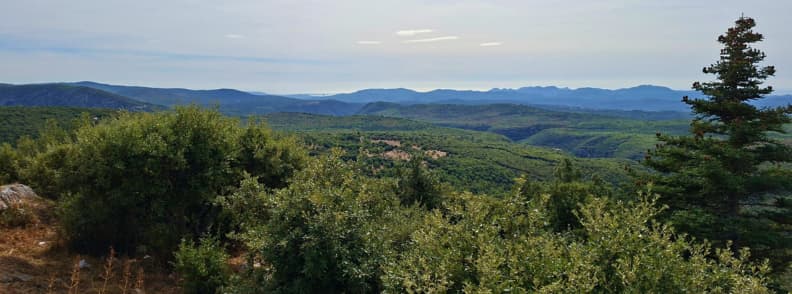
Pays de Fayence, hilltop villages, and Lac de Saint-Cassien
The arrière-pays varois around 30 minutes from Fréjus is where my version of the Côte d’Azur moves away from the coast. I’ve been living in Pays de Fayence since 2021, first in Bagnols-en-Forêt and now in Saint-Paul-en-Forêt, so these roads are part of ordinary life for me. And I’ve started visiting this area around a decade ago, when Mathieu brought me here to meet his family.
The Mediterranean is still close, but autumn arrives differently here. Evenings cool earlier, terraces depend increasingly on sunshine, restaurant schedules shrink, and finding a parking space becomes pleasantly uninteresting outside peak season.
The Pays de Fayence has nine perched villages: Fayence, Callian, Mons, Tourrettes, Tanneron, Montauroux, Saint-Paul-en-Forêt, Seillans, and Bagnols-en-Forêt. These are the villages de charme of the arrière-pays varois, but I wouldn’t treat them as collectibles to tick off between breakfast and dinner. They’re close on a map, but the winding local roads and steep village streets slow the pace considerably.
A Var hilltop villages driving tour is better with two or three stops and time for lunch. Parking also becomes easier after summer, which removes one of the dullest reasons to hurry. These Var hilltop villages are small enough that a visit often revolves around walking the old center, having a look at the scenery from the higher streets, stopping at the local market or café, and then continuing through the countryside.
Fayence is the obvious place to start. A Fayence medieval village day trip combines the old center with one of the busier local communities in the canton. Go for a walk on the steep lanes through small squares and make your way up to the Clock Tower, whose viewpoint opens across the surrounding mountains and plain. I know Fayence through ordinary visits as much as sightseeing, including market mornings and local events like the Fête du Pain, which is exactly why I’d send someone here outside summer.
Fayence Provence in autumn is also a good base to understand the difference between coast and inland destinations. A sunny terrace fills quickly during the day, but after sunset, the temperature drops and the village gets quieter. Later in autumn, some restaurants reduce evening service. This seasonal shift is less dramatic than the shuttered apartment blocks on parts of the coast, but way easier to notice when you stay for dinner.
Seillans is the village I’d choose if you’re looking for the the classic stone-lane version of Provence. The village holds the Plus Beaux Villages de France label, and its heritage circuit remains accessible year-round. Among the French Riviera villages worth visiting in autumn, Seillans earns the detour because cooler weather makes its sloping streets more pleasant to walk. The village tourism office also houses works connected with Max Ernst and Dorothea Tanning, a useful detail for when the weather turns less cooperative.
Tourrettes is so close to Fayence that separating the two into different days makes little sense. Tourrettes has turned its streets into an open-air art museum, with over 80 paintings, mosaics, and metal sculptures placed around the villag. Guided historical and artistic visits are available year-round by reservation.
The Travel Bunny’s local tip: A day visiting hilltop medieval villages near Fayence and Seillans pairs naturally with Tourrettes, especially when the daylight is shorter and spending half the afternoon in the car is a poor bargain.
Callian is another village I visit regularly, mostly for Le Petit Callian, my favorite restaurant in the canton. One of the Villages de Caractère du Var, its streets curl around a medieval château, while the upper part of the village looks toward the Tanneron and Estérel massifs. Callian a French Riviera hinterland village where the arrival of autumn improves the simple experience of walking around. Summer heat has eased, parking is less competitive, and a sunny lunch terrace is pleasant well into the season.
Saint-Paul-en-Forêt is less theatrical. I moved here this summer, but I won’t pretend and say that every visitor needs to drive inland specifically to photograph this village. Its value is showing what the Pays de Fayence looks like away from the better-known perched centers. Houses spread through wooded surroundings, local life continues after tourism slows, and the coast remains close enough for Fréjus to be an ordinary outing.
I would recommend visiting Saint-Paul-en-Forêt for hiking in the area around Lac de Rioutard and Lac de Méaulx or for the annual October Soapbox Derby, otherwise known as La Saint Paul Position. I attended last October’s edition and I’m looking forward to the second edition this year.
Bagnols-en-Forêt, where I lived before moving to Saint-Paul-en-Forêt, deserves time for the countryside around the village as much as for the center itself. Bagnols sits on the Estérel foothills, surrounded by about 3,500 hectares of oak, pine, and chestnut forest, with marked trails leading to ancient millstone quarries, oppida, and the Blavet canyon. I know well the trails around the Anciennes Tailleries de Meules, the red-rock Gorges du Blavet with the Grotte de Mueron and the viewpoints above the village. Autumn is when I most enjoy walking here after the summer heat has eased.
I’d choose to visit Bagnols-en-Forêt on a half-day trip combining a Provençal village with a quick hike, especially the millstone-quarry circuit or the Blavet area, then add the Cascade de Gourbachin if recent rain has given the stream enough water to make the detour worthwhile.
Hidden hilltop villages in the Côte d’Azur arrière-pays: Most villages aren’t even remotely hidden to the people living around them. They have schools, bakeries, municipal offices, markets, associations, and residents trying to park near the center. Autumn makes the everyday aspect much easier to see.
Mons is farther inland, and I know it less intimately than Fayence, Seillans, Tourrettes or Callian. At 814 meters, Mons is the highest village in the canton, while nearby Mont Lachens reaches about 1,715 meters. This elevation changes things. A pleasant afternoon near the coast doesn’t guarantee the same temperature higher inland.
The perched villages of the Côte d’Azur stretch well outside the Pays de Fayence. Some of the best medieval perched villages near Cannes and Nice can be found in Pays de Grasse and the Alpes-Maritimes.
Gourdon is a good example. At 760 meters above the Vallée du Loup, the Gourdon village panorama belongs to the Alpes-Maritimes, east of the Pays de Fayence. From Place Victoria, the view stretches roughly 80 km along the coast from Nice toward the Estérel. I’d keep Gourdon as a separate day trip in a Nice or Grasse itinerary instead of adding it into a Pays de Fayence day trip simply because all are villages perchés de la Côte d’Azur.
French Riviera arrière-pays villages to visit: I recommend starting with Fayence, Seillans, Tourrettes, and Callian because they group easily without turning a day trip into a road marathon.
Lac de Saint-Cassien is also part of Pays de Fayence. Lac de Saint-Cassien in autumn becomes quieter as soon as the summer swimming and water-sports season winds down. I notice some foliage change around the lake too, although nothing resembling the dense autumn color farther into the mountains.
The water cools faster than the Mediterranean, and I find late-season swimming a lot less tempting here than on the coast. Near the river inflow, where it’s cleaner, the water is colder still. The lake remains a good spot for a walk, a picnic, or a slow stop between villages after the summer activity businesses have packed away their equipment.
La Maison du Lac is open year-round and worth remembering outside high season. The visitor center is on the shore of Lake Saint-Cassien and it includes tourist information, an interpretation space about the lake and the nine villages, plus a shop with local products.
These French Riviera hinterland villages and Saint-Cassien Lake are ideal destinations for travelers with a car. Public transport does exist in parts of the canton, but I don’t consider it reliable and I wouldn’t plan an autumn stay around hopping spontaneously between villages by bus. Driving gives you control over shorter daylight, changing weather, and restaurant hours, especially later in October and November.
Can you still swim on the French Riviera in autumn?
Is it warm enough to swim in the French Riviera in autumn? In September, yes, it’s very rare that you can’t swim. Then, October moves into personal-tolerance territory, while November is mostly for committed swimmers, including locals who continue year-round even without a wetsuit.
The sea cools more slowly than the air. A 10-year sea-temperature dataset puts the average sea temperature in Cannes during autumn at about 23.7°C in September, 20.6°C in October, and 18°C in November. These monthly figures explain why an early October swim sometimes seems perfectly reasonable after a sunny summer, while November presents a different proposition.
This gradual cooling also makes sea temperature on the Côte d’Azur in fall a better guide than daytime air temperature alone. You might have a warm October afternoon after several cooler nights, with the sea still carrying heat stored through summer. In November, the opposite problem appears. Sunshine makes sitting on the beach pleasant, then entering 18°C water reminds you that the Mediterranean Sea is on a different calendar.
You can still swim in the Mediterranean in October along much of the Côte d’Azur, especially early in the month, but comfort varies enormously from person to person. French Riviera swimming in October is easiest for anyone already accustomed to cooler water. I tolerate an early October dip. Others will stand ankle-deep for ten seconds, announce that swimming was never essential to happiness, and return to the towel.
The numbers also change during the month. Historical data puts French Riviera sea temperature in October around 20°C on average, with warmer water early in October and cooler readings toward the end. In Cannes, we saw above that the temperature drops from around 21°C during the first third of October toward roughly 19°C by the final third. October sea temperature on the Riviera is like a sliding scale.
Wind complicates the picture. Météo-France notes that Mediterranean surface temperatures sometimes change sharply within a few days because strong regional winds push warmer surface water offshore and bring colder water up from depth. A warm sea-temperature average doesn’t guarantee a pleasant swim on the afternoon you arrive.
Sea state is equally important. A sheltered-looking cove often gives better protection from one wind direction than an exposed beach, but headlands, swell, and local wind direction alter conditions quickly. Around Les Issambres, I like the smaller creeks for this reason, while the Saint-Raphaël coast has several coves tucked between rocky points. I still check the water at my feet before deciding that a pretty inlet is good for swimming out of season.
Among the best beaches on the French Riviera in autumn, I favor places that remain pleasant even if nobody gets into the water. A beach with a coastal trail, a picnic space, a nearby town, or a protected cove is a worthwhile outing after the swim has been vetoed by wind. September makes sandy beaches especially attractive. Later in autumn, I’m perfectly happy on pebble beaches for a picnic or a long sit in the sun.
My best beaches in Saint-Raphaël and Fréjus in autumn include Saint-Aygulf, Base Nature, Plage de Boulouris, and Plage du Débarquement, with the smaller coves toward Les Issambres adding quieter options. Saint-Aygulf with nearby Étangs de Villepey has always been an easy beach choice with my young son, while Plage du Débarquement is perfect for walking around Cap Dramont. Combinations like these become increasingly useful in October because the day doesn’t depend on swimming.
Nice needs a slightly different explanation. You can swim in Nice in October, but municipal lifeguard supervision has already ended by then. In 2026, Nice keeps selected beaches supervised only until 13 September, while the city’s special access ropes remain in place until 30 September. It can still be warm enough to swim in Nice in October, especially early in the month, but you’re swimming outside the main supervised season.
The best beaches still open in Nice in October aren’t limited to private beach businesses. Nice’s public pebble shoreline remains physically accessible after summer services finish. Private concessions follow individual schedules. In 2026, for example, Castel Plage ends its season on 1 October, while Blue Beach remains open year-round. A closed beach restaurant and a closed beach are two entirely different things.
The same applies farther west. Fréjus public beaches are accessible year-round, while daily lifeguard supervision is only from the first Friday in June to the third Sunday in September. Showers, toilets, rescue stations, beach restaurants, and rental services need separate checks in autumn. But the strip of sand doesn’t disappear because somebody has removed the parasols.
September remains the safest month to plan actual beach days into an autumn itinerary. October is when you can still bring swimwear as long as you don’t give it the emotional responsibility for the success of the trip. November is better approached as beach-walk and picnic season unless colder-water swimming is already normal for you.
Safety becomes especially important after supervised beach seasons end. Check weather and sea conditions, enter the water progressively, avoid swimming when tired or chilled, and respect any local bathing restrictions.
You can swim on the French Riviera in October, and plenty of people do. Wind, swell, supervision, recent weather, and your own tolerance decide whether that October sea looks inviting or like a perfectly good reason to order lunch instead.
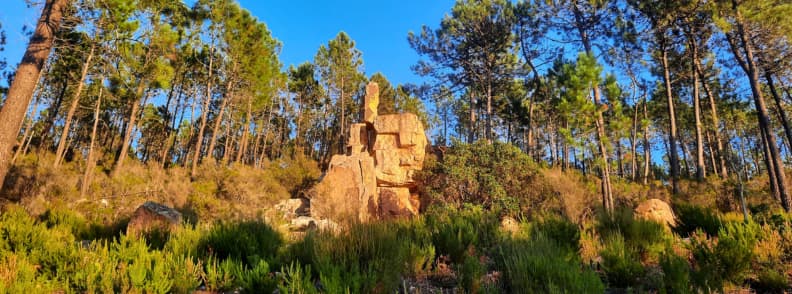
Hiking, cycling, autumn color, and photography
Autumn hiking on the Côte d’Azur gets easier once the fiercest summer heat has passed. In my experience, parking near trailheads also becomes much easier after summer. Rain is the only complication. A hard Mediterranean downpour turns tracks muddy quickly, sometimes for days afterward.
The best Côte d’Azur hiking trails in autumn depend heavily on altitude, exposure, and the month. Coastal routes are appealing deep into the season, while higher walks require colder-weather planning much earlier. French Riviera hiking in autumn also overlaps with hunting season, so pay attention to local signs and avoid assuming an empty-looking forest means nobody else is using it.
Cycling benefits from the same drop in temperature. The best cycling routes in the South of France in autumn are especially attractive in September and October, when exposed roads and climbs are less punishing than in midsummer. Shorter daylight becomes increasingly important later in the season, particularly for longer rides that stray inland.
The seasonal handover is obvious around the Préalpes d’Azur. Gorges du Loup canyoning and hiking in September are good destinations inside the active outdoor season. Official operators based around the Gorges du Loup list canyoning until 31 October in 2026, subject to weather, while the gorges themselves are also accessible on foot and by bike.
The Gorges du Verdon in autumn deserve a separate trip because they sit outside the core Riviera, between the Var and Alpes-de-Haute-Provence. Autumn is one of the best periods for hiking, with lower visitor pressure and more intense seasonal color than along much of the Mediterranean coast. Although some roads and mountain passes close according to weather and snow conditions, it’s worth coming to see autumn on the Blanc-Martel trail.
Photography changes with the season even where the vegetation barely does. The best photography spots on the French Riviera for fall light are often places that already photograph well in summer, except autumn gives them lower sun, earlier golden-hour timing, and fewer strangers wandering into the frame. The best sunset spots on the Côte d’Azur during autumn also become easier to fit around dinner once sunset stops happening absurdly late.
My photography spots on the French Riviera in autumn tend to be places with distinctive scenery: coastline, red rock, old French villages, open water, and higher viewpoints. Autumn light often reveals texture that midday summer sun flattens completely. A cloudy spell after rain also changes the color of stone, vegetation, and sea enough to make familiar places look noticeably different.
French Riviera fall foliage needs some expectation management. The coast remains heavily evergreen, and I don’t see a dramatic wall of red and gold around Fréjus, Saint-Raphaël, or much of the immediate Mediterranean strip. Riviera autumn colors are subtler, with changes in grasses, vineyards, deciduous pockets, and the general shift from baked late-summer vegetation toward cooler-season greens and browns.
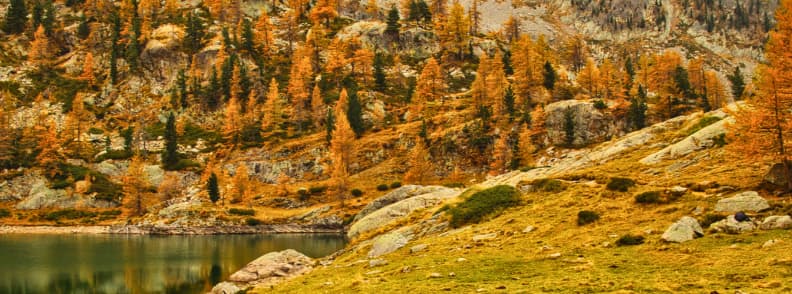
To see autumn colors near the Côte d’Azur, head inland and higher. Deciduous woodland becomes more frequent away from the coast, and altitude sharpens the seasonal change. The contrast becomes particularly visible in the southern Alps, where larches turn yellow-orange before losing their needles. Larch forests are a defining autumn feature of the high country.
To see autumn colours near Nice France, head to higher valleys and mountain country. The Côte d’Azur is unusually good for autumn photography precisely because the season changes so much over a relatively short distance from sea level to the Alps.
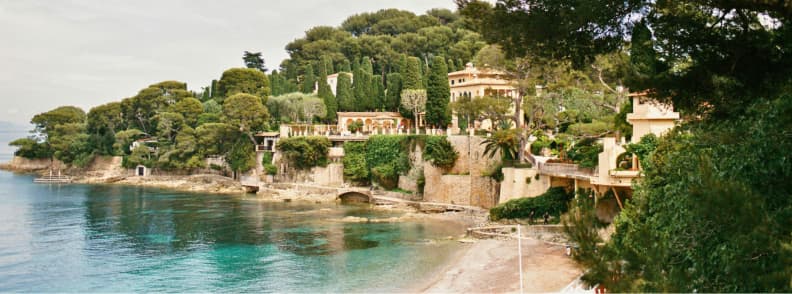
Estérel, Maures, and the coastal paths
Hiking in the Estérel massif in autumn is one of the clearest improvements the season brings. The red volcanic rock still catches the sun, the vegetation stays largely green, and the air is kinder once summer heat backs off. I’ve walked several routes around this side of the Var, including Cap Dramont and other trails farther inland, and autumn is when I’m happiest to return. Parking is easier too, which removes a surprisingly large amount of irritation before the walk has even started.
The official Estérel Côte d’Azur trail network includes walking, cycling, and mountain-bike routes around Cap Roux, Mont Vinaigre, and the wider massif. Massif de l’Estérel hiking trails range from short outings to longer climbs, so I’d choose by weather, daylight, and fitness level instead of picking whichever viewpoint has the most impressive photograph online.
Some of the best hiking trails in the Massif de l’Estérel in October lead toward Cap Roux and Mont Vinaigre. Cap Roux offers a high coastal panorama from the Sainte-Baume side, while Mont Vinaigre looks across toward the bays of Cannes and Saint-Tropez. The Mont Vinaigre route also spends much of its course under tree cover, useful on an unexpectedly warm autumn afternoon.
Hiking the Estérel from Fréjus is straightforward by car because the western entrances are close to town. I’d still leave enough time for the return before darkness falls, especially later in autumn. Mountain roads, forest tracks, and unfamiliar trail junctions become less entertaining once sunset has removed the scenery and left you with your draining phone battery.
Estérel hiking in autumn also avoids much of the uncertainty attached to high summer fire restrictions. In the Var, the prefecture publishes a daily forest-access map from mid-June until the end of September, regulating access, traffic, and parking according to wildfire risk. Estérel restrictions also extend into the western Alpes-Maritimes. October is beyond the daily summer system, although local closures, weather damage, and signed restrictions still take priority.
Cyclists win the same seasonal advantage. Estérel biking in autumn puts the climbs and exposed tracks into much friendlier temperatures, and the official trail database I mentioned a bit earlier lets riders filter routes by activity, duration and difficulty. Roc d’Azur in early October also means some parts of the area become unusually busy with mountain bikers, so quieter trailheads deserve extra appeal during event days.
Cap Dramont is where I’d send somebody who wants sea and Estérel rock without committing to a long inland hike. I’ve walked here myself, starting near the Saint-Raphaël coast, and the Cap Dramont route combines scenery with red cliffs, coves, the Île d’Or offshore, and open Mediterranean views within a relatively small outing. You have access by car, bus, and TER at Le Dramont, si it’s one of the easier Estérel outings without driving. It’s our favorite hike in the whole region.
Cap Dramont is also one of the best sunset photography spots around Cap Dramont in Saint-Raphaël, especially once autumn sunset is early enough to fit comfortably into the day. I prefer the lower light here to harsh summer midday sun because the red rock keeps its texture instead of turning into one bright slab. The practical warning is obvious but worth keeping: finishing photographs at sunset still leaves the low-light walk back afterward.
The Maures have a different character. The Massif de Maures is farther west in the Var and carries extensive cork-oak woodland and chestnut groves, which gives autumn easier to notice here than on the mostly evergreen Estérel coast. I specifically recommend the Massif des Maures for autumn walks during chestnut season.
A dry October trail and the same trail after a Mediterranean downpour are two different outings. Clay, loose stone, and forest tracks become slippery or muddy, while intense storms sometimes damage roads and paths. I’ve seen the aftermath of autumn storms locally, including fallen trees and broken roads, so I treat a severe-weather warnings as reasons to move the hike to another day.
The coastal paths farther east offer a useful alternative when a mountain hike seems excessive. The Cap d’Antibes coastal walk follows the Sentier de Tirepoil around the southern end of Cap d’Antibes, beginning near Plage de la Garoupe. The walk is 5-kilometer long and it takes about two hours, with stairs and rougher sections that call for good shoes.
A Cap d’Antibes autumn walk is pleasant once summer heat and beach traffic ease. The route is close to the water and has relatively little protection from weather, so I’d choose a dry, calm day. The Sentier de Tirepoil also gets closed during rain or strong wind.
This is also why the Cap d’Antibes coastal walk in fall belongs on a flexible itinerary. Wet stone and exposed coastal paths are a poor combination, and the official closure policy removes any ambiguity once conditions deteriorate.
The Cap d’Antibes coastal walk in autumn also pairs easily with Antibes itself. On a stable day, spend the morning on the cape and return to the Old Town afterward. If wind or rain closes the trail, Antibes still has museums, restaurants, and a town center nearby, which is an advantage over driving deep into a massif for a plan that suddenly falls apart.
Saint-Jean-Cap-Ferrat has another coastal option. The Cap Ferrat coastal trail circles the peninsula in several sections, including a 4.8 km route around the cape and shorter walks around Pointe Saint-Hospice and toward Beaulieu-sur-Mer. The full cape circuit has medium difficulty, but you should still wear proper walking shoes.
The Cap Ferrat coastal trail in fall has the same advantage I value elsewhere on the Riviera: fewer people sharing narrow paths and easier access when peak summer traffic fades. The full route passes limestone cliffs, coves, and the lighthouse, with views back toward Nice and, in clear conditions, toward the Massif de l’Estérel.
The weather caveat is serious here too. Swell or strong wind sometimes force temporary trail closures. The quieter coastal walks near Saint-Jean-Cap-Ferrat in fall are excellent precisely on calm days, while a rough sea is something to watch from somewhere farther back.
There is also a gentler option if the exposed cape route seems ambitious. Promenade Maurice Rouvier between Saint-Jean-Cap-Ferrat and Beaulieu-sur-Mer is about 1.3 km each way, paved, and without stairs. An off-season Sentier du Littoral walk doesn’t need to become a half-day expedition. Sometimes 20 minutes beside the sea before lunch is exactly what you need.
Mercantour and the best autumn color
If you want intense yellow-and-orange autumn colors, leave the Mediterranean coast and climb toward the southern Alps. The vegetation around Fréjus, Saint-Raphaël, and much of the immediate Côte d’Azur stays heavily evergreen. The Mercantour is different. Higher altitude, colder nights, and deciduous vegetation help autumn dress to impress.
The star is the European larch. Unlike most conifers, larches lose their needles in winter. The needles turn yellow-orange in autumn, and Mercantour National Park’s biodiversity records show autumn larch forests in the Roya, Fontanalba, and the Sanguinière valley near Entraunes. This is the well-known autumn color the coast largely lacks.
This difference is why autumn foliage hikes in Mercantour National Park deserve their own day trip or overnight stay instead of being treated as an extension of a beach itinerary. The park stretches through the Alpes-Maritimes and Alpes-de-Haute-Provence, across valleys including the Roya, Vésubie, Tinée, upper Var, and Cians. From Nice, the Alpes-Maritimes valleys generally require about 1 to 2 hours by car, depending on which valley you choose.
Mercantour fall foliage hikes also need tighter timing than a coastal walk. Color changes with elevation and weather, and the first snow sometimes arrives while the larches are still yellow. As part of its biodiversity records, the Mercantour National Park has photographed the Sanguinière larch forest in late October after the season’s first snowfall, which is a useful reminder that autumn and winter overlap quickly at altitude.
By late October and November, a blue sky on the Promenade des Anglais tells you remarkably little about ice, snow, or a damaged mountain path 1,500 meters higher. Check the park’s current trail-status page covering closures, diversions and seasonal restrictions, including some annual winter closures beginning 31 October.
Autumn also has an inland soundtrack. The deer rut in Provence and the southern Alps can be heard in the early part of the season through organized outings in and around Mercantour territory. In the Roya valley, the park has evening excursions devoted to listening for red deer during the rut, while the Gorges de Daluis reserve has planned guided outings on 2 and 3 October 2026.
Closer to Grasse, the Réserve des Monts d’Azur also treats autumn as deer-rut season and offers guided wildlife visits during this period.
Listen from a distance and use organized outings where appropriate. Autumn is breeding season, not an invitation to leave marked paths and chase wildlife with a phone.
Sailing, yachting, ferries, and islands in autumn
Autumn sailing on the French Riviera doesn’t stop when August ends. September remains firmly connected to the sea, October still has active marinas and boats on the water, and even November includes organized sailing. Saint-Tropez, for example, hosts Les Voiles d’Automne on 14 and 15 November 2026.
The French Riviera sailing season is longer than the beach-club season. What changes is the margin for improvisation. Days shorten, ferry schedules thin out, autumn weather becomes less settled, and a calm morning by the harbor says very little about conditions later offshore.
The French Riviera sailing season isn’t over in autumn. September is still close to summer in water temperature and daylight. October requires closer attention to forecasts. November belongs to experienced crews, organized sailing.. and people prepared for shorter days and changing conditions.
The best time to sail the French Riviera also depends on what you want from the coast. September appeals if warm weather and longer days rank high. October trades some of that warmth for quieter water traffic and less pressure ashore. Autumn boating on the French Riviera becomes increasingly dependent on the day’s forecast as Mediterranean weather systems grow more active.
That weather deserves respect. Le Marin, a southeasterly Mediterranean wind, occurs most often in spring and autumn and sometimes brings strong wind and heavy rain. Mediterranean episodes also occur primarily from September to mid-December, when warm, humid air over the sea contributes to intense rainfall.
I have sailed the Mediterranean in autumn in Greece, and I’ve also been aboard in Cyprus, but I haven’t sailed the Côte d’Azur itself during autumn. My experience has taught me something useful, though: Mediterranean sailing in autumn changes with local winds, swell, coastline, and weather systems. For the French Riviera I’d trust the current marine forecast and harbor information over assumptions carried over from elsewhere in the Med.
Autumn yachting on the Côte d’Azur also remains visible from land. Marinas stay active, major sailing events extend into the season, and waterfront towns keep their maritime character after swimmers and beach clubs thin out. You don’t need to charter a boat to notice that September and early October are still enjoyed by sailors in the area.
Ferries require more care. Autumn service often continues, but ferry frequency drops and some routes become event-specific or seasonal. Les Bateaux Verts, for example, publishes special Saint-Tropez services around Les Voiles de Saint-Tropez and the October Grande Braderie. Porquerolles has regular crossings from La Tour Fondue in autumn, although the 2026 timetable reduces departures as the season advances and allows cancellations during poor weather.
This makes island days perfectly realistic in autumn, as long as you check the return boat before committing to the outing. Summer makes frequent departures easy to take for granted, but autumn is less forgiving of somebody arriving at the quay at 6:30 pm with the confidence of an August timetable and the unfortunate discovery that the last boat has already left.
Cannes Yachting Festival, Régates Royales, and Les Voiles de Saint-Tropez
Autumn starts with an impressive amount of expensive hardware floating off Cannes and Saint-Tropez. The Cannes Yachting Festival, Régates Royales, and Les Voiles de Saint-Tropez occupy successive September weekends, with Les Voiles spilling into October. They attract quite different fleets and visitors, so I wouldn’t consider them interchangeable yacht events.
| Event | 2026 dates | Where | Useful visitor detail |
|---|---|---|---|
| Cannes Yachting Festival | 8-13 September | Vieux Port and Port Canto, Cannes | Ticketed event, free boat shuttles link both ports |
| Régates Royales | 19-26 September | Bay and Vieux Port of Cannes | Public sporting event, 150+ classic yachts expected |
| Monaco Yacht Show | 23-26 September | Port Hercule, Monaco | Monaco is a separate country, public dockside access starts 24 September |
| Les Voiles de Saint-Tropez | 26 September to 4 October | Port and Gulf of Saint-Tropez | Village entry is free, races begin 28 September |
The Cannes boat show is the commercial heavyweight. In 2026, the festival lists over 710 boats and yachts and over 680 exhibitors across Vieux Port and Port Canto. Motor yachts dominate Vieux Port, while Port Canto has sailing yachts, brokerage yachts, smaller motorboats, and water toys. Visitors with valid tickets use free shuttle boats between the two ports.
I’ve attended before, and my main Cannes Yachting Festival tips are less glamorous than the boats. Don’t assume you’ll park beside the Croisette because September has fewer tourists. We eventually drove uphill away from the waterfront and found a street space. Once inside, the sea shuttle between the ports was excellent and saved us from attempting the same parking experiment twice.
The 2026 festival takes place from 10 am to 7 pm from Tuesday to Thursday, until 10 pm on Friday, 7 pm on Saturday and 6 pm on Sunday. Boat access also deserves a small reality check. Many yachts accept visitors aboard, but each exhibitor decides who enters, and sea trials require arrangements with exhibitors. Buying a ticket gets you into the show, not automatic permission to wander through every yacht.
A week later, the emphasis changes completely. Régates Royales Cannes brings over 150 classic sailing yachts into the Bay of Cannes from 19 to 26 September 2026. This is the 48th edition, with designs associated with names such as William Fife III, Nathanael Herreshoff, and William Gardner among the expected fleet.
Cannes Régates Royales spectator tips: Keep 19 to 26 September free if classic yachts interest you, and book accommodation in central Cannes. The Vieux Port is below Le Suquet, beside the Pantiero and close to Cannes station, so the event is easier to pair with a day in town than a sailing event held somewhere outside an urban center.
The Monaco Yacht Show in September overlaps with the end of Régates Royales. It takes place at Port Hercule from 23 to 26 September 2026. This event leans heavily toward superyachts, with over 120 superyachts and 60 luxury tenders. Ordinary visitor access to the Dockside Area starts on Thursday, 24 September. Wednesday is restricted to invited and higher-tier pass holders.
A French Riviera boat show in October would be Les Voiles. Les Voiles de Saint-Tropez 2026 is scheduled from 26 September to 4 October, bringing classic boats, modern racers and maxis onto the same stretch of water. There are 250 boats for the event, with racing beginning on 28 September. This is the Saint-Tropez regatta in October I’d build a sailing-focused trip around, especially if watching boats interests you as much as standing aboard them.
Attending Les Voiles de Saint-Tropez as a spectator doesn’t require access to a yacht or an invitation to somebody’s very expensive deck. Le Village des Voiles is free to enter and opens from 9 am to 9 pm from 26 September to 3 October, then closes at 5 pm on 4 October. Exhibitor stands and public entertainment are available throughout the event.
What to expect at Voiles de Saint-Tropez? Modern yachts generally start racing from 11 am near Portalet, while maxis start around noon off Pampelonne. Classic yachts join from 29 September. 1 October brings the Club 55 Cup, the Centenary Trophy, challenge races, and the crew parade through the port. Some prize ceremonies and evening events remain invitation-only.
Voiles de Saint-Tropez regatta visitor guide: The port gives you close access to the boats, crews, and shore-side atmosphere, but the racing happens offshore. I’d check the official daily race program before deciding where to spend the middle of the day, then return to the village later when the crews and boats come back into Saint-Tropez.
The program also explains why Voiles de Saint-Tropez is interesting even if sailing terminology leaves you unmoved. On 30 September, there’s pétanque at Place des Lices. 1 October brings the children’s parade and crew parade. Live music shows are planned on most evenings in the Village des Voiles. The event occupies the town, not only the port.
I would plan road access carefully. During the event, arriving early and checking current traffic before setting out is worth the effort. Saint-Tropez in late September is technically shoulder season, but several hundred racing yachts have clearly failed to receive that memo.
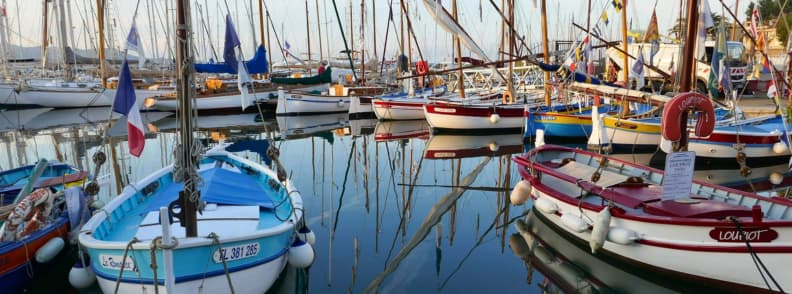
Marinas, charters, ferries, wind, swell, and autumn safety
Autumn doesn’t empty the marinas. The rhythm changes, and the boats that remain become easier to notice once summer traffic thins out. Saint-Tropez even switches to its official low-season berth package from 15 October to 1 April. Cannes keeps marina offices staffed through the cooler months too, although opening hours shorten.
The important change happens offshore. French Riviera sailing conditions in September and October demand increasing attention to wind, swell, and the marine forecast as autumn advances. Météo-France divides the Côte d’Azur into dedicated coastal marine forecast zones, including including Port-Camargue to Saint-Raphaël and Saint-Raphaël to Menton, with wind, gusts, swell and sea-state forecasts.
While September still has relatively long days and warm water, October takes away daylight surprisingly quickly and autumn weather becomes less forgiving of casual planning. Le Marin, a moist southeasterly wind affecting the Mediterranean coast, occurs particularly often in spring and autumn and sometimes arrives strong, with heavy rain. Mediterranean rain episodes also concentrate between September and mid-December.
Booking a French Riviera sailing charter in fall is still a realistic option, particularly in October.
Chartering a catamaran on the French Riviera in October is also a genuine autumn possibility. Availability still needs checking for your exact dates, and I would pay much closer attention to cancellation terms and bad-weather alternatives than I would in high summer.
A French Riviera sailing charter in October also benefits from lower seasonal pressure after the major September yacht events, although Les Voiles de Saint-Tropez keeps the Gulf busy until 4 October 2026.
Private yacht charters in the Gulf of Saint-Tropez in October remain available through operators serving the autumn season. Current 2026 charter listings include Saint-Tropez catamarans in October, with some weekly rates dropping after the Les Voiles period. I would still compare the charter contract, skipper requirements, included fuel, and the weather policy before getting distracted by photographs of teak decks.
Ferries are where autumn timetables become particularly easy to misread. An operator might still be running while the specific route you wanted has already dropped to selected days. Les Bateaux Verts, for example, publishes special October services around Les Voiles and the Saint-Tropez Grande Braderie, which is a good reminder to check the date as carefully as the destination.
The Lérins Islands off-season are refreshingly straightforward from Cannes. Trans Côte d’Azur lists the Cannes to Sainte-Marguerite crossing every day throughout 2026, with the trip taking about 15 minutes and several departures spread across the day. The first 7:30 am sailing has a winter Sunday exception, but the island connection continues year-round.
Visiting the Lérins Islands from Cannes during off-peak months is one of the easiest autumn island days on the French Riviera. Sainte-Marguerite welcomes you with forest paths, coves, and Fort Royal, while the Musée du Masque de Fer et du Fort Royal is open from Octobert to March from Tuesday to Sunday, apart from listed holiday closures.
The seasonal change becomes clearer if you leave from Nice. Direct Nice to Sainte-Marguerite crossings are available only on selected days from 1 to 20 October in 2026, while Cannes maintains its daily link. In autumn, your departure port starts deciding how easy would an island day be.
Porquerolles maintains a regular public ferry from La Tour Fondue well into autumn and winter. Between 21 September and 1 November 2026, you have several daily departures, followed by a reduced winter timetable from 2 November. Poor weather or technical problems sometimes lead to schedule changes or cancellations, though.
Port-Cros has a sharper seasonal reduction. From 28 September to 1 November 2026, you have a 9 am departure and 4:30 pm return, with no crossings on Tuesdays or Thursdays. This lets you plan an easy island day, but leaves very little room for creative timekeeping.
Non-sailors still have plenty to take from the maritime side of autumn. The sea affects ferry schedules, island access, coastal walks, beach conditions, and even which side of a cape makes sense for lunch. Watching the marine forecast is useful before a Sainte-Marguerite outing or exposed Sentier du Littoral walk, even if the closest you intend to come to helming anything is choosing a seat on the ferry.
The Travel Bunny’s boating tip: Check the marine forecast first, the outbound boat second, and the return timetable third. In summer, frequent departures forgive a slow lunch. In late October, the boat you miss has a much greater chance of being the one you were supposed to be on.
Autumn events calendar on the Côte d’Azur
Autumn is quieter on the French Riviera, but it isn’t empty. This French Riviera autumn festivals and events calendar shows you why September and October still create sudden bursts of traffic, full hotels, and very busy waterfronts. One week, the coast looks pleasantly civilized again, and the next, several hundred yachts or thousands of mountain bikes arrive and everybody remembers where the parking problem went.
The highest concentration of autumn festivals on the Côte d’Azur falls between early September and late October. September leans toward sailing and large outdoor events, October shifts toward cycling, village celebrations, and harvest-season gatherings, while November brings fewer major dates but still has the Nice-Cannes Marathon.
| Date | Event | Location | Why it is worth knowing |
|---|---|---|---|
| 4-6 September | YOG.A Festival | Saint-Tropez | Three-day wellness event during the first quieter stretch after August. |
| 8-13 September | Cannes Yachting Festival | Cannes | Over 700 boats, around 680 exhibitors and major activity around Vieux Port and Port Canto. Expect pressure on central accommodation and parking. |
| 11-13 September | Festival de Quatuors à Cordes en Pays de Fayence | Pays de Fayence | One of the canton’s principal cultural festivals, useful for adding an inland evening to a western Riviera stay. |
| 11 September – 4 October | Festival d’Art Sacré | Antibes | Concerts take place in the cathedral and historic chapels around Antibes, including performances through early October. |
| 12-13 September | IRONMAN 70.3 World Championship | Nice | Major international triathlon weekend. Check road restrictions and waterfront access before arrival. |
| 12-13 September | Saint-Jean-Cap-Ferrat Prestige | Saint-Jean-Cap-Ferrat | Concours and classic-vehicle event on the peninsula. |
| 16-20 September | Les Voiles Maralpines | Villefranche-sur-Mer | Traditional sailing gathering in the bay immediately east of Nice. |
| 17-20 September | Longines League of Nations | Gassin, Gulf of Saint-Tropez | International equestrian competition during an already busy month around Saint-Tropez. |
| 18-20 September | Festival International de l’Air | Fréjus | Free kite and aerial-sports festival at Base Nature François Léotard. I’ve attended before and treat this as a proper half-day family outing, preferably with a picnic. |
| 19-20 September | Journées Européennes du Patrimoine | Across the Côte d’Azur | Museums, historic buildings and normally restricted sites open for special visits and programmes. |
| 19-26 September | Régates Royales | Cannes | Over 150 classic yachts are expected in the Bay of Cannes during the 48th edition. |
| 21-27 September | Saint-Tropez Open ATP 125 | Saint-Tropez | Professional tennis adds another major date to the late-September calendar. |
| 23-26 September | Monaco Yacht Show | Monaco | Port Hercule fills with over 120 superyachts and 60 luxury tenders. General visitor access to the Dockside Area begins on 24 September. |
| 24-27 September | Nice Côte d’Azur by UTMB | Nice and the Alpes-Maritimes | Major trail-running event linking the Mediterranean with mountain terrain. |
| 26 September – 4 October | Les Voiles de Saint-Tropez | Saint-Tropez | Around 250 racing yachts plus the public Village des Voiles. Saint-Tropez is anything but quiet during these dates. |
| 26 September – 4 October | Festival International de la Photographie Surréaliste et Créative | Fréjus | Free international photography festival at Villa Aurélienne, with exhibitions, workshops and talks. |
| 27 September | Natura Trail en Pays de Fayence | Saint-Paul-en-Forêt and surrounding countryside | Routes cross Lac de Méaulx, Castel Diaou, the Blavet area and neighbouring communes. |
| 1 October – 1 November | Automne à Théoule | Théoule-sur-Mer | A month of mushroom-focused tasting menus at participating restaurants. One of the best French Riviera food festivals for a restaurant-led autumn trip. |
| 2-4 October | Spartan Race Estérel Côte d’Azur | Saint-Raphaël | Obstacle races centred around Plage du Débarquement and the Estérel side of Saint-Raphaël. |
| 2-4 October | Festival du Livre de Mouans-Sartoux | Mouans-Sartoux | The 39th edition brings authors, talk, and literary events to Mouans-Sartoux. |
| 2-9 October | Un Festival C’est Trop Court! | Nice | European short-film festival spread across venues in Nice. |
| 4 October | Transhumance de Roubion | Roubion | Traditional movement of livestock from mountain pastures, useful for an inland autumn day north of Nice. |
| 6-11 October | Les Ailes de Saint-Tropez | Saint-Tropez | International foil event bringing around 300 competitors to the gulf in recent editions. |
| 7-11 October | Roc d’Azur CIC | Fréjus and surrounding massifs | One of the largest cycling weeks of the year around Base Nature. Normal October assumptions about traffic and parking should be temporarily discarded. |
| 9-11 October | EVO France | Nice | Major fighting-game competition among Nice Côte d’Azur’s headline autumn events. |
| 9-11 October | Paradis Porsche | Saint-Tropez | Porsche gathering and motoring event during another unusually busy October weekend for Saint-Tropez. |
| 11, 18, and 25 October | Fête de la Châtaigne et du Terroir | Collobrières | Three major chestnut Sundays in the Massif des Maures. |
| 12-15 October | MIPCOM | Cannes | International television and media market at the Palais des Festivals. Travellers should know the dates before pricing Cannes accommodation. |
| 12-17 October | Cape 31 Regatta | Saint-Tropez | Another sailing competition following Les Voiles and Les Ailes. |
| 16-18 October | Vignobles en Scène | Multiple Var wine destinations | Vineyard walks, tastings, cellar events, and food-and-wine activities. Individual experiences require separate reservations. |
| 18 October | Fête des Vendanges et des Châtaignes | Saint-Paul-de-Vence | Winemakers from the Pays Vençois join local producers and artisans on Place de Gaulle. |
| 18 October | Fête de la Châtaigne | Tanneron | Chestnut market and autumn celebration in the Pays de Fayence. |
| 18 and 25 October, 1 November | Fête de la Châtaigne | La Garde-Freinet | Three chestnut Sundays, with local products, grilled chestnuts and entertainment. |
| 18 October | Saint-Tropez Classic | Saint-Tropez | Road-running event through and around the town. |
| 23-25 October | Grande Braderie de Saint-Tropez | Saint-Tropez | Tens of thousands of visitors arrive for three days of end-of-season shopping. I would plan road access with the same suspicion I reserve for midsummer. |
| 24-25 October | Terravini | Nice | Wine and gastronomy fair at Palais Nikaïa. |
| 25 October | Fête des Châtaignes | Valdeblore | Regional produce, artisans, traditional meal, roasted chestnuts and vin chaud at La Bolline. |
| 25 October | Fête du Coing | Cotignac | Quince takes over Cotignac with a craft market, food and village entertainment. |
| 26-31 October | Terreur aux Arènes | Fréjus | Halloween programme inside the Roman amphitheatre, with separate daytime family and evening adult routes. |
| 30 October | Fréjus Fête Halloween | Fréjus historic centre | Free Halloween celebration around Place Clemenceau and Place Formigé. |
| 31 October – 1 November | Dark Arena Festival | Fréjus | Night-time Halloween music and performance event inside the Arènes de Fréjus. |
| 31 October – 1 November | National de Pétanque | Saint-Tropez | National pétanque competition closes the month in town. |
| 3-4 November | MAPIC | Cannes | Major international commercial-property congress at the Palais des Festivals. Check these dates before assuming November Cannes accommodation will be cheap. |
| 8 November | Marathon des Alpes-Maritimes Nice-Cannes | Nice to Cannes | The 42.195 km coastal marathon starts on the Promenade des Anglais and finishes on the Croisette. |
| 14-15 November | Les Voiles d’Automne | Saint-Tropez | Autumn regatta showing that Saint-Tropez sailing continues well beyond Les Voiles in early October. |
| 15 November | Fête de la Châtaigne | Cagnes-sur-Mer | Large free town-centre celebration with chestnuts, vin chaud, traditional crafts, family activities and daube-polenta menus. |
| 21-27 November | Ciné-Festival en Pays de Fayence | Montauroux | The 24th edition brings a full week of cinema to the canton. |
| 21 November – 6 December | Festival de Danse Cannes Côte d’Azur | Cannes and partner venues | The 26th edition brings 25 companies from 11 countries to the late-autumn cultural calendar. |
| From 28 November | Foire aux Santons et Gourmandises | Callian | Traditional santon and food fair inside the medieval Chapelle des Pénitents, marking the transition from late autumn towards Christmas events. |
This calendar also shows why French Riviera festivals in October deserve checking before booking accommodation. Saint-Tropez begins the month with Les Voiles, Fréjus fills again for Roc d’Azur, and Collobrières draws visitors on three successive Sundays. Autumn prices are often kinder than July and August, but event weekends are not considered shoulder season.
The French Riviera food festivals are smaller in scale than the yacht shows and sporting events, yet they often reveal more about local autumn life. Collobrières is one of the clearest example, with its chestnut celebrations tied directly to the harvest and the Massif des Maures. I recommend arriving before 09 am and leaving before 3 pm to make traffic easier. That’s how popular these supposedly quiet autumn Sundays become.
Check exact event dates before choosing your base. A town that seems ideal for a calm October weekend might be hosting several thousand cyclists, a regatta or a harvest fête on the dates you picked.

Roc d’Azur, Festival International de l’Air, and Nice-Cannes Marathon
Fréjus gets two very different crowds within a few weeks. Roc d’Azur Fréjus is from 7 to 11 October 2026, with Base Nature François Léotard as its main hub. The event has grown from seven mountain bikers at its first edition in 1984 to over 20,000 amateur and professional participants across today’s program.
The racing spreads well beyond Base Nature. The headline Roc d’Azur CIC course on Sunday covers 55 km with 1,275 meters of climbing through the Massif des Maures, while other days include shorter cross-country races, e-bike routes, gravel and recreational rides. Even as a spectator, check the day’s program before leaving home because the start waves, disciplines, and routes change throughout the five days.
Spectator guide for Roc d’Azur mountain biking in Fréjus: I recommend arriving by bicycle if you’re staying near Base Nature to avoid the inevitable delays when leaving the parking area. Saint-Raphaël train station is about 5 km from the event site.
September brings a less earthbound event to the same venue. The Festival International de l’Air takes place from 18 to 20 September 2026, from 10 am to 6 pm each day, also at Base Nature François Léotard. Entry is free, and the official program centers on kites, aerial choreography, flying demonstrations, and related activities.
I’ve been before and plan to return this year. The Base Nature is large enough to spread the crowd out, but parking still takes some patience. Last time, we found a space toward the train-station side. There is also the main Base Nature parking plus an additional event parking area farther inside the site during the festival.
This year I’m bringing a picnic. We noticed plenty of families doing exactly this during our previous visit, and it made obvious sense once we were there. Food and drink stands are available on site, but Base Nature has lots of open space to make a picnic easy. With children, I’d arrive early, bring something to sit on, and plan to stay for several hours instead of treating the festival as a quick stop.
November shifts the spectacle east and puts everyone back on the ground. The Marathon Nice-Cannes date for 2026 is Sunday, 8 November. The 42.195 km race starts at 08:00 on the Promenade des Anglais in Nice and finishes on Boulevard de la Croisette in Cannes, about 300 meters from the Palais des Festivals. The individual Marathon des Alpes Maritimes is already sold out.
The route also makes this an unusually easy race to understand as a spectator. You don’t need to chase runners along the entire coast. Pick one town or one end of the course and stay there. Nice has the mass start on the Promenade des Anglais, while Cannes hosts the finish on the Croisette. Antibes is roughly halfway along the 2 x 21.1 km version of the course, which divides at the half-marathon point there.
Driving along the race corridor on marathon morning is the option I’d approach with the most suspicion. The course occupies the coastal route between Nice and Cannes, so access changes around the event are inevitable. If the marathon is part of your day, choose your viewing point first and check the final traffic restrictions shortly before 8 November. If it isn’t part of your day, knowing the date is equally useful. A peaceful Sunday drive along the coast and 42.195 km of organized running have competing priorities.
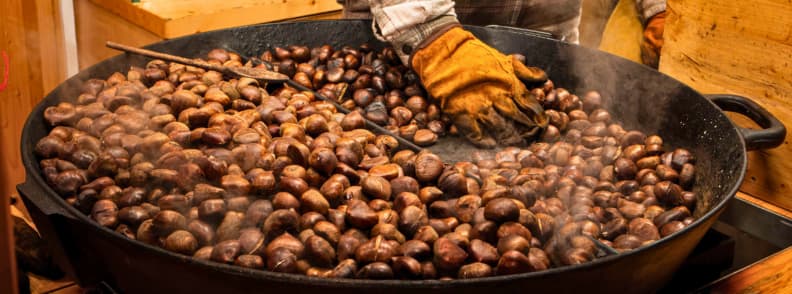
Chestnut fairs, wine season, and local fêtes
Autumn food events are best once you leave the waterfront and start following harvests. I like village fêtes for a simple reason. I want to eat what local producers brought, buy something to take home, and see the village doing something residents care about. The chestnut fairs of the Var fit autumn especially well because the crop belongs to the Massif des Maures, where chestnut groves have long shaped local agriculture.
The Collobrières chestnut festival is the heavyweight. Officially called Fêtes de la Châtaigne et du terroir, the 2026 celebration fills three Sundays, 11, 18, and 25 October, from 9 am to 6 pm. Collobrières is in the Massif des Maures and promotes itself as the chestnut capital of the Var during harvest season. Entry to the festival is free.
Each Sunday has a different emphasis. 11 October focuses on Var producers and local food, 18 October brings international delegations and traditional groups, and 25 October turns toward artisans and demonstrations of old trades. A chestnut festival in Provence is better when the chestnuts come from the surrounding hills, which is why I’d choose Collobrières over a generic autumn food market if the crop itself interests you.
Collobrières Fête de la Châtaigne and guide: Free guided visits of the town during October, while visits to the Châtaigneraie Godissard are scheduled at 10:30 am and 3 pm on the three festival Sundays. Strollers and dogs are discouraged because of the crowds. I also recommend carrying cash because Collobrières has only one ATM.
Collobrières isn’t the Var’s only option. La Garde-Freinet also holds chestnut fairs on 18 and 25 October and 8 November 2026, with chestnuts, local products, and grilled marrons. Tanneron has its Fête de la Châtaigne on 18 October, while Rayol-Canadel-sur-Mer schedules a Castagnade for 28 October.
The best chestnut festivals near Nice in autumn include options much closer to Nice than Collobrières. You have the the Fête des Vendanges et des Châtaignes in Saint-Paul-de-Vence on 18 October, the Valdeblore chestnut festival on 25 October, and Cagnes-sur-Mer’s Fête de la Châtaigne on 15 November 2026. Cagnes adds a local-produce market, roasted chestnuts, vin chaud, traditional trades, and a daube-polenta menu in participating restaurants.
Nice itself needs a date check. A chestnut festival in Vieux Nice has clear precedent. The City of Nice held a Fête de la Châtaigne on 22 November 2025 at the Maison de l’Artisanat et du Goût de Nice, in the Nice Historique area, with roasted chestnuts, local produce, polenta, and family activities. For now, there isn’t a confirmed 2026 date on the city’s official agenda, so I wouldn’t build an October trip around the Nice Castagnada yet.
Wine season starts earlier. Nice’s Bellet vineyards are on the hills west of the center, and the 2026 Vignobles de Bellet shuttle works until 26 September. The route serves seven estates, including Château de Bellet, Domaine de la Source, Château de Crémat, and Clos Saint-Vincent, with some estate visits requiring reservations. September is the easiest autumn month to visit Bellet without driving. October still allows vineyard visits after the seasonal shuttle stops.
Nice has held Fête des Vendanges celebrations at Saint-Roman de Bellet in previous years, but the city’s current 2026 agenda doesn’t provide a confirmed autumn edition for the Nice wine harvest festival. However, Nice has other food-and-terroir events, including its free Festins des Territoires from 4 September to 9 October and the Sant-Bertoumiéu agricultural fête on 5 September, with local growers, winemakers, and food producers.
The famous Mougins food festival in autumn, Les Étoiles de Mougins, is a genuine international gastronomy festival born in 2006 and now held every two years. The organizer’s official website still displays the 14 and 15 September 2024 edition and confirms the biennial schedule, but no 2026 dates appear yet.
Around the Pays de Fayence, I see the social calendar change differently. Late August and early September still bring local fêtes, concerts, and end-of-season gatherings, while later autumn becomes quieter and food turns heavier. This is when raclette and fondue return at home, mushrooms and game appear through family and local cooking, and village markets shrink without disappearing. Autumn here tastes less like a themed festival calendar and more like the season arriving at the table.
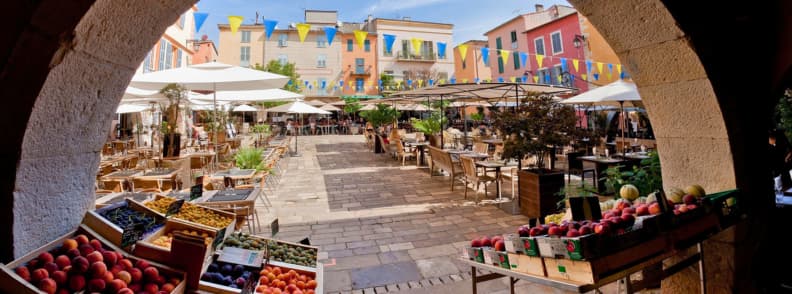
Autumn food, wine, markets, and harvests
Autumn changes what I buy and eat around the French Riviera long before the coast turns cold. September still gives us grapes and figs. October brings chestnuts, mushrooms, squash, walnuts, and quince into greater prominence. By late November, olives belong to the seasonal picture too. The local food calendar makes the change of season more visible than the vegetation along much of the Mediterranean coast.
Figs are one of September’s best local markers in the Var. The protected Figue de Solliès AOP comes from the Solliès basin and uses the Bourjassotte noire variety. Its official specification allows harvesting from 15 August to 15 November, although annual opening and closing dates depend on ripeness. This long harvest explains why figs still belong naturally on early-autumn market stalls even though Solliès-Pont holds its main fig festival at the end of August.
Chestnuts arrive later and pull the food map toward the Massif des Maures. Collobrières gets most of the attention, deservedly, but chestnuts also appear in village fêtes, markets, and restaurant dishes elsewhere in the Var. October is the best month for finding them locally, especially once the three Collobrières festival Sundays begin.
Mushrooms are where I become much less adventurous than the season might encourage. My brother-in-law hunts mushrooms and game and cooks with both, so wild food is part of autumn family meals for us. Provençal wild mushrooms in autumn still require proper identification and local knowledge, something I leave to people who really know what they’re doing.
Restaurants offer a safer route. You’ll find cèpes among the seasonal ingredients, alongside game dishes such as pheasant and wild boar. Eating wild cèpes mushrooms on the French Riviera in fall still deserves one extra check with the restaurant about origin. A menu mentioning cèpes doesn’t prove the mushrooms were gathered locally or in the wild.
Théoule-sur-Mer takes the seasonal idea considerably further. From 1 October to 1 November 2026, Automne à Théoule puts mushrooms at the center of participating restaurant menus, with five-course mushroom tasting menus alongside regular cards. The best restaurants on the French Riviera for an autumn menu are easier to identify through current seasonal dishes like these than through a generic year-round restaurant list.
The wine calendar starts earlier. The Provence wine harvest begins from the second half of August in the earliest coastal vineyards and continues into early autumn, reaching October in later areas. This spread is important because harvest season doesn’t mean every Provençal vineyard picks grapes during the same September week.
The French Riviera wine harvest also crosses several wine territories. Around the Var, Côtes de Provence dominates much of the vineyard country I pass between the coast and inland villages. Near Nice, Bellet forms a separate AOP on the hills west of the city. The Bellet wine harvest follows each estate’s grapes and vintage conditions.
Any French Riviera wine harvest experience to book needs current confirmation from the producer. A normal tasting, cellar visit or vineyard tour doesn’t automatically include picking grapes or entering active harvest areas. During vendanges, a working vineyard is busy producing wine, which is a useful fact to remember before assuming everybody has been waiting for visitors to arrive with a basket.
September gives no-car visitors a particularly easy Bellet option. Nice’s Vignobles de Bellet shuttle runs in September, serving seven estates including Château de Bellet, Domaine de la Source, Domaine de Vinceline, Château de Crémat and Clos Saint-Vincent. A return trip costs €3.40 on the Lignes d’Azur network, and some estate activities require reservations.
Domaine de la Source gives a particularly useful example of organic Bellet wine tasting in Nice. The estate offers guided vineyard and cellar visits, plus tastings of white, rosé and red AOP Bellet wines. Its tasting options also include AOC Nice olive oil, olive paste and olive jam.
An organic Bellet PDO wine-tasting tour in Nice this autumn is also available through Domaine de Vinceline, an organic producer. Its 2026 visitor offer includes estate visits with tastings from €10 and a 4×4 tour of the Bellet appellation followed by a tasting from €35.
The best wine-tasting tours in Provence and on the Côte d’Azur in autumn are the ones whose cooler-season hours have already been published. Château Roubine, an organic AOP Côtes de Provence estate near Lorgues, stays open Monday through Saturday from 10 am to 65 pm from October to May, with cellar visits and tastings starting at €25.
Provence wine tours in October also include structured events beyond individual estates. La Maison des Vins Côtes de Provence at Les Arcs-sur-Argens has a tasting workshop on 10 October 2026 from 110 am to 1 pm, priced at €55 and covering six Côtes de Provence wines. The third weekend of October also brings Vignobles en Scène activities across labeled wine destinations in the Var, including tastings, vineyard walks, and food-and-wine pairings.
Markets become smaller after the summer season in my part of the Var, but I prefer them that way. I regularly go to markets around the Pays de Fayence and nearby Provence towns, and autumn strips away some of the summer crowd without removing the ordinary shopping side. Local food markets on the French Riviera in fall are best when you approach them as actual markets first and sightseeing second.
Nice has a useful year-round counterexample to seasonal resort markets. The fruit, vegetable, and fish market on Cours Saleya is from Tuesday to Sunday from 6 am to 1:30 p, with produce and local goods from the Nice hinterland. Côte d’Azur food markets in autumn therefore don’t disappear with the summer night markets. The timetable just switches back toward normal morning shopping.
Olives belong later in the season. At L’Olive du Verger in Hyères, olives destined for its mature-style oil are harvested around the third week of November. The producer sells its oil directly and also attends the Saturday morning Hyères market. Farther inland at Aups, olive harvesting and oil production traditionally begin around mid-November and continue into winter.
This means autumn olive shopping is partly about products from the previous pressing and partly about watching the new harvest begin. Olive oil, tapenade, olive paste, and table olives are better souvenirs than most objects bearing the word Provence in decorative lettering. They also have the advantage of eventually leaving your kitchen cupboard.
Restaurant schedules deserve almost as much attention as restaurant menus. Beach restaurants begin closing, inland restaurants reduce evening service, and sunny lunch terraces stay busy on good days. In my area, some restaurants resume local delivery after the summer season, which is one of those tiny changes visitors rarely notice and residents adore immediately.
Seasonal menus also become heavier as temperatures drop. Menus start featuring daube provençale, duck, chestnut desserts, and local Côtes de Provence wines as the weather cools. At home, this is also when raclette and fondue reappear. The Mediterranean diet gets exceptionally forgotten.
Michelin-star dining deals on the French Riviera in the off-season won’t appear simply because hotel rates have dropped. Michelin recognition and restaurant pricing are separate things, and autumn opening days vary by establishment.
Autumn is excellent for eating on the French Riviera because the ingredients change, not because every restaurant becomes cheaper or every vineyard turns into a harvest attraction. Buy figs while they’re ripe, chestnuts when the Maures are celebrating them, mushrooms from people who know what they have, olive products from actual producers, and wine from estates whose current autumn visitor hours you checked before leaving.
A 7-day Côte d’Azur autumn itinerary with coast plus Var hinterland
The best French Riviera autumn itinerary shouldn’t spend seven days zigzagging between Monaco and Saint-Tropez. The French Riviera is long, the coastal roads slow down quickly around towns, and autumn daylight becomes noticeably shorter as October advances. I’d divide the week geographically, moving east to west, spending the final days in the Var.
This route also reflects how I travel here myself. I use a car, especially once I leave the main coastal towns. Nice, Antibes, and Cannes have useful rail links, but the Estérel Massif and Pays de Fayence are easier with your own vehicle. A French Riviera itinerary for autumn can be amazing once you stop thinking of every famous name on the map as a compulsory day excursion.
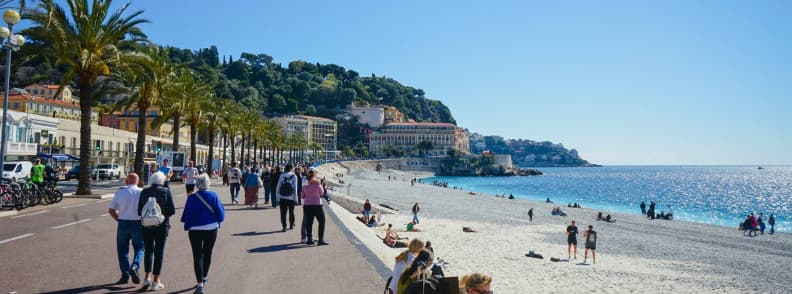
Day 1. Visit Nice. Just Nice
Start in Nice, especially if you’re flying into Nice Côte d’Azur Airport. Spend the first day visiting the city itself. Walk the Promenade des Anglais, Vieux Nice, Cours Saleya, and the port, then keep a museum in reserve in case rain arrives. The tourism office’s Nice one day itinerary is designed largely on foot, which is a good indication that a car adds little to a day visiting Nice’s center.
September still ok for a swim after sightseeing. For October, I’d pack swimwear and decide after seeing/touching the sea. November shifts the balance toward walking, food, and museums. Nice earns its spot at the beginning of your Côte d’Azur week because bad weather doesn’t ruin the entire day.
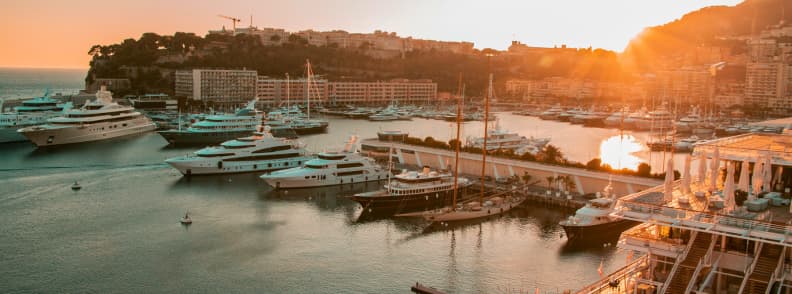
Day 2. Èze, Monaco, and the Corniches
The best day trips from Nice in autumn include the eastern coastline because several major stops are within the same geographical corridor. I’d choose Èze and Monaco for one day, with Menton added only if you start the day early and genuinely want an extra stop. Otherwise, a visit to Menton deserves its own day on a longer trip.
Driving gives you access to the Trois Corniches between Nice and the eastern French Riviera. The Basse, Moyenne, and Grande Corniche are at different elevations, with the Grande Corniche opening broad views toward Villefranche-sur-Mer, Saint-Jean-Cap-Ferrat, and Monaco. Check out a dedicated Corniche circuit for this route.
Among the best scenic drives along the Corniche roads in fall, I’d choose the altitude according to weather. A clear day is more rewarding on the higher roads. Low clouds make some grand viewpoints less impressive, at which point the Basse Corniche beside the sea is the best choice.
A Monaco-to-Nice coastal drive in autumn makes a good return leg if you spent the middle of the day in Monaco. Take your time and stop where parking and visibility are on your side. I wouldn’t try covering all three Corniches in one day.
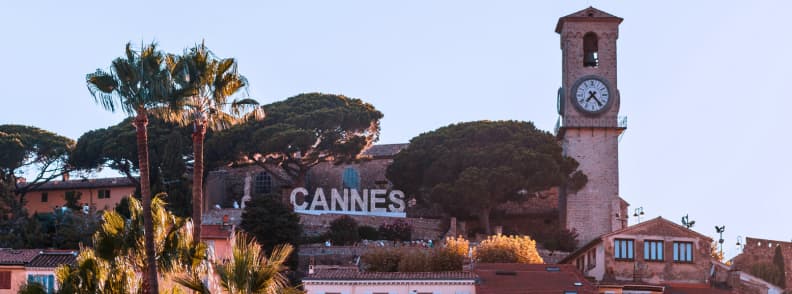
Day 3. Antibes and Cannes, or the Lérins Islands
Move west for Antibes and Cannes. Visiting the two towns together takes you to old streets, museums, harbors, and many indoor options to absorb an autumn shower. This is also a convenient train day if you prefer leaving the car parked.
On a calm, dry day, I’d replace part of Cannes with Sainte-Marguerite in the Lérins Islands. Cannes ferries operate daily, including Sundays and public holidays, with a crossing of about 15 minutes. Autumn departures become less frequent than peak-summer service, so check the return time before walking too far across the island.
Your seven-day French Riviera itinerary in October should react to the forecast. Keep Antibes and Cannes for rainier weather. Visit the island on a clearer day. There’s little virtue in stubbornly preserve a day’s plan just because you put it in writing.
Day 4. Fréjus and Saint-Raphaël
Now move your base west to Fréjus or Saint-Raphaël. I’d spend the first day locally instead of immediately disappearing into the Massif de l’Estérel. Wander through Roman Fréjus, have lunch in town, then head to Plage de la Base Nature or the Saint-Raphaël waterfront later in the day.
This is also when I’d start slowing the pace. I live inland from this part of the coast, and autumn makes Fréjus and Saint-Raphaël much easier to explore spontaneously. Parking is less troublesome outside major event dates and beach time is still a thing in September and early October.
If your dates overlap Roc d’Azur or another large event, rearrange the week. A road-trip plan that ignores a major sporting event at Base Nature has volunteered for unnecessary traffic. The region’s autumn event calendar deserves a check before assigning exact weekdays.
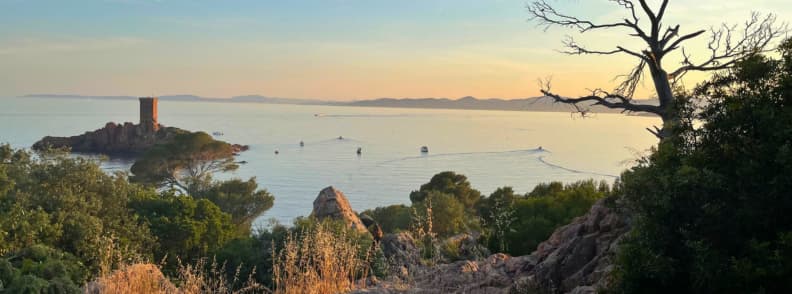
Day 5. Estérel and the Saint-Raphaël coast
Keep a whole day for the Estérel instead of catching glimpses of the massif as scenery between two towns. Cap Dramont is my favorite easy hike with red rock, coves, and the Île d’Or offshore. The longer Saint-Raphaël coastal path runs between Santa Lucia and Camp Long, with shorter sections possible between Boulouris, Aigue-Bonne, and Dramont. The official route is open year-round subject to favorable weather.
A dry October day is particularly good here. After intense rain, I’d switch to a town day and let the trails dry. Strong coastal wind deserves the same respect. Autumn gives the Estérel better walking temperatures, not immunity from weather.
The Corniche d’Or east of Saint-Raphaël also makes an excellent scenic drive if walking isn’t your priority. The road follows the red Estérel coastline through Agay and toward Théoule-sur-Mer. Saint-Raphaël has 36 km of coastline along this route.
Day 6. Pays de Fayence and Lac de Saint-Cassien
This is where my Provence autumn road trip leaves the Riviera shoreline. Drive inland toward the Pays de Fayence, then choose a small group of villages instead of attempting to visit all nine perched villages in one heroic circuit.
A driving itinerary through the arrière-pays Var around 30 minutes from Fréjus fits Fayence, Tourrettes, and Seillans or Callian perfectly, with Lac de Saint-Cassien added according to daylight.
My preferred day trips from Fréjus to the arrière-pays in autumn are deliberately short. Fayence and Tourrettes pair well because they sit close together, you can barely tell. Add beautiful Seillans or Callian if you love visiting French villages, or turn toward Saint-Cassien if you want water, a picnic and an easier afternoon in nature.
Saint-Cassien Lake remains freely accessible year-round, with parking, picnic areas and walking possibilities. Summer swimming and water activities fade from the day, which is exactly why I like Saint-Cassien differently in autumn.
These Fréjus day trips into the arrière-pays also show why I wouldn’t sleep in Nice for the entire week. Driving from Nice repeatedly into the eastern Var would turn a holiday into a study of motorway junctions. Two bases ensure a better use of your time.
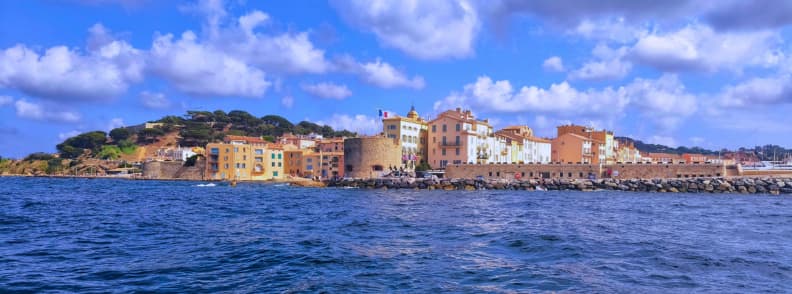
Day 7. Saint-Tropez or the Massif des Maures
Choose the final day according to month, weather, and what the previous six days lacked. Saint-Tropez is my September or early-October choice once the biggest event traffic has passed. I prefer visiting by road outside the busiest season because parking is less aggravating than in summer.
You still have a boat alternative. There are regular Les Bateaux Verts crossings from Sainte-Maxime, Port Grimaud, Les Issambres, and Les Marines de Cogolin, with service extending beyond the high season. Parking in Sainte-Maxime and crossing by sea also avoids committing the whole day to traffic around the gulf.
Later in October, especially on a chestnut-festival Sunday, I’d choose the Massif des Maures and Collobrières instead. November favors the same inland option if Saint-Tropez isn’t a personal priority. The last day should follow the season, not the French Riviera you saw in somebody’s July photographs.
A Fréjus-based version of the same week
If you prefer one base, a French Riviera road trip in autumn centered on Fréjus is the best option for the western half of this itinerary. I’d keep Fréjus, Saint-Raphaël, the Estérel, Pays de Fayence, and Saint-Tropez as separate day trips, then group Cannes with Antibes on one eastern outing.
Nice and Monaco are the awkward pair from a Fréjus base. I’d combine them only if you accept a long day, or spend one night in Nice at the beginning or end of the trip. The French Riviera road trip itinerary for September and October becomes calmer with one eastern overnight stay and the remaining nights around Fréjus.
A Fréjus base is particularly useful if beaches, hiking and the Var hinterland rank above nightlife. Nice is better without a car and better for dense urban sightseeing. Fréjus gives easier access to the places I return to most often, from Cap Dramont to Saint-Cassien and the villages inland.
How to spend a week on the French Riviera in autumn depends less on collecting destinations and more on grouping them sensibly. Plan two days in Nice and the eastern coast, one day in Cannes and Antibes, two days on the western Riviera, one day in the Pays de Fayence, then leave the final day as a weather buffer.
Seven days is enough to see two different Rivieras, the famous coast and the quieter Var behind it, without spending half the week proving how many places a rental car reaches.
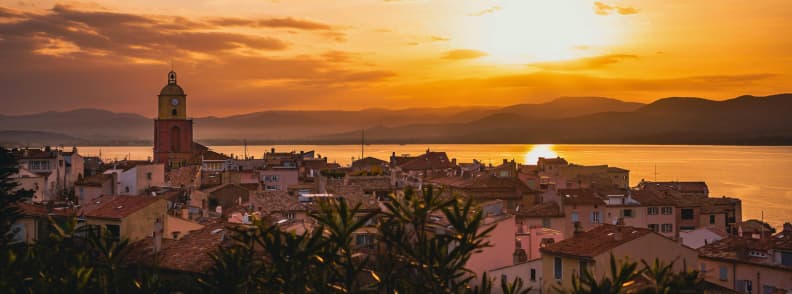
Practical planning for a French Riviera autumn trip
Autumn rewards a little advance planning because September, October, and November are like three different travel seasons on the Côte d’Azur.
Geography deserves some attention when drawing up your itinerary. Nice, Antibes, Cannes, and Monaco support a trip built around trains, buses, museums, and year-round restaurants. Fréjus and Saint-Raphaël combine town services with easy access to beaches and the Estérel Massif. The Pays de Fayence, Lac de Saint-Cassien, and much of the inland Var are better visited by car. Choosing the right base saves a surprising amount of unnecessary driving.
Then, keep in mind that a warm afternoon on the coast doesn’t tell you what conditions are like in the Mercantour, and a sunny morning doesn’t rule out rougher sea conditions later in the day. Autumn Mediterranean rain episodes also occur most often between September and mid-December, so I keep outdoor days flexible instead of attaching every hike, island crossing, and scenic drive permanently to a particular date.
Seasonal openings also needs separating into several different things. A beach remains accessible after its lifeguards, showers, or beach restaurants have finished for the season. A village is still worth visiting after a tourist attraction shortens its hours. A ferry operator may still operate, although a particular route no longer runs every day. Autumn planning becomes much easier once those distinctions are clear.
Event dates deserve one final calendar check before booking. September and October contain yacht shows, regattas, Roc d’Azur, food fêtes and other events capable of reversing the usual autumn pattern of cheaper rooms and easier parking for a weekend. Shoulder season is quieter until several thousand people have independently chosen the same weekend.
I keep one or two days flexible, check opening hours shortly before leaving, look at the marine forecast before island trips and exposed coastal walks, and check inland mountain weather separately from the coast. Autumn offers greater freedom than July or August, but the best trips still leave room for the season to change its mind.
Tap water is safe to drink on the French Riviera when supplied through the normal public drinking-water network, unless local authorities issue a temporary restriction. Tap water is one of the country’s most closely monitored food products, with permanent sanitary controls. I refill my bottle from the tap instead of treating bottled water as a travel necessity.
The Ministry of Health publishes drinking-water analyses by commune and updates them regularly through the regional health agencies. Check drinking water safety here after flooding, infrastructure damage, or any local alert.
Car vs TER, parking, ferries, and event traffic
Getting around the French Riviera without a car in fall is easiest along the railway between Nice, Antibes, Cannes, Monaco, and Menton. The coastal TER also reaches Saint-Raphaël, so a rail-based trip stretches surprisingly far west before the absence of a car starts limiting the interesting detours. Nice Airport trains are scheduled every 15 minutes on weekdays along the Cannes, Nice, Monaco, and Menton corridor from 5:50 am to 10 pm, followed by half-hourly service until 11:30 pm.
Saint-Raphaël Valescure is the western rail station I find most useful for this kind of trip. SNCF has direct regional services toward Cannes, Nice, Monaco, and Menton, while Cannes and Saint-Raphaël have over 30 return services per day on the current timetable. For coast-to-coast sightseeing, the train saves you from parking in several towns where the car contributes very little once you arrive.
My family has greater faith in French trains than I do. I’ve dealt with enough cancellations and strikes to avoid building a tight airport connection or irreplaceable reservation around one specific train. I still use rail along the coast, but I leave a buffer and check live traffic before departure. The view between the coast and Nice is a good consolation when everything runs normally.
Nice Côte d’Azur Airport is unusually well connected to public transport. Tram Line 2 reaches central Nice in under 30 minutes, while Nice Saint-Augustin railway station is less than 500 meters from Terminal 1, reached by a dedicated pedestrian route in about seven minutes. Nice airport also has direct coach links to Cannes, Antibes, Monaco, Menton, and Saint-Raphaël. If your first base is Nice, I wouldn’t collect a rental car at the airport purely out of habit.
Everything changes inland. Renting a car on the French Riviera during shoulder season is more useful for visiting the Pays de Fayence, Lac de Saint-Cassien, Estérel trailheads, and villages spread through the Var hinterland.
Autumn also removes one transport option around Saint-Cassien. The free lake shuttle runs only from 4 July to 30 August 30 in 2026. Regional buses still serve parts of the canton, including the Seillans, Fayence and Saint-Raphaël corridor, but I use a car for my own trips around these villages. A morning in Seillans, lunch in Fayence and an afternoon at Saint-Cassien becomes straightforward when you control the route and departure times.
I prefer driving the Côte d’Azur in the off-season to driving here in July or August. Parking becomes easier around Fréjus, Saint-Raphaël, and many smaller coastal places, and the road to Saint-Tropez becomes less oppressive after the major early-autumn events finish. A car also gives me the freedom to abandon a muddy trail after rain, switch villages, or stay longer over lunch without consulting a timetable.
Major events briefly reverse that advantage. Always compare your travel dates with the event calendar before assuming autumn traffic will be light.
Parking farther from the obvious destination often saves time overall. For Bateaux Verts, you have several paid central car parks in Sainte-Maxime, plus the free La Fourmi parking area at 900 meters from its embarkation point. At Les Issambres, the Port de San Peïre parking is free. Saint-Tropez has paid central parking, including the large Nouveau Port facility near the entrance to town.
Day trips from Fréjus to Saint-Tropez by ferry start, in practice, next door in Saint-Raphaël. Les Bateaux Bleus depart from the Vieux Port of Saint-Raphaël and have Saint-Tropez among their destinations, with the 2026 season running from 4 April to 31 October. Individual Saint-Tropez departure dates still deserve checking before you leave Fréjus.
A ferry to Saint-Tropez from Cannes in October is also possible, but daily summer frequency has gone by then. You can check availability here:
Around the Gulf of Saint-Tropez, Sainte-Maxime remains the most useful boat alternative later in the season. There are frequent Sainte-Maxime to Saint-Tropez crossings through October and a reduced timetable from 1 November into December. If the longer Cannes or Saint-Raphaël excursion has stopped on your dates, driving to Sainte-Maxime and crossing the gulf gives you another option.
I’ve ridden the Train des Pignes à Vapeur myself, so this is one autumn rail trip I recommend from firsthand experience. The historic steam train leaves Puget-Théniers and passes through the Haute Vallée du Var toward Entrevaux, Annot and, on selected services, Le Fugeret, with the scenery becoming increasingly mountainous along the way.
I’ve also traveled on one of its themed trains, so my Train des Pignes autumn foliage route review comes with an extra reason to check the seasonal calendar. Autumn brings special departures linked to local traditions, including Halloween and chestnut events, while the trip passes from olive-growing country into higher valleys where autumn color becomes easier to find than along the evergreen Riviera coast.
There is an important limitation. Regular trains currently go from Nice only as far as Saint-André-les-Alpes because of rehabilitation inside the Moriez tunnel. A replacement coach covers Saint-André to Digne, with full rail service expected to resume in spring 2027. For an autumn-color rail outing from Nice, check the exact destination and current traffic notice before deciding how far inland to go.

What to pack, rainy-day alternatives, and seasonal closures
Packing for the Côte d’Azur in autumn gets easier once you stop dressing for a single season. September still calls for summer clothes, while October brings cooler mornings and evenings, and November needs a warmer outer layer, especially inland. My rule is simple: dress in layers and adjust as the day changes. A sunny afternoon by the sea and dinner later in the Pays de Fayence can require quite different clothing, even though the drive between them is short.
My French Riviera autumn packing list stays fairly small because layers do most of the work:
- Coast during the day: T-shirts, light tops, shorts or light pants, sunglasses, sunscreen and comfortable walking shoes. September often keeps me in summer clothes.
- Inland and evenings: long pants, a light sweater and a light jacket. I start using these more regularly from late September, especially after rain.
- Hiking: walking shoes with proper grip, water, an extra layer and a small waterproof outer layer. Add warmer clothing for higher-altitude outings.
- Rain: a hooded waterproof jacket and shoes that tolerate wet streets. A small umbrella is useful in town, although exposed coastal wind quickly reduces its charm.
- Swimming: swimsuit, towel and something dry to change into. I still pack swimwear in early October because I know it’s possible.
- Sailing or ferry days: a wind-resistant outer layer, sun protection, and shoes with secure soles. The temperature aboard a moving boat is often less forgiving than lunch beside the harbor.
- November: light layers for sunny afternoons plus a warmer jacket for mornings and evenings. I still spend some bright days outdoors in a T-shirt, but sunset changes the temperature quickly.
This is what to pack for the French Riviera in autumn. Pack for temperature changes across a single day, not for one average monthly number. The coast, inland villages, and mountains belong to different autumn wardrobes even when they appear close together on a map.
What to wear on the French Riviera in October depends heavily on the hour. I’d start with a T-shirt or light top, carry a sweater or thin jacket, and choose trousers or shorts according to the forecast. Early October still looks a lot like late summer on sunny days. By the end of the month, cool mornings and evenings become harder to ignore.
Riviera October packing should still include swimwear. Leaving a swimsuit at home because the calendar says October makes little sense when the sea remains warm enough for some swimmers early in the month. A swimsuit occupies almost no luggage space, don’t end up regretting you left it at home!
What to pack for the Côte d’Azur in October changes if your itinerary includes the Estérel or Pays de Fayence. Add walking shoes and an extra layer for cool evenings. A day that begins beside the sea in Saint-Raphaël and ends over dinner in a hill village crosses enough microclimates to make light layering useful.
Nice stays milder than the higher inland areas, but what to wear in Nice France in late October still includes a light jacket for evenings and rainier periods. During sunny daytime sightseeing, lighter clothing often remains comfortable. But I wouldn’t fill a suitcase with heavy winter clothing for a city stay at sea level.
The difference becomes clearer when deciding what to pack for the Côte d’Azur in October and November. November needs warmer outerwear and greater attention to rain, especially for evening plans. Heavy winter gear is still unnecessary for an ordinary coastal city trip, unless your itinerary climbs into the Mercantour or other higher country.
What to pack for the Côte d’Azur in fall: Bring one useful layer from each temperature level instead of several versions of the same summer outfit. A T-shirt, sweater, light waterproof jacket, and comfortable shoes cover an impressive share of ordinary autumn days.
Rain doesn’t need to ruin a French Riviera day. Things to do in Nice France when it rains in autumn include museums, galleries, and indoor heritage sites. There are around fifteen museums across Nice, including the Musée Matisse, Musée de Préhistoire de Terra Amata, and several municipal collections.
Villa Masséna is especially useful because the museum is directly on the Promenade des Anglais. From 1 November 2026 to 30 April 2027, Villa Masséna is open from 11 am to 6 pm on Monday and Wednesday to Sunday, with Tuesday closure. A wet morning here also keeps you central enough to abandon the museum and return outside quickly if the clouds clear.
Villa Ephrussi de Rothschild on Saint-Jean-Cap-Ferrat is better for mixed weather than a serious downpour because the gardens are a large part of the visit. The villa itself provides an indoor cultural stop, and the schedule keeps the property open daily from 10 am to 6 pm until 1 November, apart from specific exceptional closure dates. Check the date before driving there, because there are several exceptional September and October closures.
Grasse is one of my preferred day trips for a wet day because perfume gives you something to discover that is genuinely specific to the area. Grasse perfume workshops in autumn include several options through Fragonard, Galimard, and the Musée International de la Parfumerie.
Covered food markets give you another thing to do on rainy mornings. Menton’s Marché des Halles opens every day until 1 pm and has around forty producers selling inside and around the historic market building. I’d choose a place like this over marching through an outdoor market under steady rain while insisting the experience remains charming.
Nice’s Libération neighborhood also has wet-weather options around its morning produce market. The market here is from Tuesday to Sunday from 6 am to 12:30 pm, while the nearby historic Gare du Sud now contains the indoor Halle de la Découverte. From September 2026, the Atelier de Cuisine Niçoise is scheduled there with cooking classes and demonstrations.
Fréjus gives a limited rainy-day alternative on the western Riviera, although Roman ruins obviously involve some time outdoors. The Roman theater and amphitheater switch to cooler-season hours from 1 October 2026 to 31 March 2027, opening Tuesday to Saturday from 9:30 am to 12:30 pm and 2 pm to 5 pm. Both close on Sundays, Mondays, and public holidays.
A wine cellar is another good inland substitute when trails are wet, provided the estate has cooler-season visitor hours. I’d reserve ahead for a guided visit instead of arriving at an estate during harvest or reduced autumn staffing and expecting somebody to drop everything to show me around.
Seasonal closures are the part of autumn planning most likely to cause unnecessary disappointment. A place being open in October doesn’t mean summer hours survived into October. Museums shorten schedules, Roman monuments close on additional weekdays, ferry departures thin out, private beaches finish their season, and restaurants in smaller resorts start taking regular closure days again.
This is where French Riviera in autumn packing and planning meet. Carry the layer that saves a cold evening, keep one indoor idea for rain, and recheck opening hours a day or two before each outing. Autumn here is best enjoyed by those who adapt. A morning storm sometimes becomes a perfume workshop, a museum or a long lunch, then clears in time for the coast afterward.
Where to stay on the French Riviera in autumn. coast or hills?
Where to stay on the French Riviera in autumn depends on month, transport, and the kind of trip you want. I’d choose the coast in September for swimming, ferries and long evenings. October gives the widest choice between coast and inland Var. In November, I’d favor a year-round city or a well-equipped inland property over a small seasonal resort where half the shutters have already come down.
The best places to stay on the French Riviera during autumn also depend on how much ground you intend to cover. Nice is the best no-car base. Cannes and Antibes keep rail connections and cultural options close together. Fréjus and Saint-Raphaël put beaches, the Estérel, and the Var within easier reach. The Pays de Fayence gives you villages, space and local life, but I would only base myself here with a car.
| Base | Best for | Car needed? | Autumn advantage | Autumn drawback |
|---|---|---|---|---|
| Nice | No-car travelers, museums, restaurants, eastern Riviera | No | Year-round services, airport tram, coastal rail | Urban base, poor fit for repeated Var outings |
| Cannes or Antibes | Coast, culture, events, Lérins | Usually no | Rail, beaches and island access | Event dates push room prices upward |
| Fréjus or Saint-Raphaël | Estérel, beaches, Roman Fréjus, western Var | Helpful | Strong coast-and-outdoors balance | Long trips to Monaco and Menton |
| Saint-Tropez area | Sailing, Les Voiles, Gulf of Saint-Tropez | Yes | Much quieter outside major event dates | Seasonal restaurants and services start closing |
| Pays de Fayence | Villages, Saint-Cassien, local life, space | Yes | Quiet roads, easier parking, inland access | Limited no-car freedom and shorter restaurant schedules |
I live in the Pays de Fayence and reach the coast around Fréjus in roughly half an hour, so I see the trade-off from both directions. Sleeping inland gives you a quieter start and end to the day. Sleeping on the coast gives you easier dinners, rail access, and spontaneous beach time. Neither is automatically better. The wrong choice is spending every day driving across the same stretch of the Var or Alpes-Maritimes because your accommodation looked central when you viewed the entire French Riviera on a tiny map.
When visiting the French Riviera in autumn starts saving money
The cheapest time to visit the French Riviera for luxury hotels isn’t a fixed autumn week. September still carries major yachting events in Cannes, Monaco and Saint-Tropez. Early October brings Les Voiles de Saint-Tropez and Roc d’Azur around Fréjus. November generally loses much of that event pressure, although the trade-off is a smaller choice of seasonal hotels and restaurants.
French Riviera luxury hotels in fall divide into two useful groups. City properties in Nice and Cannes tend to keep a broad range of services as the season advances. Resort hotels around smaller coastal destinations sometimes shorten their season, so a tempting November price deserves an opening-date check before you become attached to the spa photographs.
Luxury hotel deals on the French Riviera in fall are date-sensitive. Compare several consecutive dates. Don’t assume every October night costs less than every July night. A yacht show, regatta, conference, or large sporting event quickly rearranges the usual shoulder-season hierarchy.
The same caution applies to off-season luxury boutique hotels in Cannes and Monaco. September is barely off-season during the major yacht events, and Cannes continues hosting conferences and sporting events after summer. I’d choose the hotel first, then move the stay by a day or two if the calendar shows an absurd rate.
autumn hotels worth shortlisting on the French Riviera
In Nice, Hôtel La Pérouse is the coastal option I’d shortlist for travelers who want Old Nice within walking distance without giving up a sea-facing stay. The hotel sits between the port, Castle Hill, and the Promenade des Anglais, with 53 rooms and suites. Its outdoor pool is heated and stays open until the end of October.
Cannes has a great year-round luxury option in Five Seas Hotel Cannes. The hotel is a few steps away from the Palais des Festivals and Croisette, with a rooftop pool, spa, and central location that removes the need for a car during a short stay. It’s a property for all seasons, and current 2026 listings extend into late autumn. I’d choose this type of central Cannes hotel when autumn weather is uncertain because restaurants, shops, trains, and indoor options remain close.
Around Fréjus and Saint-Raphaël, Hotel Excelsior has one enormous practical advantage, which is location. The hotel faces the beach in central Saint-Raphaël and sits within a few minutes’ walk of Saint-Raphaël Valescure station. Excelsior is open all year and it has lower November and December room prices than September and October. This is exactly the sort of western Riviera base I like for autumn because the car stays optional on town days and useful on Estérel days.
Saint-Tropez calls for greater seasonal selectivity. Hôtel de Paris Saint-Tropez is about two minutes on foot from the harbor and has an indoor spa plus a heated rooftop outdoor pool kept at 27°C throughout the year, weather permitting. This gives late-season guests like you an unusual advantage in a town where many summer amenities start disappearing.
Pays de Fayence for space, villages, and a car-based trip
For a high-end inland base, Terre Blanche Hotel Spa Golf Resort is in Tourrettes on 300-hectare estate. With guests like Brad Pitt and Johnny Depp, this resort has suites and villas, two 18-hole golf courses, indoor and outdoor pools, and a 3,200 m² spa. This is the Pays de Fayence choice I’d make when the accommodation is part of the holiday, especially for spa time, golf, or a slower stay between village outings.
Among the best boutique stays in the arrière-pays, L’Escale Provençale is a smaller alternative in Tourrettes. The property has spacious rooms with kitchenettes, garden and mountain views, a pool and free private parking. Its 2026 pricing calendar specifically includes October as mid-season and November to December as low season. I’d choose a smaller property like this for a couple who wants to visit Fayence, Tourrettes, Saint-Cassien and dine at local restaurants close at hand without staying inside a large resort.
La Bégude du Pascouren in Fayence is another good small-scale option, especially for travelers who value outdoor space. It offers rooms, suites, and a private villa with a heated pool and Provençal garden, and confirms being open all autumn. The property also has private terraces and parking, which are useful in an area where arriving by car is the best choice.
Vineyard stays farther into the Var
For Provence vineyard stays in October, I’d widen the map west toward Lorgues. Château de Berne is on a large wine estate between Lorgues and Flayosc, with hotel rooms, private villas, an 800 m² spa, restaurants, and vineyard activities. The hotel is open year-round and offers vineyard and cellar visits with tastings by reservation.
Château de Berne also has an indoor spa pool and a Mediterranean outdoor pool heated throughout the year. This is a proper wine-estate stay, not accommodation with a few decorative vines beside the parking lot. The location is a bit farther from the French Riviera shoreline, so I’d use Château de Berne for the Provence half of a split stay, especially after several nights on the coast.
Private villas and heated pools in autumn
A French Riviera private villa in autumn starts making better financial sense for families or friends traveling together, especially when several hotel rooms would otherwise be required. The practical advantages are space, a kitchen, private parking, and the freedom to stay inland without depending on restaurant opening hours every evening.
Luxury private villa rentals on the French Riviera in autumn need a different checklist from July rentals. Ask about central heating, fireplace use, covered outdoor areas, pool heating, pool-heating charges and the dates when outdoor furniture or summer services are withdrawn. A villa designed around open terraces looks considerably less clever during three days of October rain.
A luxury villa rental on the French Riviera in fall also needs an honest pool conversation. Pool and heated pool are separate amenities. Heated still leaves room for different temperatures and operating dates.
A rental with a heated pool in the Var in autumn is therefore worth confirming in writing before payment. La Bégude du Pascouren in Fayence is a useful option for this kind of stay, with rooms, suites, and a private villa set in a Provençal garden. The villa has a heated pool, while the south-facing terraces and mountain views give you outdoor space even when beach weather becomes less predictable
At the luxury end, Villa Terre Blanche in Tourrettes gives a luxury villa rental on the French Riviera in fall a different scale. The 300 m² villa sleeps up to nine people and has three private terraces, a private outdoor pool, an outdoor Jacuzzi, a full kitchen, and a home cinema. Guests also have access to the spa, including indoor, and outdoor pools, which is a useful detail in autumn, when the weather decides your private terrace has had enough attention for the day.
Autumn weddings on the Riviera and inland Var
Among autumn wedding venues on the French Riviera, I’d look inland as seriously as I’d look at the coast. Autumn weather makes indoor backup space more important, and hotel accommodation on site removes late-night transport between a reception and scattered villas.
Terre Blanche has dedicated wedding facilities in the Pays de Fayence, including the Salon Fayence for up to 200 guests, smaller event rooms, private terraces, and accommodation in suites and villas. September has warmer evenings, while October has softer temperatures for daytime ceremonies. Any outdoor plan still needs a proper indoor alternative because Mediterranean rain arrives with little respect for table plans.
Château de Berne also hosts weddings and private events among its vineyard, hotel and villa facilities. I’d place the estate in the Provence part of a Riviera wedding search, especially for couples who want vineyards and olive trees to carry as much visual weight as the sea.
Planning an autumn wedding on the Riviera? Once you’ve narrowed down the venue, my guide covers the next decisions, from choosing the season and setting a budget to guest travel, local planners, paperwork, and packing. Read my destination wedding planning guide here
Coast or hills by month
In September, I’d stay on the coast unless your trip centres on villages, vineyards or golf. Nice is the best base without a car. Cannes places events and the Lérins Islands close at hand. For beaches, the Estérel and western Var, I’d choose Fréjus or Saint-Raphaël.
October makes the decision less obvious, but in a good way. Early in the month, a coastal base still lets you go swimming and hop on some ferry trips. Inland, places like the Pays de Fayence give you cooler walking weather, village days, and easier access to the Var countryside. For the kind of autumn trip I enjoy, Fréjus, Saint-Raphaël, and the Pays de Fayence are my best October bases.
By November, I’d pay closer attention to what stays open after dark. Nice and Cannes keep the widest choice of restaurants, museums, and transport. Saint-Raphaël still has its railway station, town-center restaurants, and an active local population. Inland, I’d choose accommodation designed for cooler weather, such as Terre Blanche or Château de Berne, where an indoor pool, spa or good restaurant earns its keep once the sun disappears.
The coast has trains, restaurants, waterfront walks, and the last realistic chances for sea time. But the hills give you space, quiet mornings, Provençal villages and easier access to inland Var. For a week-long trip, I’d split the stay between the two. A few nights on the coast followed by a few inland is better than repeatedly crossing the French Riviera because one hotel looked conveniently central on a map.
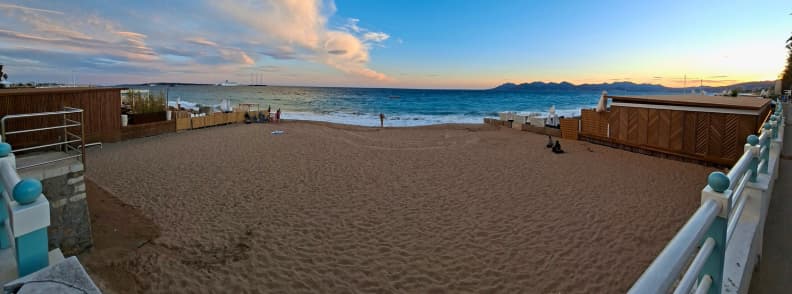
Autumn on the Côte d’Azur: practical FAQs
You already have the month-by-month weather, swimming, transport, packing and event details. The remaining decisions usually surface at booking time: how quiet Saint-Tropez becomes, what locals mean by arrière-pays, how many days deserve setting aside, and how the Riviera compares with another Mediterranean coast in October. These shorter answers fill those gaps without repeating the planning advice above.
Is autumn a good time to visit the French Riviera?
Yes. Autumn is one of the best periods for a French Riviera trip, especially from September through mid-October. September keeps the warm sea and summer wardrobe while losing much of the school-holiday traffic. October is better for hiking and mixing coast with the arrière-pays. November trades beach life for quieter towns, easier parking and a much better sense of everyday local life.
I prefer September myself. I still swim, businesses are largely running their warm-season schedules, and getting around Fréjus, Saint-Raphaël and the surrounding coast becomes noticeably less tiresome once families return to school.
Is October a good time to visit the French Riviera?
Yes, and October is my second choice after September. Early October still leaves a realistic chance of swimming, eating outside at lunchtime and taking some seasonal boat trips. At the same time, lower temperatures make the Estérel, Pays de Fayence and inland trails much nicer on foot.
The compromise is rain. Mediterranean heavy-rain episodes occur most often from September through mid-December, so I leave room in an October itinerary for a museum, long lunch, perfume workshop or wine cellar when the forecast turns unpleasant.
Is the French Riviera nice in October?
Yes. October is great when your idea of the Riviera extends beyond lying on a beach from breakfast until dinner. Nice, Antibes and Cannes still have museums, markets and restaurants, while Fréjus and Saint-Raphaël give easy access to the Estérel. Inland, the Pays de Fayence becomes much more comfortable for village walks and hiking.
The month also has a packed event calendar. Les Voiles de Saint-Tropez runs into early October, Roc d’Azur takes over Fréjus from 7 to 11 October 2026, and chestnut, wine and harvest festivals begin inland.
Is the French Riviera worth visiting in November?
Yes, with a different trip in mind. November is great for Nice, Cannes, Antibes, Monaco, Saint-Raphaël, museums, markets, Roman heritage, food, and walking on dry days. Smaller coastal resorts grow much quieter, and some beach restaurants, private beaches and seasonal attractions have already closed.
I find November interesting because the seasonal touristic layer has peeled away. Around Fréjus and Saint-Raphaël, secondary residences start showing rows of closed shutters, while businesses serving residents carry on. The coast looks less like a holiday set and more like the place where people live.
The drawbacks are shorter days, cooler evenings, fewer boat departures, and reduced restaurant choice in seasonal areas. The advantages are easier parking, quieter streets, and less competition for the places that stay open.
What is the best month to visit the Côte d’Azur?
September is my choice. The sea retains summer warmth, daytime clothing stays light, event calendars remain busy, and the crowds fall after school resumes. For a trip mixing swimming, restaurants and sightseeing, September gives the broadest range of options.
October comes second for me. Choose October for hiking, village days, food festivals and a quieter coast while still keeping some swimming chances early in the month.
November is the specialist choice. Go then for museums, local life, long lunches, town walks and an almost empty coast, not for a classic Riviera beach holiday.
What is the best time of year to visit the French Riviera?
For swimming plus sightseeing, I’d choose September. For hiking and inland exploration, October and spring are better. July and August bring the most dependable beach weather, but also the hardest traffic, busiest beaches and greatest pressure on parking.
Winter has its own appeal in Nice, Cannes, Menton and Monaco because those places retain cultural life and year-round services. Smaller resorts lose more activity after autumn.
The right season therefore depends on what you want from the Riviera. September gives the best all-round compromise for my kind of trip.
Is the French Riviera less crowded in autumn?
Yes, but September still attracts plenty of visitors. In the Alpes-Maritimes and Monaco, coastal hotel occupancy reached 89% in August 2025 and remained around 80% to 85% in September. By October 2025, commercial accommodation occupancy had fallen to 66%.
My experience around Fréjus and Saint-Raphaël follows the same seasonal direction, though. Once school resumes, beaches, roads and parking become easier. Major events briefly reverse that pattern in Cannes, Nice, Fréjus and Saint-Tropez.
October or November on the French Riviera, which is better?
October wins if you want outdoor variety. You still have a realistic chance of swimming, some ferry and excursion services remain, hiking weather improves and autumn food events are underway.
November wins if quiet is the objective. Central Nice, Cannes, Antibes, Monaco and Saint-Raphaël continue operating as real towns, while many smaller resort areas become sleepy. I’d choose October for a first autumn visit and November for someone who already knows the coast and wants another side of the region.
What is the weather like on the French Riviera in autumn?
September usually keeps a summer character near the coast, with warm afternoons and mild evenings. October becomes cooler and wetter. November brings shorter days, colder nights and a greater need for layers.
Nice gives a useful coastal reference. October normals for 1991 to 2020 show an average high around 21°C, an average low around 14°C and 127.9 mm of monthly rain. November drops to roughly 17°C by day and 9.7°C at night, with 138.4 mm of rain.
Inland Var cools faster after sunset. A day that starts by the sea in Saint-Raphaël and finishes in the Pays de Fayence often needs another layer by dinner.
What is the weather like on the French Riviera in October?
October on the coast is mild, with warm sunny spells separated by wetter periods. Nice averages around 21°C for daytime highs and 14°C for nighttime lows. The 1991 to 2020 normal gives 127.9 mm of rain for the month, with rain falling on an average 7.5 days at the 1 mm threshold.
This monthly rainfall figure deserves context. Riviera autumn rain often arrives in concentrated episodes, so an October holiday is rarely seven consecutive days of drizzle. One stormy day might deliver a large part of the week’s rain, followed by blue sky again. Mediterranean episodes also bring flash-flood risk, which is why I take alerts seriously after experiencing damaged roads and fallen trees following severe storms here.
What is the weather like on the French Riviera in November?
November is mild on the coast by northern European standards, but the French Riviera has clearly left summer behind. Nice averages around 17°C during the day and 9.7°C at night, with 138.4 mm of monthly rain and roughly 8.5 days receiving at least 1 mm.
Sunny afternoons still surprise visitors. I spend plenty of time outdoors in late autumn, sometimes in a T-shirt when the sun is strong, then reach for warmer clothing after sunset. Inland villages cool faster.
Is swimming possible on the French Riviera in October?
Yes. Early October is the safest bet for ordinary holiday swimmers. I’ve swum at Base Nature in Fréjus during the first week of October without treating the outing as some heroic cold-water achievement.
Later October becomes increasingly personal. Sea temperature falls, supervised swimming is less widespread, and wind or swell changes the experience quickly. A calm 20°C sea under afternoon sun is a different proposition from the same temperature during a grey, windy morning.
Is Nice warm enough for swimming in October?
For many swimmers, yes, particularly in the first half of the month. Nice’s historical October sea temperature averages around 21°C, with the water gradually cooling during the month. Late October often drops into roughly the 18°C to 20°C range.
Nice also has pebble beaches, so water shoes are useful if you dislike hobbling across galets while trying to preserve your dignity. Swimming conditions still depend on wind, waves and personal tolerance, not temperature alone.
What is the sea temperature in late October and early November?
Around Nice, Cannes, and Saint-Raphaël, October monthly averages sit close to 20.5°C to 21°C. By late October, temperatures commonly move toward 19°C to 20°C. November averages drop to around 18°C in Cannes and Saint-Raphaël.
This makes early November possible for committed swimmers, while most holidaymakers will regard the sea as brisk. Locals still swim year-round. Their enthusiasm should not be mistaken for a universal comfort standard.
Are restaurants and beach clubs open in October?
Restaurants remain widely available in Nice, Cannes, Antibes, Fréjus, Saint-Raphaël and central Saint-Tropez. Smaller coastal resorts and beach strips start thinning their restaurant schedules during October, particularly later in the month.
Private beaches are less predictable. Some close at the end of September or during October, while others run until the end of the month. October is the point when checking an individual beach club becomes necessary instead of assuming a whole town follows one closing date.
In my area, another small seasonal marker appears inland. Restaurants that stop delivery during the packed summer months start offering delivery again once local customers become the main audience. That tells you quite a lot about who the region is serving by then.
Is Saint-Tropez open in October and November?
Yes. Saint-Tropez doesn’t shut down on 1 October. October is unusually busy at several points, starting with Les Voiles de Saint-Tropez through 4 October, followed by Les Ailes, Paradis Porsche, Cape 31, the Saint-Tropez Classic and the Grande Braderie from 23 to 25 October.
November is quieter but still alive. The Place des Lices Provençal market continues every Tuesday and Saturday throughout the year. Les Halles switches from daily service to Fridays and weekends from 1 November, while exhibitions, concerts and Les Voiles d’Automne continue during the month.
Saint-Tropez in November is a town with reduced seasonal choice, not a locked village.
Are attractions open on the Côte d’Azur in November?
Many major museums and cultural sites remain open, especially in Nice, Antibes, Cannes, and Monaco. Antibes’ Musée Picasso, for example, opens Tuesday to Sunday from 10:00 to 13:00 and 14:00 to 18:00 during the cooler season, apart from listed holiday closures including 1 November.
The important distinction is between year-round cultural institutions and seasonal leisure attractions. Museums often shorten hours. Gardens adjust closing times. Boat excursions and beach businesses shrink more sharply. Check the exact date, not merely the month.
How do I get around the French Riviera without a car in autumn?
Stay close to the coastal rail line. Nice, Antibes, Cannes, Monaco and Menton form the easiest car-free chain, and Nice Saint-Augustin connects directly with Nice Côte d’Azur Airport. On weekdays, trains run roughly every 15 minutes along the Cannes, Nice, Monaco and Menton corridor from early morning until 22:00, then every 30 minutes until 23:30.
Fréjus and Saint-Raphaël are also on the rail network, but a car becomes increasingly useful for the Estérel, Pays de Fayence, Lac de Saint-Cassien and smaller Var villages.
My family trusts the train more readily than I do after enough cancellations and strike-related surprises. I still use a car for almost everything. For a visitor staying between Nice and Cannes, though, rail makes is better than renting a car merely to spend the holiday hunting for parking.
What should I pack for the French Riviera in autumn?
Pack layers. September still needs summer clothes, October needs a sweater or light jacket for cooler periods, and November deserves warmer outerwear for mornings and evenings.
I’d take comfortable walking shoes, long pants, T-shirts, a sweater, a light waterproof jacket and sunglasses. Keep swimwear in the bag through early October. Hiking days need grip and water, while sailing or ferry outings deserve a wind-resistant layer.
The main trick is dressing for a day that changes. Sunshine by the sea at lunchtime and dinner inland in the Pays de Fayence do not belong to the same wardrobe.
Where should I stay on the French Riviera in autumn?
Choose Nice for a car-free trip with museums, restaurants, and easy rail links. Cannes or Antibes give good access to the central coast. Fréjus and Saint-Raphaël are better for the Estérel, beaches and western Var. The Pays de Fayence is my choice for villages, hiking and a slower inland base with a car.
September favors the coast. October gives coast and hills equal appeal. By November, I’d choose a year-round town or an inland hotel or villa with good cold-weather facilities instead of a tiny seasonal beach resort.
For a week, I prefer splitting the stay. A coastal base followed by several nights inland gives you two distinct versions of southern France without spending half the holiday retracing the A8.
What are the best things to do on the Côte d’Azur in October?
Start with the outdoors. Hike the Estérel, walk Cap Dramont, visit the Pays de Fayence, spend a day around Lac de Saint-Cassien, and keep an early-October beach day available if the sea and weather cooperate.
Then use the October calendar. Roc d’Azur runs in Fréjus from 7 to 11 October 2026. Saint-Tropez has sailing, running and motoring events. Inland villages move into chestnut, wine and harvest season.
A rainy day belongs to museums, perfume workshops in Grasse, Roman heritage in Fréjus or a cellar visit. October is perfect with an itinerary with alternatives, because forcing a coastal walk through a Mediterranean downpour is admirable only from indoors.
What festivals happen on the French Riviera in autumn?
September has the biggest international calendar, including the Cannes Yachting Festival, Régates Royales, Monaco Yacht Show, Festival International de l’Air in Fréjus and the start of Les Voiles de Saint-Tropez.
October shifts toward Roc d’Azur, Saint-Tropez regattas, chestnut fêtes, wine events, Halloween celebrations and the Grande Braderie. November brings the Nice-Cannes Marathon, Les Voiles d’Automne and smaller inland cultural events.
This is why I check event dates before booking accommodation. The Riviera might be in shoulder season on paper while one town spends the weekend behaving like August forgot to leave.
What happens in Saint-Tropez in October?
There’s a lot happening in Saint Tropez in October. Les Voiles runs through 4 October 2026. Les Ailes follows from 6 to 11 October, Paradis Porsche from 9 to 11 October, Cape 31 from 12 to 17 October, and the Saint-Tropez Classic takes place on 18 October. The Grande Braderie then fills the town from 23 to 25 October.
October therefore has two Saint-Tropez personalities. Between major events, streets and beaches are calmer than midsummer. During event weekends, parking and accommodation require the same kind of advance thinking you would give a summer visit.
What happens during Les Voiles de Saint-Tropez?
Les Voiles de Saint-Tropez brings together classic yachts, modern racing boats, and maxis in the Gulf of Saint-Tropez. The 2026 edition is from 26 September to 4 October, with roughly 250 boats and about 3,500 crew members.
The shore experience is part of the event. The Village des Voiles opens to the public from 9 am to 9 pm on most event days, with stands and live music. Racing begins around midday on several days, and crews return toward the harbor later in the afternoon.
Non-sailors have plenty to watch. Walk the quays, follow starts from shore where visibility allows, spend time in the village and stay into the evening. No knowledge of racing rules is required to appreciate a century-old yacht passing a modern maxi in the same gulf.
What is Roc d’Azur in Fréjus?
Roc d’Azur CIC is a five-day cycling event based around Base Nature François Léotard in Fréjus. The 2026 edition runs from 7 to 11 October and includes mountain-bike racing, gravel, e-bike events and recreational rides. Some routes cross private land and protected areas opened specifically for the event.
Even if you never touch a bicycle, the practical consequence is worth knowing. Fréjus gets busy. Base Nature fills with competitors, exhibitors and spectators, so ordinary October expectations for nearby parking need temporary revision.
Is the French Riviera good for hiking in autumn?
Yes. Autumn is one of my favorite times for walking here because the punishing summer heat eases and many forest areas become usable again after the highest fire-risk period.
Around the western Riviera, I’d start with Cap Dramont, the Estérel, Gorges du Blavet near Bagnols-en-Forêt and trails around the Pays de Fayence. For more intense autumn color, head higher toward the Mercantour, where larches turn yellow and orange while much of the coastal vegetation stays evergreen.
Two autumn cautions deserve real attention. Heavy rain leaves trails muddy and occasionally damages access roads. Hunting season also overlaps with hiking season, especially inland.
What is the arrière-pays of the French Riviera?
The arrière-pays is the inland country behind the Côte d’Azur, where coastal towns give way to forests, lakes, gorges, farms and hilltop villages. The term describes geography and character, not a single administrative territory.
The Pays de Fayence is the part I know best. Its nine villages are Bagnols-en-Forêt, Callian, Fayence, Mons, Montauroux, Saint-Paul-en-Forêt, Seillans, Tanneron, and Tourrettes. The territory stretches from the northern Estérel toward the southern foothills of the Verdon area.
Why visit the arrière-pays in autumn?
Because autumn improves the activities that summer heat makes harder. Village streets become comfortable for walking, forest trails reopen after high fire-risk periods, parking becomes easier, and restaurant terraces remain pleasant on sunny afternoons.
The Pays de Fayence also gives you a different rhythm from the coast. I lived in Bagnols-en-Forêt before moving to Saint-Paul-en-Forêt, and autumn is when I enjoy this area most for trails, local events and ordinary village life.
The temperature difference appears quickly after sunset. Bring another layer if a coast day ends with dinner inland.
Coast or arrière-pays, where should I stay?
Stay on the coast if trains, restaurants, waterfront walks and possible sea time are priorities. Stay in the arrière-pays for villages, hiking, quiet mornings and easy access to inland Var.
October gives the closest contest between the two. For a seven-day stay, I’d divide the trip between a coastal base such as Saint-Raphaël or Cannes and several nights in the Pays de Fayence.
One hotel for Monaco, Cannes, Saint-Tropez, the Estérel and the Pays de Fayence looks efficient on a map. By the third long drive, the map has usually lost the argument.
What are the best day trips from Fréjus in autumn?
Bagnols-en-Forêt is my nearest inland choice, around 18 km from Fréjus and roughly 20 minutes by car in ordinary conditions. Go for the village, old millstone quarries and Gorges du Blavet.
Lac de Saint-Cassien is about 20 km away. Autumn swaps summer swimming activity for quieter shores, walks and the Maison du Lac.
Cannes is 35 to 40 km from Fréjus, with road times commonly around 40 minutes outside heavier traffic. The direct train is often the smarter choice for a town day.
Saint-Tropez is roughly 37 km by road, yet traffic makes distance a poor predictor of arrival time. I prefer visiting after the biggest sailing events, when road access becomes less irritating.
Is autumn sailing season over on the French Riviera?
No. September remains an active sailing month, and the calendar continues well into October. Les Voiles de Saint-Tropez runs through 4 October, while Les Voiles d’Automne takes place in Saint-Tropez on 14 and 15 November 2026.
Passenger-boat and charter schedules thin as autumn advances, so an October sea trip needs a date-specific timetable.
I’ve sailed the Mediterranean in autumn in Greece and have also been aboard in Cyprus, but I haven’t sailed the Côte d’Azur itself during autumn. One Mediterranean coastline tells you surprisingly little about another.
What are sailing conditions like on the French Riviera in September and October?
September usually offers longer daylight, warmer water, and the most active autumn sailing calendar. October brings shorter days and a greater chance of unsettled Mediterranean weather.
Local forecasts deserve authority here. Marine bulletins divide the Riviera into coastal zones including Port-Camargue to Saint-Raphaël and Saint-Raphaël to Menton, with separate forecasts for ports such as Saint-Tropez, Cannes, Antibes and Nice.
Wind, swellm and heavy-rain episodes deserve a fresh check before every departure. Mistral influence reaches the Var coast, and Mediterranean autumn storms develop on a scale no anecdote from a previous trip should outrank.
Is Les Voiles de Saint-Tropez worth attending without sailing?
Absolutely. Les Voiles de Saint- Tropez is one of the rare sailing events where shore spectators still have a great day out. The harbor fills with classic yachts, modern racers and maxis, the public village stays active through the day, and live music continues into the evening.
I’d arrive early, walk the port before racing, watch fleet movements from shore, then return toward the quays as boats come back. The spectacle is visual enough that nobody needs to know the difference between a tack and a gybe to enjoy the afternoon.
French Riviera vs Amalfi Coast in October: which is better?
French Riviera vs Amalfi Coast in October comes down to the shape of the trip. Choose the Côte d’Azur for a broader mix of cities, museums, trains, beaches, hiking, islands, and inland villages. Choose the Amalfi Coast for a tighter itinerary centred on Positano, Amalfi, Ravello and the dramatic coastal road.
The Riviera is easier for a rail-led October holiday. The Cannes, Nice, Monaco and Menton corridor has frequent regional trains, while the western side adds Fréjus and Saint-Raphaël.
The Amalfi Coast still has ferry service in autumn, but sea conditions affect departures and road movement needs extra attention. In October 2026, alternate-number-plate restrictions apply on the SS163 on Saturdays, Sundays, and public holidays.
I’d choose the Amalfi Coast for a short Italian coast-focused break. I’d choose the French Riviera for a week where one day involves Nice, another the Estérel, another a market village in the Var, and another sitting beside the sea deciding that lunch has already lasted long enough to cancel the afternoon plan.
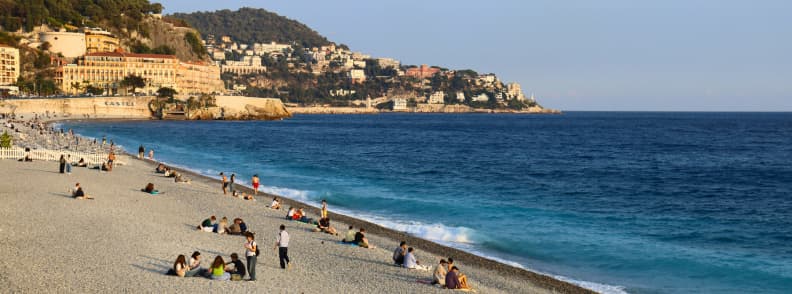
My Thoughts on autumn after Living near Fréjus since 2021
I’ve been living in the Pays de Fayence since spring 2021, first in Bagnols-en-Forêt and now in Saint-Paul-en-Forêt, about half an hour inland from Fréjus. This gives me a slightly different view of living on the French Riviera in autumn. The coast isn’t somewhere I save for holidays. Fréjus, Saint-Raphaël, Saint-Aygulf, and the Estérel are ordinary outings for me, so I notice the season through traffic, parking, restaurant habits, beach use, and the gradual disappearance of summer visitors.
September is still my favorite month. The sea is warm enough for swimming, daytime clothes remain summery, most seasonal businesses are still open, and French school holidays have ended. Beaches around Fréjus and Saint-Raphaël lose much of their July and August crowds. Roads calm down. Parking stops consuming an unreasonable share of the day. September is for the French Riviera I like in summer, minus a large part of what annoys me about summer.
October changes the balance. I still visit the coast, and I’ve swum at Base Nature in Fréjus during the first week of the month, but inland life becomes more attractive. Hiking around Bagnols-en-Forêt, Saint-Paul-en-Forêt, and the Estérel is easier without peak summer heat. Village events start leaning toward chestnuts, mushrooms, wine and harvest food. Restaurants in my area begin changing their schedules, and some resume home delivery once local residents replace summer visitors as their main customers.
November strips the coast back even further. In Fréjus and Saint-Raphaël, whole buildings sometimes sit behind closed shutters because so many apartments are second homes. Some streets acquire a slightly eerie quality after dark. At the same time, the places serving residents keep going, and this makes November useful for anyone curious about expat life on the Côte d’Azur beyond the beach-season version. You see which neighborhoods, cafés, shops, and restaurants belong to everyday life and which depended heavily on summer.
The difference between living in the arrière-pays vs. the coast on the Côte d’Azur becomes especially clear once autumn settles in. Coastal towns offer easier rail travel, a larger restaurant choice, and spontaneous walks beside the sea. Inland, I have forest trails, village life, easier parking, and space around me, but evenings cool faster and a car becomes more useful.
For me, living in the Côte d’Azur backcountry during fall means choosing between two good days instead of waiting for summer to return. One day might be lunch and a walk beside the sea in Saint-Raphaël. Another might be hiking near Lac de Rioutard, the Gorges du Blavet, or the old millstone quarries around Bagnols-en-Forêt. Autumn also brings the less photogenic parts of local life, such as road repairs, muddy trails after storms, hunting season and restaurants closing earlier. These details belong to the season too.
What I value most about living in the south of France in autumn is the return of spontaneity. In July or August, a simple coastal outing often requires thinking about traffic, parking and crowds before leaving home. By autumn, I’m way happier deciding late in the morning that we’re going to Fréjus, Saint-Aygulf, or Saint-Raphaël. The coast becomes ordinary again, which is exactly why I enjoy using the coast more.
A useful digital nomad guide to staying in the Côte d’Azur backcountry also needs to say plainly that inland beauty comes with transport trade-offs. Saint-Raphaël Valescure and Cannes are the main rail gateways for the Pays de Fayence, both around 35 km from the territory, while regional buses serve the villages. The free Lac de Saint-Cassien shuttle is a summer service and finished on 30 August in 2026. If I were staying inland while working online and wanted frequent coast days, I’d rent a car and choose accommodation only after checking the exact internet connection, mobile coverage, and distance to groceries.
Any moving to the French Riviera as an expat guide worth trusting should also distinguish the famous coastline from the places where many residents build ordinary lives. Nice, Cannes, and Antibes offer public transport, larger cultural calendars and city convenience. The Pays de Fayence has forest, villages, and room to spread out, with greater dependence on driving. Neither version is the “real” Côte d’Azur. They are just different ways of living in the same wider region.
Autumn is when that difference becomes easiest to read. Summer gives almost every coastal place visitors, open terraces, and activity. By November, the disguise has come off. If I were judging an area as somewhere to live, work remotely or buy a home, I’d visit in late autumn before making any decision. A place you still like after the beach clubs have closed, the evenings are colder and the neighboring shutters stay down for weeks tells you more about daily life than an August afternoon ever will.
About the Author

Hi! I’m Mirela Letailleur, founder of The Travel Bunny and a Provence-based travel writer living in the Pays de Fayence, around 30 minutes from Fréjus. I’ve lived here since 2021, so my guides to autumn on the French Riviera, the Côte d’Azur, the Estérel and inland Var come from repeated seasons spent swimming, hiking, attending local events, driving these roads and watching the coast change after the summer crowds leave.
My French Riviera autumn advice combines everyday life in the arrière-pays with frequent time around Fréjus, Saint-Raphaël, Saint-Aygulf, Cannes, Saint-Tropez, and other Côte d’Azur destinations. I write from firsthand visits, then verify practical details such as opening dates, transport, weather, events and seasonal access. This long-term perspective lets me explain what September, October and November are genuinely like here, including the quieter corners and seasonal changes a short visit often misses.
After reading my French Riviera autumn guide, check out these local guides on The Travel Bunny
Autumn in Provence. A First-Hand Guide to September, October & November in the South of France
Complete Cotignac Travel Guide. Provence’s Cliffside Village with Quince Markets, Royal Miracles & Troglodyte Caves